Eating Native?

veggiesforgrilling2smI’m currently teaching a biodiversity class at my daughter’s school, so I’ve been thinking a lot about biodiversity in New Zealand. Out here on this island in the middle of the Pacific Ocean, living things have had 65 million years to evolve in isolation. Until humans arrived about 700 years ago, most living things here were endemic—found nowhere else on earth. Three and a half metre tall birds and the giant eagles that preyed on them, flightless parrots, frogs that hatch from the egg fully formed, tuatara that died out everywhere else on earth millions of years ago, crickets the size of mice…

Humans changed things dramatically and rapidly. We brought thousands of other organisms with us, some on purpose, many by accident. Many of those organisms flourished here, at the expense of native organisms. Today, there are few New Zealand ecosystems untouched by the invasion of humans and other non-natives. Some of the most successful invaders have been plants—today there are more introduced plants here than there are natives, and more arrive all the time, in spite of efforts to prevent them.

Many of those invading plants were brought to New Zealand on purpose to provide food, shelter, or medicine. In fact, I can’t think of a single native plant currently cultivated for food, except one seaweed. There are certainly a few edible native plants, but they are few, and they are more of a survival food than something you’d want to eat every day.

No surprise. The crops we eat today have been cultivated for thousands of years—selected by countless generations of farmers to be bigger, tastier, and easier to grow. With only 700 years of history in New Zealand, there’s hardly been time to develop native crops.

The human migrants to New Zealand brought their crops with them instead. Familiar corn and carrots, potatoes and peas. But it’s not just in New Zealand that people mostly eat food native to other regions. People have been carrying their food with them for as long as we’ve travelled, until it’s sometimes hard to know where a food originally came from—classic Italian tomato sauce is made from a plant native to the Americas, the American “wheat belt” has its origins thousands of years ago in Turkey, and cassava domesticated in Brazil is now a staple food throughout tropical areas worldwide. Few people anywhere in the world eat native.

While I would love to be able to magically bring back the moa, Haast eagles, huia, and host of other incredible New Zealand endemic organisms that humans have wiped out here, I will admit I’m terribly fond of my non-native tomatoes, cucumbers, potatoes, eggplants, etc. I am thankful those non-natives are here, and I need not subsist on seaweed and ferns. Does it feel somewhat disingenuous to passionately support the conservation of our native biodiversity while I plant my non-native vegetable garden? Yes, but I’m only human, after all, doing what humans have done for 10,000 years.
Anticipation

100_3284 copyIt is a bread day. A real bread day, with the wood fired bread oven. It feels like forever since we’ve fired up the oven—with a fire ban almost all summer, and major DIY weekends since.

Ian has been preparing for two days already—ramping up the sourdough, and gathering wood for the oven. My daughter and I walked to the neighbours before dawn to buy eggs (my chooks are on strike at the moment), and I spent the morning planning and preparing for the cakes and cookies I will bake after the bread is done. My son has chopped a pan of vegetables to roast for dinner, and later I’ll prepare a couple trays of pumpkins for baking and freezing.

The fire has been built and burnt, and built and lit a second time. Soon the oven will be hot enough, and the dough will be ready. Then the frenetic work will begin.

For the moment, we wait, in anticipation of the baking to come.

See a time lapse of a bread day at Crazy Corner Farm!

Guest Post–Figs

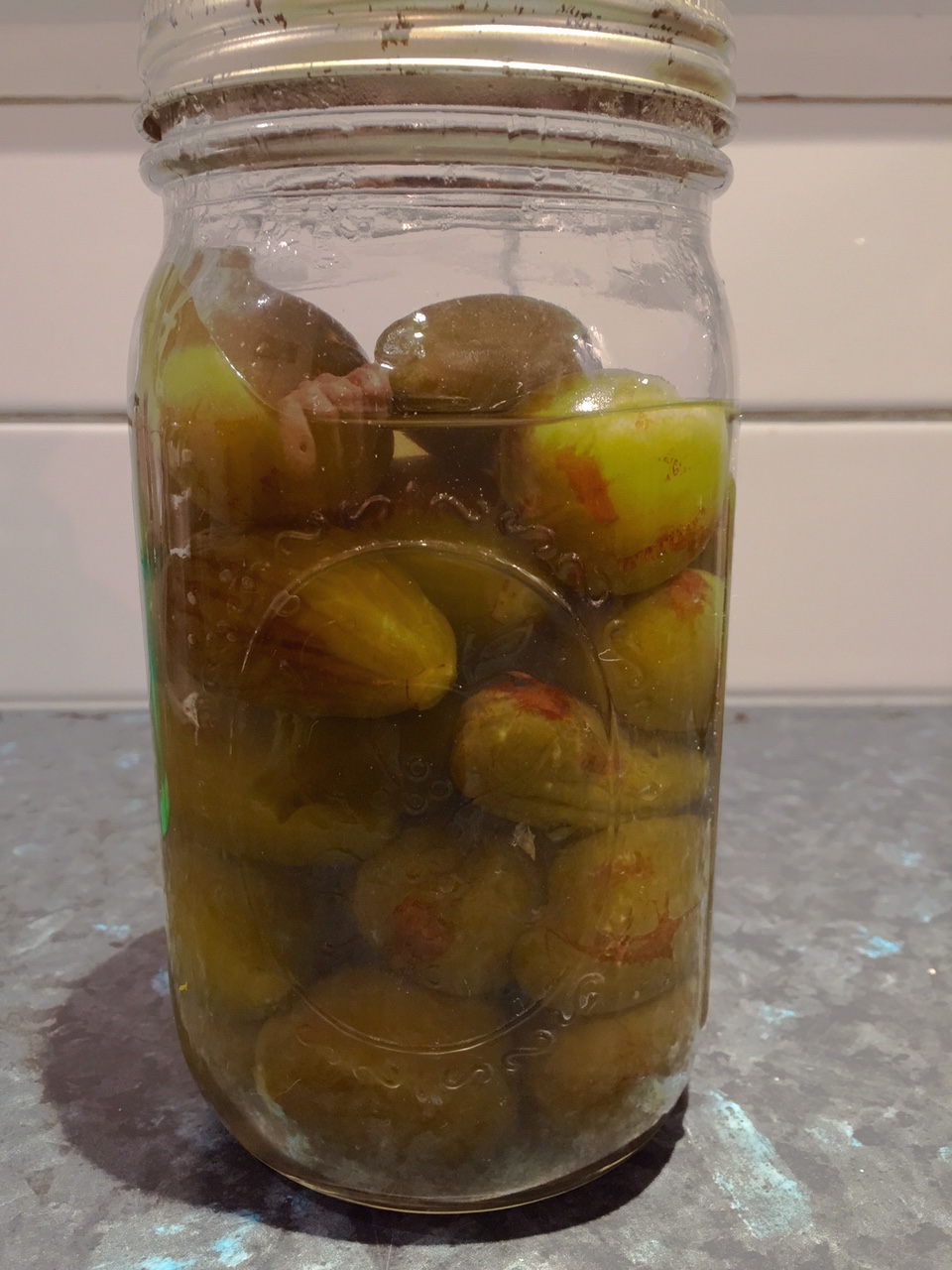
FigsToday’s post is a guest post written by my 11 year-old daughter about the figs she picked and processed today:

Last week I ate a fig for the first time ever. We have one fig tree. It started looking the most decimated of all the small fruit trees, but now it’s the only one that has given us fruit.

I noticed the figs were being eaten by birds so decided to pick one and try it. It tasted sweet and somewhat like Neptune’s necklace (a seaweed), but unlike Neptune’s necklace, it was quite tasty.

Today we picked the rest of the figs because the tree was getting frosted. We then boiled them and put them in a syrup. They are meant to be let sit for three weeks, but now they taste like somewhere between a fig and a sweet gherkin.

Queen’s Birthday Cake

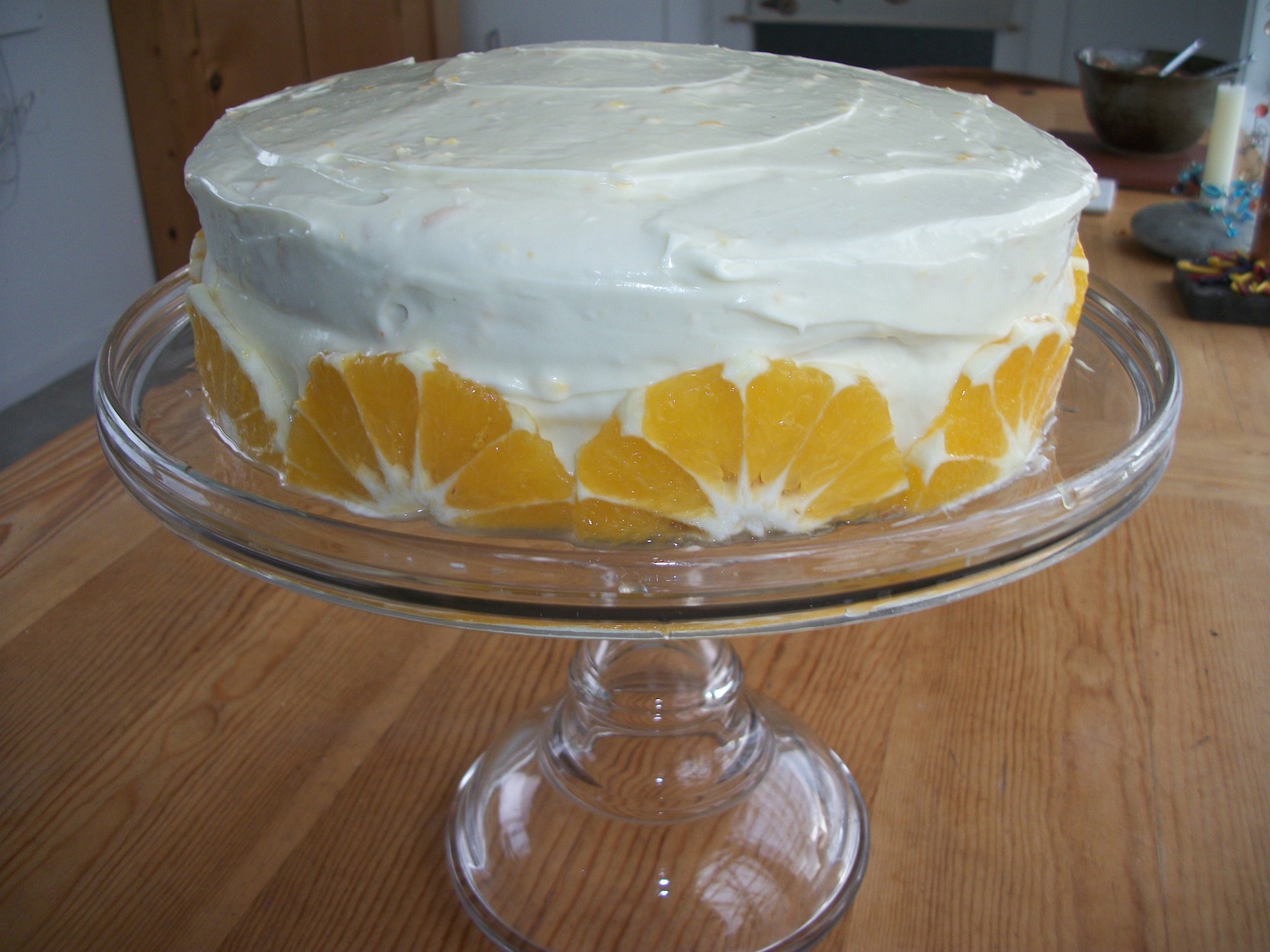
100_3280 copyIt is Queen’s Birthday weekend, so naturally I had to make a cake. Something out of the ordinary, and fitting for Her Royal Majesty.

As fortune would have it, the neighbour dropped off a large sack of grapefruit from his tree yesterday, so I made Citrus Surprise Cake from The King Arthur Flour Baking book. The surprise is grapefruit—lots of it—in the cake, in the icing, and also serving as the decoration.

It was just on afternoon tea time when I put the final touches on the cake. We sang a rousing chorus of Happy Birthday to Her Majesty, and tucked in.

The bitter/sour grapefruit was as surprising as the name suggests, and the cream cheese frosting flecked with grapefruit peel looked as good as it tasted. Overall, a delightful cake, and one I will make again.

Happy Birthday, Your Majesty! Thanks for giving me an excuse to make cake!

Best compliments ever

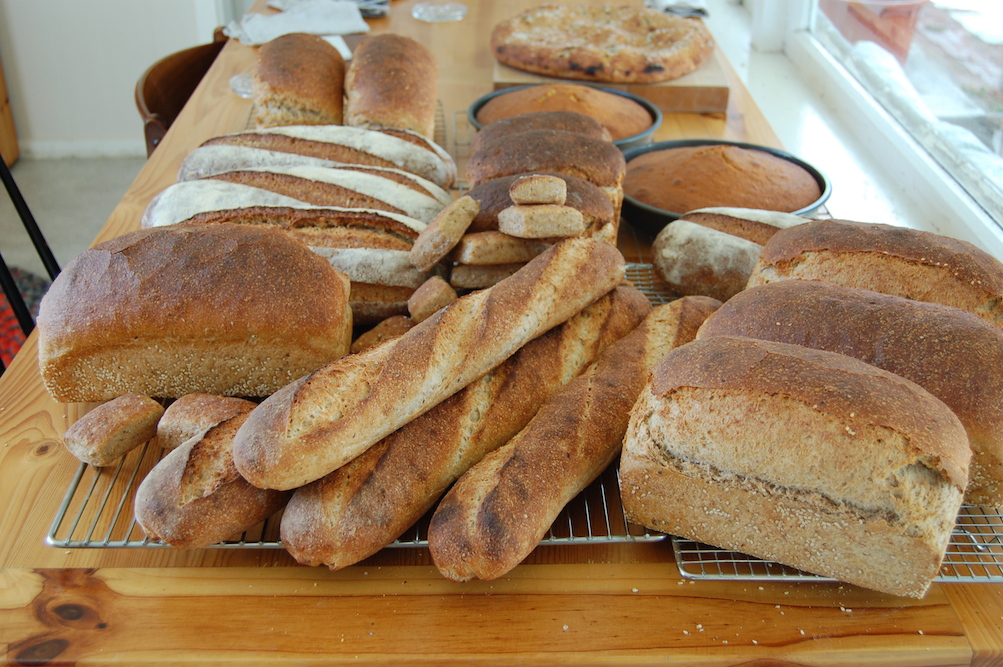
My bread can't compare to these beauties of Ian's.

My bread can’t compare to these beauties of Ian’s.

“Ugh! Their house smells like wet dog!” commented a friend’s sassy teenage daughter about a mutual acquaintance.

“I don’t want to know what you think my house smells like,” I teased.

“Oh! Your house smells wonderful! Like fresh bread and cinnamon!”

____________

“Is this homemade, too?!” asked Son’s Friend #1 in astonishment.

Everything here is homemade!” answered Son’s Friend #2 with glee.

Real Men Don’t Eat Quiche

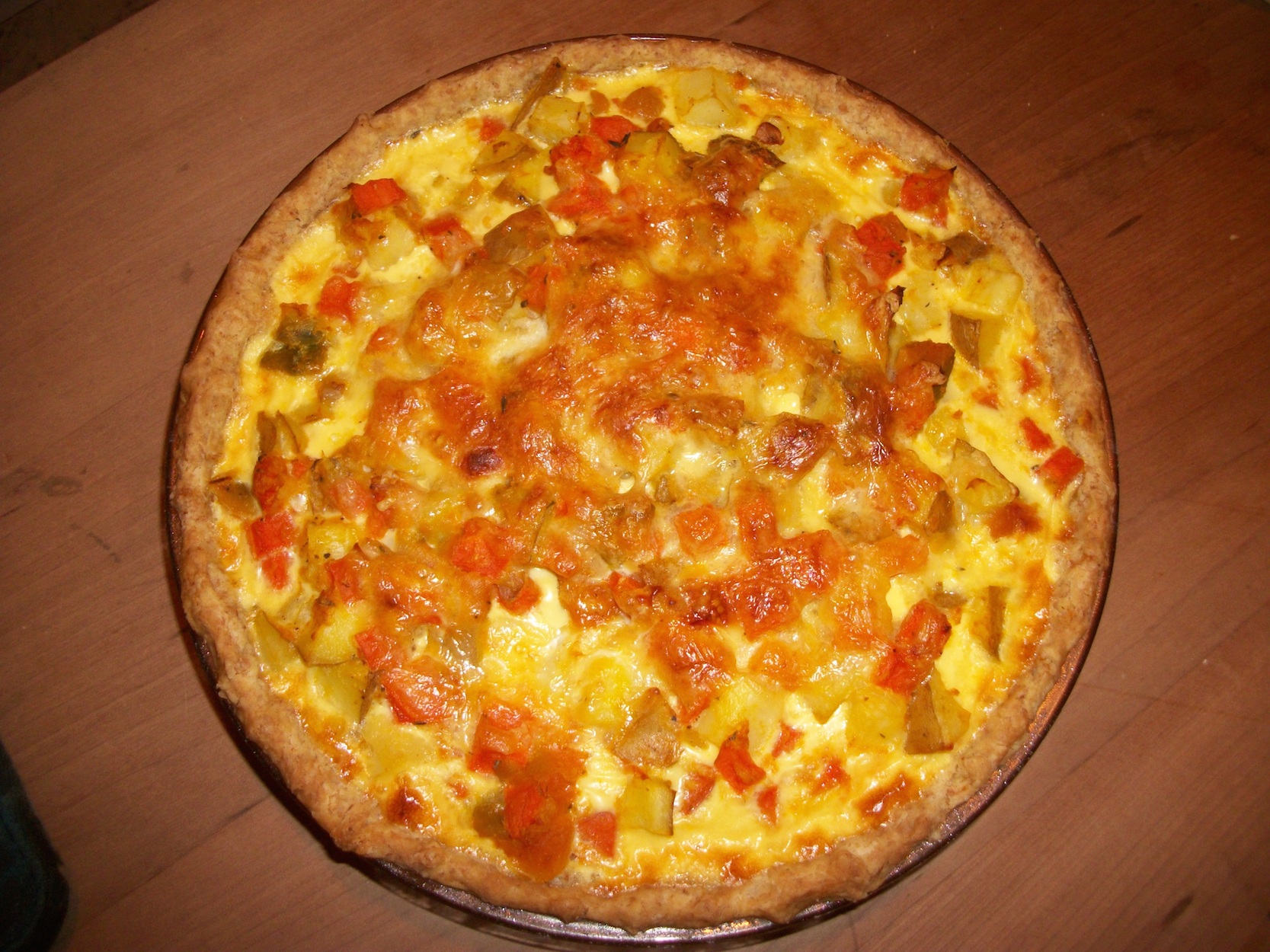
100_3267 copyWhen the book Real Men Don’t Eat Quiche came out in the early ‘80s, many of us had a laugh about the gender stereotypes portrayed in the book. Unfortunately, the satire was lost on some of my acquaintances, who truly believed that to eat quiche (or to try any foods with foreign-sounding names for that matter) was to lose their masculinity.

They were, of course, way off base, but I understand the importance of food to our identity. “You are what you eat,” after all. Foods can be tribal affiliations—Coke vs. Pepsi, vegans vs. meat eaters, carbs vs. protein.

Even if we eat the same things, the vocabulary of food defines and divides us. Soda or pop? Hoagie or sub? Chips or fries? Biscuits or cookies? Casserole or hot dish? Brownies or bars?

But for the adventuresome, those differences quickly resolve into similarities. Cook enough different foods, and the divisions become connections.

Take quiche lorraine, for example. It is just the French version of the English bacon and egg pie. The variations within “quiche” and “pie” are greater than the differences between them.

A gallette is just a tart with a French accent.

Mexican tortillas are almost the same as Indian roti.

Greek pita bread could be mistaken for Indian naan.

French ragout, Indian curry, and Latin American sancocho are all just stew by a different name.

Sweet, sour, bitter, salt, umame. Starch, sugar, protein. It all comes down to biology, and we all need the same nutrients to keep us going. The protein in my burgers may come from soybeans, and yours from beef, but we both love that slab of umame-rich protein on a nest of carbohydrates (a bun, some rice, some bulgher) and dripping with sweet/sour catsup (or ketchup, or sauce…).

The spicing may differ, but the essence is the same. Just like us. We are what we eat, after all.

Eating Local

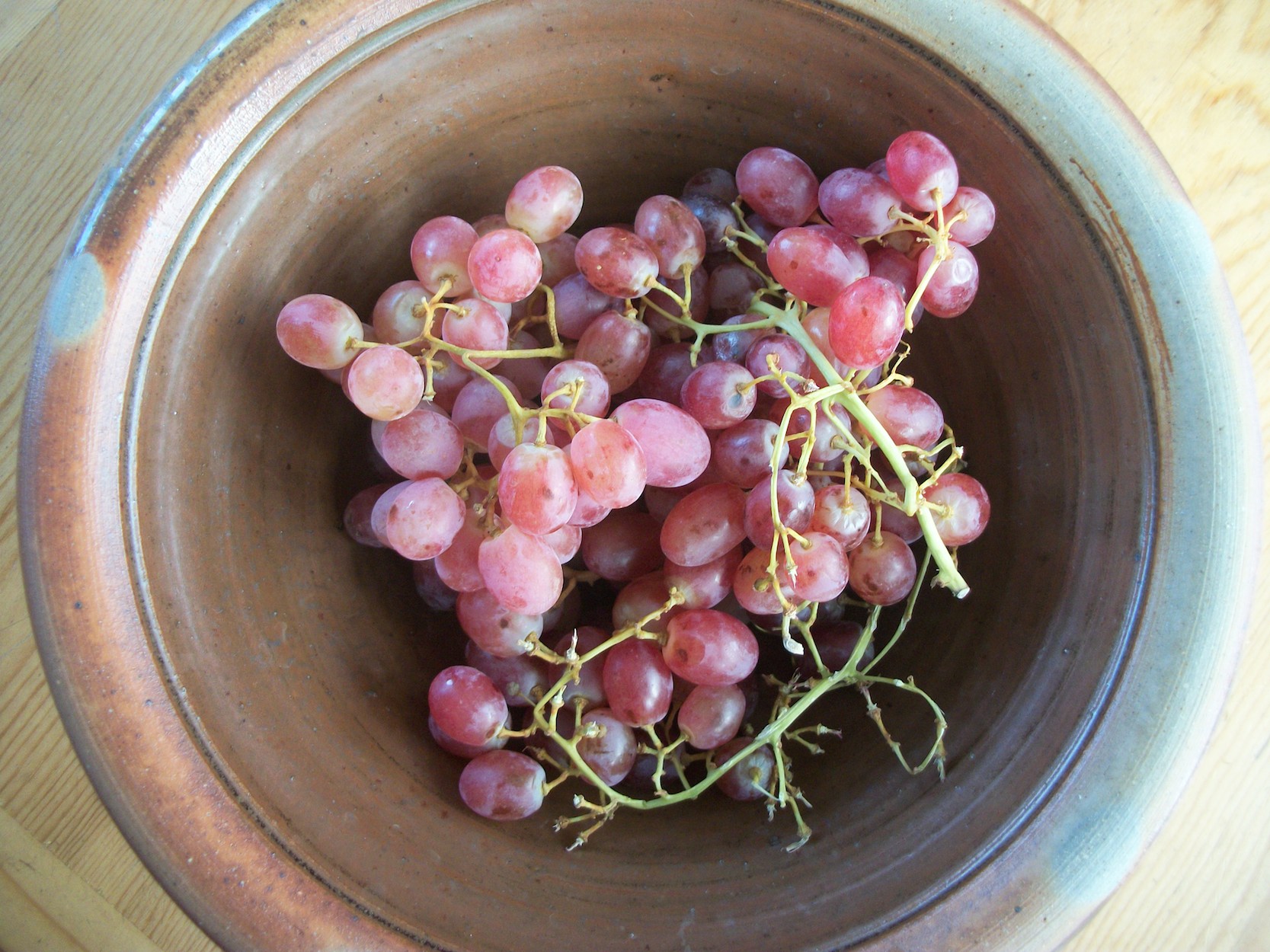
100_3263 copyThere was excitement in the house this week when I brought home the groceries. I had bought grapes! It generally only happens once a year, during the short Australian grape season. By the time I next go to the store, in three or four weeks, the season will be over, and the grapes will be from California.

There’s nothing wrong with Californian grapes, but I cringe at the idea of buying fresh produce that’s been transported all that way. True, the Australian grapes have travelled quite a distance, but they are the closest commercial table grapes available, and I reckon once a year I can splurge on them.

I’m not a locavore zealot, but I try to minimise the environmental impact of my food choices, and minimising the distance my food has travelled is part of that. So I gaze dreamily as I pass by the Ecuadorean mangoes and American pecans in the store. I use the Canadian maple syrup sparingly, and spend twice as much to buy canned tomatoes from New Zealand rather than Italy. When I do buy food from distant lands, I try to make my purchases as responsible as possible, mentally making up for the food miles expended—buying fair trade, organic products wherever possible.

In making these choices, I’ve discovered some wonderful things. Homemade jam and fruit butters are much better on pancakes than maple syrup. Locally produced olive oil is among the best I’ve ever tasted. Honey is a nicely flavourful substitute for cane sugar. And New Zealand oranges knock the socks off anything grown by Sunkist.

Would I still love a big, meaty mango? Yep, and some days I’m sorely tempted by them. But I’ve eaten mangoes in Panama, where they grew on a tree overhanging the house. My memory of mangoes is almost certainly better than a mango that was picked several months ago and hauled half way round the world. Do I long for grapes more than once a year? Of course, but perhaps, by restricting myself to the most local grapes possible, I enjoy them more when I do have them. And do I occasionally just say, “to hell with it,” and buy a pineapple from who knows where? Absolutely, but I like to think of those environmentally costly things as the treats they probably should be, and spend most of my time enjoying my local riches instead.

Favourite Kitchen Tools: wooden spoons

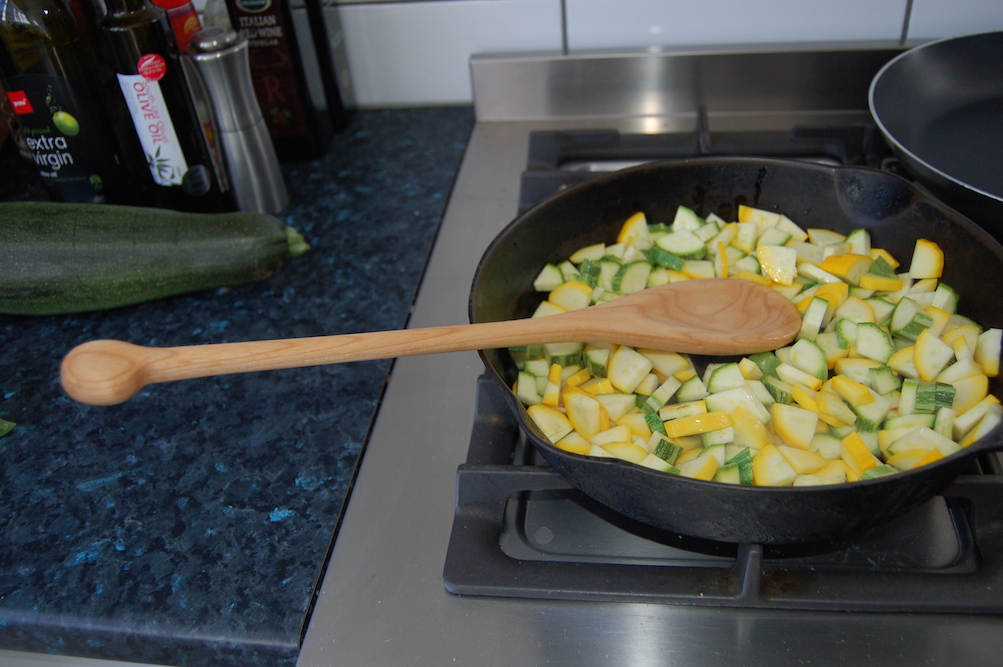
Lia's spoonsmWe have a good half dozen wooden spoons sitting in the crock on the kitchen counter. They are some of the most heavily used tools in the kitchen, and the first thing I reach for whether I’m stirring pasta, potato soup, or sizzling onions.

The very best spoon is the one my daughter carved for me. Its smooth finish, beautifully rounded bowl, and attractive handle speak to her perseverance and attention to detail. It is a lovely, functional piece of art, and it makes me smile every time I use it. Can’t ask more of a spoon!

Speculaas

100_3249 copyA couple of years ago, I got The Gourmet Cookie Book for Christmas. I immediately loved the book just for its stunningly elegant graphic design. It’s a book worth having, even if you never make a single recipe out of it, because it is a piece of art all by itself. It took me a while to get around to making the cookies, but every recipe I’ve tried has been good so far.

Yesterday, I made Speculaas (Saint Nicholas Cookies) from this book. I think I’ve found my new favourite cookie. These lovely biscuits combine the best of biscotti, rusks, and gingerbread in a highly dunkable package! I made the recipe straight from the book:

Combine in a medium bowl:

3 cups flour

4 tsp baking powder

1 Tbsp cinnamon

1 tsp cloves

1 tsp nutmeg

½ tsp ground aniseed

½ tsp ground ginger

½ tsp salt

Beat in a large bowl until light and fluffy:

1 cup butter

1 ½ cups brown sugar

Stir in:

3 Tbsp milk

Gradually add the flour mixture to the butter mixture, stirring until it is well combined. Form the dough into a ball and knead on a well floured board. Roll into a rectangle ¼-inch thick, and cut into rectangles 2 ½ inches by 1 ½ inches with a knife or cutter (I used my bench scraper, and it did a lovely job). Place the rectangles on a buttered cookie sheet, decorate with blanched almonds, halved or slivered (press the almonds gently into the dough), and brush them with lightly beaten egg white.

Bake at 375°F for 12 to 15 minutes, or until browned and firm.

Welcome to the feast

100_3248 copyMy daughter wanted me to blog about Lego today.

“It’s gotta fit the 365 Days of Food theme,” I said. “Make a Lego feast, and I’ll blog about Lego.”

The result was a creative combination of preformed Lego food and her imagination, and reflects some of our favourite foods.

Bread, of course, is a central part of the feast. Sliced, in this case, with a sword, because Lego does not provide bread knives.

Flat round plates serve as pancakes, one of our common Sunday breakfast foods.

A Lego turkey, complete with dagger as carving knife, is a response to the fact the kids have several Lego turkeys. My daughter has, in fact, never eaten turkey.

Lego carrots are common, so naturally there is a bowl of carrots on the table.

A bowl of small red bricks represents balsamic glazed tomatoes—a lovely part of any feast.

There’s plenty to eat. Come join us at the Lego feast!