Summer Soup 2024

Making and canning vegetable soup used to be a whole family activity, with the kids pitching in from a young age, picking and chopping vegetables alongside my husband and me. My husband would cook the soup while the kids and I washed dishes, and then I would can (bottle) it up.

We called it Summer Soup, because we made it at the height of the summer vegetable season (which ironically always falls in early autumn). On the cold rainy nights winter we could open a jar and enjoy a bowl of summer. 

When the kids were young, they delighted in recounting which vegetables they chopped, proud of their part in feeding the family. These days, making summer soup is a mostly solitary activity for me, the kids being all grown up. It hasn’t stopped me from making a vast quantity of soup. Last Sunday I designated as Summer Soup day because I had heaps of tomatoes, green beans, sweet corn, zucchini, and other vegetables to put in it.

Because it was Sunday, I started off at 5.30 am by making muffins for breakfast. While the muffins baked, I began chopping vegetables …

My husband had planned on baking bread on Sunday, but unfortunately he woke with a terrible cold that morning. He’d started his sourdough sponge the night before, so with instructions from him, I made up his bread dough after breakfast and set it to rise as I continued to chop vegetables.

The mixing bowls began to fill up in the kitchen as the morning progressed. After several hours and a few trips to the garden to pick more vegetables and dump scraps on the compost pile, I took a short break from chopping to divide the bread dough for loaves. Thankfully, my husband felt well enough at this point to form the loaves and get them started on their second rising, because I really wanted to finish chopping vegetables by lunchtime.

I finished the final chopping shortly after the focaccia came out of the oven. We sat down to enjoy fresh focaccia for lunch.

My break was short, because after lunch I began processing all those chopped vegetables. It was clear I wasn’t going to be able to fit everything into one pot, so I pulled out both my 20-litre stock pots and divided the vegetables between them. While the soup heated up, I prepared my jars and the pressure canner. I also filled my 12-litre stock pot with vegetable scraps and water and set it on the stove to simmer for a few hours for vegetable stock.

Much of the time commitment in making and canning vegetable soup is in the canning process. Each batch of seven jars has to be processed for an hour and 15 minutes, and then there’s the waiting time while the canner cools down enough to remove the jars before putting in the next batch.

While I was waiting for the canner to do its thing, I started in on the apples that needed to be processed. I peeled and sliced a mountain of apples. Once I’d emptied the soup out of one of the 20-litre pots, I refilled it with apple slices and cooked them up into apple pie filling—enough for three generously filled pies. The pie filling went into the freezer. 

The soup seemed to never end. Even after separating off two meals worth of soup for eating this week, I ran three full canner loads (21 quarts) of soup and one full load (7 quarts) of stock. The last jars came out of the canner at 9.15 pm.

I’m glad I only make summer soup once a year, but I’m thrilled to have all that summery goodness squirrelled away in the pantry. Bring on the rain and cold of winter—I can already taste the soup (followed by a slice of apple pie, of course!).

Crazy Cake Season 2024—well, that was a fail

The cake was ugly even before the jelly layer was added on top…

The girl turned 20 this week, but she hasn’t outgrown crazy birthday cakes. Her response when I asked her what she wanted this year was: How would you feel about making a hornwort (Anthocerophyta not Ceratophyllum)?

Well, that’s a gauntlet thrown, for sure. Hornworts’ thin, jelly-like ‘leaves’ and tall, narrow sporophytes do not lend themselves to buttercream icing. This called for a new technique.

I immediately thought of agar agar (a vegetarian gelatine substitute, for those who don’t know), which has the right sheen for a hornwort, and which I knew could be made into thin, textured sheets (I knew this because I’ve used it for creating texture on fake wounds … yeah, I do a lot of weird stuff.)

As I was looking up a good water:agar ratio for the consistency I wanted, I stumbled across the world of jelly cakes. I was immediately hooked. They look totally disgusting to eat (I hate jelly/jello, won’t use gelatine because it’s not vegetarian, and I think agar tastes like seaweed), but visually they’re amazing.

So when I found that my thin agar leaves were fiddly and a bit too floppy, I decided I would do a jelly cake and create my hornwort using jelly cake techniques. 

And the jelly added extra special ugliness.

I spent two hours practicing with the jelly last week, making sure I could do it without all the specialised equipment the professionals use. Then I made the other components of the cake over the weekend. I first made the actual cake (because no way was I going to have only jelly cake to eat) using a new recipe. This turned out so awful, I made a second cake with a tried-and-true recipe because there was no way I could use the first. I made the fake moss (using a new technique I hadn’t used before), chocolate tree bark (again, something I hadn’t made before), and the icing (using an unusual recipe I had never used before). 

Then, on the girl’s birthday, I made the jelly hornwort and assembled the whole thing.

The result? Pretty ugly, and not very hornwort-like. Or bark-like, or moss-like. And the icing set up like glue …

But hey, you’ve got to try new things, right? On the plus side, I learned about jelly cakes. I learned that the specialised equipment the professionals use is probably necessary to do it well. I learned how to create a decent jelly from agar agar (I mean, as decent as any jelly can be—yuck!), which I could now use to create moulded shapes or other embellishments for future cakes. I learned how not to make chocolate tree bark, and that a certain cake recipe and icing recipe can be discarded. The fake moss was definitely more moss-like than previous techniques I’ve tried. It’s one that’s probably worth playing with and refining.

Trying new things can pay off…

So I learned some things. And I got to eat cake. It may not be pretty, and the icing texture is simply wrong, but the flavour’s good.

And I have to remind myself that sometimes trying something new does work. Remember the octopus cake? Better luck next time.

2024–Year of the Rat?

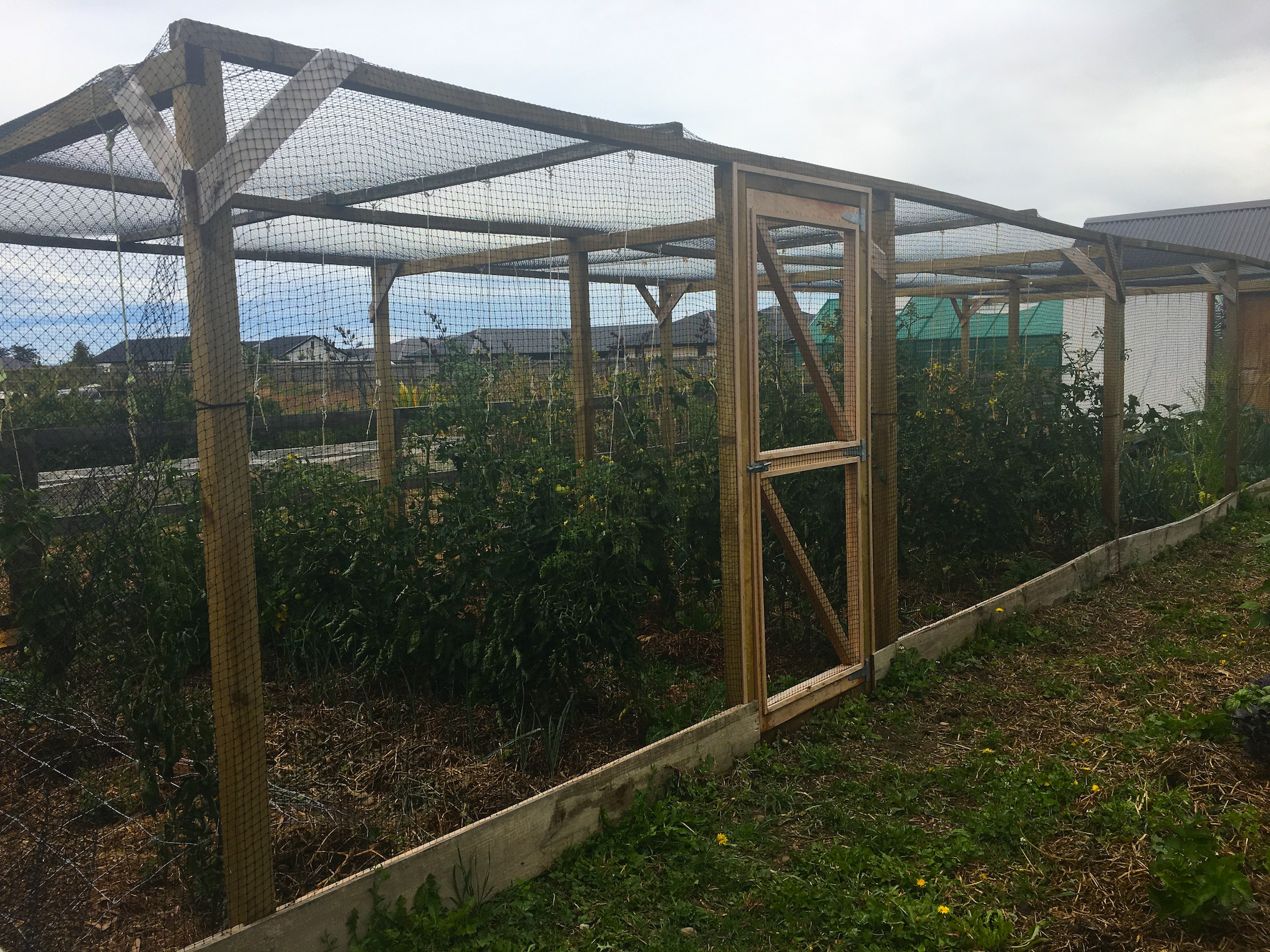
The netted ‘room’ is excellent at keeping birds out, but does nothing to thwart rats.

With a third of my garden protected with permanent bird netting this year, I was pretty smug about pests this spring. Silly me …

2023 may have been the year of the rabbit in the Chinese Zodiac, but in my garden it was year of the rat, and it seems to be continuing in 2024.

In the spring, rats ate all my pea seedlings … twice … On one of those occasions, they plundered the seedlings in the three hours the tray sat in the garden before I planted them out. I was working (planting other things) just metres away while the rat collected all the seedlings and tucked them away in its nest (I found them later when I uncovered the nest).

The rats also did good work on my first planting of corn, melons, cucumbers, and pumpkins, eating the seeds and uprooting the seedlings.

I went through three cheap rat traps (none of which actually caught a rat, and all of which quickly broke), before spending an excessive amount of money on a DOC 200 trap. This terrifying stainless-steel beauty caught its first rat within 24 hours. It has nabbed 3 rats, a hedgehog, and an English sparrow in the three months I’ve had it, which I’m quite pleased about.

Unfortunately, it has not solved my rat problem. Last week I discovered a rat (or rats) had tunnelled straight down my potato bed, eating nearly every potato in the entire bed, and damaging some plants so badly they were dying. Yesterday, I went to pick a gorgeous Black Brandywine tomato that was ripening on my now bird-protected tomato plants. I found the tomato on the ground, half eaten by little rat teeth.

I’m beginning to wonder if I will get anything off the garden this year. So far, the rats don’t seem to like courgettes or cucumbers, but my beans are planted right next to the compost pile where the rats seem to nest. Once they start plumping out, they’ll be primo rat food. And the corn? You know those rats will be scampering right up the plants to gnaw at the ears. Makes it hard to lure them to a trap when the garden is a smorgasbord of delicious food.

Makes me wish I still had a cat—the rats didn’t start to become a real problem until he was gone.

I’ve also got my first ever infestation of whitefly this year. Pretty embarrassing for someone whose Master’s degree was on greenhouse pest management. Whitefly wasn’t even on my radar, so I missed early signs of the infestation. They’re not only in the greenhouse, but outdoors as well. The key to effective integrated pest management is paying attention and catching infestations before they’re a problem, and I failed spectacularly at it. Now I’m playing catch up. My only consolation is that it looks like lots of other people are, too, because both suppliers of whitefly biocontrol agents in New Zealand are sold out. Serves me right, I guess.

So as we enter 2024, officially year of the Dragon, I’m wondering if there’s a dragon that eats rats …

January in the Garden

January is quite possibly the best month in the garden. Seemingly overnight, the vegetables double in size. Summer crops begin ripening. Weed growth slows, and the vegetables are large enough to compete with all but the most aggressive weeds. Garden work switches from planting and weeding to picking and processing. The frenzy of December berry crops is over, and the cupboard is bursting with jam.

January is a time to enjoy the fruits of my labour. Not that there isn’t work to do, but the rewards of all my work are beginning to outweigh the effort. It’s a great way to start the new year.

Another great way to start the year is with the giant plant tags Santa Claus made me for Christmas. They’re not the most efficient markers for the garden, but they’re adorable and add a touch of whimsy.

With luck (and a lot of hard work by my husband), by the end of January, I’ll also have a nice new garden shed for storing tools and potting up plants. There will be a bit of whimsy in the shed, as well, inspired by a leaded glass window we found for it. I can’t wait to have that bit of the garden plan complete and functional!

I hope your January is full of things to enjoy and to look forward to.

A Seasonal Celebration of Food

The traditional Christmas celebrations and decorations involving twinkling lights, snowflakes, snowmen, warm drinks and roaring fires make no sense here in Aotearoa New Zealand. But there’s plenty to celebrate at this time of year.

I always know it’s time to start thinking about the holidays when the strawberries and gooseberries ripen. I know it’s time to decorate when I can stroll through the garden, grazing on peas, gooseberries, raspberries, boysenberries and strawberries. When I can fill a colander with red and black currants. When the supermarket fruit begins to look old and nasty by comparison to what’s tumbling off the bushes at home. When it’s hard not to pick too much lettuce for the day’s salad.

Food is an important part of holiday celebrations, and for me half the celebration is the ability to eat my way through the garden. Finally in December, picking vegetables for dinner doesn’t feel like scrounging for whatever’s left from the winter crops. At some point during the month, the question of ‘what is there to cook for dinner’ shifts to ‘what needs to be eaten today’ (or processed and preserved). Jam making is my Christmas ‘baking’. Fresh berries replace the traditional bowl of mixed nuts put out for munching. Fruit ice creams and cordials are our figgy pudding and wassail. 

As we make our way toward the summer solstice, the long days provide plenty of daylight for picking and processing fruit. And because it’s the Christmas season, those long days (and nights) in the garden and kitchen feel more like a celebration than a chore.

Is there holiday stress because of the increase in garden work? You bet—I can’t tell you how many times I’ve sat in the car, bucket between my knees, shelling peas on the way to the beach so I can get the work done and still have time for fun stuff. And keeping up with the weeds is a struggle while many of the vegetables are still small. Then there’s the inevitable broken tap or pierced irrigation line you find the first time you need to water (which usually happens this month). And the constant struggle with the thieving birds, who want to partake of the garden’s bounty, too.

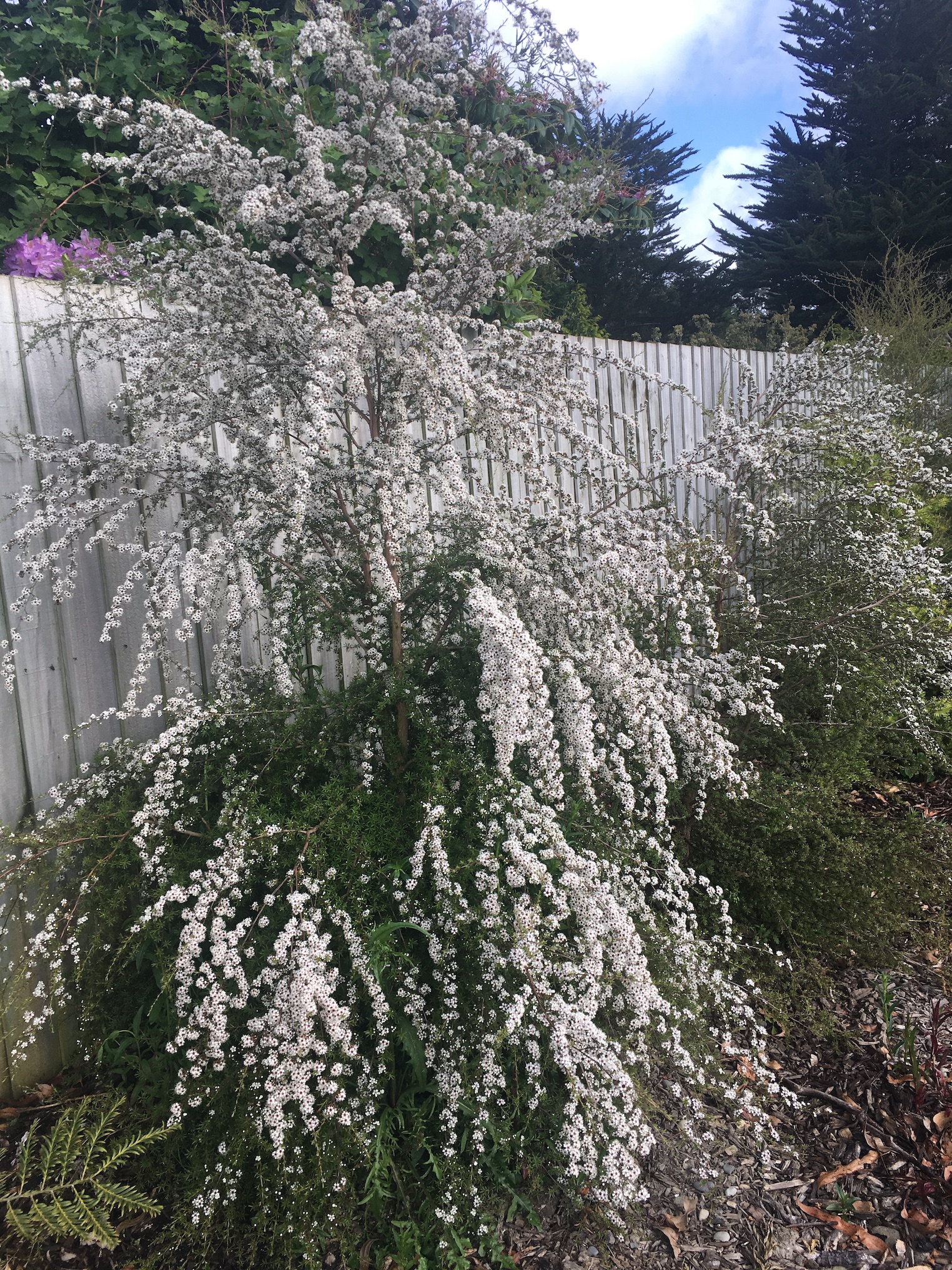
We may not have snow, but the kānuka flowers are a spectacular substitute.

But overall, the holiday season is a time to celebrate the garden’s summer bounty. It’s a time of fresh fruit and vegetables, and long days outdoors. Next week marks the end of my work year, with schools letting out for summer, and this weekend will be my first jam-making weekend of the season. Let the celebrations begin!

Baking Disaster

A rainy weekend, an empty cookie jar … why not try out a new cookie recipe? 

In general, I love the recipes in King Arthur Flour’s Whole Grain Baking book. So I thought I’d try a new one—a cookie recipe called All Oats All the Time. 

It’s an intriguing recipe with ground oats and nuts instead of flour. It’s also pretty low in fat, for a cookie.

My first warning was the texture of the dough. It was quite wet. I re-read the recipe to make sure I hadn’t forgotten any ingredients—nope, everything was in there. Still I hesitated—should I add a little flour?

No. King Arthur recipes are good ones—this would be fine. I carried on, dropping teaspoons of dough onto my greased cookie sheets. 

Five minutes in the oven, and I knew I had a problem. The cookies had spread into one another. Not horribly, but creating the thin edge, thick centre combination characteristic of a dough that’s simply too wet.

Okay, fine. They wouldn’t look nice, but they’d be okay.

I pulled them out of the oven before those thin edges burned. The recipe said to let them cool five minutes on the pan before removing them. Once again I hesitated. Would those thin edges lift off after five minutes?

Once again, I went with the recipe. 

After five minutes, those cookies were virtually cemented to the pans, and they’d turned super crisp, so the moment you managed to wedge the spatula under one, it shattered.

I experienced a moment of despair, thinking I was going to spend an hour chipping inedible cookies off the pans, and then scrubbing the pans until all that baked-on gunk was gone. But then I thought of cheesecake crust, and how these crumbly cookies would make a lovely crust, or maybe a fruit crisp topping. And once I no longer cared if the cookies crumbled, it was a snap to scrape them off the pans. The pans came clean easily after a short soaking. 

On Monday, I picked up the ingredients for cheesecake and made little cheesecake cupcakes using my crumbled cookies in a crust, with a little sprinkling of crumbled cookie on top. The results are pretty darned good—certainly better than the original cookie alone.

I’ve still got a fair bit of crushed cookie left—it has gone into the freezer for use in some other interesting way.

So maybe the cookies weren’t such a disaster after all.

Fruity Experiments

The freezer is packed with early summer fruits—raspberries, gooseberries, red currants, and black currants. Seriously, if we don’t make a good effort to eat it, we’ll still have fruit left when summer rolls around again.

Black currant scones before baking–colour unusual, but okay…

So I’ve been experimenting with new and interesting ways to incorporate fruit into baked goods.

Two weeks ago I made a cookie bar that is supposed to be filled with chocolate fudge. I filled it with black currant puree instead, making a wonderful tart-sweet flavour bomb.

There was thawed black currant puree left over from the bars, so for Sunday breakfast I took my favourite lemon barley scone recipe (which I’ll have to blog about someday …) and substituted black currant puree for the liquid ingredients. The results were … mixed.

The flavour was good, but of course I love black currant, so I expected that. The colour, on the other hand, was more of a conversation piece than a bonus—dingy purple. The scones didn’t rise as well as they usually do either, and the texture was heavier than I would have liked.

So I’d say the scone experiment was inconclusive and needs more testing.

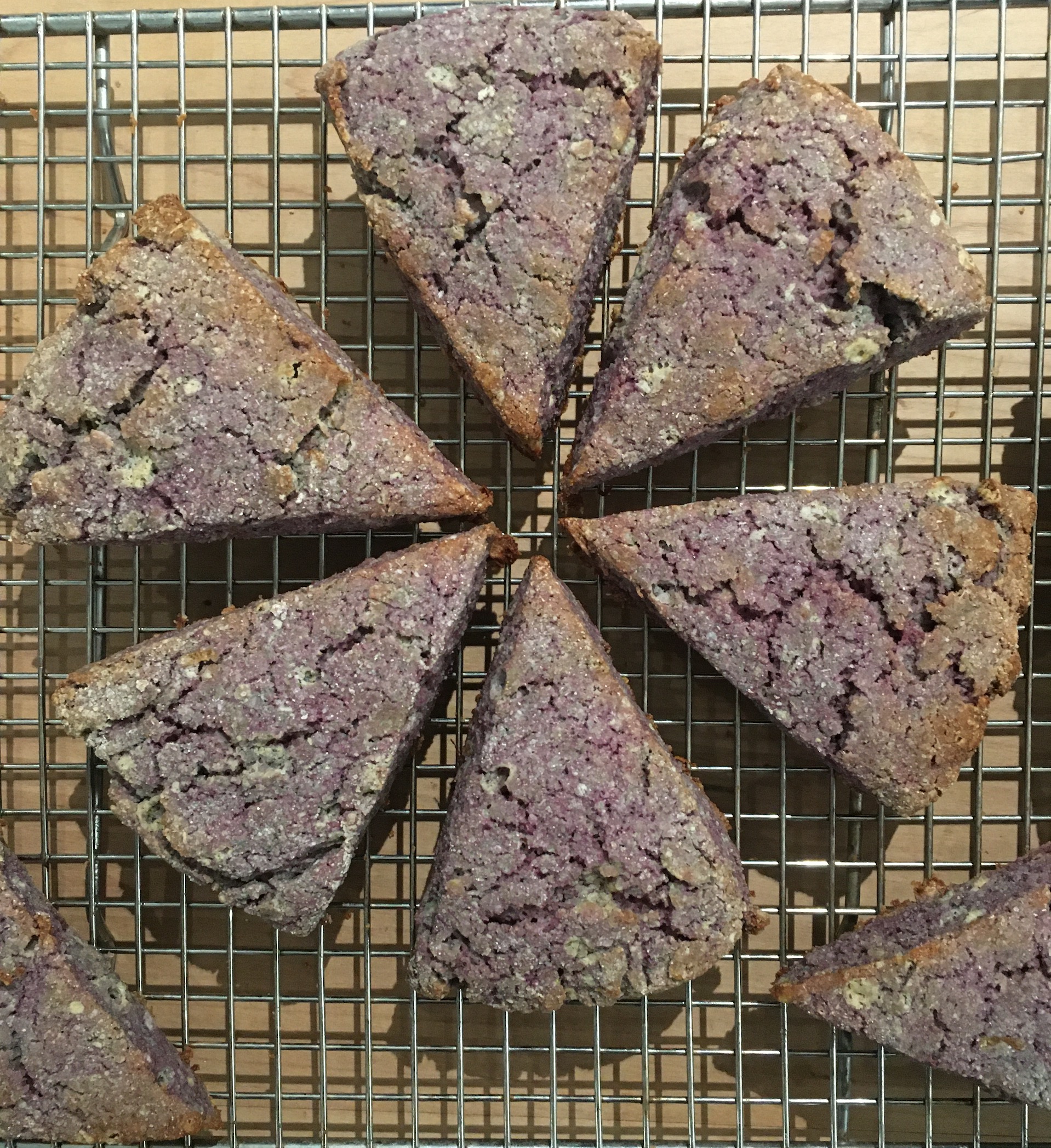
Black currant scones after baking–colour a bit disturbing…

I also made raspberry crisp and lemon pound cake studded with red currants over the past two weeks, and these were resounding successes. They, too, require replication.

And there’s plenty more fruit for additional studies! I don’t think it will be too much of a hardship to work our way through the frozen fruit.

Do I have to eat it?

Nance is a small yellow fruit popular in Panama. When my husband and I first arrived there, chicha de nance (a drink made from crushed nance fruit) was something we could barely choke down out of politeness to our hosts. The flesh of nance fruits is oily, gritty, acidic, and has a funky cheesy flavour. If you think too much about it, chicha de nance is reminiscent of watery vomit.

So you’ll understand why we didn’t like it.

But during nance season (and for several months afterwards, because people store it in bottles of water—yeah, don’t even think about what grows in those bottles) it’s impossible to avoid nance. Everyone you visit serves chicha de nance. Neighbours give you bottles filled with nance fruit.

You learn to drink it without grimacing. Before long you’re drinking it without even thinking about vomit. It’s a slippery slope from there, and next thing you know, you’re looking forward to nance season and wondering if you can trade some eggs for a bottle of nance from your neighbour.

I’m thinking about nance today as I contemplate the feijoas dripping from our tiny feijoa bushes. This is the plants’ first year producing fruit and I am amazed and a little terrified at their productivity.

I’m terrified because I hate feijoas. I don’t even like the smell. Simply walking past the fruit bowl when there are a few ripe feijoas in there makes me wrinkle my nose in disgust. I find it hard to breathe around them. Eating one makes me shudder—I swallow quickly to avoid tasting it too much.

Fortunately for me this year, my husband has been keeping up with the feijoas—he loves them. But those feijoa bushes are only going to get bigger. Next year I will have no excuses—I’ll have to eat them. 

So I’m thinking about nance. If I could learn to love a fruit that tastes and feels like vomit, surely I can learn to love feijoas, right?

They say a child needs to try a food up to 15 times before they’ll eat it. That’s a lot of feijoas …

Lazy Lemon Cake

Sometimes you want cake, but don’t want to work for it.

A head cold this past week has left me craving cake, but without the energy to do much baking. Consoling myself with cookbooks from the library, I came across a recipe for Greek Lemon-Yoghurt Loaf Cake that was so easy, I couldn’t resist. Nothing else really caught my eye in the Great British Bake Off cookbook this came from, but I think this one is a keeper.

Here’s the recipe, in case you’re feeling lazy …

150 g plain flour
2 tsp baking powder
pinch of salt
50 g ground almonds
200 g caster sugar
finely grated zest of 1 lemon
3 medium eggs (I used 2 large)
125 ml Greek-style yoghurt
125 ml mild light olive oil (I used a mix of canola and extra-virgin olive oil, because I didn’t have light olive oil)

for the glaze:
125 g icing sugar, sifted
finely grated zest of 1 lemon
1 – 1 1/2 tbsp Greek-style yoghurt

Sift the flour, baking powder, salt and almonds into a mixing bowl (tip in any almonds remaining in the sieve). Stir in the sugar and lemon zest.

Combine the eggs, yoghurt and oil in a measuring jug and beat well with a fork. Pour into the flour mixture and stir until well combined.

Pour into a greased loaf pan lined with a strip of baking paper. Bake at 180℃ for 55-65 minutes until golden brown. When the cake is ready, cool in the pan for 5 minutes, then run a knife around the edges of the pan and lift the cake out by the lining paper and allow to cool on a rack.

Make the glaze by sifting the icing sugar into a bowl. Mix in the lemon zest and then add just enough yoghurt to make a smooth, shiny glaze with the consistency of double cream. While the cake is still hot, spoon the glaze over the top.

I have lots of ideas for variations on this cake—using a blackcurrant glaze, replacing half the flour with barley flour, stirring in frozen blackcurrants … it’s a recipe that invites you to make it again and again. 

Autumnal Assessment

April is upon us, and it’s time to assess how the garden year went.

In a word, it was disappointing. 

It started off bad, with my seedlings in fungal-infected seed raising mix. That problem was made worse when I contracted Covid and couldn’t move those seedlings into better mix quickly, so they languished for a while. Many were planted out late or small.

And the problems continued once plants were in the garden. Flooding last winter sucked the nitrogen out of the soil in about half the garden, leaving my pumpkins, corn, peppers and eggplants all looking anaemic. To be fair, I harvested pumpkins—enough to enjoy fresh, but not my usual quantity that lasts us all year. We also ate sweet corn, but had none extra to freeze. The peppers and eggplants were so slow to grow this year that they’re only now ripening fruits—just in time to be killed off by winter temperatures.

The tomatoes and peas grew well this year, but were decimated by birds.

The cucumbers and melons were slammed by phytophthora during an early summer wet period—most died, and those that survived grew slowly. The only cucumbers that grew well turned out inedibly bitter, and I tore the plants out of the ground.

On the positive side, the potatoes were great—died off a little earlier than I expected, but produced plenty of tubers, with little trouble in the way of pests and disease. 

The perennial fruits did well overall, too, and the freezer is stuffed with berries for the winter. Even the 3-year-old fruit trees gave us crops this year (small ones, but the trees are still tiny themselves).

So, as usual, there were wins and losses, and now I’m looking forward to how to increase the wins for next year. I spent the past several weekends digging a drainage ditch and soak pit to draw flood water off the garden this winter. Hopefully that will help retain the nutrients I’m hauling to the garden in the form of manure each week. My husband and I have also been discussing improving our bird defences before next spring—permanently netting an area of the garden for the most bird-ravaged crops. I’ve also identified some new varieties of bean that are doing better in the new garden than my standards from the old garden, and I’ll adjust next year’s planting to allow more space for the more vigorous varieties. 

That’s the best part of gardening, really. You always get another chance to do it better. So I head into autumn a little disappointed in last year’s garden, but with high hopes for what next year will bring.