Happy Equinox!

Here we are at the autumnal equinox! Hard to believe my garden year is three-quarters over. But the days are feeling very short, and the vegetable garden is slowing down.
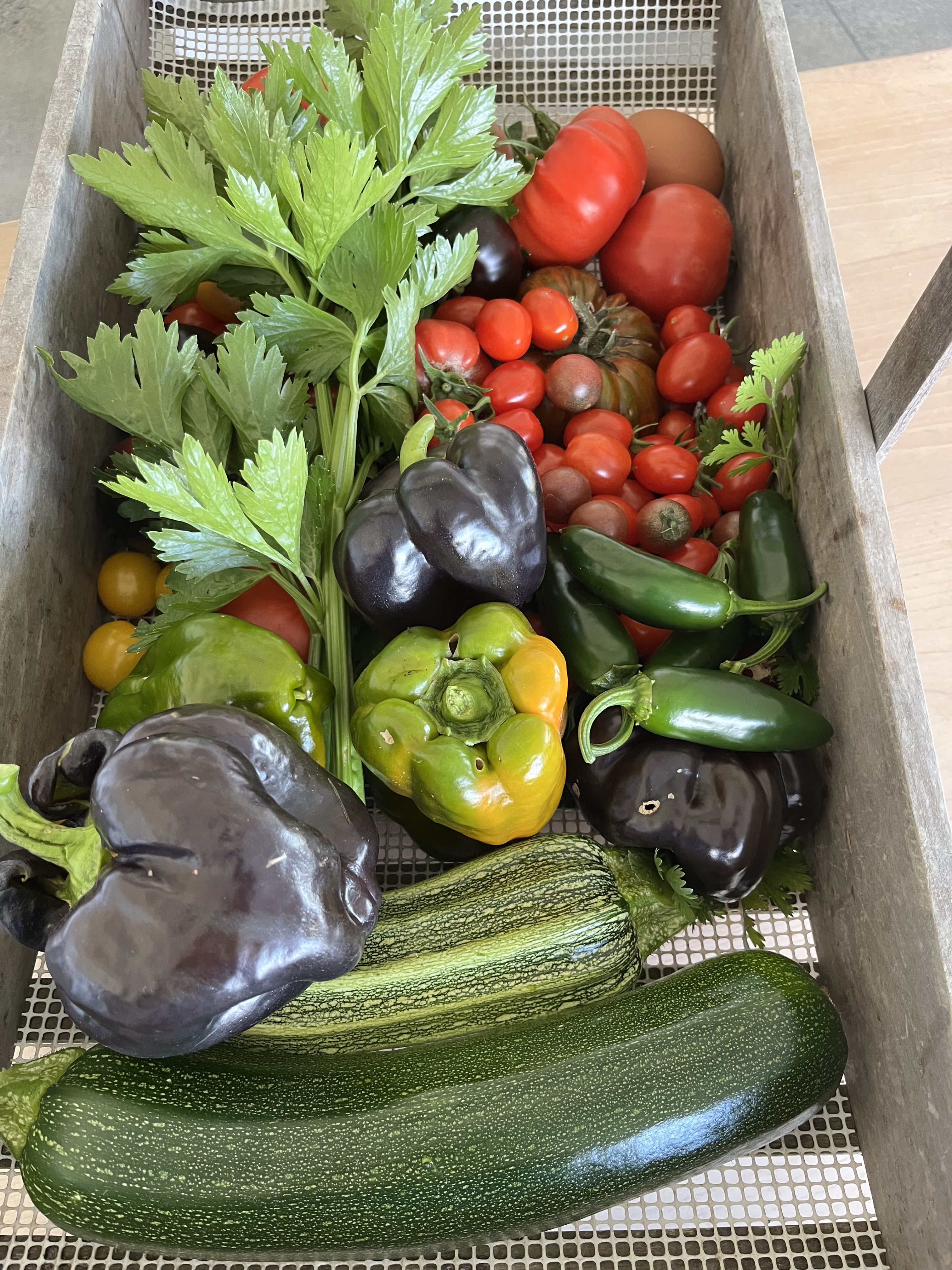
basket of vegetables

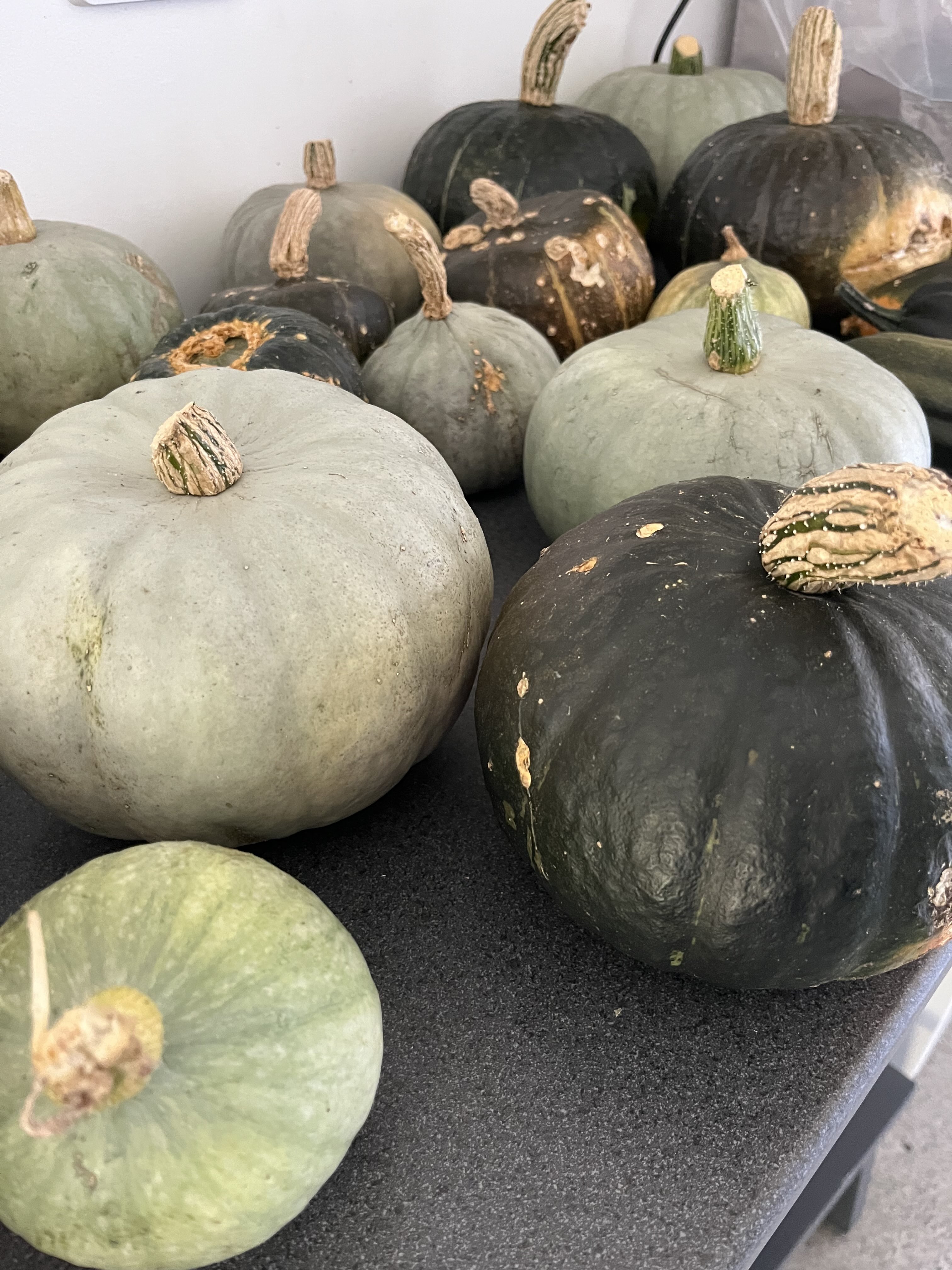
Despite the short days and cool weather, the harvest is really just getting going. I picked over 64 kg of pumpkins last weekend, and there are more to bring in. I’ve been harvesting dry beans for weeks, and will continue for another few weeks as they mature on the plants. Most haven’t been weighed in yet, because they’re still drying, but I’ve recorded over 4 kg so far, and I estimate my final total will be around 10 kg.

Sweet corn is at its peak at the moment, and one of these days soon, I’ll be picking and freezing a whole lot, because we can’t keep up with it, despite having corn on the cob pretty much every day for dinner (it’s a rough life…).

The popcorn still has a few weeks of maturing on the plant before it will be ready to harvest, and there are still two apple trees and a pear awaiting harvest.

Meanwhile, the summer crops continue to trickle in at a pace to keep us feasting.

In total so far, since the winter solstice, the garden has given us over 526 kilograms of fruit and vegetables and 490 eggs. 

Having not bought vegetables in about 20 years, I was curious about the monetary value of our garden, so I checked the prices of a few of the currently in-season vegetables at the grocery store. I was, quite frankly, shocked at how expensive fresh vegetables have become.

Some quick calculations …

Our garden has (so far) produced this year:

  • $388 worth of zucchini
  • $348 worth of tomatoes
  • $379 worth of potatoes
  • $30 worth of onions
  • $235 worth of pumpkin
  • $60 worth of chilli peppers
  • $192 worth of green beans
  • $287 worth of garlic
  • $47 worth of carrots
pumpkins

And most of these calculations are based on the price of conventionally grown (not organic) vegetables, because organic options weren’t available at the store.

Just that short list of vegetables adds up to over $2000, and it doesn’t include any of the expensive berry fruits we produce. And, of course, it doesn’t take into account that we grow things that you simply can’t buy in the grocery store—delicious, but non-commercial crops like ugniberries and quince, heirloom tomatoes that can’t survive shipping, colourful carrot varieties. Add to that the fact that our vegetables have been off the plant for minutes when we cook them, versus days or weeks for the sad specimens in the grocery store, and it is clear that the value of our garden can’t be measured by an instrument as blunt as price. Still, it’s good to know that the hundreds of dollars I spend each year on seeds, pea straw, and other garden supplies are more than paid back in food.

Just three months to go to complete our garden year. The tally continues as delicious fruit and vegetables roll in!

Happy autumn (or spring, if you’re in the northern hemisphere)!
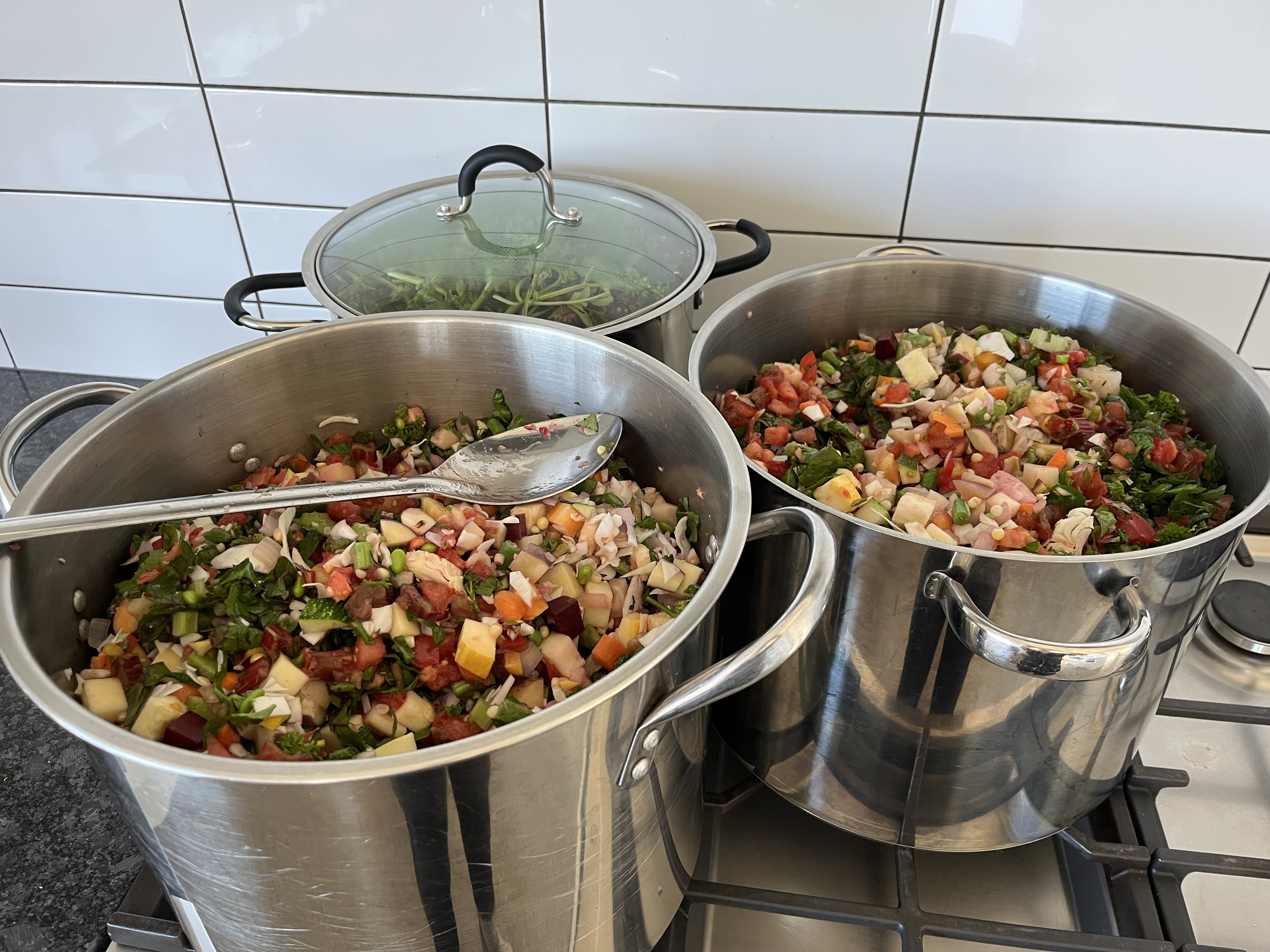
Summer Soup 2026

Last Saturday was Summer Soup Day—the day I make vegetable soup to last through the winter. As usual, I started just after breakfast, around 7 am. Picking and chopping vegetables, with my husband’s help, took until nearly lunchtime.

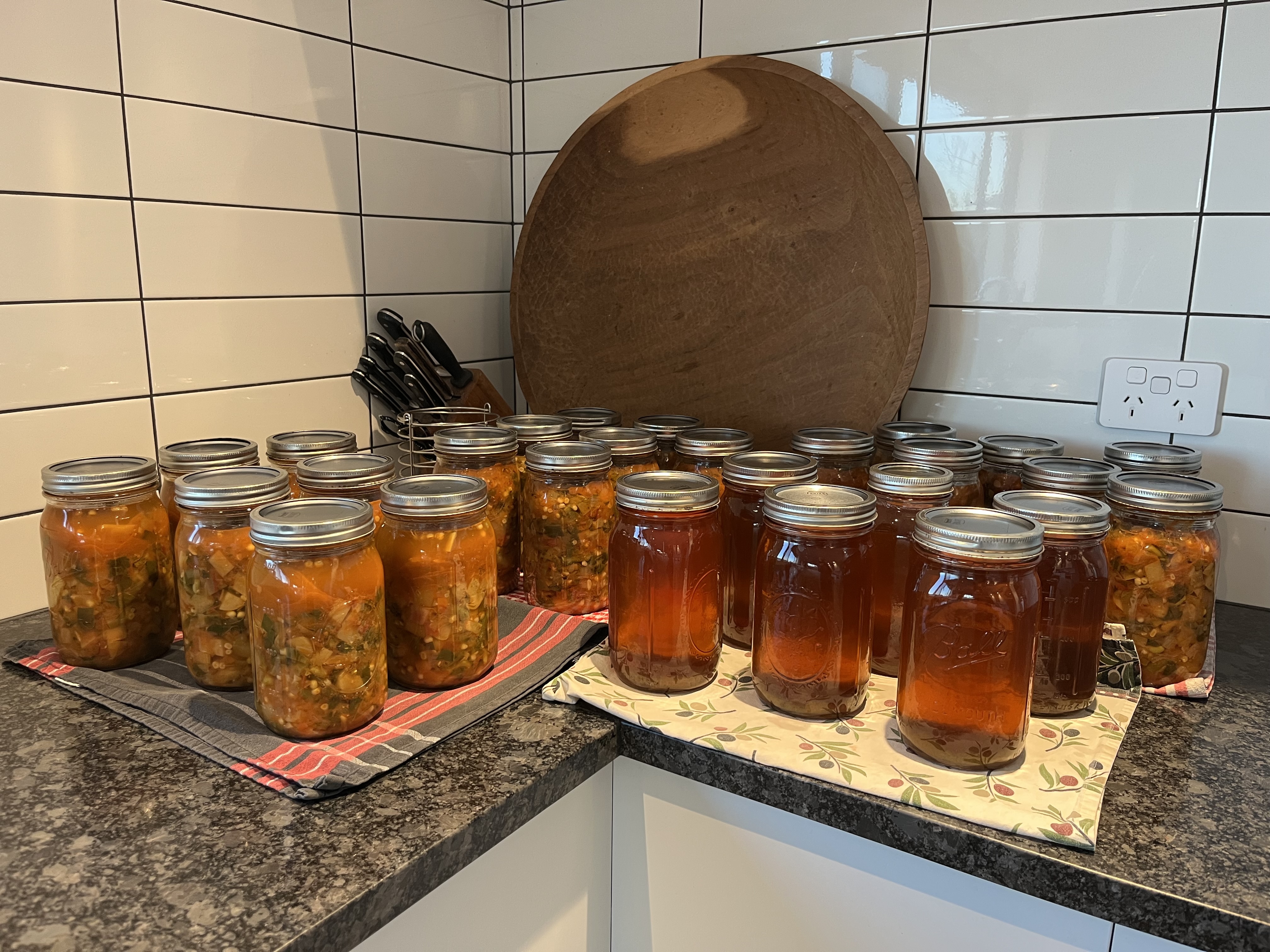
We filled both of our largest stock pots (16-litres and 18-litres) with soup, and our 12-litre pot full of vegetable offcuts for stock. Just getting all that soup to a boil took nearly an hour, and then it had to be processed in the canner. It was a long day in the kitchen.

A long time to contemplate soup.

We’ve been making summer soup for close to twenty years, now. Each year it is slightly different. Each year reflects the summer’s weather and our garden wins and fails for the year. It truly is an encapsulation of the summer. 

This year, the summer soup was full of beautiful carrots—long and straight, including some fabulous purple carrots. The soup is a record of my successful raised carrot bed born of my frustration at previous carrot crop failures. 

This year’s soup contains blazing hot jalapeño from a plant a friend gave me, because my jalapeño plants (a variety called Jalapeño Early, which is milder) were devoured by slugs as seedlings.

This year, the summer soup is devoid of sweet peppers, reflecting the cool, wet weather that has delayed ripening and rotted peppers on the plants.

This year’s soup is rich in green beans, which are often long over by the time I make soup. Planting only runner beans this year, instead of mostly dwarf varieties, gave me a longer season.

This year, there’s less sweet corn in the summer soup than usual, the result of abysmal germination in my first sweet corn planting.

Despite the cool, wet weather, germination woes, and devouring slugs which have affected this year’s soup, it is delicious, as it is every year. It is a slice of summer’s bounty, bottled up to remind us of sunshine and warmth on days when both are scarce.

The tally at the end of the day was 25 litres of soup, and 6 litres of vegetable stock (plus the two dozen cupcakes I made while waiting for the jars to run through the canner). I pulled the final jars out of the canner at 8 pm. 

A long day, but worth every moment.

February in the Garden

We’ve had an overabundance of rain this summer, and not nearly enough heat and sunshine for many of the summer vegetables. Slugs and slaters are running rampant, and fungal pathogens are making an early appearance. 

Still, it takes more than too much rain to suppress the exuberance of late summer. The dahlias are blooming, the sweet corn and tomatoes are ripening, and the pears and apples are heavy on the trees. I picked over 40 kilograms of potatoes on Sunday, and we’ve been freezing tons of pasta sauce. It is a time of abundance, despite the summer’s setbacks.

So, I invite you to enjoy my late-summer garden with me on one of our few beautiful sunny days. 

Cake Season 2026–Cake #1

I can’t really call cake season crazy anymore. There are no children at home demanding quirky cakes in the shape of peripatus, octopi, hobbit holes, or the city of Wellington (all cakes I have, in fact made).

But I can still pull out the stops on the birthday cakes, and to be fair, the ‘adult’ cakes taste better than the kid cakes.

This year’s first birthday cake was a 4-layer lemon cake filled with a cornstarch-thickened blackcurrant jam and iced with mascarpone frosting. Fresh berries on top and a bit of blackcurrant-coloured frosting swiped on the sides of the cake were the only decorations.

For looks, I’d give it a 4. Pretty average, though it did look nice sliced on the plate. For flavour, it gets a 9—a good combination of tangy and sweet. 

This was the first time I’ve worked with mascarpone, and I have to say I expected more from it. Nothing wrong with it—it was easy to work with and made for a very nice, fluffy, not too sweet frosting. But flavour-wise, I prefer the bolder cream cheese frostings.

But that’s okay. This cake, with its generous blackcurrant filling, is deliciously bold, and there is absolutely nothing wrong with the mascarpone icing.

If you want to make your own, I baked my lemon cake in three 15-cm cake tins (they took about 45 minutes to bake, as opposed to the 30 minutes in the recipe). After baking, I sliced two of the cakes in half horizontally into two layers each. The third cake I froze for later.) 

The filling is the blackcurrant jam from my blackcurrant twists recipe—super simple and quick to make. I made it the day before and refrigerated it so it was nice and firm.

The mascarpone frosting recipe is from Of Batter and Dough—I used a full 500g package of mascarpone, eyeballed 400 ml of a 500 ml bottle of cream, and used the smaller quantity of sugar called for in the recipe.

For once, I also cut my layers flat, piped my icing on, and worked with a cold cake. This helped make the thickly-filled layers stack solidly.

And though I was a bit disappointed by the final look, the taste makes it definitely worth doing again.

Garden Tally Half-year Check-in

We’re nearly at the summer solstice, so I thought it was time to do a check-in on the garden tally project I mentioned back at the winter solstice.

Since 21 June, we’ve been keeping a record of all the food that comes out of the garden. Whenever we bring something into the kitchen, we record it in a little notebook I’ve placed there for the purpose. The months of June, July and August include lots of days when we brought in nothing but eggs. No surprise, the dead of winter is a slow time in the vegetable garden. 

That’s not to say we weren’t eating from the garden. All winter we enjoyed the stored up bounty from last summer—tomato sauces, pickles, jams, chutneys, pesto, pumpkins, frozen corn and peas … There may have been little fresh coming in, but we didn’t lack for delicious vegetables and fruits.

Since September, the incoming volume from the garden has grown rapidly, and some of the half-year numbers are already staggering, despite the fact that the early onset of summer heat wreaked havoc on the spring crops.

If you ever wondered what 6.6kg of gooseberries looked like …

We’ve harvested over 56 kilograms of vegetables, 40 kilograms of fruit, and 335 eggs since the winter solstice.

Those 56 kg of vegetables only covered about half of our theoretical daily need, but that was the ‘lean’ season, when most of what we were eating was stored food from the previous season. Even as a vegetarian, I didn’t feel any lack of vegetables over winter.

There were also some stand-out individual harvests.

The final sweet pepper from last year’s crop was harvested on 2 August! For those of you in the northern hemisphere, that’s like harvesting peppers in early January. The new greenhouse is truly amazing for extending our growing season.

And it not only extends the later crops, it also gives them an early start. This year, I was disappointed, because the zucchini I planted early for the greenhouse never germinated. So the plant I stuck into the greenhouse was sown at the same time as my outdoor zucchini. Despite this, we harvested the first greenhouse zucchini on 13 December, well before my ‘zucchini by Christmas’ goal.

No matter how small, the first tomato is the best.

Oddly, however, the first ripe tomatoes have come from the outdoor tomato plants. These plants are currently less than half the size of the plants in the greenhouses, and honestly look like they’re only barely hanging on. Yet the Gold Nugget cherry tomatoes are already ripening out there.

All these stats make me eager to see what the second half of the growing year has in store. I was blown away by how much we’ve harvested during the leaner half of the year, but the real harvest has yet to begin.

I hope you all have a lovely solstice full of family, friends, and good food. 

Pickling onions, harvested in December, but we’ll eat most of them next winter.

Bountiful Berries–a Summer Celebration

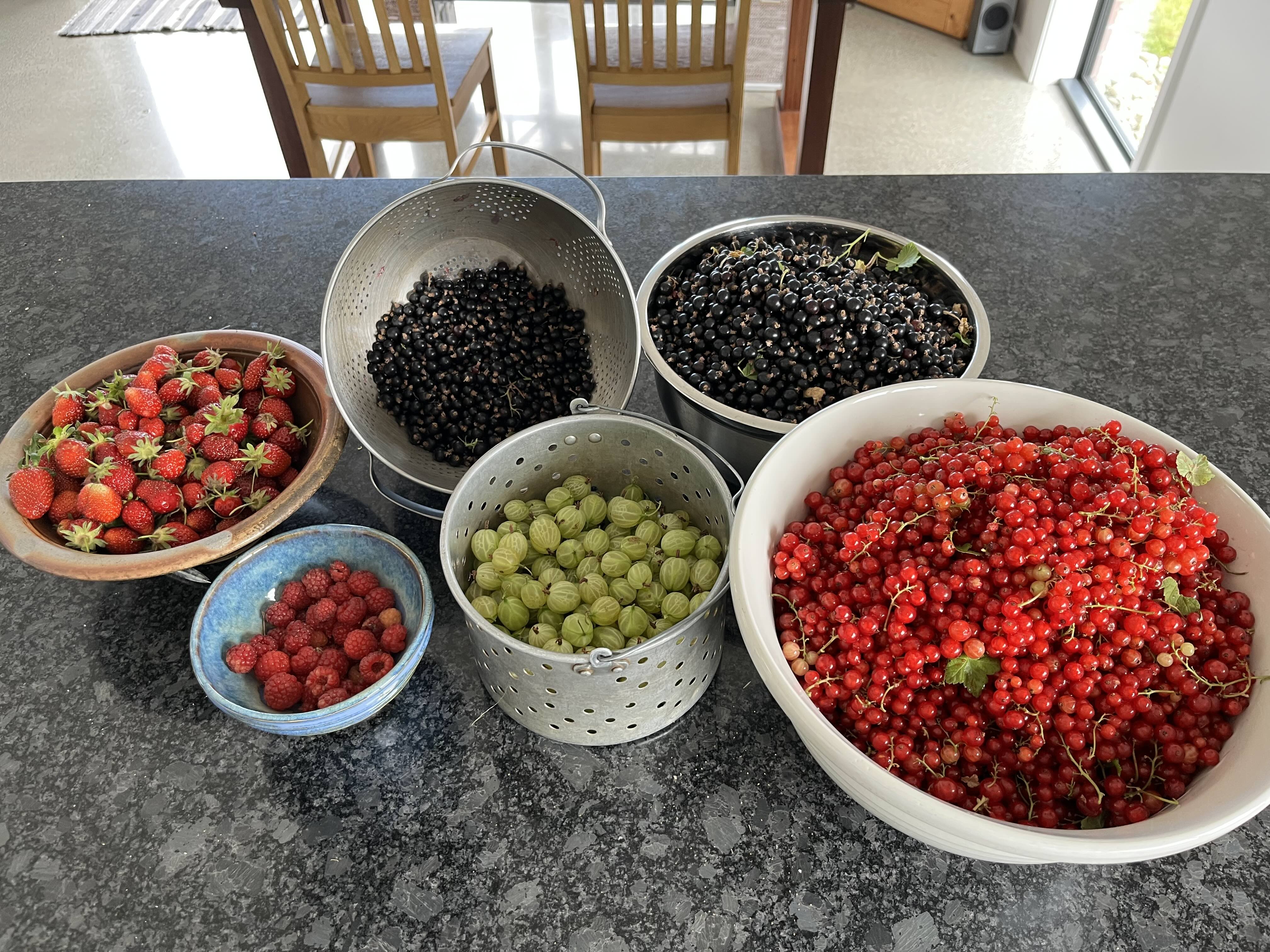
In the past two weeks, we have picked and processed (or eaten) 26.6 kg of fruit. Mostly strawberries, raspberries, black currants, red currants and gooseberries, but also a few cherries and boysenberries.

I have run out of half-pint sized jam jars, which is fine, because when you’re making jam with over 6 kg of fruit, you really want to put it in larger jars for the sake of your own sanity. The freezer, too, is beginning to fill with fruit, some of which will be taken out through the summer to combine with later crops in chutneys.

Still, the fruit keeps coming. Honestly, you can hardly tell I’ve picked currants at all. The next two weeks will likely see me pick at least another 20 kg of fruit.

And then it will be largely over. Christmas usually marks the end of the insane early summer harvest. Heading into the new year, the blueberries will begin to ripen, and raspberries, strawberries and boysenberries will continue to come in. But the obscene overabundance of berries will be over for the year. 

Although it is exhausting, there’s something magical about the December berry rush. Eating your way through the garden, having fresh berries on your breakfast cereal every morning, cramming your lunch box with fruit. Making trifle and fresh fruit ice creams. And the days are long—you can fit in a lot of picking and processing of fruit. It’s not unusual for me to be finishing a batch of jam at 10 pm. After all, it’s still light out, surely there’s time to get it done today. Never mind the clock, or the fact that it’s light before 5 am, and I’ll be springing out of bed at first light to pick more fruit before the day heats up.

Can this much work be a celebration? It feels like it. I weed, water, mulch, fertilise and prune all year, and then for a month the berries pour out their thanks. The work to gather it up is full of joy. By the end of the month, I’ve stored berries for the year. In the dark days of June, I’ll be able to make black currant tarts and enjoy the sparkling taste of the summer solstice. 

Homemade Potting Mix

I’ve been frustrated with commercial potting and seed raising mixes in recent years. Not only are they expensive, but my vegetable seedlings languish in them, if they germinate at all.

The culprit is most likely clopyralid herbicide residues in the mixes. Even ‘organic’ compost may have traces of the herbicide in it, because the chemical doesn’t break down easily, and can be found even in manure from animals that have eaten plants sprayed by it.

So this year I decided to try making my own potting mix. The results have been encouraging.

My biggest hurdle to making good potting mix is ridding my compost of weeds. I don’t do hot composting. Though some of my pile will get to the temperature necessary to kill weed seeds, not all of it does. Fortunately, I have an effective way of sterilising compost—the bread oven.

This spring, every time we’ve fired up the bread oven, I’ve used the residual heat, after all the baking is done, to sterilise compost. 

I put moist, sieved compost into a restaurant steam tray (lidded) and/or a stock pot (lidded) and put it in the hot oven until the temperature in the centre of the compost reaches 82℃. This takes a couple of hours, as the oven is usually only around 150℃ by the end of baking. 

I mix my sterilised compost with coarse landscaping sand in a 2:1 ratio, and voila—my own potting and seed raising mix!

Sterilised soil is prone to fungal outbreaks, because there are no other microorganisms to keep the fungi in check, so when I use my mix, the first watering I give it is a slurry of soil from the garden. This inoculates the mix with the healthy mix of microbes from the garden and avoids excessive fungal growth.

And how did my mix do, compared to commercial mix? Spectacularly well! 

Because I didn’t decide to make my own mix until I actually needed it, some of my seeds were planted in commercial ‘organic’ mixes. Many of these seeds failed to germinate this year. Those that did germinate then sat without growing at all until I transferred them to my own mix.

Seeds planted in my own mix germinated well and grew vigorously.

I will definitely be making my own potting mix from now on.

The Carrot Conundrum

I love carrots. I love them cooked into everything from pasta sauce to burgers, and I love them raw in my lunch box. As a snack to get me through the day, they are unparalleled—crunchy, juicy and sweet, but not so sweet that they give me a sugar crash. And homegrown carrots are a million times more flavourful than commercial carrots, so growing good carrots is important to me.

Unfortunately, I rarely have luck with my carrots. Last year, I planted three times and got, maybe six carrots. This year, after my first planting failed entirely, and my second mostly failed, I decided to get serious about carrots. 

First, I evaluated why my carrots so often fail. It’s not just one problem that nails them. First, I probably plant my carrots a little too early. Not that they won’t grow at the cooler soil temperatures of early spring, but they take longer to germinate, leaving the seeds at risk of my other two problems: pests (mostly slugs and slaters) which eat the seeds and freshly germinated seedlings, and drying out.

Finally, even once my carrots germinate, they struggle with the heavy clay soil of my garden. If I lighten the soil by adding lots of compost, the slugs and slaters just eat the carrots before they can establish.

So, to try to address all these issues, I started by asking my husband to build me a raised bed. Into the bed we poured a commercial garden mix (half soil, half compost), combined with a sack of garden sand.

I watered the bed well before planting. Then I made my furrows deeper than necessary, so that even after covering the seed, the rows were lower than the surrounding soil. My hope was that the rows would stay moist longer after watering or rain if they were furrowed. 

I watered well after planting, then generously sprinkled the bed with slug bait (I use Quash (iron EDTA), which is also very effective against slaters, but is safe for most everything else). Then I mulched between the rows with grass clippings, and covered the whole bed with feed sacks laid right on the surface.

With the feed sacks on the surface, I didn’t need to water daily, but I watered every other day (with extra waterings on hot days).

Ten days later, I have excellent germination on my carrots!

Was my raised bed necessary? Maybe not, but by making the bed, I focused my effort on a smaller area than I usually plant in carrots. It gave me an excuse to work really hard in that small area to make it work.

Will it work again next year? I’ve had bumper carrot crops in the past, so I know that success one year doesn’t necessarily mean success every year. But I’m hopeful that I’ve hit on a technique that works consistently for me. Only time will tell. 

In the meantime, I’m doing my best to keep my newly sprouted carrot seedlings moist and free of pests. I can taste the carrots already…

Gardening and Community

blooming daffodils
Blooming daffodils cover a multitude of sins (aka weeds) in spring.

The local veggie gardening group had our first Monday evening gathering for the season last night. And what a lovely gathering it was!

I hosted, which is always a bit nerve-wracking. You don’t want the place to look like it’s been abandoned or neglected, and in early spring, weeds are often more prominent than crops. And some of the group members have absolutely stunning gardens and are way better than I am at growing food. 

But we all have weeds. And we all have different challenges in our gardens and in our lives. And everyone comes in a spirit of community. Once people begin piling out of their cars and strolling the garden, any nervousness is forgotten as we all share our successes and failures so far this season, and catch up with each other’s lives outside the garden.

Conversations ebb and flow as the group wanders, breaking into subgroups around particular plants, garden structures, pest outbreaks, or other items of interest. 

Because we’re not quite on daylight savings time yet, we ended our garden stroll as daylight faded. But like any good gathering, we weren’t done yet—it was time for kai and a cuppa.

artichoke bud
Artichokes are on their way!

Last night, the party broke down on gender lines, as it often does (for no real reason … we laugh at ourselves all the time for this tendency to segregate)—the guys lit the brazier outside and commandeered the cheese and crackers to accompany some home brew. Indoors, the ladies had tea and cookies. 

Without the garden in front of us, the conversation diversified—and we’re such a diverse group outside our interest in growing plants, that you never know what might be under discussion on any given day. Crafts, books, digger operation, food, business interests, travel, rock collecting, climate change … you name it, we’ve probably discussed it. Garden group conversations are always intriguing and full of laughter.

When our guests headed home for the evening, the fire was still burning merrily in the brazier. The night was unseasonably warm, and the sky was clear and washed with stars. For an hour, my husband and I ignored the dirty dishes and sat in the dark by the fire, sharing what we’d both learned from the gathering.

While we sat there, a few thoughts occurred to me:

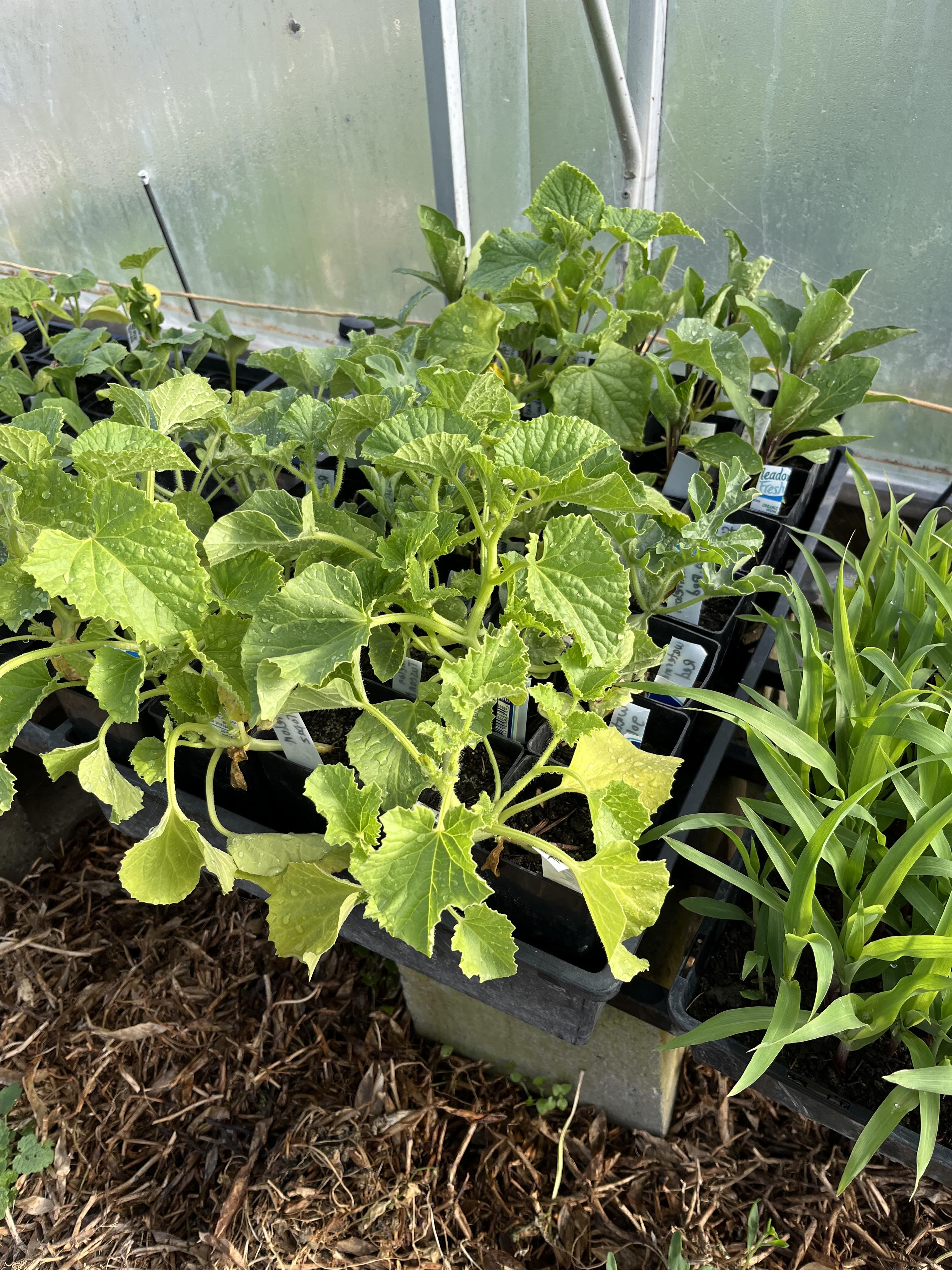
tomato seedlings
Tomato seedlings in the greenhouse.
  1. We don’t enjoy our garden enough. And by ‘enjoy’, I mean just sit or stroll and appreciate the beauty. Not that we don’t do this at all, but we could be doing it a whole lot more.
  2. We are absolutely blessed to be part of the local gardening community. I’m a total introvert, and being with groups of people where there are multiple non-stop conversations going on is exhausting for me. But I love this crowd of generous, community-focused people, and I look forward to each of our get togethers.
  3. Finding common ground with people can be as simple as sharing excess lemons or cuttings from your favourite herbs.

There is something humanising about gardening. The very act fosters community, brings people together. Reading the daily news, I can quickly begin to think the worst of the the entire human race. The garden group reminds me that there is beauty, not only in the garden, but in the ones who tend it.

Cardamom Pound Cake

I recently made an excellent cardamom pound cake. Half way through modifying a recipe from the book Sweet, I realised I’d already created a cardamom cake recipe, based on some other cake. But this one might actually be better. Rich, moist, and flavourful—what more can you ask for in a cake?

I now need to make both versions for side-to-side taste tests. Anyone want to join me for cake?

Here’s the new recipe so you can test them too.

110 ml milk
6 eggs
2 tsp vanilla
zest of 1 lemon
300 g all purpose flour
1 tsp baking powder
1/2 tsp salt
200 g caster sugar
1 1/2 tsp cardamom
250 g butter, very soft, cut in chunks
1 cup shredded coconut

Whisk together the milk, eggs, vanilla and lemon zest in a medium bowl.

Sift together the flour salt and baking powder in a large bowl. Add the sugar and cardamom. Add the butter and half the egg mixture and combine with an electric mixer until the dry ingredients are incorporated. Mix 1 minute more, then gradually add the remaining egg mixture. Stir in the coconut.

Spoon the batter into a greased 23 cm Bundt pan or 2 loaf pans. Bake 40-45 minutes at 195℃.

Cool in the pan for 10 minutes before turning out onto a wire rack.