Cafe Conversation

Café conversation

Hums

Over light jazz music

Nobody has

Ever

Actually

Listened to.


Espresso machine

Hisses and gurgles.

Trim flat white and

A chocolate latte!


Laptops

Mark the places

Where the

Officeless

Use the clamour

Of public space

To find quiet.


No One Cooks in a Novel

No one cooks in novel.

This isn’t strictly true, but in general, no one cooks, uses the toilet (except for in middle grade novels of a certain type…), washes the dishes, brushes their teeth, or cleans the house. These are ordinary, everyday activities—who wants to read about them?

__________________

Toby crept into the bathroom shortly after midnight. The house was dark and silent. But, wait, there was a dark form ahead of him. He flicked on the light. A bloodcurdling scream rent the air as he saw his sister on the toilet.

__________________

Carla was chopping onions…again. She didn’t even know what she was going to cook, yet, but she knew it would have onions. Chopping them gave her time to think, to plan. But she wasn’t planning dinner. When her husband came home from work and stepped up behind her to give her his standard peck on the top of the head greeting, she turned and plunged her knife into his chest.

__________________

Still waking up, Jason washed his face, then grabbed his toothbrush. He flicked open the toothpaste and squeezed, but what came out of the tube was not minty paste. Instead, it was foul and dark, and melted the toothbrush when it touched it.

__________________

OK, maybe it’s good our day-to-day lives aren’t worthy of a novel. Remember that the next time you think life is too boring.

Catching dinner when we can

Tomorrow is Anzac Day, and the stores will be closed.

This caused us some confusion today, because we all get Monday off, as Anzac Day has been “Mondayised”, so we assumed that stores would be closed only on Monday. We had planned to pick up the remaining materials for our big shed project tomorrow morning, so we could work on it over the long weekend.

Thankfully, Ian picked up the rental trailer this afternoon, so when, at 5.15 pm he realised he couldn’t pick up building materials in the morning, he was able to make the trek to town with the trailer before the store closed.

Meanwhile, I was doing my usual Friday afternoon routine, running our daughter to clarinet lessons, then two different band rehearsals.

All of us missed dinner. My daughter and I ate cheese sandwiches and carrots in the back of the car, and Ian and our son grabbed some crackers, and made egg sandwiches when they got home just before 8 pm. They were still eating when my daughter and I got home.

I know for some families, that’s a normal day, but we do our best to eat a proper dinner, together as a family every day. It’s unusual to have such a crazy un-meal, and it always makes the day seem incomplete, not to have that time all together as a family.

It’s good to have these days, though. They remind me of how blessed we are to be able to sit down together almost every day to share a meal and each other’s company.

Marcella Hazan

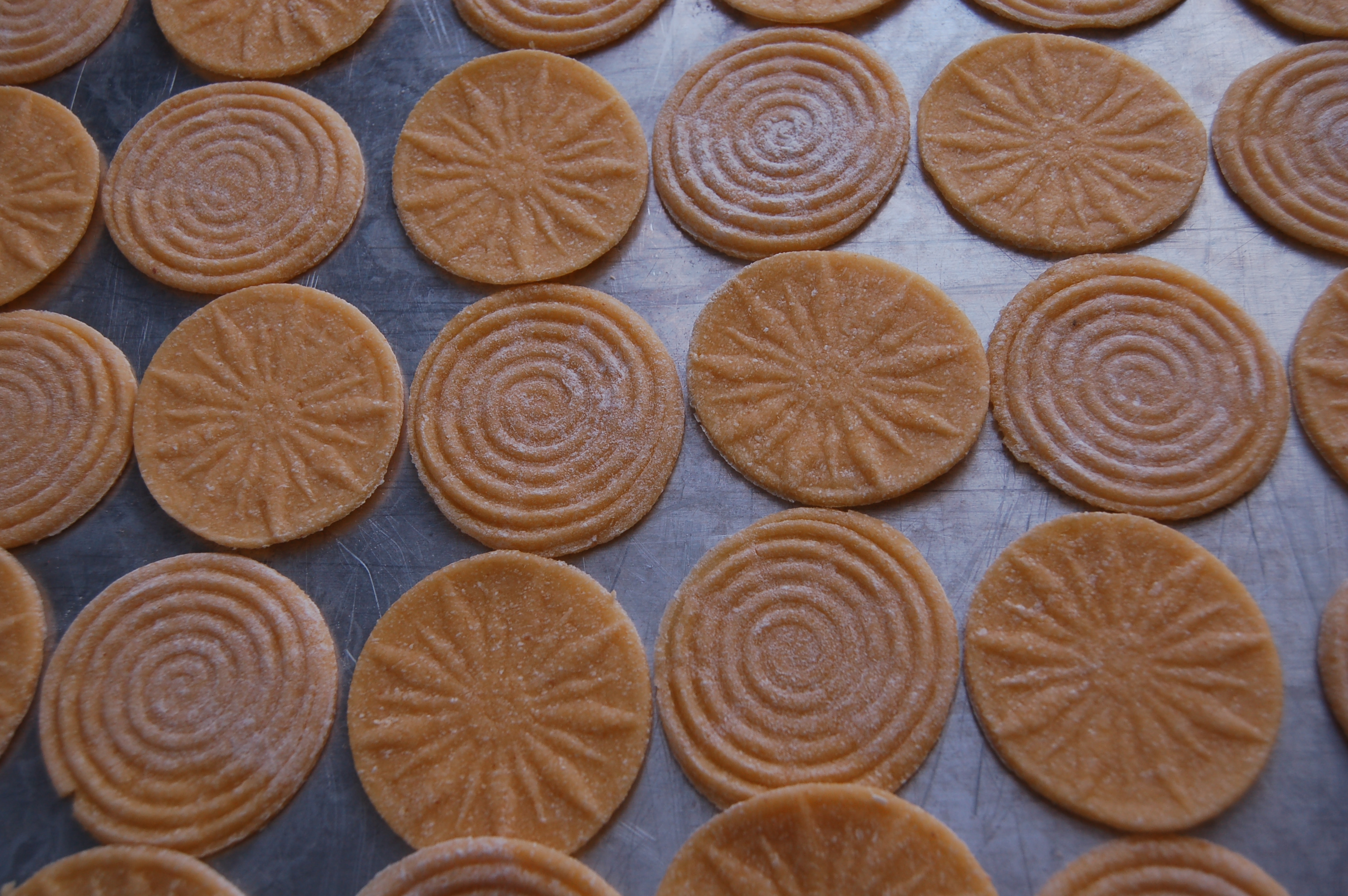
Corzetti made with Hazan's pasta recipe.

Corzetti made with Hazan’s pasta recipe.

Marcella Hazan was born on my birthday…or I suppose I was born on her birthday, as she was born 46 years before me. Our copy of her first book, The Classic Italian Cook Book, falls open to two pages—homemade pasta and risi e bisi (rice and peas). They form opposite ends of our cooking spectrum. Risi e bisi is the comfort food we go to when we come home late from work and school and don’t feel like cooking. It is delicious and filling, and oh so easy to make.

Homemade pasta, on the other hand, is what we pull out when we want an extra special meal–pumpkin stuffed ravioli, linguini with mounds of home grown oyster mushrooms in a creamy goat milk sauce, lasagne packed with the freshest vegetables from the garden.

I didn’t know much about Hazan until she died in 2013. Upon her death, the New York Times published a lovely obituary, painting her as the initially reluctant chef, who wasn’t terribly interested in food and learned to cook to please her husband. Apparently, she had to be cajoled into writing a cookbook. What a lovely picture of this icon of Italian cooking!

What speaks to me most about her cooking style are her insistence on intimacy with the ingredients and the cooking process, and the simplicity of many of the recipes. This was a woman who cooked for everyday, but who felt that every day should include good food. In The Classic Italian Cook Book she writes, “The finest accomplishments of the home cook are not reserved like the good silver and china for special occasions or for impressing guests, but are offered daily for the pleasure and happiness of the family group.” This is a woman I would have loved to meet.

Fresh vegetables, pasta rolled by hand, homemade stock—she could be quite opinionated and judgemental. In her risi e bisi recipe, she notes, “You may use frozen peas, if you must… but until you’ve made it with choice fresh peas your risi e bisi will be a tolerable but slightly blurred copy of the original.” At the same time, her recipes are written for real cooks. About Minestrone di Romagna, she writes, “It is not necessary to prepare all the vegetables ahead of time…while one vegetable is slowly cooking in oil and butter you can peel and cut another. I find this method more efficient and less tedious than preparing all the vegetables at one time”.

For Hazan, cooking and eating were both expressions of love:

“Italian cooking is the art of giving expression to the undisguised flavors of its ingredients.”

“The Italian art of eating is sustained by a life measured in nature’s rhythms, a life that falls in with the slow wheelings of the seasons, a life in which, until very recently, produce and fish reached the table not many hours after having been taken from the soil or the sea.”

“There probably has been no influence, not even religion, so effective in creating a rich family life, in maintaining a civilized link between the generations, as this daily sharing of a common joy. Eating in Italy is essentially a family art, practiced for and by the family.”

Thank you, Marcella, for everything.
Seasonally Adjusted Holidays

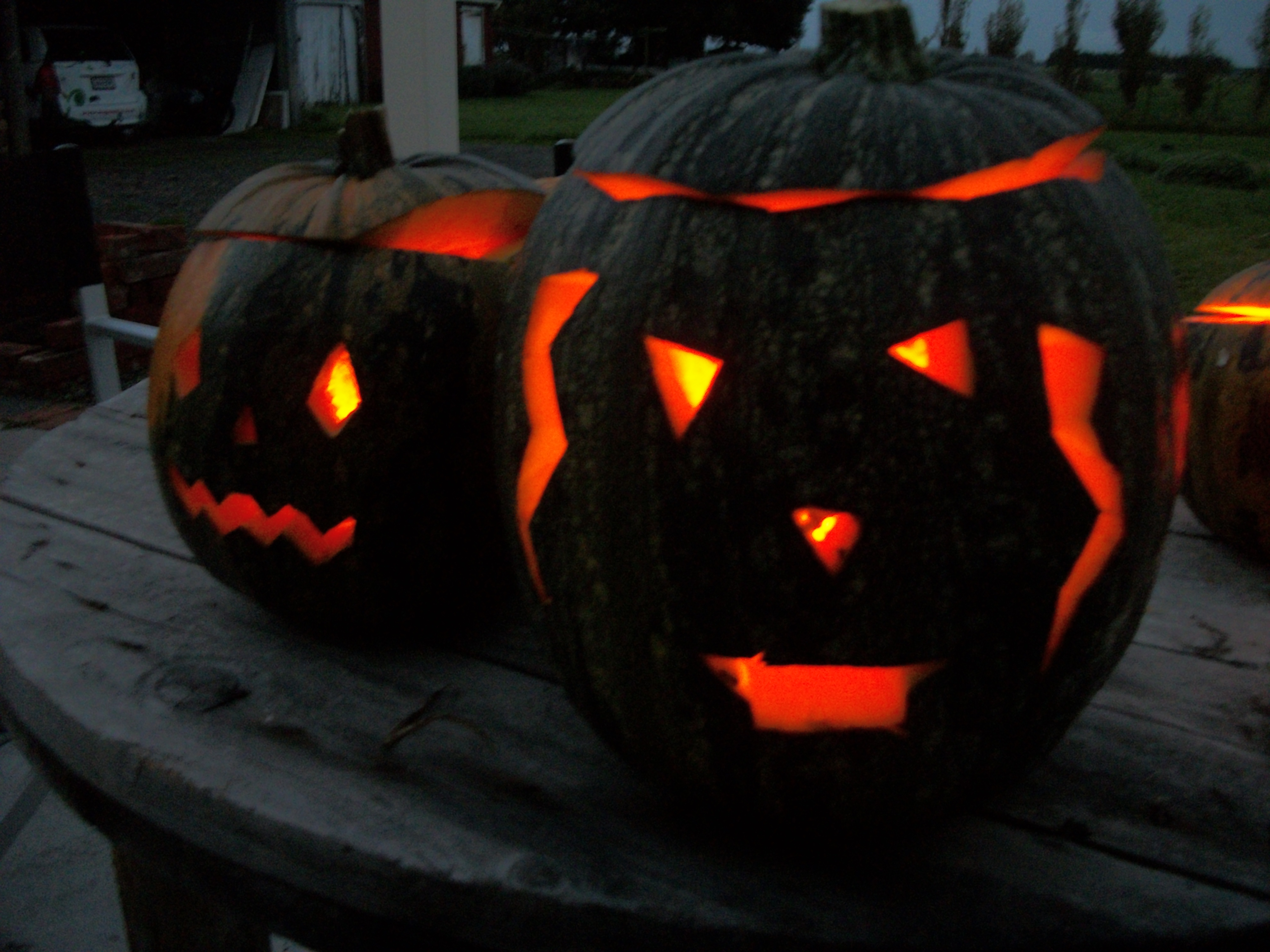
100_2185When life gives you pumpkins, make Jack-o-lanterns!

Halloween used to be one of my favourite holidays, and not because of the candy. Costumes, pumpkins, and the excuse to scare one another outdoors at night—what more could you ask?

Halloween here is a sad farce, and we do not observe it. It is fundamentally an autumnal celebration, and coming, as it does here, at the very beginning of summer is simply wrong. There are no pumpkins, there are no crisp brown leaves, and the sun doesn’t even set until after 8 pm.

Though we skip Halloween, when autumn does come around (long about Easter), we celebrate the lengthening night and cooler days with Jack-o-lanterns.

Naked seed pumpkins are great for carving—the flesh isn’t particularly good for eating, so I don’t feel so bad about throwing the pumpkins shells to the kids to carve after I’ve removed the seeds. (Uncarved pumpkin shells go to the goats, who don’t seem to mind the gritty, tasteless flesh.)

The finished Jack-o-lanterns sit on the picnic table outside the dining room window, where we can enjoy them during our increasingly dark evening meals.

Celebration breads

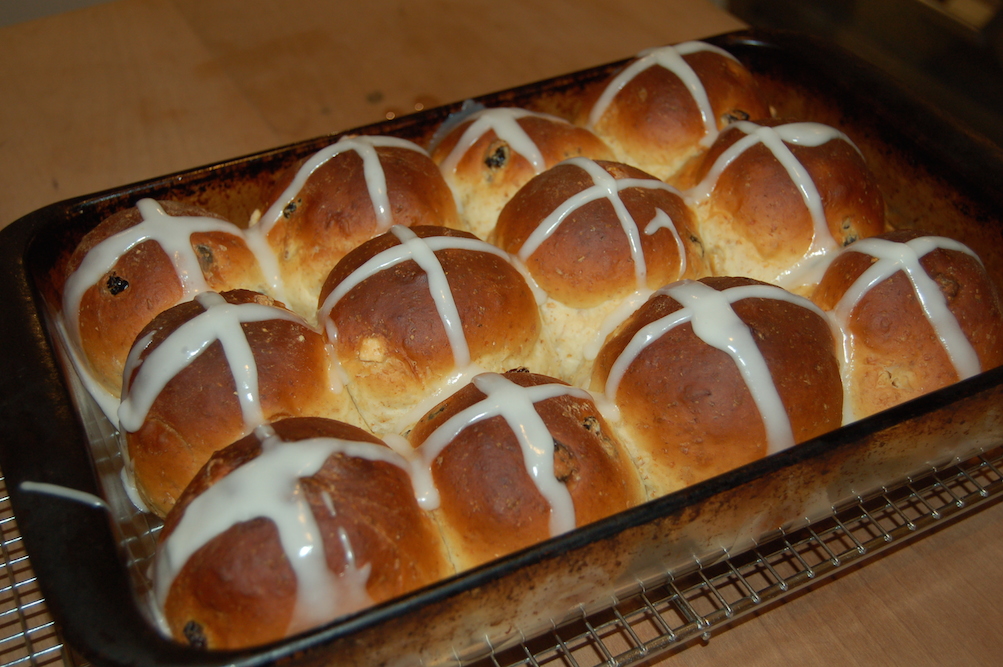
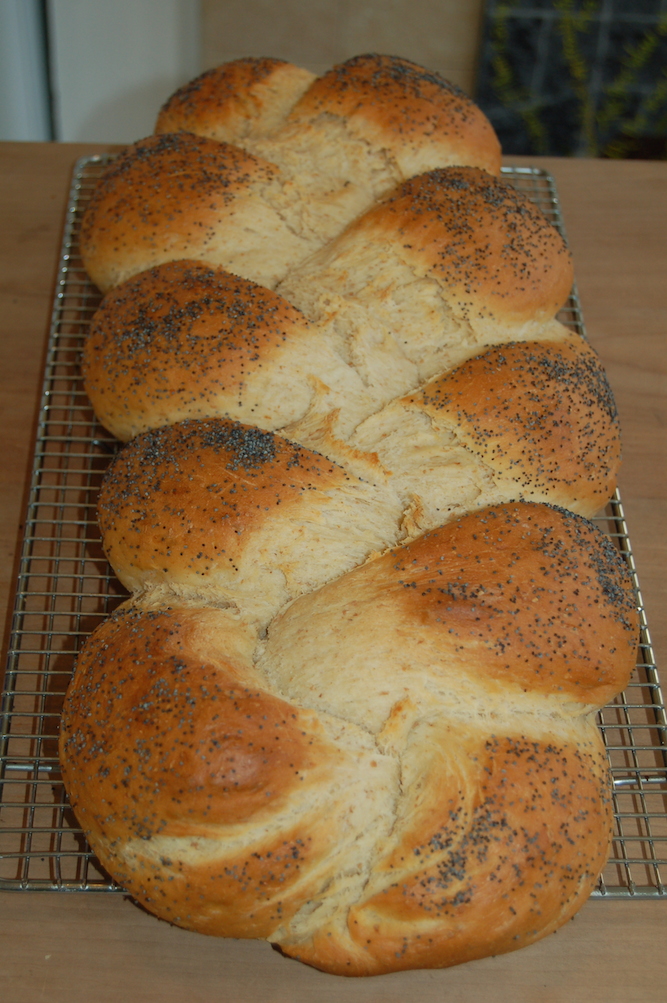
DSC_0007 copyI know it’s not fashionable to appreciate gluten these days, but our household thrives on bread. No holiday celebration is complete without at least one bread. Holidays are an excuse to bake something different, something extravagant. Today rated two special breads. I made hot cross buns for breakfast, and Ian made a challah the size of a toddler, which we enjoyed with home made goat cheddar for lunch.

DSC_0002 copyEnjoy your day, whether you are celebrating Easter, Passover, or just a beautiful day in April! May it be full of bread!

Farewell to Christmas

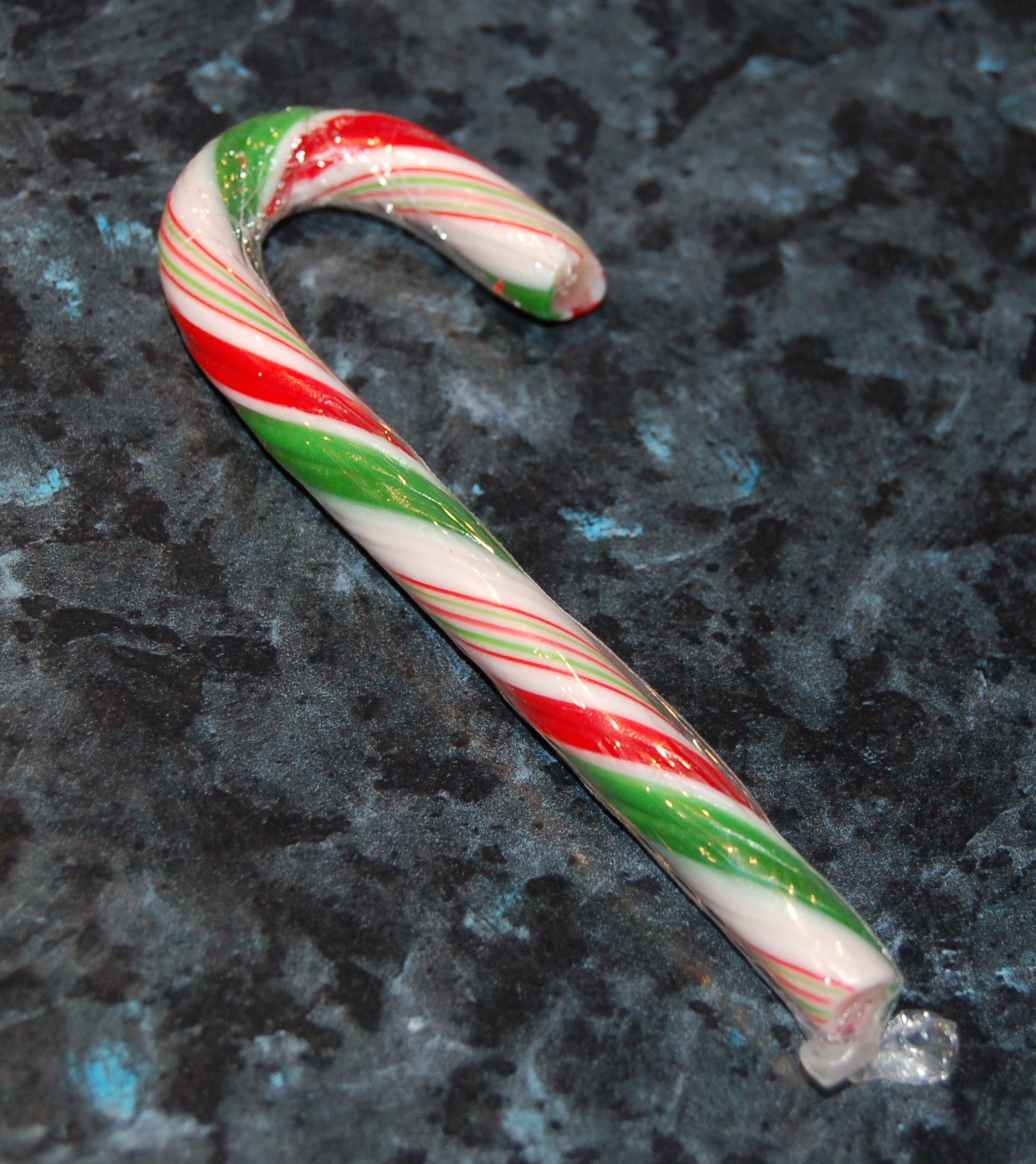
DSC_0004As I tidied the kitchen the other day, I noticed a candy cane hanging forlornly from the fruit basket. I thought it was time to toss it out, being nearly Easter.

It happens almost every year, the leftover candy canes. None of us really likes them, but Christmas isn’t Christmas without them. Candy canes in the stockings are like milk and cookies for Santa—you’ve got to do it, even though you know it’s silly (Santa really wants beer and chips, after all). I buy as few as possible, but the smallest box they come in contains six of them. That’s about six more than we really want to eat. The kids, being kids, manage to eat theirs eventually, though they are the last of the Christmas treats to go. The rest get hung on the tree for decoration, then tossed into a cupboard (or this year, hung on the edge of the fruit basket).

When I start thinking about Easter, I know it is time to ditch the candy canes. Time to make way for the confections of Easter.

Brought to you by the letter P and the colour Purple

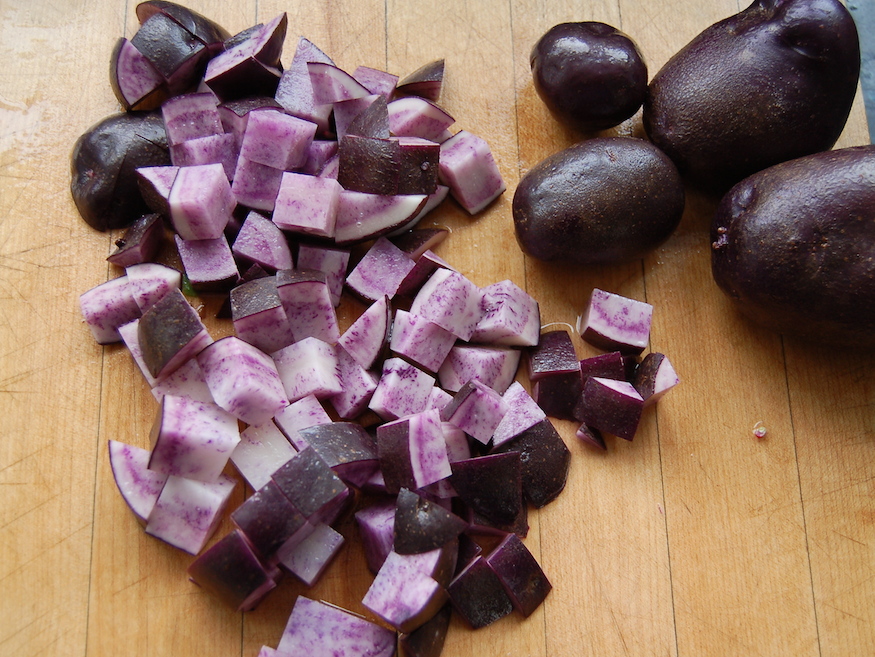
DSC_0004 copyPotatoes are one of my favourite foods. They go with just about everything. They can be baked, fried, boiled, steamed, and grilled. They can become a cool potato salad for a hot summer day, or a thick steaming soup for a cold winter night.

When we visited Bolivia and Peru years ago, I got to see and taste a wide range of potatoes I’d never experienced before. One of my most vivid memories is sitting in a boat travelling across lake Titicaca watching a group of local men pull out their lunches—handfuls of small, colourful potatoes that they ate like apples. Most of those potato varieties never make it out of South America, and our cuisine is poorer for it.

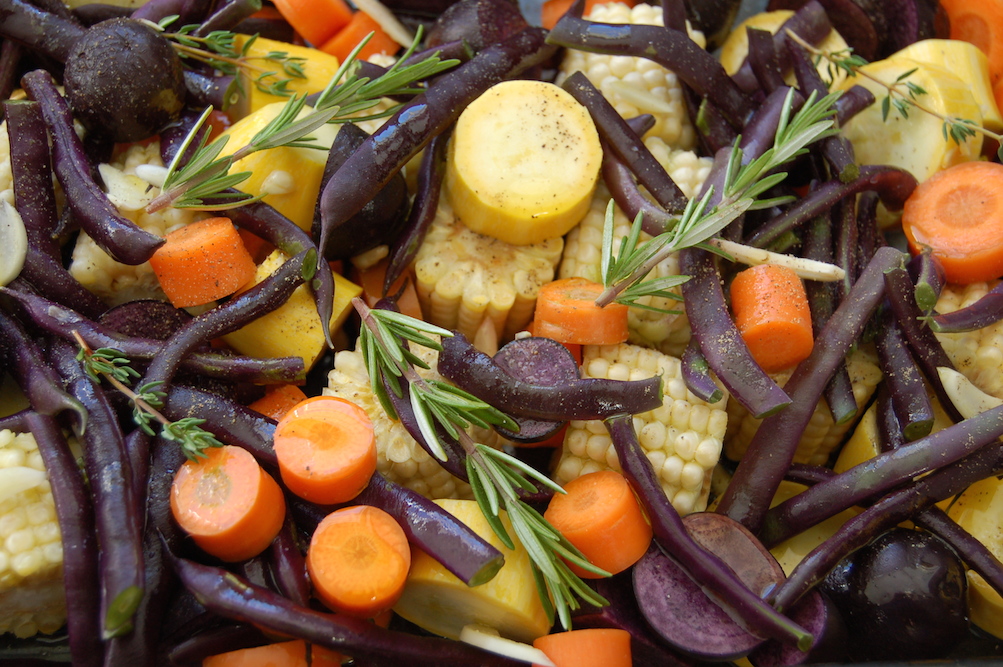
Roast veggies3sm

Purple potatoes (and purple beans, too) add a lovely colour contrast to other vegetables.

Supermarket potatoes are a rather uniform lot, but a greater variety can be had in seed potatoes. My all time favourite potato is Purple Heart. Even if it weren’t delicious (which it is), its purple colour would win me over. The colour remains during cooking, and adds a splash of whimsy to a plate. Purple mashed potatoes, anyone?

Soy: The Asian/Pennsylvania Dutch Cultural Conundrum

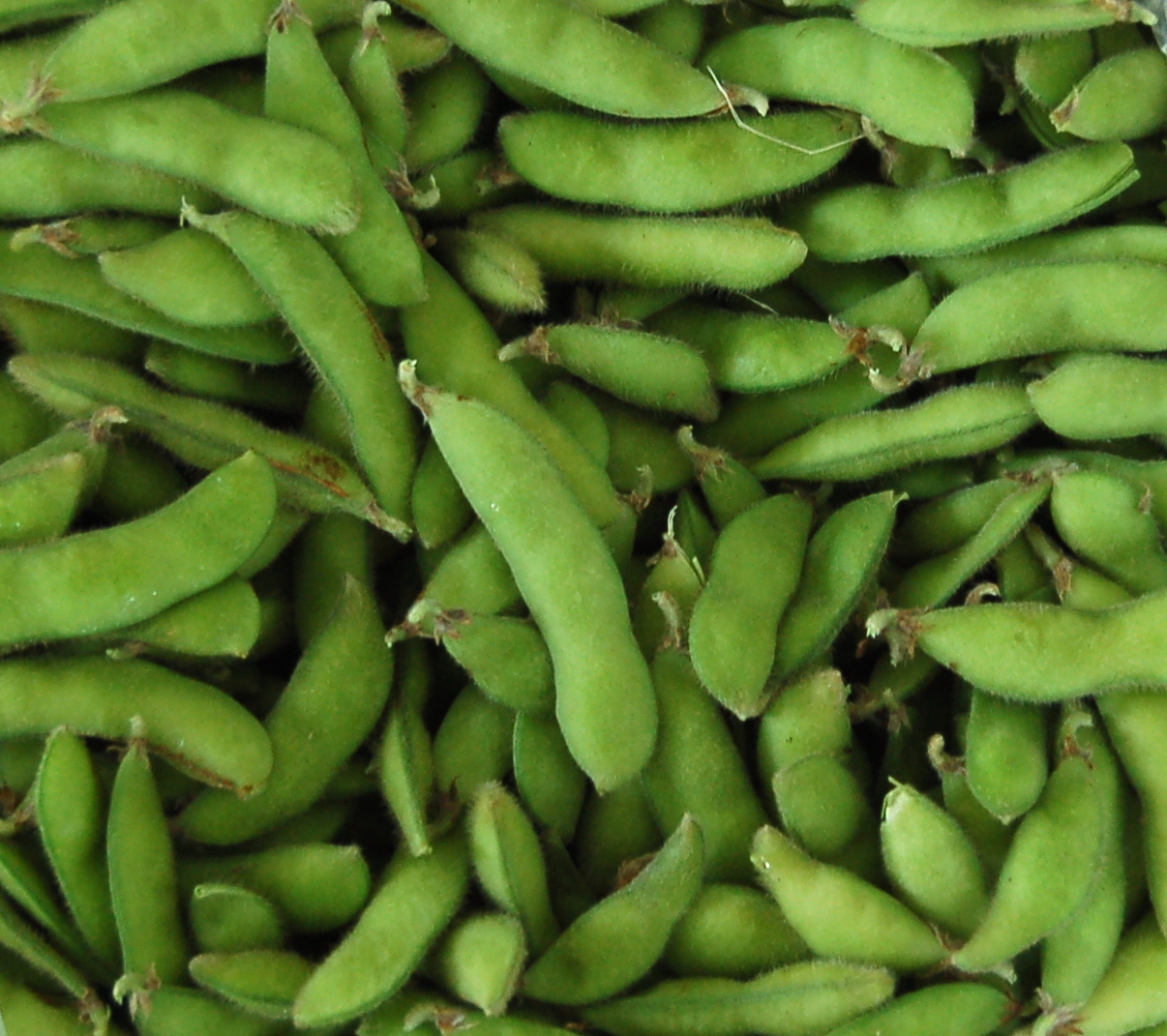
soycropI grew up thinking soy beans were an ordinary garden vegetable. Every year, my mother planted soy from seeds purchased at the tiny general store in Mastersonville. It wasn’t until I was 21 and finally living in a “real” house on my own (not in the university dormitories) that I realised the rest of America didn’t even know what soy beans were. My attempts to find fresh soy beans in 1990 in Ann Arbor, Michigan failed. In fact, the only soy product I could find were “soy nuts”—roasted, salted soy beans—at a health food store. They were stale and mealy, and so hard they nearly broke my teeth.

It seemed that no one outside of Lancaster, Pennsylvania ate fresh soy beans as a vegetable. Everyone thought I was nuts. I started asking my mother to send me a packet of seeds every spring, from the store in Mastersonville.

Many years later, I learned about Japanese edamame and recognised it as the fresh soy beans of my youth. Fresh soy beans have been eaten since at least the 1200s in China, Japan and other Asian countries, and are apparently popular bar food in Japan, served steamed and salted in the pod to be snacked on alongside your beer.

Soy beans arrived in the American Colonies in 1765, but were mostly used as a forage crop. When and why the people in south eastern Pennsylvania began to eat fresh soy is unclear. And why no one else in America did is even more unclear, since soy’s sweet, nutty flavour beats the socks off of other beans Americans commonly eat fresh (I’m thinking about those mealy lima beans…).

Soy beans as garden vegetable only arrived in New Zealand in the past 6 years or so. I was unable to get seeds when we first arrived, and when I first contacted an Asian seed supplier to enquire about them, I was told they were still building up their stock, and couldn’t sell them yet.

Even now, though I can get soy bean seeds, I have been unable to locate the appropriate bacterial inoculant for them, and they grow poorly here. Still, I grow them–my garden feels incomplete without them. However it came to be, I feel a cultural connection to soy beans—that Asian/Pennsylvania Dutch fusion food. Go figure.

Cultural Icons

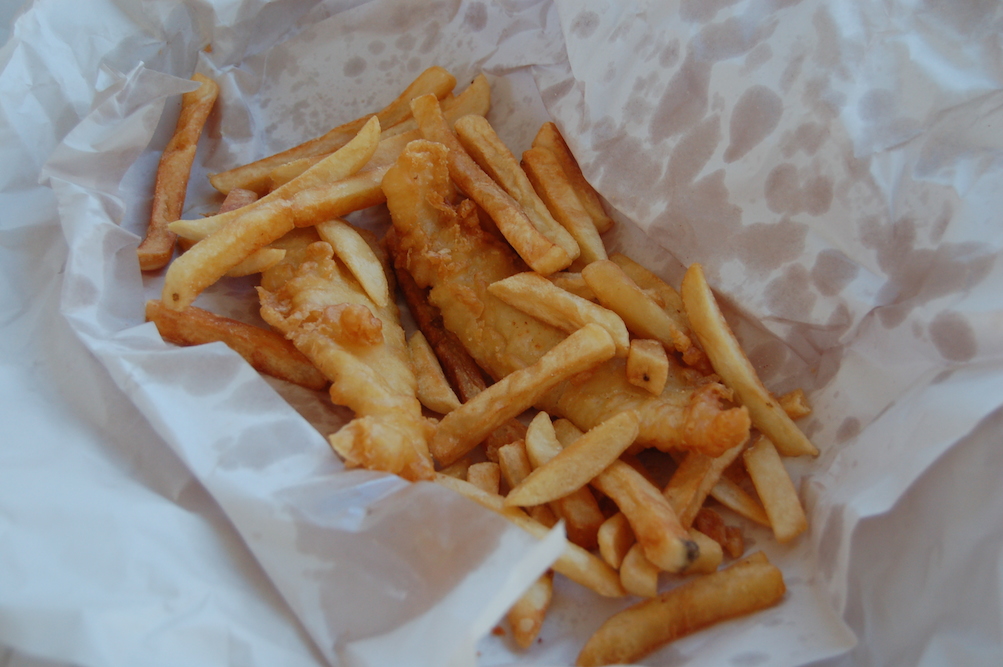
fishnchipssmWhat does it take to become a Kiwi? An appreciation for the uses of number 8 wire? The ability to pronounce Whangaparaoa without stumbling? Knowing the culturally acceptable way to pass a mob of sheep on the road? Understanding that a statement like “I wonder if you should move your car out of the way?” actually means “MOVE YOUR F#*&%^ CAR OUT OF THE WAY!” An ability to converse coherently about rugby?

All these things are certainly important. Equally important is an understanding of New Zealand food icons.

Food is central to cultural identity. Apple pie and hot dogs are quintessentially American, a Panamanian festival wouldn’t be complete without ojaldre, and Costa Ricans would lose their sense of self without black beans.

Wherever I’ve travelled, I’ve tried to experience the local, iconic foods so as to fully experience the culture. I try not to let my own dietary choices prevent me from these experiences, so among other things, I’ve eaten spicy chicken salteñas from a street vendor in Bolivia, and titi (muttonbird) traditionally caught and preserved by local Maori. These experiences haven’t always been positive—the spicy salteña tasted a lot worse coming back up an hour later in a public park—but they’ve always taught me something.

Modern Kiwi culture is culinarily represented by pavlova (a meringue topped with fresh fruit), kiwi fruit, and fish and chips. Determined that our kids not be culturally and socially handicapped by vegetarianism, we’ve made a point of occasionally picking up fish and chips at our local shop. We don’t do it often—maybe 3 times a year—so it’s a rare treat for the kids (as greasy, salty fried food probably should be), but it has worked. Though they still speak with an American accent, and have no interest in rugby, they can connect with their peers over the cultural icon of fish and chips. And I can think of no better way to fit in than around the dinner table.