Happy Matariki, (Maori New Year) to you all!

100_3340I love a good New Year celebration, but the January one has less meaning here than Matariki, which is seasonally appropriate, and a much needed celebration in the dark of winter. Matariki is celebrated on the new moon after the constellation Matariki (a.k.a. the Pleiades, Subaru, 7 Sisters) appears in the pre-dawn sky, after being absent from the night sky since April.

The modern celebration of Matariki only dates back to the early 2000s, and is a quirky blend of Maori traditions and European ideas. Kite and lantern making, food, song, and traditional crafts have all become part of the modern celebrations. Matariki is a time for looking back and honouring the past, and for looking forward with hope. It is a time to give thanks for the bounty of the harvest, and to begin to prepare for the coming planting.

So this Matariki, I will honour the spirit of my grandfather, who died late last year and taught me to pursue my dreams, even if it meant striking off the beaten path. I will look forward to the future, striving to make the coming year I find my place in my new career. I will celebrate the bounty of the past summer’s garden, bringing out jars of summer soup, peaches, and pumpkins for a weekend of glorious food. I will begin to prepare for next year’s garden, weeding the strawberries, and planting garlic in the cold, wet soil. I will celebrate light amidst the dark of winter, with candles and toasted marshmallows over a campfire.

May you find wonderful things to celebrate this weekend, too, whether you are celebrating Matariki, Winter Solstice, Summer Solstice, or just another day.
A Culinary Adventure

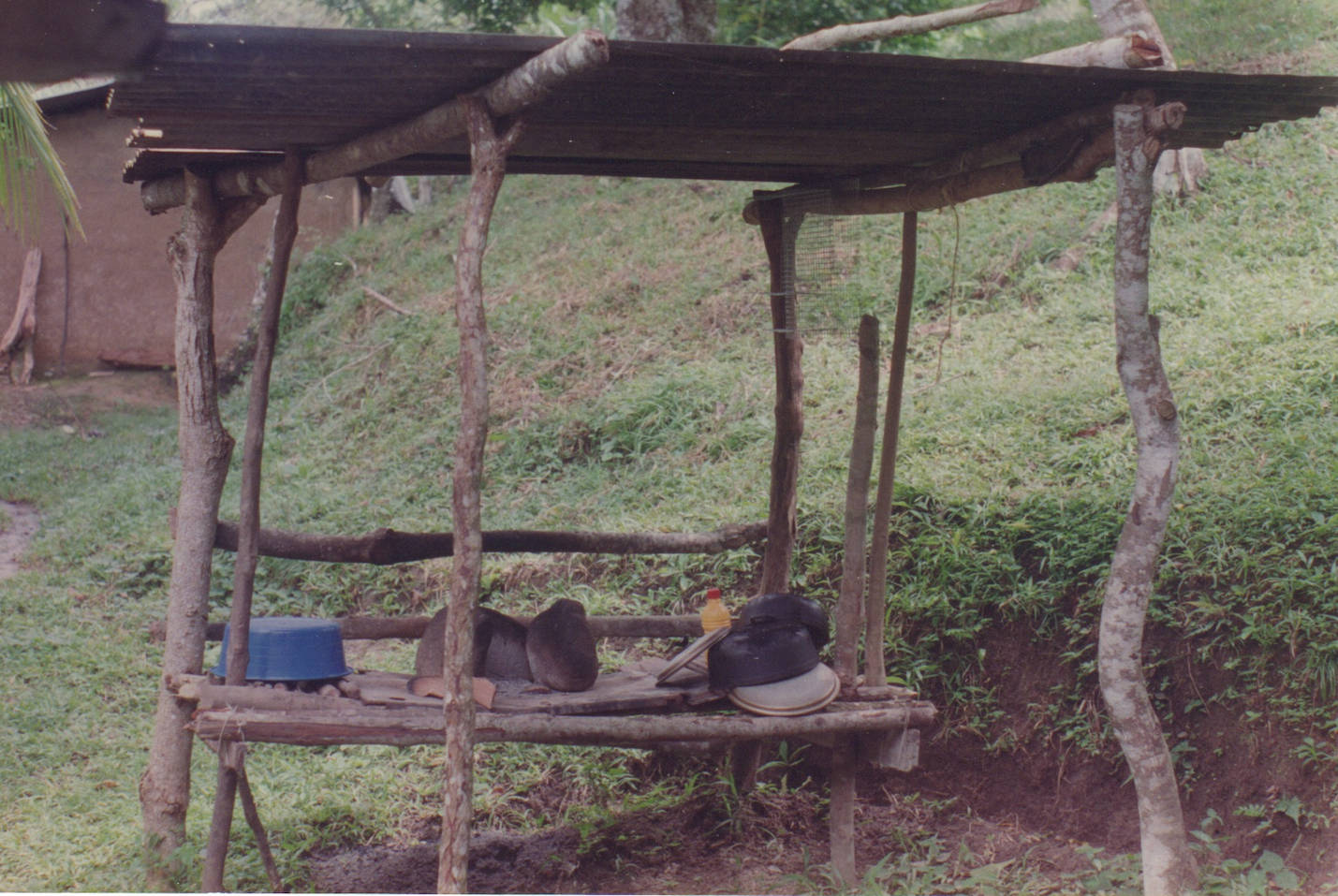
The kitchen, with 3-rock fire.

The kitchen, with 3-rock fire.

I spent a couple of hours today going through the letters I wrote home from Panama when we were in Peace Corps–trying to decide if there’s a book in that mass of experiences. As I went through, I noted that, in almost every letter, there is something about food. Life in rural Panama was a nutty mix of plenty and famine, luxury and squalor. We had no electricity, and only rudimentary water, but we had fresh hot bread delivered to our door every morning. Sometimes we ate nothing but rice with a spoonful of chutney for dinner, and other times we stuffed ourselves with fresh produce and tropical fruits.

Every week, I had something to say about food:

“Last night’s dinner was actually pretty good. The rice and beans and juice they brought us tasted fine as long as you ignored the dead bugs in both. Same with the soup for lunch today and the mouse droppings.”

“Tonight our dinner was 25 cents worth of bread and a little peanut butter. After eight hours of walking I would have liked more…oh well, we won’t starve to death.”

“6:15 am–I’m sitting here enjoying a delightful warm roll that was just delivered to our door a minute ago.”

“Thanksgiving dinner didn’t quite turn out as planned—the papaya we were planning on for the bulk of our fruit salad was full of worms—but it was very good.”

“We each ate about four oranges yesterday…and the citrus season still isn’t in full swing! We’re hard pressed to eat all the citrus we’re getting now! Guess we’ll just have to suffer.”

“We stopped by a kiosko (little store) on the way home this afternoon for a Coke (warm, of course).”

We grew to love the local lentils and rice, boiled yuca lightly salted and served with a slice of tomato, and thick sweet oatmeal drink that substituted for a meal in the fields. We perfected the art of straining ants out of the coffee with our teeth. We learned how to make lasagne and pizza on our 3-rock fire. It was a culinary adventure!


Ojaldre

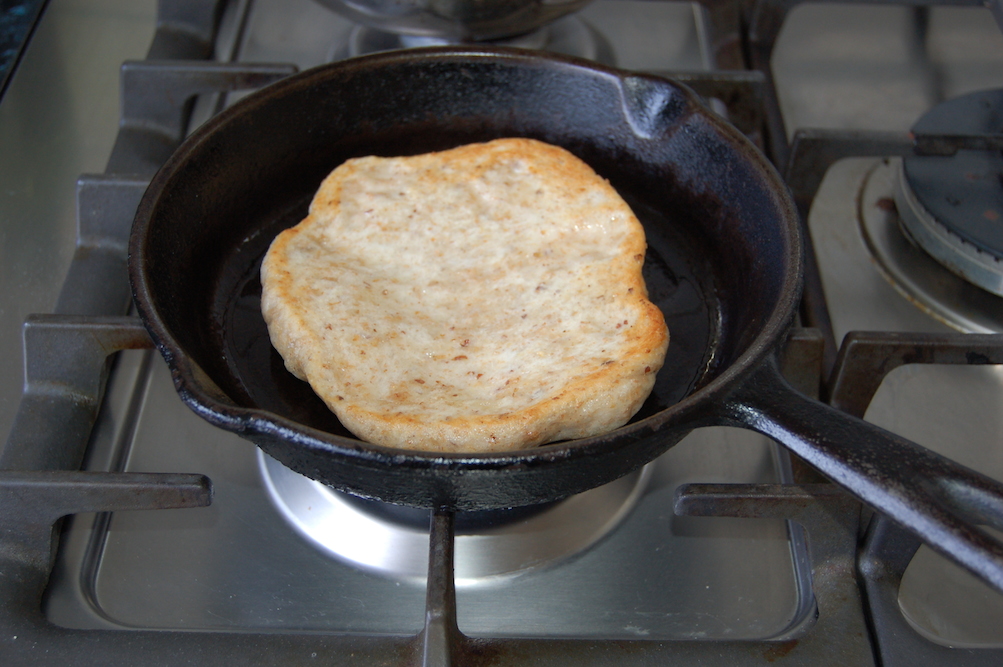
ojaldre smWhile I’m talking about fried food, I thought I’d share one of my favourite Panamanian foods—ojaldre.

Ojaldre is fried bread. It’s something we used to eat at fairs and festivals, like you’d eat French Fries.

I make ojaldre almost every time I make bread (which isn’t that often, as Ian usually bakes the bread). I always hope for a little extra dough—a little too much to put in that last loaf.

Take that extra dough, pat and pull it into a flattish, roundish sort of shape, and slap it into half an inch of hot oil until it’s brown and crispy on both sides. Shake a little salt onto it, and you’ve got a snack that reminds me of rodeos and terrifyingly decrepit carnival rides.

Eating Native?

veggiesforgrilling2smI’m currently teaching a biodiversity class at my daughter’s school, so I’ve been thinking a lot about biodiversity in New Zealand. Out here on this island in the middle of the Pacific Ocean, living things have had 65 million years to evolve in isolation. Until humans arrived about 700 years ago, most living things here were endemic—found nowhere else on earth. Three and a half metre tall birds and the giant eagles that preyed on them, flightless parrots, frogs that hatch from the egg fully formed, tuatara that died out everywhere else on earth millions of years ago, crickets the size of mice…

Humans changed things dramatically and rapidly. We brought thousands of other organisms with us, some on purpose, many by accident. Many of those organisms flourished here, at the expense of native organisms. Today, there are few New Zealand ecosystems untouched by the invasion of humans and other non-natives. Some of the most successful invaders have been plants—today there are more introduced plants here than there are natives, and more arrive all the time, in spite of efforts to prevent them.

Many of those invading plants were brought to New Zealand on purpose to provide food, shelter, or medicine. In fact, I can’t think of a single native plant currently cultivated for food, except one seaweed. There are certainly a few edible native plants, but they are few, and they are more of a survival food than something you’d want to eat every day.

No surprise. The crops we eat today have been cultivated for thousands of years—selected by countless generations of farmers to be bigger, tastier, and easier to grow. With only 700 years of history in New Zealand, there’s hardly been time to develop native crops.

The human migrants to New Zealand brought their crops with them instead. Familiar corn and carrots, potatoes and peas. But it’s not just in New Zealand that people mostly eat food native to other regions. People have been carrying their food with them for as long as we’ve travelled, until it’s sometimes hard to know where a food originally came from—classic Italian tomato sauce is made from a plant native to the Americas, the American “wheat belt” has its origins thousands of years ago in Turkey, and cassava domesticated in Brazil is now a staple food throughout tropical areas worldwide. Few people anywhere in the world eat native.

While I would love to be able to magically bring back the moa, Haast eagles, huia, and host of other incredible New Zealand endemic organisms that humans have wiped out here, I will admit I’m terribly fond of my non-native tomatoes, cucumbers, potatoes, eggplants, etc. I am thankful those non-natives are here, and I need not subsist on seaweed and ferns. Does it feel somewhat disingenuous to passionately support the conservation of our native biodiversity while I plant my non-native vegetable garden? Yes, but I’m only human, after all, doing what humans have done for 10,000 years.

Queen’s Birthday Cake

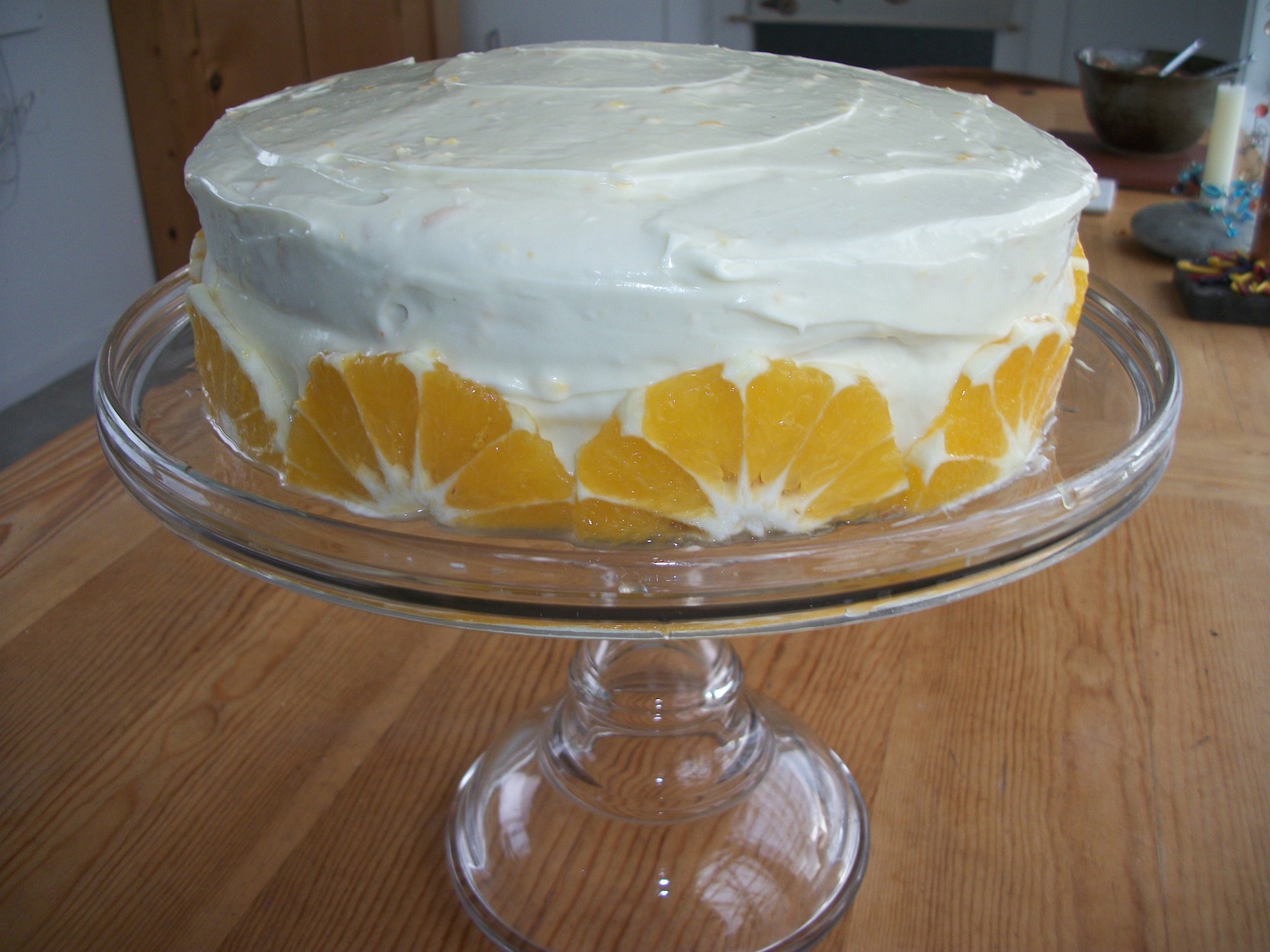
100_3280 copyIt is Queen’s Birthday weekend, so naturally I had to make a cake. Something out of the ordinary, and fitting for Her Royal Majesty.

As fortune would have it, the neighbour dropped off a large sack of grapefruit from his tree yesterday, so I made Citrus Surprise Cake from The King Arthur Flour Baking book. The surprise is grapefruit—lots of it—in the cake, in the icing, and also serving as the decoration.

It was just on afternoon tea time when I put the final touches on the cake. We sang a rousing chorus of Happy Birthday to Her Majesty, and tucked in.

The bitter/sour grapefruit was as surprising as the name suggests, and the cream cheese frosting flecked with grapefruit peel looked as good as it tasted. Overall, a delightful cake, and one I will make again.

Happy Birthday, Your Majesty! Thanks for giving me an excuse to make cake!

Real Men Don’t Eat Quiche

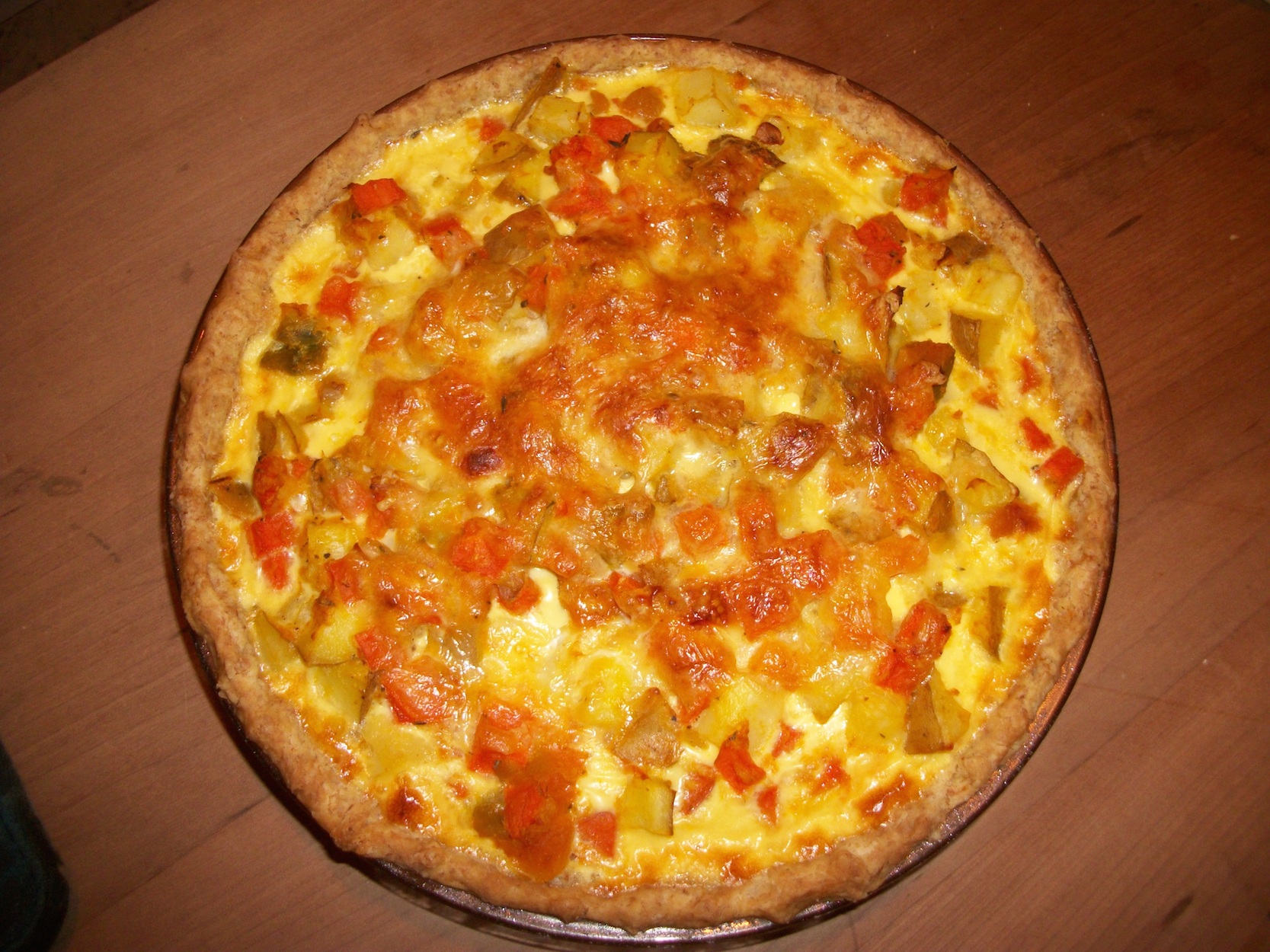
100_3267 copyWhen the book Real Men Don’t Eat Quiche came out in the early ‘80s, many of us had a laugh about the gender stereotypes portrayed in the book. Unfortunately, the satire was lost on some of my acquaintances, who truly believed that to eat quiche (or to try any foods with foreign-sounding names for that matter) was to lose their masculinity.

They were, of course, way off base, but I understand the importance of food to our identity. “You are what you eat,” after all. Foods can be tribal affiliations—Coke vs. Pepsi, vegans vs. meat eaters, carbs vs. protein.

Even if we eat the same things, the vocabulary of food defines and divides us. Soda or pop? Hoagie or sub? Chips or fries? Biscuits or cookies? Casserole or hot dish? Brownies or bars?

But for the adventuresome, those differences quickly resolve into similarities. Cook enough different foods, and the divisions become connections.

Take quiche lorraine, for example. It is just the French version of the English bacon and egg pie. The variations within “quiche” and “pie” are greater than the differences between them.

A gallette is just a tart with a French accent.

Mexican tortillas are almost the same as Indian roti.

Greek pita bread could be mistaken for Indian naan.

French ragout, Indian curry, and Latin American sancocho are all just stew by a different name.

Sweet, sour, bitter, salt, umame. Starch, sugar, protein. It all comes down to biology, and we all need the same nutrients to keep us going. The protein in my burgers may come from soybeans, and yours from beef, but we both love that slab of umame-rich protein on a nest of carbohydrates (a bun, some rice, some bulgher) and dripping with sweet/sour catsup (or ketchup, or sauce…).

The spicing may differ, but the essence is the same. Just like us. We are what we eat, after all.

Hunger

My son is participating in the 40 hour famine this weekend. This is his second year doing the famine, and I am proud of his commitment and effort. It seems fitting, then, that I should blog about hunger and malnutrition today. I’m not going to reiterate the statistics you can easily find on the web. You can look those up if you’re so inclined.

My story is more personal.

As a Peace Corps Volunteer, I lived in a community of artisans and subsistence farmers in rural Panama. One of my roles in the community was to teach soil conservation and improvement techniques to help farmers get more out of their land and their effort.

Subsistence farming is brutal. Our neighbours in Panama aged quickly, and many bore the scars of their difficult lives. In our village, most people farmed in the morning, then wove baskets and hats or carved soapstone in the afternoon. On market day, they would shoulder huge baskets full of their work and hike three hours up the mountain to sell. By many standards, farmers in our village were rich, because of their craft sales. But rich is relative, and even the most productive villager had precious little money to buy food. Mostly, they ate what they could grow.

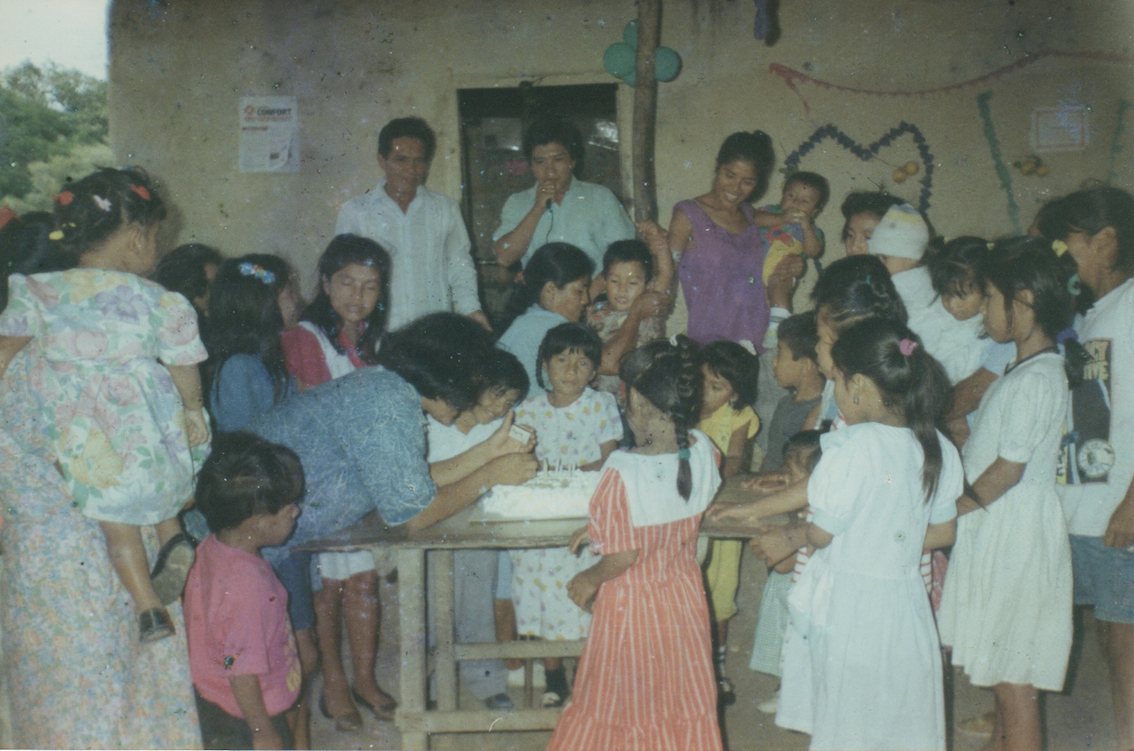
Children at birthday parties brought a bag to take food home for their families.

Children at birthday parties brought a bag to take food home for their families.

Panama has a four month dry season, during which almost no rain falls at all. By the end of the dry season, the air is like a furnace, and any crops that aren’t watered daily are long gone. New fields are cleared at the end of the dry season, and the brush is burned to make way for new crops. With the first rains, the farmers plant corn, beans, and rice. The new crops need much tending—weeds grow fast in the tropics—and there is much work to be done at the beginning of the rainy season.

Unfortunately, the farmers are doing that work at a time when they have the least amount of food to fuel the effort. Though most people manage to fill their stomachs with something every day, it is rarely enough, and often little more than plain rice. Malnutrition is rife during this lean time of year, and during my time in Panama, it was not uncommon to hear of young adults—generally strong and resilient—dying from simple illnesses because their bodies had no reserves to draw on.

This subtle starvation was nearly invisible to the outside world. Even in the city, the “ricos” had no idea that people starved to death in the surrounding countryside. “But there’s always something to eat in the campo! There can’t possibly be hunger there!”

It is not enough to fill one’s stomach. We all need to eat nutritious and diverse food that provides our bodies all the nutrients they need. Subtle starvation—malnutrition—happens nearby, no matter where you live. There is enough food on earth to feed us all. Let’s all do our part to make sure everyone has enough.

Pennsylvania Dutch make the best junk food

The well-used Brownie page

The well-used Brownie page

In the interest of full disclosure, I admit I was raised in Lancaster County, Pennsylvania, and I claim Pennsylvania Dutch heritage.

But my Michigan-born husband agrees that nobody does junk food better than the Pennsylvania Dutch.

My husband the saltaholic raves about Bickles chips and Snyders pretzels. I, with my sweet tooth would swim through crocodile infested water for a whoopie pie or a slice of shoo fly pie.

So when I’m looking for pure decadence, unencumbered by nutrients, I open the Mennonite Community Cookbook.

Usually, it falls open to page 281—Brownies.

I have modified this recipe, reducing the sugar slightly, and substituting cocoa for unsweetened chocolate (which isn’t easily available here), but I hate to mess too much with perfection…

Oh, and I ALWAYS make a double batch…here’s my doubled version

¾ c. cocoa powder

1 c. butter or shortening

1 ½ c. sugar

4 eggs

1 c. flour

1 tsp baking powder

1 tsp salt

2 c. chopped nuts, chocolate chips, or coconut

2 tsp vanilla

Melt cocoa and butter together. Beat eggs thoroughly and add sugar. Combine egg and chocolate mixtures and blend well. In a separate bowl, whisk together the flour, baking powder and salt. Blend wet and dry ingredients together, mixing until smooth. Add nuts and vanilla.

Spread dough in a greased 9 x 13-inch pan. Bake at 350°F (180°C) for 30 minutes.

Food Therapy

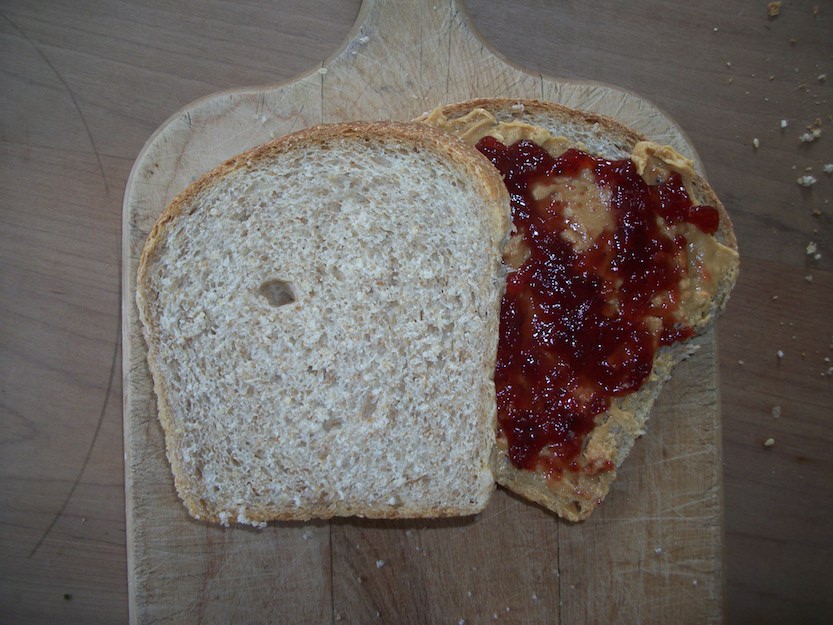
Peanut butter and Jam--mood enhancing drugs.

Peanut butter and Jam–mood enhancing drugs.

My latest novel, The Anti-Mage, virtually wrote itself. Vastly better than previous novels, this book is saleable, I’m sure.

As the rejections pile up, though, I begin to doubt. I doubt the book’s merits, my wisdom in making this leap of faith to writing, and my fundamental value as a human being. Did I make a huge mistake in shutting down my science outreach business in order to write? Have I made myself nothing more than a chauffeur, gardener and cook for my family? Have I fallen into the stay at home mom role I have striven all my life to avoid? These questions haunt me more with every rejection, with every day I troll the Internet for new agents to approach.

Despair, like the cat curled up under my desk, lurks at my feet. It raises its head now and again to stare malevolently at me, dismissing my efforts to be something as nothing but bothersome noise.

I know there is nothing for it but to soldier on. Decisions have been made, and cannot be undone. I must carry on as though I have faith in my books and myself. And so I resort to food therapy.

No, I don’t go on a chocolate binge—I know it will leave me feeling worse than I started—but I choose food that makes me happy. It could be comfort food, like a peanut butter and jelly sandwich for lunch. It could be food that is pretty, like a salad sprinkled with bright nasturtium flowers. It could be food that takes skill to make, like tortillas. Or it could be food that I know will make my family happy, like spaghetti with tofu meatballs. Whatever the food is, I choose it to make me feel better about myself and my lot in life.

Does it help?

Well, a plate of food is never going to sell a book, no matter how pretty or comforting it is, but it does make it easier to manage the daily grind of criticism and rejection. To be able to step away from work and focus on something as simple and fundamental to life as food can be a profoundly centring activity.

And a little chocolate now and then doesn’t hurt, either.

Mother’s Day

DSC_0006 copyHappy Mother’s Day to all the mothers out there!

I have difficulty with Mother’s Day, and so I’m glad that my family allows me to observe it as I wish, by forgetting the day entirely. The ‘traditional’ breakfast in bed for Mom on Mother’s Day would just about kill me. I’d have to stay in bed two to three hours longer than usual in order for them to bring breakfast to me there, and the thought of eating in bed is completely unappealing; bed is not a place for food. More than that, I always make a cooked breakfast on Sunday mornings. I do it because I enjoy it. I do it because that way I get exactly what I’m craving every Sunday morning (though I do occasionally take requests). Why would I give that up for Mother’s Day?

And doing my chores for me, so I can sit around and eat bonbons all day? Are you kidding? If I have to sit still more than twenty minutes I go stir crazy. That wouldn’t do at all for Mother’s Day.

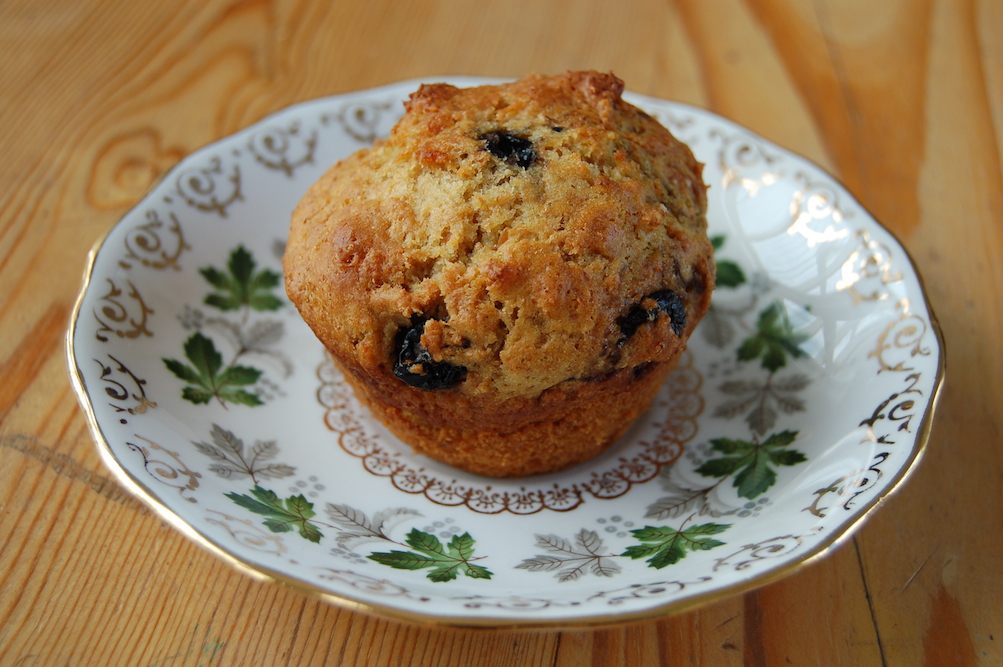
So this morning, we had lemon blueberry muffins. In a nod to the day, I made up the batter last night, so all I had to do was scoop it into the muffin tin and throw it into the oven this morning.

I also cleaned the house yesterday, so I could do outdoor chores today, which I vastly prefer to scrubbing the toilet. Much better to do work I want to do, that to do nothing at all!

So, however you like to spend your day—eating bonbons or digging ditches—I hope you enjoyed your day!