Slowing it Down

When I tell people I enjoy quilting, they assume I mean I enjoy choosing fabrics and colours, and piecing quilt blocks. They’re usually surprised to find that it’s actually the quilting that I enjoy, and that I do it by hand.

People are also often surprised to know how much hand sewing goes into the clothing I make. Buttonholes, zips, linings…even my t-shirts often have hand-stitched hems or neckbands.

Partly, I do a lot of hand stitching because I prefer the way it looks, or it’s the only way to handle something my machine can’t do.

But mostly, it’s a way to take my time and focus on both product and process. A machine stitches quickly, but if I sew something by hand, I can place each stitch exactly where it want it. I can shape an edge or an awkward corner. I can make hand stitches invisible or use them to add subtle embellishment. By sewing slowly, by hand, I have greater control over the stitches themselves.

Sewing by hand also forces me to take more time with each project. I rarely make anything purely for fun–when I sew a pair of jeans, it’s because I need a new pair of jeans–but I also enjoy sewing. It is tempting, sometimes, to whip out a project quickly, just to get it done and have the final product to wear. By sewing parts of a project by hand, I am able to slow down and enjoy the process, not just the product.

While I am sewing by hand, I have time to think–about the project, about the person it’s for (if it’s a gift), about the ways in which it might be used, about how the process is going (and whether I need to rip a hastily done seam and do it over, or add a feature I hadn’t planned on). There is something meditative about hand sewing that sewing by machine doesn’t provide. And I think it has to do with speed.

It’s like walking versus driving. You might not get there as quickly walking, but you will experience more along the way.
 

Failure

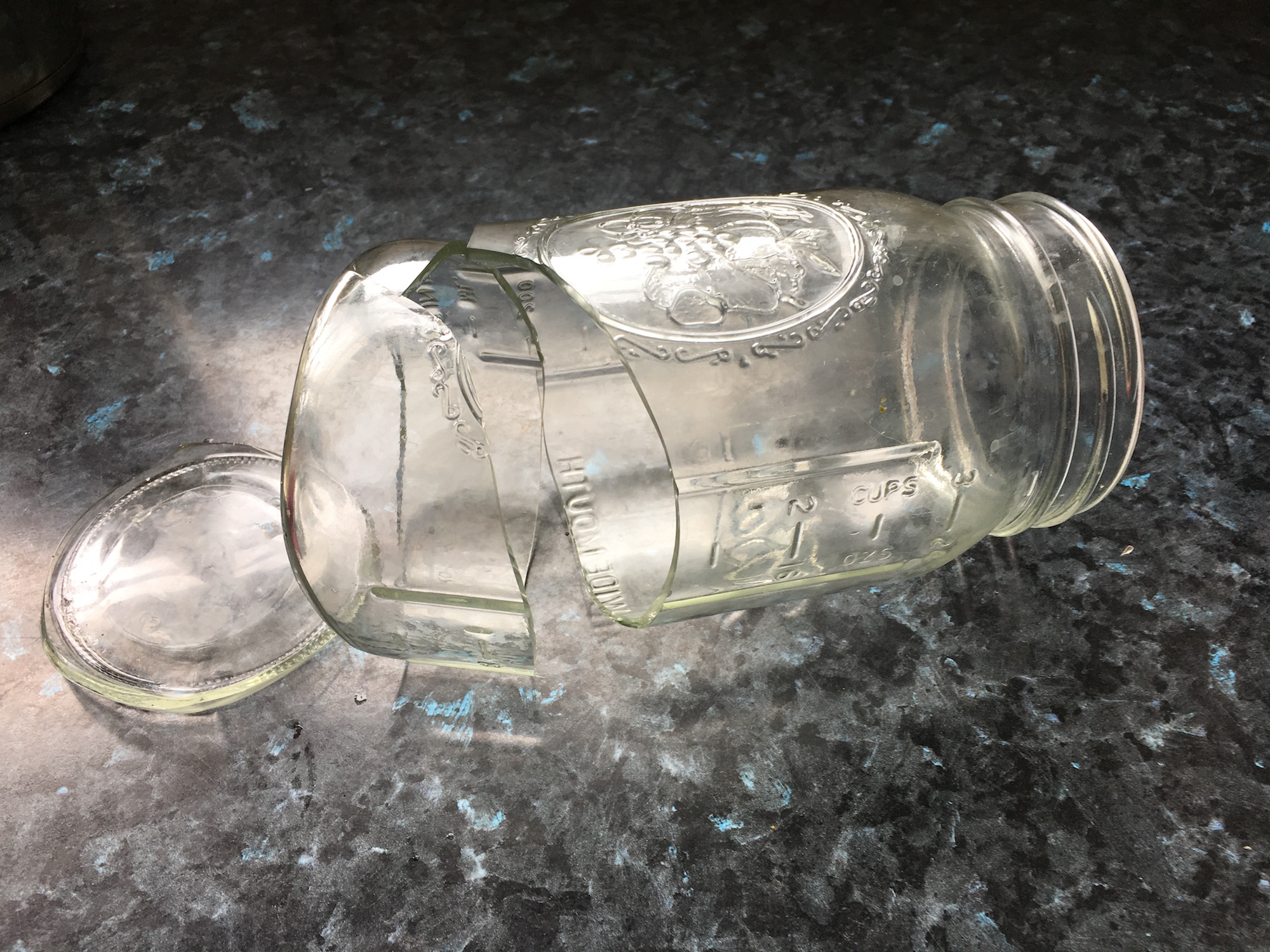
2017-01-21-09-23-03smI’ve been in a veritable frenzy of pickling the past couple of weeks. Before that, there was a good stint of jam-making. I’ve had a brilliant run. I’ve been able to run a full canner-load almost every time, every jar has sealed, and the jam has been the perfect consistency.

Until two days ago, when a jar of dill pickles exploded when it was lowered into the canner. Then yesterday, I ran fifteen jars through the canner, and FIVE of them didn’t seal. What? FIVE? I never have that sort of failure rate. I did what I always do though, upon reflection, maybe my lids or jars weren’t quite as hot as they should have been, because I was doing two batches at once, and my attention was divided.

Today I reran the five unsealed jars, making sure they were nice and hot, and they all dutifully sealed.

But it made me think about failure and my response to it.

I fail a lot. I have hundreds of rejections of my writing from agents and publishers. I’ve thrown away entire rounds of cheese that just didn’t work properly. I’ve made loaves of bread that could be deadly projectiles. I’ve made birthday cakes that didn’t look anything like what they were meant to be. I’ve taught lessons that have flopped completely. I’ve made clothes that have gone immediately into the rubbish upon completion. The list of my failures goes on and on.

When we fail, we have a number of options.

Option 1: We can pout, blaming our failure on the weather, the phase of the moon, the person next to us, the wrong tools, millions of illegal immigrants, or whatever. This might make us feel good, because it allows us to pretend our failure was not our own fault. But it doesn’t make us likely to succeed next time.

Option 2: We can get angry, blaming our failure on our own stupidity, clumsiness, incompetence, or lack of innate ability. We can believe that, because we failed, we are a failure. This is an easy response, because it allows us to justify not trying again. “I’ve tried that, and I can’t do it.”

Option 3: We can critically analyse what went wrong. Maybe it was poor tools–I’ve had cheese fail when a thermometer was inaccurate. Maybe we got sloppy–I’ve ruined garments by rushing to finish them. Maybe we didn’t understand enough about what we were doing–the first time I taught preschoolers, they chewed me up and spit me out, because I had no idea how they related to the world. Analysing our failures takes time. It requires a willingness to critique ourselves in an honest and constructive manner. It requires us learn new things. It requires us to get back on that bicycle and try again.

It’s hard.

But it’s the only option that leads to success.

Homemade Gifts

100_2135smMy daughter’s birthday is fast approaching, and I still felt I hadn’t come up with a gift idea that was truly from me. I have often made special things for the kids for their birthdays, but they don’t always go over as I’d wish. Three years ago, I made her this awesome jeans jacket. I found an okay commercial pattern and modified it to fit my daughter’s tastes and frame. I spent ages searching for the perfect cool hardware bits to decorate the front. Then I had to order a zip from overseas, because I couldn’t find exactly what I wanted in country (because it had to match the hardware, of course). In the end, I was quite pleased with the results.

She has never worn the jacket. Not once. Not even for a few minutes.

The same thing happened with the skirt I made her four years ago (because the girl needed something other than shorts and T-shirts to wear). She’s worn the skirt…once or twice when I forced her to wear it to a formal occasion, and every time it’s led to tears.

That’s okay. It really doesn’t bother me. I had a blast making every homemade gift I’ve given the kids. If the kids don’t like them, I know that I’ll be able to give them to someone else who will. And some of them have gone over extremely well (all the stuffed animals, the jerseys and parkas, the zip-off pants, the slippers, the fuzzy bathrobes, the wizard costumes…).

I’ve received my fair share of awkward and excellent homemade gifts from the kids too. Because we all give and receive homemade gifts, we all understand and appreciate the time and love that went into each item, even if we wouldn’t be caught dead wearing it. It makes each gift special, regardless of what the item actually is.

And we learn from past mistakes.

This year, the homemade gift my daughter will receive is something I’m pretty certain she’ll appreciate and use–a list of 500 writing prompts, written just for her and categorised by genre. As usual, I’m having a fabulous time making it, and if she doesn’t end up using it, I expect to find it handy, myself.

Spindle vs Garden

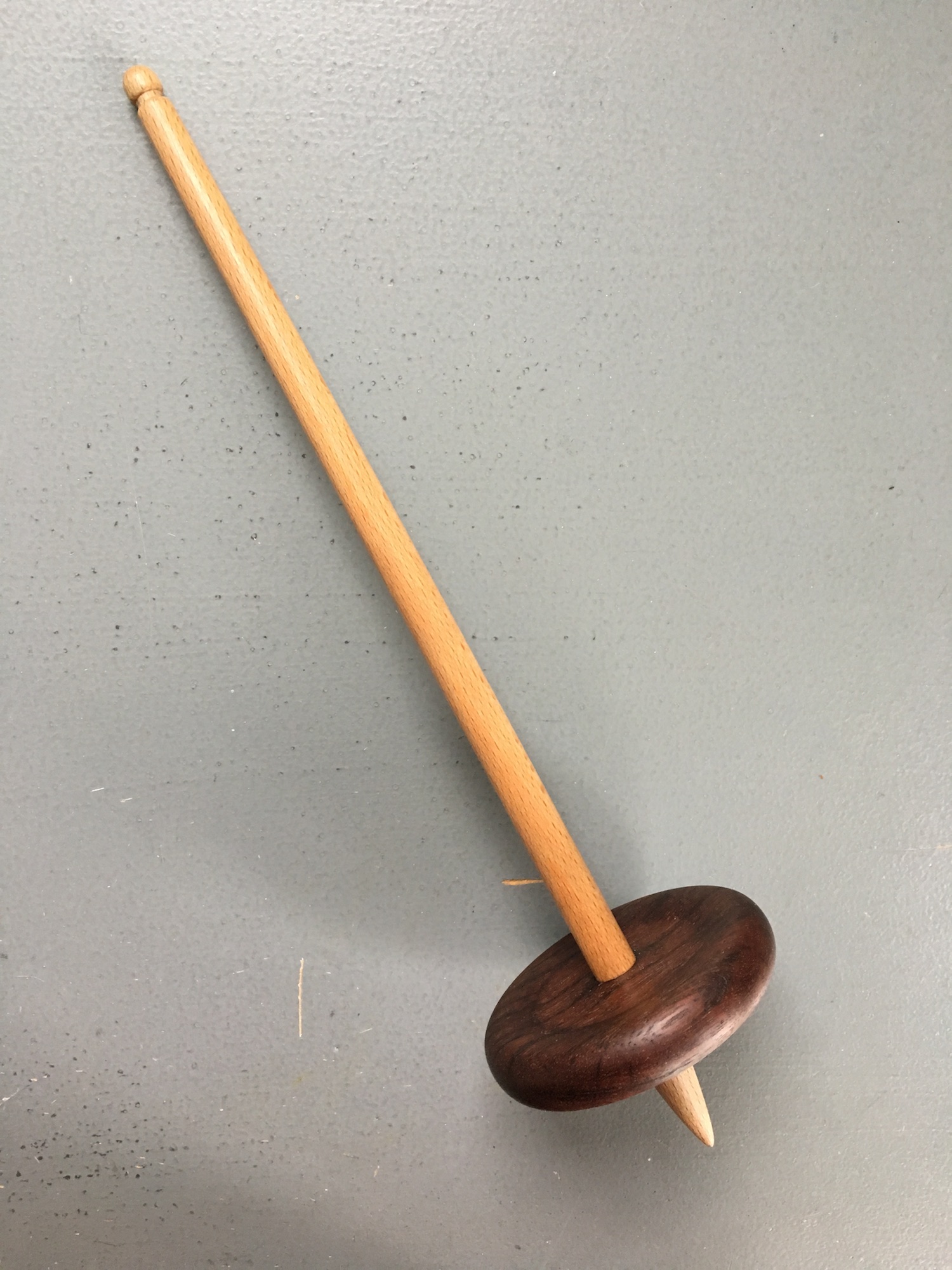
2016-10-09-11-01-27My husband presented me with this beautiful drop spindle that he turned for me this week. It’s practically a work of art—beautifully weighted and smooth as glass.

As if the pressure wasn’t already on.

At this time of year, crafts have to take a back seat to the garden, but with the goats newly shorn, I’m dying to actually work with the mohair sitting in my office. I picked up a pair of carders last week and have been slowly learning to use them. I have enough carded fibre to start spinning.

But the garden beckons—weeds grow rampant, seeds need to be planted, seedlings need potting up. And worse still, my hands are garden-rough; every time I touch the mohair, I end up with tufts of it stuck to the dry cracks in my hands.

So I may have to be content to just admire my new spindle for a while, until the spring garden rush is over.

When Summer Meets Winter

2016-08-21 10.36.07Early spring is an awkward time in my office. The office is used, not just for work, but also for sewing, crafts, and as a heated greenhouse.

In springtime, it can get awfully crowded in there.

I do a lot of sewing over winter, when the garden doesn’t demand so much of my time, and it’s not particularly pleasant outside. In summer, I do almost none—I have little free time, and my hands are so garden-rough that working with fabric is a lesson in frustration.

But in springtime, the two often overlap. My winter sewing list is always longer than I have time for, and I try to squeeze as many projects in as possible before I run out of time. That means I’m usually still frantically trying to finish the last project when it’s time to start vegetable seeds. The plant shelves go into the office and are filled with seedling trays while the sewing machine and iron are still set up.

It’s crowded, fabric invariably gets dirty, pins and scissors end up getting dropped on fragile seedlings.

Some day, maybe I’ll have a dedicated, heated greenhouse so that sewing and gardening can be separate. Until then, winter will rub shoulders with summer for a few weeks every year.

Functional and Meaningful

2016-06-28 16.00.01The pattern weights in the slick sewing magazine were tempting, for sure—sleek brass cylinders that screamed ‘professional sewer’. Just looking at the picture, I could feel their delicious heft and smooth finish.

But my life is not one of polished brass. Though the fancy pattern weights were elegant and undoubtedly fit for the job, my beach rocks are, too.

Smooth greywacke cobbles I collected myself from the beach just 4km away beat out the fanciest weights. They belong here. They fit my hand nicely, come in many sizes and weights, and they speak to me of waves and water, sun and sand. Nothing purchased can do that.

My pie weights come from the beach, too, and work just as well as a fancy set of ceramic beads. More so, because they make me smile whenever I use them.

Objects that are of a place. Objects that belong.

In our global economy, with the products of the world just one click (and a credit card number) away on the Internet, it’s easy to forget that what is in our back yard may be just as useful, and far more meaningful, than anything manufactured and stamped with a brand name.


Confessions of a Packrat

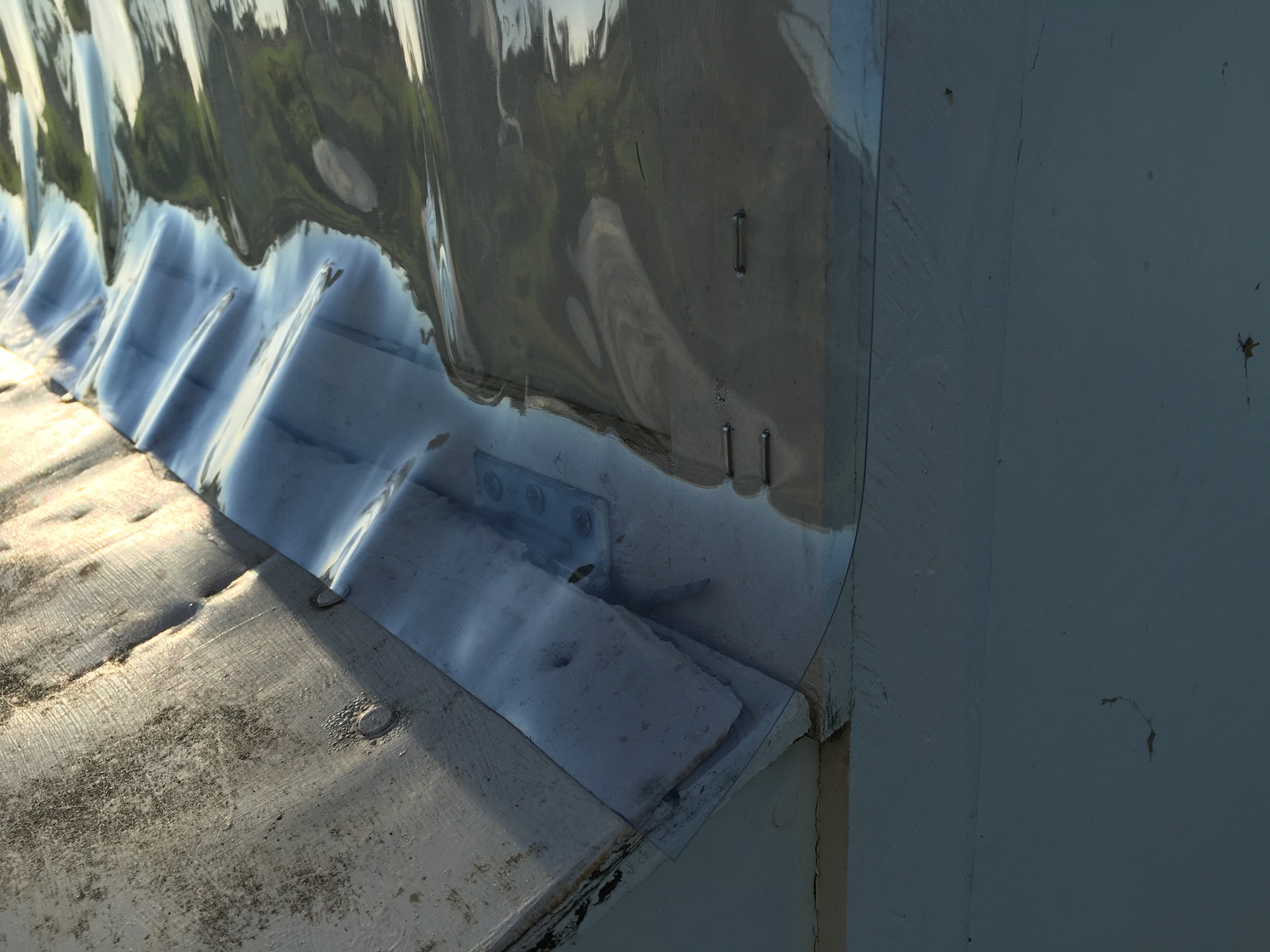
2016-06-01 15.19.52 HDRWhen the kids were young, we used to regularly visit Creative Junk, a place that sells all manner of industrial off cuts, overruns, and misprints, along with household ‘junk’ like plastic tubs, fabric scraps, broken tiles, and empty jars. It was a great place to get cheap materials for the kids’ creations (you know, those 3-year-old constructions of dubious artistic merit—the ones that end up in the rubbish a couple of days later).

On one of those trips, I scored a roll of heavy clear vinyl for myself. I didn’t know what I’d use it for, but it struck me as a handy thing to have.

That vinyl has sat unused in my office for eight years. It’s always a little too heavy or a little too small for anything I might want it for. More than once I considered tossing it (or donating it back to Creative Junk). But getting rid of it required more work than just leaving it in the back of the cupboard, so it just stayed there.

This past weekend, I noticed that rain was getting into the chicken coop. A crack at the back of the hinged lid over the nesting boxes had gotten wider with age, and was now letting water stream right into the nesting boxes.

I needed something to block the crack without preventing the nest box lid from lifting. Something waterproof, stiff enough to not blow in the wind, but flexible enough to bend with the lid.

My roll of vinyl was exactly the material for the job.

I worried the piece wouldn’t be long enough, but found it was exactly the right length, and exactly twice as wide as I needed, so after cutting it, I had a piece to put on the coop, and a perfect replacement, if the first doesn’t hold up long-term.

And this, of course, is the reason I have a cupboard full of little bits of this and that in my office; and a pile of leftover bits of spouting, flashing, and pipe out behind the shed; and a stack of not-entirely-rotted fenceposts; and three rolls of used deer fencing; and an old bed frame; and…

Eventually, nearly everything comes in handy. Nearly everything can be reused, often more than once. There are half a dozen boards under my firewood right now, keeping it off the wet ground, that are on their third lifetime—they were once a porch roof, then a tree house, and now protect the firewood. Between uses, they were slated for the rubbish, but ended up being reused before we got around to hiring a trailer to take them to the tip.

I’ve grumbled more than once about the lack of rubbish pick-up here, but I often think it does more good than harm. The more difficult it is to get rid of things, the more creative we become in reusing them.

That’s got to be good—for our finances, and for the environment.

Sew Lovely It’s Raining

2016-05-24 16.22.48One of the best things about finally getting some rain is the excuse to spend my weekends and evenings sewing, rather than working in the garden. Not that I don’t enjoy working in the garden, but I enjoy sewing, too.

And with all the nice weather, the sewing projects have been piling up.

2016-05-24 14.07.14With the help of the wet weather this past weekend, I managed to complete a garden holster (to hold the hand tools I’m always losing among the weeds), and a new set of curtains for the office.

Next up are some new clothes for me—some jeans, a couple of shirts, and probably a new jersey…

Here’s hoping for more rain!

New Arrivals

IMG_1139 cropThe Saturday Story will have to wait until Sunday this week, because there’s excitement in the paddock today.

I made the difficult decision a few weeks ago to sell my dairy goats and switch to angoras. The daily grind of milking, dealing with mastitis, kiddings, and all the other stress that goes along with breeding and milk production was getting really old. It was time for a new adventure.

So today, we drove to Rangiora and picked up three lovely wee boys (wethers) from Mohair Pacific. My elderly dairy goat, Artemis, will remain with us. The last of the other dairy goats is due to be picked up on Monday morning.

We’re still getting to know the new boys, and they’re still settling into the paddock. We’ve been tossing around names for them, with such notable trios as the three musketeers, the three stooges, and the three tenors being among them, but I think we’ll wait and learn a bit about their personalities before we stick names on them.

This will be a new adventure for me—learning to spin and dye yarn. I love mohair, though, and I’m looking forward to weaving and knitting with it.

Getting over the hump

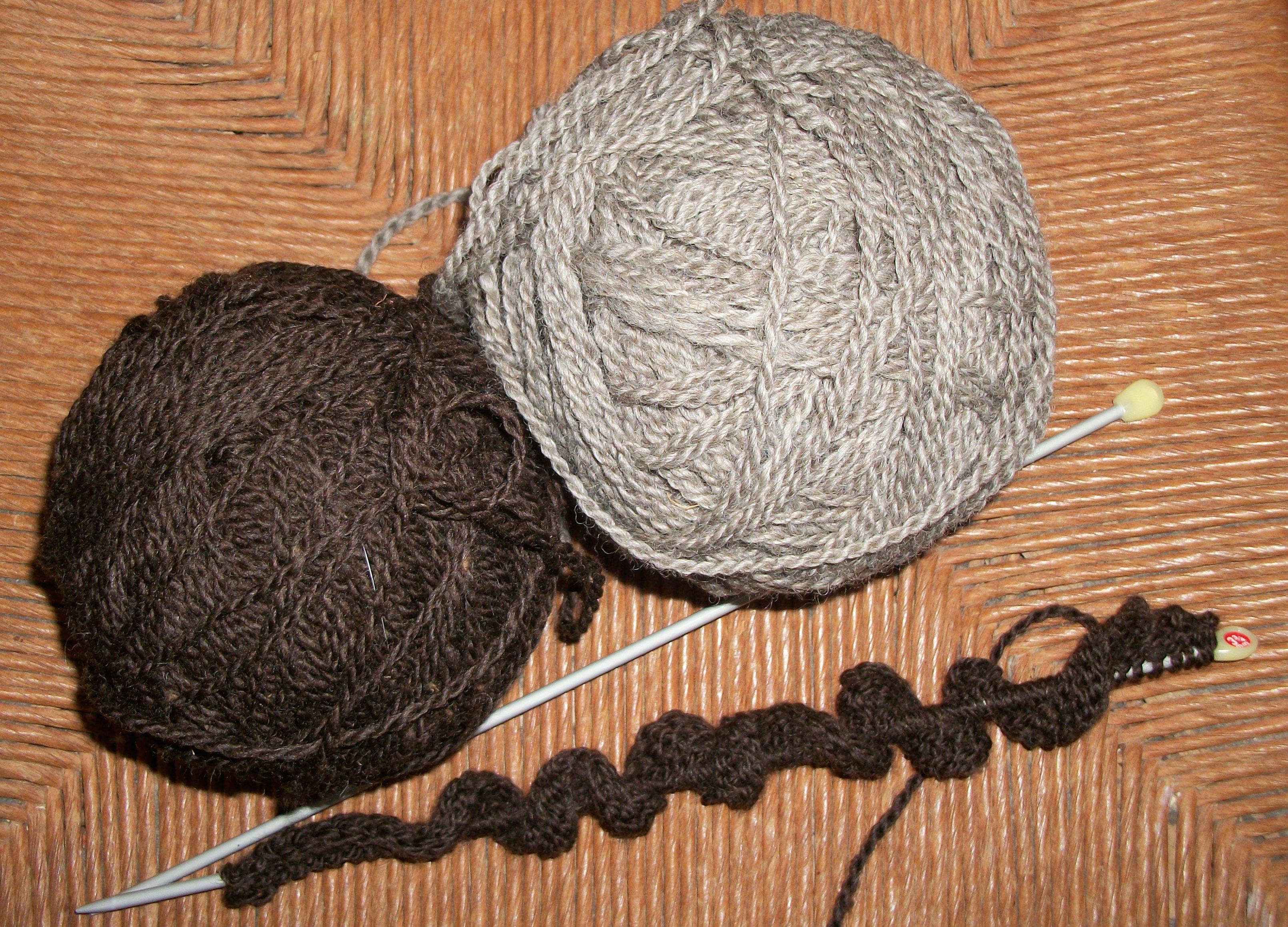
knittingI am not a knitter. People have been trying to teach me to knit since I was seven years old, to no avail. I’m very crafty in other ways. I weave, sew, quilt and embroider; I was once quite good at macramé (when macramé was “in”); I’ve done quilling and scherenschnitt, basketry and rug braiding, beading and jewellery making. I’m proficient at all these crafts and more, but put knitting needles in my hands, and suddenly I’m all thumbs.

But I’m also stubborn. When my mother tried to teach me to knit, and failed, I tried again. When the neighbour tried to teach me to knit, and failed, I tried again. When a friend tried to teach me to knit, and failed, I tried again. I bought Debbie Bliss’ book How to Knit, and forced myself to knit and unravel, knit and unravel, until I could manage to knit a row without dropping or adding stitches. It wasn’t pretty, and it was a stressful process. I’d finish a knitting session with a sore neck and tense muscles. I made myself a pair of slippers. Then I made another pair, and another, and another, and another. Six pairs of slippers later, I was thoroughly sick of slippers, and still struggled with knitting. I took a break…a ten month break. When I came back to knitting, I had to learn all over again. I tried out some different stitch patterns, attempted knitting in the round, and ended up unravelling most of my work.

Another year passed. My slippers wore out, and winter came. My feet were cold, so I tried knitting again. I had to pull out the knitting book in order to remember even the basic stitches.

But something had changed. After the first clumsy rows, I began to relax. The stitches came naturally. My fingers didn’t cramp. I finished the first slipper in a day. I was over the hump.

As parents, my husband and I regularly have to push our children to get over that hump. Learning a new skill is hard work, and there are precious few rewards at the beginning. Playing the piano, there are many wrong notes, and the songs sound clunky, the rhythm erratic. Making pastry, there could easily be half a dozen dense, oily lumps before the first magical, flaky crust. Juggling, there are a lot of balls rolling away on the floor before they soar effortlessly from hand to hand.

For some skills, the hump is low, and easily surmounted. For others, that hump is like a steep mountain with no breathtaking views until the very top. As a parent, one of my jobs is to push the kids to get over those mountains and not quit before a new skill becomes fun. It doesn’t mean becoming a tiger mom, but it does mean enforcing some discipline in kids who may not want to practice their instrument, because it’s a struggle, and they know they sound awful. It means asking the kids to help prepare dinner, and patiently encouraging them as they slowly and unevenly slice the carrots or mix the dough. It means cheering on the child who comes last in the race, and running alongside her as she prepares for the next one.

Hopefully, if we do our job right, the kids will be able to push themselves over those humps on their own one day.

They might even learn to knit.