Reprise: Summer Soup

I usually blog about summer soup when we make it. It’s a major point in the garden calendar and deserves a mention at that time.

I’ve never said a word about it during the winter, but this is when it is most appreciated.

Yesterday we all got home late from work and school. It was dark and cold. We were tired and hungry. I was crashing into a miserable head cold I’d kept at bay all day by sheer force of will.

And there was the summer soup, waiting to welcome us home and usher us into summer, if only for a brief time. I heated up a jar of edible summer, and we sat down to eat within minutes of arriving home.

I took a spoonful and shut my eyes. Tomato, zucchini, green beans, corn and soy … all the flavours of summer soothed my raw throat and pounding head. The heat of sun-ripened jalapeños and Thai chilis warmed my sinuses and eased my congestion. For a short time my winter cold was forgotten in the glory of a summer’s day.

I harbour no illusions—summer soup won’t cure my cold, nor will it lessen its severity and duration. But it certainly can make my illness more bearable.

And so again I sing the praises of summer soup, and am thankful for the family effort that makes it possible to ease a cold and enjoy the summer sun in the heart of winter.
Summer’s Final Farewell

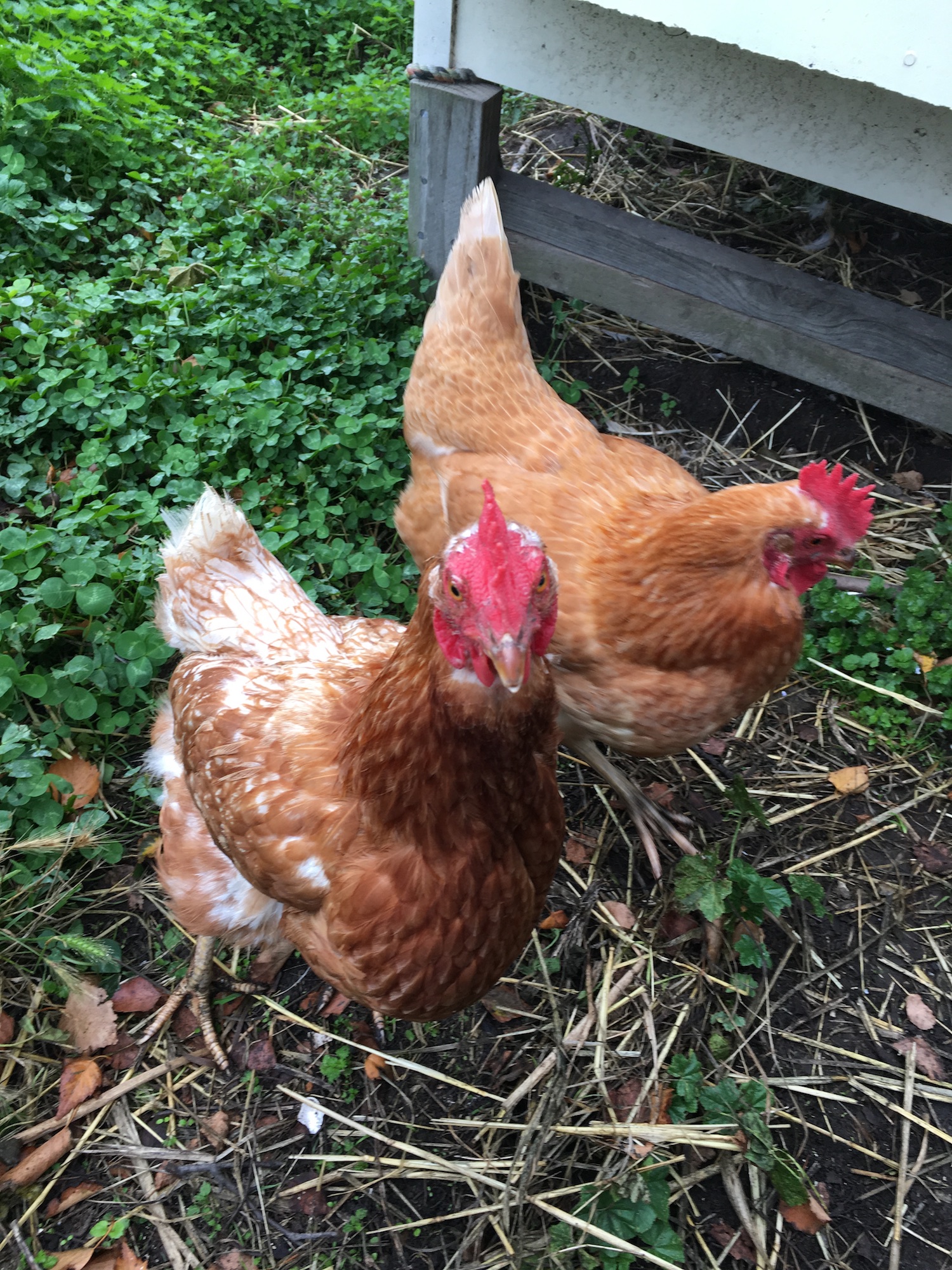
I moved the chickens into the vegetable garden last weekend—the final admission that summer is over.

I know it’s been over for weeks, but there have still been eggplants, peppers and tomatoes coming out of the tunnel houses. Before I moved the chooks, I harvested the last of those summer crops. We’ll savour them over the next week or so, and then it will be full-on winter from a culinary perspective, at least.

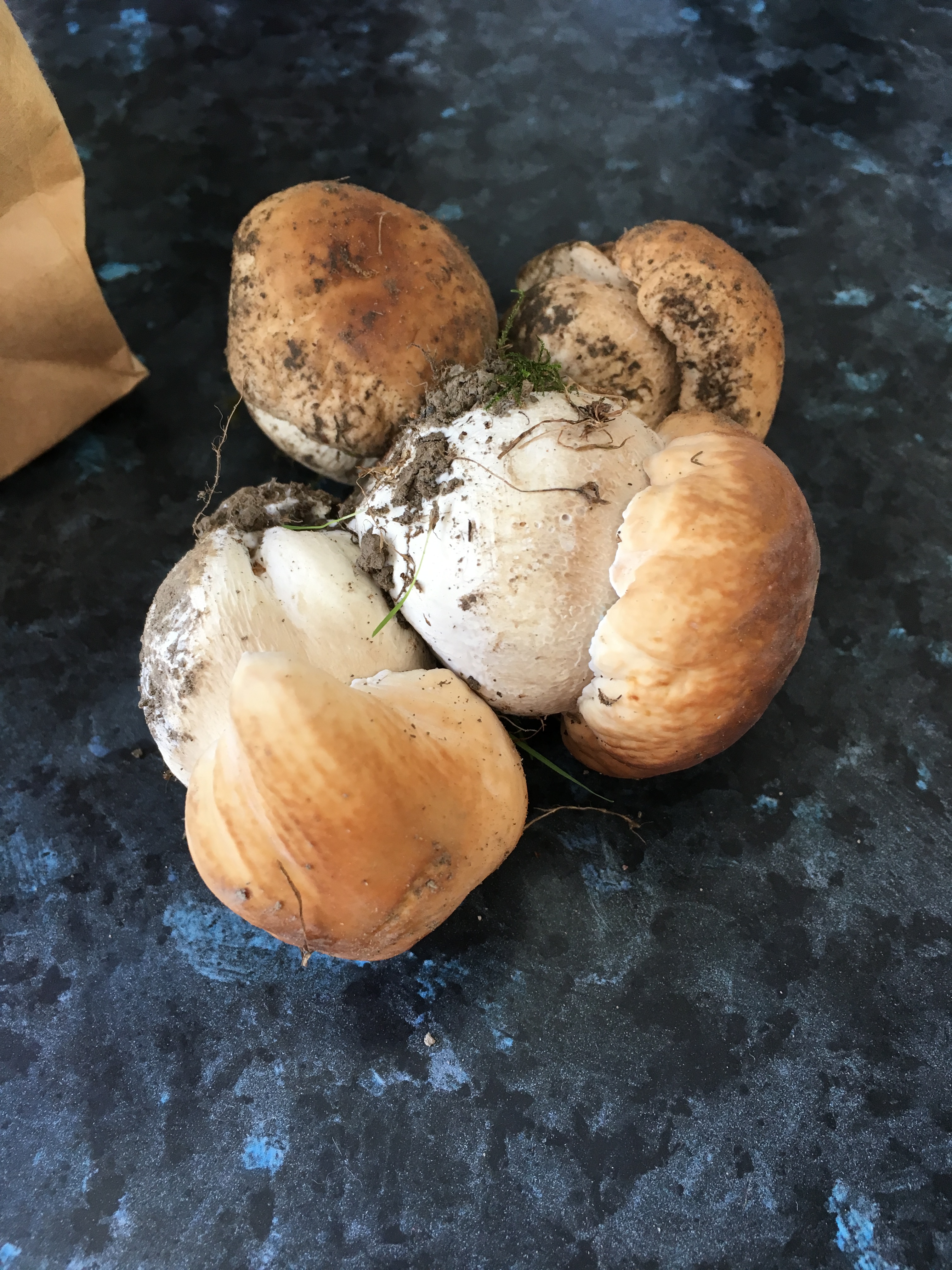
I’ve stocked up on barley to cook with our dry beans in bean-barley soup. Maybe I’ll add a bit of mushroom stock made from this autumn’s haul of porcini.

I’ve baked up some pumpkins so I have cooked pumpkin on hand for pie or galette later in the week. I’ll add frozen spring peas and summer corn to the galette, and garlic, stored in braids in the shed.

I’m eyeing up the secondary head of cabbage, sprouting from the remains of the summer crop. They’ll make tasty winter salads to complement warming meals.

i’ve planted out the winter crops, too—lettuce, spinach, broccoli, cabbage and cauliflower. They will provide us the late-winter vegetables we’ll crave come August.

So while I farewell summer, I welcome the culinary delights of winter. Not so varied, perhaps, as summer fare, but no less delicious.

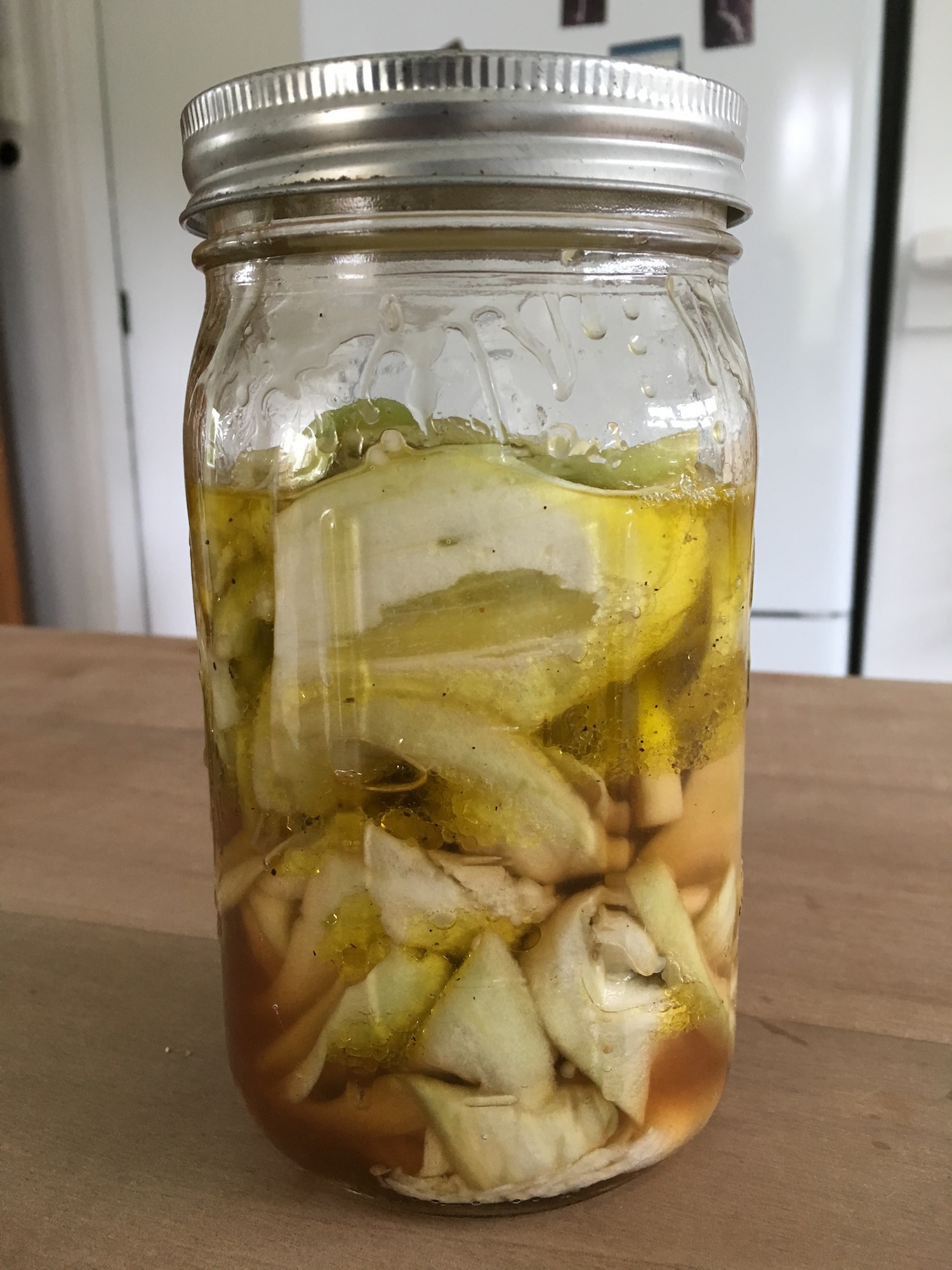
Vilma’s Eggplant–better late than never

I’ve blogged about Vilma’s Eggplant in the past, but it’s worth repeating a recipe this good.

This year’s eggplants took a long time to get going, and it’s only now that summer is over that they’re really giving well. But it’s never too late for Vilma’s Marinated Eggplant. This stuff could make an eggplant lover out of anyone.

Vilma was the sister of our host mother during Peace Corps training in Costa Rica. She was loud and fiery-tempered, and regularly stayed with our host family when she was fighting with her partner.

When she was with us, she cooked—glorious Italian food she’d learned to make from her partner. Her food was a flavourful gift in a house where vegetables were usually boiled to death and served plain. 

One of the most wonderful things Vilma made was thinly sliced eggplant marinated in garlicky vinegar. She’d leave a jar of it in the fridge when she left, and we would savour it for a week on our sandwiches or with our mushy, flavourless boiled vegetables.

I foolishly never asked Vilma for the recipe, but a bit of trial and error was all it took to recreate Vilma’s marinated eggplant. 

This recipe mostly fills a quart-sized jar. It keeps for a long time in the fridge and makes a lovely addition to sandwiches. Serve it on crackers for party appetisers—it’s not the prettiest food, but after one bite, none of your guests will care.

2 small to medium eggplants
1 clove garlic, crushed
½ cup red wine vinegar
½ cup extra virgin olive oil
salt and pepper to taste

Peel eggplants and slice very thin (1-2 mm). Steam until the slices are tender and limp (but not falling apart completely). Whisk all the other ingredients together in a small bowl, and toss them gently with the hot steamed eggplant. Refrigerate at least an hour before serving (the longer the better, as the eggplant will soak up more marinade).

Embracing Autumn

Our summer has finally turned to autumn. Cooler temperatures and more rain mean the grass has begun to grow again, green shoots sprouting through rain-driven drifts of dead vegetation.

The tomatoes are browning, spent after summer’s excess, and while I mourn their loss, I welcome the fruits of autumn—pumpkin, wild boletes, black beans, apples and a return of leafy greens. I welcome warming soups and casseroles. I welcome the smell of baking pie, simmering beans, and sautéing mushrooms.

I welcome the reduced workload in the garden, too. There’s still plenty of harvesting to be done, and I’ll be clearing away dead plants throughout autumn and winter, but soon I’ll release the chickens into the garden to keep the weeds and pests in check until spring.

It’s time now to take stock. Plenty of summer soup, pickles and jam in the cupboard; strings of onions and garlic hanging in the kitchen; pesto, peas and corn in the freezer. Jars of popcorn and dry beans line the shelf, and a basket of apples sits in the kitchen. We will eat well this winter, food and effort stored in jars and freezer boxes to be released and enjoyed on dark, cold evenings. 

So I will savour the warmth and sun that remains, but embrace the cold to come.

Nifty Nigella

Late summer is harvest time for all sorts of crops. Nigella might be the most unusual one I harvested this week.

Nigella sativa goes by many names: nigella, kalonji, black cumin, fennel flower, nutmeg seed, onion seed, and black caraway. Added to this mess of often misleading names is Nigella sativa’s ornamental cousin, Nigella damascena, also known as nigella (or love-in-a-mist). You could be forgiven for being confused.

Culinary nigella is a lovely aromatic seed that looks confusingly like onion seed. Its flavour has been described as oniony or oregano-like. I’m not sure how I would describe it—I suppose onion and oregano come close, but the truth is it has its own warm rich flavour. It is traditionally used in naan and string cheese. It’s also apparently great with lentils and other legumes.

Because we rarely harvest much nigella, we’ve only used it in naan, where it imparts a lovely savoury note to the bread. 

But this year, conditions must have been just right for nigella; it grew luxuriantly. Consequently, I have a huge quantity of seeds, so I expect we’ll be trying it out in all sorts of stews and curries. I’m looking forward to the addition to our spicing options.

Summer Soup 2019: proof we really are nuts

The family made our annual Summer Soup on Sunday. 

I think we definitively proved we have no self-control when it comes to gardening or cooking. In spite of me reducing my garden area this year, and despite the knowledge that our son is leaving home in a week (and won’t be around to eat this year’s soup), we managed to make even more than usual.

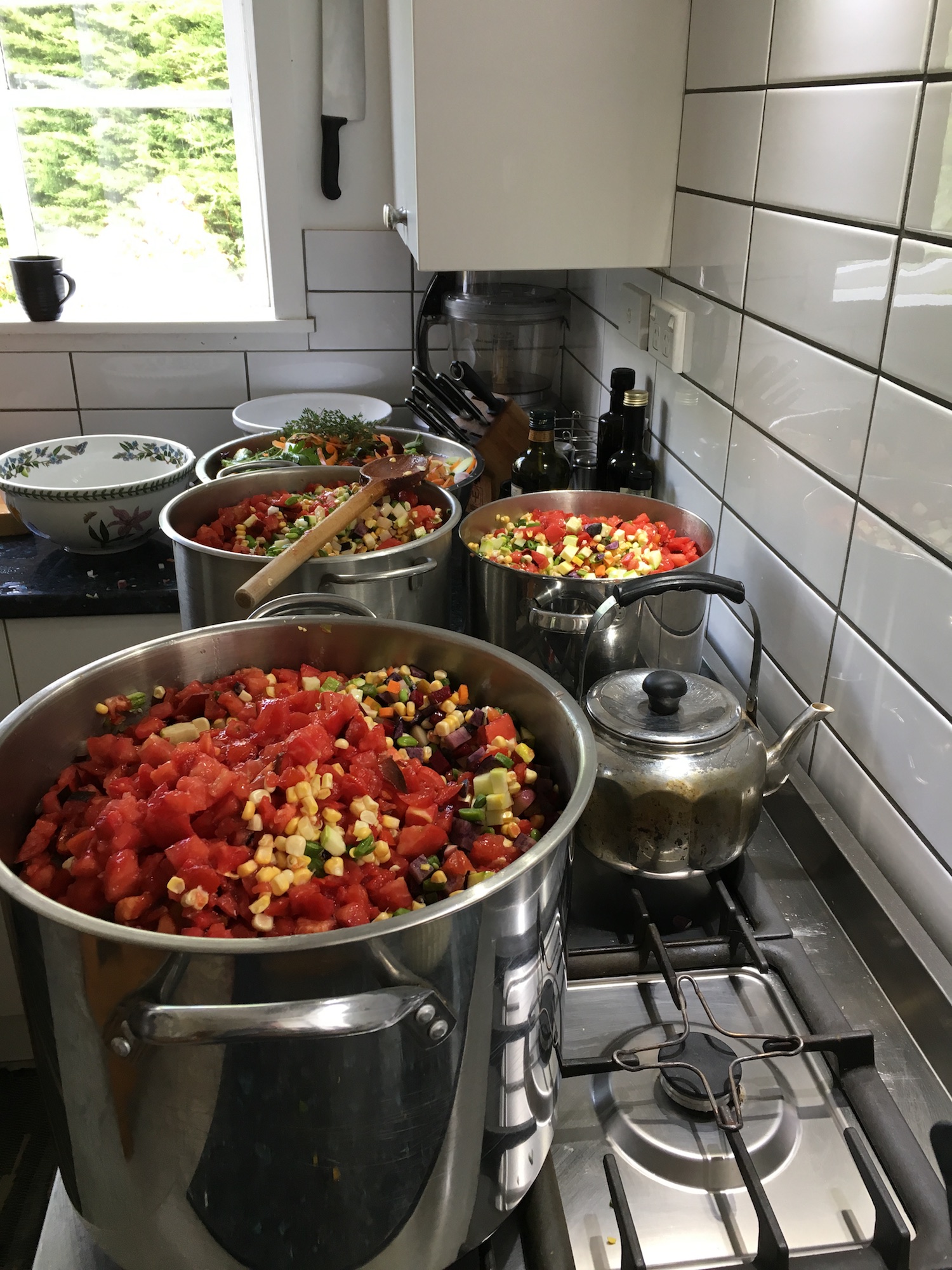
We filled all three of our big stock pots, and it took from 7.30 am to 9.00 pm to pick, chop, and process all that soup.

We had soup for dinner, I put a meal’s worth of soup in the fridge, and there are 28 beautiful quart jars full of soup lined up in the cupboard. 

Summer Soup is full of potatoes, carrots, soy, green beans, zucchini, tomato, sweet peppers, hot peppers, onions, garlic, sweet corn, beet root, basil, oregano, thyme, rosemary, and celery. The only thing not from the garden is the salt. It’s a burst of summer goodness for the cold days of winter. It’s a quick and delicious meal when we all come home late. 

But it’s more than preserved vegetables. It’s a whole-family team building exercise. After a dozen years, it’s a family tradition. Each soup-making session brings back memories of early years, when the kids’ help was more of a hinderance. They took enormous pride in their work those years, reciting the vegetables they’d cut every time we opened a jar.

Now they’re both accomplished cooks, and their help allows us to go way overboard on soup-making. They’re less vocal about it now, but I think they’re still proud of their part in Summer Soup.

As I’ve mentioned before, anyone can make soup, but it takes a family to make Summer Soup.

The Colours of Summer

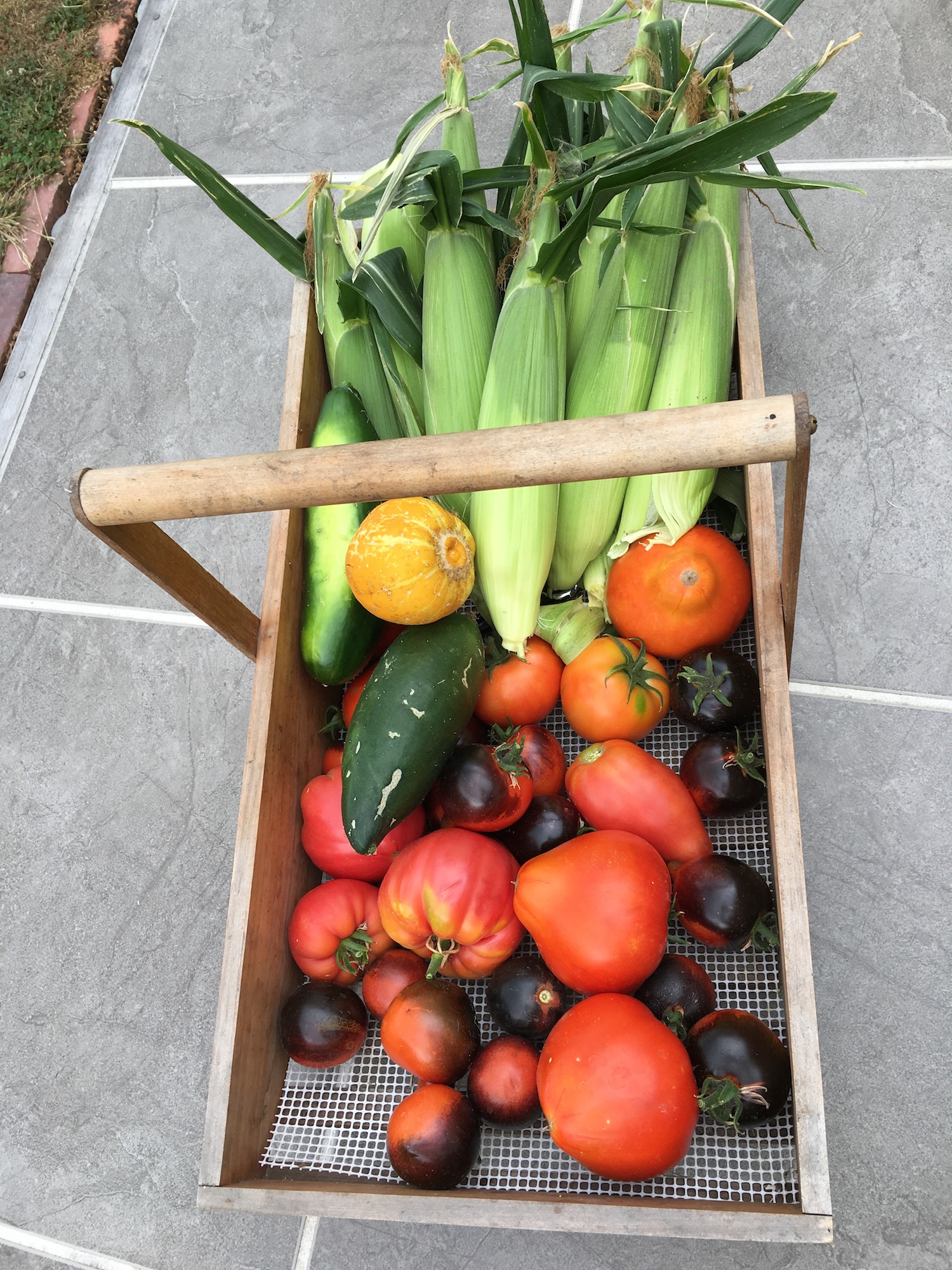
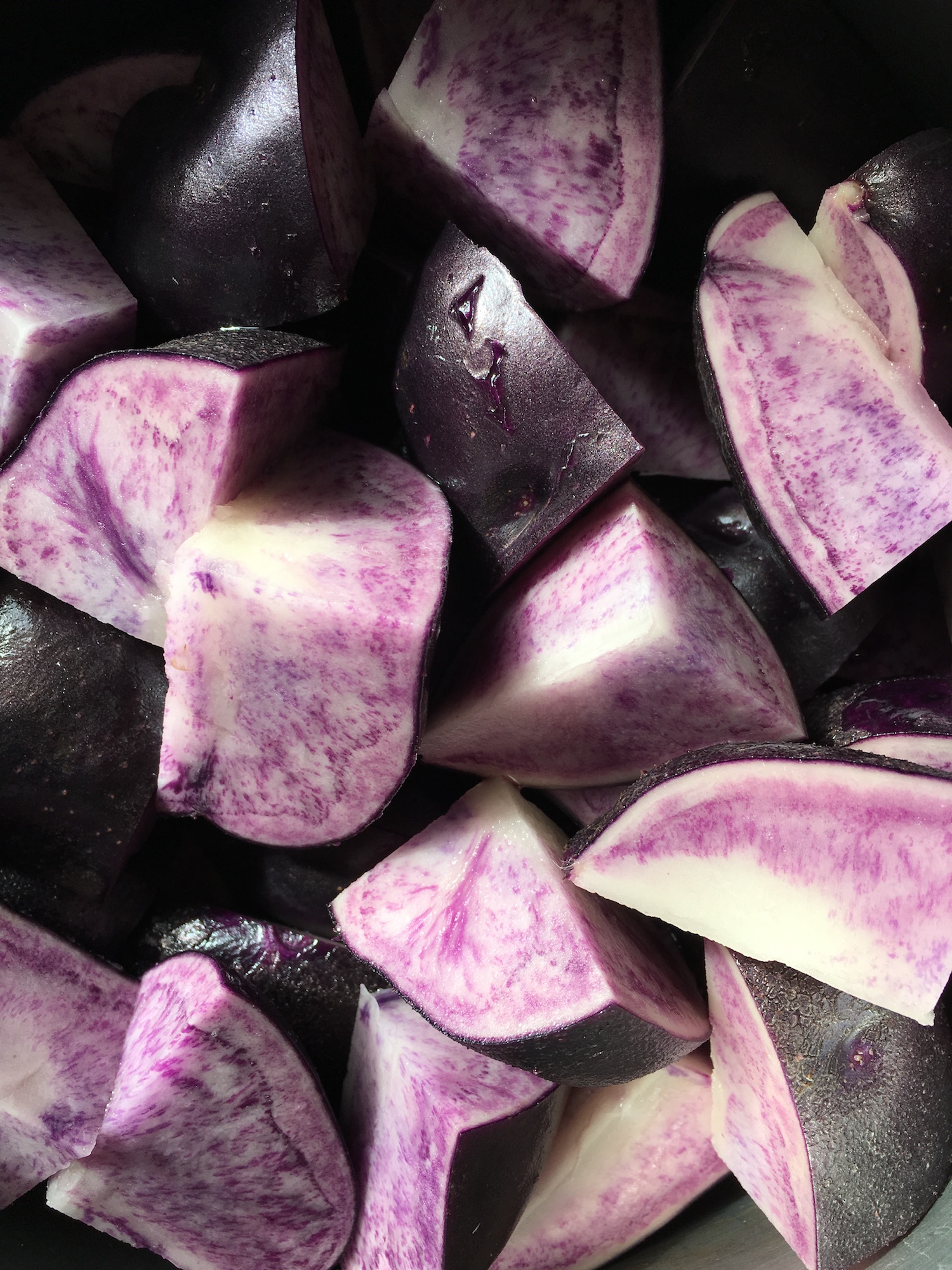
Blue peas, purple potatoes, green beans, yellow zucchini, red tomatoes, orange carrots … The summer garden is full of colour. But it’s not just a feast for the eyes.

In the garden, the colours can serve a purpose—black and yellow tomatoes and red lettuce are overlooked by birds and bugs because they’re not the ‘right’ colours. Blue peas have tough pods that resist birds. And purple basil deals better with dry heat than green.

In the kitchen, the colours create spectacular visual treats—purple mashed potatoes, deep orange braised carrots, bright green pesto, pasta studded with all the colours of the rainbow. Along with the colours come flavours not found in supermarket produce—the rich sweet-tart of an Indigo Apple tomato, the succulent crunch of Scarlet Runner beans, the smooth earthiness of a Zephyr zucchini, the nutty bitter of a Touchon carrot.

A few years ago there was a campaign here to get kids to eat more vegetables. The main message was “Eat your colours.” I agree. Eat your colours. Revel in them. Feast your eyes and your taste buds.

Gazpacho–Cool Food for a Hot Day

Gazpacho depends on good quality tomatoes. Only use the best.

While many of you in North America are shivering in the cold, we’re sweltering in the heat here. Our daily highs are in the mid-30s (the mid-90s F). After dripping sweat all afternoon, the idea of cooking is unappealing.

So we resort to hot-weather foods. Fortunately, the garden makes this easy. One of my favourite cool dinners is gazpacho—a cold vegetable soup. I think there are as many variations on gazpacho as there are cooks, but here’s my version. Serve with crusty bread and butter for a more substantial meal.

5-6 medium tomatoes (about 10 cups, chopped)
2 medium cucumbers
1 small red onion
handful fresh basil
1 clove garlic
1/4 cup red wine vinegar
1 tsp salt
black pepper to taste

Peel and coarsely chop the cucumbers. Process in a food processor until finely chopped (not pureed). Remove to a large bowl.

Core and coarsely chop the tomatoes. Process in a food processor until finely chopped. Remove to the bowl with the cucumbers.

Finely chop the onion and basil (I find this easiest by hand, but it can also be done in the food processor). Add to the bowl.

Crush the garlic and add to the bowl, along with the vinegar, salt, and pepper.

*Optional—add a finely chopped jalapeño or a dash of hot sauce.

Mix all ingredients together and chill 2 hours before serving. If you’ve got no time to chill it, add crushed ice to the soup.

A Passion for Pickles

I’ve blogged about pickles before. How could I not? I love pickles. I plant pickling cucumbers only every other year, to prevent me from becoming the Crazy Pickle Lady, but this year is a pickle year.

Our favourites, without question, are dills. I made seven quarts of dills last weekend, and this weekend I put up another nine quarts. Plenty more to come before I’m finished pickling.

I can most of my pickles in a water-bath canner, so they last two years. But the canning process leaves them less crisp than I like, so I also make fresh pickles to eat right now. They’re crisp and sour, and super easy to make.

For a 1-quart jar, you’ll need:
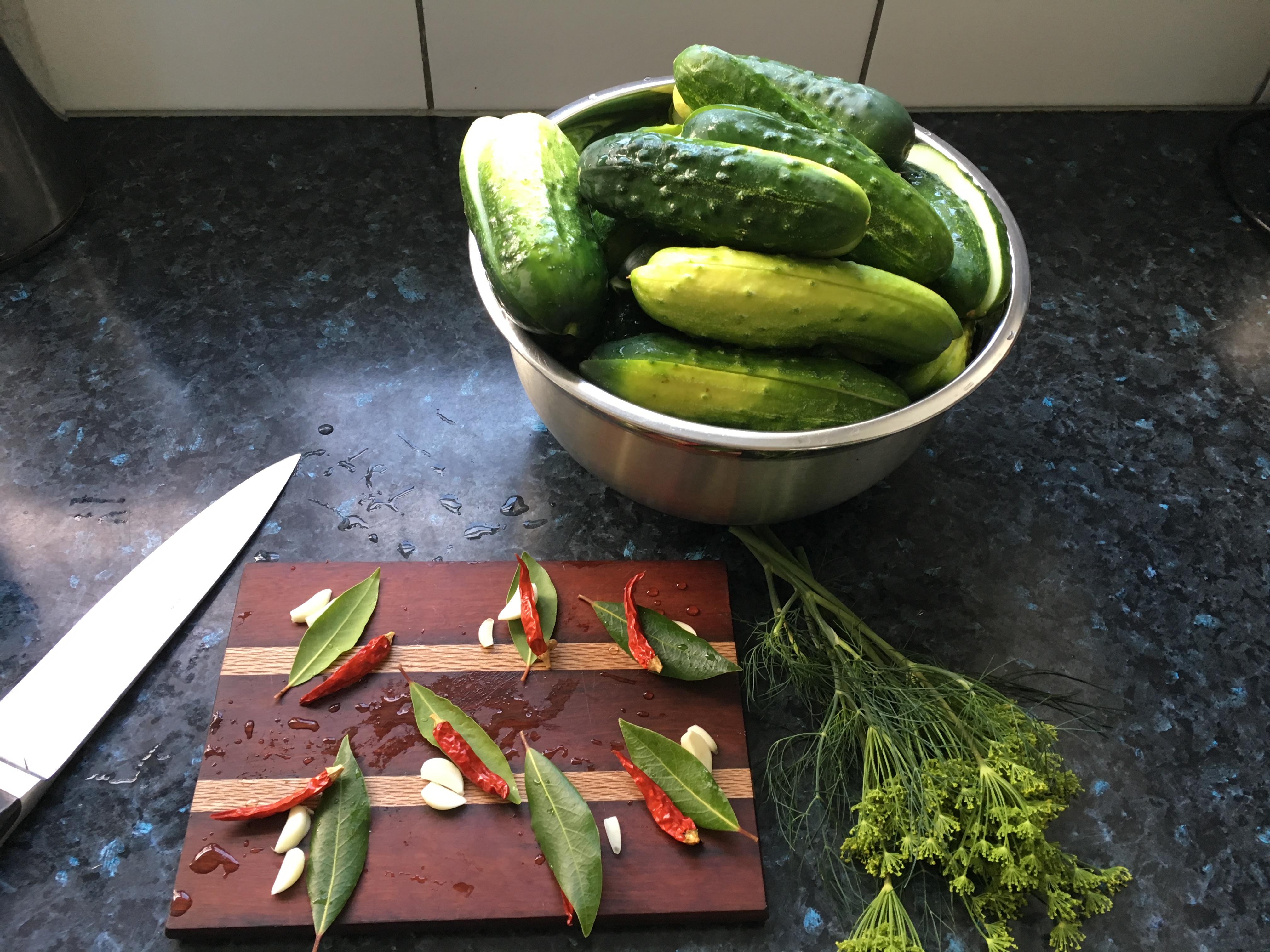
1 kg pickling cucumbers, washed and cut in half lengthwise
1 head fresh dill
1 small red chilli (fresh or dried)
1 clove garlic, cut in half
1 bay leaf
1 cup vinegar (white or cider)
1 cup water
2 Tbsp coarse salt
3 Tbsp sugar
1 Tbsp mixed pickling spices (you can buy commercial, but I make my own mix to have on hand, see below)

Combine vinegar, water, salt, and sugar in a saucepan. Tie the spices into a cloth bag (or use a stainless-steel tea ball) and drop it into the vinegar mixture. Bring to a boil, then lower the heat and simmer, covered, for 15 minutes.

Shortly before the vinegar is ready, fill your jar with hot water (from the tap is fine, but make sure it’s as hot as you can get it). Let it sit for a few minutes, to ensure the jar is hot. This step minimises the risk of heat stress cracking the jar when you pour boiling liquid into it.

When the jar is warm, pour out the water. Drop the dill, chilli, garlic and bay leaf into the jar, and then pack the cucumbers in tightly. Try to arrange them so the cut sides are not pressed against one another—you want the pickling liquid to penetrate the flesh. Remove the spice bag from the simmering pickling liquid and pour it over the cucumbers, covering them completely.

Allow to cool, and then store in the refrigerator for 3-5 days before eating.

If you have leftover pickling liquid, save it in a jar, and just heat it up to make your next batch of pickles.

Pickling spice mix (makes about 1 cup):
6 Tbsp whole mustard seed
3 Tbsp whole allspice
6 tsp whole coriander seed
1 tsp whole cloves
3 tsp ground ginger
3 tsp red pepper flakes
3 bay leaves (crushed)
3 cinnamon sticks (crushed)

Pity the One Percent

I enjoy springtime for its warmer temperatures, flowers and the opportunity to get outdoors more frequently. But it’s the bump in our standard of living that I enjoy most.

Garden excess comes early, in the form of artichokes and asparagus. Add in some home grown oyster mushrooms, spinach, leeks and herbs, and I begin to feel like we have unlimited wealth. Like we’re in the ‘one percent’.

Except, I doubt the one percent gets vegetables as fresh as ours.

And I expect they don’t have the pleasure of strolling among head-high artichoke plants, breathing in their earthy scent and picking twice as many as they need, because, well, why not?

And I know they don’t enjoy passing their excess vegetables on to the neighbours, spreading and sharing riches that cannot be saved, banked, or invested.

So I feel sorry for them, in springtime; they are so poor, and I am a queen.