Practice Makes Perfect

Tortilla1smIan shakes his head and rolls his eyes.

Nobody just whips out a batch of home made tortillas! Even Mexicans buy their tortillas.”

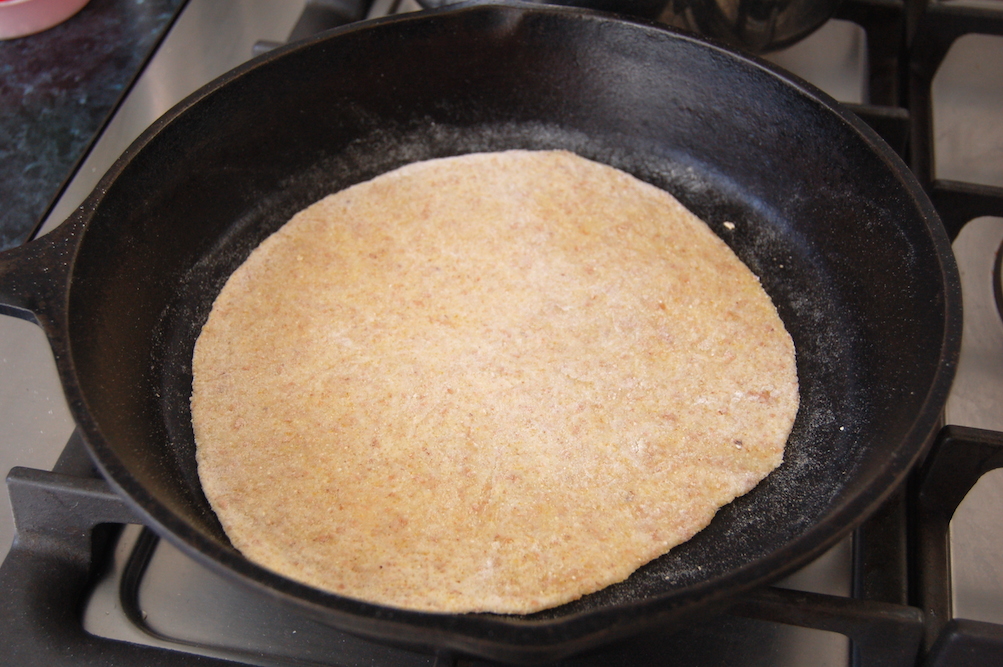
I shrug. It’s really not that big a deal, making tortillas. Although…thinking back to twelve years ago, when I was a novice tortilla maker, I’m inclined to agree. Back then, making tortillas always involved tears and curses. The dough ripped, stuck to the kitchen counter, and stuck to my rolling pin. The pan was always too hot or too cold, either burning or drying out the tortillas. Why I continued to try making them, I don’t know.

But I did. Again and again I tweaked my recipe, changed my rolling technique, adjusted the heat under my pan. Somewhere along the line, making tortillas changed from a once-in-a-while-when-I’m-feeling-particularly-brave sort of dish to a standard part of my repertoire. It changed so dramatically, that once I made over 100 tortillas for a party, and did so without breaking a sweat.

How many other foods once seemed unfathomably difficult or complex? I can think of dozens: risotto (stir constantly?), pizza (such advance planning needed!), anything Indian (all those spices?!), quiche (crust, and filling, and custard?!)…

It’s good to remember, sometimes, how difficult these “easy” things seemed long ago. It’s good to remember that how difficult something is to do is often simply a measure of how much you’ve practiced doing it. A few weeks ago, having endured yet another fondant icing disaster (see The Desolation of Smaug), I privately decided that fondant was too hard, and I would stick to my buttercream icing in future. But maybe I just haven’t made enough fondant. I don’t know if “practice makes perfect”, but it does make it easier.

Summertime Grilling

veggiesforgrilling2smThere’s nothing like a barbecue in summer. Now, you might think that vegetarians don’t have much use for a grill—you couldn’t be more wrong! Grilling is one of the best ways I know to celebrate summer vegetables. Add some corn on the cob or a fat slice of melon, and you’ve got a veritable feast.

One of the best things about grilling vegetables, is that they take very little preparation beforehand—big slabs of vegetable work best, so there’s no tedious chopping to do.

I’ll admit that grilling is Ian’s sphere, and what goes on after the vegetables are cut is his business. A few weeks ago, he wrote down the following recipe for the marinade he brushes on the vegetables before grilling:grillingveggies1 sm

Oil (~ 75% of volume)

Worcestershire sauce

Mustard (just a bit but essential)

Ketchup (not too much)

Vinegar (bit)

Cayenne

Soy sauce (fair whack)

crushed garlic

brown sugar (tiny bit to enhance flavour)

You can see by this recipe it’s an exact science…but never mind; whatever he does, works, and I’m happy to leave the grilling to him.

Bon appétit!

Favourite kitchen tools–Brisingr

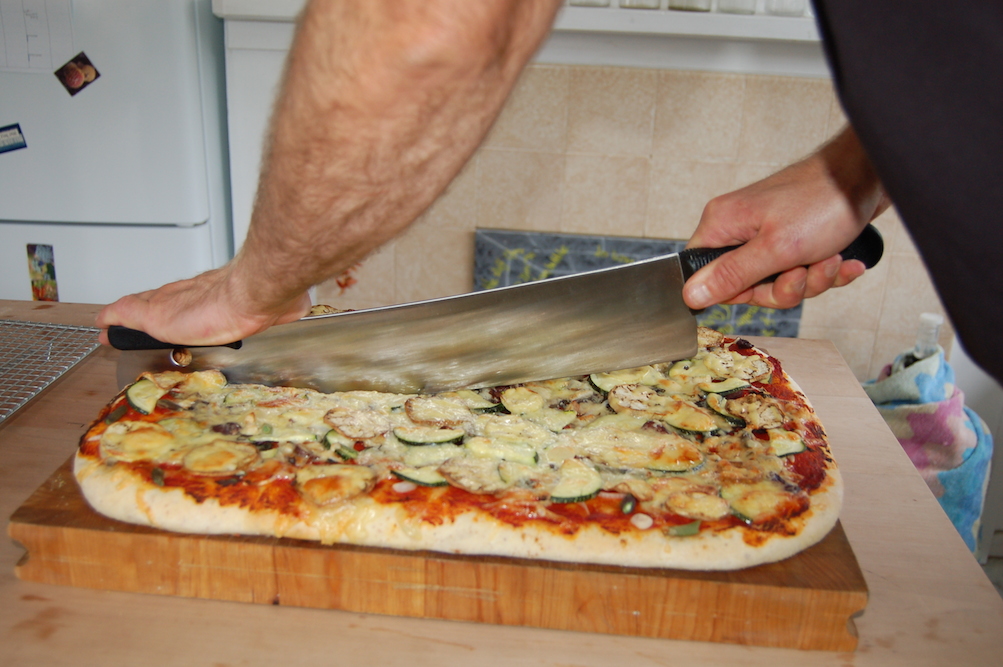
DSC_0011 smWe all have our favourite tools—the ones that fit the hand perfectly, or make a job easy. I have quite a few favourite tools in the kitchen. One of them is “Brisingr”, a knife so impressive, the kids named it after the sword in the fantasy series by Christopher Paolini. Brisingr is a handy and effective knife for big round vegetables like cabbage and pumpkins (Indeed, I once cut up 3 commercial cases of pumpkins in one session for a school event. The knife needed sharpening afterwards, but it made the job quick and painless). It’s also a fantastic pizza knife. Best of all, it just looks good. Hanging on the wall, poised to cut, or lying next to an expertly sliced pizza, it calls out, “Back off, lesser knives! I’m here to get the job done”.

Do you have a favourite kitchen tool?

Leftover Cake

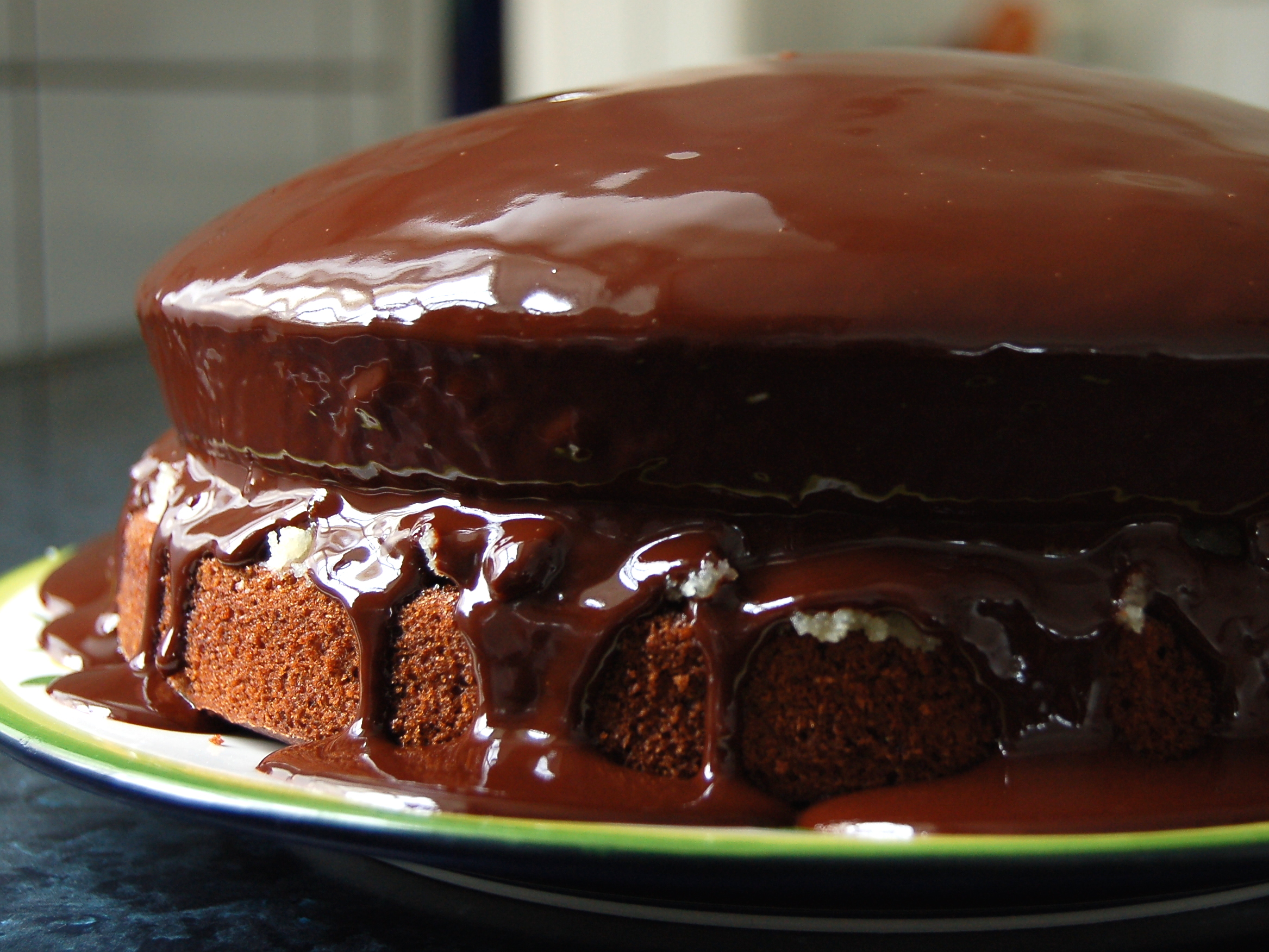
DSC_0006 cropAfter the Desolation of Smaug, I felt a need to redeem myself in the cake department. I also had some almond paste and some dark chocolate left over from the kids’ birthday cakes, so yesterday I created this beauty—as delicious as it looks. It’s a devils food cake, filled with almond paste, and covered with a chocolate ganache. Marvellously decadent!

Kiss me Nicholas

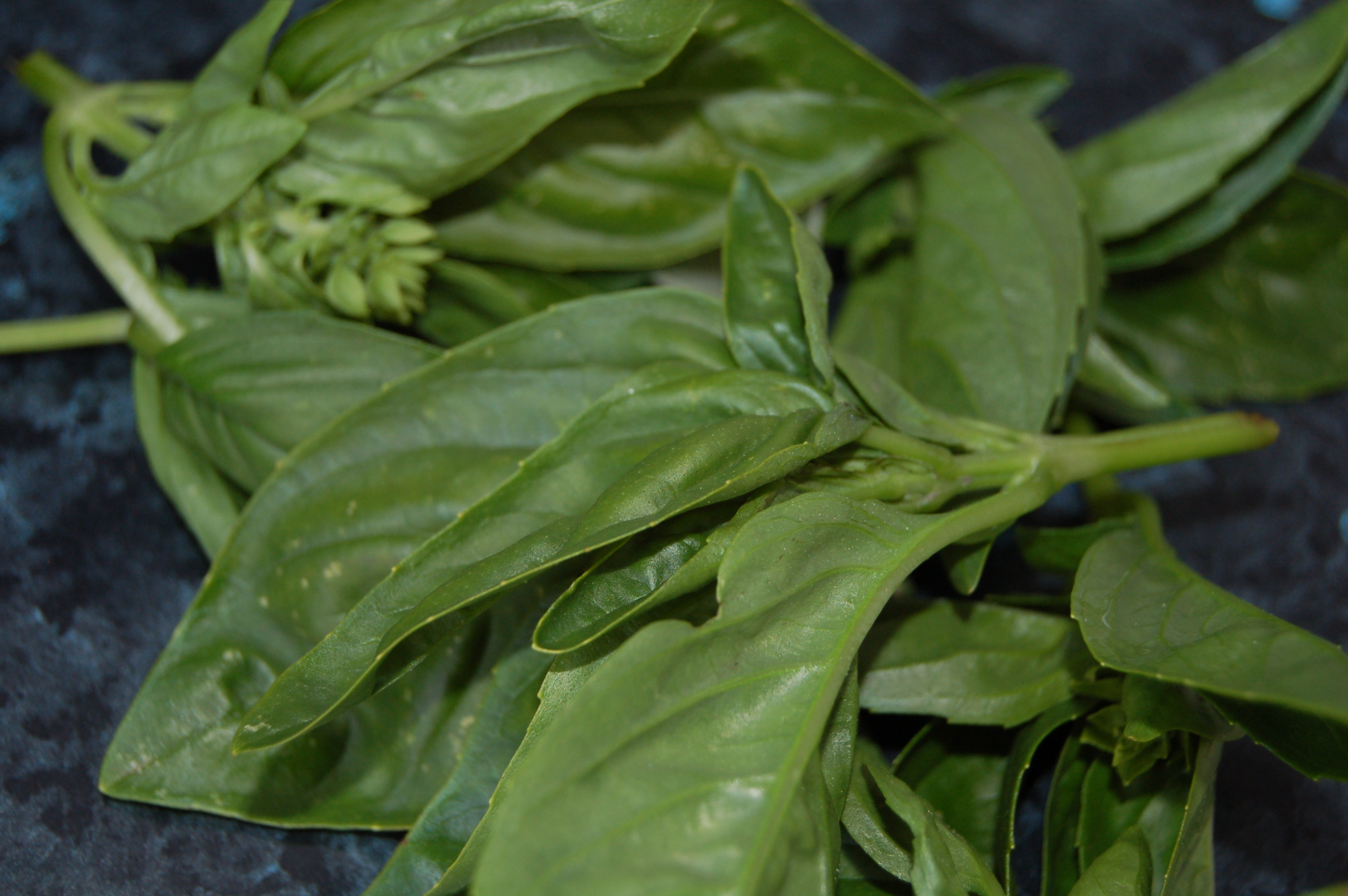
basil greenFor Valentine’s Day, I thought I’d write about one of my favourite romantic foods—basil, also known as bacia-nicola or kiss me Nicholas in Italian. Like most herbs, basil’s lore is mixed, being associated with both love and hate, but for today, let’s focus on love. What I like about basil is not that it will make a woman love you, as sage is supposed to do (if you thread the leaves onto the woman’s hair and bury it under her doorstep), or that it is an aphrodisiac, as saffron is said to be. What I like is that it is said to “attract husbands to wives”. Isn’t that nice?

Now let it be said that there is no scientific evidence whatsoever that basil attracts husbands to their wives. The two main aromatic chemicals in basil are methyl chavicol, and eugenol. Methyl chavicol is produced commercially for use in perfumes, flavourings and herbal supplements, and apparently doesn’t attract anything. Eugenol is also used in perfumes and flavourings, and also as an antiseptic and anaesthetic, particularly in dentistry. The only things eugenol is known to attract are male orchid bees (who use the chemical to make pheromones), and female cucumber beetles.

Alas, there is no scientific evidence that feeding my husband pesto will attract him to me. But I can’t help believing there is just a little truth in basil lore. After all, they say the way to a man’s heart is through his stomach. If I feed my husband a delicious meal full of basil (and what meal full of basil wouldn’t be delicious?), it stands to reason he might be attracted to me.

So I’ll go all out with the basil today, because it can’t hurt, right?


Salt

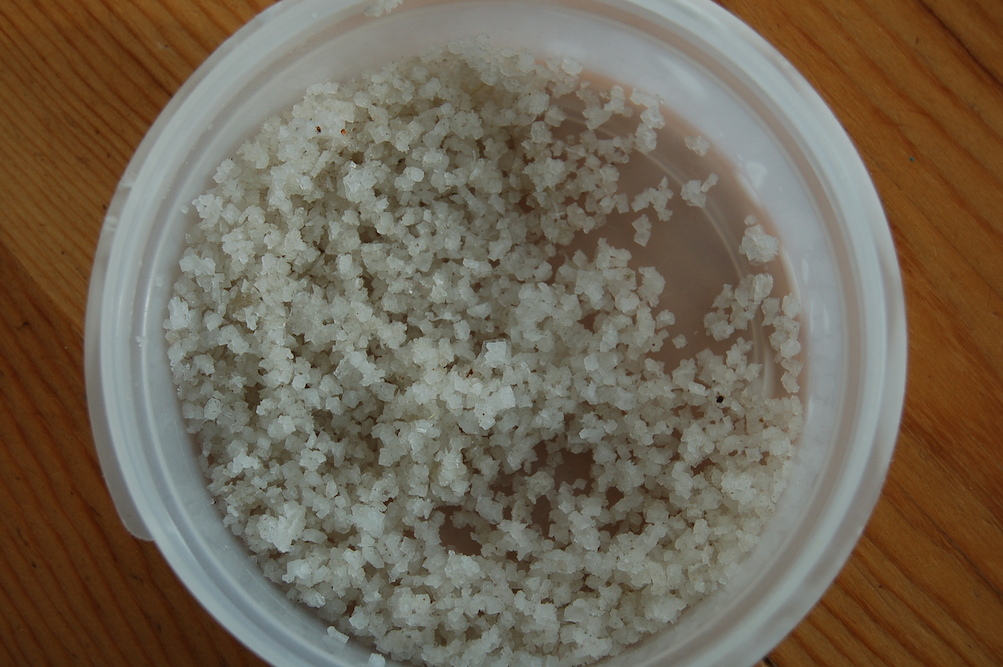
SaltsmIt preserves and flavours almost all our food. It’s been traded commercially for over 2600 years. It features in the language of nearly all cultures—you are “worth your salt”, you are “the salt of the earth”, you take things “with a grain of salt”, you “rub salt in a wound”.

Central as it is, it is one of those ingredients we don’t produce ourselves. During summer, our meals often consist entirely of products we’ve produced…except for the salt.

My daughter was determined to rectify that. Last week, she declared she was going to make salt. We popped out to the beach and snatched a bucket of sea water from a large and violent surf. She poured the water into a pan and set it on the porch. Within two days, she had a pan of salt…and, due to a dust storm, dirt. She tried again, this time protecting the pan from dust with a sheet of Perspex, propped up to allow air circulation.

The result was delightful, and surprising to us all. From a jelly roll pan full of seawater, she harvested about half a cup of salt. Even with the cover, some was too dirty to use, but the rest is beautiful. We enjoyed it on our corn on the cob last night, and it was everything a gourmet salt should be—a full-bodied taste of the sea. And so easy to harvest!

Half of New Zealand’s salt is produced just a few hours north of Christchurch at Lake Grassmere. The industrial scale process of harvesting 70,000 tonnes of sea salt each year is little different from our tiny experiment in a baking pan. Like we did, the process at Lake Grassmere relies on summer sun and strong, drying nor’west winds. We buy a lot of salt from Lake Grassmere, for cheese making, preserving, and cooking. But we might be buying less from now on. There’s something wonderful about harvesting this most basic of ingredients, this gift from the sea.

When Food Doesn’t Taste Good

It happens to the best of us. We get a cold, we feel lousy, we can’t taste much, and we can’t be bothered to eat. That’s how I’ve felt for the past week—sore throat, low grade fever, slightly upset stomach. The last thing I want to do is cook a meal. In my twenties, I’d have made myself a piece of toast and gone to bed early. It’s not that easy anymore. There’s a family that wants dinner, whether I do or not. There’s also a whole mess of vegetables out in the garden, clamouring to be eaten.

So I fall back on the standards—meals I can cook with little effort and without the need to taste test them before they reach the table. Oven-baked risotto is one of the best. This recipe is a variation on a recipe in Market Vegetarian by Ross Dobson.


Oven-baked zucchini and eggplant risotto

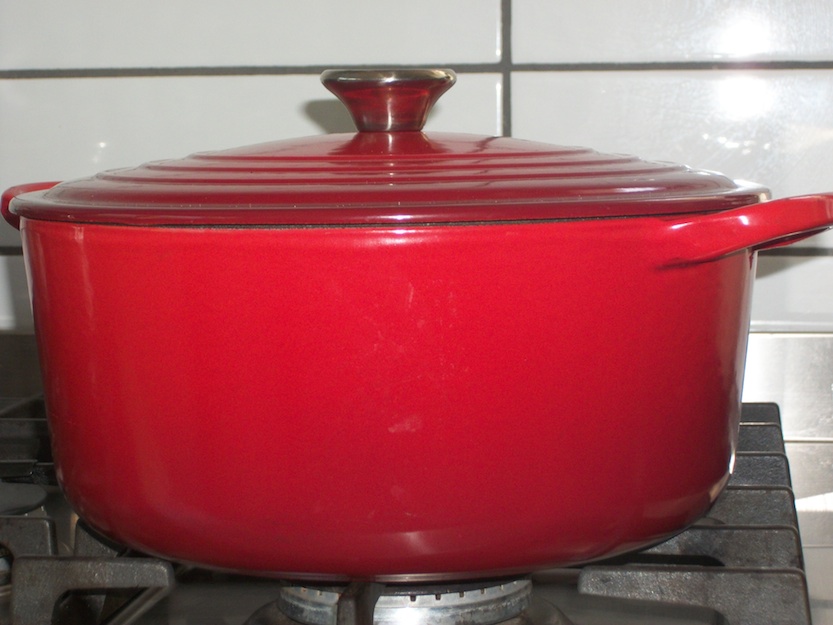
My beloved Le Creuset makes oven risotto a breeze.

My beloved Le Creuset makes oven risotto a breeze.

3 cups water or vegetable stock

2 Tbsp olive oil

1 onion, chopped

1 garlic clove, chopped

1 ½ cups Arborio rice

handful fresh basil, chopped

2 medium zucchini, chopped

2 medium eggplants, chopped

2 tomatoes, chopped

3 Tbsp butter

½ cup grated Parmesan cheese

Preheat the oven to 200°C (400°F). Warm the stock over low heat in a small saucepan. Put the oil in a flameproof, lidded casserole dish and set over medium heat. Sauté the eggplant, onion and garlic gently for 2-3 minutes until the onion has softened and the eggplant is partly cooked. Add the rice and the cook for another minute before adding the zucchini. When the rice becomes opaque, add the tomatoes and basil. Pour the hot stock into the casserole and stir well. As soon as the liquid starts to simmer, cover with the lid and cook in the oven for 30 minutes.

Stir in the butter and Parmesan just before serving.


Water

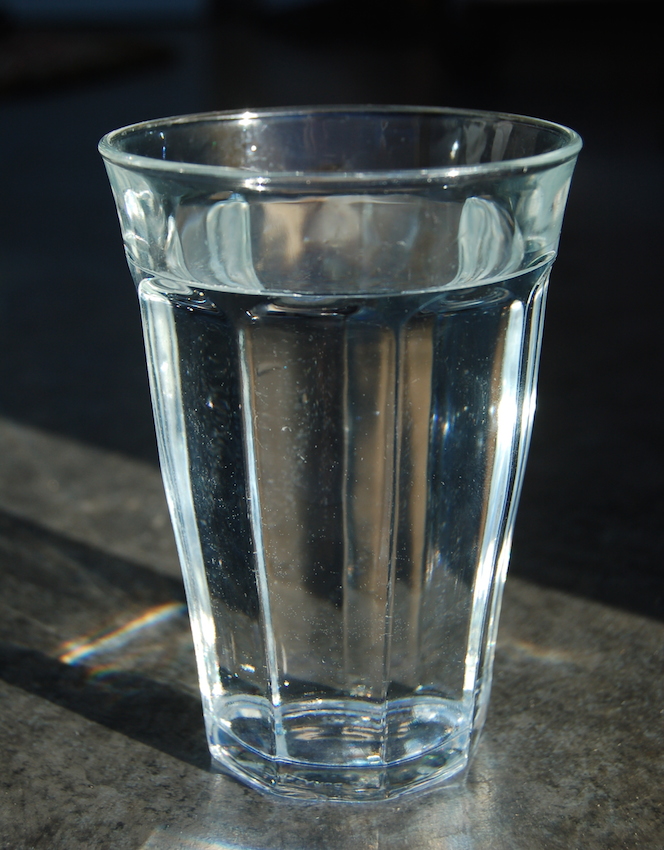
waterglasssmI was most of the way through a pond life lesson and leading 30 kids back to the nature centre when I had my first real lesson in dehydration. My world went black. I fainted. When I came to, I retched until long after my stomach was empty. Years later I watched a fellow Peace Corps Volunteer do the same after a long hot day in the field.

For a while, a small skink lived in our house in Panama. We named him Smaug. One day we found him listless and dull. It was the dry season, and we wondered if he might be thirsty. We offered a jar lid of water. He instantly pounced on it and began to drink. He was pert and perky the next day.

Last week, our son was complaining about helping with a garden task. He was dragging his feet and grumbling. “Have you had anything to drink today?” asked Ian. No. A glass of water, and he was a different boy—energetic and helpful.

Water.

Taken for granted when it’s there, terribly missed when it’s not.

I’ve been thinking a lot about water lately—naturally so, since it’s in such short supply here at the moment. I am ever grateful for the new well, and its ability to keep the vegetable garden green and our water glasses full.

We lost the old well in the September 2010 earthquake. When the power came back on, after four days of near-constant shaking, the pump poured out a slurry of sand instead of water. We spent five months trying to salvage the old well. They were five months of not knowing whether we’d have water or not each day; of carefully filling every vessel we could on the “wet” days, so we were sure to have water on the “dry” ones; of daily conversations with the technicians at Allied Water, who began to feel like family, they were here so often. More than once, I washed the laundry with rainwater in a 5-gallon bucket, just as I used to do in Panama. The garden went without, so we and the animals could drink.

It was a relief when the new well was dug, and we could again count on water for drinking, cooking, washing and irrigating. The careful habits stuck, though, and I try to make every drop count. And just in case, a week’s worth of drinking water sits in the shed, and a barrel of rainwater stands ready for watering and washing.

Unnecessary kitchen gadgets

Everyone has a drawer in the kitchen—the junk drawer. In it goes all the little things that don’t quite fit into a neat category—corkscrews, melon ballers, garlic presses, vegetable peelers, the odd rubber band.

In every junk drawer, there’s probably a selection of effective but completely unnecessary kitchen gadgets. Gadgets useful for exactly one thing. I had a rummage through ours today and found these gems.

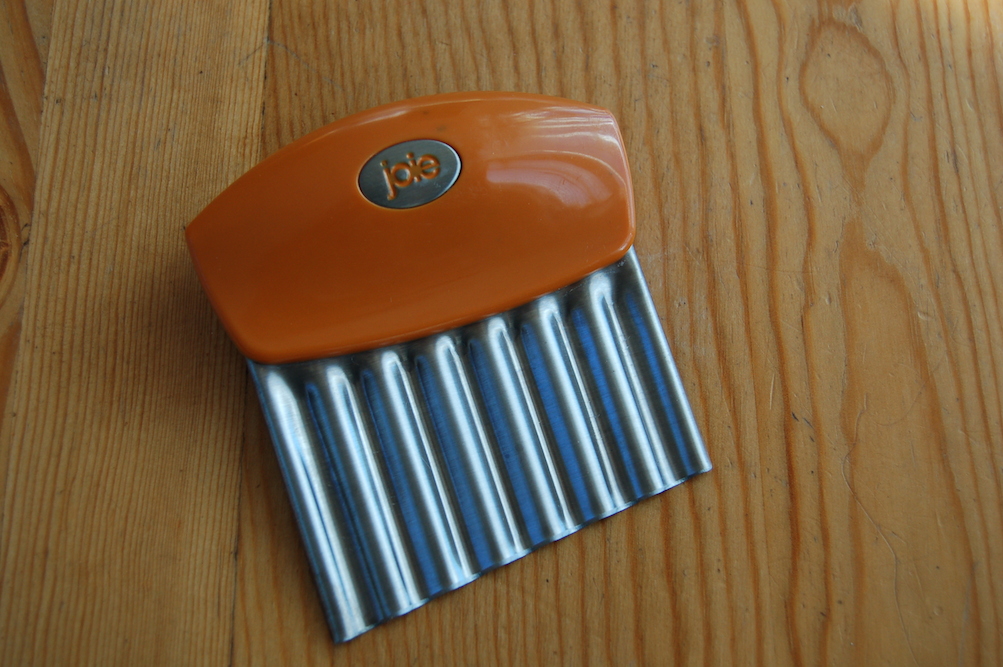
DSC_0010 smThe crinkle cut knife—This truly does make awesome French fries, but it’s shorter than your average potato, and who wants to sit there and carefully line up the little wavy lines so your fries look nice?


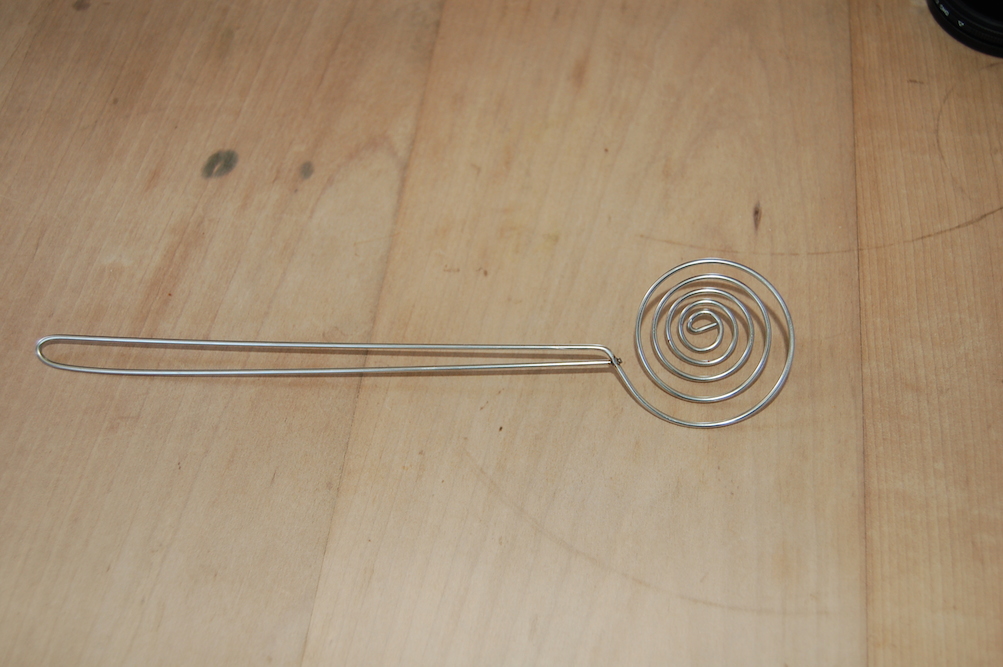
DSC_0012smThe candy dipper—If this worked as well as a fork, I might pull it out when I dip truffles. It certainly looks really cool. Unfortunately, an ordinary fork is easier to use.


DSC_0001 sm

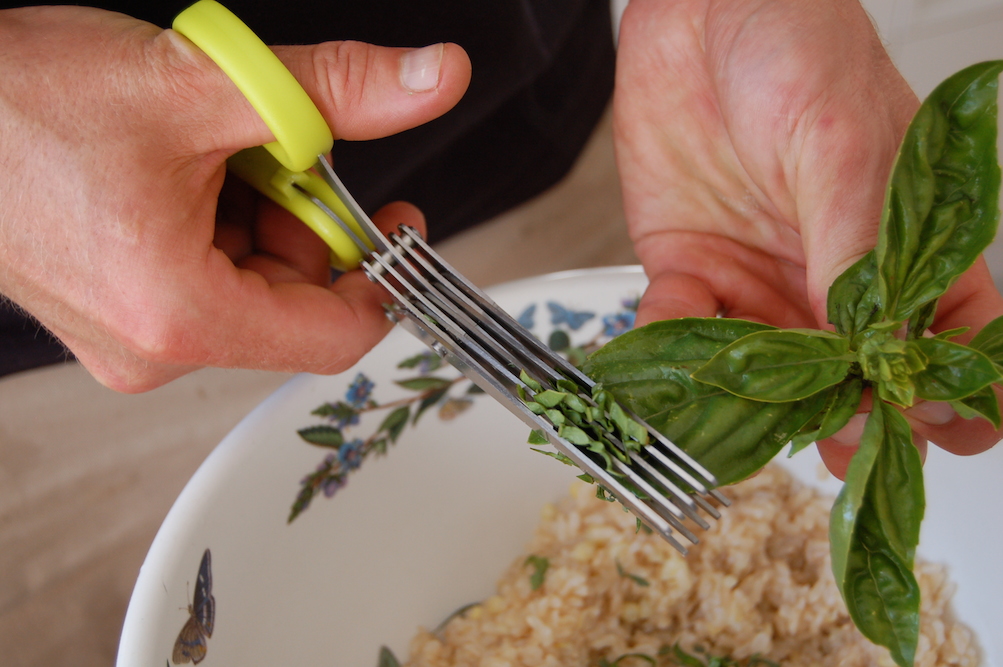
The herb scissors—These are all the rage right now here; every kitchen store has them. I took one look at them and thought, “Cute, but you’d never get them clean.” Ian took one look at them and thought, “Great stocking stuffer for Robinne!” We pull them out occasionally for the humour value, but I find a knife works just as well, and is easier to clean.

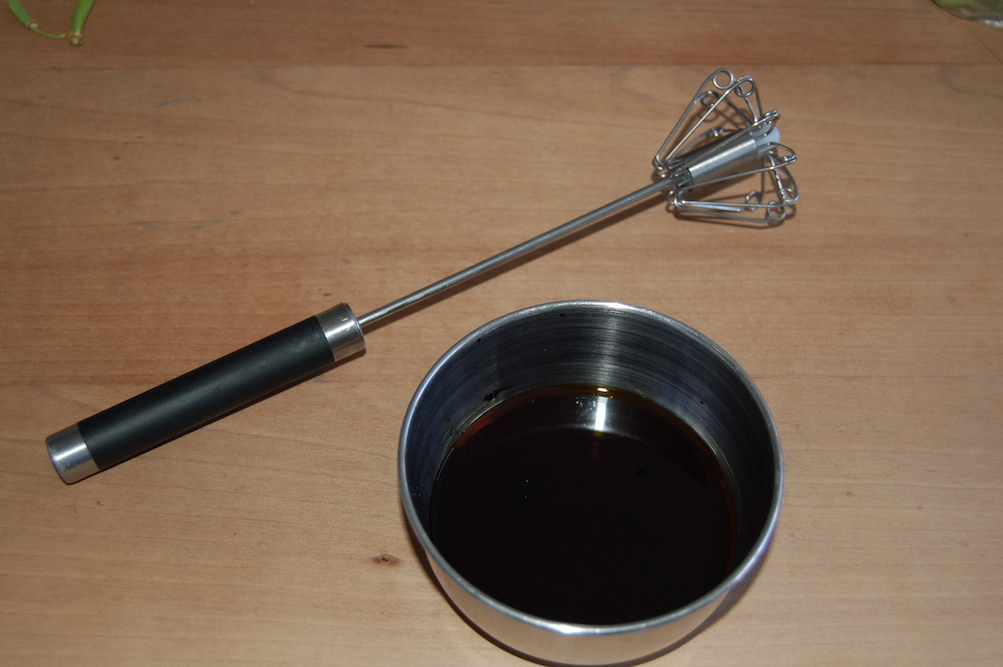
whisk2 smThe spring-loaded whisk—I don’t even really know what to call this gadget. Press down on the handle, and the whisk spins. For small quantities of vinaigrette, it does a fine job, but give it anything more, and it can’t manage. Even for stuff it could manage, I still tend to reach for a fork instead.

What unnecessary kitchen gadgets are in your junk drawer?


The (not so) Humble Onion

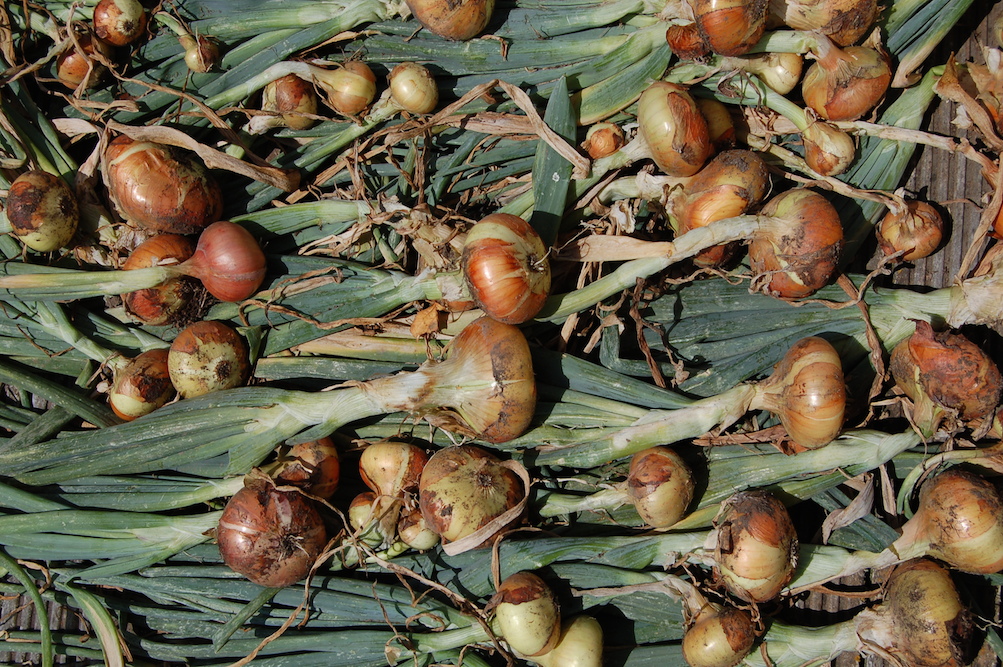
DSC_0010smI never thought much about onions until I tried to grow a year’s supply of them. Onions were just onions—a necessary component of most nights’ dinners, but not a feature. In fact, onion was probably my least favourite vegetable. My first attempts to grow enough for the year were abject failures. Onion was such a mundane vegetable, I just assumed it would be easy to grow.

I was wrong. First, the tiny seeds didn’t like to germinate in the garden, so I learned to start them indoors, and transplant the seedlings. Then I discovered that onions are very sensitive to drought, and I needed to improve my watering regime or they would never get larger than a walnut. I also quickly learned that they hate competition and I needed to keep the onion bed scrupulously weed free. Finally, I found they were heavy feeders and liked a generous helping of good quality compost in their bed. Such finicky tastes for a vegetable I assumed was little more than a weed!

I did eventually get it right, and can now keep us supplied with onions year round. As with most vegetables, I gained a greater appreciation for subtle differences among varieties when I started seriously growing onions. One of my best “discoveries” has been red onions. The first time I grew them, I cured and stored them like the others, with poor results. They never properly dried, and rotted or sprouted within a month of harvest. What I’ve since realised is that they should be eaten fresh. And when eaten fresh, they are like an entirely different vegetable—so sweet and succulent, that even I like them raw in salads. Now we start eating the red onions as soon as the first bulbs swell. They fit nicely in the food year, between the last spring onion and the storage onion harvest.

The best thing about them is they’ve taught me to better appreciate a vegetable I was never overly fond of before. I think about the times I’ve had French onion soup and didn’t like it. Was it because it was made with the wrong variety of onion? Did I spend the majority of my life unenthusiastic about onions because all I’d eaten were the store bought varieties? Seems I’m going to have to do some more research and try some new varieties. There are dozens to choose from in the seed catalogues!