Step Away From The Kitchen!

There's more to life than the kitchen!

There’s more to life than the kitchen!

“I don’t know what is more terrifying…that your blog makes you seem like this insane woman who spends all day in the kitchen, or that you really are an insane woman who spends all day in the kitchen.”

I just want to make it perfectly clear that I do not spend all day in the kitchen. I may be insane (indeed, I’m pretty sure I am), but not in that way.

For example, I spent all afternoon Saturday in the garden, and Sunday morning I cleaned the house and payed a social call to the dentist. I just finished editing a resource management plan for a client, and soon I will move on to the main task of each week day, writing and selling (well, trying to sell) my books (which have nothing to do with food, though sometimes characters do eat).

Have I spent an inordinate amount of time in the kitchen lately? Yes, at least on weekends. But it is harvest time, and extra work now means I can spend winter evenings sewing, or curled up with a book. I intend to enjoy every one of the frozen and canned meals I’ve been working so hard on lately, and I will take full advantage of the extra hours I gain later, spending them out of the kitchen.

Oh boy! Oh boy!

DSC_0005 copyEvery crack in my hands is stained purple. My fingernails have turned a dark grey. The floor, walls and cupboards in the kitchen are splattered magenta. There is a sticky splotch on my big toe that looks remarkably like a terrible wound.

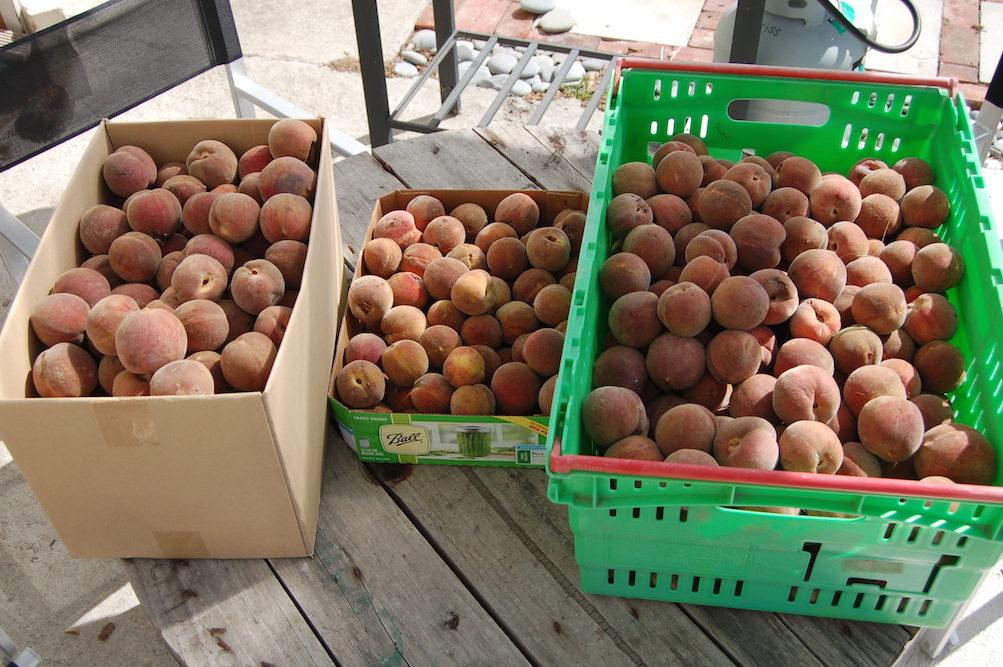
These are the inevitable result of working my way through the better part of 40 kg of black boy peaches.

The dentist called mid-week to say he had a box of peaches for me; I should call in at the office and pick them up (this is the gardening dentist I mentioned in a previous blog). Along with the 10 kg box of peaches was an invitation to coffee (and more peaches) this morning. We came home with a veritable carload of peaches (more than 30 kg, though I haven’t weighed them all). The first 10 kg became 10 pints of spiced peach butter. Then I filled up my remaining quart jars (14) with canned peaches, and made enough peach crisp for a generous dessert tonight and breakfast tomorrow morning.

There are still about 12 kg left. I’m out of jars, out of freezer boxes. Hmm…I suppose that means we’ll have to eat peach pie, peach cobbler, peach shortbread, peach muffins, peaches on granola, and just plain old peaches all week. Darn. 🙂

Step out

I step out of the light and steam of the kitchen,

Away from the hum of the fridge,

From the smell of cake and jam.


Orion hangs overhead in the cool still air.

The moon

Floats with him.

Light, noise and steam are shut in.

Night is out.


One breath.

Two breaths.

The night whispers.

Memory of the day fades

Into inky black sky.


I am caught.

Held.

Soothed.

By velvet silence.


In praise of the freezer

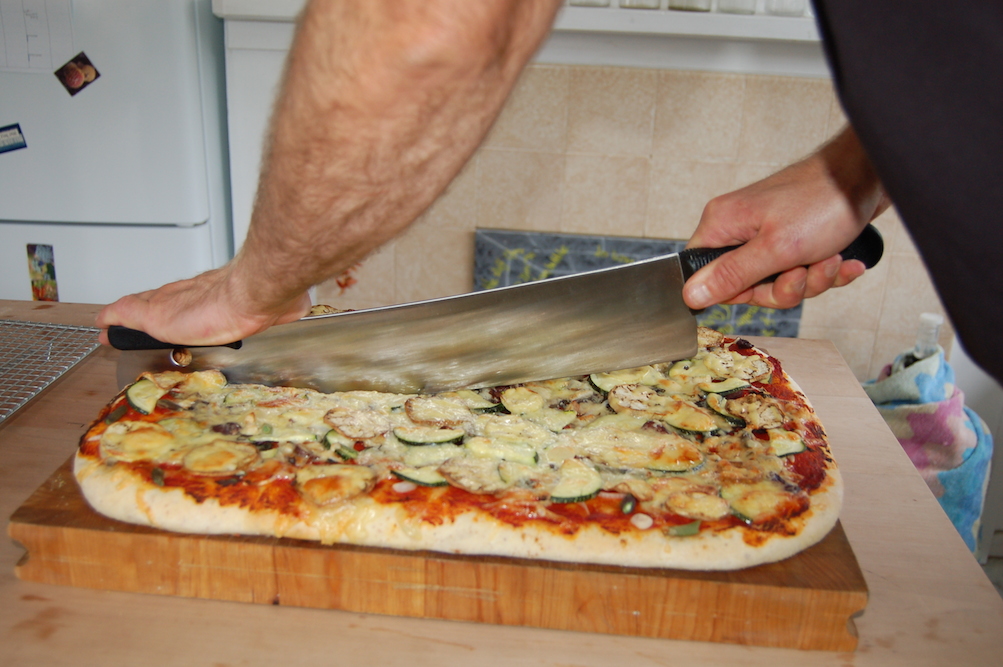
Hurrah for the freezer that allows us to enjoy hot homemade pizza in 15 minutes!

Hurrah for the freezer that allows us to enjoy hot homemade pizza in 15 minutes!

This evening, the kids have a piano recital. But first, we will stay late at school for band practice, and Ian will come home late from work because of a meeting. There will be precious little time between the day’s events and the evening’s event to cook and eat a meal.

Thank God for the domestic freezer (or perhaps I should thank the dozens of inventors who worked on developing and refining refrigeration technology since 1755). Despite the tight schedule, we will eat well this evening. A homemade pizza awaits us in the freezer. Fifteen minutes in the oven is all it will take to turn that icy block into a delicious meal.

This is our first year with a chest freezer, and we are singing the praises of modern refrigeration technology (at least until the power goes out for four days, which has been known to happen in this shaky land). In the past, we’ve not been able to freeze vegetables, because the little freezer space we had was needed for the 24 loaves of bread Ian makes every two or three weeks. We resisted getting a chest freezer for a variety of reasons—space constraints, cost, the frequency with which the power goes out (5 times so far in the month of March)—but after the cheese fridge died, we decided to give the chest freezer a try (it could sit where the cheese fridge had been, after all, and the cheese…well, we’d figure out where that was going later).

In the heat and bustle of summer, it was lovely to be able to quickly prepare fruit for freezing, rather than laboriously canning it and steaming up the kitchen. It was delightful to be able to plant as many peas as I had space for, knowing I could freeze the excess. I was thrilled to be able to freeze the extra corn, rather than watch it dry out on the plants. And when the pumpkins start to rot in late winter, I’ll be able to bake dozens of them at a time in the bread oven and freeze the flesh so we don’t lose them.

So, thank you William Cullen, Oliver Evans, Jacob Perkins, Alexander Twining, James Harrison, Ferdinand Carré, Nathaniel Wales and many, many others who have refined this technology over hundreds of years and brought us the modern freezer.

The Well-sharpened Knife

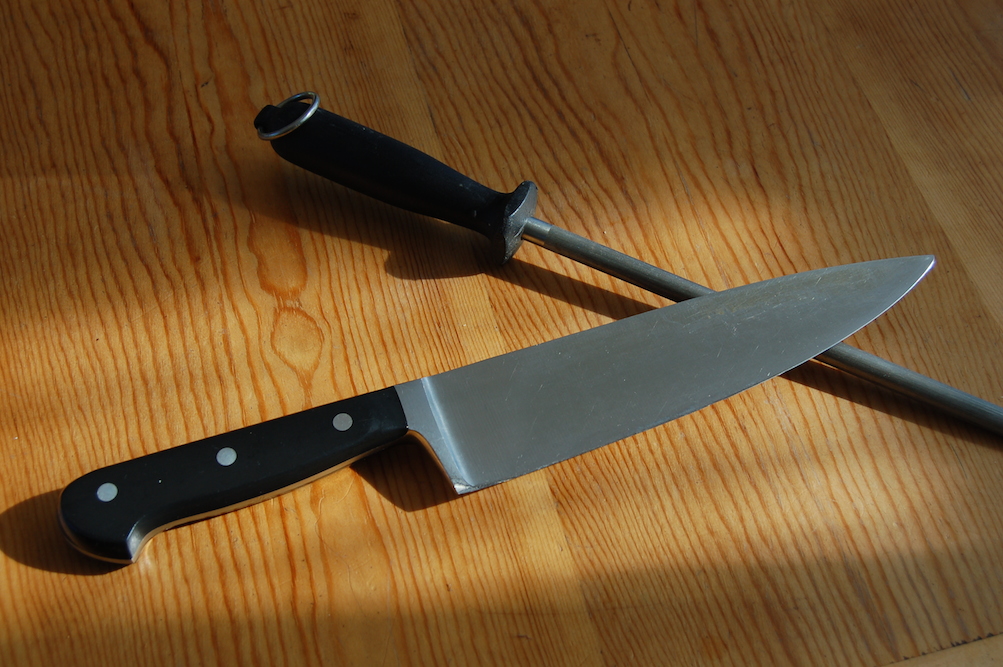
knife_sharpenersmTomatoes are always good for our knives. There’s nothing like a tomato to show you how dull a knife is, and the knives get sharpened more during tomato season than they do all the rest of the year. Last weekend, I sharpened my favourite tomato knife twice as I chopped 18 kilos (40 pounds) of tomatoes for pasta sauce. Then I sharpened it again the next day before slicing a tomato for lunch.

Years ago I saw a knife salesman demonstrating his wares. He cut a tomato to show how good his knives were. The knife sliced cleanly through the fruit, without squishing it, or tearing at the skin. It would have been an impressive demonstration, except that I know all about tomatoes and knives. The best knife in the world will destroy a tomato if it’s not well sharpened. The knife salesmen count on that. Their knives might be the cheapest, lousiest knives out there, but because they sharpen them before a demonstration, they’re guaranteed to cut better than any knife in the average domestic kitchen.

A well-sharpened knife is a pleasing tool (and much safer than a dull one). It’s too bad it takes a bushel of tomatoes to remind me to sharpen them.

Brought to you by the letter P and the colour Purple

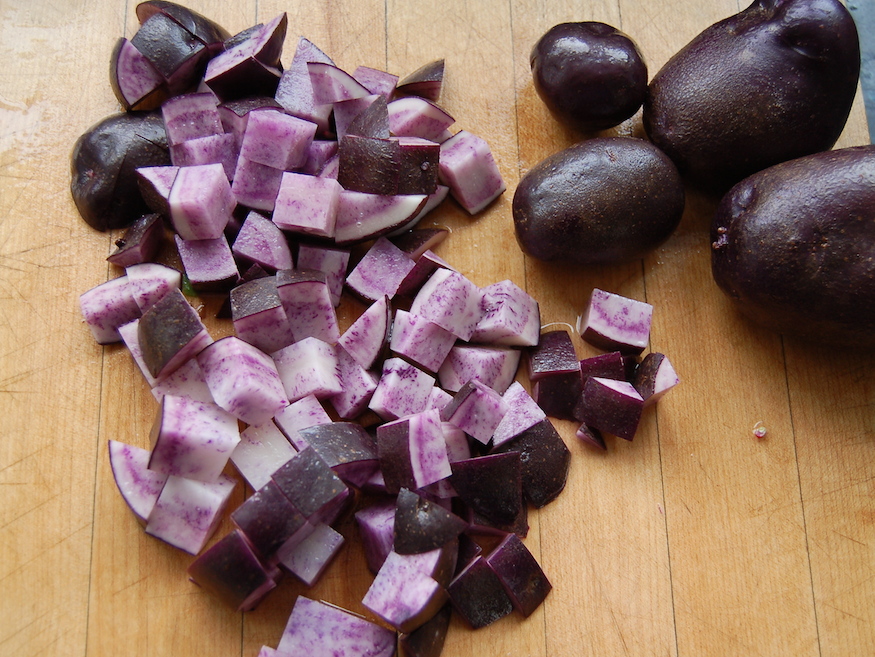
DSC_0004 copyPotatoes are one of my favourite foods. They go with just about everything. They can be baked, fried, boiled, steamed, and grilled. They can become a cool potato salad for a hot summer day, or a thick steaming soup for a cold winter night.

When we visited Bolivia and Peru years ago, I got to see and taste a wide range of potatoes I’d never experienced before. One of my most vivid memories is sitting in a boat travelling across lake Titicaca watching a group of local men pull out their lunches—handfuls of small, colourful potatoes that they ate like apples. Most of those potato varieties never make it out of South America, and our cuisine is poorer for it.

Roast veggies3sm

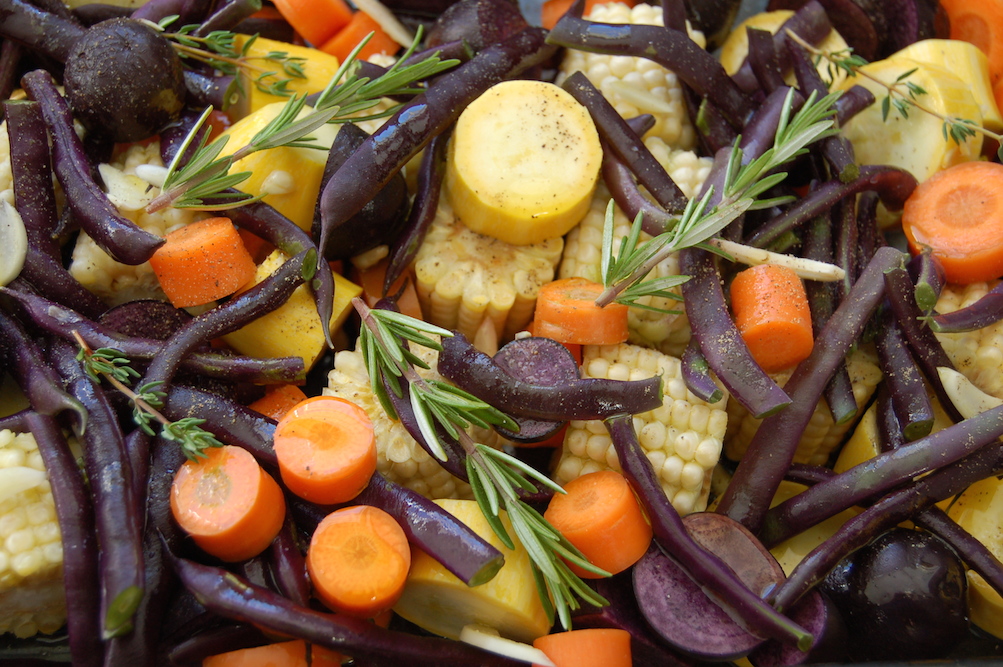
Purple potatoes (and purple beans, too) add a lovely colour contrast to other vegetables.

Supermarket potatoes are a rather uniform lot, but a greater variety can be had in seed potatoes. My all time favourite potato is Purple Heart. Even if it weren’t delicious (which it is), its purple colour would win me over. The colour remains during cooking, and adds a splash of whimsy to a plate. Purple mashed potatoes, anyone?

Favourite kitchen tools: Granny Fork and Pastry Knife

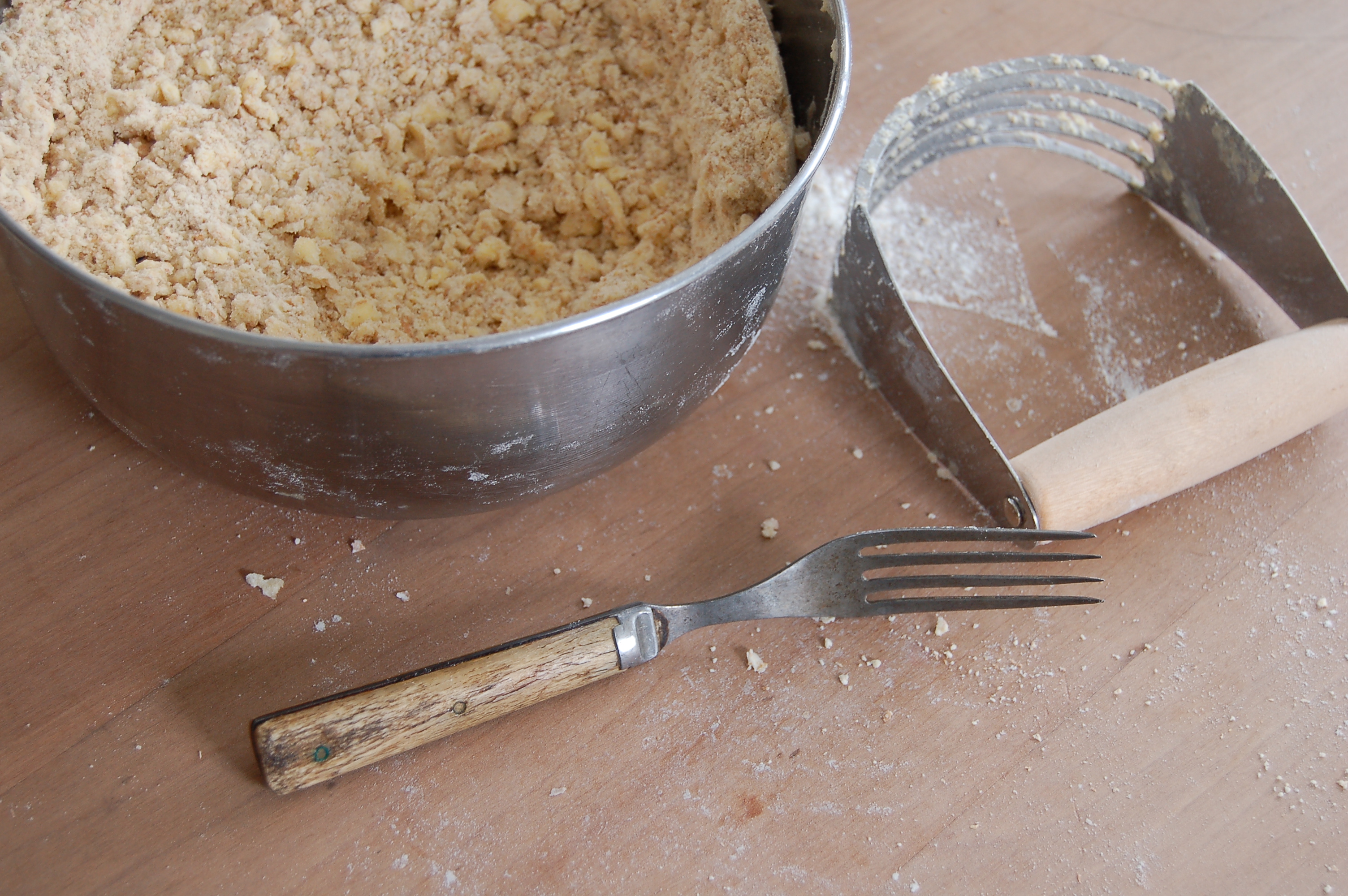
piedough3I thought it was time to share another favourite kitchen tool, and really had to share both of these together, because I so often use them together for pie dough.

The granny fork. I don’t know what this sort of fork is actually called, but everyone’s granny has one, so we call it a granny fork. Long, thin tines make it perfect for mixing water into pie crust, and the real bone handle, worn and stained, tells stories of kitchens past. The granny fork mixes history into every pie.

The pastry knife. I suppose most people don’t use this tool anymore. It’s been replaced by the food processor, which is far quicker and easier to use, for sure. But I enjoy the feel of a pastry knife. There is a pleasing rhythm to cutting butter with one of these, and it’s much quieter than the food processor when I’m making scones early on a Sunday morning while the family sleeps. I particularly like the old ones, purchased at second hand shops or garage sales—they fit the hand better, and are sturdier than new ones—but as I wear out a pastry knife in about a year (don’t think about that…it’s a lot of pastry!), I use whatever I can find.

So there we are—the Luddite’s favourite kitchen tools. While the food processor gathers dust, I quietly make my pie dough just like granny did.

Soy: The Asian/Pennsylvania Dutch Cultural Conundrum

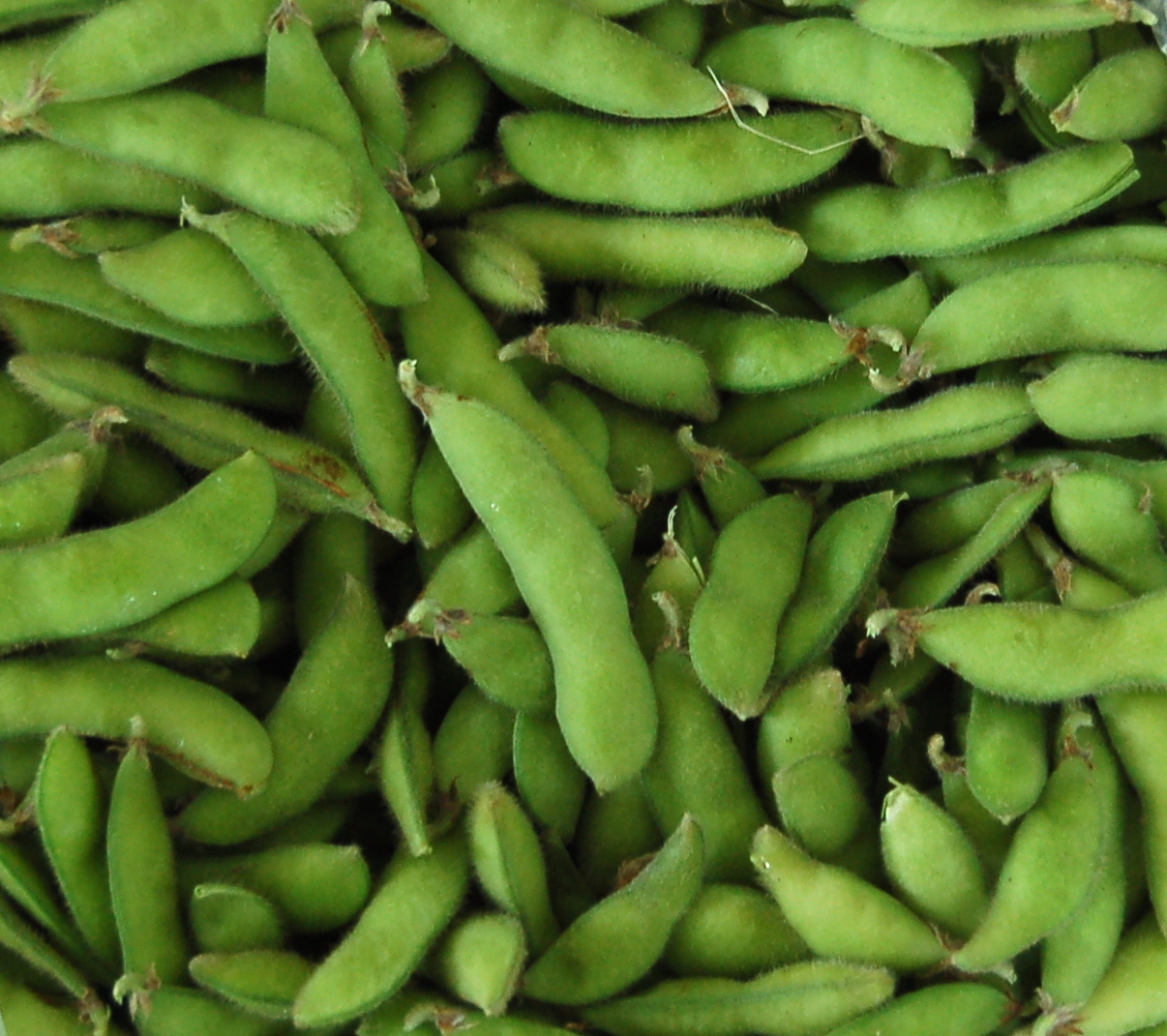
soycropI grew up thinking soy beans were an ordinary garden vegetable. Every year, my mother planted soy from seeds purchased at the tiny general store in Mastersonville. It wasn’t until I was 21 and finally living in a “real” house on my own (not in the university dormitories) that I realised the rest of America didn’t even know what soy beans were. My attempts to find fresh soy beans in 1990 in Ann Arbor, Michigan failed. In fact, the only soy product I could find were “soy nuts”—roasted, salted soy beans—at a health food store. They were stale and mealy, and so hard they nearly broke my teeth.

It seemed that no one outside of Lancaster, Pennsylvania ate fresh soy beans as a vegetable. Everyone thought I was nuts. I started asking my mother to send me a packet of seeds every spring, from the store in Mastersonville.

Many years later, I learned about Japanese edamame and recognised it as the fresh soy beans of my youth. Fresh soy beans have been eaten since at least the 1200s in China, Japan and other Asian countries, and are apparently popular bar food in Japan, served steamed and salted in the pod to be snacked on alongside your beer.

Soy beans arrived in the American Colonies in 1765, but were mostly used as a forage crop. When and why the people in south eastern Pennsylvania began to eat fresh soy is unclear. And why no one else in America did is even more unclear, since soy’s sweet, nutty flavour beats the socks off of other beans Americans commonly eat fresh (I’m thinking about those mealy lima beans…).

Soy beans as garden vegetable only arrived in New Zealand in the past 6 years or so. I was unable to get seeds when we first arrived, and when I first contacted an Asian seed supplier to enquire about them, I was told they were still building up their stock, and couldn’t sell them yet.

Even now, though I can get soy bean seeds, I have been unable to locate the appropriate bacterial inoculant for them, and they grow poorly here. Still, I grow them–my garden feels incomplete without them. However it came to be, I feel a cultural connection to soy beans—that Asian/Pennsylvania Dutch fusion food. Go figure.

Cleaning Up: Why I Don’t Need a Dishwasher

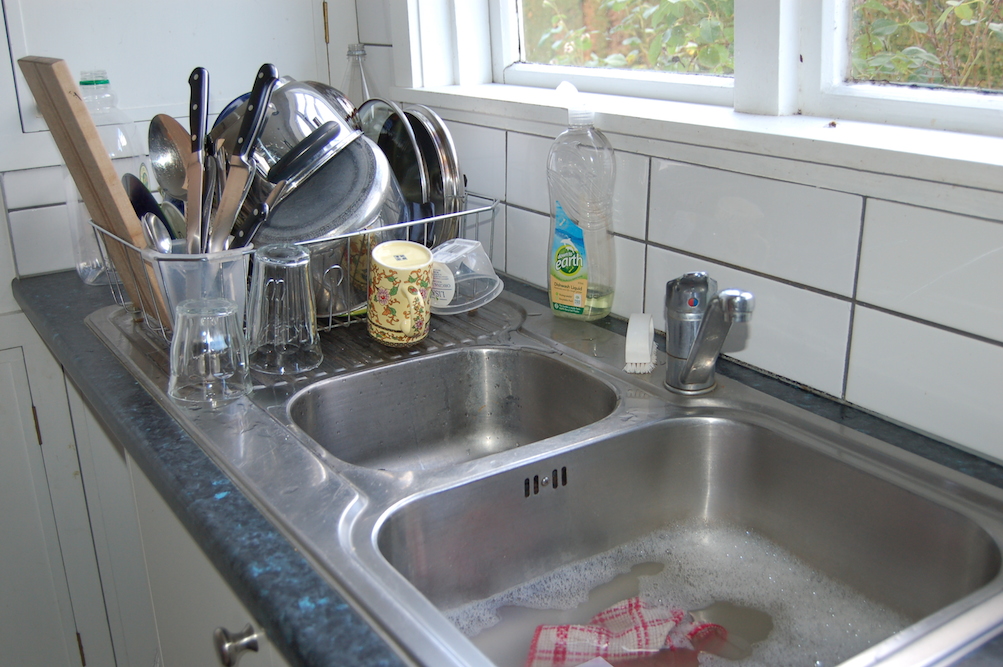
DSC_0004 copyI have lived 42 of my almost 45 years without a dishwasher. I remember washing dishes with my siblings as a child. In my memory, it was done willingly, but I’m sure we bickered over it as much as my kids do. Who will wash? Who will dry? Do we have to wipe down the table and kitchen counters, too? But, as with my own children, I know that once we’d finally settled the details and gotten down to the job, washing the dishes was full of laughter, silliness, and playing with bubbles.

It was a lesson in fairness, in being part of a team—the cook shouldn’t have to also clean up, everyone should have to do some of the work to feed the family, clean up tasks should be shared by all.

It was, and still is, also a time for communion with one another. As kids, it was a time to share jokes and plan the next great tree fort. As adults, it’s a time to debrief the day and discuss the future.

I find doing the dishes particularly satisfying after a party—the time you might least expect to enjoy washing up. When the last guest leaves, and the kids have gone to bed, we’ll start gathering up dishes—the wine glasses left on the windowsills, the plates scattered about the lawn, empty serving dishes, and crusty pots and pans. We heap the dirty dishes on the kitchen counter, fill the sink with hot, foamy water, and get to work. While we work we talk, and after a party, there is plenty to talk about. Though we were both present, each of us heard different news. We compare notes and observations. We discuss who is contemplating divorce, who is newly pregnant (but doesn’t want anyone to know yet), whose children are struggling at school, who just accepted a prestigious job overseas. The conversation wanders, and we compare our relationship to our friends’ marriages, taking lessons from all we’ve seen and heard, giving thanks for the solid relationship we have. We talk about the food—who liked what, how many people went back for seconds or thirds, how we might do things differently for the next party. We wander further into discussion of our lives and careers, ranging far and wide to talk about love, life and happiness.

Before we know it, the mountain of mess is tidy. The dishes are clean, dry and put away. The counters are clean, and we have assessed, evaluated, and repaired our lives.

All through the simple task of washing dishes.

Do I occasionally wish for a dishwasher? Yes, but only rarely. The daily chore of washing dishes is a daily opportunity for laughter and reflection that a dishwasher cannot give.

These are a few of my favourite things…

DSC_0015 copyI just had to share last night’s dinner. Ian and I spent all day in the kitchen yesterday, he making bread, and I making a vat of spicy tomato sauce. Most of the bread and sauce was squirreled away for later, but there was no reason not to enjoy them with dinner. The result was nothing less than a feast: bread sticks and Parmesan-crusted zucchini dipped in spicy tomato sauce, with edamame (fresh soy beans) and watermelon. So many of my favourite summer flavours, all together on one plate!

The Parmesan-crusted zucchini sticks are a delicious way to eat zucchini, and easy to make, too. Cut the zucchinis into generous sticks (small ones can be just quartered lengthwise) Mix up a breading of:

½ cup bread crumbs

½ cup grated Parmesan cheese

1-2 tsp rosemary (fresh or dry), finely chopped

½ tsp salt

black pepper and cayenne to taste

Dredge the zucchini sticks in beaten egg, then in breading, and set on a greased pan. Bake at 210°C (400°F) for about 15 minutes, flipping the sticks once during that time.