The (not quite) Perfect Icing, Part 2

I took another step on my quest for the perfect carrot cake icing on Sunday. This variation on cream cheese icing is made into a fluffy confection with the addition of quite a lot of cream, slowly beaten into the already fluffy cream cheese. 

I had my doubts. I’m not overly fond of a straight whipped cream topping. Would the cream cheese flavour come through enough? Would there be enough tart zing to it to offset the sweet?

The answer was no. 

Don’t get me wrong, this icing is GOOD! There’s enough cream cheesy goodness to give it body and depth of flavour. And the addition of cream means it gets away with having half as much sugar as other cream cheese frostings. The texture is divine—smooth and creamy, with a lightness you don’t often get in a cream cheese frosting. It’s delightful on the lemon and blackberry cupcakes I used it on. 

But is it the perfect carrot cake icing? Not quite.

So, the first icing was great on flavour, lousy on texture. This one is amazing for texture, not right for flavour. I can work with that. Trial number three will be a fusion of the two, hoping for that perfect balance.

It’s a tough job, but somebody’s got to do it. 😉

Meanwhile, I do recommend frosting #2. I think it would be spectacular on chocolate cake, and absolutely stunning rolled up in a bûche de Noël. Here’s the recipe if you want to give it a go:

170 g cream cheese
3/4 cup icing sugar (confectioner’s sugar), sifted
1 1/2 tsp vanilla
1 cup heavy cream

Beat the cream cheese until fluffy. Add the sugar and vanilla and beat until smooth. With the mixer on low, slowly pour in the cream. Then turn the mixer on high and beat until stiff peaks form.

Because of the quantity of cream in this frosting, I recommend storing cakes with this frosting in the fridge.

Baking One for the Team

I’ve recently sent out my next book, Demonic Summoning for the Modern Gardener, to beta readers. It’s a more fleshed out tale than my husband read and commented on last month. A few weeks ago, I mentioned on the blog that my husband had requested more carrot cake in the story. In my rewrite after his comments, I made chasing the perfect carrot cake a sort of running gag/tiny subplot through the book.

Then I decided I should include the perfect carrot cake recipe in the back of the book.

I had already developed the perfect carrot cake recipe, so that was easy to include. But the frosting … I’ve made some very good carrot cake frostings, but I can’t say I’ve hit on the perfect frosting. Everyone agrees, of course, that carrot cake must be frosted with a cream cheese frosting, but there’s a lot of variation among cream cheese frostings. I’ve had them too sweet, too grainy, too dense …

No better excuse for baking!

So last night I whipped up a carrot cake and tested out a new variation on cream cheese frosting. This one has no butter—just cream cheese as the fat. It also contains lemon zest and lemon juice for a bit of added tartness. Lots of potential to be awesome!

Flavour-wise, it’s good … the texture, not so much. It’s too gummy. Not fluffy enough. Definitely not the perfect frosting.

But never fear, we’ll suffer through this almost perfect cake (have I mentioned that I’ve had two pieces of it already, and it’s been only 12 hours?), and then I’ll make another!

Because I couldn’t let my readers down with sub-standard carrot cake, now could I?

If you have a favourite cream cheese frosting, let me know—maybe I’ll try it out. How many cakes do you think it will take to reach peak frosting?

Cardamom Coconut Pound Cake

I love cardamom, but I don’t use it very often. Inspired by the book, A Whisper of Cardamom by Eleanor Ford, which I checked out of the library last week, I decided to use it more frequently.

I’ve made Coffee Cardamom pound cake before (from Sweet by Yotam Ottolenghi and Helen Goh), and that was my first thought. But I didn’t have the instant coffee the recipe calls for, and anyway, coffee wasn’t what I wanted. I considered chocolate cake with cardamom, which would be good, but wasn’t really what I wanted either. 

What about coconut? Maybe with a spark of lemon to brighten the flavours? I decided to give it a go. Starting with a vanilla pound cake recipe, which I only loosely followed, I added lemon zest, cardamom, coconut, and a lemon glaze. The result was quite lovely. Here’s the recipe if you want to give it a go.

2 1/2 cups wholemeal (whole wheat) flour
1 cup all purpose flour
3/4 tsp salt
1 tsp freshly ground cardamom
250 g (1 cup) butter
1 cup icing (confectioner’s) sugar
1 cup granulated sugar
1 tsp baking powder
4 eggs
1 cup yogurt
2 tsp vanilla
grated zest of one lemon
1 cup coconut

For the glaze:
1/4 cup lemon juice
3/8 cup granulated sugar

Combine the flours, salt and cardamom in a medium bowl.

Cream together the butter, sugars and baking powder in a large bowl until light and fluffy (about 5 minutes). Add the eggs, one at a time, and beat well after each addition. Add the flour mixture alternately with the yogurt. Stir in the vanilla, lemon zest and coconut.

Bake in a greased bundt pan at 180℃ (350℉) for 55 minutes to an hour. Remove the cake from the oven and let sit in the pan for 5 minutes before turning it out onto a rack. 

To make the glaze, combine lemon juice and sugar in a small, microwave-safe bowl. Microwave on high for about 30 seconds, and then stir until the sugar is dissolved. Brush the glaze onto the warm cake until it’s all absorbed.

Winging it–Quince and walnut rolls

Sometimes, you try something new in the kitchen (like using an entire quart jar of black currants in a recipe for cupcakes), and it’s edible, but not something you particularly want to repeat. Then there are times you make something up and it just works.

On Saturday I made a cake that used all the eggs in the house and most of the butter. It didn’t leave me much to work with for Sunday breakfast. (This blog is not about Saturday’s cake, but it was amazing—the Brown Sugar-Spice Cake from King Arthur Flour’s Whole Grain Baking book—it’s what you’d get if gingerbread and pound cake had a baby together, and it was raised by carrot cake.)

So I figured I’d make a yeasted bread for Sunday breakfast. My initial thought was cinnamon rolls, which we do for Christmas breakfast every year. But I wanted something different—cinnamon rolls are for Christmas, not everyday. 

I started off by looking at recipes for various traditional fortified breads, but all of them either had eggs or lots of butter in them. 

So I decided to wing it.

Saturday evening, I combined two cups of warm milk, some yeast, about two tablespoons of butter, some salt, a spoonful of honey and enough flour (half wholemeal (whole wheat) and half high grade (bread flour)) to make up a nice bread dough. It rose beautifully, and after two hours, I rolled it out into a large rectangle. I spread it with about three quarters of a cup of quince paste, then sprinkled on some cinnamon and a generous handful of chopped walnuts. Then I rolled it into a log and cut the log into twelve thick slices, which I arranged, cut side down, in a greased 9 x 13-inch baking tin. 

I popped the pan in the fridge overnight, and the rolls were beautifully risen by 5 this morning. I gave them 30 minutes in a 210℃ oven, pulling them out when they were nicely browned.

While they were still warm, I drizzled a simple glaze over them—1/2 cup icing sugar (confectioners sugar), about 1/2 tsp vanilla, and enough milk to make a thick, pourable consistency.

It’s really too bad I didn’t actually measure most of the ingredients, because the result was excellent. In fact, I think it’s worth running out of eggs and low on butter purely to have an excuse to make these rolls. Maybe next time I’ll measure my ingredients so I can give you all a recipe—it’s definitely one worth sharing.

In the meantime, if you’re adventuresome and would like to give my loose winging-it recipe a go, I highly recommend it. If you can’t get quince paste, I reckon apple butter or a thick apple sauce would work nicely, too, though it’s hard to beat quince for flavour. 

Good luck, and happy experimenting!

Summer Soup 2024

Making and canning vegetable soup used to be a whole family activity, with the kids pitching in from a young age, picking and chopping vegetables alongside my husband and me. My husband would cook the soup while the kids and I washed dishes, and then I would can (bottle) it up.

We called it Summer Soup, because we made it at the height of the summer vegetable season (which ironically always falls in early autumn). On the cold rainy nights winter we could open a jar and enjoy a bowl of summer. 

When the kids were young, they delighted in recounting which vegetables they chopped, proud of their part in feeding the family. These days, making summer soup is a mostly solitary activity for me, the kids being all grown up. It hasn’t stopped me from making a vast quantity of soup. Last Sunday I designated as Summer Soup day because I had heaps of tomatoes, green beans, sweet corn, zucchini, and other vegetables to put in it.

Because it was Sunday, I started off at 5.30 am by making muffins for breakfast. While the muffins baked, I began chopping vegetables …

My husband had planned on baking bread on Sunday, but unfortunately he woke with a terrible cold that morning. He’d started his sourdough sponge the night before, so with instructions from him, I made up his bread dough after breakfast and set it to rise as I continued to chop vegetables.

The mixing bowls began to fill up in the kitchen as the morning progressed. After several hours and a few trips to the garden to pick more vegetables and dump scraps on the compost pile, I took a short break from chopping to divide the bread dough for loaves. Thankfully, my husband felt well enough at this point to form the loaves and get them started on their second rising, because I really wanted to finish chopping vegetables by lunchtime.

I finished the final chopping shortly after the focaccia came out of the oven. We sat down to enjoy fresh focaccia for lunch.

My break was short, because after lunch I began processing all those chopped vegetables. It was clear I wasn’t going to be able to fit everything into one pot, so I pulled out both my 20-litre stock pots and divided the vegetables between them. While the soup heated up, I prepared my jars and the pressure canner. I also filled my 12-litre stock pot with vegetable scraps and water and set it on the stove to simmer for a few hours for vegetable stock.

Much of the time commitment in making and canning vegetable soup is in the canning process. Each batch of seven jars has to be processed for an hour and 15 minutes, and then there’s the waiting time while the canner cools down enough to remove the jars before putting in the next batch.

While I was waiting for the canner to do its thing, I started in on the apples that needed to be processed. I peeled and sliced a mountain of apples. Once I’d emptied the soup out of one of the 20-litre pots, I refilled it with apple slices and cooked them up into apple pie filling—enough for three generously filled pies. The pie filling went into the freezer. 

The soup seemed to never end. Even after separating off two meals worth of soup for eating this week, I ran three full canner loads (21 quarts) of soup and one full load (7 quarts) of stock. The last jars came out of the canner at 9.15 pm.

I’m glad I only make summer soup once a year, but I’m thrilled to have all that summery goodness squirrelled away in the pantry. Bring on the rain and cold of winter—I can already taste the soup (followed by a slice of apple pie, of course!).
Zucchini and Tomato Tart

We’re in the bountiful days of summer right now. And while I’d like to be sitting in a chaise lounge enjoying that bounty all day, someone’s got to pick it and process it. At the moment, the processing mostly involves making pickles and chutneys, but there’s a lot more to come. Then there’s the necessary watering, weeding, tying up of tomatoes, planting of winter crops (because as John Snow says, winter’s coming)…

zucchini tomato tart

But at the end of each day, we do get to enjoy the fruits of the season. Last night I made one of my favourite mid-summer meals—zucchini and tomato tart.

The beauty of this tart belies its simplicity—just tomato and zucchini, embellished with a little parmesan cheese, garlic and basil. 

Back when I had dairy goats, I’d spread a layer of chevre on the bottom, too, which was divine. It also had the bonus of preventing the crust from getting too soggy. These days, without an unlimited supply of goat cheese, I put up with a soggy crust—the tart is still amazing.

This tart relies on having the best tomato and zucchini possible—it’s not a dish to make with out-of-season vegetables—so if you’re in the Northern Hemisphere, hang in there and enjoy this gem in July and August instead.

Download the recipe here.

Salad Trifecta

Holiday cooking is always special. And with the holidays falling during the summer here, it’s easy to create stunning meals without a trip to the grocery store.

For Christmas Day, I made homemade linguini, and my husband topped it with a delicious selection of garden vegetables—a fabulous, festive meal.

But Boxing Day’s dinner sort of blew Christmas Day out of the water.

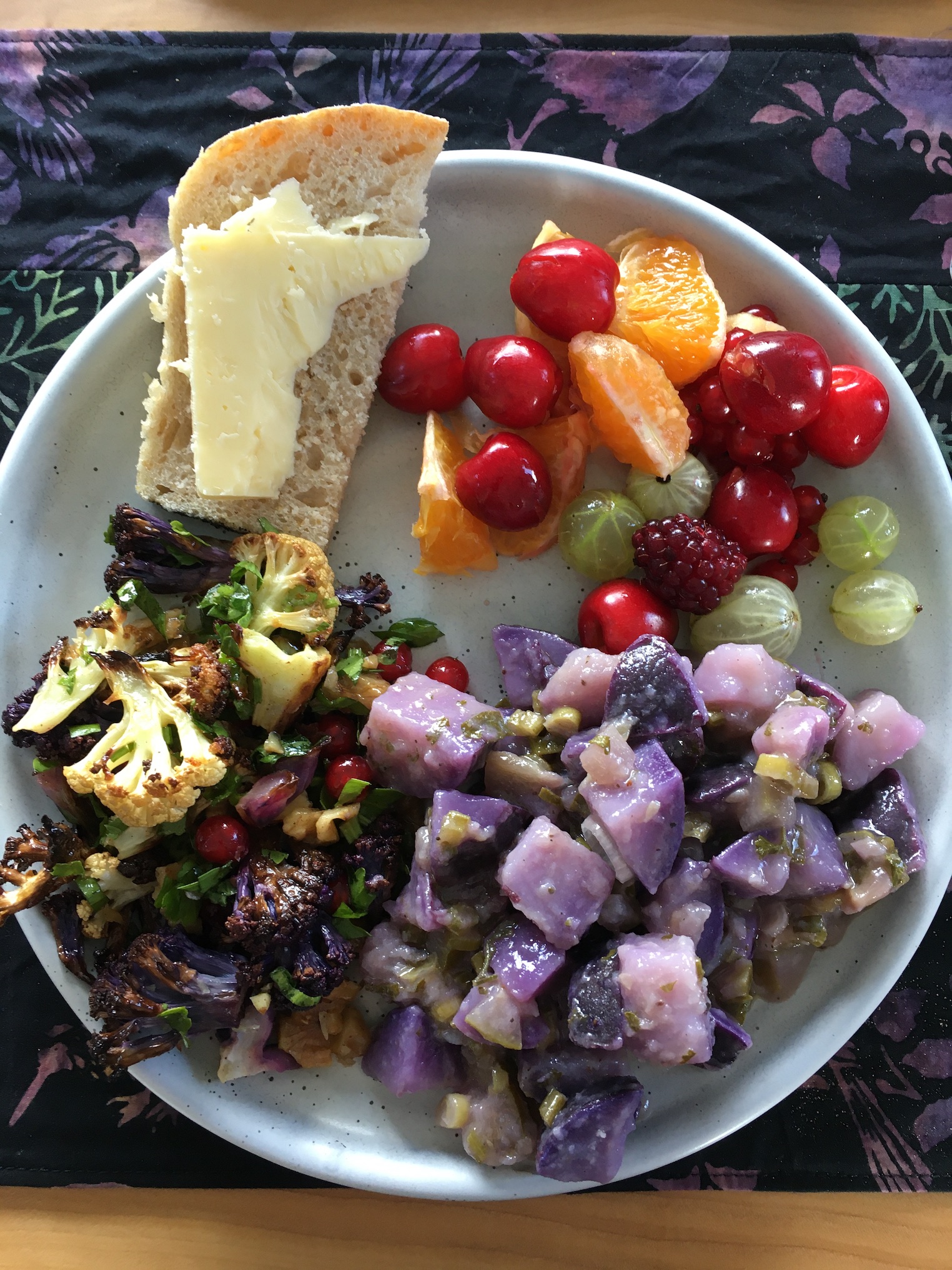
It was a simple meal. Just three salads.

A potato salad made with purple potatoes, sparked up with celery, spring onion, parsley, and homemade pickles.

An Ottolenghi-inspired roasted cauliflower salad made with purple and white cauliflower and toasted walnuts. A dressing of vinegar, oil, maple syrup, cinnamon and allspice added complexity to the flavours, and fresh red currants added crunch and zing.

A fruit salad made with the many fruits gushing from the garden these days.

The overall effect was a riot of colour and flavour. Best of all, nearly everything came from the garden. Holiday meals don’t get much better than that.

Biscuit Stars (a.k.a. Starry Scones)

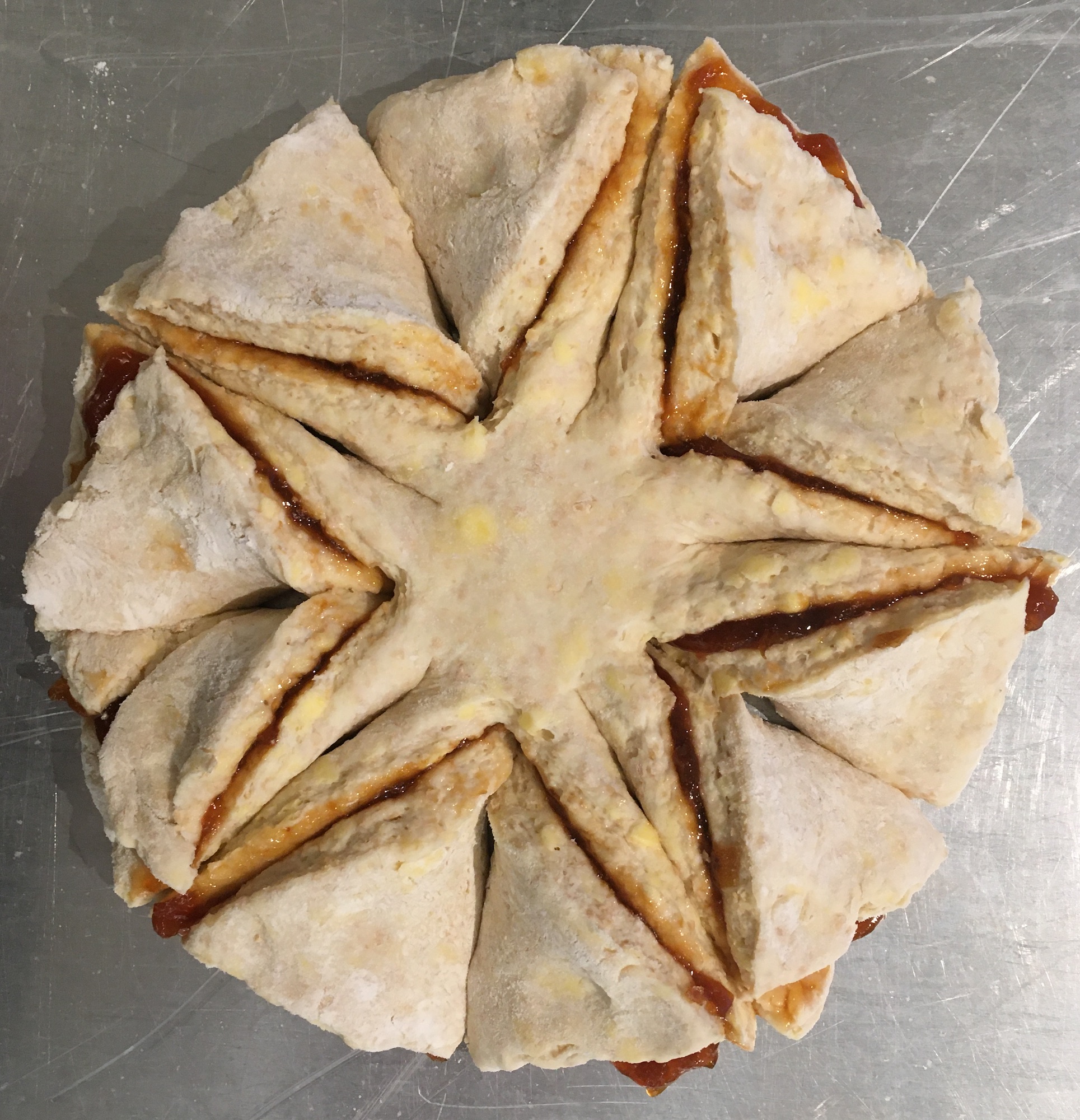
It’s been a long time since I blogged about biscuit stars (or Starry Scones, as I call them here in NZ, since ‘biscuits’ are cookies here). It’s been a while since I made them, too.

I was feeling whimsical on Sunday morning, though, and whipped one up for breakfast. As usual, it turned out beautifully and took minimal effort. It struck me as the perfect ‘fancy’ breakfast for the coming busy holiday season.

Try making one of these yourself—everyone will ooh and aah over your amazing culinary skills, and you never have to let on that it’s dead easy (I won’t tell …). 

Here’s the recipe. Enjoy!

Carrot Success

young carrots
Young carrots, fresh from the garden–nothing is better!

I used up the last of the fresh carrots yesterday—the last of the carrots that I planted a year ago at this time. 

There are still about 2 kilograms of frozen carrots left that should last almost until the first of this season’s carrots are ready to pick.

I can’t tell you how pleased I am about that. It’s the first time ever I’ve grown (nearly) enough carrots for the year. Usually I end up buying commercial carrots by mid-June.

We eat a lot of carrots. I have raw carrots for lunch every day, and at least half our dinners have carrots in them. We also discovered the joy of Mexican pickled carrots this year, and probably ate five kilos of them in the past two months. So a year’s supply is a whole heap of carrots! 

And if you wonder why I go to all the effort of attempting to grow a year’s supply of carrots, you have clearly never grown your own carrots. Home grown carrots put the tasteless, watery supermarket carrots to shame. Yes, they’re not as uniform in size and shape—I harvest some pretty ugly, twisted roots from my rocky garden—but their flavour (and colours) are far superior to commercially grown carrots.

I plant a wide variety of carrots. Last year I planted Paris Market, Scarlet Nantes, Touchon, Kuroda Improved, Tendersweet, and Purple Dragon. Touchon has been my workhorse carrot for years—flavourful, reliable and nicely shaped. When we moved to the rocky soil of the new property, I first tried Paris Market—a stubby round carrot I figured would be less bothered by the rocks. I wasn’t terribly excited about it at first—little carrots can be a pain to process in the kitchen, when you want a whole lot of carrot for dinner. What I didn’t know was that Paris Market carrot also has fantastic flavour for eating raw, and roasts beautifully as whole little carrot nuggets. It can also grow to a whopping size if you let it. And because of its shape, it’s easy to pick in my heavy clay soil. It’s beginning to nudge Touchon out of the top spot on my favourite carrots list.

Now that I’ve successfully grown enough carrots, my goal this year is to spread my carrot planting over a longer period, so I get just as many carrots off half the garden space, and so I don’t have 40 kilos of carrots in the fridge at any one time. 

And there’s one of the many reasons I love gardening—there’s always something new to learn, new to try. There are always tweaks and improvements to be made. A gardener can always aspire to a more productive, less weedy, less labour-intensive garden for the coming season.

Happy gardening everyone!

Winter Culinary Adventuring

One of the best things about winter is the excuse to try unusual foods. During every other season of the year, there are so many vegetables coming out of the garden, it feels wrong to buy any fruits or vegetables. And as a rule, I only buy local produce, even during the winter, but once in a while it’s fun to splurge.

can of jackfruit

A few weeks ago I bought a can of jackfruit. This tropical tree is related to mulberries and figs, and produces large fruits with stringy flesh. The young fruits (before they ripen and become sweet) are used as a meat substitute, because the texture is somewhat meat-like.

I’ve eaten jackfruit in restaurants, but never cooked with it before, so it seemed like a good winter splurge.

Jackfruit itself has little flavour—its intrigue is in the texture. Most of the jackfruit recipes I found online take advantage of this texture by using it in dishes most commonly made with shredded pork.

After scanning a number of recipes, I decided to make gyro-inspired jackfruit wraps.

flatbreads fresh from the oven

I started by making flatbreads based somewhat loosely on a naan recipe I have.

Then I made a hash of shredded jackfruit, mushrooms and onions, heavily spiced with paprika, smoked paprika, and chipotle. A dash or two of vegetarian Worcestershire sauce gave it a little tang, and a handful of fresh cilantro tipped it towards Asian flavours.

Finally, I made a yogurt and tahini sauce to go with it, generously flavoured with fresh mint.

I’m not sure what cuisine the final Greek/Indian/Southeast Asian wraps would fall into, but they were absolutely delicious. The hot and spicy jackfruit hash was balanced beautifully by the yogurt sauce, and the fresh flatbreads, still warm from the oven were everything a good flatbread should be.

jackfruit has cooking on the stove

It was fun to cook with a new and unusual ingredient, and the results were well worth the effort. I won’t be adding jackfruit to my regular grocery run, as it’s not exactly a local food (the can I bought was imported from Thailand), but I’ll definitely consider it next time I’m looking for a little winter splurge.