On-the-Fly Spinach Tart

2016-11-04-18-25-58-smMy plan was an easy dinner tonight. I’d been saving a few artichokes—letting them get big, so we could have steamed whole artichokes. I figured I’d make a salad with some leftover cous cous in the fridge, and maybe fry up some tofu crusted with herbs and parmesan cheese. Quick and easy.

Then I went to the garden and saw the spinach. Beautiful, glossy leaves, loving the bit of rain we’ve had recently. There was so much of it, I couldn’t resist.

So instead of a quick, easy meal, I made a spinach tart to go with those artichokes.

Dinner was a little late, but it was well worth it. There wasn’t a crumb left when we were through.

Trying to work quickly, I didn’t bother looking for a recipe. Here’s what I did.

I made a standard pie crust—enough for a single-crust pie. I rolled it out and lined my tart pan, then put it in the fridge to chill while I prepared the filling.

For the filling, I used:

Fresh spinach (maybe 1kg (2 lbs), coarsely chopped)

Fresh chives (a good handful, chopped)

Fresh dill weed (4 Tbsp, chopped)

1 cup grated goat cheddar

4 large eggs

salt and pepper to taste

I cooked the spinach and chives with a few tablespoons of olive oil until the spinach was well cooked, and most of the water had boiled off. I removed it to a bowl to cool. When it was cool enough to handle, I squeezed more water out of the spinach, and drained it off. (You want the spinach pretty dry, to keep the crust from getting soggy.)

I mixed in the dill, cheese, eggs, and salt and pepper, then poured the mix into the prepared crust. I baked it at 190°C (375°F) for about 40 minutes. I let it cool ten minutes before serving.

Umami Stacks

umamestack1My husband came home from work early yesterday, which gave us a rare mid-week chance to cook dinner together.

“What I want,” he said, “is some sort of pastry. Little rounds topped with feta cheese and…I don’t know what. What’s out in the garden?”

“Pak choi, asparagus, artichokes…” I began. “Artichokes would be good.”

“Yeah, but a lot of work.”

“Not if you use last year’s canned ones—there are still some left.”

Before we knew it, we had concocted these incredible little pastries. We called them umami stacks for their dose of umami-rich ingredients. They were as beautiful as they were delicious. With mid-week meals like this, it’s no wonder we never bother to go out to eat.

We measured nothing, but here’s an approximation of a recipe…

Make your favourite pie crust—enough for a double-crust pie. Roll thin and cut into 8-10 cm (3-4 inch) rounds. Arrange the rounds on ungreased baking sheets and chill until you’re ready to use (my recipe made 24 rounds).

Toast a few tablespoons of sesame seeds in a dry skillet until browning. Grind them in a mortar and pestle with some coarse salt and black peppercorns. Set aside.

Slice a generous handful of portobello mushrooms, and sauté with a little garlic. Set aside.

Steam 10 asparagus spears. Remove 8-10 cm tips and set aside. Chop the remaining stems.

Mix in a large bowl, mashing slightly:

  • feta cheese (about 125 g)
  • canned artichokes (1 pint jar)
  • spinach (several good handfuls, cooked well)
  • fresh dill weed (a handful, chopped)
  • 1 egg
  • the chopped asparagus

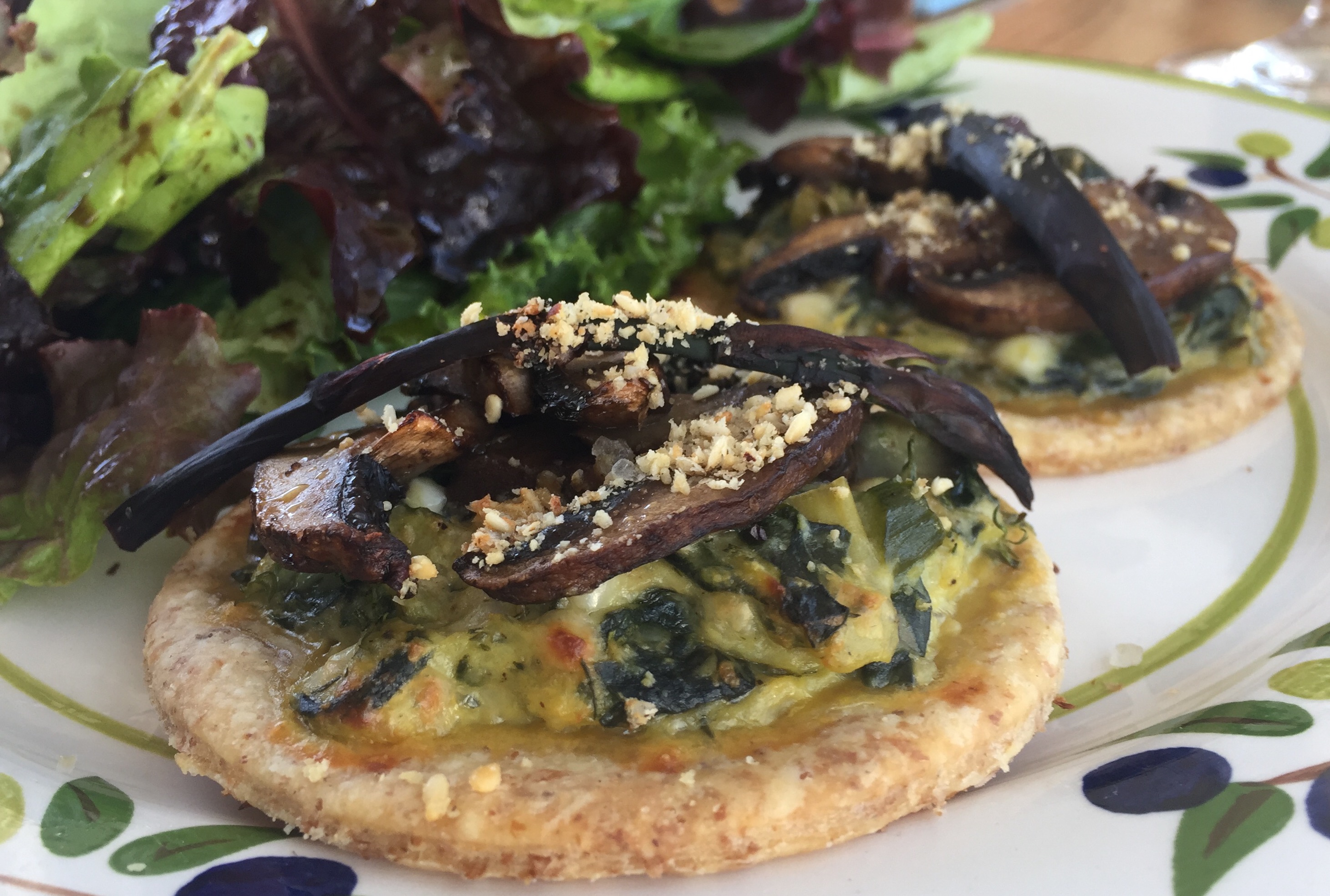
Spread a dollop of the feta mixture on each pastry round. Top with a few slices of mushroom and an asparagus tip. Sprinkle with the sesame seed mixture.

Bake at 190°C (375°F) until the pastry is lightly browned—15-20 minutes.


*We had six pastry rounds left over. I spread them with softened butter, sugar, and cinnamon, rolled them up, and baked them with the umami stacks. Mmmmm!

Time for Thyme

2016-10-10-09-15-06Thyme is one of my favourite herbs. In spring, its lush new growth encourages me to put it in almost everything. Nearly everything is better with thyme, but it is especially good with braised carrots, eggs, pumpkin, and mushrooms. Mixed with good olive oil, also makes an excellent marinade for bocconcini—little mozzarella balls.

It’s one of those herbs that we plant more of than we need for culinary use, because it’s so pretty in the garden. There are around 400 varieties of thyme. Some are more culinary, others are more ornamental. Some grow into 30 cm tall shrubs, others creep low to the ground.

Thyme is a tough little plant. It puts up with hot dry conditions, and recovers from even the most aggressive pruning. The low-growing varieties can even be used as a fragrant lawn (though at our house, there’s no stopping the couch grass coming up through it).

Its white, pink or purple flowers are attractive to a wide range of insects. On ours, we regularly have honey bees bumble bees, flower flies, and butterflies—and the preying mantids that eat them.

Truly, you can never have too much thyme.

A New Oven

2016-09-24-12-46-29

Partly deconstructed old oven.

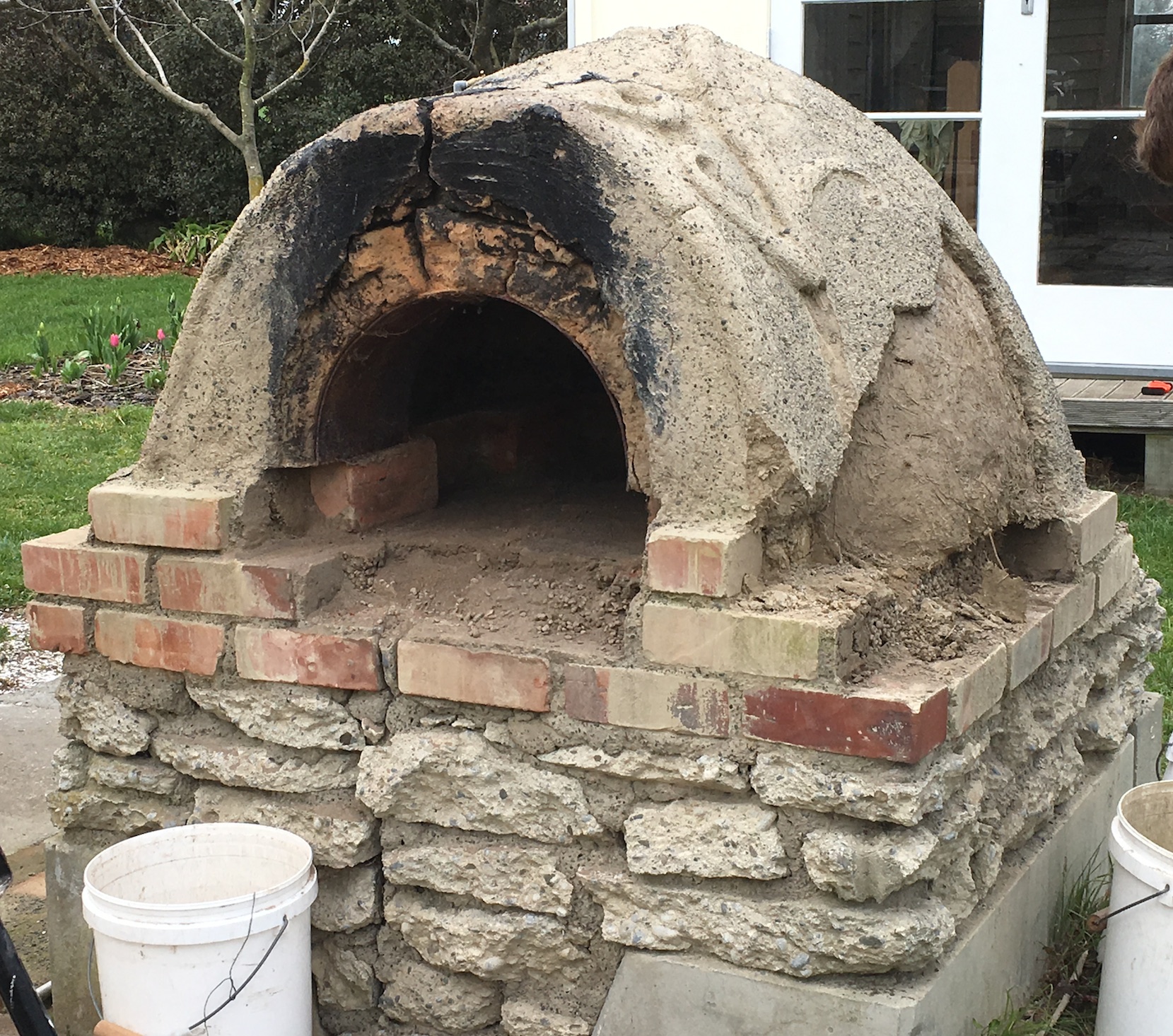
The old bread oven was almost ten years old. Theoretically, it might have lasted longer, but earthquakes and aging bricks took their toll. A crack split it top to bottom, and we regularly had to pick gravel out of our bread.

So the kids spent last weekend dismantling the old oven to make way for a new one. This one will be quake-proofed with a reinforced concrete base, and include such luxuries as an ash pit, a chimney, and a roof.

2016-09-28-16-43-21

Ready to pour the new foundation.

The bread oven is my husband’s project—he’s the family builder and the bread baker. But all of us will lend our muscles to the effort. We’ll mix concrete, haul bricks, and provide whatever brute labour is necessary.

And all of us will enjoy the breads, cakes, cookies, and dinners that come out of it.

Mmmm…I can taste them already!

Beetsteak

beetsteakI was clearing a garden bed today and pulled out a beet—forgotten in the masses of summer produce—left from last year’s garden. It was the size of an adult’s head, with dozens of sprouts coming from it.

I decided to take it to the goats, who love beetroot. On the way, I showed it to the family—it was impressive, after all.

My husband wouldn’t let me feed it to the goats. He was curious to know just how woody a beet that size would be.

So he made beetsteaks. He used our big pumpkin knife to slice it into giant slabs, then steamed them and grilled them with a spicy marinade.

The result…

Edible…mostly.

But I think I’ll feed any other beets this size to the goats next time.

North African Salted Lemons

Salty lemons and sweet lemon curd...mmmmm.

Salty lemons and sweet lemon curd…mmmmm.

My husband brought home a grocery bag full of lemons yesterday—a gift from a colleague with a prolific lemon tree.

When life gives you this many lemons, you have to be more creative than lemonade.

The first thing I did was make lemon curd, which is one of my favourite uses of lemon.

But when I was done with that, you couldn’t tell I’d taken any lemons out of the bag.

So I searched around and found a few recipes for salt-preserved lemons.

I was intrigued. We’ve been using more and more lemon in our savoury cooking, and salted lemons should be perfect for that.

It is perhaps the most bizarre recipe I’ve ever made.

Cut the lemons lengthwise into quarters, but not all the way through, so they fan out like a flower. Sprinkle salt on the fanned quarters, then juice them before stuffing the juiced lemon into a jar and pouring the salty lemon juice over it. Repeat with as many lemons as will fit in the jar. Let sit in a warm place for a month, then store in the fridge for up to a year, pulling out lemons as needed.

I’m very curious how they taste, and how we will end up using them.

And now I’m on to baking lemon cake and lemon scones, because I still have half a bag of lemons left…

Homemade Goat Parmesan

2016-09-05 17.16.17Today was the day—the day to finally crack open one of the parmesan cheeses from last October. Eleven months in the fridge, and they were every bit as disgusting as they always are. Covered in mould, in spite of my efforts to avoid it, and with a hard, dry rind.

And as usual, once the rind was cut off, the cheese underneath was the most divine, flavourful cheese ever.

My parmesan is drier than the standard commercial block, a bit less salty, and with twice the flavour punch. It takes at least ten months to reach full ripeness, but it’s worth the wait. We put commercial parmesan on pasta, in risotto, and in pesto. My parmesan, we also sneak onto our sandwiches for lunch, or onto crackers for an after school snack.

Of all the cheeses I’ve learned to make, it is one of the most rewarding for its sheer over-the-top gourmet decadence. I’d say we live like kings, but I wonder if even kings get cheese this good on a daily basis.

Oven Fries

2016-09-03 18.01.27I’ve been making oven fries for 25 years, and the only thing I don’t like about them is that they stick to the pan, and it takes an overnight soak to clean it.

It’s because I’ve been doing it wrong.

I only learned this a few weeks ago. I was making fries for dinner, and had just slipped the tray into the oven when my daughter asked me to play a game of Bananagrams with her.

I can’t possibly turn down Bananagrams (we usually play two games every evening), and I had the time…

Half an hour and two games of Bananagrams later, I remembered my fries. Whoops! I usually stir them after about 15 minutes to ensure they bake properly and stick less.

I opened the oven to find a tray of perfectly baked fries.

They’ll stick badly, I thought.

Nope. They popped right off the tray—much easier than usual.

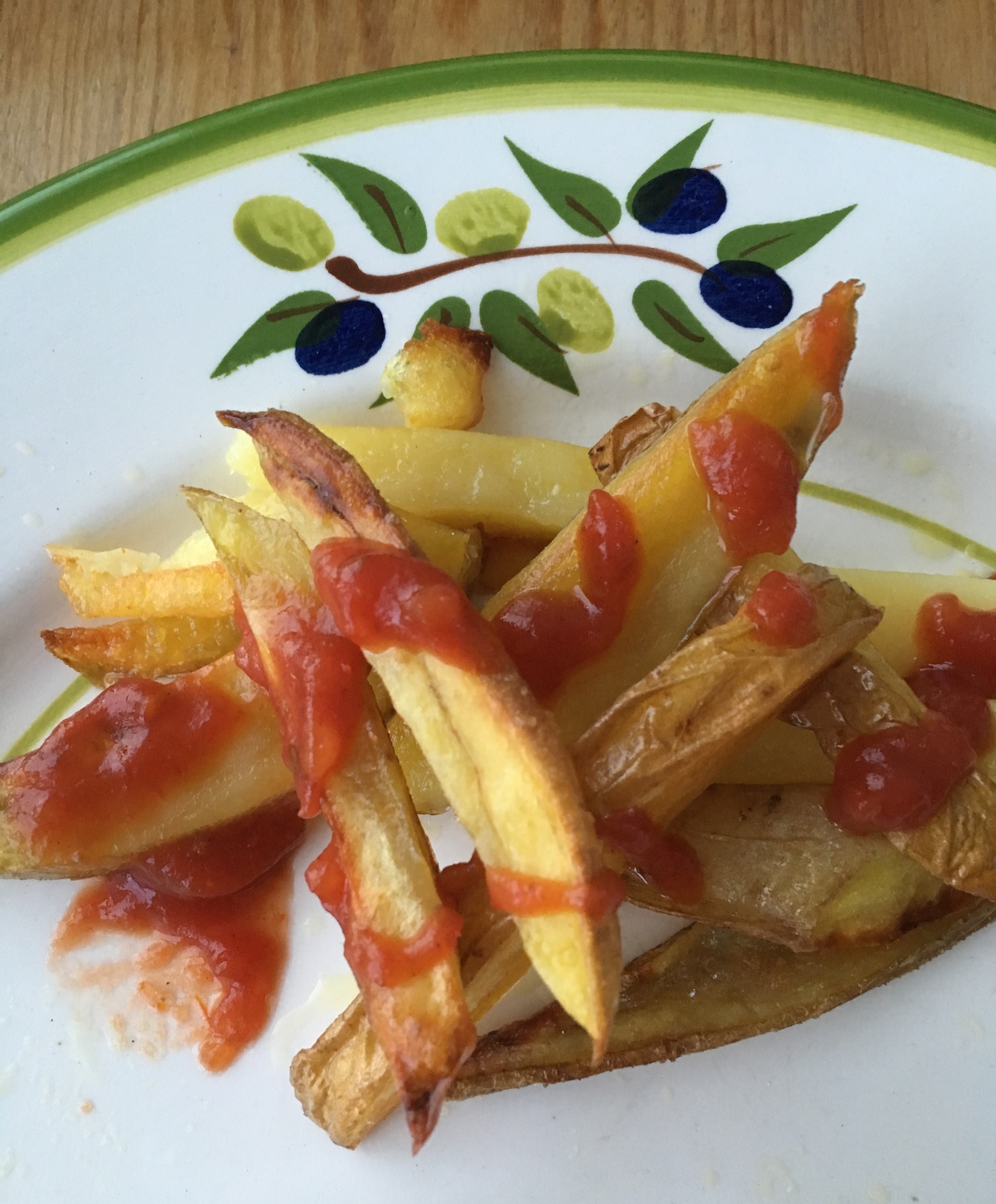
Well, you learn something new every day. Since then, I’ve made them several more times, “forgetting” to stir them, and tweaking the technique until I’ve got the best oven fries ever. Here it is…

Cut your potatoes into fries or wedges, however thick you’d like. Toss them generously with olive oil and salt on an oiled baking sheet (I use a jelly roll pan).

Bake on fan-assist at 210°C (400°F) for about 40 minutes, until the fries are nicely browned. Enjoy a glass of wine or a game while they bake—no need to do anything to them!

Cricket Flour

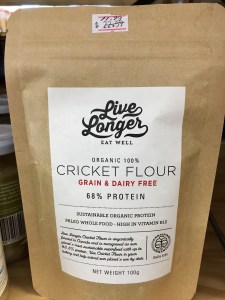
IMG_1784I was running errands in town today, and called in to Bin Inn for some flour and cornmeal.

I was excited to find this sitting on the shelf next to the rice flour and barley flour. It was the first time I’ve seen commercial insect products that admit to being insect products sold in an ordinary store (there are plenty of things you’ve probably bought that contain insect products, but manufacturers generally don’t advertise that).

It’s nice to see insects showing up on the grocery store shelves. I am a proponent of entomophagy, even though I am a vegetarian. If you’re going to eat meat, insects are probably the most environmentally sound way to go.

Being cold-blooded, insects convert feed into body mass much more efficiently than our warm-blooded livestock. You can raise a kilo of crickets on just 1.7 kilos of feed. Compare that to chicken at 2.5 kg of feed per kilo of chicken, or cows at 10 kg of feed per kilo of cow. Adjust these numbers for percentage of the animal that’s edible, and they favour insects even more—80 percent of a cricket is edible, whereas only 55 percent of a chicken and 40 percent of a cow is.

It still takes resources to produce insects. Though they convert feed into food more efficiently, insects need to be kept warm—warmer than you need to keep a cow, because they can’t keep their own bodies warm. There is an energy cost in that.

Of course the biggest problem with farming insects is getting people in Western countries to eat them. Most of the world’s people actually do eat insects, but our modern Western culture had separated us so much from our food, that we even get squeamish when we can identify the animal that our cuts of meat came from.

Consumers generally don’t want to actually see the animal when they’re preparing dinner. I’m sure cricket flour goes over better than, say pickled whole crickets (sort of like sliced ham vs. pickled pigs feet).

It will take a change in our attitude toward insects before Westerners will agree to bar nuts that include roast, salted crickets (which are delicious, by the way). When preschoolers learn that a cricket says “chirp, chirp” along with the cow says “moo”, we’ll be on our way. When we begin to view insects, not as enemies to be beaten, but as fellow organisms on Earth, we’ll be on our way. When we stop seeing insects as dirty, but rather recognise that they carry fewer potential human pathogens than our close relatives the cow and pig, we’ll be on our way.

As a vegetarian and a gardener, I value the insects that come into the kitchen on my vegetables. I don’t get enough vitamin B12, because it is only found in animal products. Insects are full of vitamin B12. So, I’m casual about cleaning the insects off our organically grown vegetables. We eat a lot of aphids, and quite a few caterpillars, I’m sure. And that’s great—it gives us all the nutrition we need, without any extra effort on our part (less, in fact).

Indeed, though I support insect farming, I’m afraid I will probably never buy any insect products–there are so many wonderful insects out there free for the taking, I couldn’t see spending $120 per kilo (and that’s half off!) for cricket flour.

Besides, I prefer my crickets whole—the best part about them is the crunch, after all.

Heavenly Hash Browns

2016-08-07 17.28.05 smSunday is usually a day for cooking an elaborate dinner. But the kids and I were in the city all afternoon, and came home late. After scones for breakfast and leftovers for lunch, none of us really needed a big dinner anyway.

So we had breakfast, instead—fried eggs and hash browns.

They were the first really good hash browns I’d ever made. In the past, my hash browns have been a bit too gummy, a bit too soft.

But thanks to the Internet, I had many hash brown recipes at my fingertips today (yes, it’s been that long since I made them—I had only cook books before).

So, I tried a new method today, and hit it just right.

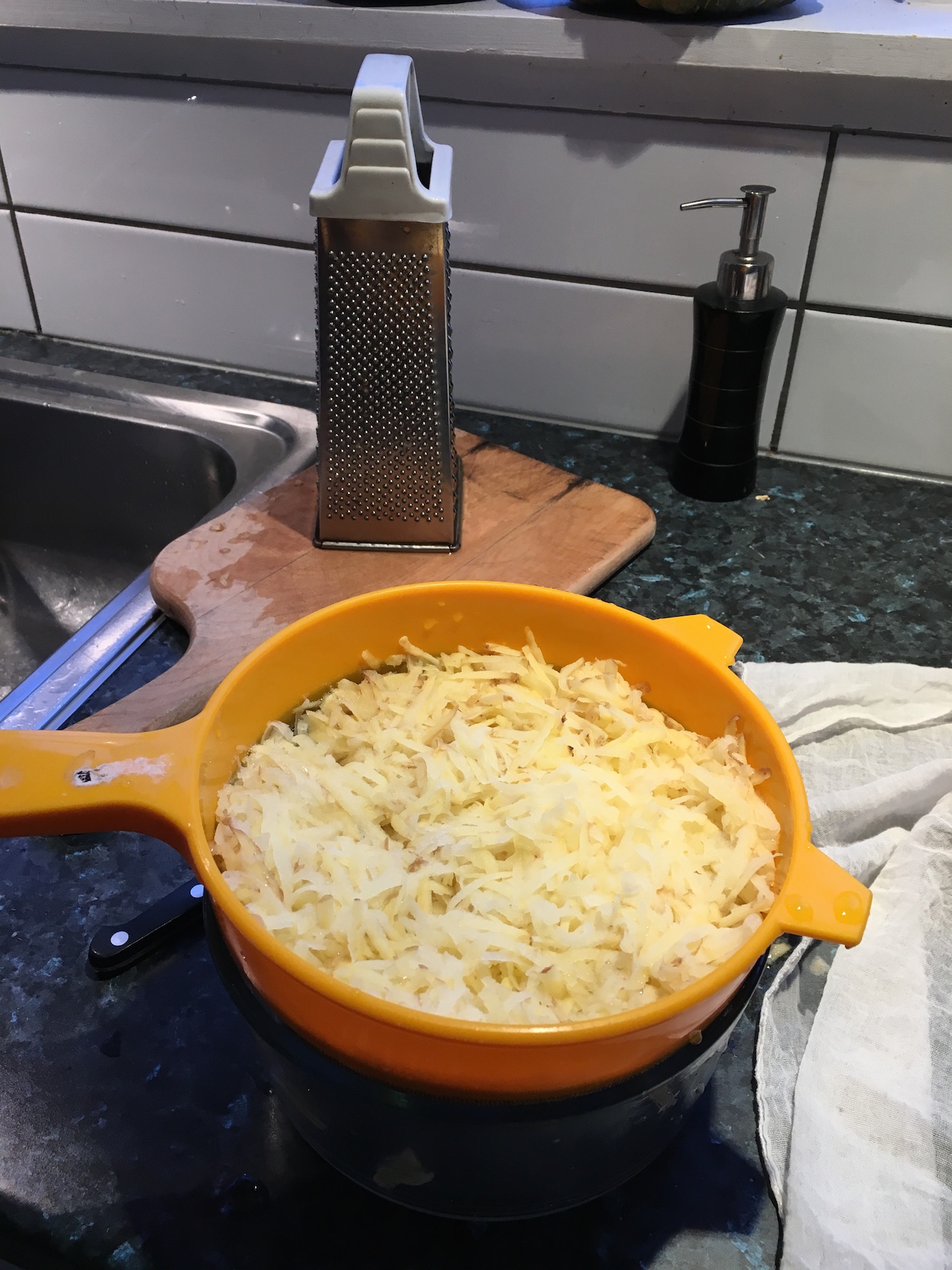
After grating my potatoes, I rinsed them well, and squeezed the excess water out of them. I tossed them with salt and pepper and fried them in a non-stick skillet with a generous quantity of clarified butter.

They were everything a hash brown should be—salty, crispy, and greasy.

Looks like hash browns are back on the menu!