Franz Josef Glacier–Vanishing West Coast Wonder

My husband and I spent Canterbury weekend on the West Coast. We stayed in Hokitika, because I had a market there on Sunday, but on Saturday, we drove down to Franz Josef Glacier. 

Franz Josef Glacier in 2009.

We hiked up to Alex Knob. This 17 km hike is a steady, occasionally steep climb of about 1000 metres. It’s not technically difficult, but it’s a good hike. It’s rated as 8 hours return, but we did it in about 5 1/2—it’s easy to speed on the way down. On our way up, we got glimpses of the glacier. Unfortunately, by the time we reached the top, where the view should have been spectacular, the whole top of the knob was in cloud, and a fierce wind was driving snow into our faces. Despite the wind, snow and cold, we tucked ourselves behind a tussock and had a snack, enjoying the sheer wildness of the weather, before driving hail hurried us down.

It’s been ten years since I’ve been to the glacier. What I saw on this visit was heartbreaking.

Sixteen years ago, I did some interpretation work for the Department of Conservation, researching and writing text for interpretive panels at Franz Josef Glacier and Fox Glacier. I also did some research around visitor behaviour at the glaciers and the effectiveness of various warning messages. At the time, the glaciers were easily accessible on foot. They were advancing and dropping deadly chunks of ice on visitors who ignored warning signs and crossed barrier ropes to get up close.
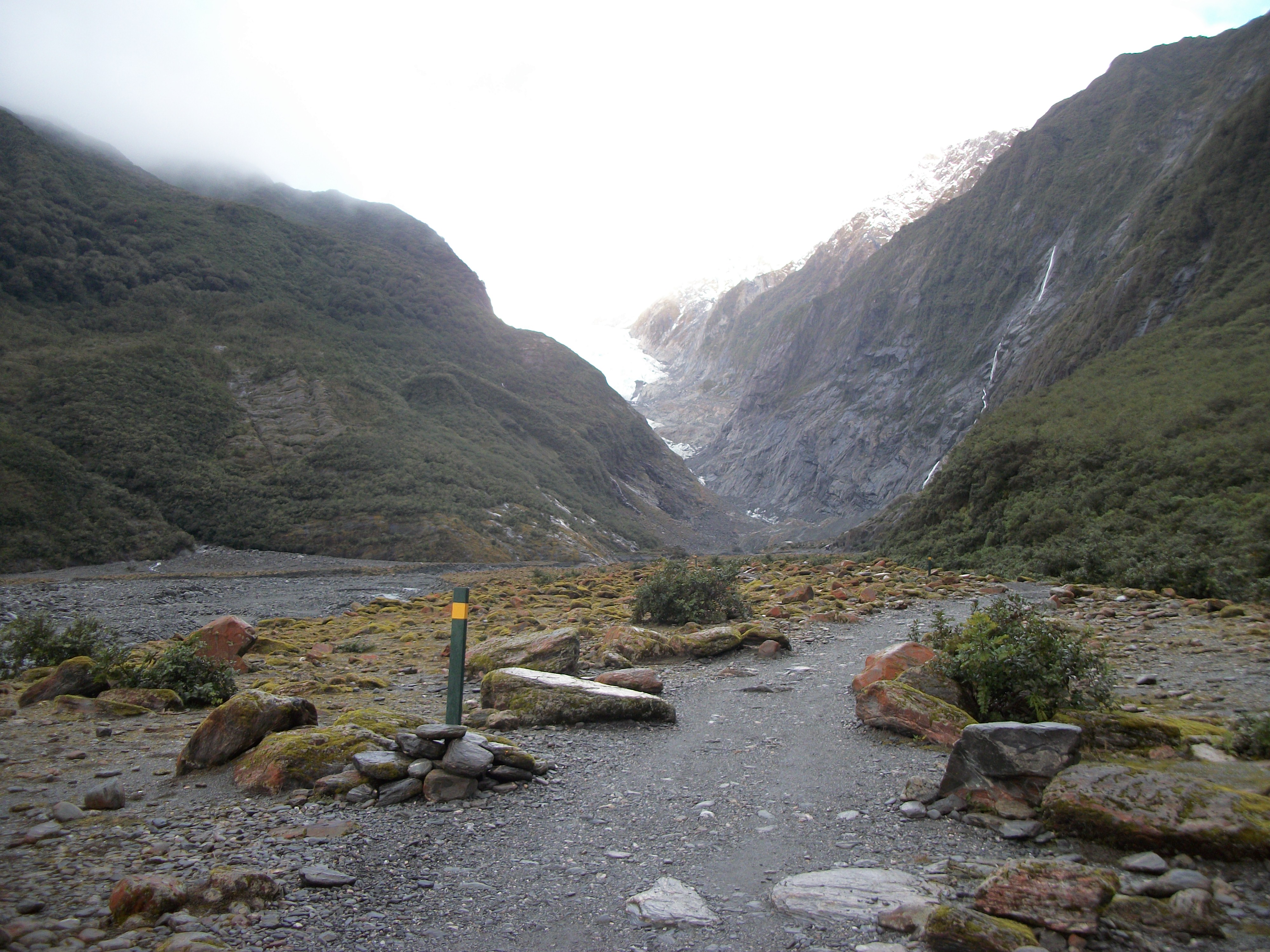
Franz Josef Glacier in 2015

Today, Franz Josef Glacier has retreated so far, it is not possible to walk to it. Ironically, the only way to visit the glacier these days is by helicopter—further spewing the greenhouse gases that are killing the glaciers.

There were thousands of tourists in Franz Josef Township last weekend, and the glacier carpark and tracks were crowded. Many of these tourists were here for the lure of New Zealand’s spectacular glacial landscape. New Zealand used to be the only place on earth where you could see glaciers reaching down into temperate rainforest. Today the glaciers come nowhere close to the forest, and soon there will be no glaciers left at all.
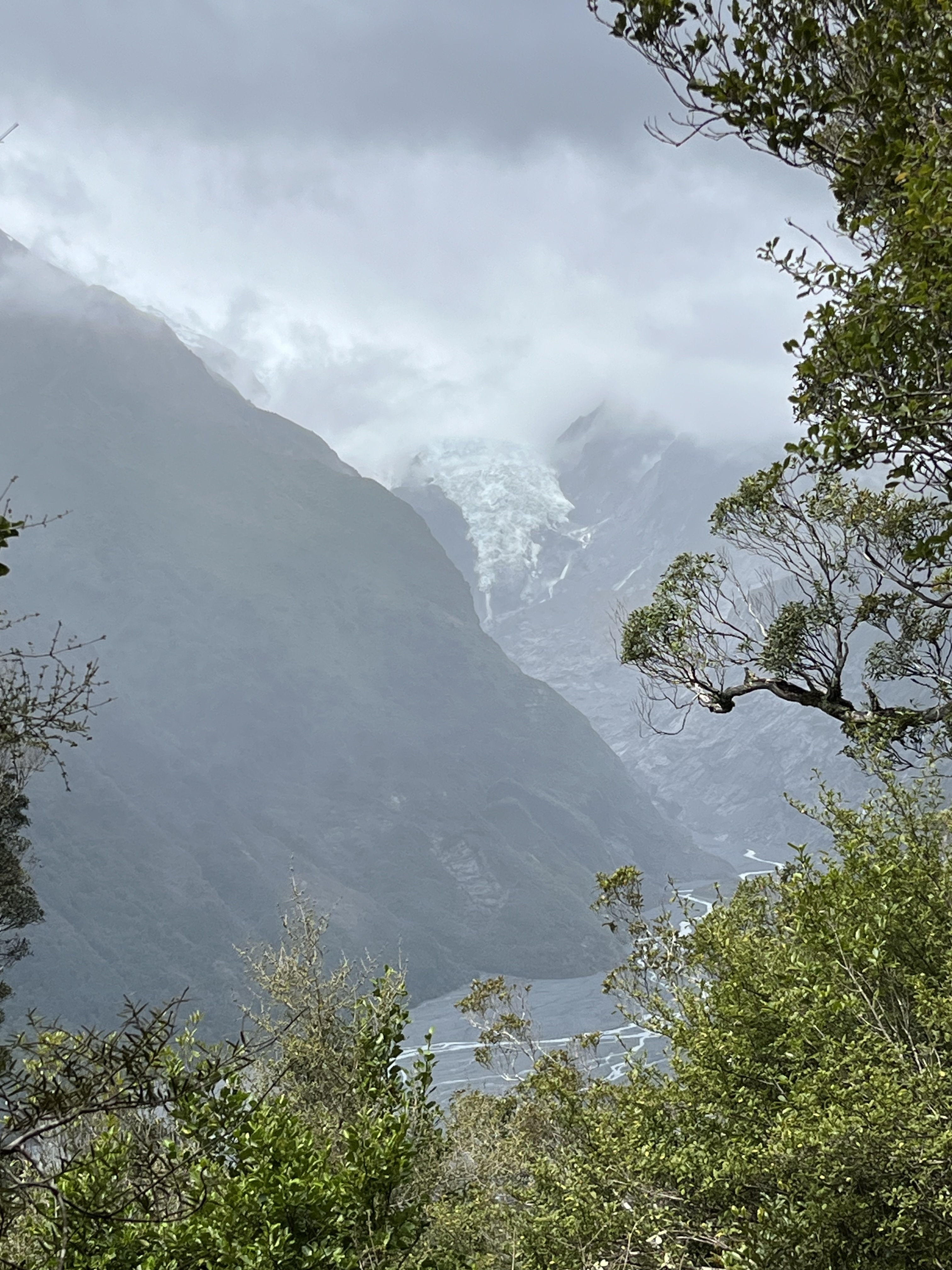
Franz Josef Glacier in 2025

There are many other wonders on the West Coast—the rainforest, the mountains, wildlife and beaches—but the loss of the glaciers is tragic, not just because of their natural beauty, but also because of their role in water storage and release. Their loss will have long term consequences for all of New Zealand.

It may be another decade before I go to Franz Josef Glacier. I hope there is still a glacier to see when I get there.

Living With Earth

Coes Ford–open…just.

Nature is bigger than we are.

That’s been clear from world events the past few weeks—flooding in Indonesia, earthquake in Mexico, multiple hurricanes in the Atlantic.

We can pretend the natural world doesn’t affect us. We can do our best to engineer human structures and our daily lives so that, most of the time, we forget we are an integral part of Earth. But I think this is a terrible mistake.

On my way to and from town every day, I cross the Selwyn River. Normally, I do this at a spot called Coes Ford.

The Selwyn River floods. It’s simply part of the hydrology and ecology of the river. The low bridge over the Selwyn at Coes Ford acknowledges flooding. The bridge was never meant to allow passage over the river during a flood. It was meant to survive floods intact, and provide passage during low water.

The ford has been closed for several weeks, but reopened yesterday. The bridge itself is still underwater, but it’s passable.

To me, there is something right and good about an infrastructure that acknowledges the forces of nature and doesn’t try to control them. It is good for us to accept that, while we have great influence, we are not masters of the planet. At Coes Ford, we will be inconvenienced by floods. This is part of the natural order. It is part of what it means to live here. And if we are inconvenienced by floods, we will notice when the pattern of flooding changes. We will feel that something is amiss. Hopefully, we will do something about it. It’s not a coincidence that when the Selwyn stopped flooding and dried up last summer, the focus of the worry was at Coes Ford—that’s where the locals understand the river’s pulse the best.

If we are separated from the rhythms of the planet, we won’t notice when something is wrong, locally or globally. When we are separated from the rhythms of the planet, we may not notice problems with our life-support system until it is too late. Separated from, and ignorant of the rhythms of the planet, it’s easy to deny that there are any problems.

And so, I embrace the inconvenience of Coes Ford. I thank the engineers who chose to accept the Selwyn River for what it is. I hope that, as human technology advances, we continue to remember our interdependence on the natural systems of Earth. We must live with the earth, not on it.

Water Perspective

“The weather’s been shocking! Where did our sunshine go?”

“I don’t know. All this rain is horrible.”

I listened to this conversation with a mixture of amusement and sadness. Amusement, because, though we’ve had seven days of off-and-on drizzle, it’s not been that bad. It’s not been cold or windy, just overcast with some light rain now and then.

Sadness because the conversation revealed how disconnected the speakers were from the desperate state of Canterbury at the moment. Three years of drought have left our streams dry, our groundwater depleted, and our land tinder-dry. The soil is dry as dust for as far down as you want to dig. This rain hasn’t even begun to bring us back to the soil moisture we should have. It has wet the top few centimetres of soil, no more.

The truth is, we need weeks and weeks of steady rain, just to bring us to where we should be at this time of year, then we need a nice wet winter to top us up.

Beachgoers have been spoiled with three years of clear skies and record high temperatures, but if it continues, there will be dire consequences for the region–a region that depends upon irrigated agriculture to fuel the economy. Not to mention the higher water bills, more frequent wildfires, rising electricity costs (because much of our power comes from hydro lakes), and fewer recreational opportunities.

While those of us involved in growing plants and raising livestock understand this intuitively, the majority of folks, living in town and paying little attention to more than the immediate weather conditions, are completely unaware.

It can’t be good, this lack of awareness. Our planet is facing such catastrophic climate change, that a lack of awareness of larger patterns in weather and climate can only lead to continued lack of action to address the issue, a continued blindness to the changes that to me are so clear and convincing.

Until we all understand that having nothing but beautiful beach days isn’t good, our fight against climate change is going to languish.