Homemade Goat Parmesan

2016-09-05 17.16.17Today was the day—the day to finally crack open one of the parmesan cheeses from last October. Eleven months in the fridge, and they were every bit as disgusting as they always are. Covered in mould, in spite of my efforts to avoid it, and with a hard, dry rind.

And as usual, once the rind was cut off, the cheese underneath was the most divine, flavourful cheese ever.

My parmesan is drier than the standard commercial block, a bit less salty, and with twice the flavour punch. It takes at least ten months to reach full ripeness, but it’s worth the wait. We put commercial parmesan on pasta, in risotto, and in pesto. My parmesan, we also sneak onto our sandwiches for lunch, or onto crackers for an after school snack.

Of all the cheeses I’ve learned to make, it is one of the most rewarding for its sheer over-the-top gourmet decadence. I’d say we live like kings, but I wonder if even kings get cheese this good on a daily basis.

Crazy Corner Farm

2016-04-17 11.13.55 sm“So, what do you grow here at Crazy Corner Farm, eh?” asked the man who delivered 500 bricks earlier this week.

I laughed.

“Well, it’s basically a subsistence farm. A little milk and cheese. A lot of vegetables.”

It was a good enough answer, and appropriate to the situation. But other things came to mind.

What do we grow here at Crazy Corner Farm?

A lifestyle. A lifestyle of hard work rewarded by the fruits and vegetables of our labour.

Kids. Kids who know where their food comes from. Kids who understand the work that goes into a simple block of cheese. Kids who can tell a bee from a syrphid fly, use a machete and an axe safely, and design and plant a garden.

Creativity. Creativity in food, garden, crafts, DIY problem-solving, circus arts…everything. By providing the space, materials, and encouragement to let it flourish.

Stories. Or, as my husband said it, “Organic hand-picked words available in convenient poem, economic story, and family-size novel packs.”

So, we grow a lot here on our tiny farm. More than you might guess at first glance.

Pumpkin Ricotta Lasagne

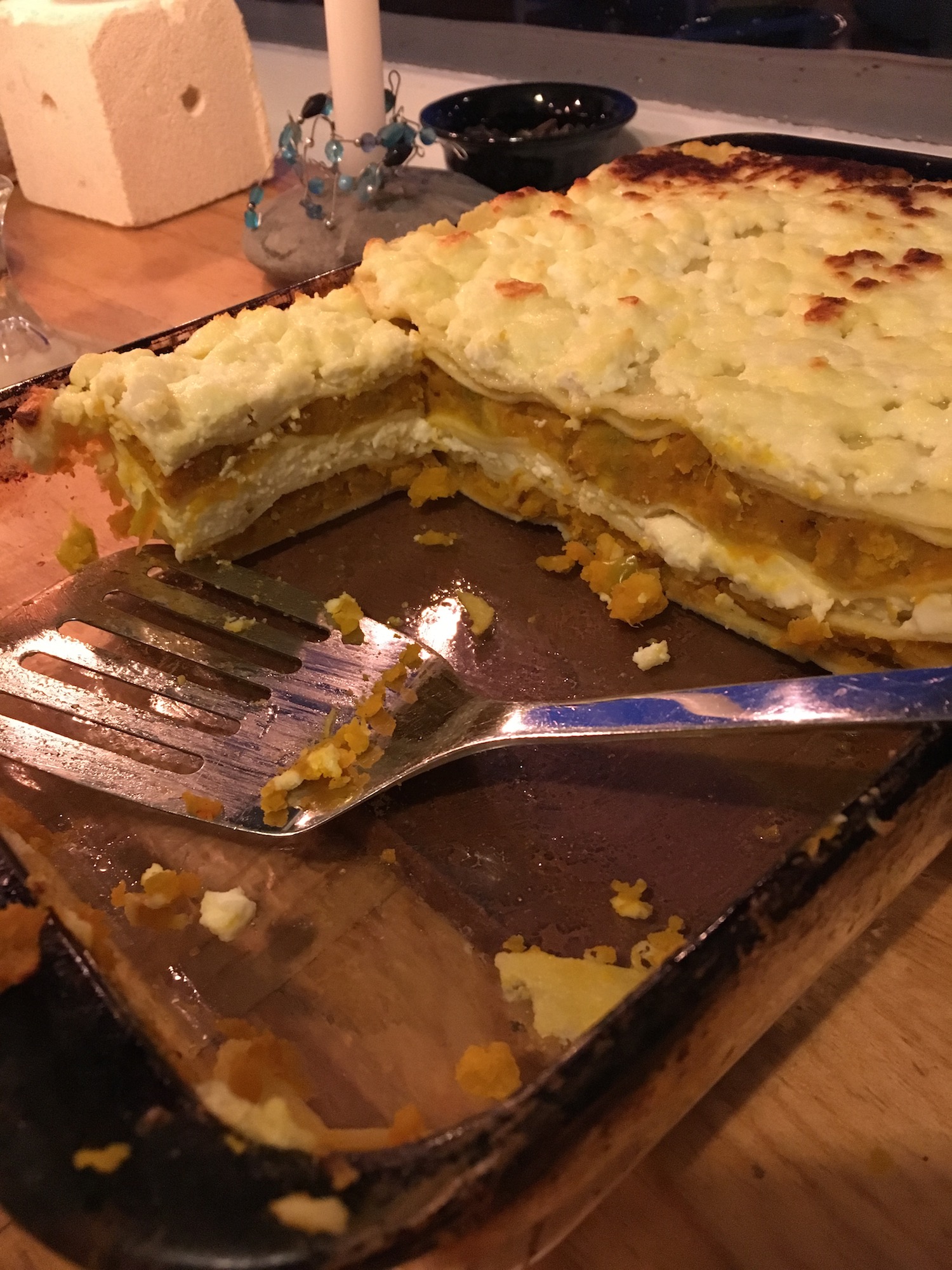
2016-04-20 18.18.45 smYesterday I made a large batch of ricotta, and then wanted to use some of it in dinner. I also had in the fridge some leftover pumpkin galette filling from dinner a few days ago. And over the weekend, I had made some pepper oil to use with pasta.

What came out of it all was a pumpkin ricotta lasagne that was an absolute hit.

I can’t even begin to give you a recipe. It would start with, “Make too much pumpkin galette filling on Saturday, pepper oil on Sunday, and a vat of goat milk ricotta on Wednesday…”

But the final assembly followed this recipe, and yielded a beautiful white and orange striped dish that kept its form well when cut. It would have been perfect for a dinner party, served with a leafy green salad. Perfect, because we didn’t even eat half of it—it’s much denser than a normal lasagne, and would have easily fed five more people.


Onion and Goat Cheese Tart

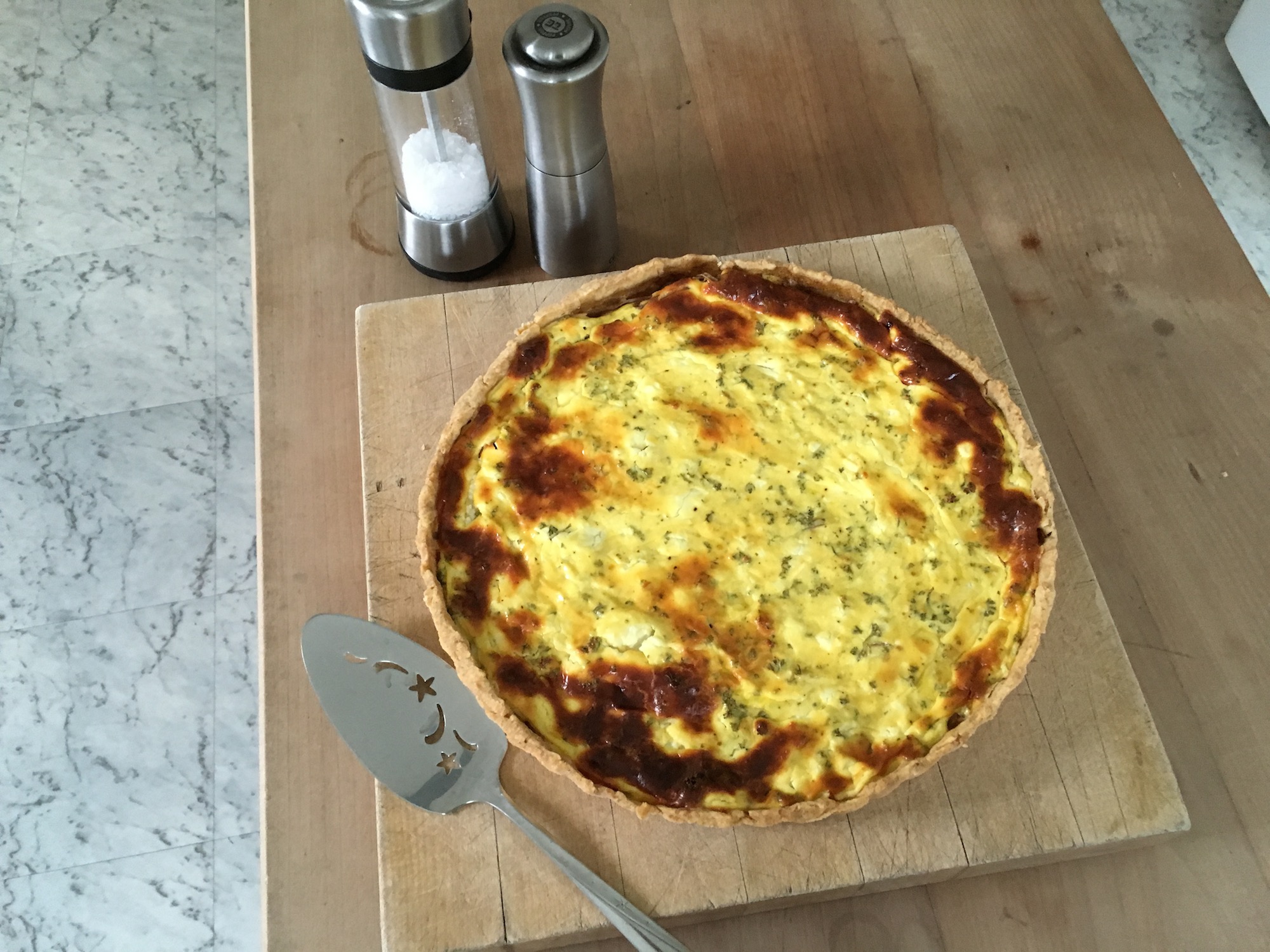
2016-01-23 17.44.36 smThere are dozens of variations on this tart available on the Internet. Here’s my version. This is best served at room temperature, outdoors on a hot day with a glass of white wine.

2 medium to large red onions

2 Tbsp olive oil

2 Tbsp balsamic vinegar

1 tsp brown sugar

500 g chevre or other soft goat cheese

3 eggs

¼ – ½ c chopped fresh parsley

salt and pepper to taste

pastry for a single crust 10-inch tart (I use my favourite pie dough recipe for this)


Line the tart pan with pastry and allow to chill in the refrigerator as you prepare the filling.

Cut the onions into strips, and sauté on medium-low heat until they are well cooked and beginning to turn golden. Add the vinegar and brown sugar and continue to cook until most of the liquid has evaporated. Set aside to cool.

Beat the eggs in a large bowl. Add the cheese, parsley, salt and pepper and mix thoroughly.

Spread onions in the bottom of the tart and top with the cheese mixture.

Bake at 200˚C (400˚F) for about 40 minutes until firm and browning on top.

Cool on a rack and serve at room temperature.

Vegetable Dip

100_4256 smChristmas day is a low-key affair at our house. We work like mad up through Christmas eve, preparing food, baking cookies, getting caught up on all the weeding, harvesting and processing of vegetables. Then Christmas day, there is nothing to do but enjoy the fruits of our labours.

To that end, I made a vegetable dip for our Christmas dinner, which will be a Mediterranean feast—bread, cheeses, olives, salad, and fresh vegetables.

Inspired by a variety of recipes, and by the lovely herbs in the garden, I made the dip up as I went. Taste testers declared it delicious, and we’re looking forward to enjoying it tomorrow with carrots, cauliflower, sugar snap peas, and broccoli from the garden.

1 (8oz/225g) pkg cream cheese, softened

2 small spring onions

small handful fresh flat leaf parsley

2 small stalks cutting celery (or ½ celery stick)

small sprig fresh savoury

½ tsp paprika

juice of 1 lemon

Beat cream cheese until fluffy. Chop herbs and onion very fine and stir into the cheese along with the paprika. Add enough lemon juice to make a dipping consistency.


Ricotta Cheesecake

100_4225 smWhile all you denizens of the northern hemisphere are baking Christmas cookies, we’re down here trying to figure out how to eat an overabundance of early summer fruits.

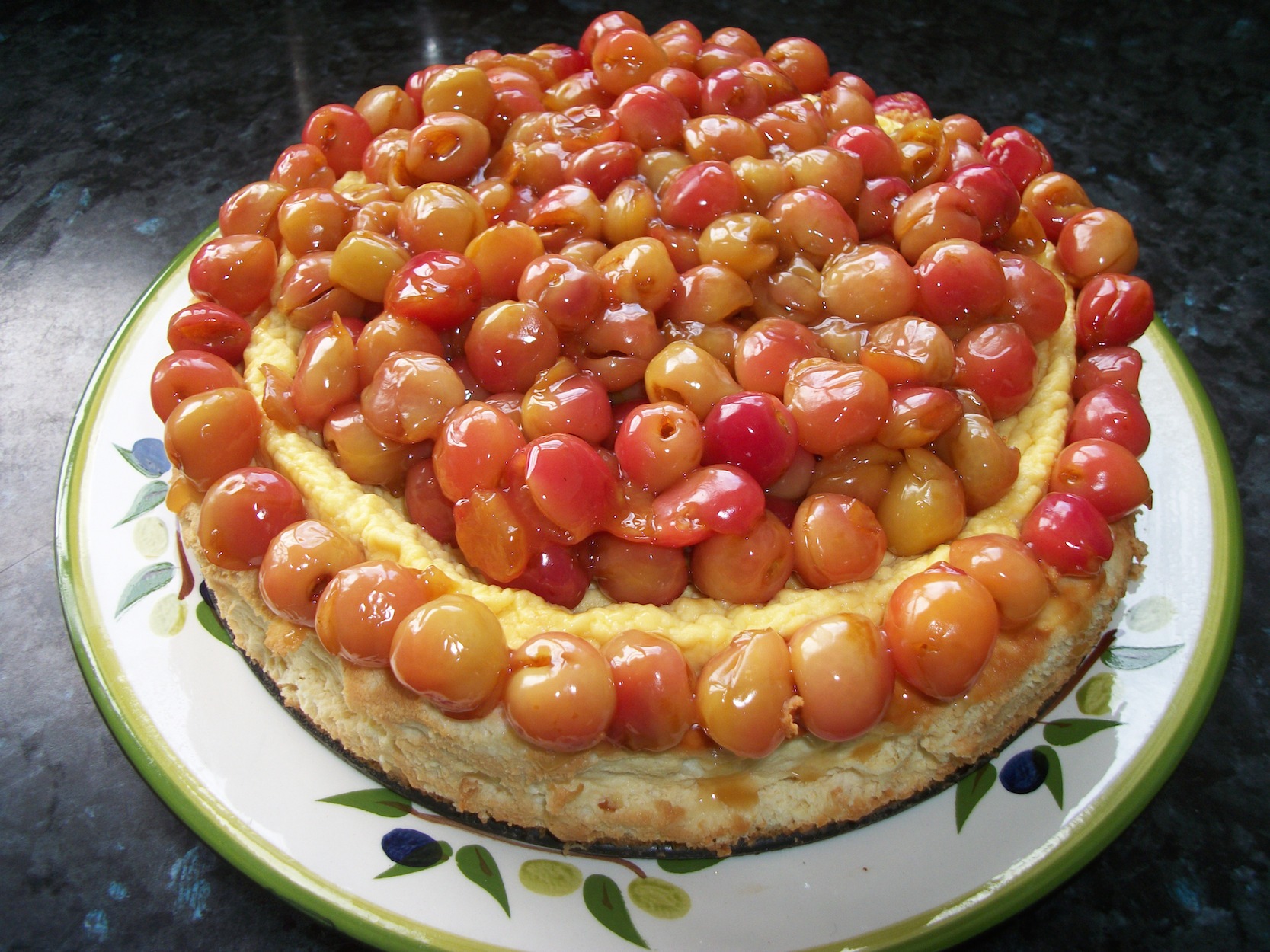
This week, we had a delicious confluence—too many cherries and too much ricotta cheese. There’s only one thing to do with that situation—make ricotta cheesecake and smother it in cherry pie filling!

The ricotta cheesecake—essentially a sweet soufflé—puffed twice the height of the pan in the oven, then fell most unattractively when it cooled. But it left a perfect rim for holding cherries.

Culture clash

100_4199 smSome days it’s unavoidable, and we have a culture clash in the kitchen. No, I don’t mean that I want stir fry for dinner, but my husband insists on a curry. This is a more literal clash of cultures—sourdough vs. cheese culture. Either one can infect the other, with unsavoury results, and both take up large amounts of space in the kitchen, so we try to avoid making both on the same day.

Today, however, there was no getting around it. The neighbour gave me 50 litres of milk—I had to make cheese. And my husband already had the sourdough bulking up Friday—he had to make bread.

Timers were going off all morning, and it was a trick to know what each one was for—was that the bread, the parmesan or the cheddar? And what needed to be done to it? Then of course, I was standing over the hot oven, stirring cheese curds for hours. And all dishes had to be washed, dried and put away immediately, or they were in the way. And trying to keep the cheese-making stuff sterile? Forget it!

Glad that doesn’t happen often!

Reality check

syringesPeople who don’t keep livestock think that having dairy goats is like some sort of fairytale honeymoon. You go out to the paddock, fill a pail with fresh milk, and life is all strawberries and cream.

Reality…is a bit different.

You wake at 5 am to the sound of the goats whining at you. You stumble out of bed wishing that you could sleep in, just one day, but you know you can’t—the milking has to be done, whether you feel like it or not. You go out to the paddock and open the gate. You wrestle desperately with four goats who all want out the gate at once, trying to tease out the one you want. While you heave the gate shut behind her, the loose goat decides to eat those lovely ornamentals you just planted.

You pull her away from your flower beds and head her to the milking stand. She baulks at stepping up, because yesterday the neighbour’s irrigator was hitting the stand while you milked, and she was spooked by it. You cajole, then threaten her up onto the stand. You start to milk her, and she kicks. When you pull back to let her calm down, you discover why she doesn’t want to be milked this morning—she has a cut on one teat, and milking is reopening it. Your hand is covered in blood, but you can’t stop—she’s got to be milked.

You manage to milk her out while she dances around, trying to upset the pail. You get her back into the paddock and repeat the circus with another goat. When you get back inside, you strain the milk, and realise that one of the goats has developed mastitis.

You spend another couple of milkings trying to isolate who is infected, and whether one or both sides is infected.

When you finally know only one side of one goat has mastitis, you go to the vet, who decides that this time, she’s going to give you a systemic antibiotic for it, not the local udder injection like you expected. All that work figuring out exactly where the infection is was a waste of time.

For the next three days, you inject the goat with antibiotics. An intramuscular injection that’s as painful for you as it is for the goat. She hates the injections, and by day three absolutely refuses to get on the milking stand where you give them to her.

Now, for thirty-five days, you need to continue to milk, morning and evening. But instead of making cheese and ice cream, you have to throw the milk away because it’s laced with antibiotics.

So, yeah, it’s all strawberries…hold the cream.

Chevre Ravioli

ravioli1 smI love chevre. Not only is it easy to make, it’s delicious in so many ways—on bread with jam, on crostini with olivade, covered with herbs or black pepper and spread on crackers. It’s a fine stand-in for cream cheese in cheesecake, too. It takes on sweet or savoury flavours and lends them a creamy tartness.

This week, I used chevre for a super-easy ravioli filling—I mixed about a cup of finely chopped herbs (oregano, thyme, rosemary and cracked pepper) into about two cups of chevre.

My husband made a lovely spicy sauce full of spring vegetables to go on top.

The result was marvellous! Full of intense, fresh flavours!


Why I love my e-reader

cheese curds sm(or how I manage to read novels during summer)

I love to read, but don’t always have a chance to sit down in summer. I’m often busy from 5 am to 10 pm.

But cheese making gives me an unexpected opportunity to get some reading in, and an e-reader makes it all the easier.

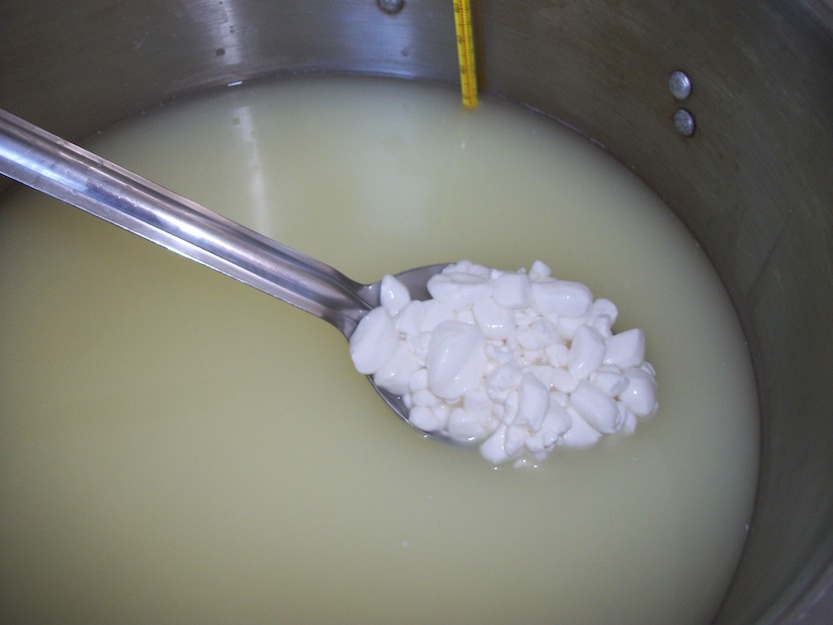
Cheese making involves a lot of standing in the kitchen slowly stirring the curd to drive the whey out. Depending on the cheese, this process can last from 30 minutes to almost two hours.

It only takes one hand to stir, leaving the other free to hold a book. Paper books often fall shut, and it’s hard to turn a page one-handed, but the e-reader is easy to operate one-handed. And if I finish a book half-way through stirring, I can just click to another without leaving the cheese pot.