Cardamom Pound Cake

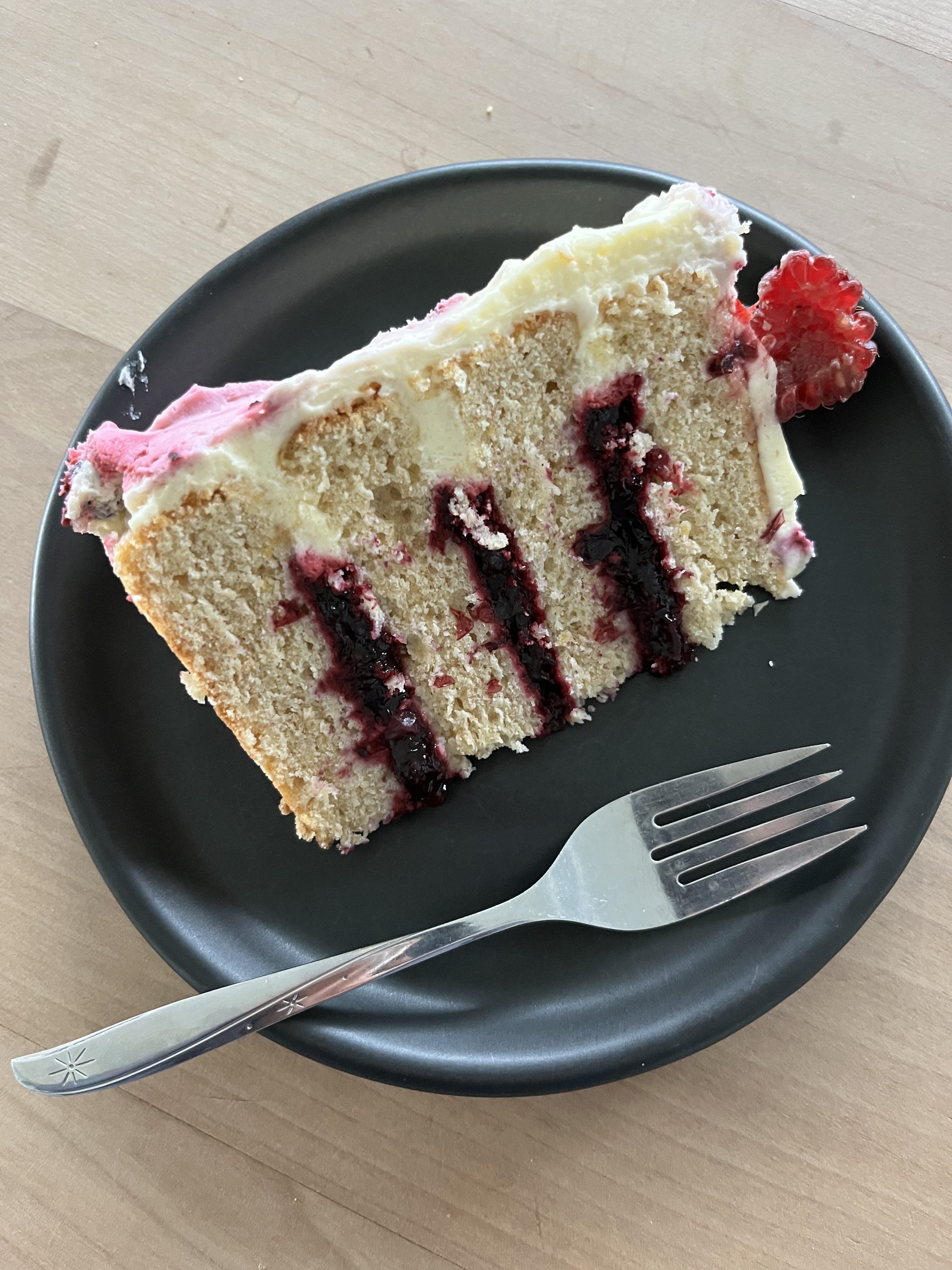
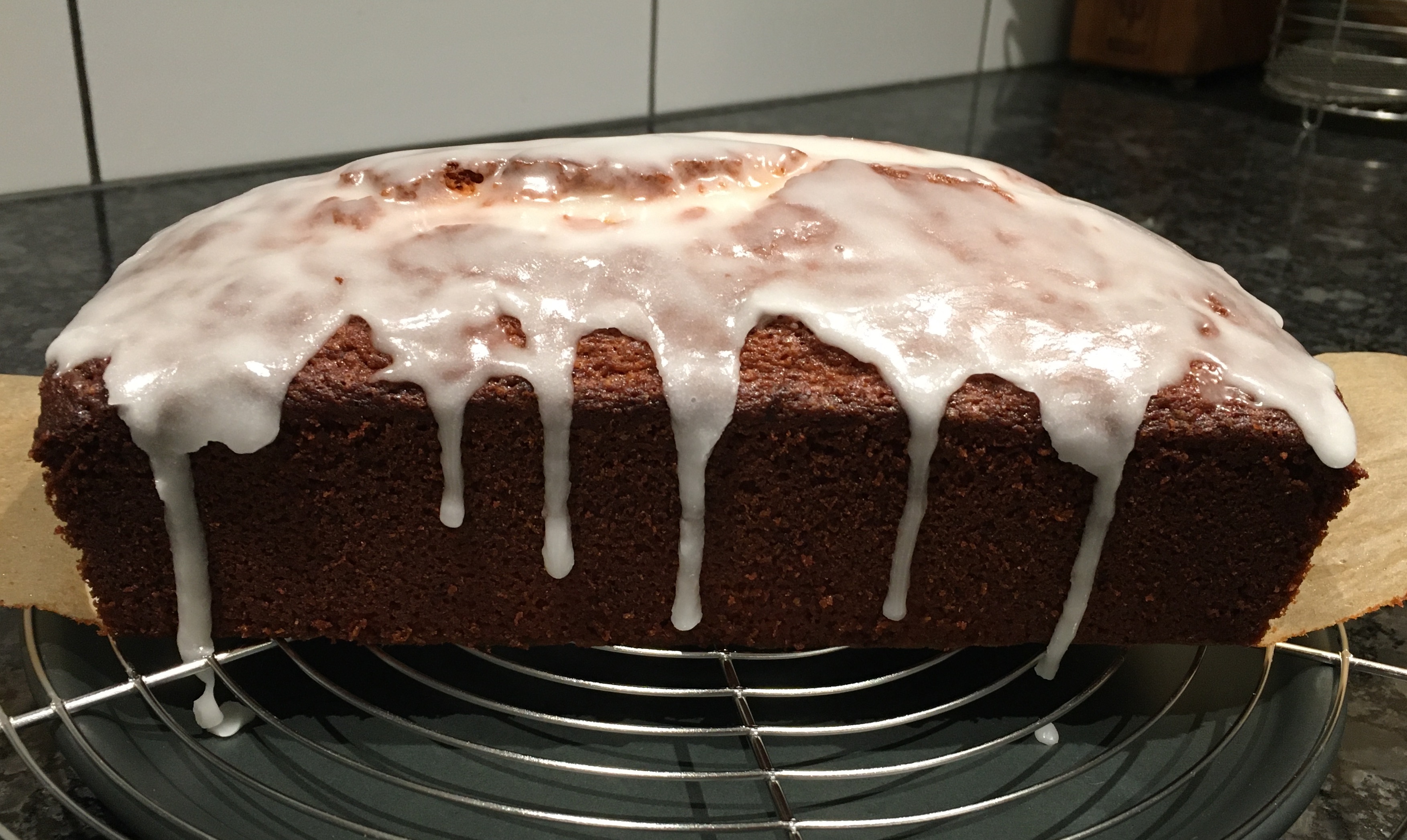
I recently made an excellent cardamom pound cake. Half way through modifying a recipe from the book Sweet, I realised I’d already created a cardamom cake recipe, based on some other cake. But this one might actually be better. Rich, moist, and flavourful—what more can you ask for in a cake?

I now need to make both versions for side-to-side taste tests. Anyone want to join me for cake?

Here’s the new recipe so you can test them too.

110 ml milk
6 eggs
2 tsp vanilla
zest of 1 lemon
300 g all purpose flour
1 tsp baking powder
1/2 tsp salt
200 g caster sugar
1 1/2 tsp cardamom
250 g butter, very soft, cut in chunks
1 cup shredded coconut

Whisk together the milk, eggs, vanilla and lemon zest in a medium bowl.

Sift together the flour salt and baking powder in a large bowl. Add the sugar and cardamom. Add the butter and half the egg mixture and combine with an electric mixer until the dry ingredients are incorporated. Mix 1 minute more, then gradually add the remaining egg mixture. Stir in the coconut.

Spoon the batter into a greased 23 cm Bundt pan or 2 loaf pans. Bake 40-45 minutes at 195℃.

Cool in the pan for 10 minutes before turning out onto a wire rack.

Bread Day, revisited

It’s been a long time since I last blogged about a bread day. I reckoned it was time for a revisit.

For most of our married life, my husband has baked all our bread. When we moved to New Zealand, we applied for a permit to bring his sourdough starter, which was a bit of a family heirloom, having been passed to him by his father (who baked their bread when my husband was growing up).

Once we settled in New Zealand, in a rural location with some land, we built a wood fired bread oven. Our first oven was made of clay we dug from the property, empty wine bottles for insulation, and set atop two overturned concrete livestock water troughs. An oven on the cheap, because we didn’t have much money and weren’t sure we’d use it long term.

We loved it, so when the first oven began to fall apart, we were happy to buy materials for the second. And when we moved, we built a third one, on the new property as one of our first big projects.

A bread oven is different from a pizza oven. Unlike the pizza oven, which relies on a live fire, the bread oven bakes on stored heat.

A bread day starts the day prior, when my husband pulls the sourdough starter out of the fridge and makes his sponge—a wet slurry, more like batter than dough. The sponge bubbles away overnight.

On the actual bread day, the fires is lit early, usually before breakfast. My husband fills the bread oven with wood and lets it burn to coals, then repeats the process in order to ensure the mass of bricks soaks up plenty of heat.

While the fire burns, my husband makes up the dough, using around 7 kg of flour.

By about lunchtime, the dough is ready to be made into loaves, and by early afternoon, the second fire is burnt to coals, which get raked out of the oven. At this point, the oven is running at about gazillion degrees—way too hot for most breads. But each type of bread bakes at a different temperature, and each batch lowers the temperature of the oven.

The first bread in is focaccia—thin and flat, it is in and out of the oven in 5 minutes. Then we throw in a big tray of vegetables to roast. They take 10 to 15 minutes and bring the oven temperature down enough to bake narrow baguettes, which are also out within 10 minutes.

Then come the batards, and then finally the square loves.

At this point, I take over the baking. The oven is now at a good temperature for cakes and pies. I like to bake things like pound cakes on bread days, because they take so long to bake. It’s nice to be able to make them with the ‘free’ heat of the bread oven.

The oven is still quite hot (around 180℃) by the time the cakes are done (usually about dinnertime).

There are a whole bunch of things we’ve done with that heat: toast granola, roast pumpkins, make baked beans, dehydrate fruits and vegetables. As the oven cools further, we’ve made yogurt and dried herbs. There’s useful heat in the oven for a good 48 hours, if we have the time and inclination to use it.

Last weekend we found a new use for the residual bread oven heat—sterilising compost for seed raising mix (which I’m sure I’ll blog about later). I put about 40 litres of compost through in two lots, and I might have gotten a third batch through if I’d had it ready to go.

The final tally from last weekend’s bread day: 1 focaccia, 17 loaves of bread, 2 meals worth of roast vegetables, 2 weeks worth of breakfast granola, 2 cakes, a baker’s dozen of fruit tarts, and 40 litres of sterilised compost. Not bad for a bread day!

Check out this time lapse of a long-ago bread day.

Parsnip Cake

As spring nears, we’re working through the winter vegetables still in the garden. At this point, the remaining parsnips that I planted last spring are monster roots weighing in at nearly 1.5 kilograms. It’s past time to eat them.

So, when I found a recipe for parsnip cake, I had to make it.

The recipe was in the book Sweet, by Yotam Ottolenghi and Helen Goh (I seriously recommend this book, if you don’t already have it). Like many of Ottolenghi’s recipes, it includes flavour combinations and spices I don’t normally work with.

And as with most of Ottolenghi’s recipes, I didn’t have all the right ingredients to make the recipe as it was written, but with a few substitutions, I ended up with some delicious cake. As I often do, I baked the cake as cupcakes—they’re so easy to snag for lunch boxes, and they encourage us to eat less cake, because you can’t cut a big piece like you can with a proper cake.

I love the flavour combinations in this cake—parsnip, orange , nutmeg and aniseed. It’s a fantastic combination that I’m not sure I’ve ever used. 

Here’s my version of the Ottolenghi/Goh recipe:

150 g walnuts
450 g grated parsnip (the original recipe says this is 3 large parsnips, but it was only 3/4 of one of my parsnips)
100 g raisins
finely grated zest of 1 orange (approx. 1 Tbsp)
3 eggs
225 g caster sugar (I would cut this down next time—they’re quite sweet)
280 ml vegetable oil (I would cut this down next time—they’re a little too greasy for me)
190 g all purpose flour
1 tsp cinnamon
1 1/2 tsp baking powder
1 1/2 tsp baking soda
1 tsp nutmeg
1 tsp ground aniseed
3/4 tsp salt

Toast the walnuts in the oven for 10 minutes at 170℃. Cool and then coarsely chop. Combine the walnuts, parsnip, raisins and orange zest in a large bowl.

Beat eggs and sugar together in another bowl until thick and creamy (about 2 minutes). While beating, slowly pour in the oil until it is all combined. 

Sift together the flour, cinnamon, baking powder, baking soda, nutmeg, aniseed and salt in a bowl. Add these to the egg mixture and beat until combined. Fold in the parsnip mix.

Spoon the batter into cupcake tins (greased or lined with papers), and bake about 25 minutes at 210℃.

I found that these cupcakes didn’t rise much—the batter is mostly fruit, vegetables and nuts. If their flat look bothers you, I’d recommend topping them with a cream cheese frosting that includes grated citrus zest. I didn’t make special frosting for mine, but I had a little left over from a previous cake, and it was delicious on the cupcakes. It wasn’t at all necessary, however—they were fantastic with no embellishment at all.

Cake Season, 2025

Those of you who have followed my blog for years will know that the first three months of the year are birthday months in my family. For years, I called it crazy cake season, because I would obsess over birthday cakes all month, and spend literally weeks designing and making crazy birthday cakes.

Like the octopus:

The geode:

The peripatus:

An alpine botanical scene:

And many others.

But now that the kids are adults, the crazy cake season is far less crazy. It still involves cake, of course, but the cakes are more subdued and geared toward adult tastes.

This year, my daughter said ‘surprise me’ when I asked about her cake preferences.

So, faced with a kitchen full of beautiful ripe peaches from our trees, I made her a three-tiered peach upside down cake using my favourite upside down cake recipe, from King Arthur Flour’s Whole Grain Baking book. 

The cake recipe is meant for nectarines, but I’ve also made variations of it with pears, lemons, peaches, and plums, and it’s fabulous.

I recommend reducing the sugar in the batter, because it can be overly sweet, with the gooey fruity sugar that soaks in from the topping. I also adjust the spicing to suit the fruit and my own tastes. And I always use more fruit than the recipe suggests. 🙂

Here’s the original recipe:

Topping:
3 Tbs butter (43 g), melted
1/2 cup brown sugar
1/4 tsp nutmeg
1/4 tsp cinnamon
2 large nectarines
2 tsp lemon juice

Batter:
1 3/4 cups whole wheat flour
1 3/4 tsp baking powder
1/4 tsp salt
4 Tbs (57 g) butter, softened
3/4 cup brown sugar (I use 1/2 cup)
2 large eggs
1 tsp vanilla or almond extract
1/2 cup milk

To make the topping: Place the melted butter in an ungreased 8-in (20 cm) square baking pan, tilting to coat the bottom evenly. Mix together the brown sugar and spices, and sprinkle evenly over the butter. Slice the fruit (either peeled or unpeeled is fine) 1/4-inch (half a centimetre) thick and arrange the slices in the pan on top of the sugar and butter. Sprinkle with lemon juice. Set aside.

To make the batter: Whisk together the flour, baking powder and salt in a small bowl. Cream together the butter and sugar in a large bowl until light in colour and fluffy. Beat in the eggs, one at a time, and the vanilla. Stir in half the flour mixture, then the milk. Add the remaining flour mixture, stirring until the batter is evenly moistened. Gently pour the batter over the fruit in the pan.

Bake at 375℉ (190℃) for 45 minutes or until the cake begins to pull away from the sides of the pan and a cake tester inserted into the centre comes out clean. Allow to cool 5 minutes in the pan. Then invert the pan onto a serving platter and let sit for 1 minute before removing the pan. Serve warm, with whipped cream or ice cream, if desired.

We enjoyed our peach upside down cake with homemade peach ice cream, made by my husband.

The (not quite) Perfect Icing, Part 2

I took another step on my quest for the perfect carrot cake icing on Sunday. This variation on cream cheese icing is made into a fluffy confection with the addition of quite a lot of cream, slowly beaten into the already fluffy cream cheese. 

I had my doubts. I’m not overly fond of a straight whipped cream topping. Would the cream cheese flavour come through enough? Would there be enough tart zing to it to offset the sweet?

The answer was no. 

Don’t get me wrong, this icing is GOOD! There’s enough cream cheesy goodness to give it body and depth of flavour. And the addition of cream means it gets away with having half as much sugar as other cream cheese frostings. The texture is divine—smooth and creamy, with a lightness you don’t often get in a cream cheese frosting. It’s delightful on the lemon and blackberry cupcakes I used it on. 

But is it the perfect carrot cake icing? Not quite.

So, the first icing was great on flavour, lousy on texture. This one is amazing for texture, not right for flavour. I can work with that. Trial number three will be a fusion of the two, hoping for that perfect balance.

It’s a tough job, but somebody’s got to do it. 😉

Meanwhile, I do recommend frosting #2. I think it would be spectacular on chocolate cake, and absolutely stunning rolled up in a bûche de Noël. Here’s the recipe if you want to give it a go:

170 g cream cheese
3/4 cup icing sugar (confectioner’s sugar), sifted
1 1/2 tsp vanilla
1 cup heavy cream

Beat the cream cheese until fluffy. Add the sugar and vanilla and beat until smooth. With the mixer on low, slowly pour in the cream. Then turn the mixer on high and beat until stiff peaks form.

Because of the quantity of cream in this frosting, I recommend storing cakes with this frosting in the fridge.

Baking One for the Team

I’ve recently sent out my next book, Demonic Summoning for the Modern Gardener, to beta readers. It’s a more fleshed out tale than my husband read and commented on last month. A few weeks ago, I mentioned on the blog that my husband had requested more carrot cake in the story. In my rewrite after his comments, I made chasing the perfect carrot cake a sort of running gag/tiny subplot through the book.

Then I decided I should include the perfect carrot cake recipe in the back of the book.

I had already developed the perfect carrot cake recipe, so that was easy to include. But the frosting … I’ve made some very good carrot cake frostings, but I can’t say I’ve hit on the perfect frosting. Everyone agrees, of course, that carrot cake must be frosted with a cream cheese frosting, but there’s a lot of variation among cream cheese frostings. I’ve had them too sweet, too grainy, too dense …

No better excuse for baking!

So last night I whipped up a carrot cake and tested out a new variation on cream cheese frosting. This one has no butter—just cream cheese as the fat. It also contains lemon zest and lemon juice for a bit of added tartness. Lots of potential to be awesome!

Flavour-wise, it’s good … the texture, not so much. It’s too gummy. Not fluffy enough. Definitely not the perfect frosting.

But never fear, we’ll suffer through this almost perfect cake (have I mentioned that I’ve had two pieces of it already, and it’s been only 12 hours?), and then I’ll make another!

Because I couldn’t let my readers down with sub-standard carrot cake, now could I?

If you have a favourite cream cheese frosting, let me know—maybe I’ll try it out. How many cakes do you think it will take to reach peak frosting?

Cardamom Coconut Pound Cake

I love cardamom, but I don’t use it very often. Inspired by the book, A Whisper of Cardamom by Eleanor Ford, which I checked out of the library last week, I decided to use it more frequently.

I’ve made Coffee Cardamom pound cake before (from Sweet by Yotam Ottolenghi and Helen Goh), and that was my first thought. But I didn’t have the instant coffee the recipe calls for, and anyway, coffee wasn’t what I wanted. I considered chocolate cake with cardamom, which would be good, but wasn’t really what I wanted either. 

What about coconut? Maybe with a spark of lemon to brighten the flavours? I decided to give it a go. Starting with a vanilla pound cake recipe, which I only loosely followed, I added lemon zest, cardamom, coconut, and a lemon glaze. The result was quite lovely. Here’s the recipe if you want to give it a go.

2 1/2 cups wholemeal (whole wheat) flour
1 cup all purpose flour
3/4 tsp salt
1 tsp freshly ground cardamom
250 g (1 cup) butter
1 cup icing (confectioner’s) sugar
1 cup granulated sugar
1 tsp baking powder
4 eggs
1 cup yogurt
2 tsp vanilla
grated zest of one lemon
1 cup coconut

For the glaze:
1/4 cup lemon juice
3/8 cup granulated sugar

Combine the flours, salt and cardamom in a medium bowl.

Cream together the butter, sugars and baking powder in a large bowl until light and fluffy (about 5 minutes). Add the eggs, one at a time, and beat well after each addition. Add the flour mixture alternately with the yogurt. Stir in the vanilla, lemon zest and coconut.

Bake in a greased bundt pan at 180℃ (350℉) for 55 minutes to an hour. Remove the cake from the oven and let sit in the pan for 5 minutes before turning it out onto a rack. 

To make the glaze, combine lemon juice and sugar in a small, microwave-safe bowl. Microwave on high for about 30 seconds, and then stir until the sugar is dissolved. Brush the glaze onto the warm cake until it’s all absorbed.

Crazy Cake Season 2024—well, that was a fail

The cake was ugly even before the jelly layer was added on top…

The girl turned 20 this week, but she hasn’t outgrown crazy birthday cakes. Her response when I asked her what she wanted this year was: How would you feel about making a hornwort (Anthocerophyta not Ceratophyllum)?

Well, that’s a gauntlet thrown, for sure. Hornworts’ thin, jelly-like ‘leaves’ and tall, narrow sporophytes do not lend themselves to buttercream icing. This called for a new technique.

I immediately thought of agar agar (a vegetarian gelatine substitute, for those who don’t know), which has the right sheen for a hornwort, and which I knew could be made into thin, textured sheets (I knew this because I’ve used it for creating texture on fake wounds … yeah, I do a lot of weird stuff.)

As I was looking up a good water:agar ratio for the consistency I wanted, I stumbled across the world of jelly cakes. I was immediately hooked. They look totally disgusting to eat (I hate jelly/jello, won’t use gelatine because it’s not vegetarian, and I think agar tastes like seaweed), but visually they’re amazing.

So when I found that my thin agar leaves were fiddly and a bit too floppy, I decided I would do a jelly cake and create my hornwort using jelly cake techniques. 

And the jelly added extra special ugliness.

I spent two hours practicing with the jelly last week, making sure I could do it without all the specialised equipment the professionals use. Then I made the other components of the cake over the weekend. I first made the actual cake (because no way was I going to have only jelly cake to eat) using a new recipe. This turned out so awful, I made a second cake with a tried-and-true recipe because there was no way I could use the first. I made the fake moss (using a new technique I hadn’t used before), chocolate tree bark (again, something I hadn’t made before), and the icing (using an unusual recipe I had never used before). 

Then, on the girl’s birthday, I made the jelly hornwort and assembled the whole thing.

The result? Pretty ugly, and not very hornwort-like. Or bark-like, or moss-like. And the icing set up like glue …

But hey, you’ve got to try new things, right? On the plus side, I learned about jelly cakes. I learned that the specialised equipment the professionals use is probably necessary to do it well. I learned how to create a decent jelly from agar agar (I mean, as decent as any jelly can be—yuck!), which I could now use to create moulded shapes or other embellishments for future cakes. I learned how not to make chocolate tree bark, and that a certain cake recipe and icing recipe can be discarded. The fake moss was definitely more moss-like than previous techniques I’ve tried. It’s one that’s probably worth playing with and refining.

Trying new things can pay off…

So I learned some things. And I got to eat cake. It may not be pretty, and the icing texture is simply wrong, but the flavour’s good.

And I have to remind myself that sometimes trying something new does work. Remember the octopus cake? Better luck next time.

Lazy Lemon Cake

Sometimes you want cake, but don’t want to work for it.

A head cold this past week has left me craving cake, but without the energy to do much baking. Consoling myself with cookbooks from the library, I came across a recipe for Greek Lemon-Yoghurt Loaf Cake that was so easy, I couldn’t resist. Nothing else really caught my eye in the Great British Bake Off cookbook this came from, but I think this one is a keeper.

Here’s the recipe, in case you’re feeling lazy …

150 g plain flour
2 tsp baking powder
pinch of salt
50 g ground almonds
200 g caster sugar
finely grated zest of 1 lemon
3 medium eggs (I used 2 large)
125 ml Greek-style yoghurt
125 ml mild light olive oil (I used a mix of canola and extra-virgin olive oil, because I didn’t have light olive oil)

for the glaze:
125 g icing sugar, sifted
finely grated zest of 1 lemon
1 – 1 1/2 tbsp Greek-style yoghurt

Sift the flour, baking powder, salt and almonds into a mixing bowl (tip in any almonds remaining in the sieve). Stir in the sugar and lemon zest.

Combine the eggs, yoghurt and oil in a measuring jug and beat well with a fork. Pour into the flour mixture and stir until well combined.

Pour into a greased loaf pan lined with a strip of baking paper. Bake at 180℃ for 55-65 minutes until golden brown. When the cake is ready, cool in the pan for 5 minutes, then run a knife around the edges of the pan and lift the cake out by the lining paper and allow to cool on a rack.

Make the glaze by sifting the icing sugar into a bowl. Mix in the lemon zest and then add just enough yoghurt to make a smooth, shiny glaze with the consistency of double cream. While the cake is still hot, spoon the glaze over the top.

I have lots of ideas for variations on this cake—using a blackcurrant glaze, replacing half the flour with barley flour, stirring in frozen blackcurrants … it’s a recipe that invites you to make it again and again. 

Crazy Cake #2, 2023

My husband’s birthday cake request this year was simple—make something I’d never made before.

Little did I know how difficult that would be—let’s face it, I’ve made a lot of cakes. I pored over my cookbooks and googled ‘unusual cakes’. So many of the cakes I came across were simply variations on a theme. An ordinary butter cake, but with unusual ingredients—rose water and pistachios, beetroot and sour cream, tomato soup. 

I considered some of those cakes—they would certainly be different from my usual cakes. But to really comply with his request, I felt I had to do something outside my comfort zone.

So I went for a chocolate mousse cake—there is no flour in this cake, nor are there ground nuts to replace the flour. 

No.

This cake is a chocolate souffle with chocolate mousse on top, garnished with cocoa nibs and ganache. Eggs, chocolate, and sugar constitute the bulk of the cake (and honestly, there’s not much sugar—it’s mostly eggs and chocolate).

It’s not the prettiest cake I’ve made, by a long shot, and I would definitely do it differently next time to avoid some of the unnecessary faffing around in the recipe. 

It is rich. If you like chocolate—I mean really like chocolate—it’s definitely a cake for you. I’m not certain it’s my kind of cake, though. It’s more fluffy candy bar than cake, and while I like chocolate cake, this is a bit much for me. I like a bit of flour, some nuts—something to cut the chocolate a bit, something to give a cake a little more substance.

That said, I am happily doing my part to get rid of this cake, and I’m glad I gave it a go. Next year, though, if he makes the same request, I’m going for the zillion-layer apple spice cake in which each layer is about 5 mm thick and the filling is essentially apple butter.