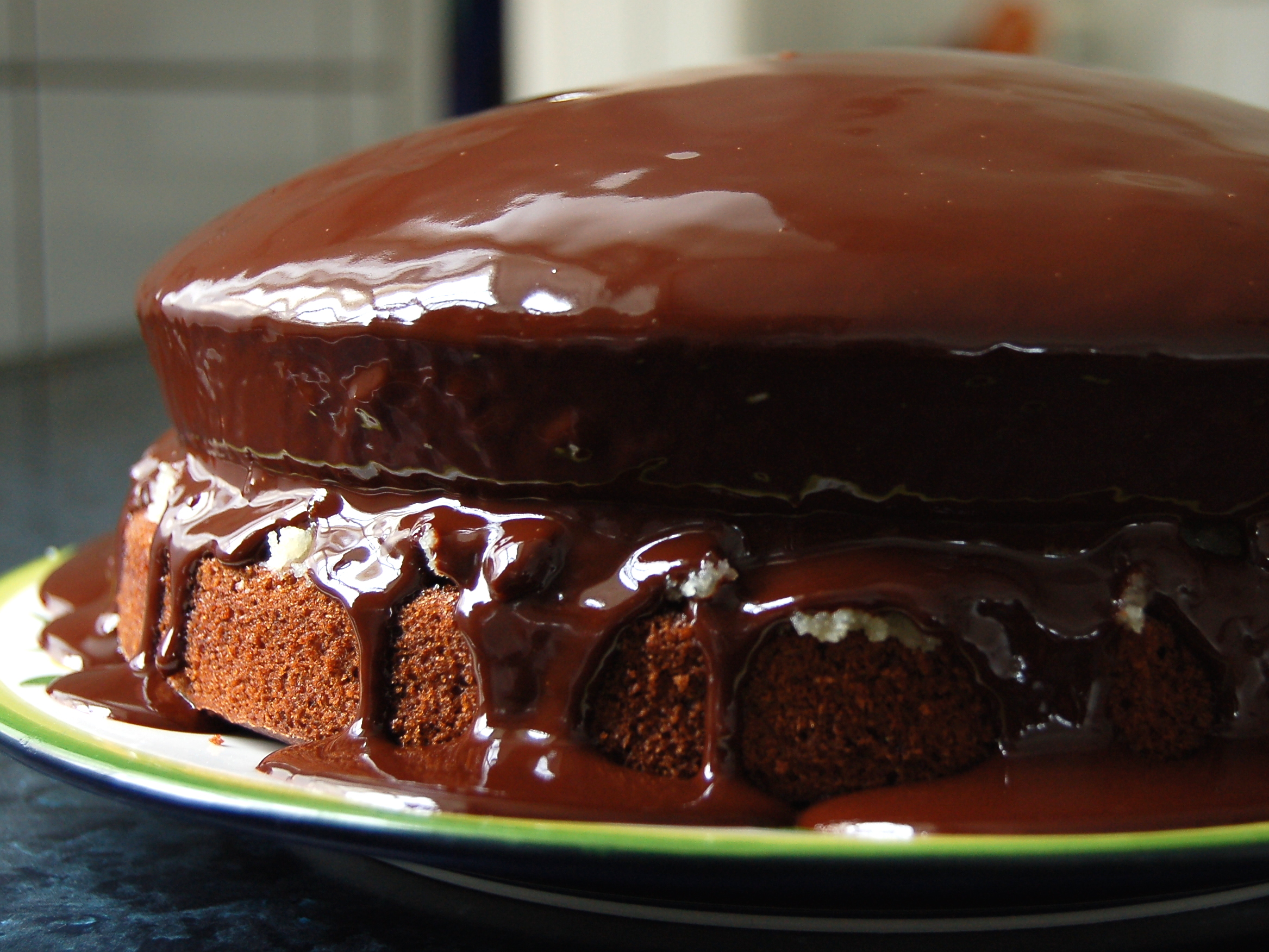
 After the Desolation of Smaug, I felt a need to redeem myself in the cake department. I also had some almond paste and some dark chocolate left over from the kids’ birthday cakes, so yesterday I created this beauty—as delicious as it looks. It’s a devils food cake, filled with almond paste, and covered with a chocolate ganache. Marvellously decadent!
baking
The Desolation of Smaug
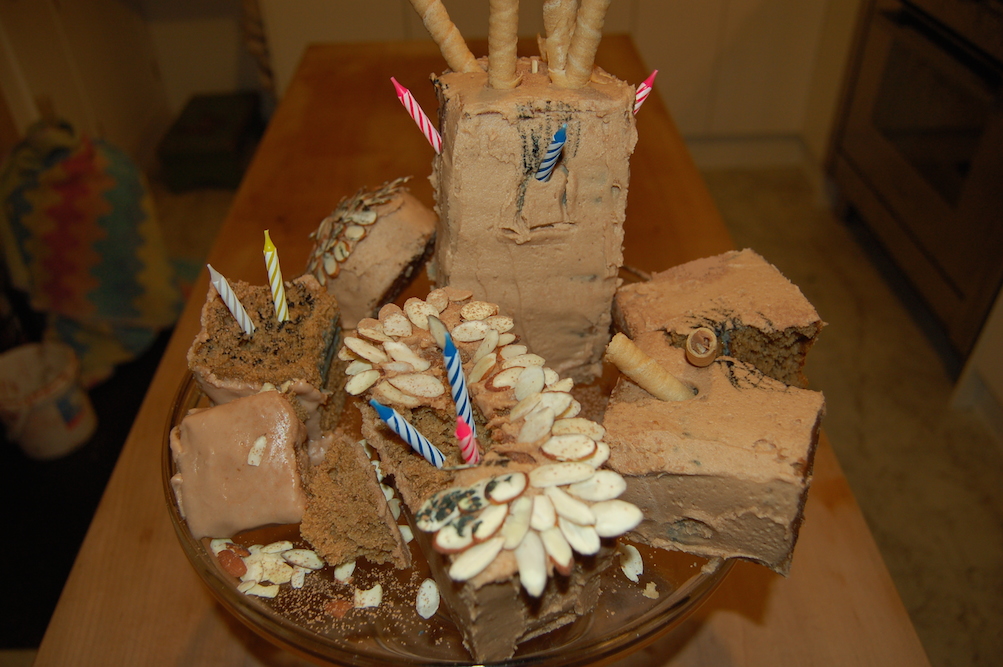
The desolation of Smaug
When my son requested this year’s birthday cake, he envisioned an architectural marvel—the city of Dale (yes, another Hobbit themed cake), with its neat, tile-roofed houses and soaring stone towers. I agreed to his request, thinking I would use the rolled fondant icing I intended to try this year. The one using agar…the one that tasted like sugared seaweed (read about it at this post). No problem, plan B was to use a poured fondant (no agar in that) and ice the buildings like petit fours. I tested the fondant last week on the dwarf heads, and was confident it would work.
But this batch of fondant was too thick; it ended up lumpy, and didn’t stick properly to the cake. Fixing it would require remaking it (and allowing it to cure for another 24 hours). OK, on to plan C. I had some marzipan left over from last week’s cakes, so I tried rolling it and covering the cake with it—too soft, it didn’t hold together. Plan D was to try the same with almond paste. It almost worked, but only on small pieces, and I didn’t have enough of it, anyway. I resorted to plan E, buttercream icing, which I knew wasn’t going to created the look I wanted. Before the first building was iced, I decided it wasn’t good enough. Tired, frustrated, and struggling under the oppression of a bad head cold, I surveyed the results with dismay. Nothing short of another day’s work was going to improve the cake. It was 9.30 pm the night before Lochlan’s birthday. I had, maybe, another hour before I would collapse from exhaustion.
I did the only logical thing I could—I skipped to plan S. He’d asked for the city of Dale, and he would get it, but not before Smaug did.
It felt wrong to purposely rip and tear at the half finished buildings, but the resulting confection was deemed “awesome” in the morning. I wouldn’t go so far, but it will do. Sometimes, that’s the best you can hope for.
Dwarf Cakes
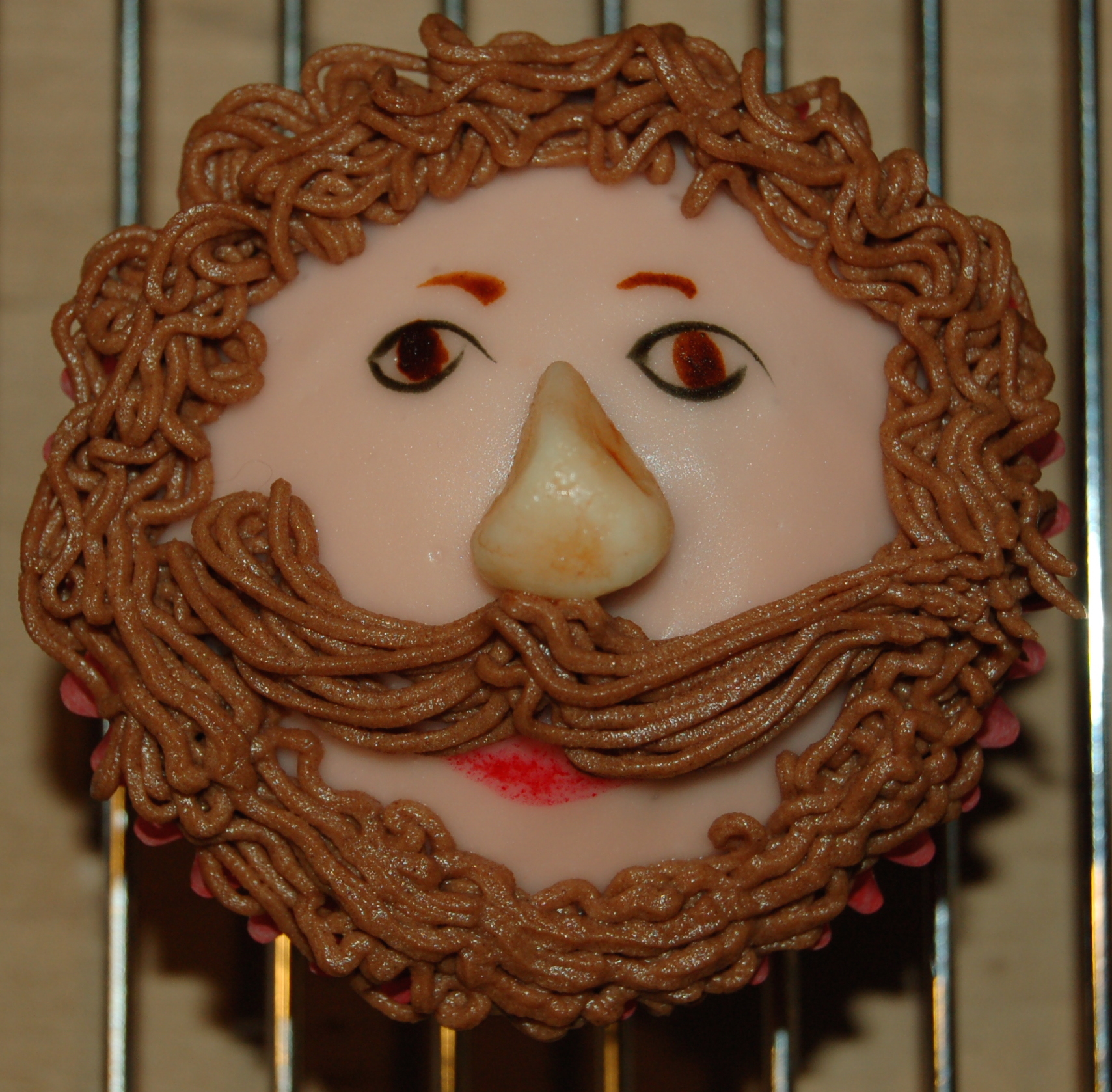
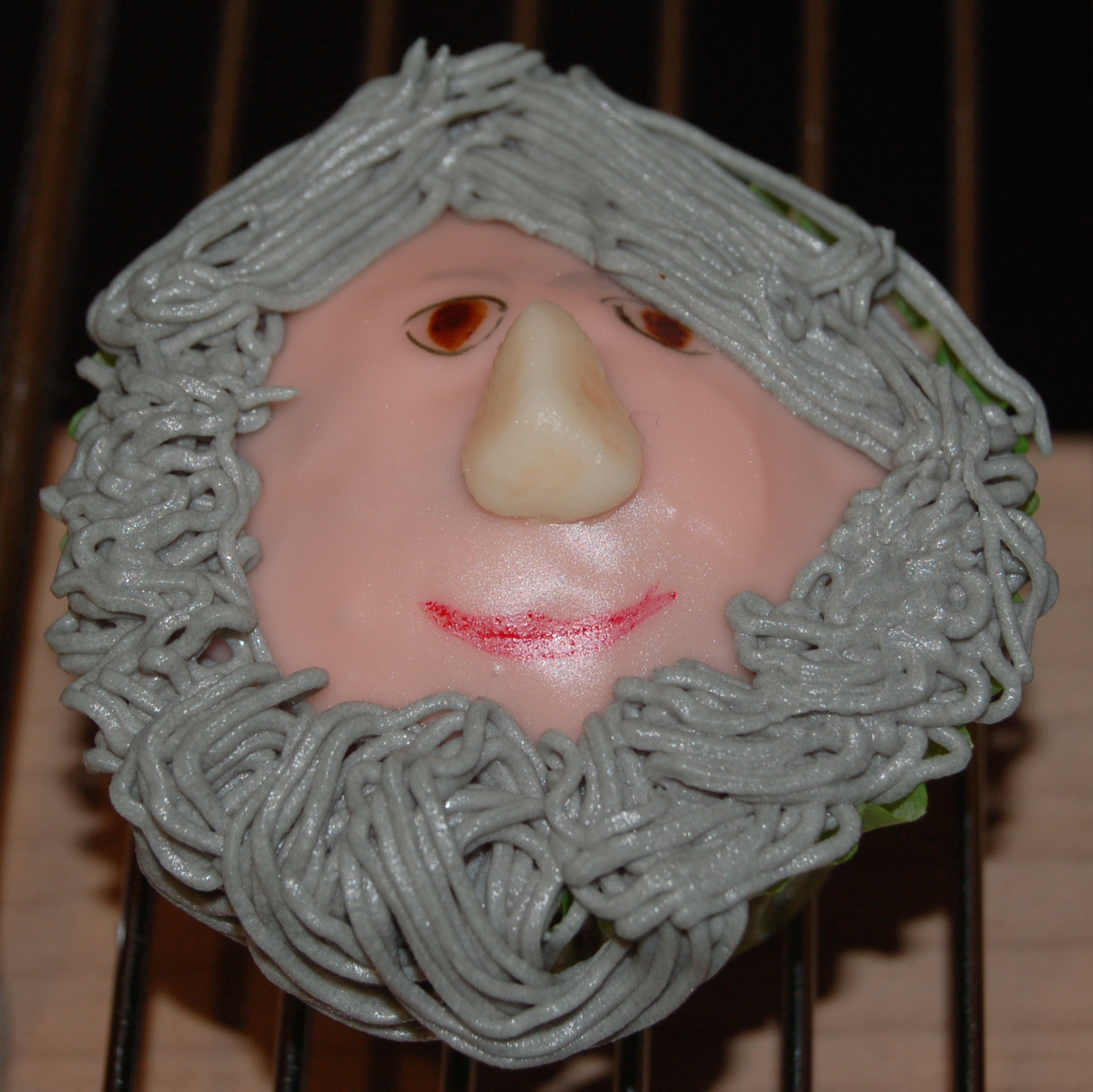
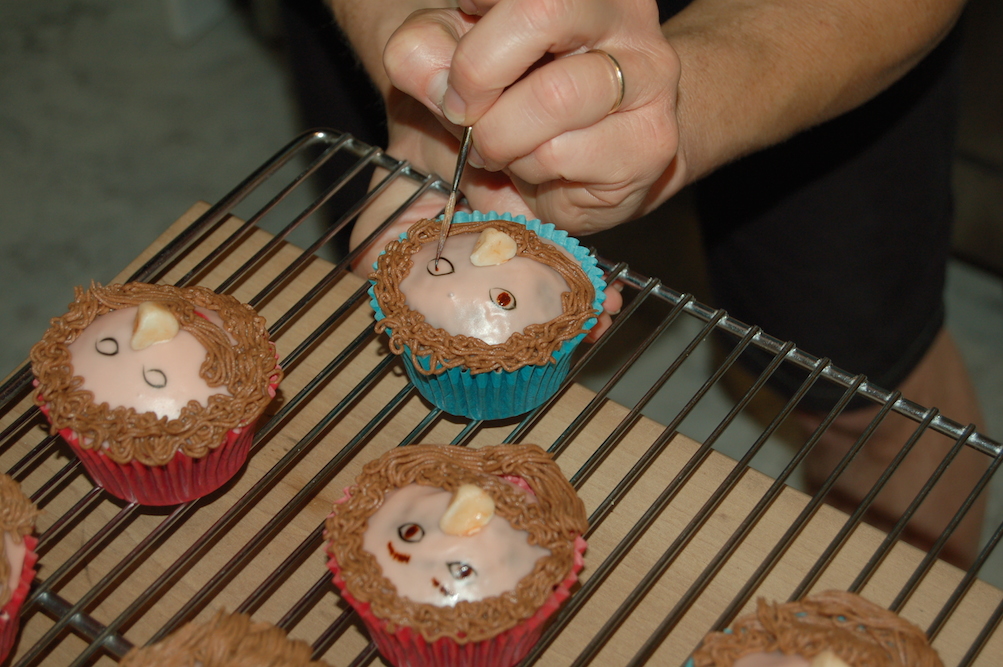 Over the school holidays, we saw the final Hobbit movie on the big screen, so I suppose it’s no surprise the kids wanted Hobbit themed cakes this year for their birthdays. The joint birthday party this year was held at Okain’s Bay—a weekend on the beach with a few friends. The party cake had to be able to travel, so a big elaborate confection like last year’s Smaug cake wasn’t going to work. I suggested decorated cupcakes instead, and the kids immediately decided they had to be dwarf faces.
So I pored over the cast photos from the Hobbit, made dozens of marzipan noses, and agonized about how to create braided icing. Some ideas worked, and some didn’t. Here are the results.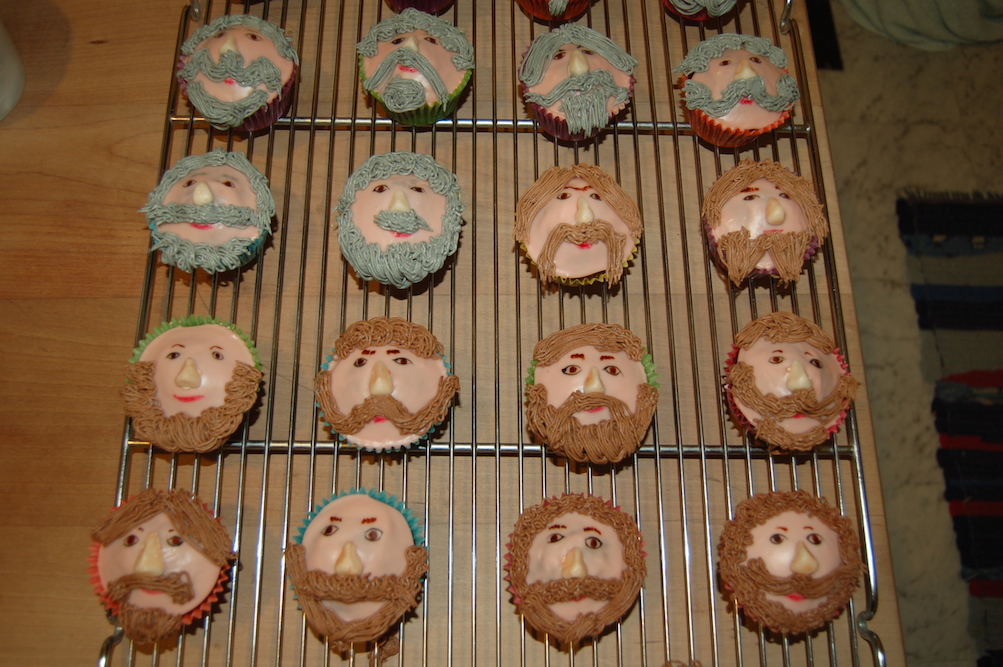







Lemon Cake
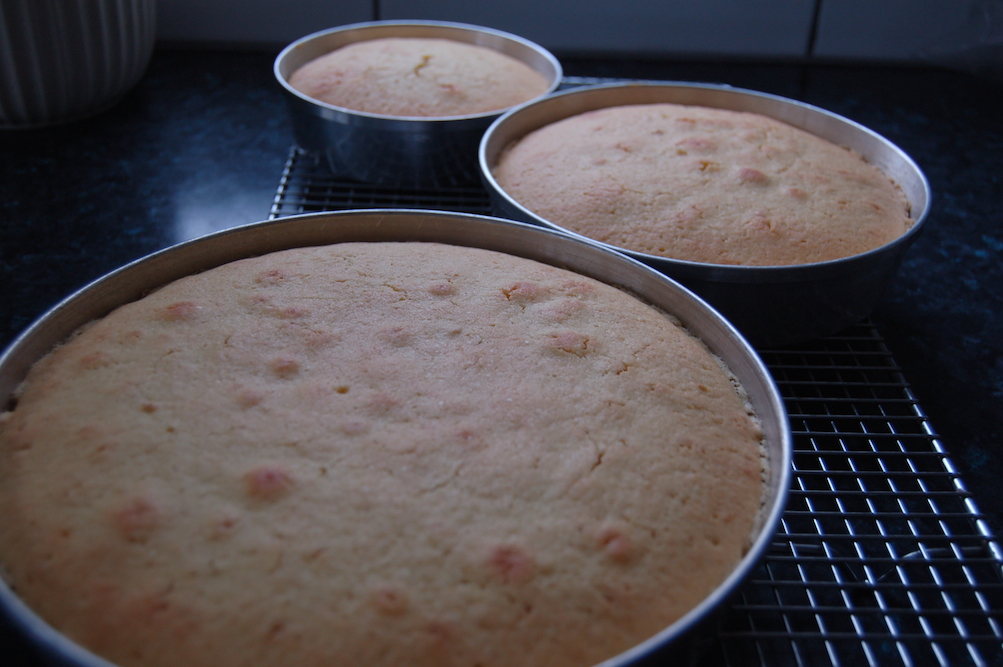 Carrying on with the cake theme, I thought I’d share this Lemon Cake recipe. This is the second year in a row my daughter has asked for lemon cake for her birthday. Though my cookbook collection is truly excessive, I don’t have a good recipe for lemon cake. Since the first lemon cake request, I’ve been tinkering with various recipes, and this year I hit on a winner. This combines ideas from coconut cake, orange cake, and lemon scone recipes to created a very lemony cake with beautiful texture. I used lemon curd between layers for an over-the-top lemon experience. Do take the time to find barley flour—its flavour complements the lemon perfectly.
1 cup butter, softened
1 ¾ cup sugar
4 eggs, separated
grated zest of one lemon
2 ¼ cup all purpose flour
1 cup barley flour
½ tsp salt
2 ½ tsp baking powder
¼ cup fresh lemon juice
¾ cup water
Cream butter. Add sugar gradually and beat until fluffy. Add egg yolks and lemon zest and continue to beat. Mix flours, salt, and baking powder in a separate bowl. Add dry ingredients alternately with lemon juice and water. Beat thoroughly after each addition. Fold in stiffly beaten egg whites. Pour into greased and floured pans. Bake at 180°C (350°F) for 30 minutes. (Makes two 9-inch layers)
Obsession with Cake
 It’s that time of year again, when I spend my days and nights obsessing over cake. I suppose there are worse things to obsess about, but had I planned better, I would have spread my children’s birthdays further apart. As it is, with just 12 days between them, it’s a bit of a marathon—a cake for each of them on their birthdays, then usually a third cake for a joint birthday party, all in the space of two weeks.
A few weeks before their birthdays, they request a cake flavour and a theme. It’s then up to me to produce something that will wow their eyes and tastebuds.
I take the task seriously (Ian argues that I take it way too seriously). I plan, I test out new materials and techniques. I even watch the weather forecast—I learned that the hard way several years ago when the large clear candy sails on a pirate ship melted in humid air.
In the days before a birthday, I prepare necessary accessories like marzipan, fondant, and candies. I bake the cake the day before, so it is cool and ready to decorate after dinner. Though the kids know generally what I am making, the actual cake is meant to be a surprise in the morning. I work late into the night, shaping and decorating, then cleaning up the tremendous greasy, sticky mess that only icing can create.
In the morning, I watch carefully for the first reactions to the cake. Did I get it right? Did I capture the vision my children had when they decided what they wanted?
And then it’s all over. Two weeks of frantic obsession with cake, then it’s another year until I get to make another.
Eggplant
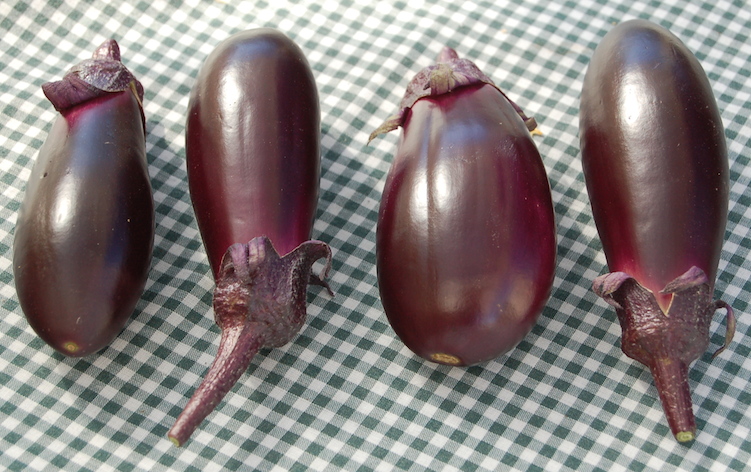 Eggplant is native to a wide region stretching from India through Asia into China. Unlike some of our vegetables, eggplant has changed little over the 2000+ years it has been cultivated. In different times and cultures, a varied and contradictory array of properties have been attributed to the plant. Is it an aphrodisiac, or a cure for diabetes? Does it cause uterine damage, or relieve asthma? Is it the source of leprosy, or a cure for ear disease? Today, various sources claim eating eggplant skin can reduce your risk of cancer, obesity, and heart disease (and there is limited research to back up these claims), but the important thing about eggplant is that it is delicious.
I know, I know, some of you are saying, “Are you kidding? Eggplant is disgusting!” I admit, it can be. Eggplant can be bitter, rubbery, and thoroughly unlikable. Big, mature eggplants you find in the grocery store, shipped from Spain during the winter, are often less than tasty, but there is nothing more amazing than a young, freshly picked eggplant. I seldom need to salt my eggplants (which helps if the fruit is bitter), and I use eggplant in dozens of ways. From January to April it serves as our “meat”. Grated, it thickens spaghetti sauce, sliced thin and sautéed it adds deep flavours to a stir fry, on the grill, it soaks up marinade and turns to a melt-in-your mouth consistency.
My kids like it best as the “fish” in my vegetarian fish and chips. I make up a spicy batter (just as you would for the real thing), and fry big lengthwise slabs of battered eggplant until it’s just cooked and still firm. Served with a generous tray of oven fries, it’s as good as fast food gets.
In fact, one of my favourite bar meals (back when I used to go to a bar maybe once a year) used to be eggplant sandwiches at some place in Ann Arbor, Michigan. Battered, fried eggplant slabs smothered in tomato sauce and cheese in a big sub roll. Mmm!
Yeah, you may think eggplant is good for you, but to me, it’s just plain good.
Do you have a favourite way to eat eggplant?
Veggie Burgers
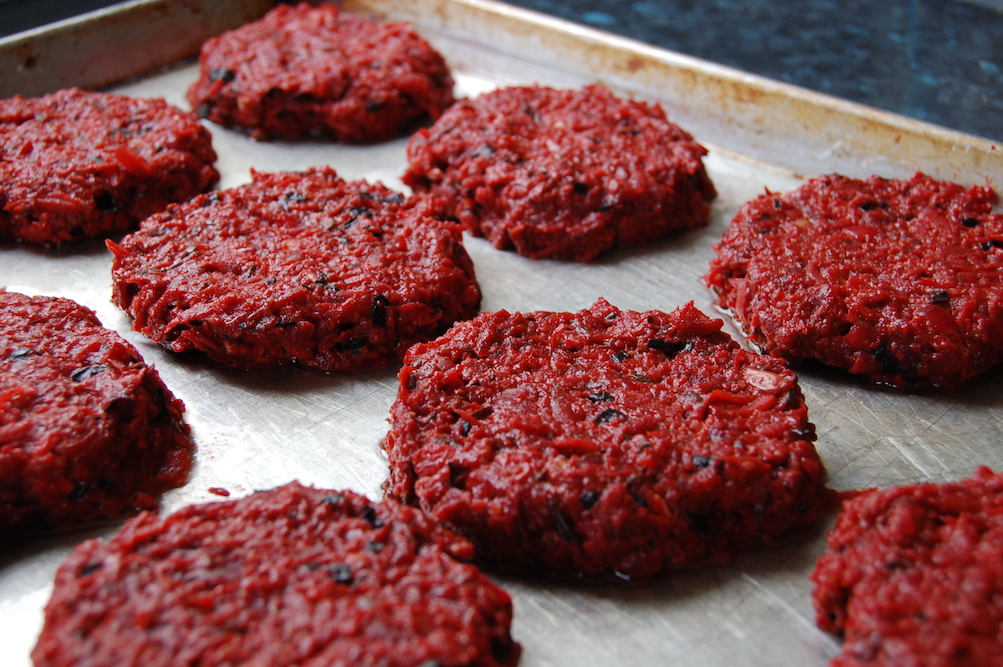 One of my favourite ways to eat overabundant summer vegetables is as burgers. After weeks of eating the same veggies over and over, burgers are a great way to make vegetables seem like not just ANOTHER dinner of zucchini (or whatever else we’ve been eating that week). And, of course, there’s nothing better in summer than a good burger dripping with melted cheese and slathered in ketchup!
As a vegetarian, I’ve experimented with a wide array of burger recipes. Some have great flavour, but fall apart when they’re flipped. Others taste dry and dull. Over the years, I’ve combined ingredients and techniques from dozens of vegetarian burger recipes to arrive at a versatile, simple recipe that tastes great, holds together well, and freezes beautifully. This recipe works with just about any vegetable you can grate, and I rarely make it the same way twice, because I use whatever is coming out of the garden at the time.
Here is my base recipe. I’ve included specific quantities as a guide, but I rarely actually measure anything that goes into my burgers—I measure my oats by the handful, and my oil by the glug—the burgers are reasonably forgiving, once you have a feel for what the final consistency should be like.
1 onion, finely chopped
2 cloves garlic, crushed or finely chopped
1 Tbs paprika (or ½ Tbs smoked paprika, or a combination of the two)
6-8 cups grated vegetables (any summer squash, carrots, beets, eggplant—use whatever you have in abundance)
½ cup old-fashioned rolled oats (or up to a cup, if your vegetables are particularly moist)
½ cup fresh herbs, finely chopped (basil, parsley, oregano, rosemary, and/or thyme)
¾ cup nuts or seeds, toasted and ground to a fine powder (sunflower seeds, walnuts, and cashews are my favourites)
1 tsp prepared mustard
3 Tbs sesame oil
1 ½ Tbs soy sauce
½ tsp ground fennel
1 tsp dried oregano
Black pepper to taste
1-2 eggs
½ c – 2 c bread crumbs
Preheat the oven to 375˚F (190˚C). Place nuts or seeds in a shallow pan and into the heating oven to toast. When they’re ready, they will be aromatic and slightly browned. Grind them in a spice or coffee grinder, or in a rotary cheese grater.
While the nuts are toasting, gently sauté the onion, garlic and paprika in a large skillet until the onion is translucent. Add grated vegetables and ¼ cup of water to the skillet, cover and let the vegetables cook until they begin to soften and release moisture, stirring occasionally. Once the vegetables begin to soften, add the oats and cook uncovered until most of the moisture is gone.
Mix all the ingredients except the eggs and bread crumbs together in a large mixing bowl and taste for spicing. Add enough bread crumbs to make the mix stiff, but not dry. Thoroughly mix in the eggs. Form into patties and place on a well-oiled baking sheet. Bake for 25-30 minutes, turning the burgers after about 15 minutes.
To make cheeseburgers, lay a slice of cheese over each burger 5 minutes before the end of baking.
Using the larger amount of vegetables, this recipe makes enough for two dinners for my family of four. The burgers freeze well and make a great dinner to pull out at the end of a busy day. Layer waxed paper between fully baked burgers so you can easily separate them when frozen. Reheat in the microwave or in the oven.
A day in the kitchen
At 3.30 pm, I wiped the sweat from my brow and wondered where the day had gone. I felt like I’d been in the kitchen all day, and I nearly had. By 6.30 am I was pasteurising the day’s milk. Before the milk was even fully chilled, I was on to making the almond paste that I’ll make into marzipan for Lia’s birthday cake next week. Next, I gathered and packed the food for our weekend camping trip. Then we made a run to the grocery store to pick up a few ingredients. Back at home, I started a batch of naan that we’ll eat on our camping trip tomorrow. While the dough was rising, I made the fondant that I’ll use on the upcoming birthday cakes. Then I picked vegetables, and whipped out a curry to accompany the naan for tomorrow’s dinner. While that simmered, I started rolling out and baking the naan.
Tonight is the kids’ night to make dinner, so as I did the dishes and wiped the counters, I helped them decide what to make. This involved a trip to the garden to assess the availability of cucumbers, then instructing the children on how to make a cucumber salad.
In another hour or so, I’ll need to help the kids make grilled vegetables, then I’ll need to pasteurise the afternoon milk. So I’m taking a break right now to…blog about food.
Thankfully, not every day is this focused on food and food preparation. Indeed, for the next two days, the only food-related work will be to decide when and where to stop for lunch, and what flavour ice cream to get. (I’ve even written the next two days’ blog posts already, so I really am home free!).
So bon appétit! I’m out of the kitchen and off to the beach!
Best pie ever
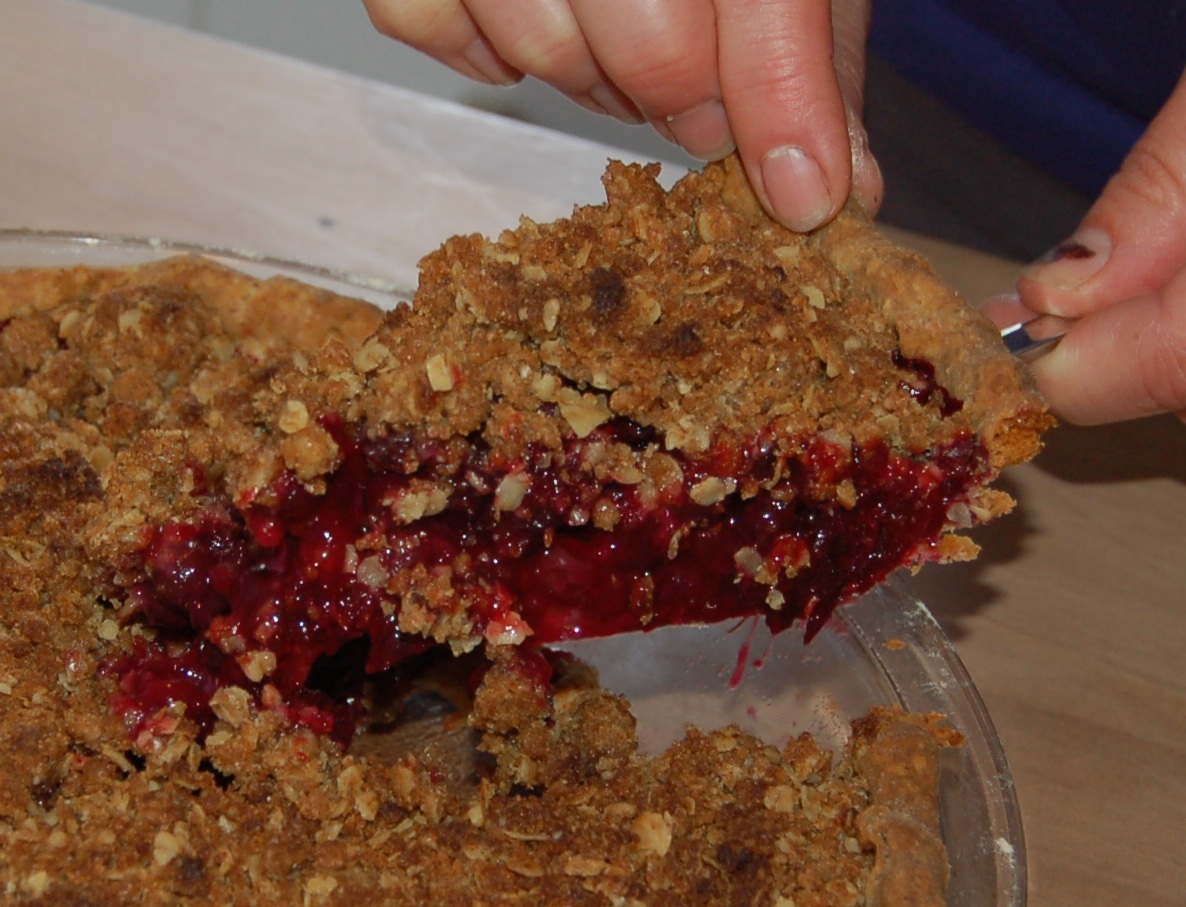 We had an overabundance of blackcurrants this year, and in looking for interesting (and easy) things to do with them, I found some lovely pie recipes. I mixed and matched them, and came up with this divine concoction. So flavourful, you only need a little slice…so good you’ll want a big one!
I’ve been making it the day after making quiche for dinner—I make twice as much pastry dough as I need for the quiche, and put half in the fridge. With pre-prepared dough, the pie can then be assembled in minutes.
4 cups blackcurrants (fresh or frozen, thawed)
½ cup granulated sugar
2 Tbsp. all-purpose flour
Pastry for 9-inch pie
Wash and drain blackcurrants and remove stems. Mix with sugar and flour. Pour into the pie shell and top with pastry or streusel topping (see below).
Bake at 200°C (400°F) for 30 minutes, then reduce the heat to 180°C (350°F) and bake for another 25-30 minutes. Cool completely, and serve with whipped cream or vanilla ice cream.
Streusel:
5 Tbsp. melted butter
2/3 cup quick-cooking rolled oats (traditionally chopped nuts, but ‘easy’ is the whole idea here)
½ cup packed brown sugar
2/3 cup whole wheat flour
1 tsp. cinnamon
Mix ingredients with a fork until it resembles coarse crumbs.
 Robinne Weiss