Not Yo Mamma’s Mac and Cheese

DSC_0005 copyGrowing up, I remember macaroni and cheese as something that was bright orange and came out of a box. Of course, I loved it. But as an adult, I have a hard time serving that sort of stuff to my family.

So, I started making mac and cheese using Joy of Cooking’s Baked Macaroni recipe, but there’s not much in it—it’s good, but not terribly interesting or nutritious. I began tinkering, and came up with Not Yo Mamma’s Mac and Cheese. My kids, of course, point out that it is their mamma’s mac and cheese, but the name stuck anyway.

This recipe makes a generous meal for our family of four, with lots of leftovers for lunch the next day.

500 g package elbow macaroni

2 large carrots, diced

1 ½ cups fresh or frozen peas (thawed if frozen)

1 ½ cups fresh or frozen corn (thawed if frozen)

1 onion, diced

2 stalks celery, diced

¼ cup chopped fresh parsley

1 ½ cups grated cheese (pick your favourite)

3 eggs

1 cup milk

bread crumbs

butter

salt and pepper to taste

Cook the macaroni. While macaroni is boiling, boil the carrots until just tender. Sauté the onion and celery in olive oil or butter until the onion is translucent. Add vegetables and cook just a few minutes longer, until everything is warm through. Mix in the parsley, and salt and pepper to taste.

Scald the milk, and beat in the eggs.

In a well-buttered casserole dish, layer macaroni, vegetables, and cheese, ending with a layer of cheese. Pour the egg mixture over the top. Sprinkle generously with bread crumbs and dot with butter. Bake at 190°C (375°F) for 30 minutes, until the egg is firm in the centre.

 

Surprises

DSC_0003 copyWe have been eating jalapeños from the garden for months now. I’ve pickled tons of them, we’ve had them on burgers, in pasta sauce, in burritos…so the other day, as I was slicing one for on pizza, I popped a generous slice in my mouth, expecting the mild heat of all the others we’ve eaten.

Boy, was I in for a surprise! I may as well have eaten a Thai hot pepper! For some reason, this jalapeño was screaming hot. My eyes began to water, I started to hiccup from the heat, all the while laughing at myself. It was half an hour before my mouth settled down to a mild tingle from the fiery pain of that pepper.

The remainder of the pepper went straight into the compost—I didn’t want any spice at all on my pizza that night! I have treated the jalapeños with more respect since then.

It’s not the first time I’ve been surprised by spice. In Peace Corps, we regularly had training events at a nearby Girl Scout camp. The camp cook always set a huge jar of homemade hot sauce on the table. The size of the jar was deceptive—served in that quantity, it couldn’t be very spicy, right? The first time, I took a large spoonful and stirred it into my beans. I wondered if I’d ever recover! A tiny bit of that hot sauce was enough to bring tears to my eyes—it was nothing but ground up habañeros. I have to wonder if the cook didn’t do it on purpose in order to laugh at all of us with smoke coming out of our ears! It was a good joke, but not a surprise I want frequently.

Luddite’s kitchen weight-loss programme

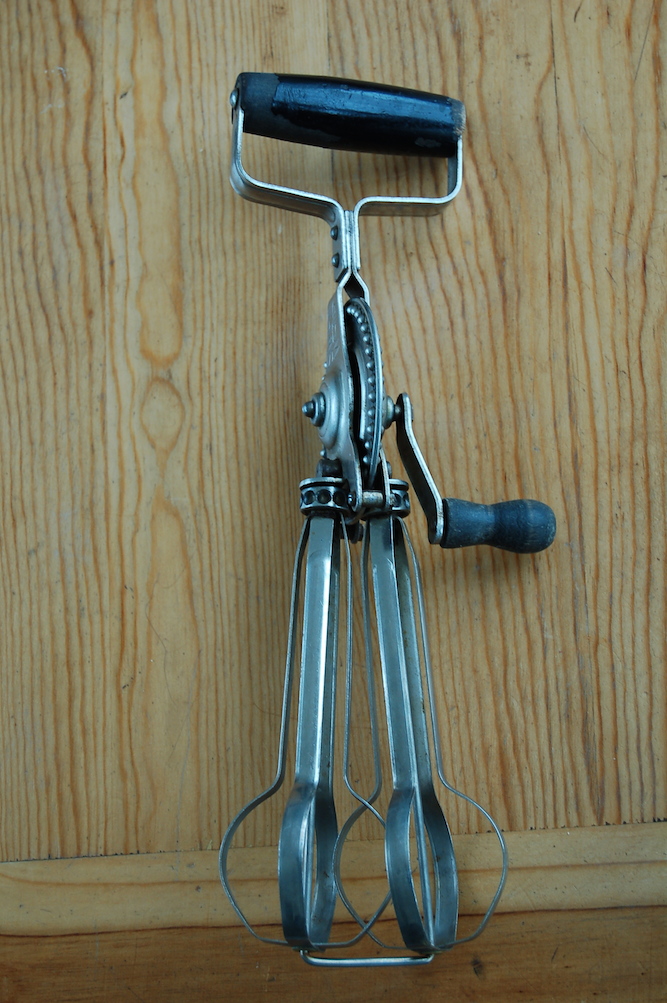
DSC_0016 copyI occasionally wonder if the obesity epidemic isn’t exacerbated by kitchen appliances. This thought generally accompanies either pastry making or the beating of egg whites. As I’ve mentioned before, I use an old-fashioned pastry knife to cut butter into my pastry dough, instead of a food processor. I use one of my other favourite kitchen tools, my egg beater, to whip egg whites or cream. Both activities usually involve a break to take off my sweater or roll up my sleeves. They’re a surefire way to warm up on a cool day.

All our labour-saving devices are great, but I wonder if we weren’t better off having to put more effort into our treats. Back in the day, when you had to grow the wheat, harvest it, grind it; milk the cow, make the butter; and mix everything together by hand, I expect the caloric output involved in making a cake was about equal to the intake of eating it.

Now, we can just drive our cars to the grocery store and buy as many treats as we’d like. I would easily fall into this trap, as I have a terrible sweet tooth. But many years ago, I decided that I would bring no treats into the house, unless I made them myself. And I make sure I have to work for those treats by using my hand-powered tools instead of electric appliances.

Does it help? Who knows. It can’t hurt, though, and it makes every cookie, cake, and bar special, because I had to work for it.

Pumpkin Cranberry Muffins

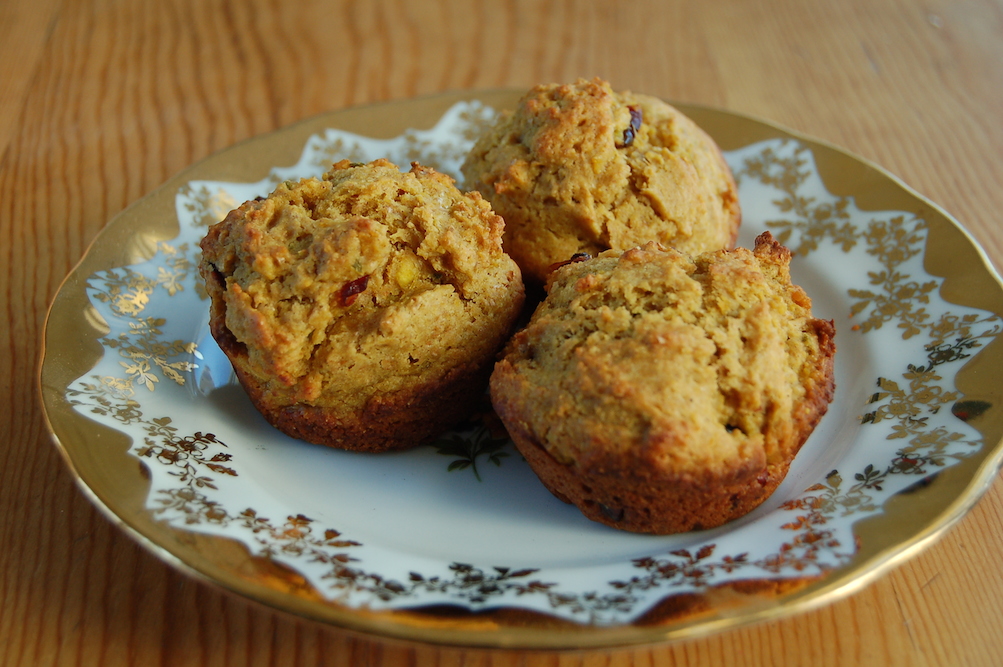
DSC_0006 copyPumpkins are on my mind, because they are all over the windowsills in the kitchen. How can you not eat them, when you look at them all day! We enjoyed pumpkin cranberry muffins this morning for breakfast. The recipe I use is a variation on a pumpkin spice muffin recipe from Ken Haedrich’s Home for the Holidays cookbook. His recipes, while tasty, tend to use every measuring cup and spoon in the kitchen. This is no exception, and I don’t make these muffins often enough to have simplified the recipe yet.

So pull out all your measuring cups…here’s my version of the recipe.

1 ½ c. cooked, mashed pumpkin

1 large egg

3/8 c. packed brown sugar

1/3 c. orange juice

¼ c. butter, melted

1 Tbsp molasses

1 c. all-purpose flour

¾ c. whole wheat flour

1/3 c. cornmeal

2 ½ tsp baking powder

½ tsp salt

½ tsp ground cinnamon

¼ tsp ground nutmeg

¼ tsp ground cloves

¼ c. milk

½ c. dried cranberries

Combine pumpkin, egg, sugar, orange juice, melted butter, and molasses in a bowl and mix well. In a separate bowl, mix the flours, cornmeal, baking powder, salt and spices. Add the liquid mixture to the dry ingredients and stir briefly. Add the milk and continue to stir until the batter is uniform. Fold in cranberries.

Spoon into greased muffin tins (I usually get about 16 muffins, but if you like big ones, you could make 12). Bake at 210°C (400°F) for about 20 minutes. Watch carefully near the end of baking; they burn easily.

Pumpkin Galette

squash galetteOne of our favourite ways to eat pumpkin. We enjoyed the first pumpkin galette of the year today.

Make enough pie dough for a double crust pie. Refrigerate until you’re ready to assemble the galette.

1 large or 2 medium winter squashes or pumpkins

2 med shallots

3 cloves of garlic

8 large sage leaves

2 sprigs fresh thyme

1 c. grated cheese (cheddar, edam, or whatever you like)

sunflower or pumpkin seeds for on top.

salt and pepper to taste

Cut the squash in half and scoop out the seeds. Place cut side down on an oiled baking sheet (a jelly roll pan works well–avoid cookie sheets, as liquid from the squash may spill off). Tuck the garlic (in its peel) into one of the squash cavities. Bake at 190°C (375°F) for 30-45 minutes, until the squash is quite soft. While the squash is baking, sauté the shallots until translucent in a generous amount of olive oil. Add the herbs and sauté a little longer. Set aside until the squash is done. When the squash is soft, scoop the flesh out of the skins, and mix it with the shallots in a large bowl. Peel the garlic cloves and put them into the bowl. Stir everything together, mashing any large chunks of squash, until you have a stiff puree. Season to taste with salt and pepper. Roll out the pie dough into a large round (38 cm/15 inches diameter). Place rolled out dough flat on a large baking sheet. Sprinkle most of the grated cheese on the dough, then mound the squash mixture on top, leaving about 8 cm (3 in) around the edge. Sprinkle the remaining cheese and a small handful of sunflower or pumpkin seeds on top. Gently fold up the edges of the dough to partly cover the squash. Bake at 190°C (375°F) for about 30 minutes, until the crust is lightly browned.

Seasonal food

100_0535 cropOvernight, the mountains were cloaked in snow, and this morning they seemed to have leapt closer, looming huge and white where all summer they’d been nothing but distant grey peaks. The wind is cold and keen, and brings driving rain and hail clattering against the windows. The cat stretches out in front of the first of the season’s fires in the log burner.

Overnight, it seems, we have broken from our never-ending summer and have been plunged into winter. And overnight, our meals have changed. Though there are still a dozen cucumbers in the fridge, the thought of a cool cucumber salad is not appealing today. Instead I hunger for potato soup, bread warm from the oven, and hot apple crisp. I eye the pumpkins as I could not on the shorts-and-T-shirt day last week when I harvested them, and I think of gallette, soup, and pie. I am excited by the culinary opportunities the change of seasons presents.

There will be more T-shirt weather, I know. The cucumbers will be eaten. Here in the land of perpetual spring, even winter days can call for iced drinks now and again. But for now, I will enjoy the excuse to eat steaming soup with buttered biscuits, and drink hot tea in the middle of the afternoon.

Fall Foraging

DSC_0016 copyI enjoy foraging for forgotten food, and university campuses often offer good pickings. Development marginalises former research and demonstration plots. The plants are abandoned in some corner between buildings, and are forgotten by everyone but the groundsmen who have to mow around them.

Apples used to be a huge crop around Lincoln (until growing houses became more profitable), and the university has done research on apples for many decades. The “Orchard Carpark” is presumably the former site of the University orchard, but only one lone apple tree remains on the edge of the pavement. No one officially picks its fruit, but passersby avail themselves. This year, the tree is groaning under a heavy crop.

This morning, when I stopped by, the tree was well-picked on the lower branches, but there was plenty of fruit on the ground, and my daughter climbed into the tree to reach a few higher up. We came home with a bag full of tart, firm apples. Perfect for pie.

Mommy’s Magical Crackers

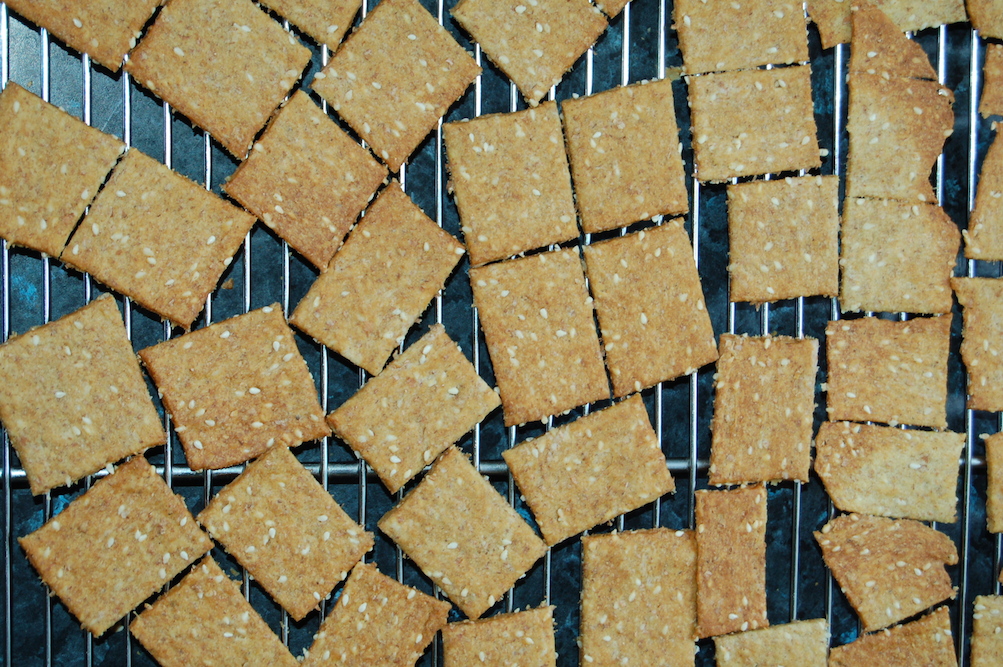
DSC_0007 copyNamed by my kids years ago, these are so magical, they start disappearing almost before they leave the oven. It’s a good thing they’re easy to make—easy enough for every day, good enough to include on a fancy cheese and cracker tray at a party.

1 c. all-purpose flour

1 c. wholemeal flour

¼ c. sesame seeds

1 tsp baking soda

½ tsp salt

1/3 c. vegetable oil

2/3 c. warm water

Mix flours, sesame seeds, soda and salt. Stir in water and oil, stirring just until the dough comes together in a mass. Divide dough into halves. Roll out each half very thin (1-2 mm) on a lightly greased baking sheet. Cut into cracker shapes, and bake at 190°C (375°F) for about 15 minutes, until they are brown and crispy. Check regularly toward the end of baking and remove any crackers that have browned before they burn.

Eat quickly before they vanish!

* Replace the wholemeal flour with rye meal (or a coarse ground rye flour) for a lovely variation.

Celebration breads

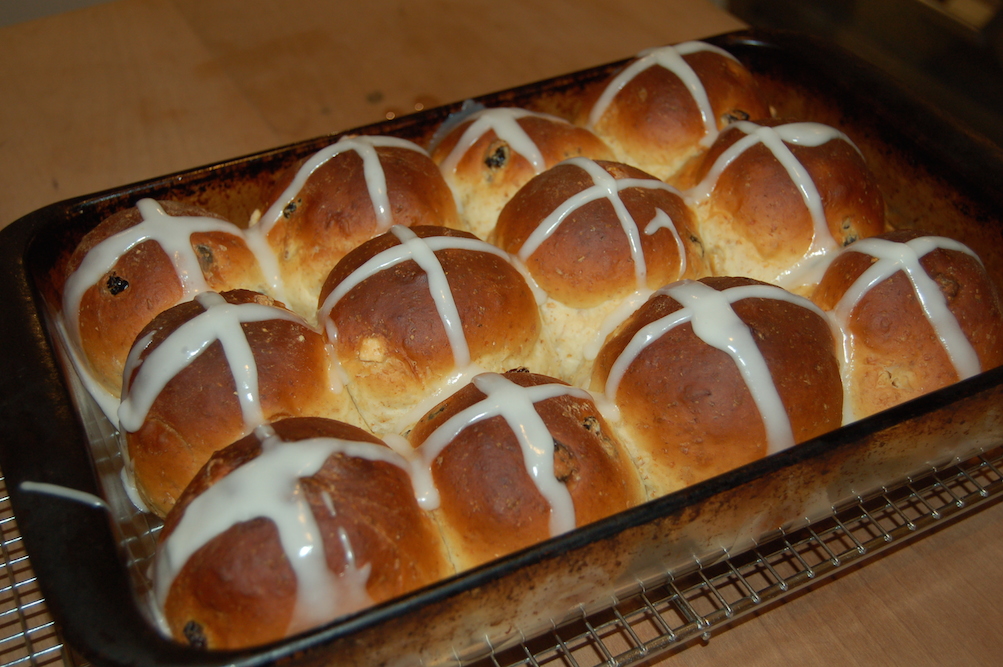
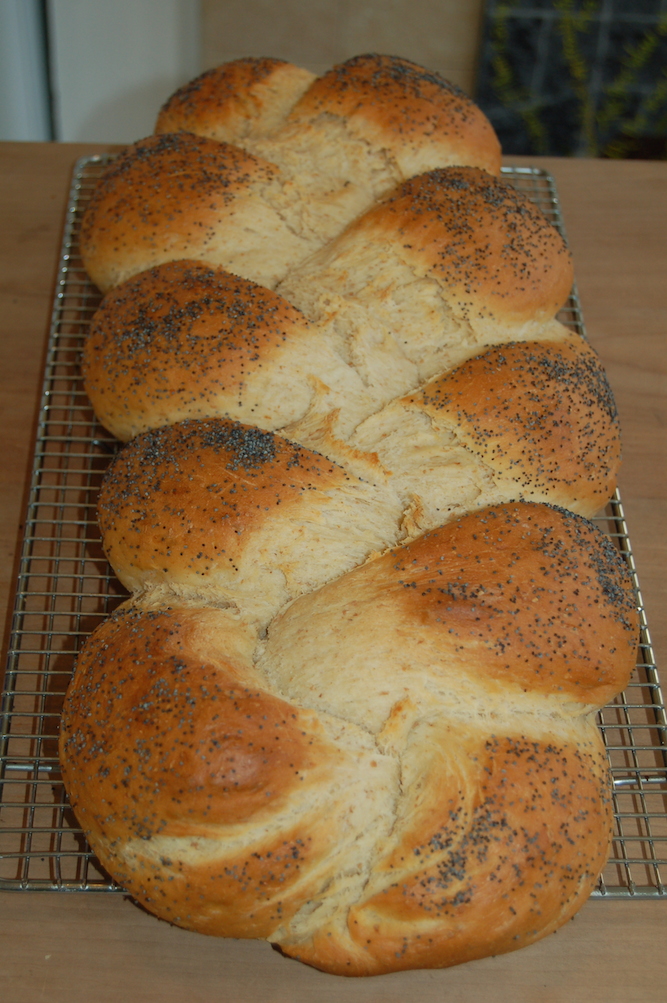
DSC_0007 copyI know it’s not fashionable to appreciate gluten these days, but our household thrives on bread. No holiday celebration is complete without at least one bread. Holidays are an excuse to bake something different, something extravagant. Today rated two special breads. I made hot cross buns for breakfast, and Ian made a challah the size of a toddler, which we enjoyed with home made goat cheddar for lunch.

DSC_0002 copyEnjoy your day, whether you are celebrating Easter, Passover, or just a beautiful day in April! May it be full of bread!

The Daily Bread

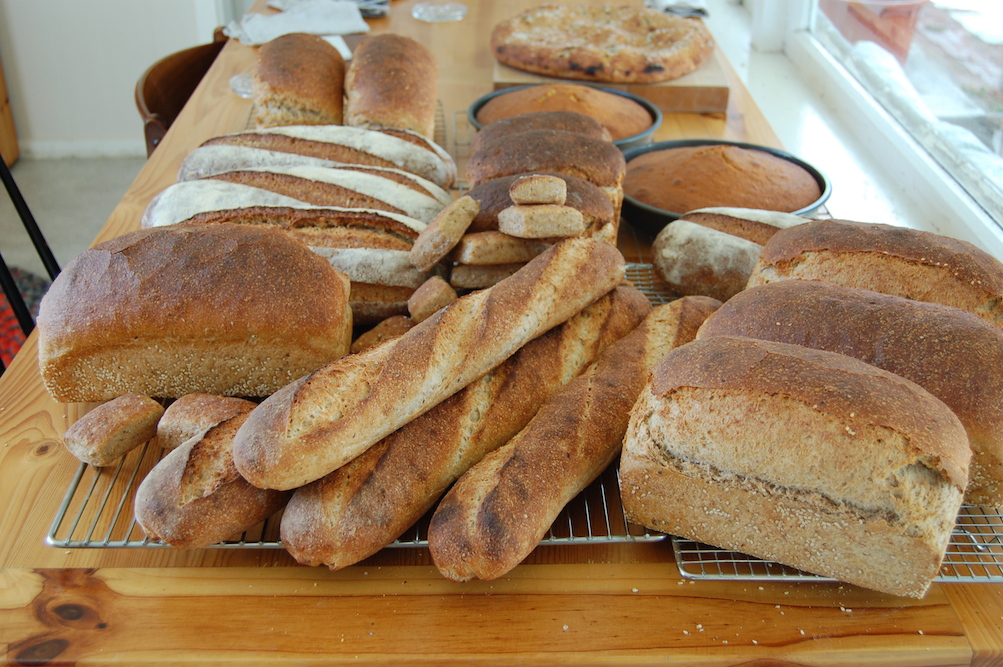
My bread can't compare to these beauties of Ian's.

My bread can’t compare to these beauties of Ian’s.

Last night when I put another four quarts of peaches in the freezer (still working through those 40 kg!), I noticed we were nearly out of bread.

Ian is under a crunch of deadlines at work and is unlikely to take the Easter weekend off, and if he does, he has a huge DIY project underway at home, so there is no way he will be making bread this weekend. That leaves it up to me to fill the gap.

I’m always a bit nervous baking bread. I make a fine loaf, but I don’t have the practiced skill Ian has at bread. Imagine drawing a picture for Picasso—that’s a bit what it’s like to bake bread for Ian.

He is kind, and says nice things about my bread, gives me advice. We both know that putting up with my bread occasionally is part of what it means to live in our family. Just as sometimes he does the milking for me, we both take responsibility for just doing what needs to be done. We’ve tried to teach this to our children—the skill of walking into a situation, seeing what needs doing, and doing it without being asked. It is one of those skills that makes a person stand out as an employee, a roommate, a co-worker, and a friend. People who have this skill are the ones who walk into the kitchen at a party, see the pile of dishes in the sink, and wash them. They are the co-workers who empty the staff room dishwasher, the children who clear their plates from the dinner table, the students who tidy the classroom bookshelves as they look for something to read. We love these people. They make everyone’s lives better.

So I know it is okay that my loaves are not as beautiful or well-made as Ian’s. Part of being on this family team is sharing responsibilities, accepting help, and recognizing that we all need to pitch in and do what we can to keep the whole family operation running smoothly.