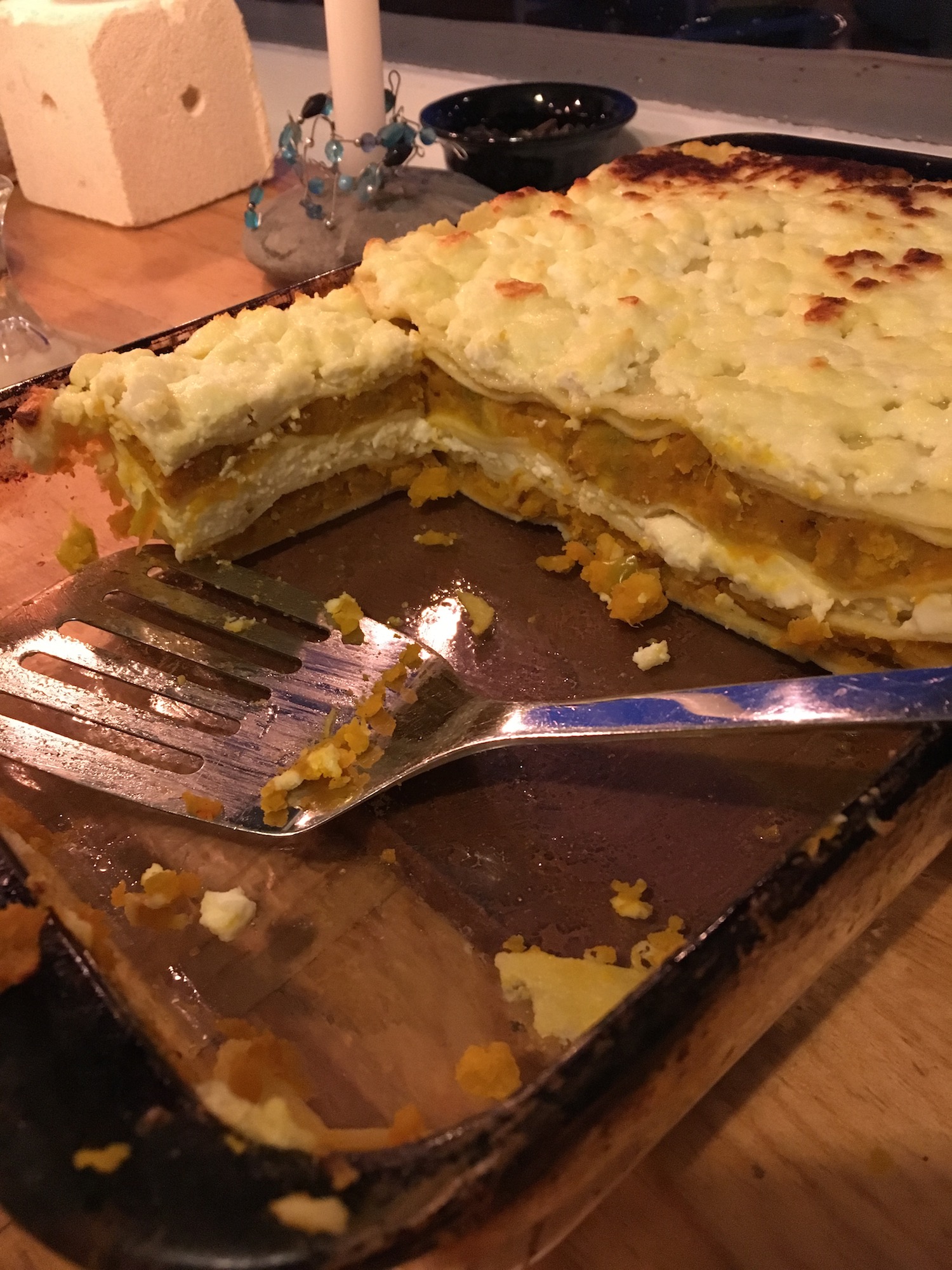
Pumpkin Ricotta Lasagne

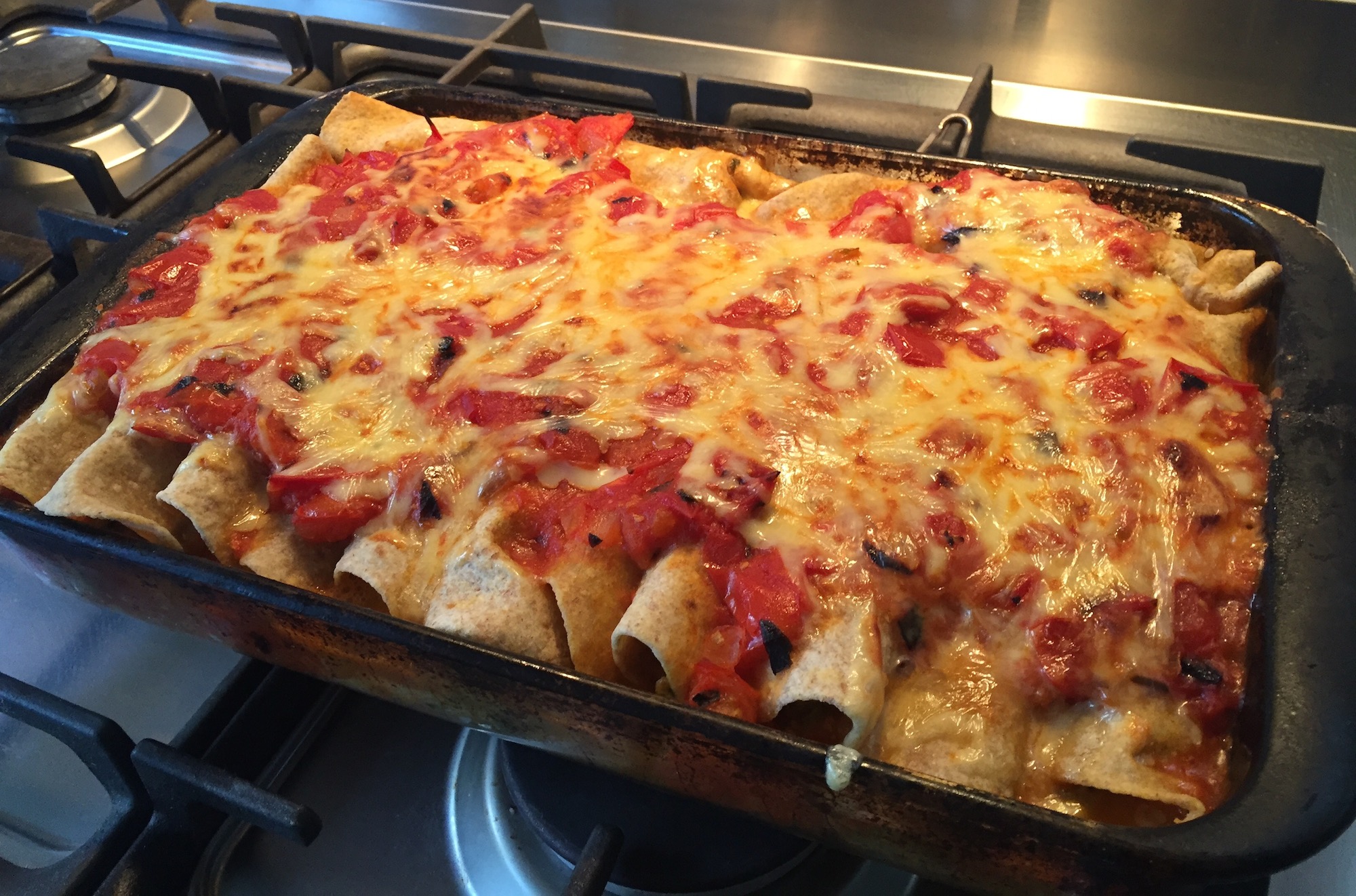
2016-04-20 18.18.45 smYesterday I made a large batch of ricotta, and then wanted to use some of it in dinner. I also had in the fridge some leftover pumpkin galette filling from dinner a few days ago. And over the weekend, I had made some pepper oil to use with pasta.

What came out of it all was a pumpkin ricotta lasagne that was an absolute hit.

I can’t even begin to give you a recipe. It would start with, “Make too much pumpkin galette filling on Saturday, pepper oil on Sunday, and a vat of goat milk ricotta on Wednesday…”

But the final assembly followed this recipe, and yielded a beautiful white and orange striped dish that kept its form well when cut. It would have been perfect for a dinner party, served with a leafy green salad. Perfect, because we didn’t even eat half of it—it’s much denser than a normal lasagne, and would have easily fed five more people.
 

Pumpkins

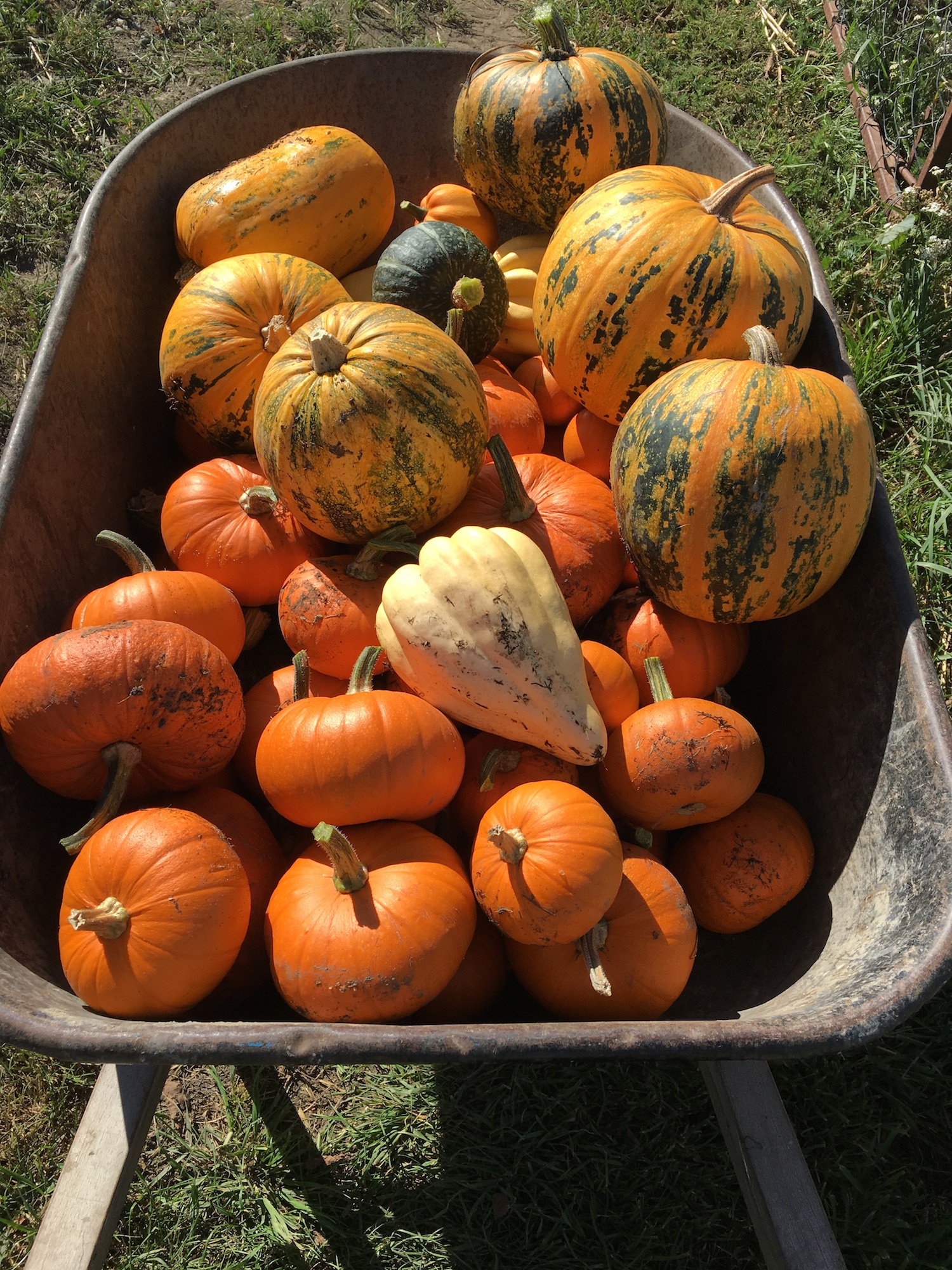
About a third of the harvest.

About a third of the harvest.

Autumn wouldn’t be complete without the requisite wheelbarrow loads of pumpkins and other winter squash. In spite of some late-frost drama this spring, the harvest wasn’t bad.

My kids ask every year, “Which are the pumpkins and which are the squash? What makes a pumpkin a pumpkin?”

The short answer is that a pumpkin is a squash that we call a pumpkin. There are four species and countless varieties that variously get called pumpkin and squash. Some fruits are known as pumpkins in one place, and squash in another.

I don’t bother with the distinction. The important distinctions are between varieties. Some are best made into soup, others make splendid pies. Some have robust, dry flesh that holds up well in savoury galettes. Some are just the right size for baking whole. Some keep well, and others need to be eaten quickly after harvest. Some have flesh only useful as goat food, but have naked seeds that are wonderful toasted with salt and spices.

Which is, of course, how I justify planting so many pumpkins of so many varieties. I need them all!

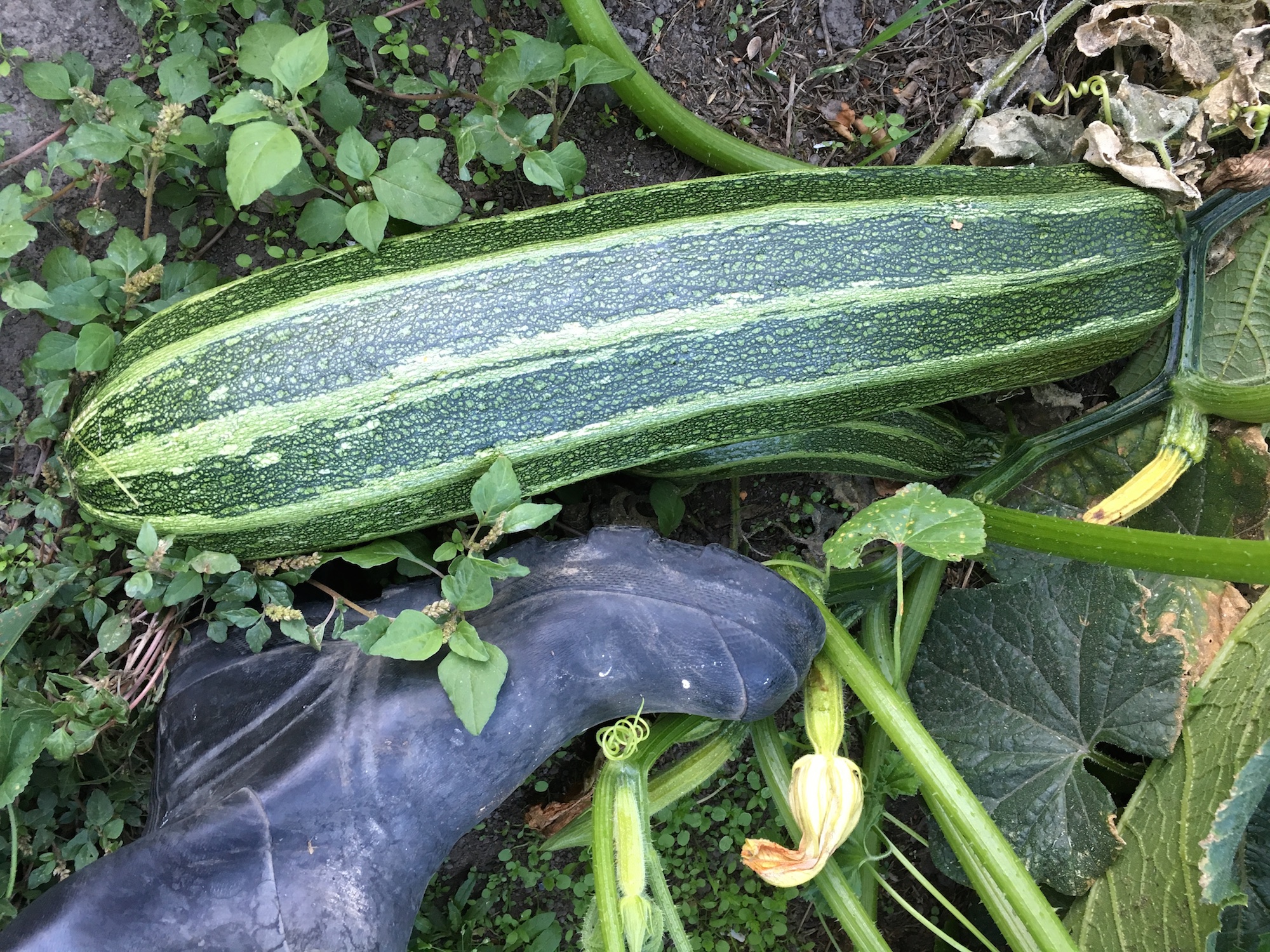
What do you do with a giant zucchini?

2016-04-02 18.47.15 smTo the tune What do you do with a drunken sailor?


What do you do with a giant zucchini?

What do you do with a giant zucchini?

What do you do with a giant zucchini,

Early in the morning?


Hey, they just get bigger.

Hey, they just get bigger.

Hey, they just get bigger.

You can’t eat them all.


zucchinienchiladassmCook ’em in a sauce and make enchiladas,

Cook ’em in a sauce and make enchiladas,

Cook ’em in a sauce and make enchiladas,

Early in the morning!


Hey, they just get bigger.

Hey, they just get bigger.

Hey, they just get bigger.

You can’t eat them all.


chocolatezucchinicakesmBake ’em in a cake and add chocolate chips,

Bake ’em in a cake and add chocolate chips,

Bake ’em in a cake and add chocolate chips,

Early in the morning!


Hey, they just get bigger.

Hey, they just get bigger.

Hey, they just get bigger.

You can’t eat them all.

Cape Gooseberries

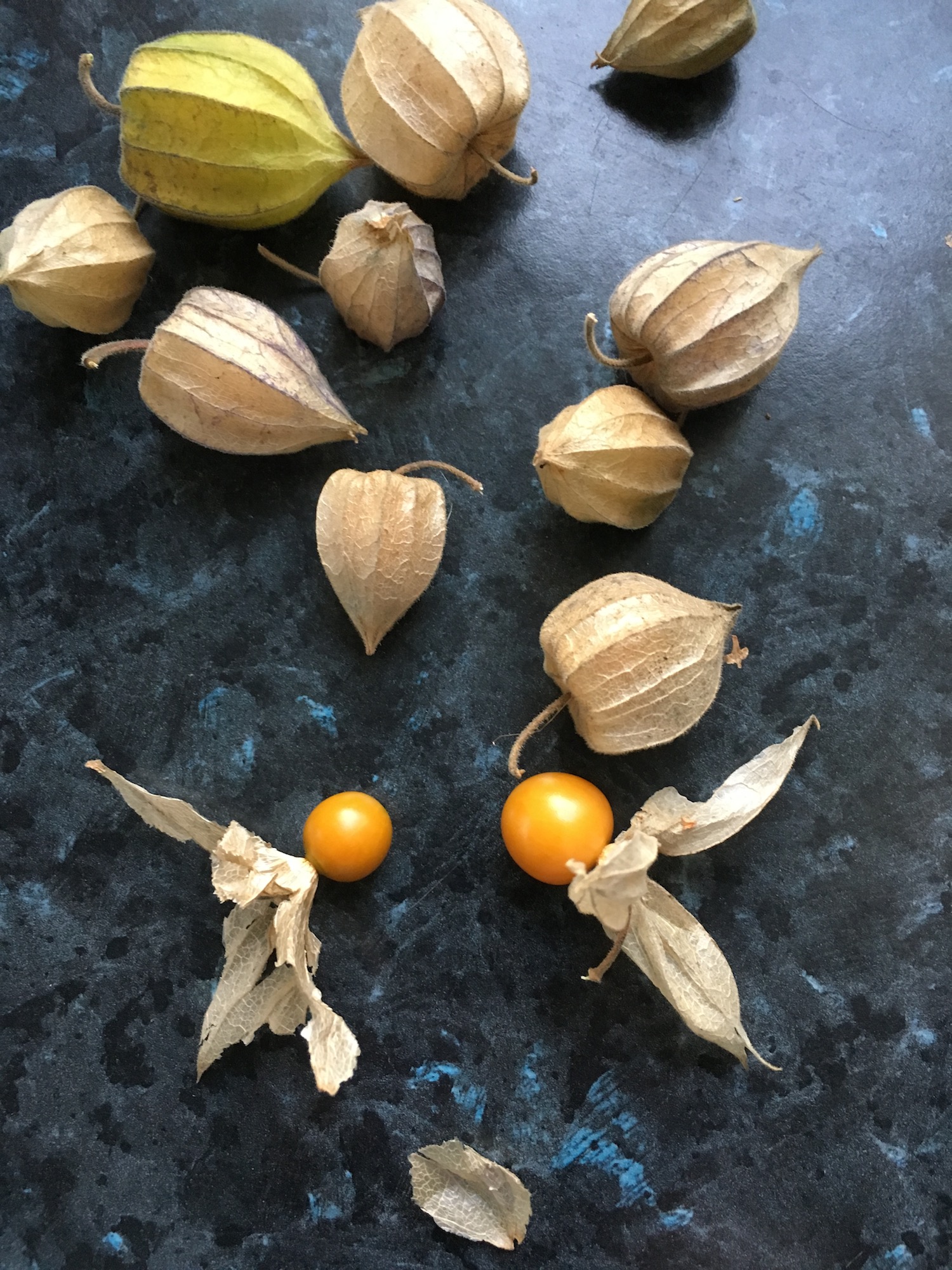
2016-03-22 19.08.56 smCape gooseberries (Physalis peruviana) are not something you’re likely to find in the grocery store. The plant is native to Peru and Chile, and has been introduced into most temperate and tropical climates around the world as a fruit for home gardens. It has been only sporadically commercially grown, however.

The fruit’s flavour defies categorisation. It is like a sour grape crossed with a tomato—not entirely surprising, as it is related to tomatoes. The initial sensation is the sour, and then they leave a lingering fruity tomato flavour in the mouth.

Cape gooseberries grow reasonably well here—some years they grow too well, actually. I’m still learning how to use them and how to enjoy their odd flavour. This year we got only a handful, as I wasn’t able to water them as much as they needed in this hot, dry summer.

Their tartness goes well in jams, chutneys, pies, and fruit salads. They’re also good eaten right in the garden—the papery husk acts as a handle, so you can snack on them even with hands dirty from gardening!

In temperate climates they are an annual, though here they often overwinter, if the weather is mild. In tropical climates they are perennial.

They’re definitely a plant to try, if you’ve never grown them.

Baking Bellybuttons

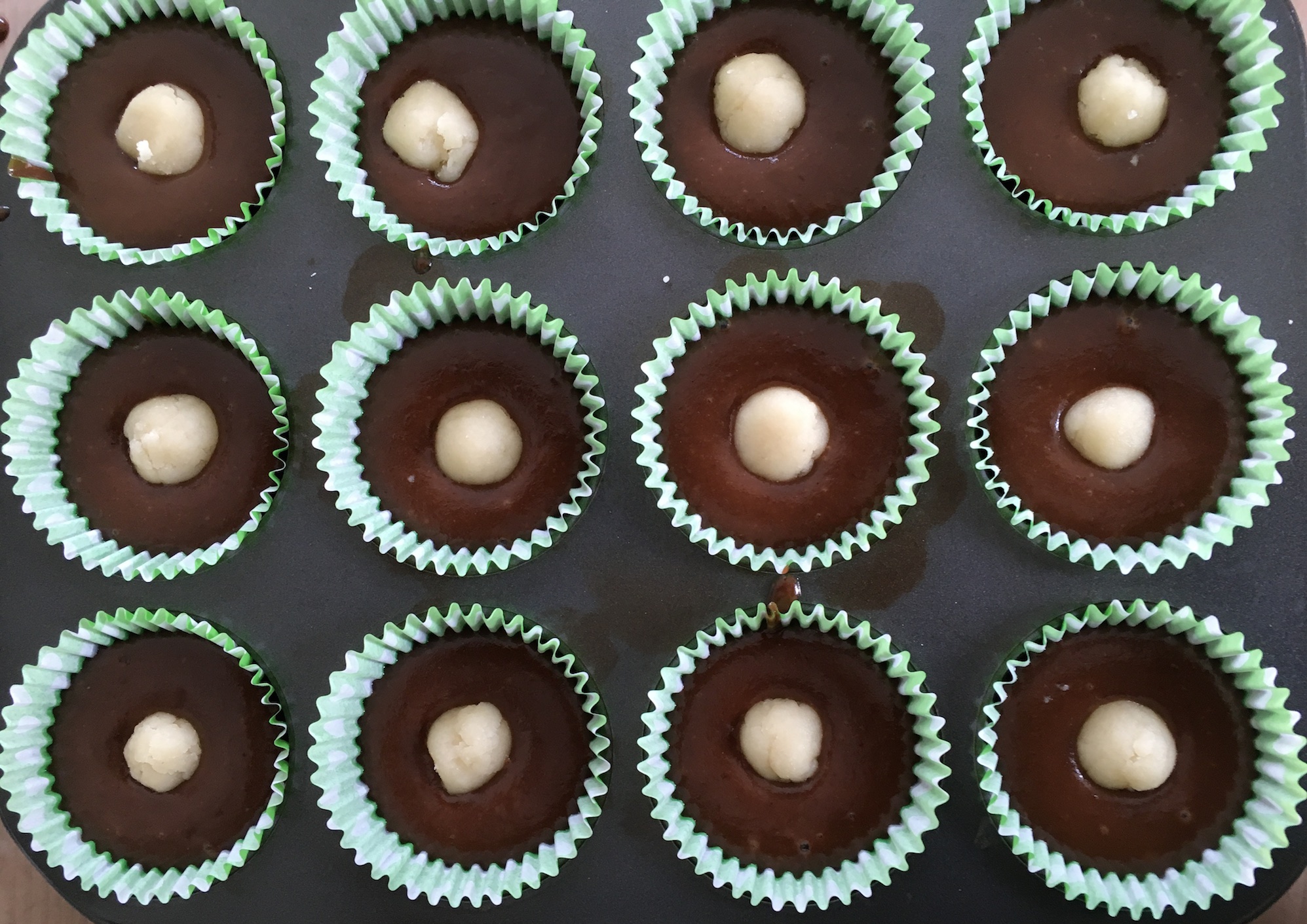
Before baking--moons in the night sky. How romantic!

Before baking–moons in the night sky. How romantic!

I had to bake on the equinox. Something to celebrate the season, and the coming long nights.

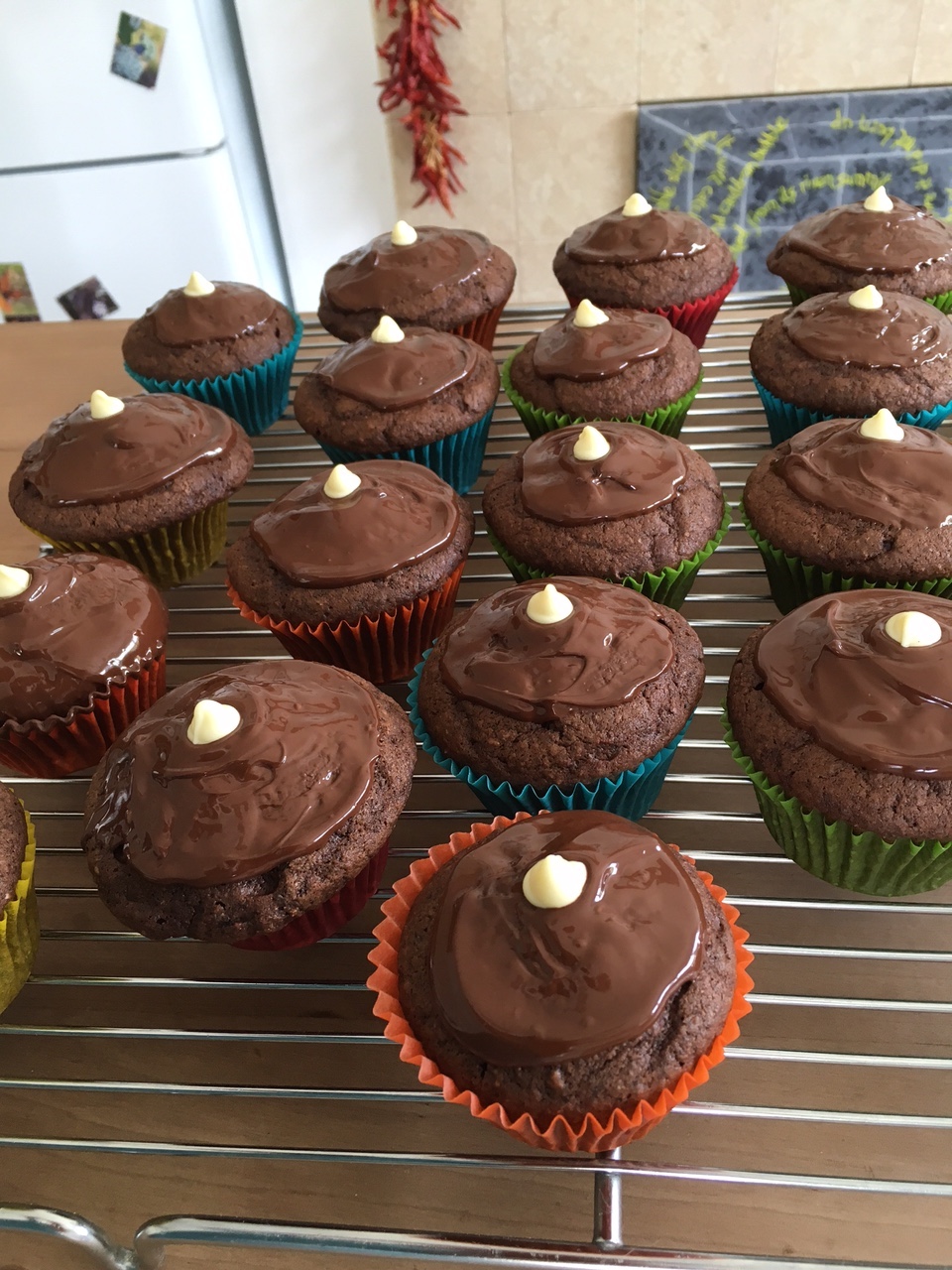
I had some marzipan left over from recent birthday cakes, so I made chocolate cupcakes, each with a little ball of marzipan dropped into the batter–you know, a moon in the night sky.

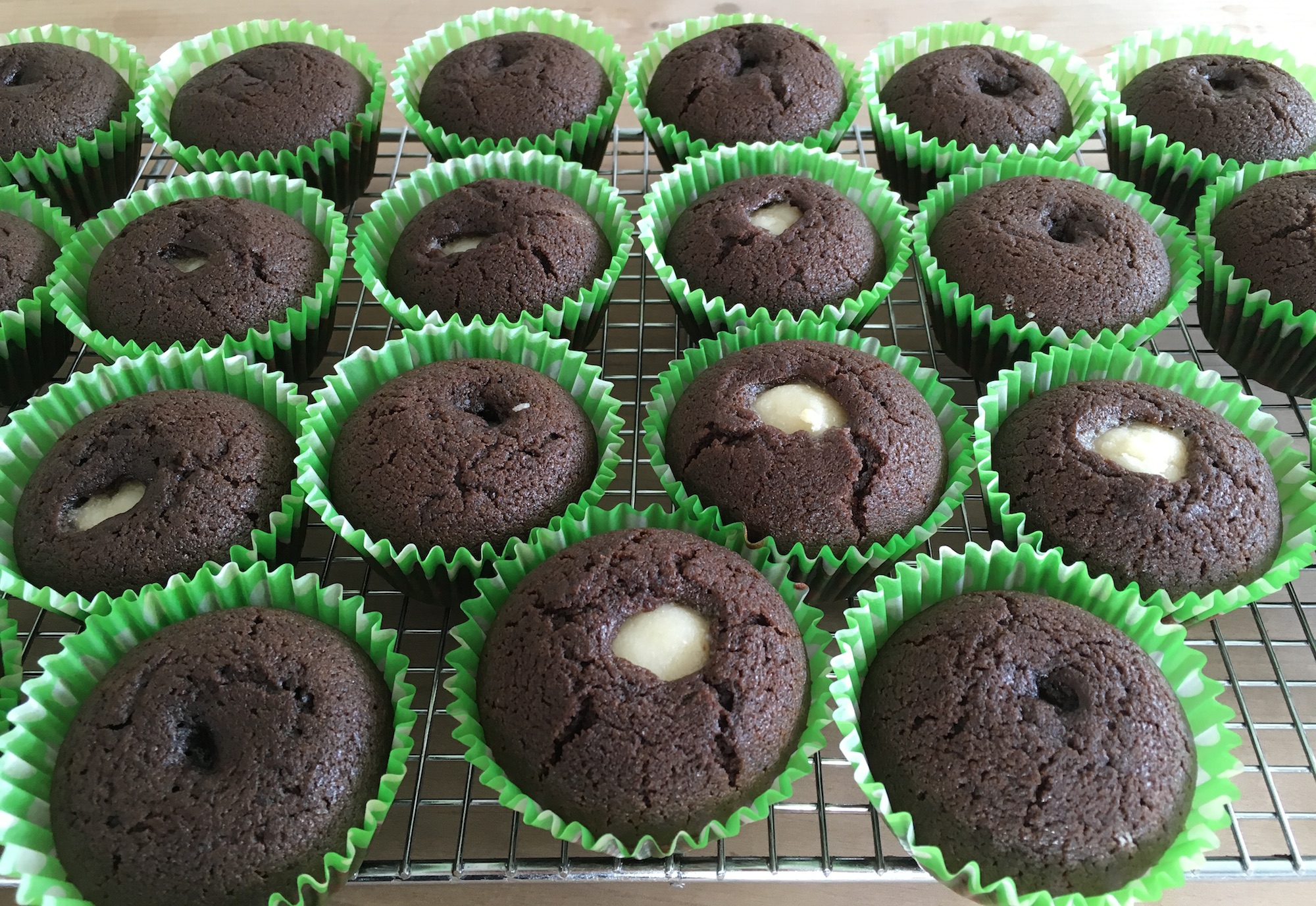
After baking--bellybuttons. How...um...something.

After baking–bellybuttons. How…um…something.

But the marzipan moons sank, leaving the cupcakes looking a bit like bellybuttons.

Delicious bellybuttons, I might add…


Apricots…with recipe

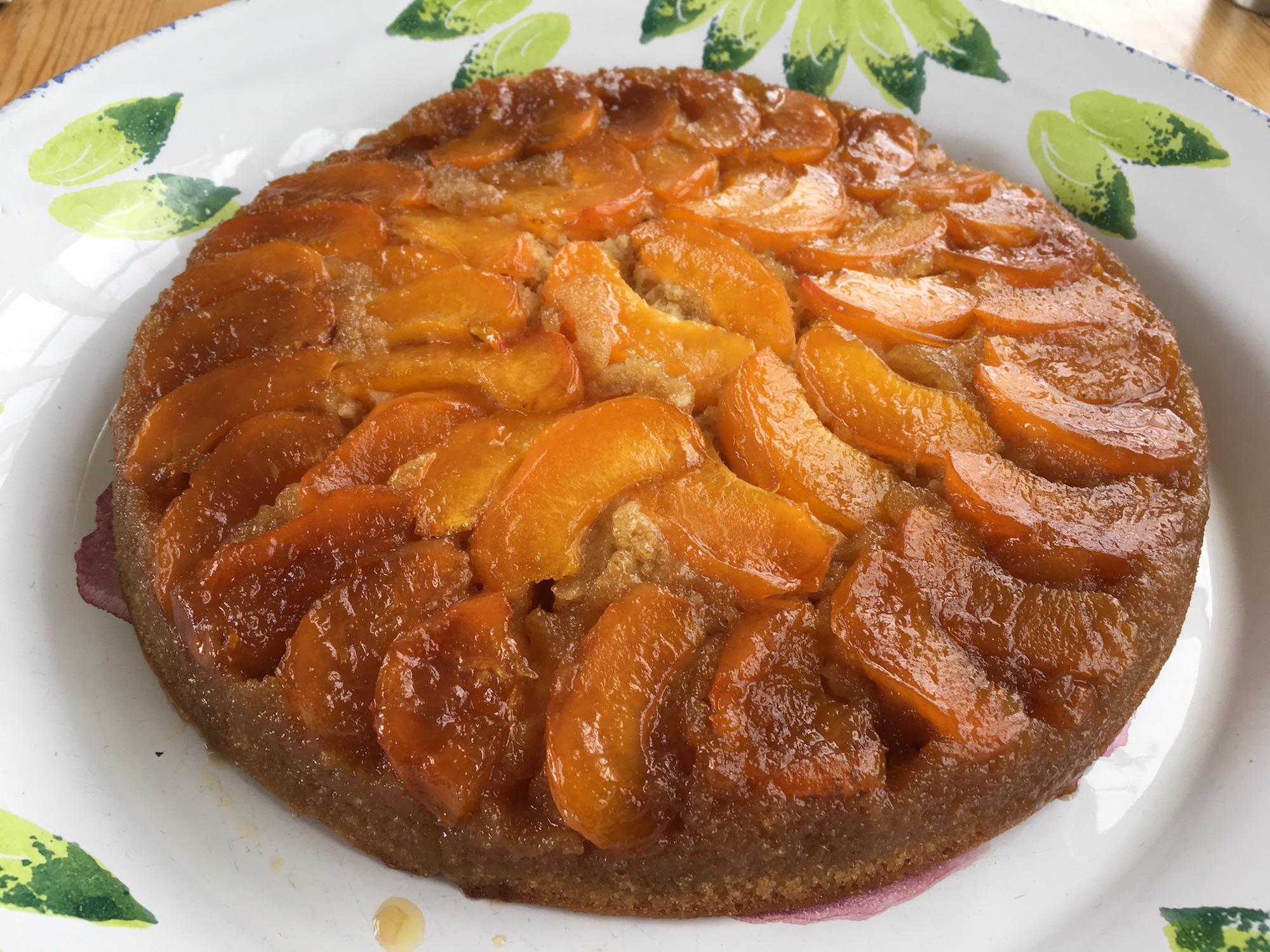
2016-02-16 18.53.39 smAs I wandered through the pond garden yesterday evening, watching the fish and the damselflies, I noticed that the apricots had blushed. I tested one. It was soft and ripe—so ripe, the juice dripped down my arm when I bit into it.

This was the first year the apricot tree has given us anything, and the wind stripped many of the fruits a month ago, but there were still about two dozen on the tree, and they were all ready to pick.

So this afternoon, I made apricot upside down cake—for the second time in a month. This time, I’ll give you the recipe…

This is adapted from a recipe in the 1997 edition of Joy of Cooking.

Melt 3 Tbsp butter in a 9-inch (20cm) cast iron skillet or round cake pan. Tilt the pan to coat all sides with butter.

When the butter is melted, sprinkle ½ cup brown sugar evenly over the bottom.

Arrange apricot halves, cut side down in the bottom of the skillet, completely covering the bottom.

Whisk together in a medium bowl:

2 large eggs

2 Tbsp buttermilk

½ tsp vanilla

Combine in a large bowl:

½ cup all-purpose flour

½ cup whole wheat flour

½ cup brown sugar

¾ tsp baking powder

¼ tsp baking soda

¼ tsp salt

Add to the flour mixture:

6 Tbsp softened butter

6 Tbsp buttermilk

Beat on low speed just until the flour is moistened, then increase the speed to high and beat for 1 ½ minutes. Add one-third of the egg mixture at a time and beat 20 seconds after each addition. Pour batter over fruit.

Bake at 180C (350F) for 35-40 minutes. Cool in the pan for 2-3 minutes before unmolding. To turn the cake out, run a knife around the edge to ensure the cake has separated from the pan. Place a plate on top of the pan and quickly flip pan and plate together. Carefully lift off the pan.

Onion and Goat Cheese Tart

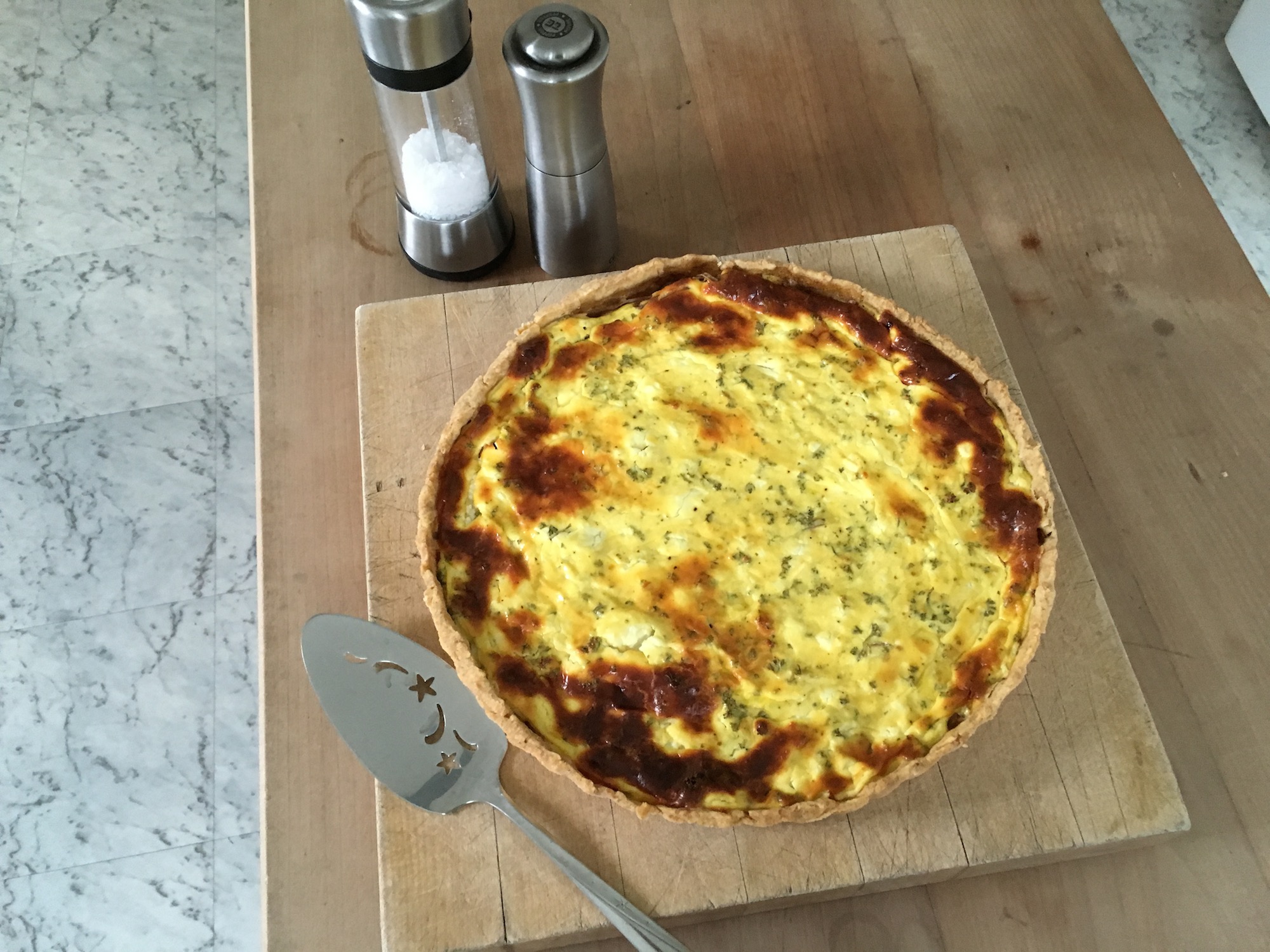
2016-01-23 17.44.36 smThere are dozens of variations on this tart available on the Internet. Here’s my version. This is best served at room temperature, outdoors on a hot day with a glass of white wine.

2 medium to large red onions

2 Tbsp olive oil

2 Tbsp balsamic vinegar

1 tsp brown sugar

500 g chevre or other soft goat cheese

3 eggs

¼ – ½ c chopped fresh parsley

salt and pepper to taste

pastry for a single crust 10-inch tart (I use my favourite pie dough recipe for this)


Line the tart pan with pastry and allow to chill in the refrigerator as you prepare the filling.

Cut the onions into strips, and sauté on medium-low heat until they are well cooked and beginning to turn golden. Add the vinegar and brown sugar and continue to cook until most of the liquid has evaporated. Set aside to cool.

Beat the eggs in a large bowl. Add the cheese, parsley, salt and pepper and mix thoroughly.

Spread onions in the bottom of the tart and top with the cheese mixture.

Bake at 200˚C (400˚F) for about 40 minutes until firm and browning on top.

Cool on a rack and serve at room temperature.

Apricot Upside Down Cake

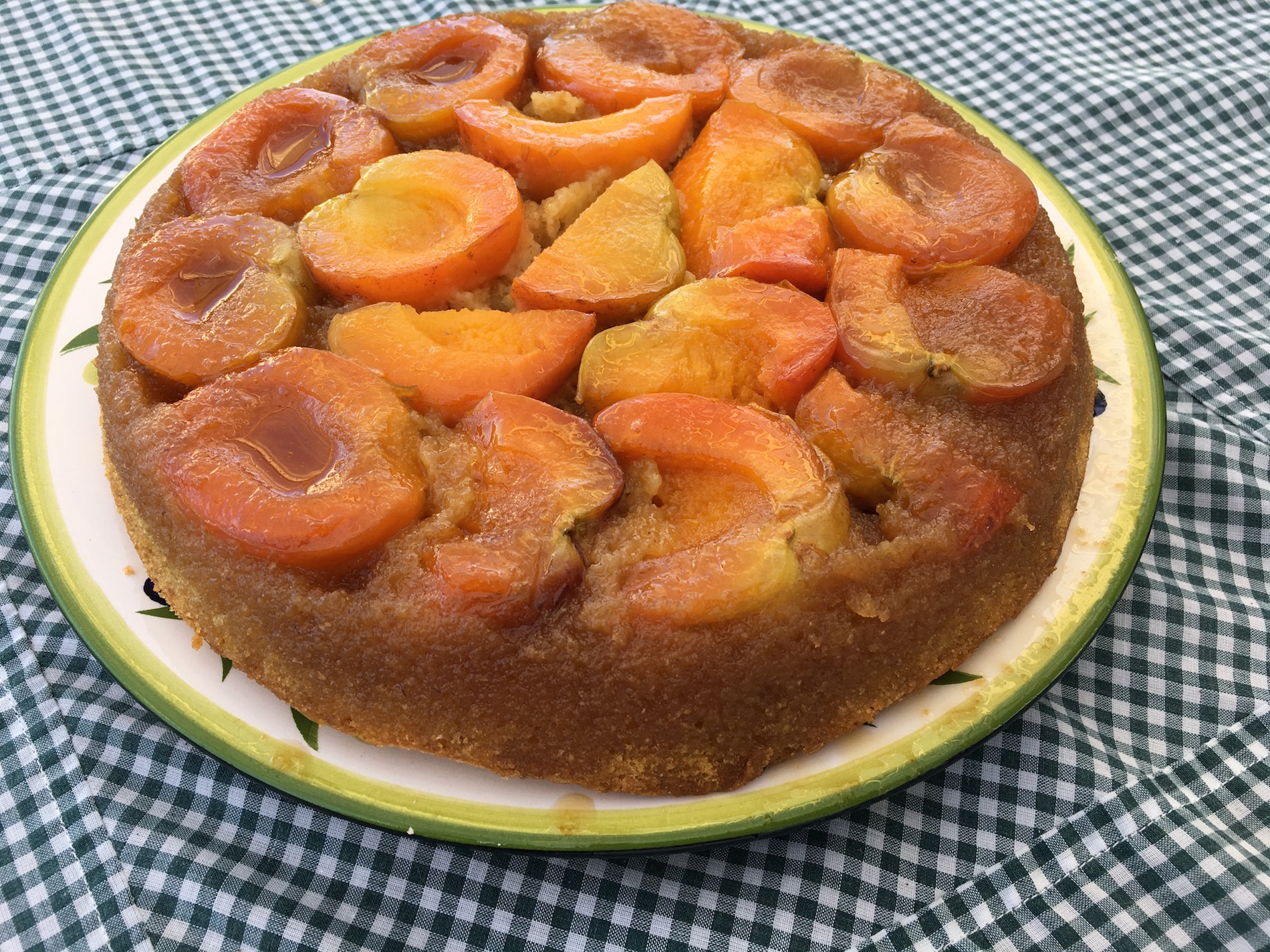
2016-01-19 18.48.49 smIt’s apricot season, and though our tree isn’t giving yet, we’ve been buying lots of them. They began to mould today. There was only one thing to do–make apricot upside down cake!

The original upside down cake was made with canned pineapple rings, and was developed as a way to get people to buy canned pineapple. But I think it’s better made with fresh apricot slices.

Now, if only I had some whipped cream to go with this…