How (not) to Curb Your Sweet Tooth

Many years ago, I decided I was not going to buy sweets anymore. If I wanted cookies or cake or pie, I would have to make them myself. It was a way for me to curb my sweet tooth, at least a little.

Oh, how that has backfired.

It’s turned me into an obsessive baker.

I’m sure it’s done good things for my health—my baked goods are full of whole grains, and much lower in fat and sugar than commercial products—but it hasn’t curbed my sweet tooth.

Instead, my sweet tooth has simply developed a more sophisticated and discerning palate. As I’ve mastered a wide range of baked goods and refined my recipes and techniques, I’ve grown uninterested in the vapid sugar-bombs on the supermarket shelves. They leave me unsatisfied (where’s the flavour?) and slightly ill (excess fat and sugar to mask low-quality ingredients). Instead, I now crave my own cakes, cookies and confections. And because I’ve had a lot of practice, it’s easy for me to whip up a delicious desert whenever I have a hankering for it.

The result is, I probably eat just as many sweets as I ever have.

I just eat better ones, now.

I suppose it’s an improvement…
‘Tis the Season

And So It Begins…

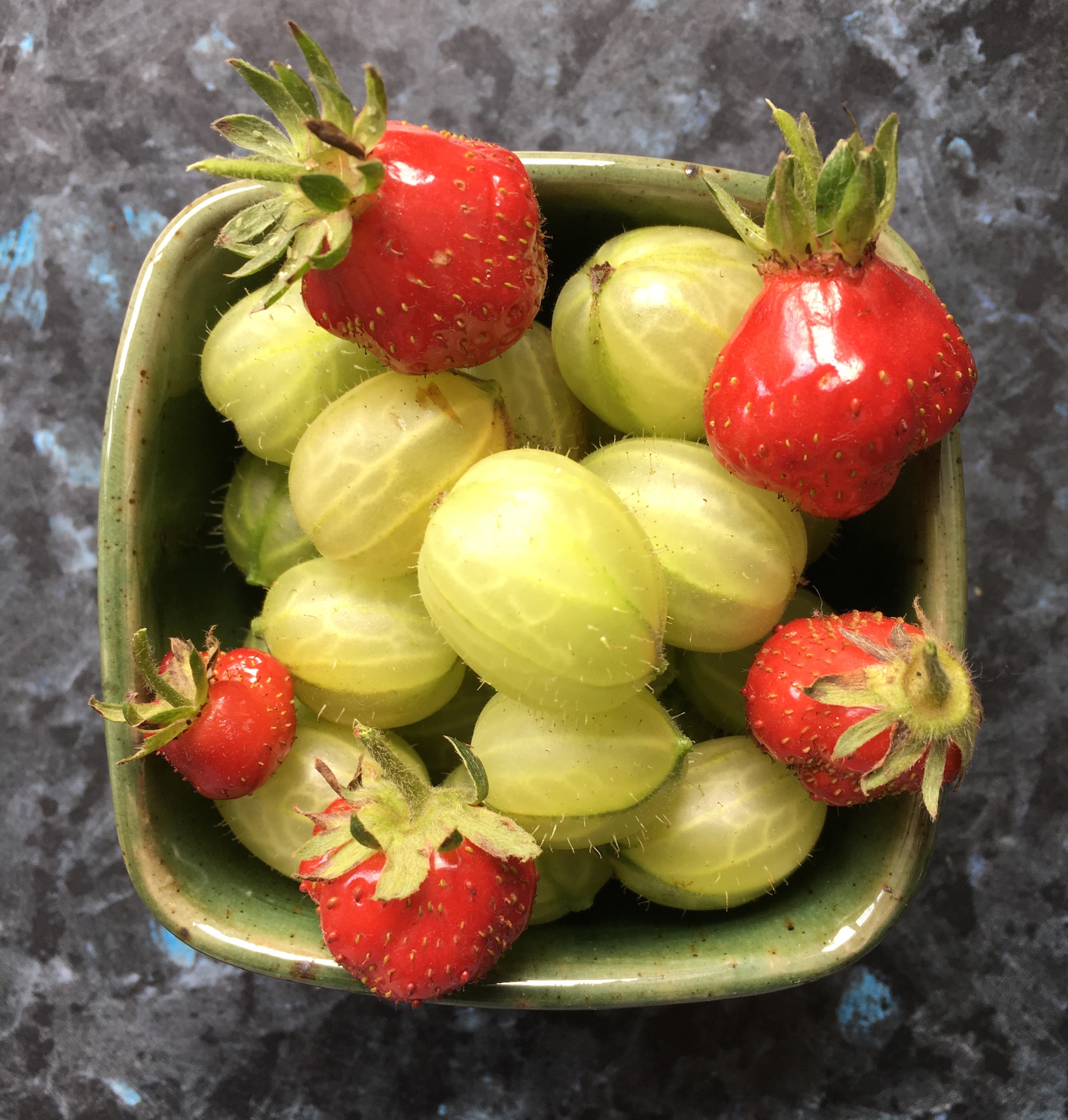
We’ve been watching the berries for weeks, and the signs have been promising. The gooseberry bushes are dripping with fruit. The currants, too, promise a good harvest. In spite of a viral infection, even the strawberries are managing a crop. The raspberries are humming with bees, attracted to a plethora of flowers.

The first harvest was tiny—a handful of berries—but it marks the beginning of my favourite season on the property. The season of fresh fruit. It begins with strawberries and gooseberries, moves on to currants, cherries and raspberries, and ends with apricots and plums. Watermelons, apples, and peaches come late in the year, and they’re lovely, but nothing compares to the early summer fruits. Their season is short, but bountiful. It’s the season of jams, fruit pies, and fruit ice cream. The season of gooseberry fool, strawberry-smothered waffles, and apricot upside down cake. It is the season of plenty.

In festive red and green, ’tis the season, indeed.

Orange Cake

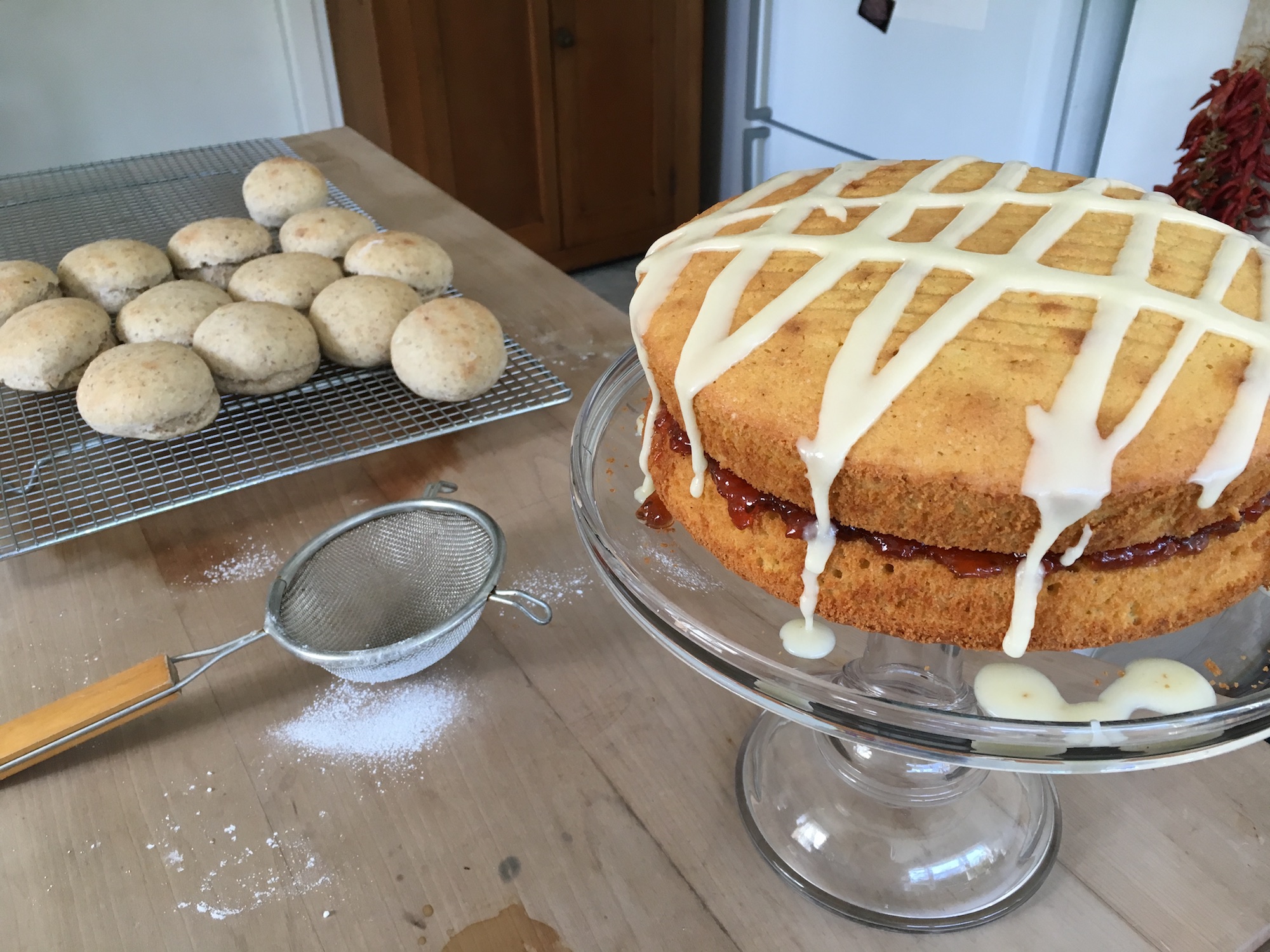
Having friends over is such a good excuse to bake. I normally wouldn’t experiment for guests, but I was pretty sure of the orange cake I tried out on Saturday, because I based it on my lemon cake recipe.

It’s a close race, but I think I may like the orange version even better than the lemon. I filled the cake with gooseberry jam and drizzled it with a simple orange icing, both of which nicely set off the cake itself.

Here’s the recipe. I suggest trying the lemon version also, to see which you prefer. You might need to make them both several times to decide.

1 cup butter, softened
1 3/4 cups sugar
4 eggs, separated
grated rind of 1 orange
2 1/4 cups all-purpose flour
1 cup barley flour
1/2 tsp salt
2 1/2 tsp baking powder
1/2 cup orange juice
1/2 cup water
3/4 cup threaded coconut

In a medium bowl, mix flours, salt, and baking powder. In a large bowl, cream butter. Add sugar gradually and beat until fluffy. Add egg yolks and orange rind and continue to beat. Add dry ingredients alternately with orange juice and water. Beat thoroughly after each addition. Fold in stiffly beaten egg whites and coconut. Pour into greased pans. Bake at 180ºC (350ºF) for 30 minutes.

Orange frosting: Sift 1 cup confectioners sugar into a small bowl. Stir in orange juice by the teaspoon until the icing reaches a thick, just pourable consistency (I used about 2 Tbsp total).

Cheesy Scones

I came home late earlier this week. No time to really cook. So I pulled out a couple of jars of summer soup and made savoury scones (biscuits to the Americans) to go with it.

But I didn’t want plain scones…

These are what I threw together, and they were divine.

1 cup all-purpose flour
3/4 cup whole wheat flour
1 Tbsp baking powder
1/2 tsp salt
60 g butter (about 4 Tbs)
1/2 cup chopped parsley
1/4 cup chopped dill
1 cup grated cheddar cheese
2 small leeks (about 1/2 cup), finely chopped
3/4 cup milk

Combine flours, baking powder and salt in a large bowl. Cut butter in until it’s the consistency of coarse meal. Mix in the herbs, cheese, and leek. Stir in the milk. On a well-floured board, knead the dough gently 4 or 5 times, then roll out to 1.5 cm (5/8 inch) thickness. Cut into squares or use a biscuit cutter.

Bake on an ungreased sheet 15 minutes at 200ºC (400ºF).

An Abundance of Artichokes

It’s a terrible thing, having excess gourmet vegetables. We are in our usual springtime artichoke excess. It’s not unusual for us to eat eight or nine artichokes five days out of seven.

A quick online search shows artichokes currently selling for anywhere from US$3 to 10 per pound (that’s NZ$9-31/kg). Given we easily eat a kilo per meal…Well, you get the idea. If we had to pay for them, we couldn’t afford them.

Of course, the problem remains–what do you do with that many artichokes? We preserve quite a few for use at other times of the year, but that still leaves plenty to enjoy during the season.

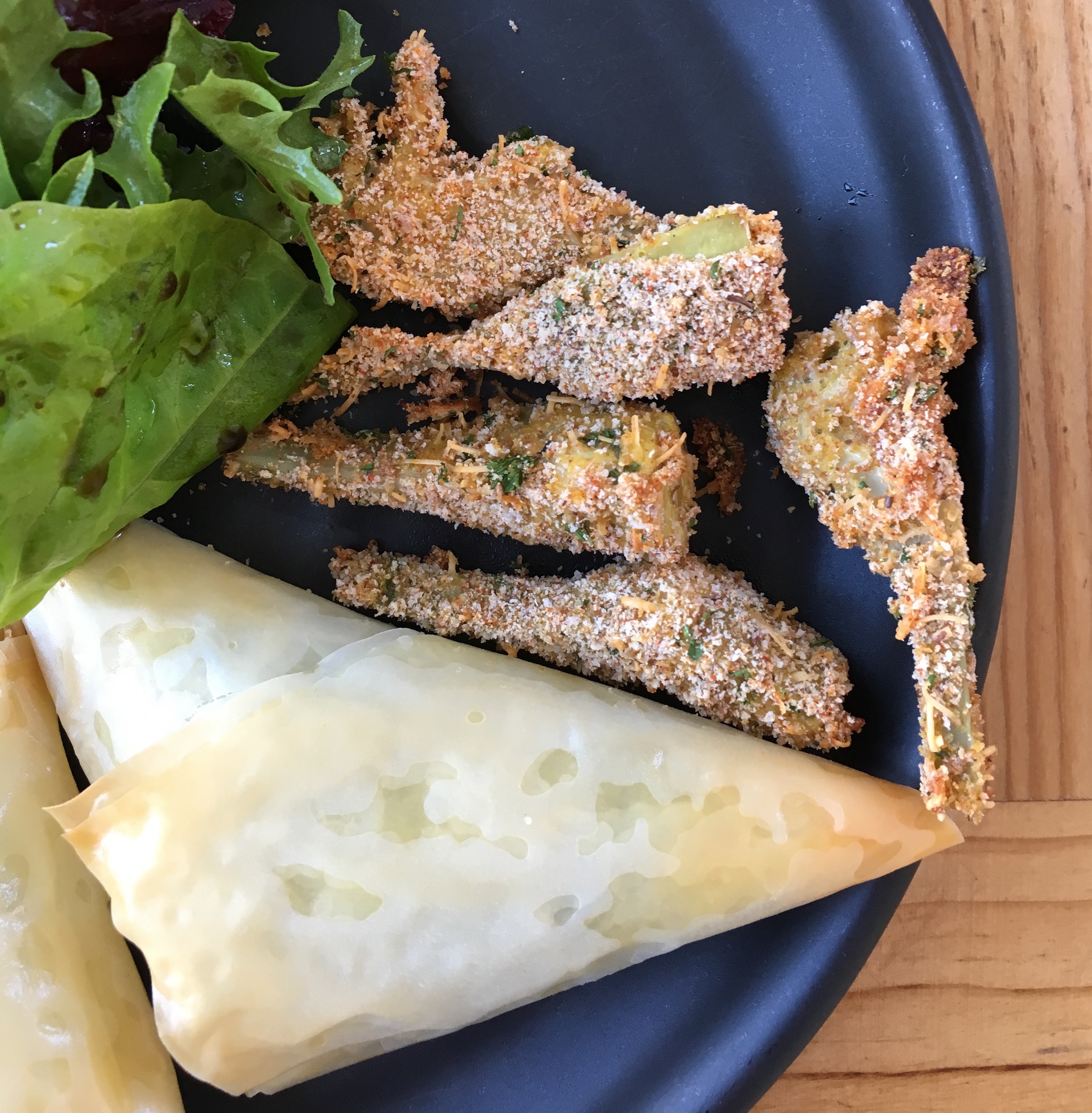
We eat a lot of artichokes in risotto, pasta, pizza, and gratins. The other day, I tried a new way of preparing them–crusted with parmesan and baked.

It’s simple, if a bit time-consuming (it would be trivial if you simply bought canned or frozen artichokes).

First, prepare the artichokes: snap off the outer leaves, peel the base and stem, trim off the top 1/3 of the leaves, remove the choke and any spines on the inner leaves, and cut the remaining heart into wedges. Drop wedges into a bowl of lemon juice and water as you go to avoid browning. Drain and steam for 3-5 minutes, until just tender, but not falling apart.

Then prepare the breading: mix in a medium bowl 1 cup bread crumbs, 1 cup grated parmesan cheese, 1/4 cup finely chopped parsley, 1 tsp salt, 1 tsp paprika, 1/8 tsp cayenne, and black pepper to taste.

In another bowl, beat two eggs.

Dredge the artichoke wedges first in the egg, then in the breading to coat thoroughly. Arrange in one layer on an oiled baking sheet. Bake for about 20 minutes at 190°C (375°F) until brown.

I served them plain, but they would be lovely with a dipping sauce like aioli or skordalia. They made a delicious accompaniment to the tiropitas (spinach and feta triangles) and salad that rounded out the meal.

Lemon Meringue Pie

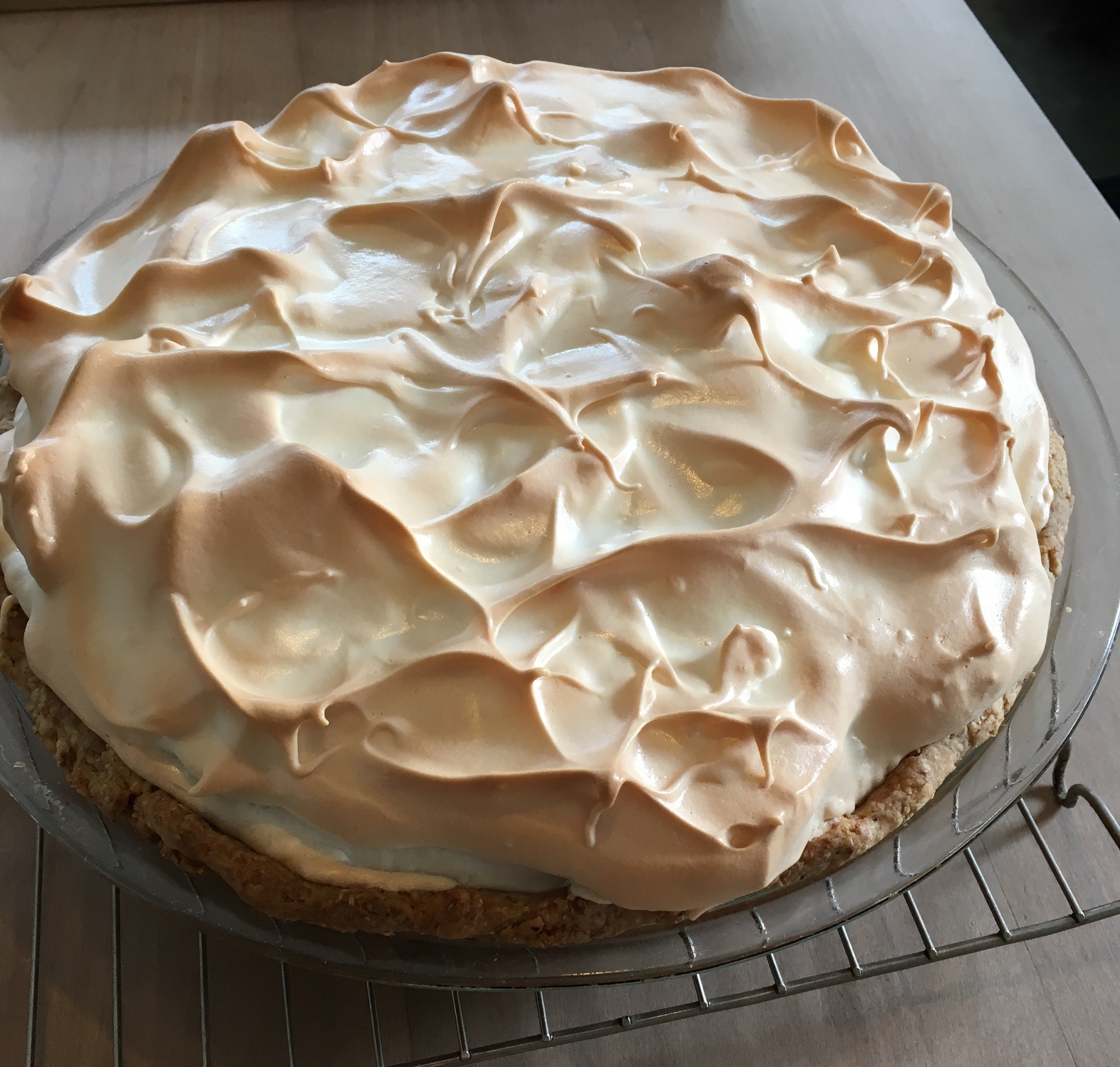
I had extra pie dough from making a quiche earlier in the week, a bunch of lemons that needed to be used, and tons of eggs. What could I do but make lemon meringue pie?

I don’t think I’ve ever actually made lemon meringue pie before. It seems a gross oversight on my part, though not entirely surprising—I’m not fond of meringue, so it wouldn’t be the first thing I’d ever think of doing with lemons.

But, hey there’s a first time for everything, and the rest of the family loves meringue. So lemon meringue pie it was.

And it was very good—a study in textures and colours, with wobbly bright yellow custard underneath and foamy egg whites on top, nestled in a crunchy crust.

Would I make it again? Maybe occasionally, but it will never be one of my regular desserts. Even with the pie dough already made, it was nearly an hour from the start of the process to putting the pie in the oven. I don’t mind spending that sort of time on a dessert now and again, but every week? I can get my sweet fix much more easily than that.

And so, now I’m dreaming of a nice, whip-it-together in-a-few-minutes pan of brownies…

Tastes Like Christmas

I know, I know, you’re wondering why I’m posting about Christmas in mid-August. Bear with me here…

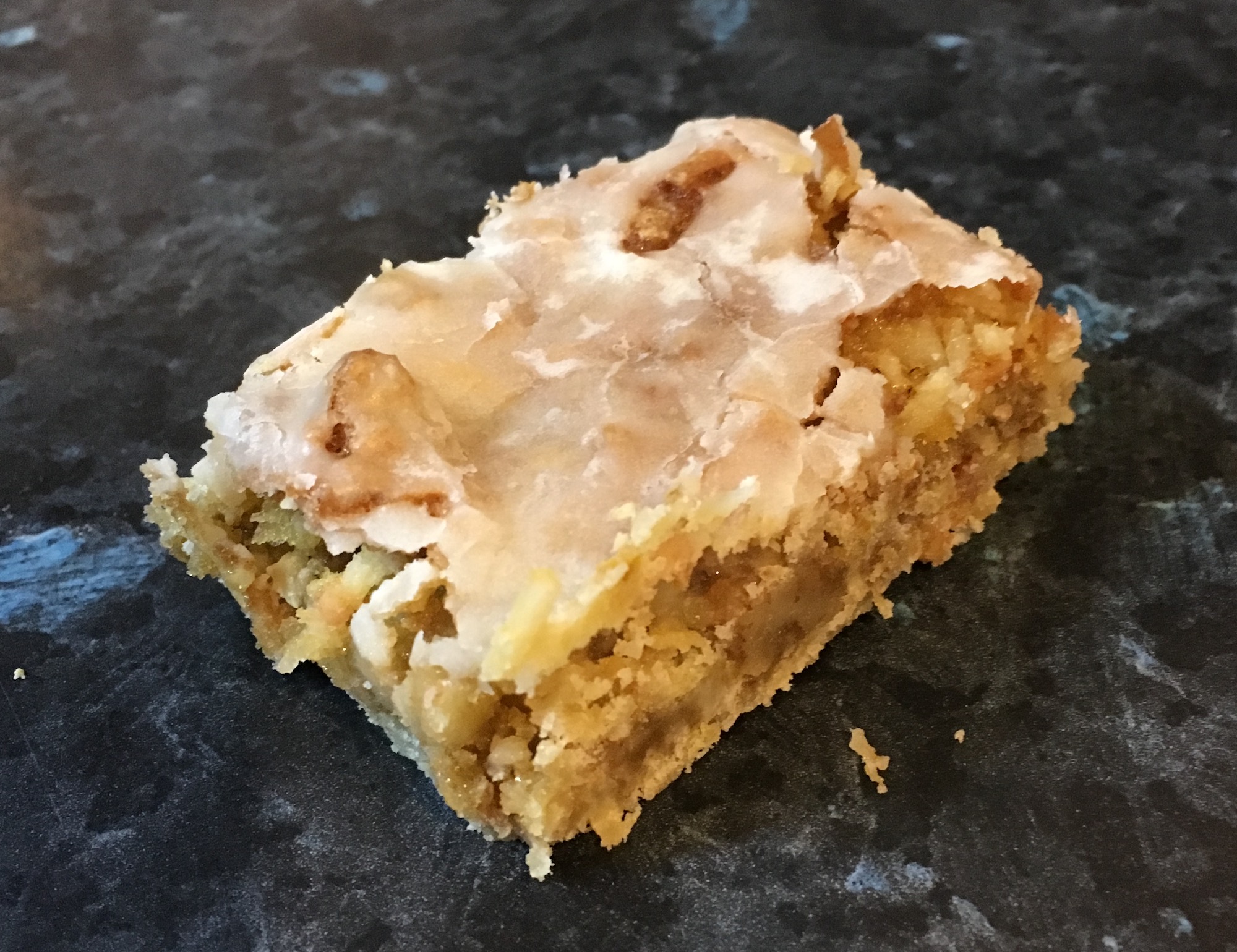
I made lemon coconut bars yesterday–a super easy recipe that I chose out of sheer laziness (and the fact I’d written ‘excellent’ beside it in the cookbook).

As I bit into one of them today, I was struck that they taste like Christmas.

Now, if you had asked me what Christmas tastes like, I would have said cinnamon, cloves and black walnuts.

My Christmassy lemon coconut bars contain none of these ingredients. As you would imagine, lemon and coconut are the primary flavours.

But these bars are loaded with brown sugar, and the more I considered it, the more I thought that must be the true flavour of Christmas. It shows up in most Christmas cookies, and even makes an appearance in some of the traditional savoury dishes, like mashed sweet potatoes.

I use brown sugar in many of the baked goods I make, so theoretically, they should taste like Christmas, too. So, why don’t they?

I think it has to do with the concentration of brown sugar. We tend to prefer baked goods that aren’t pure sugar bombs. For my everyday baking, I usually stick to less sweet items. Not so at Christmastime. Then, I throw all caution to the wind and make the most decadent sweets possible.

The lemon coconut bars fall into that decadent category, containing more sugar than flour. They taste like the decadence of Christmas.

And, perhaps that is the true taste of Christmas–the taste of decadence.


Eggsplaining the Difference

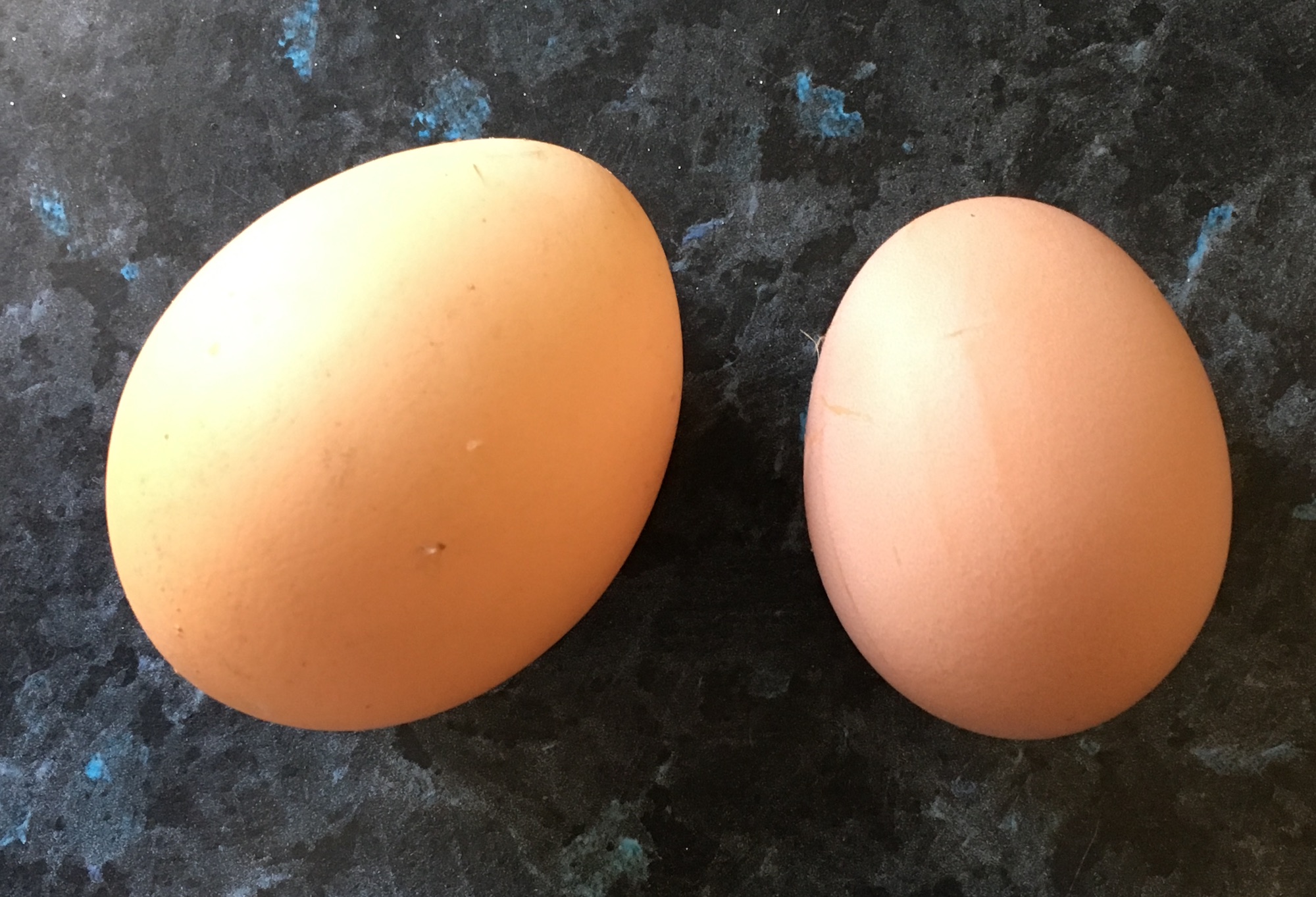
A standard egg at the supermarket weighs 53 grams, large eggs are 62 grams and jumbo eggs are a massive 68 grams.

My new chickens just started laying yesterday, and I smiled at the tiny eggs they laid.

Then I weighed them—far from being tiny, they weigh as much as a standard egg.

Turns out the ‘normal’ egg from my chickens weighs 80 grams or more (I had a 92 gram one last week—I know because it looked big, even to me, so I weighed it).

I’ve known this for some time. My eggs are bigger than the eggs called for in your average recipe. I can usually skimp on the number of eggs I use, with no repercussions. It comes in handy in wintertime, when egg production is down, and I’m often rationing eggs.

But I hadn’t really quantified it before. So, doing the maths, if a recipe calls for four large eggs, that’s 248 grams of egg. Just three of my 80+ gram eggs will do, in that case. That matches my experience with skimping on eggs in a 4-egg cake. In recipes that call for three eggs, I can probably get away with two. Start looking at a genoise cake that may call for 7 eggs, and I should really be using closer to 5.

I can’t tell you why my chickens lay such enormous eggs. I assume it’s a combination of genetics and diet. Coming from the same breeder, I expect my new ones to eventually lay 80 gram eggs, like the older ones do. But if they don’t, that’s just fine. Truth is, those super jumbo eggs don’t fit very well in the egg holder on the fridge door. Sometimes, when I open the fridge, an egg flies out to splat on the kitchen floor. I wouldn’t mind non-ballistic eggs.

Homemade Oreo Cookies

I’ve had a hankering for my ice cream sandwich cookies for weeks, but it’s midwinter—who wants to eat ice cream sandwiches?

But yesterday I had an idea. What if I turned those same cookies into homemade Oreos?

Oh. Yes.

I took my ice cream sandwich cookie dough and, rolled it out a bit thinner than I do for ice cream sandwiches. Instead of cutting it into rectangles, I cut circles with a cookie cutter. I baked them for 8 minutes at 190ºC (375ºF), and then let them cool completely on a rack.

When cool, I stuck them together with the following icing:

60 g (1/4 cup) softened butter
60 g (1/4 cup) Olivani at room temperature (shortening will work, for those in the US)
1 tsp vanilla
1 1/2 cups icing (confectioners) sugar

Beat butter and Olivani until smooth and light. Add vanilla and beat thoroughly. Sift confectioners sugar over the butter mixture and beat until smooth.

The icing was too soft at first and tended to squeeze out of the cookie when we bit into them, but it hardened overnight into the perfect Oreo filling consistency. I found this quantity of icing perfect for the number of cookies, but if you like double-stuff Oreos, make twice as much filling.

It has been decades since I last ate a real Oreo cookie, so I can’t say whether they are exactly like Oreos or not. But they are FANTASTIC!