Equinox Excitement

Time to liberate the feet! The temperature hit 28ºC today. Hard to believe it’s that warm just two days past the equinox. I can’t complain, though—it was lovely in the garden this weekend. The only problem was that I’m still clearing the winter nettles away, so it was gumboots and jeans out there. Long about three this afternoon I called it quits and shed the protective gear for shorts bare feet—pure bliss!

I’m sure there will still be cold and wet days, there will be frost, but there’s something exciting about the changing weather at this time of year.

So a happy equinox to you all. We’ve enjoyed a taste of what’s to come here this weekend. Perhaps you’ve had summer’s last hurrah, or the first bite of autumn. Wherever you are, and whatever your weather, I hope you got out to enjoy the changes around you.
Lemongrass

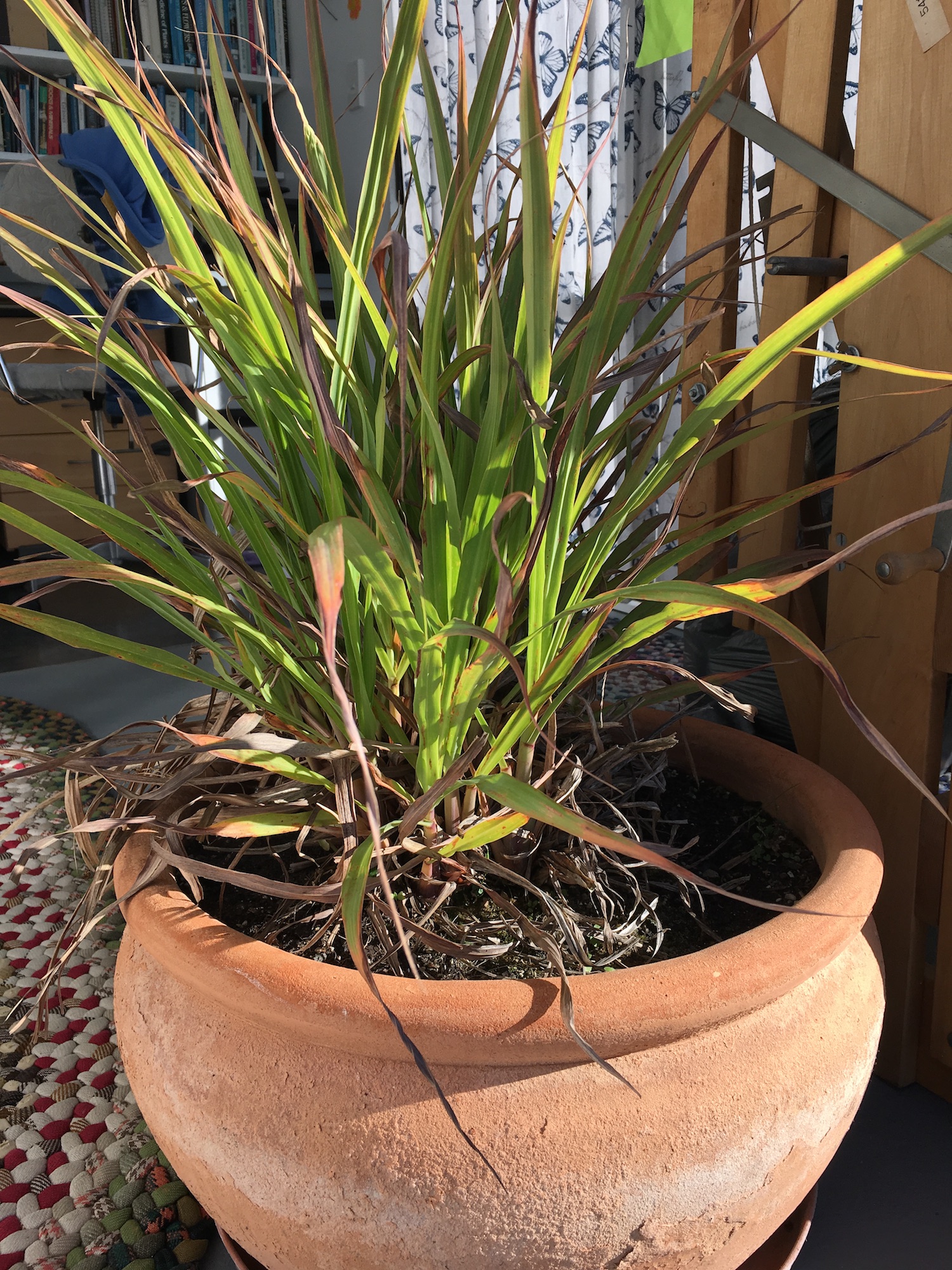
I brought the lemongrass (Cymbopogon citratus) indoors last weekend. It’s not supposed to be able to handle freezing temperatures. It does, but it doesn’t like them. The one winter I left it outside, it died back to just a few well-protected shoots in the centre of the plant.

Thankfully, it doesn’t need much protection. My office is unheated at night, but it provides enough protection to keep the lemongrass alive.

We don’t use much lemongrass. Though its lemony flavour is nice, it doesn’t have the sourness of real lemon, so I find lemongrass tea too sweet.

However, we do occasionally use it in stir fries, marinades and salad dressings, where it imparts its lemony flavour alongside other, more sour ingredients. We were first introduced to its use in salad dressings by Yotam Ottolenghi’s wonderful cookbook Plenty (which I’ve mentioned before). His sweet winter slaw recipe calls for the following dressing:

100ml lime juice
1 lemongrass stalk, chopped
3 Tbsp maple syrup
2 Tbsp toasted sesame oil
1 tsp soy sauce
1/4 tsp chilli flakes
4 tbsp light olive oil or sunflower oil

Place all ingredients except the oil in a saucepan and boil for 5-10 minutes until thick and syrupy. Allow to cool, then strain. Whisk in the oil and toss with your salad.

It’s an excellent way to use lemongrass, pairing with salty, oily, and sour ingredients that enhance its flavour. It’s worth giving up office space to the plant, just for this dressing.

Colours of Autumn

Growing up in eastern North America, autumn meant colourful leaves, fading to brown, bare branches. Green fields gave way to gold, then brown.

So it was a lovely surprise to find when we first moved here that in Canterbury, the opposite is true. Summer has its green bits, but because there is little summer rainfall, the summer landscape is predominantly brown.

But with autumn come cooler temperatures and more rain. Grass begins to grow again. Plants that were dormant through summer sprout new leaves. Autumn is a time of lush green—a time of life, not death.

For certain, the days are shortening, and the growth won’t last. Soon there won’t be enough sunlight hours to fuel plant growth. But winters are mild, and the green will remain all the way through until spring.

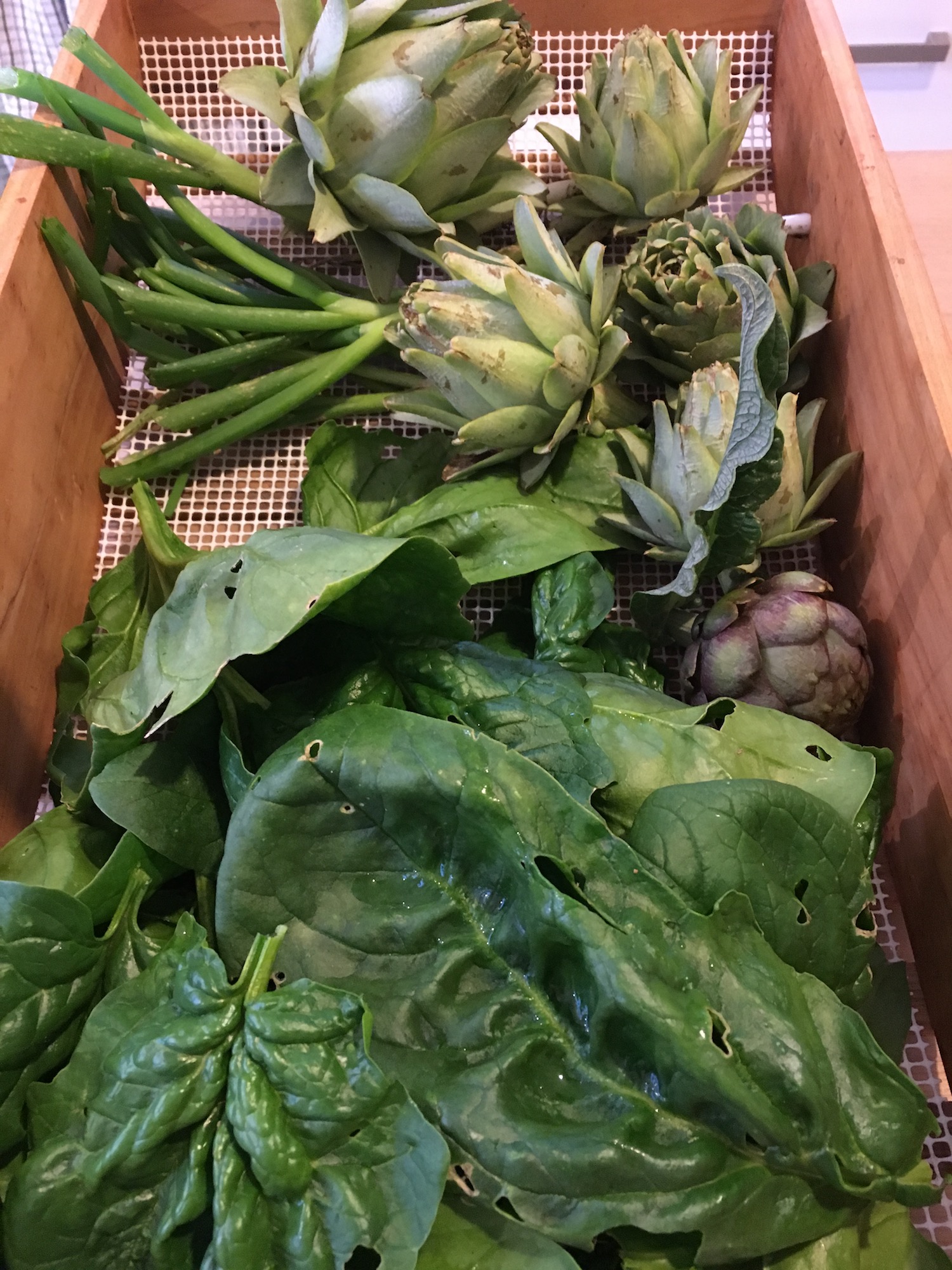
Today I picked a basket of autumn crops for dinner—all in shades of green.

Garden Rescue Mission

A southerly storm blew through yesterday, and the clouds cleared around midday today. The sun was warm this afternoon, but the wind remained chilly. This evening was clear and still. Perfect conditions for a frost.

There are few summer vegetables left at this point. The tomatoes outside the greenhouse are all dead. The peppers and eggplants are ripening their final fruits, the zucchinis and cucumbers are maturing at a tiny size. The corn has all been eaten, and the runner beans are giving just a handful every few days.

A frost will kill everything left in the summer garden, so I went on a rescue mission this evening. I gathered in everything that was still decent, whether it was fully ripe yet or not, assuming that anything left in the garden will be dead by morning.

It felt oddly good.

It’s not that I won’t miss the fresh tomatoes and eggplants of summer, but I also look forward to the pumpkins, potatoes, and beans of winter. As they say, variety is the spice of life. I would say that seasonality is the spice of life. Food marks the course of the year, and each crop has its own time. It gives the year variety and interest. It gives us things to look forward to with each season.

So, while I mount my summer vegetable rescue mission, I don’t worry about the loss of those summer crops. There are other delights to come.

Traditional Easter Jack-o-lantern

The traditional Northern Hemisphere holidays make absolutely no sense here. Easter falls at the Northern Hemisphere seasonal equivalent of mid-October. So a celebration of spring flowers, new-season’s growth, resurrection, etc. just doesn’t work.

We’ve just brought in the last of the harvest–pumpkins, apples, popcorn. The only summer crops left are those in the greenhouse, and they won’t be around much longer, either. Trees are losing their leaves. We’ve brought out the candles, and dream of sitting by a crackling fire in the coming months. Clearly, painted eggs, bunnies, and spring flowers are inappropriate.

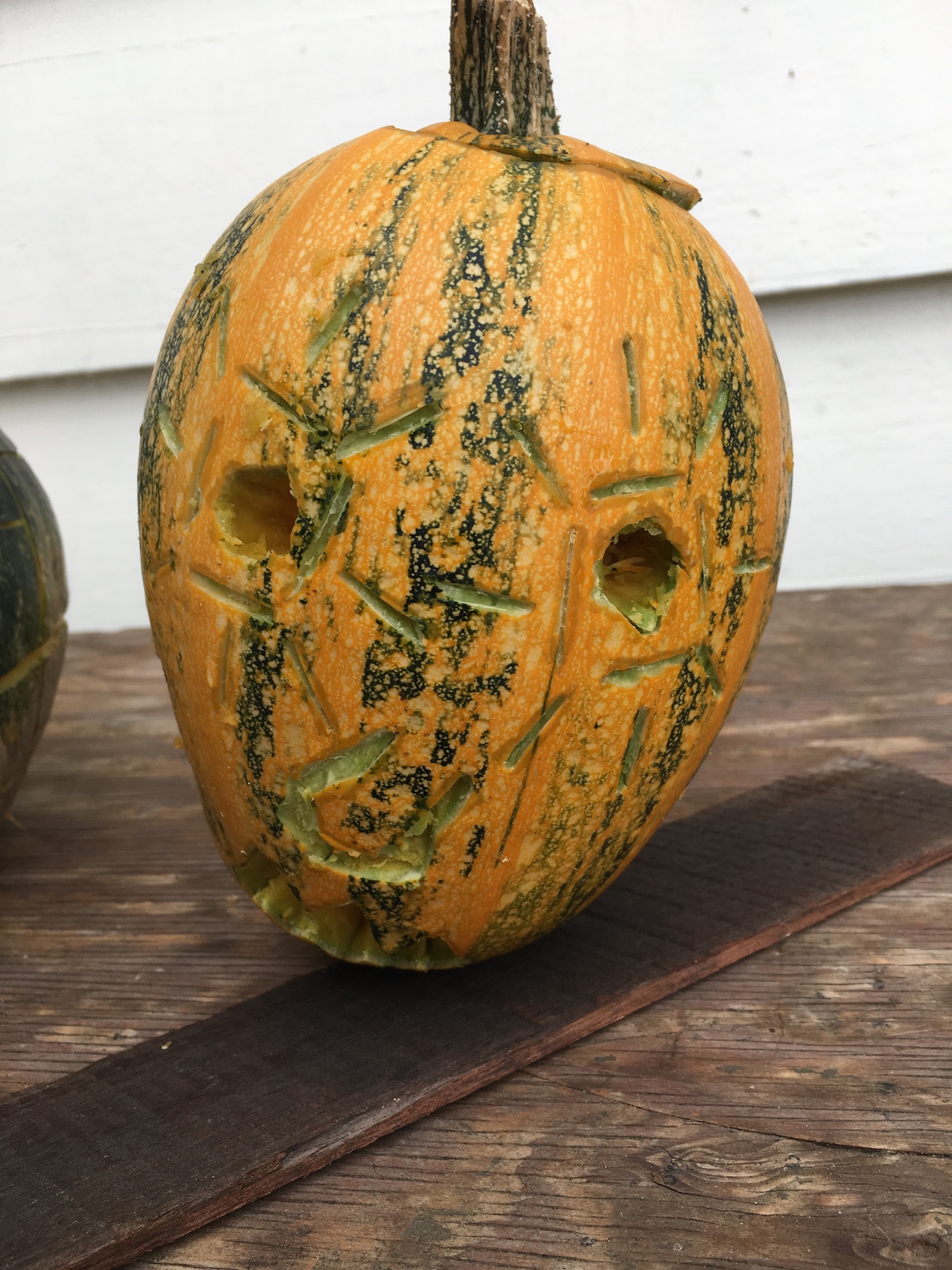
So I introduce the traditional Easter Jack-o-lantern. Carved while snacking on roasted pumpkin seeds.

Great fun for the kids, and better for them than chocolate bunnies!

Completing the Cycle

Back in early December last year, I posted an update on the preying mantids on my rosemary bushes that I’ve been following since mid-winter, when they were eggs.

Well, I haven’t forgotten them, and I’m pleased to report that they are all grown up now, and laying eggs of their own.

On the one hand, I’m thrilled (as I am every year) to watch the entire life cycle play out in the garden.

On the other hand, I’m getting a little worried.

Last winter, I didn’t prune the rosemary bushes because the bees depend on their flowers in late winter. Then in the spring I couldn’t prune them because the preying mantids hatched out. All summer I waited and watched the mantids grow. The rosemary plants grew, too, engulfing a bench on one side, and the path on the other.

And now the mantids are laying their eggs on the very branches I need to prune off…

We may soon see just how big rosemary can grow here.

To Burn or Not To Burn

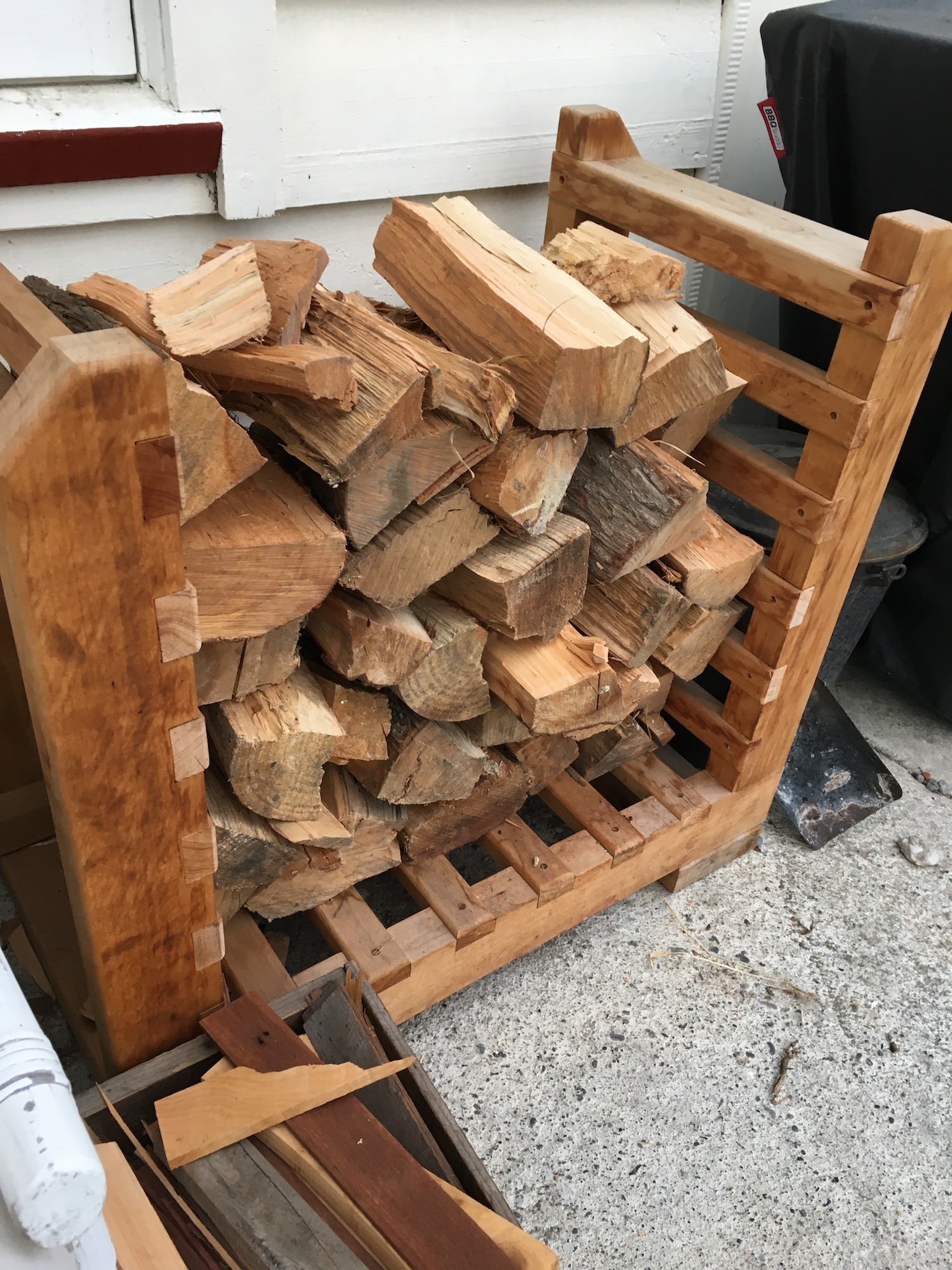
The firewood stands ready to go.

That is the question, on a night like tonight. If we light the fire, it will be the first fire of the season–always a bit momentous, because it’s an admission that summer is over.

Technically, we don’t need a fire tonight. It’s cool, but not terribly cold. We’ve had colder nights already this autumn, and never even considered lighting a fire.

But it’s been raining most of the day. The temperature has been inching downward since morning, and the wind has been picking up. It’s thoroughly unpleasant outdoors this evening.

It’s emotionally cold.

It’s not that I’m not thankful for the rain–we really need it. It’s not that I don’t enjoy hearing it on the roof and against the windows.

But it would sound even better accompanied by the sound of a crackling fire.

It’s not so much a need for warmth, but a need for hygge. A need for comfort.

And so, as a fresh gust of wind rattles the window, I think I’ll close this blog post, put on a pot for tea, and build a fire.

Mushroom Season

With the arrival of rain and cooler temperatures, the mushrooms have come out. Many fungi fruit in autumn, but this year seems particularly spectacular on our property. I can only guess that, after three years of drought, the fungi are taking advantage of weather that’s finally moist.

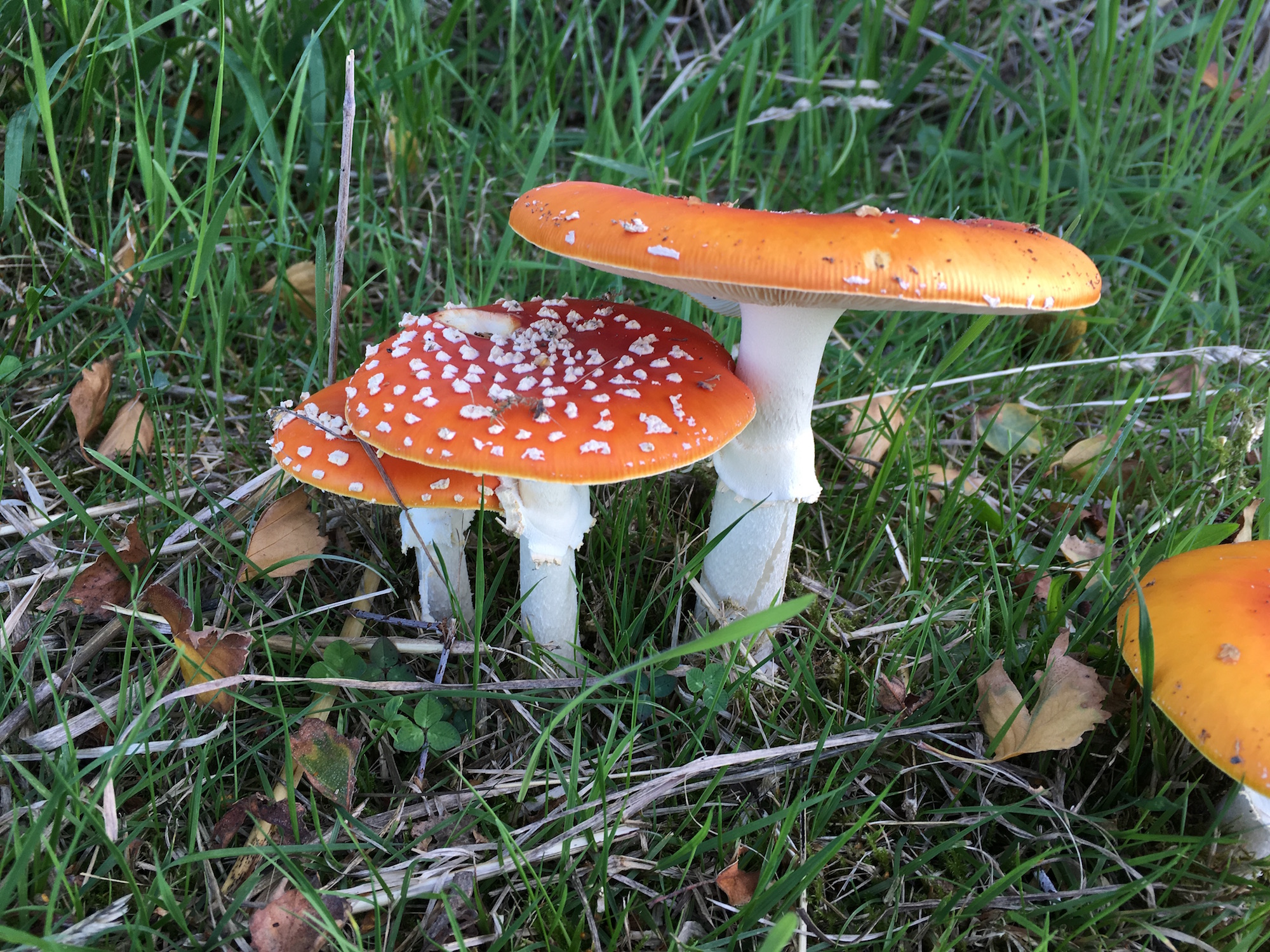
The most visually striking ones are naturally the Amanita muscaria–their bright red caps have reached epic sizes this year, and they’ve sprung up in profusion under the birch trees. They’re accompanied this year by three other species of mushroom with large brown caps (Paxillus involutus, Leccinum scabrum and a Russula).

Puffballs dot the lawn, and an assortment of smaller mushrooms have joined them.

The best find so far has been the presence of seven Noddy’s flycaps in the vegetable garden. I blogged about this mysterious fungus several months ago when the first sporocarp popped up. To find this many all at once is quite unusual.

There is another full week of rain in the forecast, and I’m looking forward to what new gems might spring up. There is also the exciting possibility of slime moulds in this weather.

So forgive me if I walk around with my eyes on the ground this week. I’d hate to miss the show.

Winter Cat

The cat has decided it’s winter. We’ve had a few chilly nights, and some drizzly, overcast days, but the daytime temperatures have been pleasant, even in the rain.

The cat, however, thinks it’s time to hibernate.

He has distinct winter and summer behaviours. In summer, he spends day and night outdoors, coming inside only to eat or for the purpose of irritating us by demanding to come in and go out every three minutes.

In winter, he spends his days sleeping on my daughter’s bed or in my office, and his nights in front of the fireplace, going out only briefly so that he can demand to be let back in again once we’re comfortably engaged in something else.

The past few days, he’s been spending time on the couch and, last night, he stretched out in front of the fireplace, though there was no fire. Today, he claimed my office chair before I had a chance to sit down.

Never mind that it’s still warm enough to have the doors and windows open. Never mind we’re still eating summer vegetables from the garden. Never mind that autumn has hardly begun. The cat says it’s winter.

Painted Mountain Corn

Last year, I tried planting a coloured corn, but the rats ate it all. This year, with some protection for my seedlings, I managed a crop of Painted Mountain. Though it’s popular for autumn decoration in the US, I’d never grown it myself.

I wasn’t certain it would produce well. The plants are shorter and faster-maturing than sweet corn, and they looked stunted. They were beautiful in the garden, though–deep burgundy-coloured stems and light green leaves. Dark red silk peeking out of the husks.

The beauty didn’t stop in the garden. My daughter and I sat on the porch yesterday evening and husked the harvest, exclaiming as each new cob was revealed. It was like Christmas, never knowing what surprise would be in the next package. The variety of colours and arrangements of colours was amazing. I’d seen all this before, in the “Indian corn” my mother decorated with each fall, but there was something magical about seeing the diversity emerge from one small crop I’d grown myself.

I have no intention of using this corn for decoration. It is beautiful, and I will enjoy it as it dries, but it is destined for more interesting uses. Painted mountain is a starch corn. Once it’s dry, I’ll grind it into cornmeal.

I have visions of beautiful, coloured corn chips, red cornbread, rosy polenta…mmm…can’t wait until it’s dry.