Happy Autumnal Equinox!

Some years still feel summery at the equinox, but this year, the weather is decidedly autumnal. Monday, we hit our highest temperature of the summer—a blustery nor’westerly day that had my students wilting by 10 in the morning. It was 31 degrees at 5 pm when we left work. Dinner was a summer feast of sweet corn, soybeans and zucchini.

We slept with the windows open, covers kicked aside on Monday night.

Tuesday morning, I went out in the dark to water the plants at about 5.30. It was still 23 degrees. As I watered, the wind shifted.

By the time I left for work an hour and a half later, the temperature had dropped to 16, and rain spattered the windshield in fits and starts.

By ten o’clock, the skies had opened up. Wind drove the rain in sheets, and the temperature continued its slide downward.

Driving home from work, the temperature registered 11 degrees. Traffic moved slowly through the downpour, wind rocking the car and thrashing trees alongside the road. When I got home, I stripped off my rain soaked cotton clothes and replaced them with cosy wool. We had potato soup for dinner.

We woke on Wednesday morning to full autumn. Summer had been scoured away by over 40 mm of rain, and stripped bare by gale force winds.

A dramatic entrance for the season. But the truth is, autumn was already well underway. Our first frost came weeks ago, on 6 March. I picked the pumpkins last weekend. And the zucchini, tomatoes and other summer-loving plants were all showing signs of being nearly done for the season.

And, of course, squirrelly me has been in autumn mode for weeks, preserving everything I can in preparation for the dark days ahead.

Today we step into the dark side of the year. Although I very much enjoyed our last couple days of hot summer sun (and today promises some beautiful sunshine), I’m looking forward to all that the dark side has to offer. 

Autumnal Harvest

The weather has turned decidedly autumnal, so while the sun is still summer-hot, the air has gotten chillier, and the weather more unsettled.

And it means I’ve gone into my annual squirrel mode—harvesting and preserving summer’s bounty so we can enjoy it all winter.

Last Saturday was summer soup day. Long time readers of my blog will know this is a key part of my gardening year. When the children were young, it was a whole-family event, with everyone pitching in to pick and chop vegetables. It’s become a more solitary activity for me in recent years, but no less important in my annual calendar. 

With just my husband and me at home now, I always think I’ll make less soup. And this year, I was a little worried I wouldn’t have enough vegetables for a big batch, because January and February were so cold and wet, the heat-loving vegetables sulked.

I should have known better.

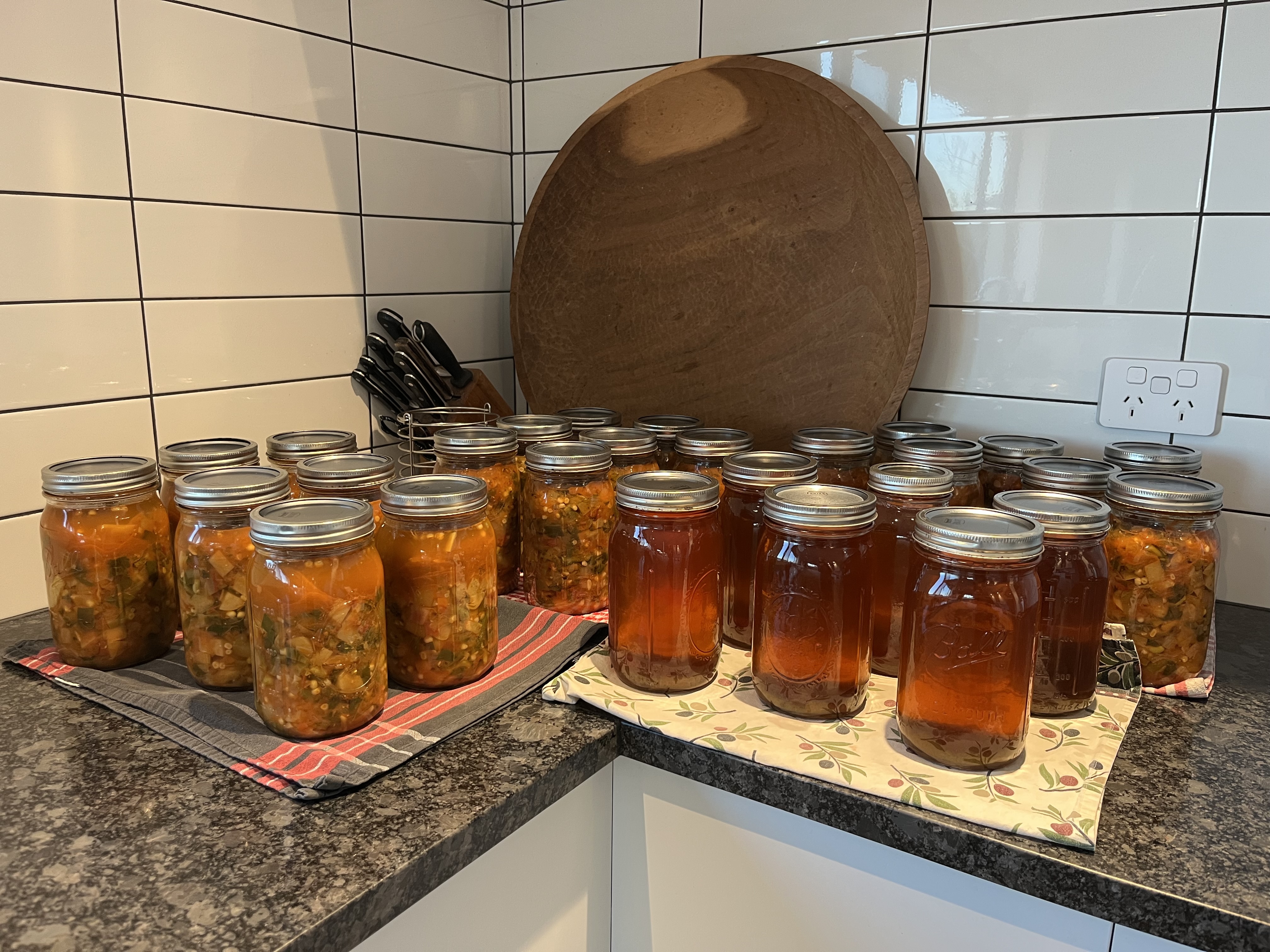
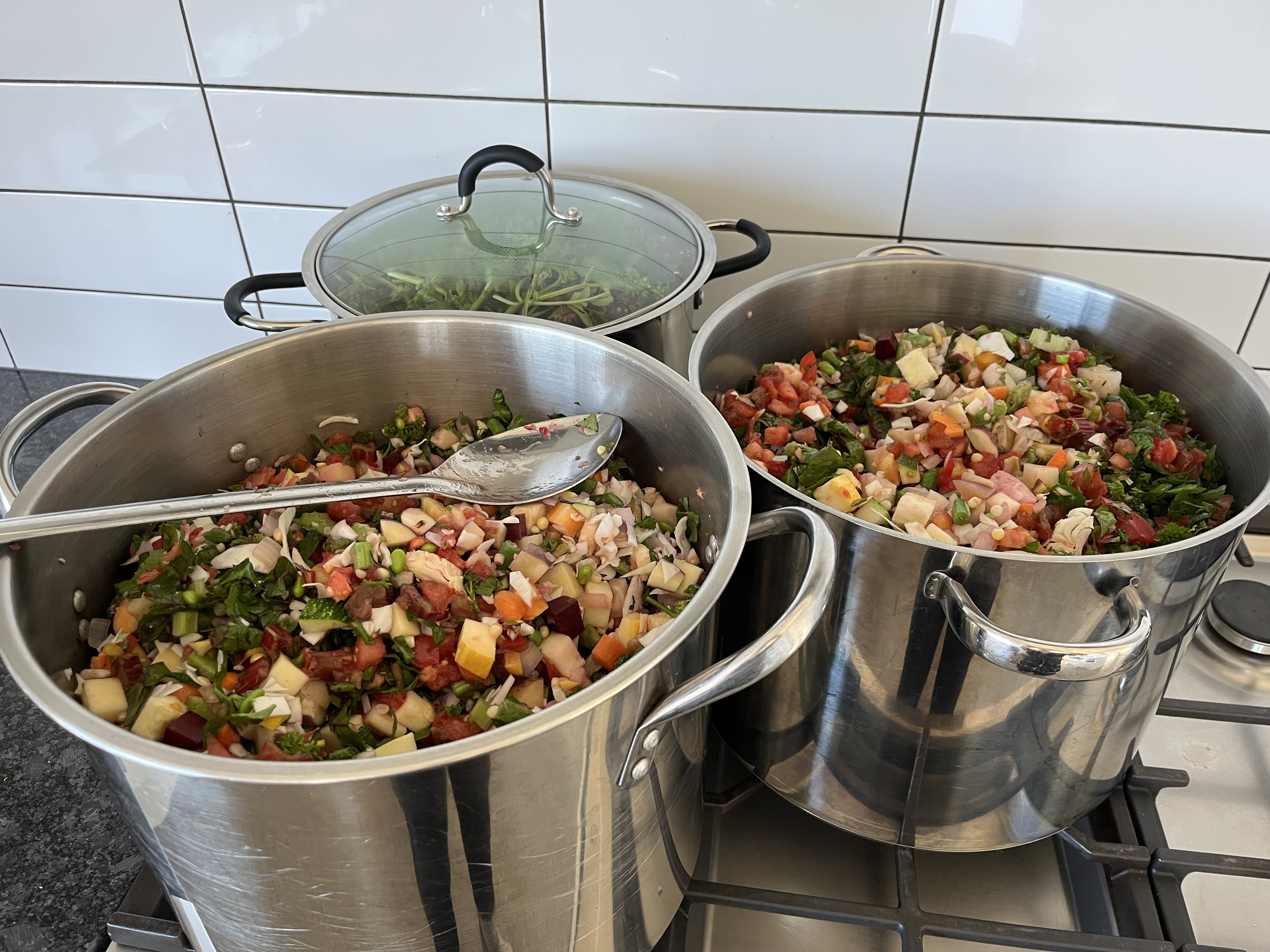
I needed both my 20-litre and 18-litre pots to cook the soup, plus the 12 litre pot for making vegetable stock from the vegetable off-cuts. In the end, I made 23 quarts of soup and 13 pints of stock. That’s Monday dinners for almost six months, plus stock to flavour 13 more meals. Not bad for 13 hours of work.

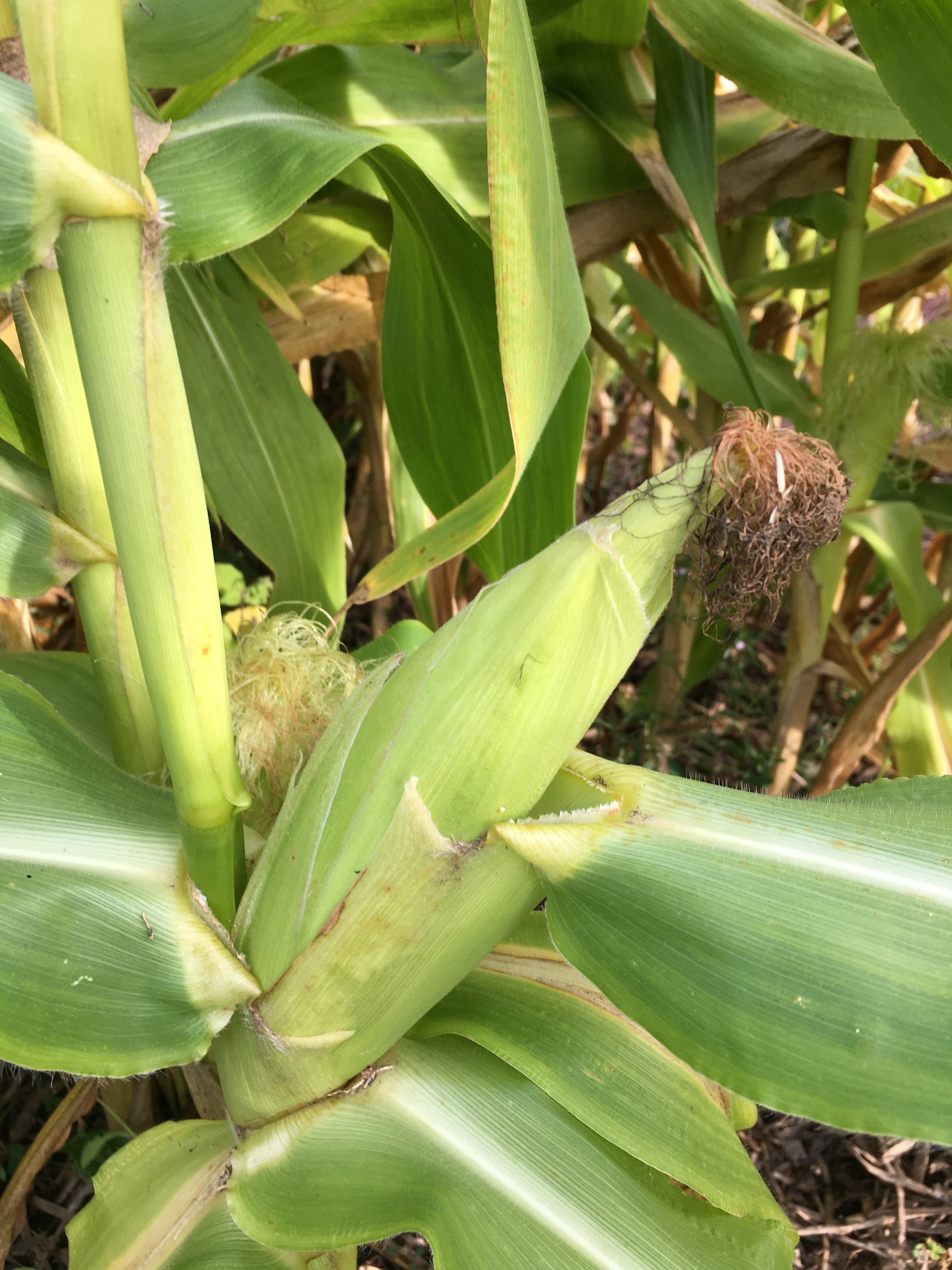
The day after summer soup day, I tackled the sweet corn. I usually sow three plantings of sweet corn, two weeks apart, in the spring. The first two plantings were desperate to be picked, so I harvested 63 ears of corn. Blanched and cut off the cob, it yielded 5.3 kilograms of corn, which went into the freezer. That’s a year’s supply of sweet corn for us, to be used in casseroles, stews, and side dishes. 

I had hoped to also freeze some soy on Sunday, but I’d waited too long to harvest, and about half the beans were too mature. So we’ll save the majority of this year’s soy as dry beans instead.

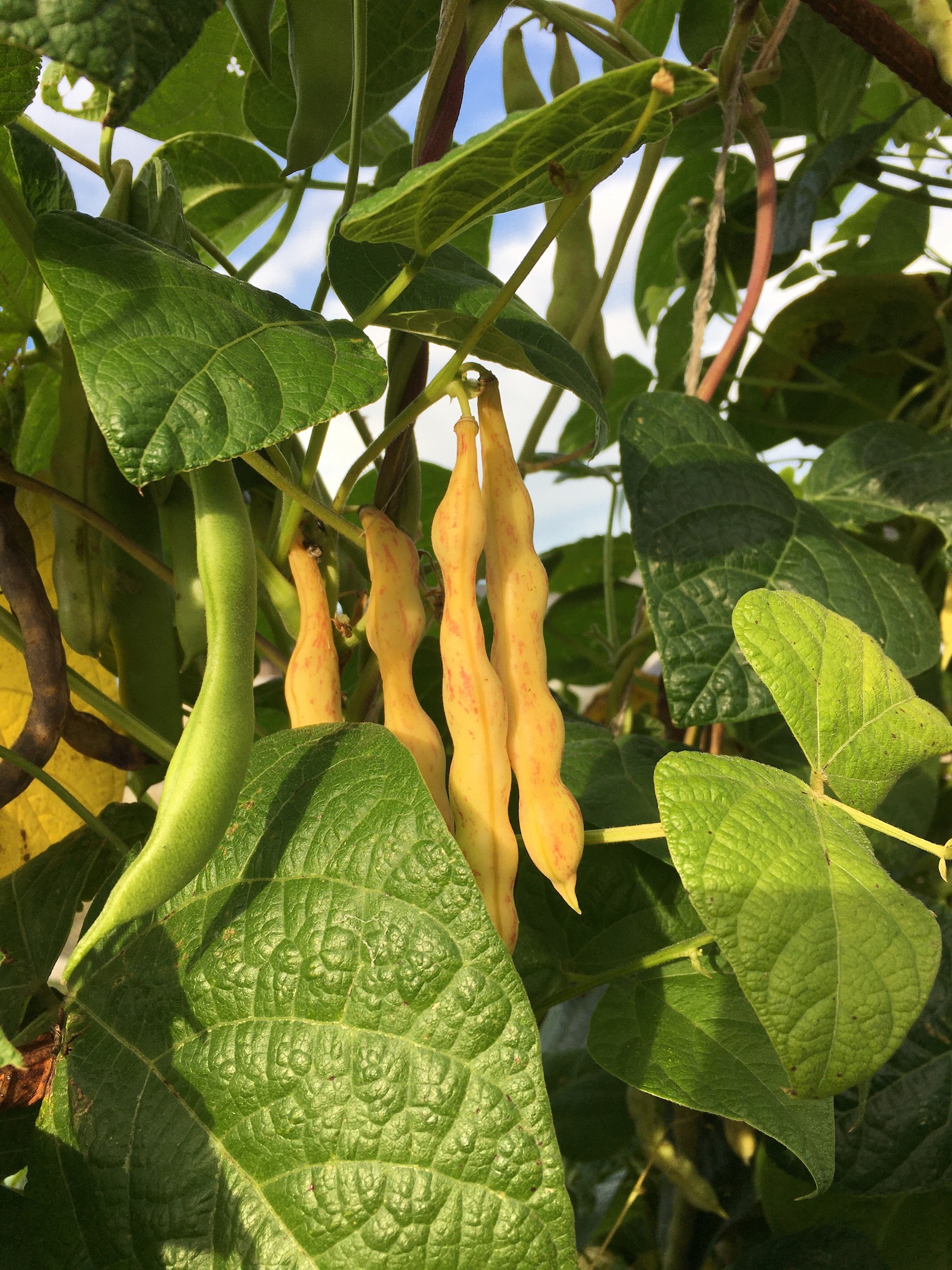
And speaking of dry beans, in the last fortnight, I’ve harvested my Borlotti and Black Turtle beans, and have started harvesting the climbing beans: Blue Shackamaxon, Bicolour Peans, Bird’s Egg, and Cherokee Cornfield. The harvest of the climbers will go on for the next month as the plants continue to grow and put out new pods while the older ones mature. Not quite as neat and tidy as the bush beans, which all mature at the same time, but in the end, I’ll get more beans from the same amount of garden space off the climbers than the bush beans.

I’ve also now harvested most of the potatoes, which did beautifully this year, with the cool rain. The spuds are tucked away in a dark corner of the laundry room, and should last through much of the winter.

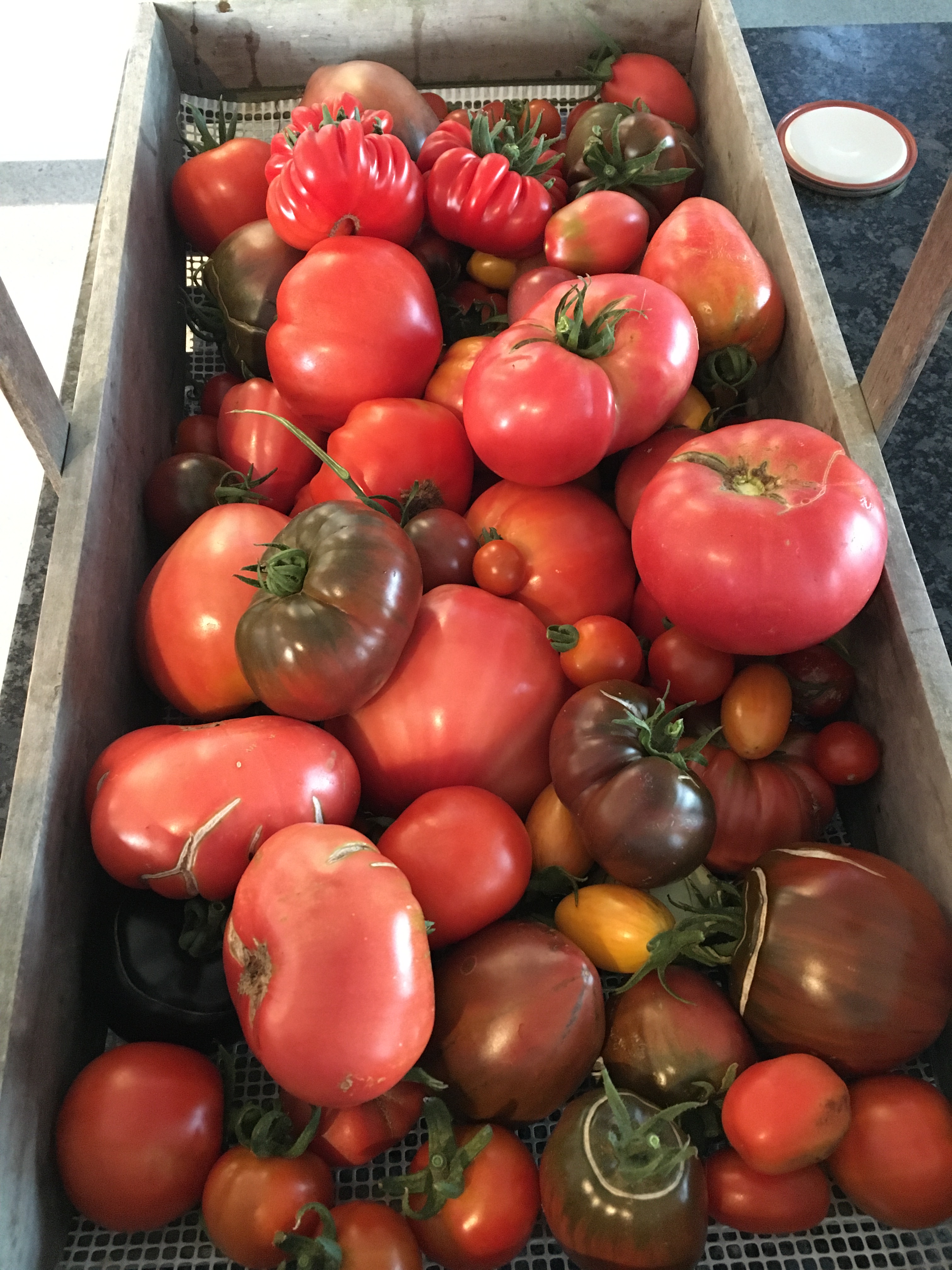
There are still more vegetables to squirrel away in the next few weeks: pumpkins, hopefully more tomatoes, more basil (in the form of pesto), and the rest of the beans and potatoes. As I do every year, I mourn the end of summer’s bounty, but I look forward to the ease of winter meals that come from the freezer or pantry instead of directly from the garden. There is something delightful about knowing that the hard work has been done, and the food is tucked away, ready to be eaten.

Autumnal Beauty

Here in Aotearoa New Zealand, most of our native trees are evergreen, so we don’t have the same spectacular autumnal colours I remember growing up in North America. There are, of course, plenty of European non-native trees planted in parks and gardens, so we do get some autumnal colour, but here in Canterbury, where summers are dry, the overwhelming landscape colour in autumn is green, as cooler temperatures and increased rainfall lead to a flush of grass growth.

In the vegetable garden, however, there’s plenty of colour. Much of it is subtle, but it speaks of autumn nonetheless.

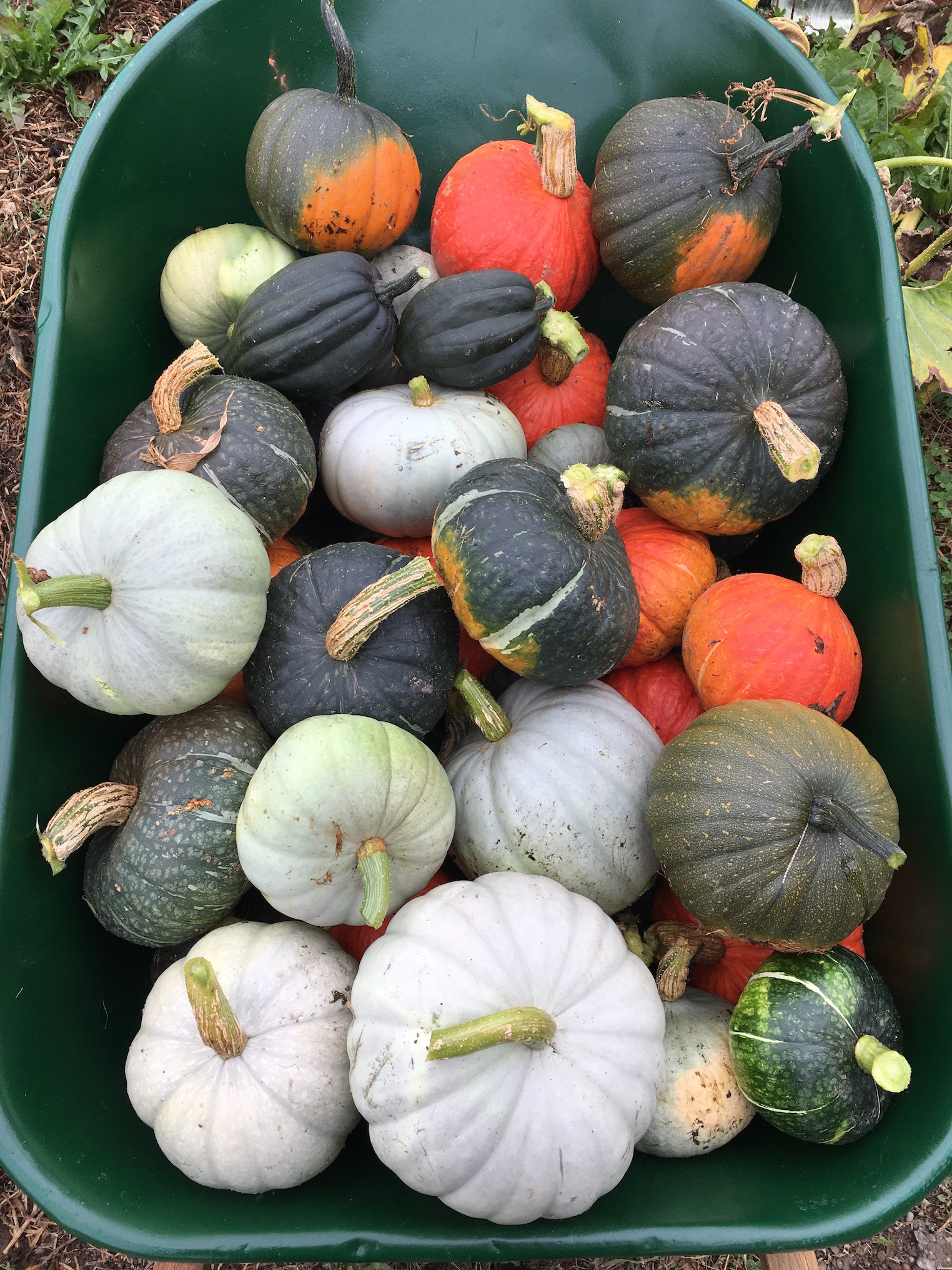
Winter squashes offer deep green, heathery grey, and orange, first in the garden, and then in the laundry room where they adorn every available surface at the moment. They’ll also offer beautiful orange in dinners throughout the coming year as we work our way through them.

Dry beans also provide colourful beauty at this time of year. Trays of drying beans on the porch make me smile: Blue Shackamaxon’s glossy black, Bird’s Egg’s speckled spheres, and Cherokee Cornfield’s riotous mix of colourful varieties.

Then there’s the flint corn. This year, I planted Strawberry Popcorn, which produces deep red kernels, and Glass Gem, with its glittering multihued kernels. Husking corn is like opening a box of crayons.

In the greenhouses, summer still reigns, offering red tomatoes, multicoloured peppers, and purple eggplants.

On top of the colourful vegetables, there are plenty of autumnal flowers in bloom: dahlias, heliopsis, and chrysanthemums provide bright splashes of yellow, orange, pinks and reds. They also attract colourful butterflies like yellow admirals, red admirals and monarchs.

So while we may not have the colourful autumn leaves, there is plenty of brightness to enjoy, even as the days grow short and dark. 

2024 Garden Stocktake

Autumn is well underway, so it’s time to take stock of the summer season’s garden successes and failures.

Strawberry popcorn

The biggest success this past season was in the soil. All winter last year, I incorporated fresh cow manure and composted horse manure into the garden beds. Every single bed got one or the other, in addition to my own compost in the spring. And finally my efforts to improve the soil over the past four years have begun to show. There’s still a long way to go, and a lot more compost and manure to haul, but this summer most of my crops grew well, and nutrient deficiencies weren’t obvious until late in the season. A huge improvement over previous years.

Particularly nice crops this year included:

  • Strawberry popcorn—This was my first year to plant this corn. I admit I was dubious when I opened the rather expensive packet of seed to find only 15 seeds. It was clear the corn was marketed as a fun thing for kids to grow. However, every seed germinated, and the plants grew to well over 2 metres tall, dwarfing all the other varieties of corn I grew. Each plant yielded two large ears (much larger than the photo on the packet indicated they would be—very un-strawberry-like), and a few even had a third, smaller ear. I was thoroughly impressed by how much popcorn so few plants produced. Of course, the proof of the variety’s worth will be when we pop it. The Glass Gem corn I love so much is marketed as a pop corn, but we’ve found the popping to be poor. It will be a few months before we know if the Strawberry popcorn was worth it.
  • Dwarf bean Xera Select—I had decided not to plant dwarf green beans anymore, because the runners produced more, better beans over a longer season. But I still had seeds for a few varieties, so I planted them, thinking I simply wouldn’t buy more. But Xera Select grew beautifully—long, uniform pods, and lots of them. I might just have to plant them again next year.
  • Bicolour sweetcorn—This year we managed to have side-by-side comparisons of the flavour of two varieties of sweetcorn, and we found Bicolour to be much sweeter than Florida Supersweet. The plants didn’t seem quite so resistant to drought, though, so I might plant both varieties again next year. They were both good and produced good crops despite water and nutrient stress.
  • Cherry tomato Rosella—Oh. My. God. This is possibly my new favourite tomato. This black cherry tomato has so much flavour in each little fruit, it’s addictive. Definitely one to plant again!
  • Cherry tomato Cherry Berry—I normally stick with heirloom tomatoes, but this F1 hybrid was amazing this year—excellent flavour, and SO MANY FRUITS! Outstanding value for the space.
  • Tomato Black Brandywine—Brandywine flavour in a dusky tomato. These ripened earlier than the Brandywine Pink, which was a bonus.
  • Tomato Black Oxheart—Big, fleshy, heart-shaped fruits. These were a winner in my book for sauces and drying.
  • Melon Topaz—Honeydew in texture, with flesh the colour of a cantelope, and a flavour somewhere in between the two. These were delicious. Definitely one to plant again.

Crops that were a bit meh:

  • Tomato Costoluto Fiorentino—These tomatoes are interesting, but the fruits were smallish, and so ridgy they were a pain to deal with in the kitchen. The flavour was pretty average. At some point, I simply stopped picking them.
  • Pea Shiraz—I was excited to plant a purple snow pea this year, but the variety disappointed. A poor yield of unattractive pods that matured quickly and weren’t terribly tasty. Back to the standard snow pea for me next year.

Absolute disasters:

  • All the carrots—This year’s carrot disaster had nothing to do with the varieties I planted, and everything to do with the slugs that ate nearly all seeds, and then the birds that uprooted the few plants that managed to evade the slugs. I planted carrots three times, and ended up harvesting about 6 carrots.
  • All the potatoes—As with the carrots, the near complete failure of the potatoes had nothing to do with the plants and everything to do with pests. The rats, who had a field day in the garden all summer, tunnelled down the row of potatoes and ate every tuber. I managed to snatch a few out of their greedy jaws, but only a few.

If not for the pests, it would have been a spectacular year in the garden. Even so, nearly every preserving jar is full, the freezer is at capacity, and I’m still bringing in the pumpkins and dry beans, so I can’t really complain.

The well stocked pantry

Summer Soup 2024

Making and canning vegetable soup used to be a whole family activity, with the kids pitching in from a young age, picking and chopping vegetables alongside my husband and me. My husband would cook the soup while the kids and I washed dishes, and then I would can (bottle) it up.

We called it Summer Soup, because we made it at the height of the summer vegetable season (which ironically always falls in early autumn). On the cold rainy nights winter we could open a jar and enjoy a bowl of summer. 

When the kids were young, they delighted in recounting which vegetables they chopped, proud of their part in feeding the family. These days, making summer soup is a mostly solitary activity for me, the kids being all grown up. It hasn’t stopped me from making a vast quantity of soup. Last Sunday I designated as Summer Soup day because I had heaps of tomatoes, green beans, sweet corn, zucchini, and other vegetables to put in it.

Because it was Sunday, I started off at 5.30 am by making muffins for breakfast. While the muffins baked, I began chopping vegetables …

My husband had planned on baking bread on Sunday, but unfortunately he woke with a terrible cold that morning. He’d started his sourdough sponge the night before, so with instructions from him, I made up his bread dough after breakfast and set it to rise as I continued to chop vegetables.

The mixing bowls began to fill up in the kitchen as the morning progressed. After several hours and a few trips to the garden to pick more vegetables and dump scraps on the compost pile, I took a short break from chopping to divide the bread dough for loaves. Thankfully, my husband felt well enough at this point to form the loaves and get them started on their second rising, because I really wanted to finish chopping vegetables by lunchtime.

I finished the final chopping shortly after the focaccia came out of the oven. We sat down to enjoy fresh focaccia for lunch.

My break was short, because after lunch I began processing all those chopped vegetables. It was clear I wasn’t going to be able to fit everything into one pot, so I pulled out both my 20-litre stock pots and divided the vegetables between them. While the soup heated up, I prepared my jars and the pressure canner. I also filled my 12-litre stock pot with vegetable scraps and water and set it on the stove to simmer for a few hours for vegetable stock.

Much of the time commitment in making and canning vegetable soup is in the canning process. Each batch of seven jars has to be processed for an hour and 15 minutes, and then there’s the waiting time while the canner cools down enough to remove the jars before putting in the next batch.

While I was waiting for the canner to do its thing, I started in on the apples that needed to be processed. I peeled and sliced a mountain of apples. Once I’d emptied the soup out of one of the 20-litre pots, I refilled it with apple slices and cooked them up into apple pie filling—enough for three generously filled pies. The pie filling went into the freezer. 

The soup seemed to never end. Even after separating off two meals worth of soup for eating this week, I ran three full canner loads (21 quarts) of soup and one full load (7 quarts) of stock. The last jars came out of the canner at 9.15 pm.

I’m glad I only make summer soup once a year, but I’m thrilled to have all that summery goodness squirrelled away in the pantry. Bring on the rain and cold of winter—I can already taste the soup (followed by a slice of apple pie, of course!).

Summer Heat, Autumnal Vibes

It’s been hot here lately, with blue skies and temperatures in the upper 20s most days—summer at its height.

But when I wake at five in the morning it is dark, and there is no working in the garden until nine in the evening anymore, unless it’s by head torch. The days are growing shorter, and there’s a feel to the air that speaks of the autumn to come. 

The cricket chorus has grown over the past few days—the summer’s crop of insects maturing to mate and lay eggs before winter. The early apples have been harvested, and pumpkins are swelling on the vines. I harvested most of my dry beans last week, too. 

Of course the summer crops—tomatoes, zucchini, eggplants, peppers, and beans—are still going strong, and will be for a while.But the seasons are turning.

I love it.

My husband and I lived for two and a half years in Panama back in the early 1990s, so we got to experience living almost on the equator. The daily temperature variation in Panama is greater than the yearly variation, and the day length variation is virtually imperceptible. The only seasonality is in rainfall—it rains from mid-March to mid-December, then stops entirely until mid-March again.

Tomato sauce made from yesterday’s harvest

After living in Pennsylvania, Michigan and Ohio for the first 22 years of my live, Panama was … well … boring from a seasonal perspective. I missed the annual markers of the Earth’s progress around the sun. Of course we had heat, but I missed the long days and drawn out sunsets of a high-latitude summer. In Panama, the sun leaps into the sky in the morning and drops like a stone below the horizon in the evening, and it does so with such precision and consistency, you can practically set your watch to it.

I missed the cold of winter, the dark days and long nights perfect for curling up with a book or sitting by the fire (though to be fair, Panama nights sometimes seemed long, because we had no electricity, one small table to sit at, and only a lopsided wooden chair and a tree stump to serve as seating).

I missed spring, for its slow unfurling of green, rising from the herbs on the forest floor to the tops of the trees as the season progressed. I missed autumn for its splash of yellows, oranges, and reds, the rime of frost on crisp mornings. I missed the bite of icy wind, the smell of snow.

New Zealand doesn’t get the extremes of seasonality I enjoyed in the northern United States. Our climate is heavily moderated by the vast Pacific Ocean in which we sit. And our native plants are largely evergreen, so green is the dominant colour all year round. But where I live, at a similar latitude to St. Paul, Minnesota (but of course on the other side of the equator), we have decent seasonality, and I love the changes throughout the year. People often ask what my favourite season is, and I have to say it’s all of them. Each season has something new and exciting to offer, and there’s no point in mourning the loss of long summer evenings, because they’ll be back. Instead, I welcome the short days, the excuse step away from the garden in the evenings. I look forward to bringing in the autumn harvest and filling the pantry with the fruits of summer. 

So bring on the shorter days. Variety is the spice of life, after all—time for some spice.

There’s No Place Like Home

I’ve been feeling a bit like Dorothy from The Wizard of Oz this week. Having been on a crazy whirlwind of a trip to the U.S. and Scotland, my overwhelming feeling since my return has been, ‘There’s no place like home’.

Don’t get me wrong—I enjoyed my travels. It was great to see family in the U.S. for the first time in six (!) years, and Scotland was new and exciting. I love traveling by train, and enjoyed every minute watching the Scottish countryside roll by. And I’d never set foot in a real castle before, so visiting four of them was a highly educational experience, and something I can’t do in New Zealand. The botanic garden in Glasgow was a real treat as well—I wandered through the massive greenhouses twice, because they were so marvellous.

But I have to admit that the best part of the trip was coming home to my own greenhouse, bursting with vegetables.

Before we left, I set up automatic watering and shut the door, trusting to the automatic window openers to provide enough ventilation if the weather was warm.

Three weeks later, both summer and winter crops had obviously thrived in the warm, humid environment. A bit too humid, actually—the slaters had moved into the tomato plants (and apparently like to eat tomatoes) because it was too moist on the ground.

Aphids thrived, too, while we were gone, but all in all, I was pleased. To arrive home to fresh vegetables was an incredible gift, and it reminded me once again of how blessed we are to live where we do.

So I am happy to be home, pulling weeds, squishing aphids, and doing all the autumnal garden tidying I haven’t yet gotten to. It’s not a vacation, but it is home.

Cheese and Quince Tart

Our quince tree gave its first harvest ever this year, which is exciting. I picked them today, and my husband went looking for some new (to us) recipes that use quince.

He came across Tarta de Queso y Membrillo con Almíbar de Cardamomo—Cheese and Quince Tart with Cardamom Syrup. How could I resist? 

It’s been a while since I followed a recipe in Spanish, so there was an added level of adventure for me making this recipe. I don’t think I ever bought or used azúcar flor (icing sugar) when we lived in Panama, so I had to look that one up.

Even in your native language, this is not a tart you whip out quickly—nothing using quince is, and this has lots of different things to prepare—but it is delicious! It’s essentially cheesecake with caramelised quince in a pie crust. What’s not to like?

I modified the recipe slightly—here’s my version, in English.

Cheese layer:
1 package cream cheese
1/2 cup unsweetened yogurt
2 Tbs honey
1 egg
1 Tbs fresh lemon juice

Quince layer:
3 large or 6 small quince
1/4 cup brown sugar
25 g butter
1 Tbs cinnamon

Enough pie dough for 1 crust (see my pie dough recipe here)

1/2 cup chopped walnuts

Cardamom syrup:
3/4 cup icing sugar
3 Tbs fresh lemon juice
3 cardamom pods

Make your pie crust and refrigerate until needed.

Mix the ingredients for the cheese layer with a handheld mixer until well combined. Set aside.

Peel, core, and thinly slice the quince (you should have 7-8 cups of fruit). Place the quince, butter and brown sugar in a large skillet and cook on low heat for about 10 minutes, until the quince has softened. Stir in the cinnamon.

Roll out the pie dough and line a pie or tart pan with it. Pour the cheese mixture evenly over the bottom of the crust. Layer the caramelised quince on top, and sprinkle with chopped walnuts.

Bake at 190℃ for 40-45 minutes.

While the pie is baking, make the sugar syrup. Place the icing sugar, lemon juice and cardamom pods in a small saucepan and boil gently for 8 minutes. Remove from the heat and let cool. Drizzle over the pie when serving.

The recipe I used said to serve the tart warm, which is how we ate it this evening. But I’m looking forward to a second piece tomorrow, because I think it’ll be even better cold. 

Next time I make this (because there will no doubt be a next time), I’ll crush the cardamom pods so that the syrup is more strongly flavoured. I also think it would be even more spectacular with a cup of ugni berries (Chilean guava) tossed into the quince mixture.

If you don’t have quince, this tart would be lovely made with apple or pear, too.

Harvest Days

My hands smell like onions. My fingernails are stained purple. The walls and cabinetry in the kitchen are festooned with colourful splatters and drips. The floor is sticky underfoot.

It must be harvest time.

The garden gushes vegetables in late summer, and the shorter days warn that it’s time to start preserving the bounty before it’s gone.

One of my favourite ways to save summer’s vegetables is in summer soup (which I’ve blogged about nearly every year since 2015). Because soup uses a bit of everything, there’s no need to have vast quantities of any one vegetable. And it doesn’t matter if, say, the sweet peppers bombed or there’s an overabundance of sweet corn. Soup accepts what you’ve got and returns lovely meals all packaged and ready to go on those winter evenings when you come home late from work. It is both forgiving and giving.

So it’s worth a long day in the kitchen to make and bottle (can) a big vat of the stuff.

And while you’re at it, it’s super easy to toss carrot peels, corn cobs, celery tops, and other ‘waste’ from soup making into a large pot to simmer for stock. Run the stock through the canner after the soup, and you’ve got delicious summer flavouring for winter risottos and stews.

So I may have spent fourteen hours in the kitchen on Saturday, but at the end of the day, I had fourteen quarts of soup and six quarts of stock (and another four quarts of pickled onions, because you know, if you’re going to spend all day in the kitchen, you may as well make the most of it.

In the coming weeks, I’ll bring in the pumpkins and potatoes, freeze sweet corn, and string hot peppers for drying. The kitchen will be messy, and I’ll have too much to get done.

But when it’s all over, I’ll be able to relax, at least for a while, until the winter crops need to be weeded …

Enjoying the Shoulder Season

sunflowers
Summer sunflowers are still in full swing.

The end of February marks the end of official summer in New Zealand. The shift to autumn is full of ups and downs. The first half of this week was as hot as it gets here, with temperatures in the low 30s (around 90℉). On Tuesday, it was hot enough that my husband and I headed to the beach for a swim after work, and I didn’t even need my wetsuit—the water and the air were both warm. 

But on Wednesday, a front came through, bringing rain and a decidedly autumnal chill. By Thursday, the porcini were sprouting—a sure sign of autumn.

Of course, also on Thursday we harvested plenty of summer vegetables from the garden—zucchini, eggplant, tomatoes, peppers. The transitions between seasons are drawn out, messy affairs. The weather forecast for next week includes more summery weather intermixed with the rain and chill of autumn.

Autumn mushrooms are coming on.

So for now, we get to enjoy the delights of both seasons, harvesting summer’s bounty amidst the treats autumn brings. This weekend, I’ll plant out my winter crops, giving them time to establish during the shoulder season, before summer’s warmth leaves entirely. I’ll also harvest the soy beans and bottle up some summer soup before the vegetables are gone. Summer’s not over yet, but it’s time to start packing up.