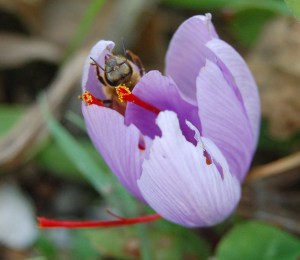
 My friend, Maryann, researches pollinator decline. Her focus is on honey bees, and how honey bee management can affect bee health.
The picture is a complex and disheartening one, but one that offers glimpses of what sustainable bee management could look like. Wherever they live, honey bees are beset by an array of diseases and parasites. Under the non-intensive, almost natural management regimes used in much of Africa, the bees fight off these pathogens and parasites without intervention from bee keepers. Intensely managed North American hives crumble under their onslaught.
North American hives are shifted from place to place, following the flowering crops, in order to provide pollination services for huge monocultures of fruits, vegetables and nuts. Hives are packed close together in vast arrays, making it easy for disease to spread from hive to hive.
The heavy use of herbicides in the agricultural landscape mean that the only source of pollen and nectar may be the crop to be pollinated. Bees evolved to feed on a wide variety of flowers, and cannot survive on one food alone. Imagine being forced to eat only broccoli—it’s good for you, but if you ate nothing else, your health would suffer.
Add to malnutrition the fact that the pollen the bees are eating is laced with no fewer than 137 different pesticides, many of which are toxic to bees or interfere with their growth, development and learning. And these pesticides are mixed with a range of substances to help them stick to the plants or disperse evenly when sprayed; these chemicals can be as poisonous to bees as the pesticides, and they are virtually unregulated.
Poor nutrition, poisoned food, and crowded conditions make North American bees susceptible to disease and parasite outbreaks. Bee keepers’ response has largely been to treat hives with pesticides to kill the parasites that spread disease, further adding to the chemical load the bees must support. When parasites develop resistance to pesticides (which they do at an alarming rate), the weakened bees are overwhelmed, and the colony dies.
I have long been uncomfortable with the North American management of bees—we squeeze everything we can from the poor animals, pushing them to their physiological limits in poor conditions. It’s no wonder they are in trouble. If we forced any other livestock to live in overcrowded conditions and eat poisoned food that didn’t meet their nutritional needs, the public would be outraged. Now, this unsustainable management has created a crisis, as the animals we depend upon to produce much of our food die in unprecedented numbers.
We need to develop a more gentle approach to bee management—one that respects the needs of these little animals. We need to critically evaluate (and curtail) our use of pesticides, and reconsider our model of vast monocultures in favour of more mixed agriculture. We need to give bees a break from the agricultural landscape so they have opportunities to eat food not laced with pesticides. We need to manage bees less for our own convenience, and more for their health and well-being. We need a new relationship with bees, forged from an understanding of bees’ needs, and aimed at long-term sustainability.
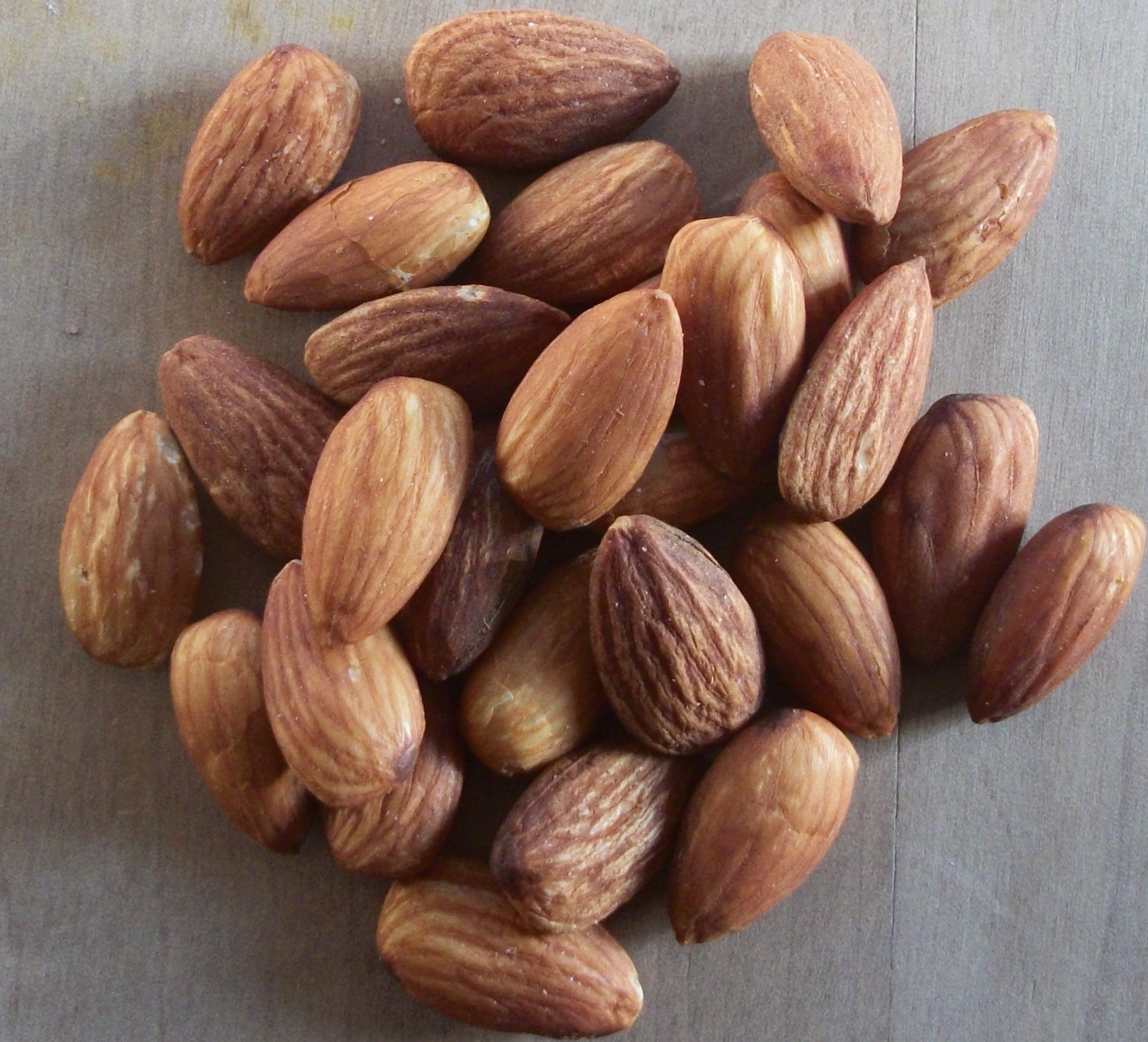 Well, there they go—the last of the almonds. The last I will buy for a long time.
 Robinne Weiss