Walk Away

2016-09-14-07-08-19Working for yourself, you have to develop discipline. You’ve got to be able to knuckle down and do what needs to be done, as though there were a boss standing over your shoulder. You’ve got to clock in at work, and spend the day there.

But sometimes the best way to get something done is to walk away from it.

I spent the first three days of this week on the West Coast, doing some educational programmes for schools. The programmes took up the mornings, but by early afternoon, I was done.

Each afternoon, I thought to myself, “Right. I need to get some writing done now. I need to make use of my time.” And each afternoon, I sat at the computer for a few minutes, then went outside for a long walk.

I hardly wrote a word, and yet…

Those long walks were perhaps a more productive use of my time. I was in places I don’t get to go to very frequently, enjoying an environment wildly different from my office. A different part of my brain was being stimulated on those walks—a part that was more thoughtful, perhaps. More open to emotion and suggestion.

That part of my mind started churning with thoughts and ideas about a novel I wrote last year. I hadn’t thought about the story for months. Though I liked the book, its sequel wasn’t going well, and I had set it aside while I wrote something entirely different. Every time I considered working on it, I felt I was up against a wall. Something wasn’t quite right about my main character. I had missed something, and wasn’t sure what it was.

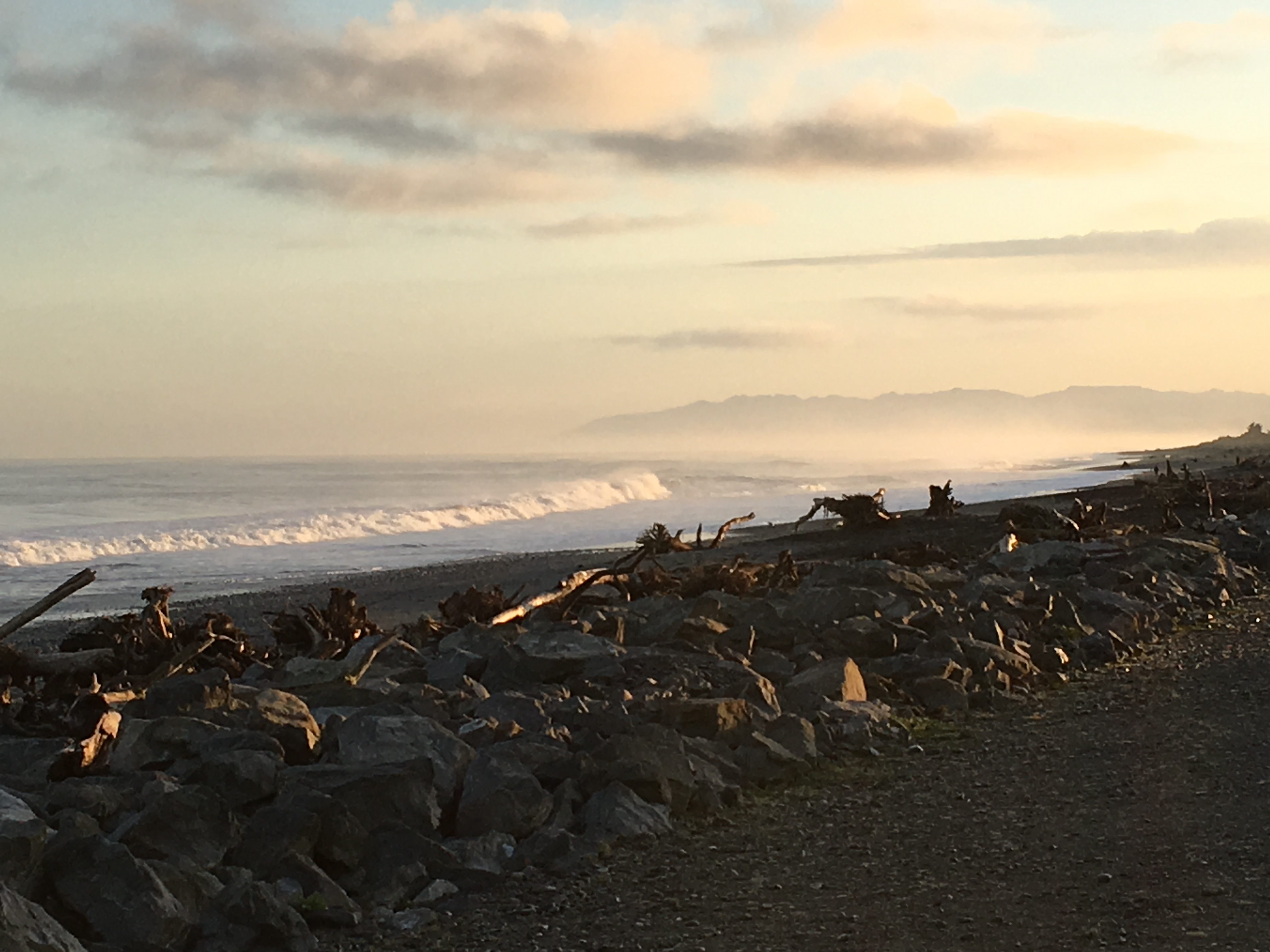
But as I walked the beach, my character walked with me. She told me about her dreams and aspirations. She told me about her childhood, and about what made her become the person she is. She explained to me why she can’t do what I’ve asked her to do in the second book, and why and how she will rebel against my expectations.

I scribbled pages of notes from our ‘conversation’, and I’m looking forward to getting back to her story and finishing it the way it should be finished.

So my ‘wasted’ time was not wasted after all. Had I sat in my hotel room and forced myself to put words on the page, I would never have found the right words for the page.

Sometimes the best thing you can do is walk away.

Sedgemere Haiku–Spring

In honour of National Poetry Day this Friday, the remainder of my posts this week will be in verse.

2016-04-18 14.50.46 cropFog billows in wet.
Frosting hair, spider webs, grass
With silver gilding.

_______

Magpie warbles loud
In early morning darkness,
Waking up the sun.

_______

Bees hum in purple
Lavender blooms, blue pollen
Dusting hairy backs.

_______

Seedlings defy frost,
Growing tall in warm sunshine,
Sheltered under glass.

_______

Sparrows descend to
Old sheds, bringing straw, grass, noise
Leaving poo, feathers.

_______

Ploughs plough, seagulls wheel
Overhead seeking
The freshly turned worm.

Literary Fog

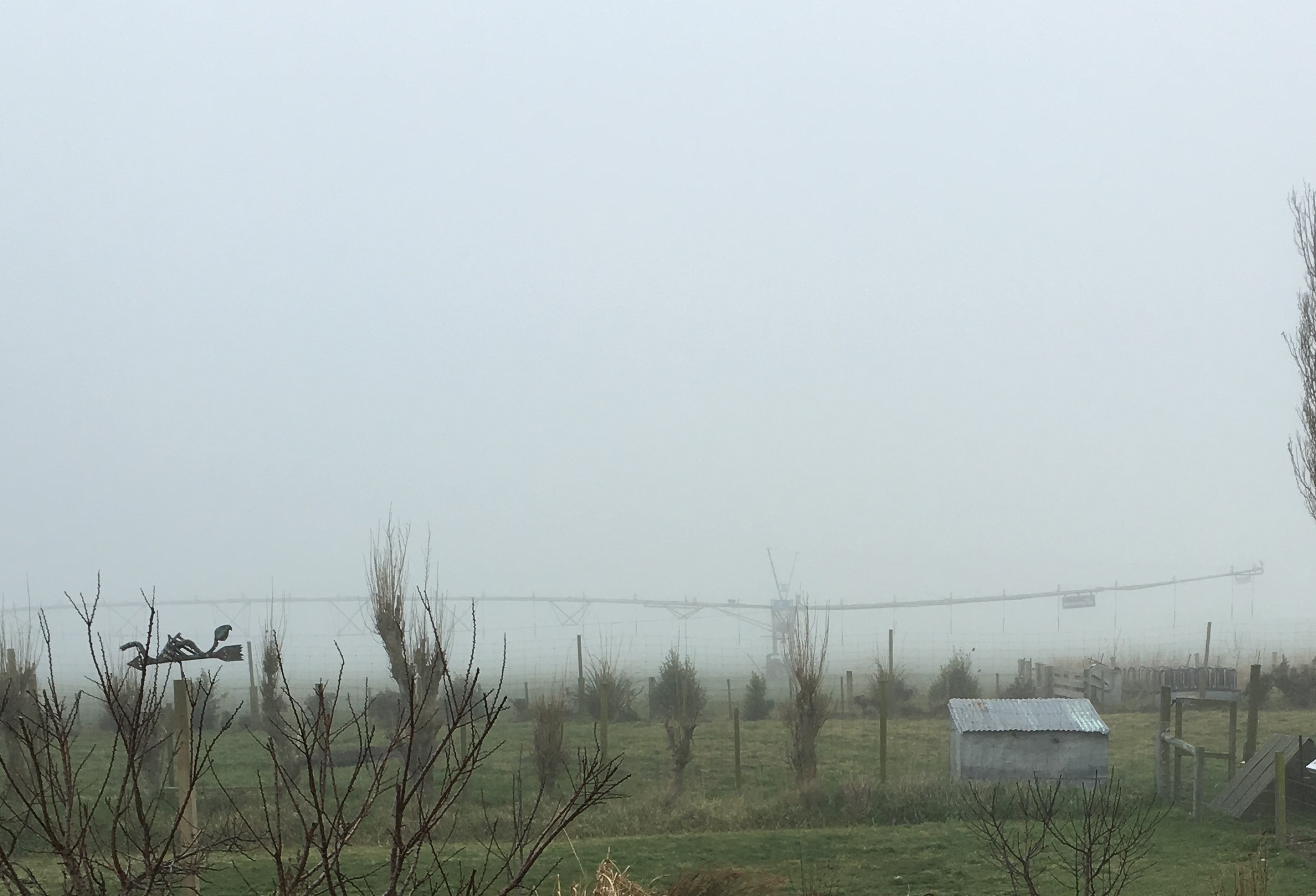
The view extended no farther than the neighbour's irrigator.

The view extended no farther than the neighbour’s irrigator.

“The fog came pouring in at every chink and keyhole, and was so dense without, that although the court was of the narrowest, the houses opposite were mere phantoms. To see the dingy cloud come drooping down, obscuring everything, one might have thought that Nature lived hard by, and was brewing on a large scale.”
–Charles Dickens, A Christmas Carol

This is one of my favourite quotes about fog. It’s actually quite a bit longer than this (Dickens certainly couldn’t dispense with such an atmosphere in just two sentences.)—I’ve just transcribed the second half of it here.

Today put me in mind of this quote. We were in the grip of a chilly sea fog most of the day. Heavy, wet and cold. I’m sure that a mere kilometre away, it was a warm and sunny day—that was the forecast, at least. But this close to the sea, our weather sometimes defies the land-based predictions.

I worked in hat and fingerless gloves most of the day, even indoors. When I went outdoors to care for the animals or get the mail, the trees dripped sullenly, and I came back in with my hair frosted with water droplets.

For about an hour—between 11 am and noon—the fog retreated. The sun shone warm on paddocks sparkling with water. I threw open the windows and took off my hat and gloves.

But soon the dull grey blanket came rolling back. I saw it coming, while the sun still shone, and closed the windows. And then we were plunged into the chill darkness again.

I would have liked the sun today—my laundry, hung on the line in the morning, ended up being thrown into the dryer in the afternoon, wetter than it had started. But there is something so delicious and…Dickens…about fog, that I can’t resist spending time out in it. There is mystery in fog. There is introspection and contemplation. Who knows, but the Hound of the Baskervilles could be out in that fog. Fog is literary. Fog is visceral, tangible like a sunny day can never be.

I do hope we see the sun tomorrow, but if it is fog, well, I’ll sharpen my pencil and keep an eye out for strange door knockers and large black dogs.

Waiting

2016-01-25 20.44.42 smFor the week before our trip to the U.S. I got almost nothing done. I was mentally occupied, with the trip—waiting for it to begin.

When we returned, we were just a week and a half from my husband leaving for a trip, and I got little done that week, either—waiting for him to leave.

While he was gone, I did almost no writing. I was distracted, I was working in odd places at odd times around the extra tasks that fell to me while he was gone. I was waiting for him to return.

Now he’s back, and I feel stuck in the habit of waiting.

I fear I’m stuck in the Waiting Place, as Dr. Seuss so eloquently described it:

“…for people just waiting.
Waiting for a train to go
or a bus to come, or a plane to go
or the mail to come, or the rain to go
or the phone to ring, or the snow to snow
or waiting around for a Yes or No
or waiting for their hair to grow.
Everyone is just waiting.”

Yep, I’m stuck in the waiting place.

It can be a hard place to get out of, but I learned many years ago that waiting rarely brings what you want.

It was in Peace Corps in Panama. My husband and I had been out with our local Corregidor (mayor), Fermín, and were returning to our village by bus. As we waited for the bus, it started to pour. We waited for hours, and when the bus finally came past, it didn’t even stop—it was too full already. The next bus might be hours, or might not come at all, so we decided to just walk, in spite of the rain. Fifteen minutes later, when we were thoroughly soaked, we heard another bus coming up behind us. Fermín smiled and said, “If you don’t walk, the bus won’t come.”

I took that as an important life lesson.

And now, I need to step out into the rain and stop waiting.

Writing By Hand

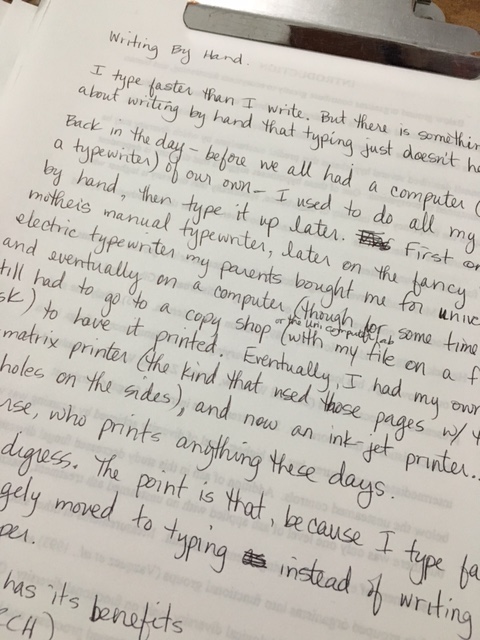
IMG_1739I type faster than I write. But there is something sensual about writing by hand that typing just doesn’t have.

Back in the day—before we all had a computer (or even a typewriter) of our own—I did all my writing by hand, then typed it up later. First on my mother’s manual typewriter, later on the fancy ‘portable’ electric typewriter my parents bought me for university, and eventually on a computer (though for some time I still had to go to a copy shop or the university computer lab with my file on a floppy disk to have it printed). Eventually, I had my own dot-matrix printer (the kind that used those cool pages with the feed-holes down the sides), and now an ink-jet printer. Of course, who prints anything these days…

But I digress. The point is that, because I type fast, I’ve largely moved to typing instead of writing with pen and paper. It’s just more efficient.

But writing has its benefits.

Educational researchers have studied the role of writing in learning, and have found that when we write notes out on paper, we actually think about what we’re writing, and we tend to rephrase things in our own words—we process the information, and learn it. When we type notes, that doesn’t happen—we tend to type verbatim, and it essentially goes in one ear and out our fingertips, bypassing the brain altogether. We don’t learn the material.

That’s fine, but when I’m writing, I’m not learning, per se. I’m expressing what’s in my head already, so it shouldn’t make any difference whether I type it or write it.

But it does.

Writing is slower for me than typing, so I spend more time considering each word as I write it.

I can pack more meaning into each word when it’s written by hand. How I write something is a reflection of my meaning. When I’m typing up a handwritten document, the typed words are often different—trying to capture in the barren lines of Times New Roman what an extra-loopy ‘y’ means, or the precise emphasis meant by an aggressively crossed ‘t’.

When I write by hand, I not only see the words, but I feel them. They have more substance than when I type them. They are more intimate. And if I’m writing something that is emotionally charged, or personal, I need to caress the words—make sure they are just right and formed correctly. I can’t do that through a keyboard.

So I often step away from the computer, pick up a pen and paper, and write by hand. It keeps me in touch with words in a way the keyboard cannot.

Library Complaints

100_3972 smThe interesting thing about working in the public library is watching the people who come in.

Today, one of the notable visitors was a woman who arrived with her husband. As they walked in, they were arguing.

To be more accurate, she was complaining about something to him. He gave monosyllabic answers to her long rants about their plans for the day, and how they were inadequate.

She left him reading the newspaper near the entrance while she descended on the library to plague the librarians with passive-aggressive questions about why they did or did not have the titles she was looking for. When she found a CD she wanted to check out, she complained that the CD wasn’t held in its case well enough—it threatened to fall out when she opened it, she said at great length and with much demonstration to the ever-patient librarian.

As she moved further into the library, I lost track of her, but I’m convinced she complained her way through the shelves, because she was still grumbling when she returned to collect her husband and leave.

I felt sorry for the librarians, who handled her complaints with grace and polite smiles. But I felt more sorry for her.

She was not young—easily in her mid-eighties. She complained with the skill of someone who has made it her life’s work to be unsatisfied, her goal to find fault with everything.

She can’t have had a very nice life.

Not that I think a hard life turned her into a complainer. On the contrary, I expect that complaining made her life hard.

That internal dialogue we play in our heads can colour everything we experience. It’s easy sometimes to let that dialogue turn to complaints.

The library never has the book I want.

Someone ate the last cookie again?

Why can’t people be quiet in the library so I can focus?

I’m not suggesting no one should ever complain. Pointing out problems to those who can do something about it, and standing up for yourself are important things that complaining can sometimes accomplish.

But when every thought becomes a complaint, the complaining turns toxic. Sometimes it pays to turn those complaints around. It doesn’t necessarily solve the problem, but it changes how you feel about it, and that can make all the difference.

The book I want is already checked out? Maybe the librarian has a suggestion for a similar book.

The cookies are gone? What a good excuse to make my favourite kind!

People are distracting me in the library? Maybe I what they do can inspire today’s blog post?

Life never gives us what we want. That’s probably a good thing. If we can remember that, it makes life much better.

Saturday Stories: The Catch

“He’s quite a catch, you know,” said Marlene.

“Yes, but…”

“He’s kind, considerate. I mean, look what he did for that little old lady the other day.”

“Yes, but…”

“He’s smart. He’s funny. You can’t underestimate that.”

“Yes, but…”

“He’s got a good job, great career prospects—you’d never want for money.”

“Yes, but…”

“He cooks, he cleans. For God’s sake, the man even does windows!”

“Yes, but…”

“And hot? Oh, baby! That guy is smoking!”

“Yes, but…”

“And your parents like him, I know that. They told me just yesterday.”

“Yes, but…”

“And…”

Marlene!”

“Huh?”

“He’s gay.”


Missed Day

2016-05-31 13.41.32I missed a day.

I failed to blog yesterday, for the first time since 2014.

The world didn’t come crashing down.

I didn’t even notice (and I’m sure no one else did either), until this morning.

If I’d failed to blog because I was blowing off writing for the day, that would have been unfortunate, but I failed to blog because I was so engaged with my work in progress that I just forgot.

I forgot to blog, I forgot to take breaks, and I nearly forgot to stop in time to do the afternoon chores and make dinner. This is why I have an alarm set to go off to remind me to pick up the kids after school.

It is a privilege to have the luxury of doing something I love. Something that engages me enough to make me forget everything else. There are many times when I wish for the things I used to have—a real job, a career with a clear trajectory, a regular paycheck. It is good to stop from time to time and appreciate that, though life has taken an unexpected, and frankly, forced, turn, I am incredibly fortunate. I enjoy what I do, most days. It will never pay the bills (hell, at this rate it may never pay for a coffee), but that I can still pursue it is a gift.

When in doubt, eat cake

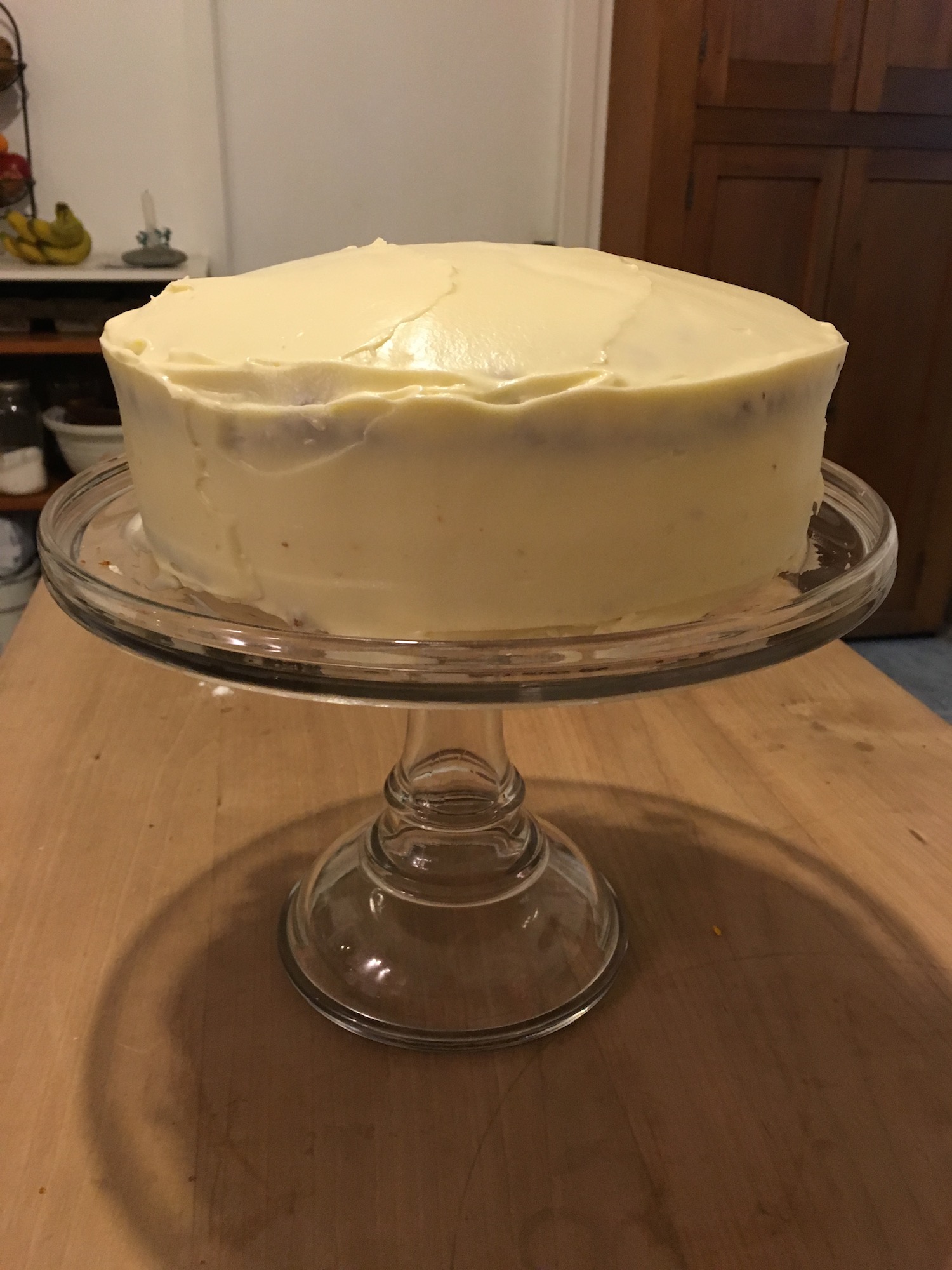
2016-05-13 18.03.48 smI had an incredible week of writing this week. New book, lots of ideas flowing, and about 18, 000 words on paper (of course, that’s a figure of speech these days—all those words are just ones and zeros in my computer, actually).

And so I came to Friday and realised that I am just written out. Or maybe this new book is crowding out any other thoughts, because I sit down at the computer, and all I can think about is my next plot point.

So I baked a cake this afternoon, thinking that a little break from writing would refresh me and open up some ideas for today’s blog.

But it didn’t.

So here I am, with a cake sitting on the kitchen table waiting for me to finish today’s blog. I can have a piece as soon as I’m done…


Saturday Stories–The Summer Job, part 3

DSC_0182 smContinued from last week

“You gotta see this,” slurred Grabloc, showing Matt a photo on his phone—Grabloc standing side by side with a grinning man.

“Is that really…”

“Yep! It’s him! Fame didn’t go to his head. He always had time for us orcs, though he can’t hold his liquor.”

Thigspit laughed, snorting orc-whisky out his nose. This naturally set Grabloc and Matt laughing. When they finally stopped, Thigspit explained.

“He got the hiccups every time he drank, And then he’d get really crazy! Take a look at this!”

Grabloc pulled up an other picture, slightly out of focus and taken at an odd angle.

“What’s he doing? Dancing naked on the table?”

Grabloc nodded, laughing.

“I had no idea he was so…”

“Well-hung?” The three burst out laughing.

More whisky and more stories followed. Outside, the storm blew itself out, and calm descended, but none of the inhabitants of the bivvy noticed. By the end of the second bottle, the three were singing songs together and getting teary-eyed reminiscing over the death of Theoden.

#

Matt woke around noon with a screaming headache. He almost wished one of the orcs had buried an axe in his head—it might have felt better. He opened his eyes to find himself alone in the bivvy. All the orcs’ gear was gone. He stumbled to his feet and out the door, grimacing at the bright sunshine as he made his way to the loo. By the time he returned, his eyes had adjusted, but his head still throbbed. He sat down on a rock and looked around. There was no sign of the orcs. Two trampers were making their way up the ridge toward him. Still far away, though.

Matt went back into the bivvy and packed up the rest of his gear. As he opened his pack to shove in his sleeping bag, a piece of paper fluttered out. Crude writing was scrawled across it.

Safe travels, Matt! We enjoyed meeting you yesterday. Thanks for the chocolate and the sword! Give your boss our regards, and tell him to fuck off.

Matt rummaged around in his pack. The sword was gone. The Tim-Tams were still there.

Ten minutes later, he was on top of a nearby ridge, cell phone and Tim-Tams in hand. He hurled the package of Tim-Tams into the steep valley below, then sent a text to his boss.

Encountered orcs yesterday. Pls include single-malt scotch in next food drop.

Then he dropped down off the ridge, following the unmistakable tracks of a pair of gumboots beside a pair of Merrells. He hoped he’d be able to catch up.

THE END