Guerrilla Art

We spent a night in Wanaka last week before our tramping trip. While wandering around town looking for a likely spot for dinner, we came across some poems stuck onto a bridge railing. 

Like a Banksy painting, the poems were certainly not ‘legal’ and were no doubt frowned upon by the local authorities. But also Banksy-like, they made passersby smile and think.

Years ago, when my husband and I lived in State College, Pennsylvania, we regularly took our walks in the agricultural fields near the edge of town. Along the path, shortly after leaving the neighbourhood, someone had installed a tiny section of sidewalk. Embedded in the concrete was the poem ‘Where the Sidewalk Ends’ by Shel Silverstein. There was no indication of who had installed the poem, and it was tucked away beside the field as though it had been surreptitiously installed in the dead of night. 

There are municipally sanctioned examples of Guerrilla art—art that appears in unlikely places. The poetry among the rocks along Wellington’s waterfront is one example. But there’s something particularly delightful about the non-sanctioned art—the amazing sand sculptures people create on the beach, the sidewalk chalk drawings that proliferated during lockdown, the splash of graffiti on train cars. It’s an expression of life and spirit, a proclamation of something uniquely human, a statement about human lives.

I think we all could use a little more guerrilla art in our lives. Thanks to the Brownston Street Bard for your lovely contribution. May the ink continue to flow from your pen.

The Little Things–Hakatere Conservation Park

As usual, I spent most of the long Labour Day weekend in the vegetable garden. I weeded, prepared garden beds, and planted my cucurbits in trays.

Lake Clearwater with mountains
Lake Clearwater was a mirror in the morning’s still air.

But as they say, all work and no play … I didn’t want to spend the whole holiday weekend sweating in the garden.

So on Monday my husband and I went to Hakatere Conservation Park and sweated on Mount Guy instead.

The Ashburton Lakes region is a glacially formed landscape dotted with lakes and tarns. The land around the wetlands is largely tussock grassland studded with spiny matagauri bushes. An unforgiving, windswept landscape that can feel downright bleak.

That was my impression the first time I visited. Fifteen years ago, I was hired to develop an interpretation plan for what was then a proposed park only. I had the great fortune to tour the area with a Department of Conservation ranger who had worked in the area for decades and had a great love of the landscape. He showed me the little things—not necessarily obvious at first—that set the region apart. Rare insects (including an aquatic moth!), waterfowl and lizards. Unique and diverse plants. Historical use of the land, and massive changes over geologic time. There’s a lot more than meets the eye.

skink
One of the many skinks we saw.

On Monday, we were treated to a glorious day—sunny and calm at first, with a brisk breeze kicking in just when the day began to feel too warm. We parked at Lake Clearwater and hiked the track to the summit of Mount Guy. On our return, we followed the tussocky ridge down to a saddle where we picked up Te Araroa, following the track back to the edge of Lake Clearwater where we completed our large, loopy circuit of the lake.

mountains and river valley
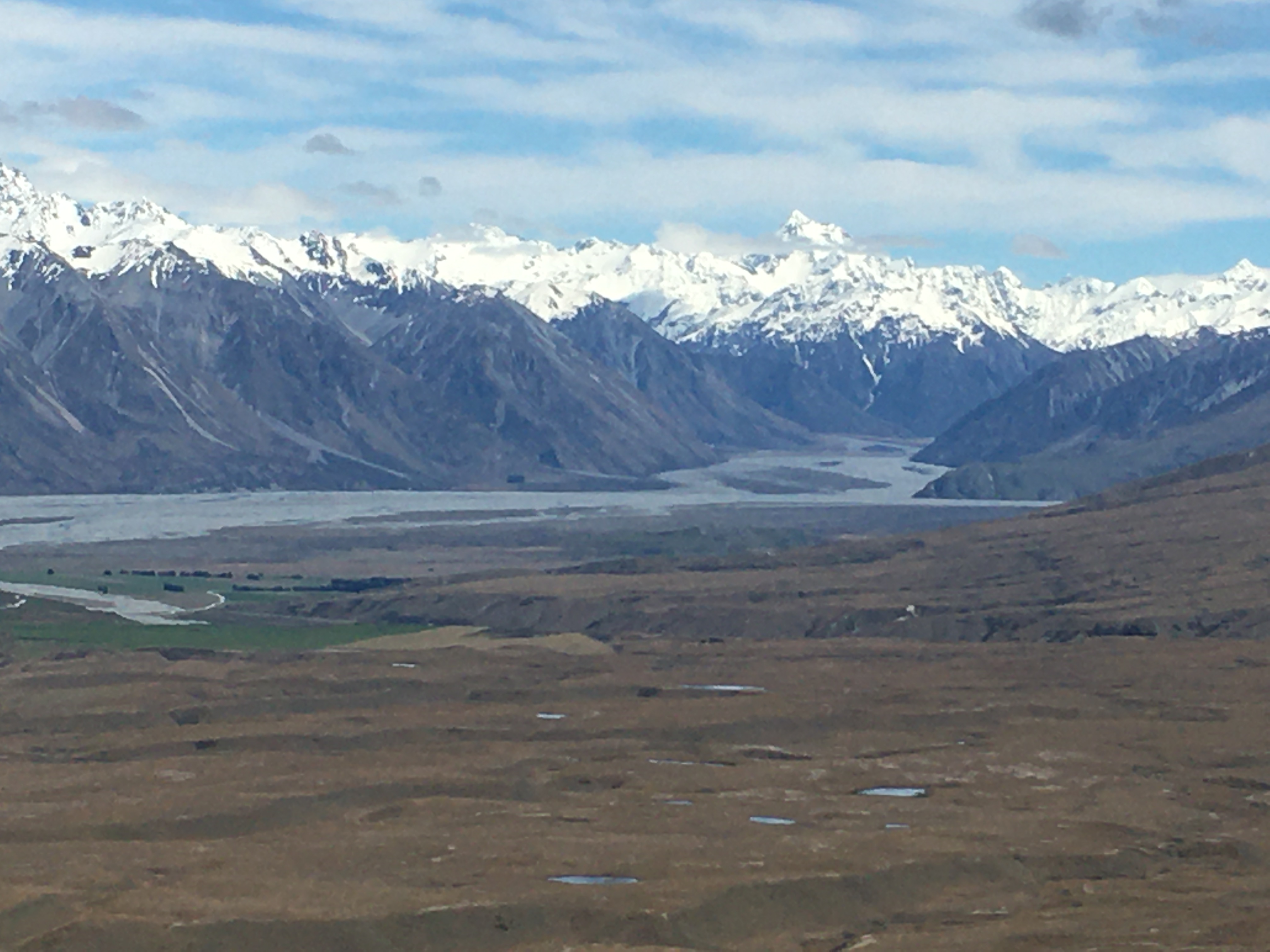
View from near the top of Mount Guy. Mount Sunday is a small mound in the river valley, just to the right of centre in the photo.

The hike afforded stunning views of jagged, snow-capped peaks, and a view of Mount Sunday down in the river valley.

Oddly, out of all the “mountains” in the park, Mount Sunday may be the most famous. The hill was used as the location for Edoras in the Lord of the Rings movies. In the enormity of the surrounding landscape, however, it is an insignificant lump of rock.

Perhaps, like the hidden insects, birds, and plants, it is the little details that are the interesting bits.

October Book Promotions

Whether you’re heading into autumn or coming into spring, October is a great month for reading. (Okay, EVERY month is a great month for reading!) This month, I’m participating in a pair of promotions with other authors, so if you like fantasy, get ready to go wild, because there are some fabulous reads here.

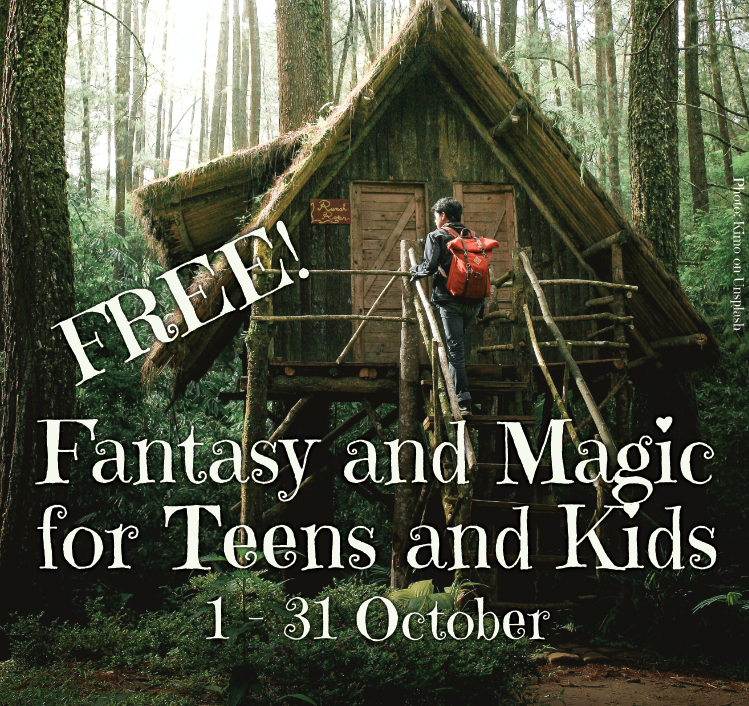
The first is a selection of free Fantasy books for Children and Teens. The selection includes The Dragon Slayer’s Son and a whole bunch of other great books. Definitely worth checking out!

The second is a fabulous group of fantasy books ranging from teen to adult titles that includes Fatecarver. Check out the list. Who knows? You may find your new favourite author here!

Inspiring Landscapes

When I was writing my Dragon Defence League series books, I delighted in placing my characters in some of my favourite places in New Zealand—the mountains of Fiordland, Kahurangi National Park, Waimangu Volcanic Valley, and many others.

But New Zealand’s landscapes infuse my latest book, Fatecarver, even though it is set in a purely fantasy world.

While I was writing Fatecarver, I kept imagining specific places in New Zealand. I sat on a peak near Arthur’s Pass and imagined my characters there. I scribbled down descriptions of real views, storms, trees, and hikes to use in the book.

I took the New Zealand landscapes and mixed and mingled them with favourite places in the United States, Panama, Peru and Bolivia until the Fatecarver world included elements of a lifetime of adventures. 

Many of my fellow authors are adventurers like me. We take inspiration for our writing from dramatic landscapes and other settings we’ve experienced. The landscape becomes a character in its own right, thwarting other characters’ plans, throwing up challenges, or providing aid at a critical moment. Just like real landscapes do.

Natural landscapes play a huge role in my own real life adventures—it’s only natural to include them in my fictional ones.

Lichens Rule

Not long ago, I spent a glorious sunny day wandering around Cass Field Station while my husband met with some students there. It was nice to take a solo walk and go at my own pace, stopping at whatever plants, bugs or rocks caught my fancy.

Once nice find was this beautiful lichen, Rhizocarpon geographicum.

Lichens are strange organisms comprised of an alga living within a fungus. The alga provides food through photosynthesis and the fungus provides protection and nutrients for the alga.

R. geographicum is an alpine/subalpine lichen and, like many lichens, is sensitive to air pollution, thriving only where the air is clean. It is not, however, a fragile organism.

In 2005, R. geographicum was one of two lichens launched into space. The lichens were exposed to 14.6 days of open space—vacuum, wide temperature fluctuations, intense UV light and cosmic radiation. Upon return, R. geographicum showed little harm from the experience.

Not only is R. geographicum tough, some individuals in the Arctic are estimated to be 8,600 years old, making them the oldest living organisms on Earth. Their longevity and predictable growth rate make them useful tools for determining when glaciers retreated from an area.

But I didn’t know all this about R. geographicum when I found it on the rocks at Cass. I simply admired its beautiful mottled colours and soft texture. 

OOOOOh my! Chocolate cookies

I dipped into Ottolenghi’s book, Sweet, again the other day. This time I made Chocolate O Cookies. 

All I can say is  OOOOOOh my!

These could possibly be the best chocolate cookies ever. They’re a lot of work, and the recipe only makes 20 cookies, but those 20 cookies are truly divine.

The cookies themselves are a rich chocolate shortbread—alone, they’re worth making. But the piece de resistance is the water ganache filling.

I’d never made a ganache like this before, and I have to say I was dubious at first—mixing chocolate and water is a no-no, right? To make matters worse, the ganache starts with a sugar syrup, which has always been a bit of an Achilles heel for me.

But somehow it worked, and the infusion of cinnamon, chilli and orange gives the ganache a complex richness that lifts it above any other ganache I’ve made.

I’ll definitely be making these again … and again … and again.

Incidentally, I had extra ganache, which I popped into the fridge and slathered on lemon cupcakes later in the week—an excellent bonus!

Here’s the ganache recipe:

1/2 cinnamon stick
shaved peel of 1/2 orange
1/2 tsp chilli flakes
90 ml boiling water
125 g dark chocolate (70% cocoa solids), roughly chopped
scraped seeds of 1/2 vanilla pod (I used 1/2 tsp vanilla)
1/4 tsp salt
50 g caster sugar
50 g liquid glucose (I used honey)
50 g butter, cut into 2 cm cubes

Place cinnamon, orange peel and chilli flakes in a small bowl and cover with the boiling water. Set aside for 30 minutes. After the water has been infusing for about 20 minutes, prepare the sugar syrup.

Place the chocolate, vanilla seeds and salt in a medium bowl and set aside. Place the sugar and glucose in a small saucepan and warm over medium heat, stirring occasionally, until the sugar has melted. Increase the heat and boil until the caramel turns a light amber colour (this doesn’t work if you use honey—it will already be amber. I boiled to about the soft ball stage), about 5 minutes. Remove from the heat and add the infused water and aromatics. Return the liquid to a boil and then strain over the chocolate and vanilla. Discard the aromatics. Leave for 2-3 minutes until the chocolate has melted. Stir until smooth.

Add the butter, one piece at a time, stirring constantly until it is incorporated and smooth. Refrigerate 30 minutes to firm up.

Winter Baking

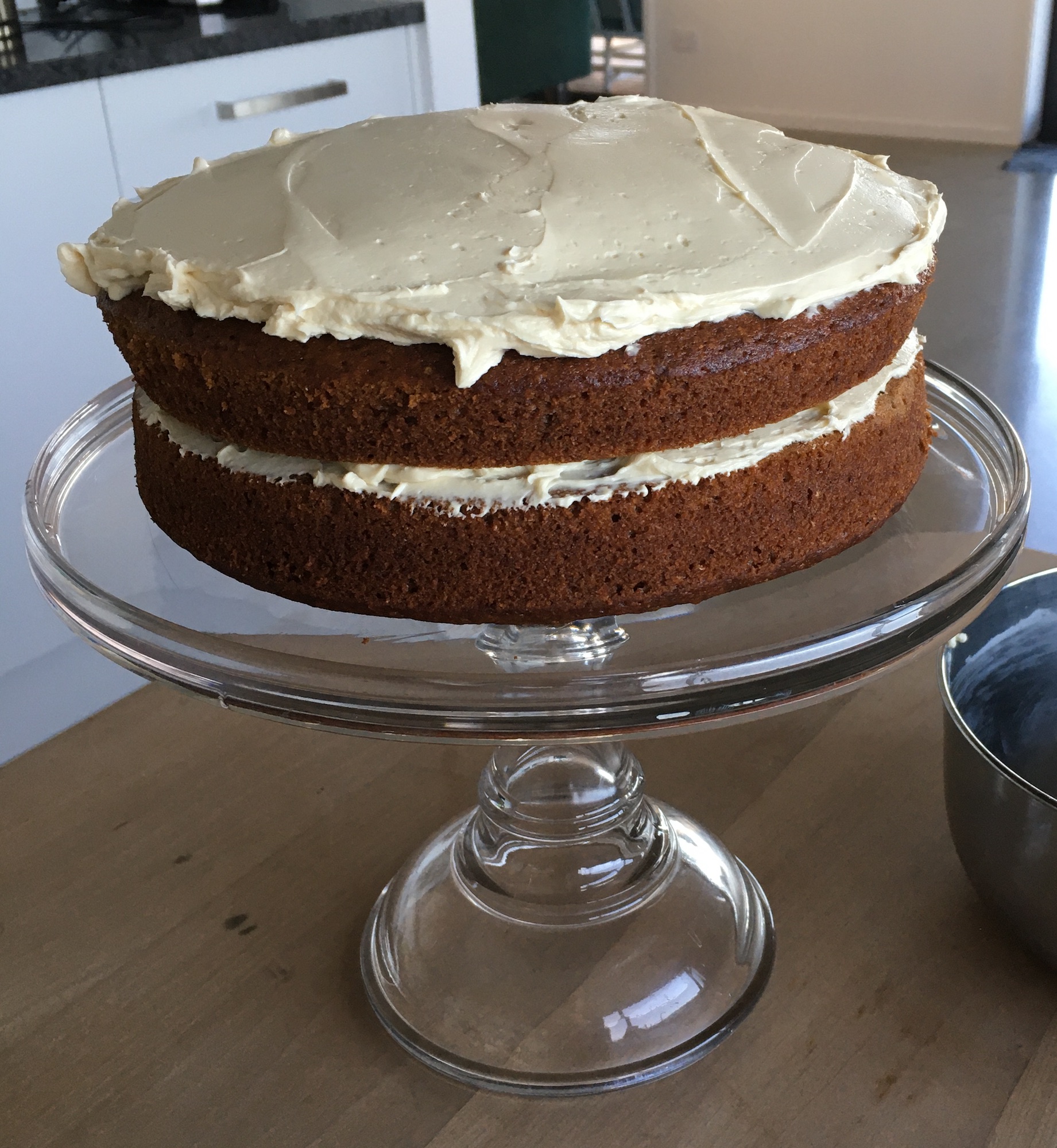
Pumpkin cakeWinter is a great time to try out new things in the kitchen. Weeks of cold, rainy weather always make me want to bake.

Last weekend I tried out two new things.

The first was a recipe for baked donuts. I was keen to try them, because I love donuts, but hardly ever make them because of the hassle of frying them. The idea of making up dough the night before, and then baking up fresh donuts for Sunday breakfast was tempting.

Unfortunately, the recipe didn’t work particularly well for me. I followed it to the letter, since it was new to me, but I did worry about the fact it had you mix the yeast into the flour, rather than proofing it first. The yeast never got off to the start it should have, and the dough didn’t rise as much as I would have liked. The resulting donuts were somewhat leaden. I also think the baking temperature of the donuts was too low—the recipe yielded a fully baked but anaemic-looking donut, barely browned at all. A hotter oven would produce an attractively brown crust with a moist interior. 

With a few tweaks to the recipe, I think there’s potential for a delicious (and dangerously easy) donut recipe there. I have no choice but to try again. 

The second new recipe I made over the weekend was a cream cheese frosting so simple, I had to give it a go. A block of cream cheese and three tablespoons of maple syrup, beaten until fluffy and spreadable.

The result is barely sweet, and beautifully flavoured. It’s denser than a standard cream cheese frosting full of confectioner’s sugar, but the density doesn’t bother me in the least—the texture is smooth and silky—delightful in the mouth. I used it to frost a pumpkin spice cake, and the flavours were perfect complements to one another. It’s definitely a recipe I’ll make again.

Saturday’s weather forecast is for snow. I’m already considering what I’ll experiment with in the kitchen.

Throw Out the Rules and Write

One of the groups of students I work with is a group of advanced year 7/8 writers. All of them are working above their grade level, and so our time together is about providing them opportunities to explore writing in different ways and hone their skills.

This week I started a unit on poetry, which always elicits groans and protests from some students. But to me, poetry is a way for them to develop skills they’re inclined to gloss over in other writing—using rhythm and repetition, using metaphors and descriptive language, thinking about the emotions they want to evoke in their readers.

Anyway, I didn’t want to approach poetry with these students in the same way it had been presented by all their teachers through primary school. I wanted to surprise them with poetry.

So on Monday morning, when I said we were going to start poetry and got the expected grumbles, I launched conversationally into a poem I’d prepared for them. 

When I say you’ll write poetry
You want to write prose.
But it’s not as bad as you think.
For poetry is simply prose
With metre and rhythm to link
The sounds with the words when they’re spoken aloud
Because this is where writing began.
With stories recited ‘round fires at night
Using rhythm and rhyme so we can
Remember our history, whakapapa too,
Remember what’s wrong and what’s right,
Give thanks to our gods,
Record all our deeds,
And remember the info that might
Come in handy someday when we look to the past
And wonder just where we went wrong.

And that music?
You know, that you play on your phone,
And dance to on Saturday night?
It’s nothing but poetry set to a tune.
So while you all grumble and fight,
Saying poetry’s musty, for old troglodytes,
I know poetry’s more, when we stop to look close,
Than a sappy old card for your mum.
It’s our history, our music
Ancestry and more.
Doesn’t have to be silly or dumb.

It took them a few lines, but when they realised I was speaking in verse, the looks on their faces were priceless.

Now, my poem didn’t convince them all—I still had a couple of grumblers. But I played them some videos of modern spoken poetry—edgier and messier than most of what they get exposed to at school—and I saw eyes light up. 

“Do we have to use rhyme?”

“No.”

“Can we use rhyme?”

“If you want to, of course.”

The idea they could write something wild and messy that followed no rules and call it poetry was revolutionary to some of them. They’ve written some excellent poems, too. No boring acrostics, no forced limericks, no pale imitations of famous poems. Instead, they’re focusing on the words, emotions and meanings embedded in their poetry. They’ve used metaphor, rhyme, rhythm, and alliteration with intent, rather than because they have to. And I think most of them are actually having fun. I know I am.

Looking back, looking forward

On 26 March 2020, New Zealand went into a nationwide Covid-19 lockdown, and my family moved into a shed. It wasn’t exactly ideal, being homeless during lockdown …

From the comfort of the new home we finally moved into at the end of June, we’ve been reliving that time as we hit milestone after milestone. 

A year ago today, our month-long nationwide lockdown was extended at least two weeks. We were simultaneously devastated and heartened by the news. Covid cases were dwindling—our efforts were working, but would take a while longer.

That day I posted the following poem on the fence:

The storm rages ‘round us
We’re soaked to the skin
Our ship pitched and tossed in the waves.
The captain barks orders,
Hand firm on the wheel.
She knows the relief her crew craves.

But she cannot allow us
Our petty desires,
As much as she longs for them too.
To weather the storm
We must all pull together
Or the tempest takes many, not few.

I don’t think I really understood how true those words would turn out to be. As the world collectively registered over 3 million Covid-related deaths this week, I reflect once again on how different our experience here in New Zealand has been from the rest of the world. Once again I am grateful for the incredible leadership we have in dealing with this crisis, and the collective commitment New Zealanders have shown to doing what needs to be done to protect everyone here.

Yesterday, we reopened our border to Australia, allowing families and friends to reunite, and tourists to travel. It raises our Covid risk as we expand our national ‘bubble’, but both countries have proven quick to respond to the virus, and I believe we will continue to pull together to keep everyone safe.