It Ain’t Over ‘Til the Magpie Sings

Photo: Eric Weiss

Photo: Eric Weiss

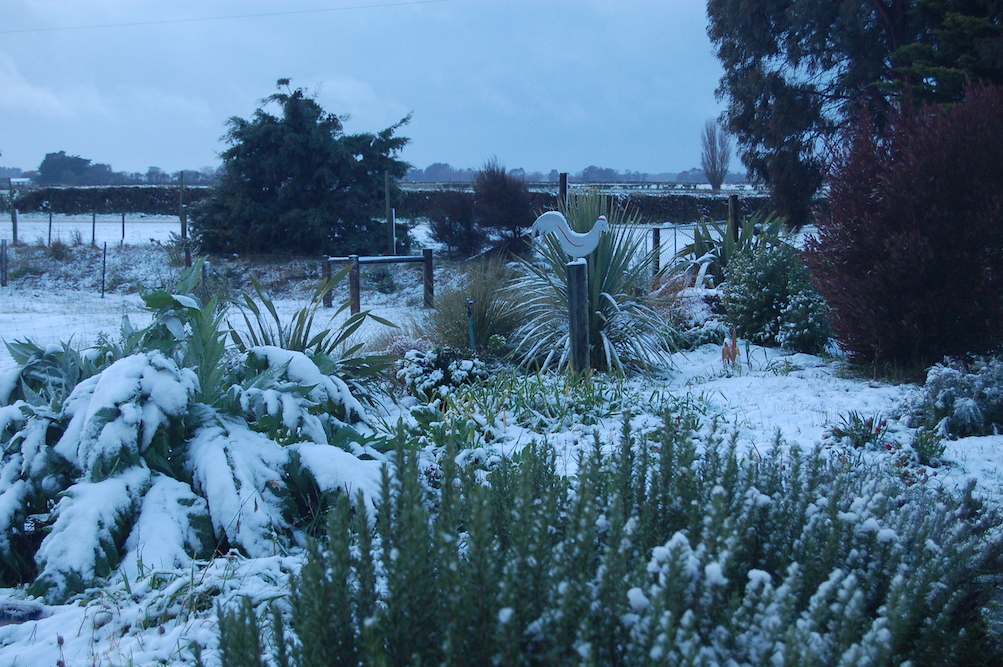
We’ve had more than our fair share of beautiful warm winter days this year. Though we’ve had some very cold nights, the days have been sunny, and we’ve gotten only a fraction of the rain we normally do over winter.

So you could have been forgiven for thinking, back in July, that winter was over. In fact, my daughter argued that it was spring a month ago.

I knew better. Winter would assert itself again.

It did so this past weekend, with icy winds bringing sleet, snow and rain. We huddled by the fire, venturing outdoors only to take extra food to the animals and split more firewood.

But in between icy squalls, at 4:00 am two days ago, I heard it—the certain sign that winter is on its way out.

A magpie.

Magpies are noisy all year long, but when spring is almost upon us, their noise changes. They start their wardle-oodle-ardling at four in the morning, and carry on until the sun rises. They feel what we know only because of the calendar—spring is just around the corner.

When the magpies start calling, I get restless. I wake when they do, and their call urges me out of bed.

Wardle-oodle-ardle!

Get up! Get up! Get ready!

            But it’s dark and raining!

Wardle-oodle-ardle!

Get up! Get up! Get ready!

            But it’s cold! Can’t I stay in bed?

Wardle-oodle-ardle!

Get up! Get up! Get ready!

Wardle-oodle-ardle!

Get up! Get up! Get ready!

Spring is coming!

Promise

DSC_0046 smThere comes a day every year. A day when winter loses its grip.

A day when the wind vane lazily turns around and the breeze no longer cuts sharply into our cheeks, but gently caresses our faces and tucks the hair behind our ears.

It is a day when the lanolin of four hundred Romney lambs next door warms and mixes with the smell of freshly turned earth and the exhalations of the grass.

It is a day when we throw open the windows, though it is only fourteen degrees outside.

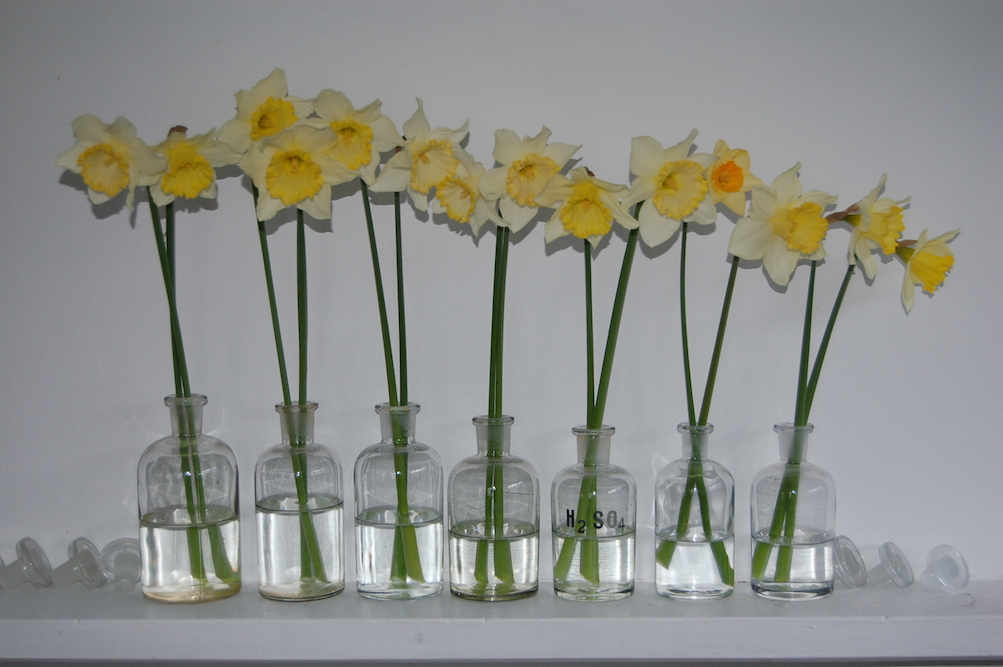
daffodils2 smIt is a day when we don’t worry that the firewood is scarce, when we can imagine a day that doesn’t start and end with a fire in the grate.

It is not spring. That day will come, but not yet. There are still weeks of kindling to split, and ice to break off the water troughs.

But it is the promise of spring.

And it is enough.

Ants!

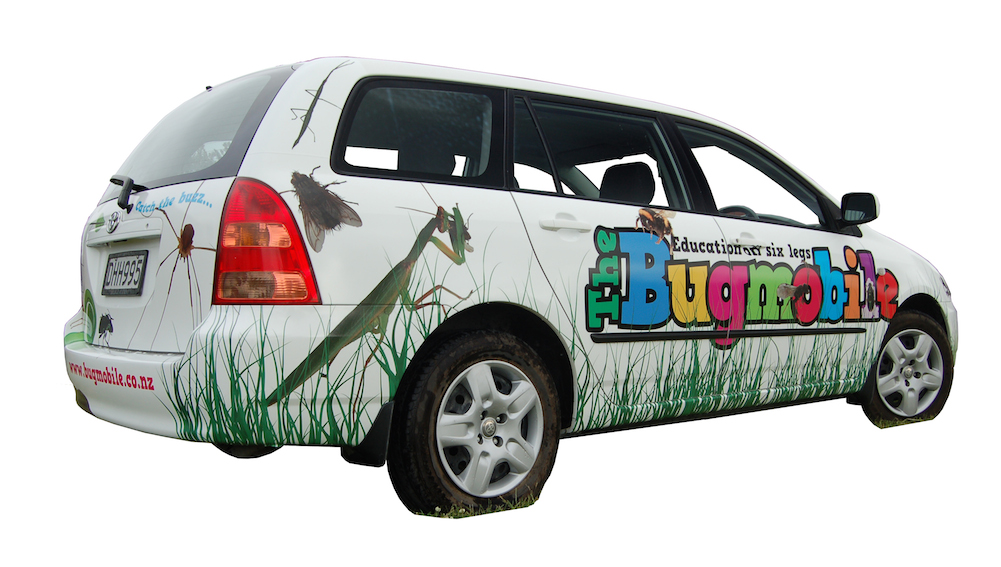
NewBugmobileclipsmFor nine years, I was owner/operator of The Bugmobile, taking live arthropods into classrooms all over Canterbury in a vehicle festooned with giant pictures of insects. I was known everywhere as The Bug Lady.

Last summer, when I closed my business, I didn’t expect to continue to think of my car as The Bugmobile. But fate, or rather a colony of ants, has interceded. My car is infested with ants.

I wouldn’t notice the ants if they weren’t so fond of Mentos…or if I weren’t so fond of Mentos.

I started keeping a roll of Mentos in the car when I was running The Bugmobile—if I had a sore throat, or needed a pick-me-up between programmes, a mint kept me going.

Apparently, they keep the ants going, too. I collected a few and identified them as the Black House Ant, Ochetellus glaber, an Australian ant that originally hitched a ride to New Zealand tucked in people’s belongings and in plant material. Ordinarily, these ants nest under stones and in tree cavities, but this particular nest is tucked neatly into a hollow in one of my mud flaps.

I should probably evict them…but they’re cute little creatures. Just 2mm long, and shiny black. I rather like them tootling around the car, cleaning up the crumbs the kids leave when they finish off their lunches on the way home from school. Maybe I’ll just find an ant-proof container for my mints.

Once The Bug Lady, always The Bug Lady…

Vegetable Poetry

Painted Mountain,

Long White Wonder,

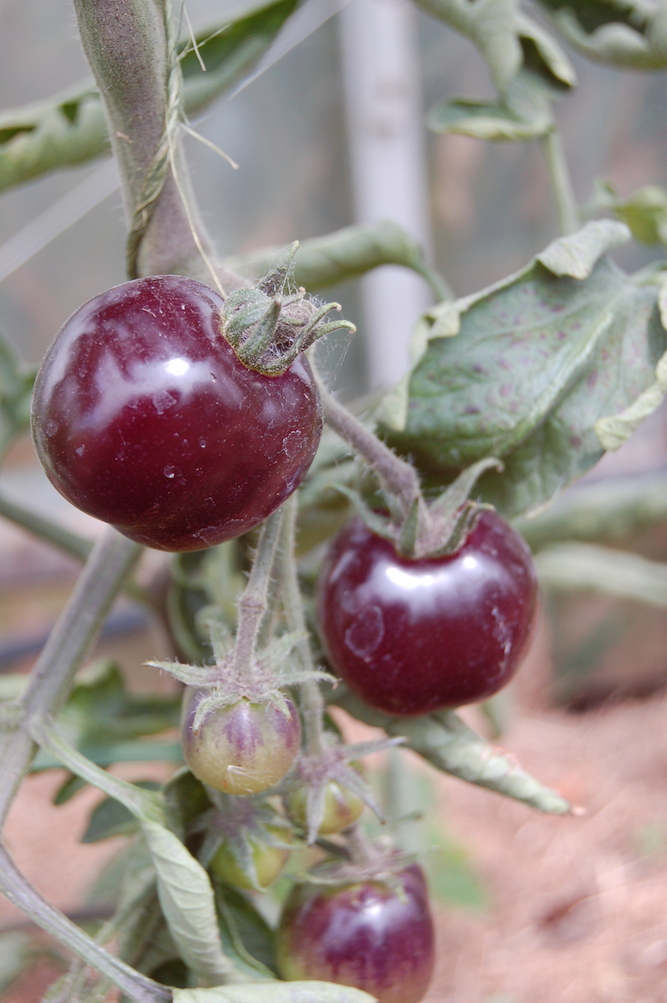
Indigo Rose

Indigo Rose

Full Moon,

Flying Saucers,

Pink Banana Jumbo,

Bloody Butcher,

Collective Farm Woman,

Drunken Woman Fringed Head,

King of the Blues,

Peppermint Stick.

I love the poetry of vegetable names! I’ll be planting many of these vegetables this spring. Can you identify what each is?

July = Seed Catalogue!

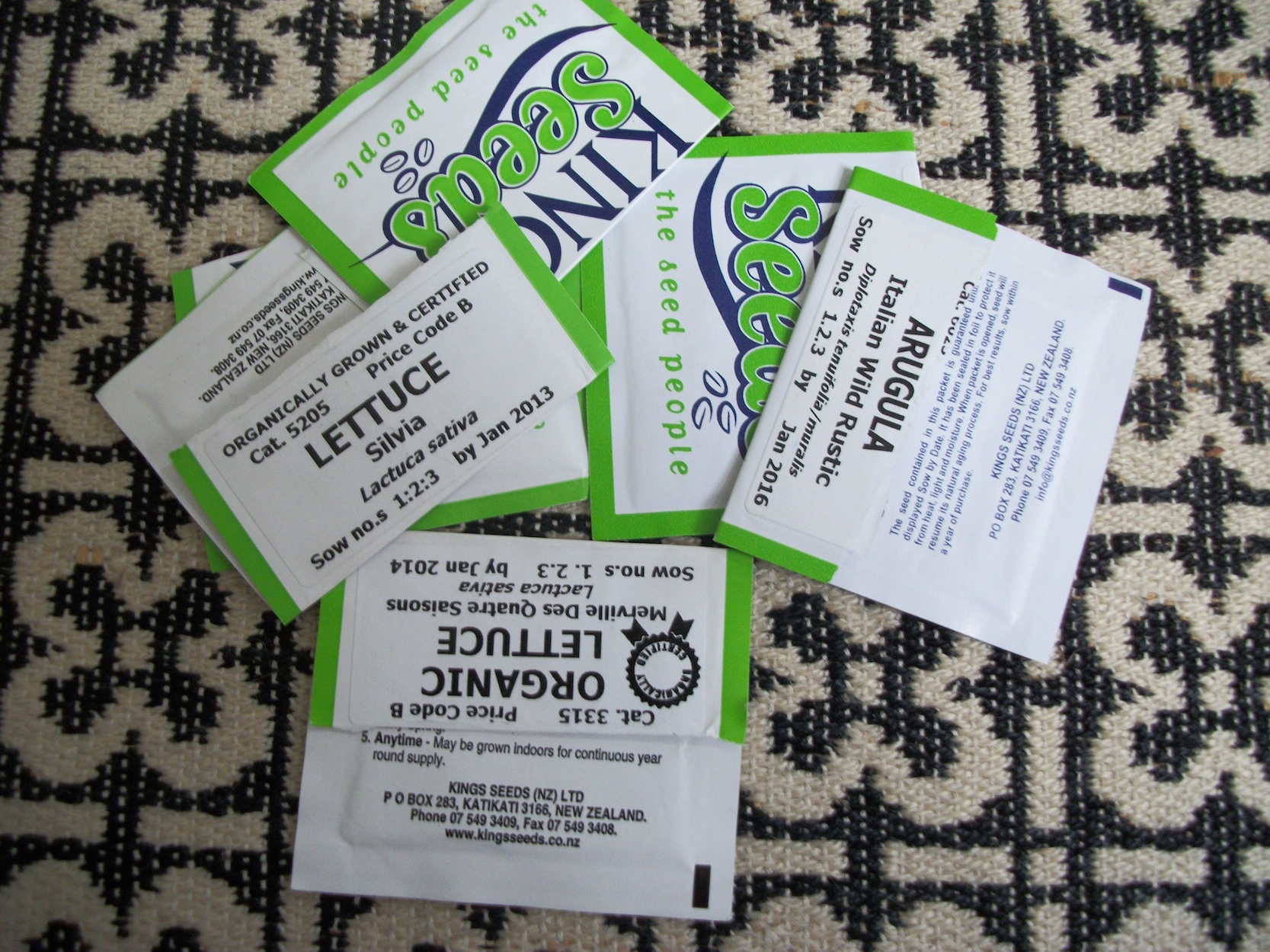
100_3404 copyKings Seed announced yesterday that the new year’s catalogue is shipping this week. I can’t wait! I’ve also got my work cut out for me, now.

Before the catalogue arrives, I need to assess my current seed situation and make a list of what I need. If I don’t, I tend to buy EVERYTHING, and end up with too many seeds. As it is, I have a hard time limiting myself to what I need, plus a few “special” things.

It’s slightly easier here than it is in the US. Before we moved here, I used to get half a dozen seed catalogues every winter, and choosing among such a huge range of options was incredibly difficult. Here, with only one decent mail-order seed supplier, I at least have only one catalogue to pore over.

So tonight I’ll pull out the seed packets and the computer (where I maintain a spreadsheet of all the seeds I have), and update my records so I can purchase sensibly when the catalogue arrives…well…if not sensibly, at least I’ll know I’m buying too many seeds! 😉

A new relationship with bees

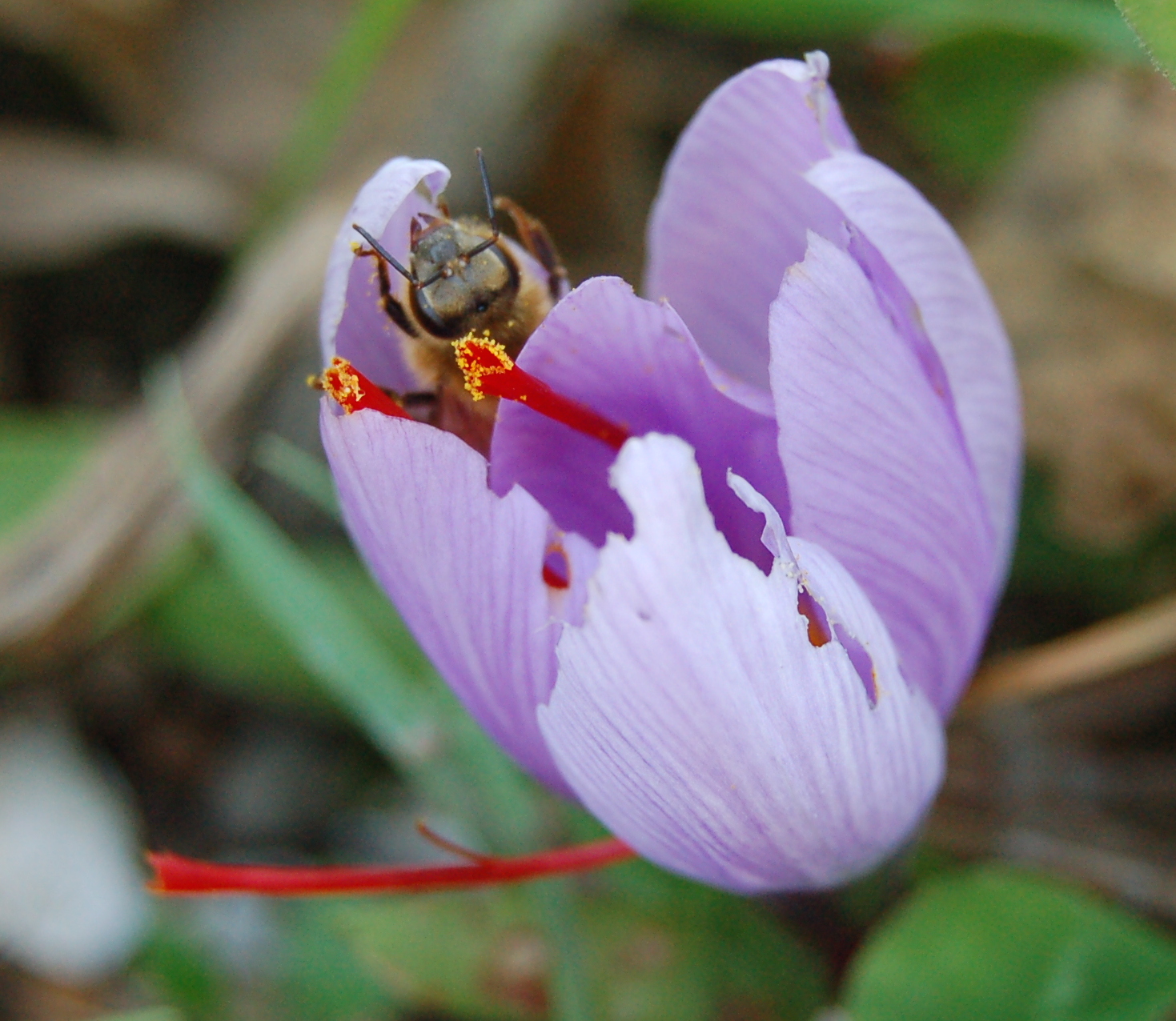
DSC_0005 cropMy friend, Maryann, researches pollinator decline. Her focus is on honey bees, and how honey bee management can affect bee health.

The picture is a complex and disheartening one, but one that offers glimpses of what sustainable bee management could look like. Wherever they live, honey bees are beset by an array of diseases and parasites. Under the non-intensive, almost natural management regimes used in much of Africa, the bees fight off these pathogens and parasites without intervention from bee keepers. Intensely managed North American hives crumble under their onslaught.

North American hives are shifted from place to place, following the flowering crops, in order to provide pollination services for huge monocultures of fruits, vegetables and nuts. Hives are packed close together in vast arrays, making it easy for disease to spread from hive to hive.

The heavy use of herbicides in the agricultural landscape mean that the only source of pollen and nectar may be the crop to be pollinated. Bees evolved to feed on a wide variety of flowers, and cannot survive on one food alone. Imagine being forced to eat only broccoli—it’s good for you, but if you ate nothing else, your health would suffer.

Add to malnutrition the fact that the pollen the bees are eating is laced with no fewer than 137 different pesticides, many of which are toxic to bees or interfere with their growth, development and learning. And these pesticides are mixed with a range of substances to help them stick to the plants or disperse evenly when sprayed; these chemicals can be as poisonous to bees as the pesticides, and they are virtually unregulated.

Poor nutrition, poisoned food, and crowded conditions make North American bees susceptible to disease and parasite outbreaks. Bee keepers’ response has largely been to treat hives with pesticides to kill the parasites that spread disease, further adding to the chemical load the bees must support. When parasites develop resistance to pesticides (which they do at an alarming rate), the weakened bees are overwhelmed, and the colony dies.

I have long been uncomfortable with the North American management of bees—we squeeze everything we can from the poor animals, pushing them to their physiological limits in poor conditions. It’s no wonder they are in trouble. If we forced any other livestock to live in overcrowded conditions and eat poisoned food that didn’t meet their nutritional needs, the public would be outraged. Now, this unsustainable management has created a crisis, as the animals we depend upon to produce much of our food die in unprecedented numbers.

We need to develop a more gentle approach to bee management—one that respects the needs of these little animals. We need to critically evaluate (and curtail) our use of pesticides, and reconsider our model of vast monocultures in favour of more mixed agriculture. We need to give bees a break from the agricultural landscape so they have opportunities to eat food not laced with pesticides. We need to manage bees less for our own convenience, and more for their health and well-being. We need a new relationship with bees, forged from an understanding of bees’ needs, and aimed at long-term sustainability.

Another James Herriot Day

100_3318 smIn a James Herriot novel, it would have been funny. The hapless protagonist wakes to a day of routine animal care and vetting. The first call is to a large, languid-looking house cat who needs worming. It’s a simple operation to force open the jaws and slip a pill into the cat’s throat–over before the cat even knows what’s happening. Except that it’s not. The pill slips out of the protagonist’s fingers and lands, in all it’s bitter potency, on the cat’s tongue. His sleepy eyes spring open, pupils dilated. He squirms and gags, tongue lashing to remove the offending pill. The protagonist reaches into the now-menacing mouth and snatches the pill out for another try, but the cat is wise to her tricks, squirming and growling, tail lashing in indignation. Instead of a ten-second procedure, the pill-taking becomes a battle of wills between protagonist and feline. The feline wins, and the protagonist promises to return later to try again to administer the now slimy pill.

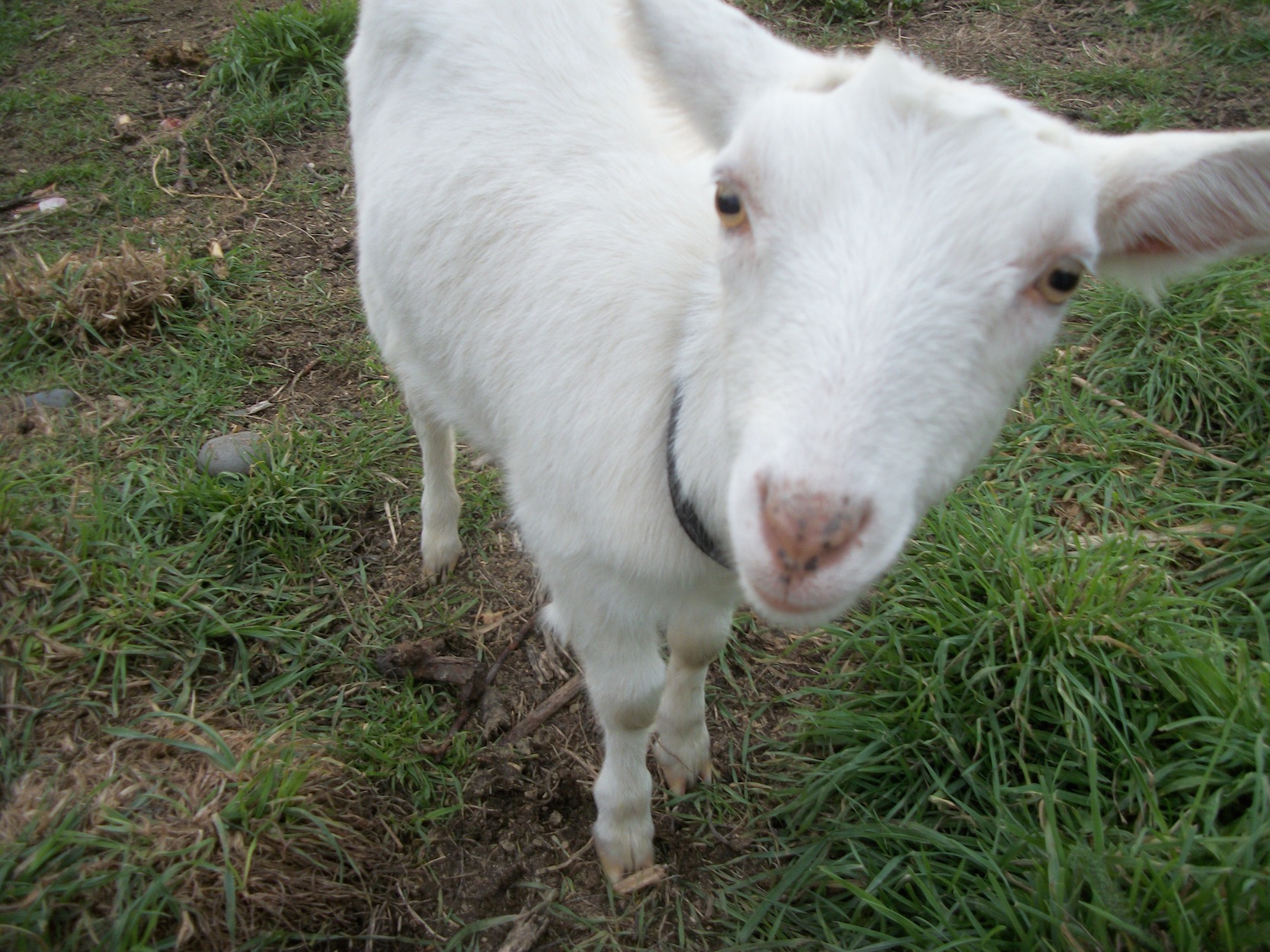
Next stop is a small herd of goats needing injections of worm medicine. Just five goats, three of them kids. Should be a snap. Our protagonist decides that, while she’s got the goats immobilised for the injections, she’ll trim their hooves, too. The first goat walks obediently to the milking stand and eagerly pops her head into the head lock to reach the grain she knows awaits her there. She stands perfectly still for her injection, and only struggles for a moment as her hooves are trimmed. She’s done in a snap, and our protagonist looks forward to the prospect of a quickly-accomplished task. The second goat is the one that has instigated the worm treatment. She’s been scouring recently, and is in poor condition. Unfortunately, this goat, having endured long treatment for a near-deadly illness in the past, is shy of needles. She bucks and jerks as the protagonist gently eases the needle into her skin. The needle pops out. Our protagonist tries again, and manages to inject about half the dose before the goat again dislodges the needle. As soon as the needle is free of the goat’s flesh, the medicine flows so freely, that the protagonist squirts the remainder of the dose into the animal’s fur. So the only animal that desperately needs a full dose gets only half of one. Moving on to the hooves, our protagonist discovers hoof rot. She’s not set up to treat hoof rot today, so she’ll have to get the goat back on the stand another day to do that. The third goat is a young goatling. It is her very first time ‘on leash’ and on the milking stand. She refuses to step out of the paddock, and while our protagonist is trying to haul her out, another goat makes a break for freedom. Our protagonist desperately lunges at the escaping goat, grabbing her collar and almost ending up face down in the mud as the goat lurches out the gate.

Now, the young goatling refuses to be caught. She hides behind her mother, so that the protagonist must lean over the adult to snatch the goatling’s collar. The goatling takes off, knocking the protagonist off her feet and onto the mother. After much cajoling, pushing and pulling, our protagonist finally gets the goatling onto the milking stand. When the goatling finds herself locked in the headlock, she panics, kicking, bucking and shimmying from side to side until she falls of the edge of the stand. The injection and hoof trimming go reasonably well, but only because her small size means the protagonist can hold her still. Again, she discovers hoof rot that will have to be treated another day.

The last two goatlings are too small to fit into the headlock. They will have to be treated in the paddock. But our protagonist is alone, and holding even a small goat still enough with her knees to inject her and trim her hooves (which take both hands) is beyond her skill. She narrowly avoids stabbing herself with a needle, then gives up entirely. As she stands, surveying the unruly herd, she notices that one of the goatlings is limping. There is something distinctly odd about the way the animal steps on her front right foot. The foot almost knuckles under, like newborn kids’ feet do sometimes, before they straighten out and strengthen. The goat will have to be caught and examined, but having been just caught and manhandled, she’s reluctant to submit to it a second time. Our protagonist is flat out in the mud before the little goat is again caught. Our protagonist can find no fault with the leg, foot or hoof. It moves freely and there are no visible injuries. She lets the animal go again, and she limps off. Our protagonist decides to give the leg a few days to see if it comes right before taking her to the vet.

Later in the day, our protagonist steps out of her car, directly into a huge pile of cat poo—the cat has gotten revenge for the morning’s pill.

All the story needs is some local farmer looking over our protagonist’s shoulder saying, “Ach! Tha knows nothin’ ’bout animals!”

As I say, it would have been funny in a James Herriot novel…
The lambs are coming!

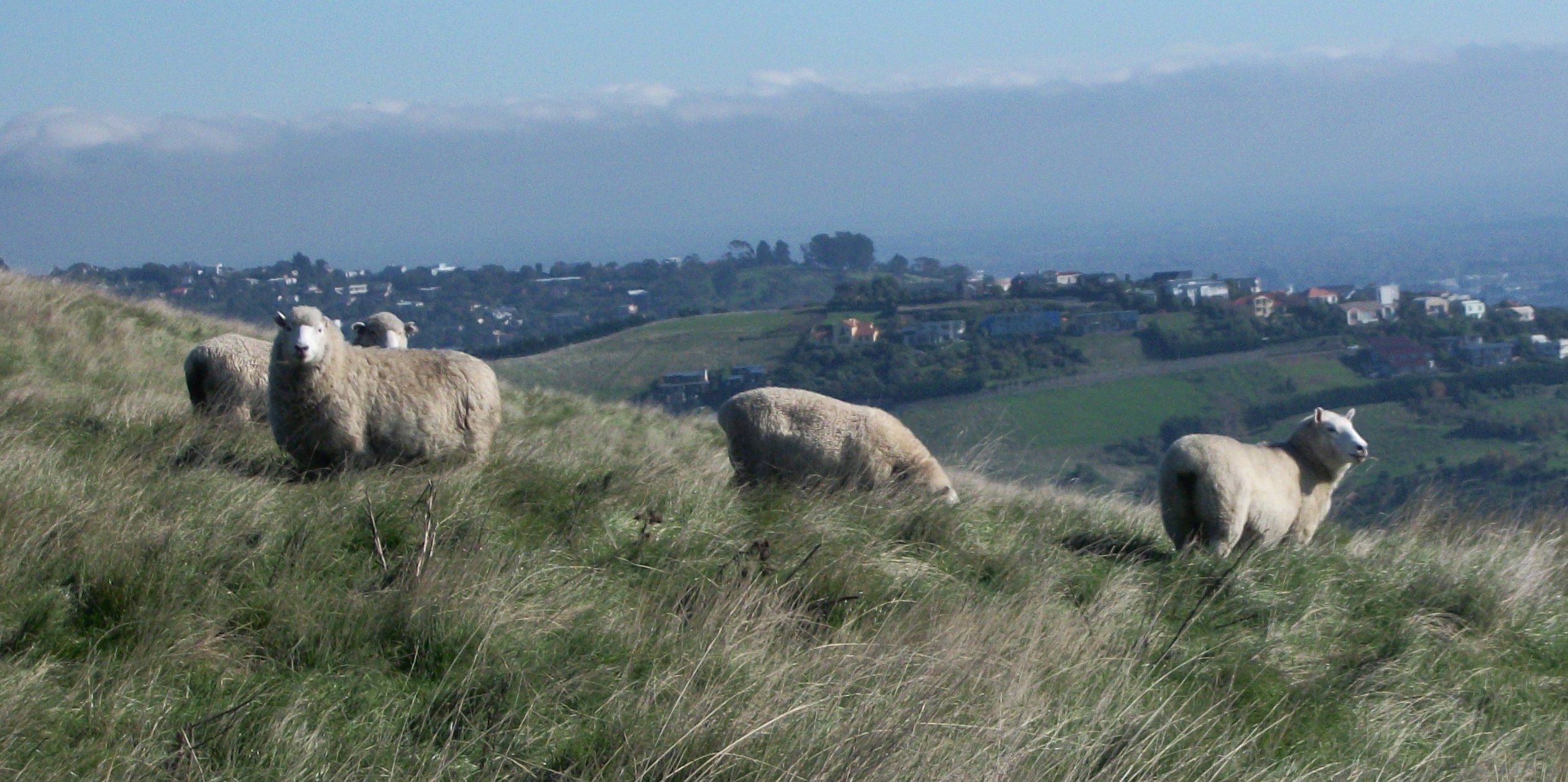
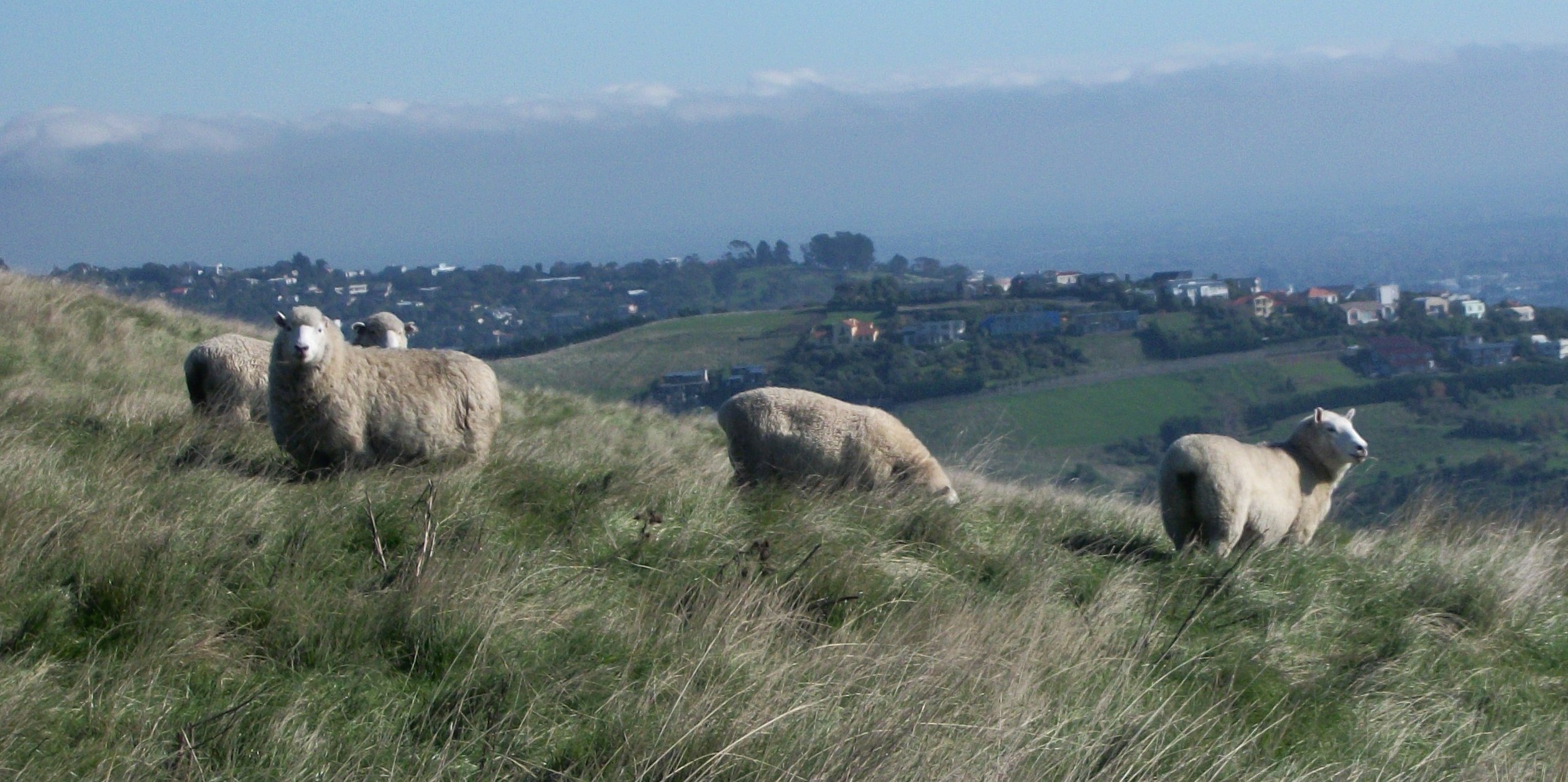
100_2204 cropTwo days ago, I heard the first one—a reedy, high pitched ‘baaa’ from the neighbour’s paddock. Today there are a dozen voices out there, calling to their mothers, whose low rumbles answer patiently.

Lambing comes early in our neighbourhood. These June and July lambs will have to survive the worst of winter, and the farmers know it is a gamble. One ill-timed storm, and a farmer can lose 200 lambs overnight. It is apparently worth the gamble though. Lambs that make it through the winter will have months of growth on the August and September lambs born in the high country, and will be prime for the Christmas lamb market.

Though I feel bad for those little lambs, born in the dead of winter, I do appreciate the promise they bring, frisking in the paddocks on frosty mornings. They promise spring to come. Warmth and light. They bring joy to the bare branches of the winter landscape.

Teenage angst

What do you mean I'm too young?

What do you mean I’m too young?

I was in my office, trying to focus on work when her insistent voice broke into my consciousness. Estrella, one of the goat kids, was whining loudly and incessantly. I stepped outside to see what was wrong with the normally quiet girl.

She was standing in the middle of the paddock. Her head wasn’t caught in the fence. Her sister and her mum were nearby. She hadn’t injured herself in the three hours since I was last in the paddock.

Ariana came bounding to her rescue, and her little tail gave a vigorous wag.

I sighed.

Estrella is in season. She’s the last of the three kids to start cycling. The other two have had their days over the past few weeks. Each cycle is heralded by vociferous maaa-ing.

At eight months old, the kids are too young to breed—though they’d happily get in kid, their bodies still aren’t fully developed, and it would cause them trouble. My old girl, Artemis, is now retired from breeding, though to hear her talk, she’d gladly visit the buck, too. Only one of the five goats in the paddock is at breeding age. She’s just come back from three weeks with the neighbour’s bucks, so I’m hopeful she is in kid.

But with four unmated goats in the paddock, and a cycle of three weeks between seasons, there’s going to be a lot of whining in the paddock this winter.

With two children in the house on the cusp of puberty, the whining indoors is almost as bad. I am surrounded by hormonal animals, all wanting something they don’t quite understand and cannot have.

It’s enough to make me dream of olive trees. They would look nice in the paddock. I love olives. And they don’t whine.

Anticipation

100_3284 copyIt is a bread day. A real bread day, with the wood fired bread oven. It feels like forever since we’ve fired up the oven—with a fire ban almost all summer, and major DIY weekends since.

Ian has been preparing for two days already—ramping up the sourdough, and gathering wood for the oven. My daughter and I walked to the neighbours before dawn to buy eggs (my chooks are on strike at the moment), and I spent the morning planning and preparing for the cakes and cookies I will bake after the bread is done. My son has chopped a pan of vegetables to roast for dinner, and later I’ll prepare a couple trays of pumpkins for baking and freezing.

The fire has been built and burnt, and built and lit a second time. Soon the oven will be hot enough, and the dough will be ready. Then the frenetic work will begin.

For the moment, we wait, in anticipation of the baking to come.

See a time lapse of a bread day at Crazy Corner Farm!