Dolphin Stress Relief

Hectors' dolphin (not today's) in Akaroa Harbour.

Hectors’ dolphin (not today’s) in Akaroa Harbour.

I had a long blog post for today mostly written. I just needed to polish it and find a photo to go with it…

Then we went down to the beach after dinner.

Before we had even crested the dunes, we saw the Hector’s dolphins—a pair of them cavorting just beyond the breakers of an unusually calm sea. By size it was a mother and calf.

What blog post can compete with dolphins?

“You realise this isn’t normal, right?” said my husband to the kids. “Most kids can’t see endangered dolphins on the beach five minutes from home.”

But it is normal for them.

And for that I am so thankful.

We walked the beach, watching the dolphins and picking up colourful stones. The stresses of the day vanished.

I forgot all about that other blog post…

Orb Weavers

2016-10-24-13-39-42Weeding can be tedious, miserable work. Hard on the back, hard on the hands, and downright painful in much of my garden, where nettles and thistles grow exuberantly.

But there are some perks. Weeding brings you close to the vegetation, and gives you a chance to see things you might otherwise miss.

Today I was treated to two native orb weaver spiders—two of my favourite native spiders here.

The first was a bright green, round-bottomed Colaranea viriditas—the green orbweb spider. These little gems are supposedly quite common, but the bright green ‘leaf’ on their backs must do an excellent job of camouflaging them, because I count myself lucky when I see one. Unfortunately, my camera was nowhere close, and this one scurried away before I could catch it.

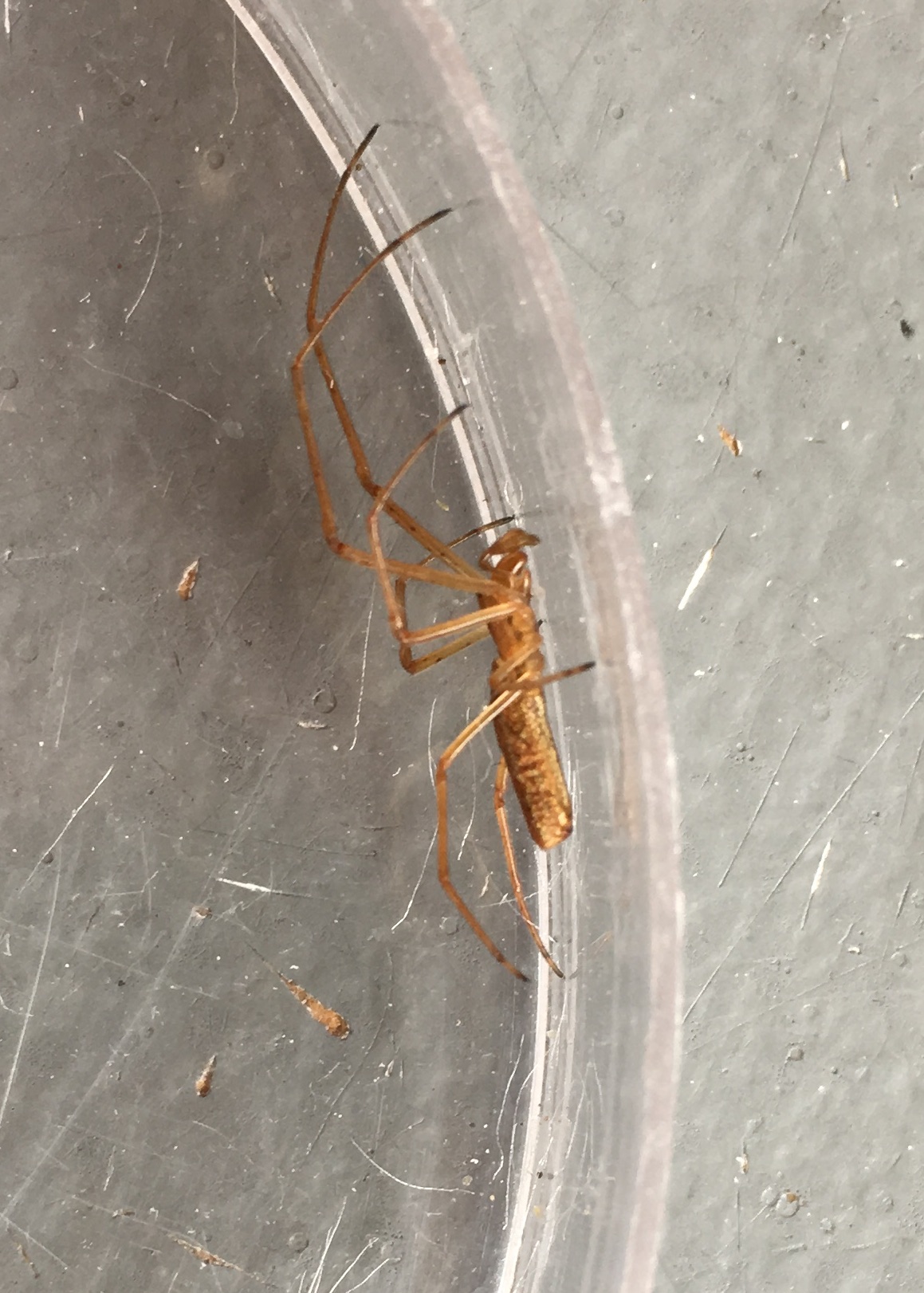
The second orb weaver I saw today is an expert at camouflage. You would be hard pressed to recognise it as a spider at all most of the time. This spider is in the family Tetragnatha—the big-jawed spiders. Tetragnathids have long thin bodies, and sit with their legs stretched out to the front and back, making the spider look like a small twig (I had to poke the one pictured here so it would stand up and look like a spider for the photo).

Tetragnathids are usually associated with wet areas, so I’m not sure what they’re doing in my dry yard, but they’re certainly common here. Though they’re hard to see, you can’t swing a sweep net in the tall grass without coming up with a few of them.

Both these spiders catch flying insects in webs shaped like the classic Halloween spider web—orb webs. Is it a coincidence that I saw them both today, a week before Halloween? Maybe they’re practicing for their big night.

Or maybe it was just my lucky day.

Crowded House

2016-10-21-18-50-54-smLast night the temperature dipped to -1°C. Fortunately, it had been forecast, so I pulled all the tender plants out of the greenhouse and into the heated office for the night.

It was a truly glorious sight—the seed shelves full of just-sprouting cucurbits and corn, and the floor carpeted in tomatoes, eggplants, peppers, and basil plants.

I look forward to getting all those tender plants back out to the greenhouse—I can’t even walk through the office, let alone work in there at the moment—but it was fun to have all the plants together for a photo shoot.


Supreme Spring Salad

2016-10-21-17-49-45-smWe had occasional salads all winter, from the fall planting of lettuces and spinach. We’ve also had several salads from this spring’s lettuce planting. But all these salads have been small, and have required me to scrounge every available leaf to glean even a modest quantity.

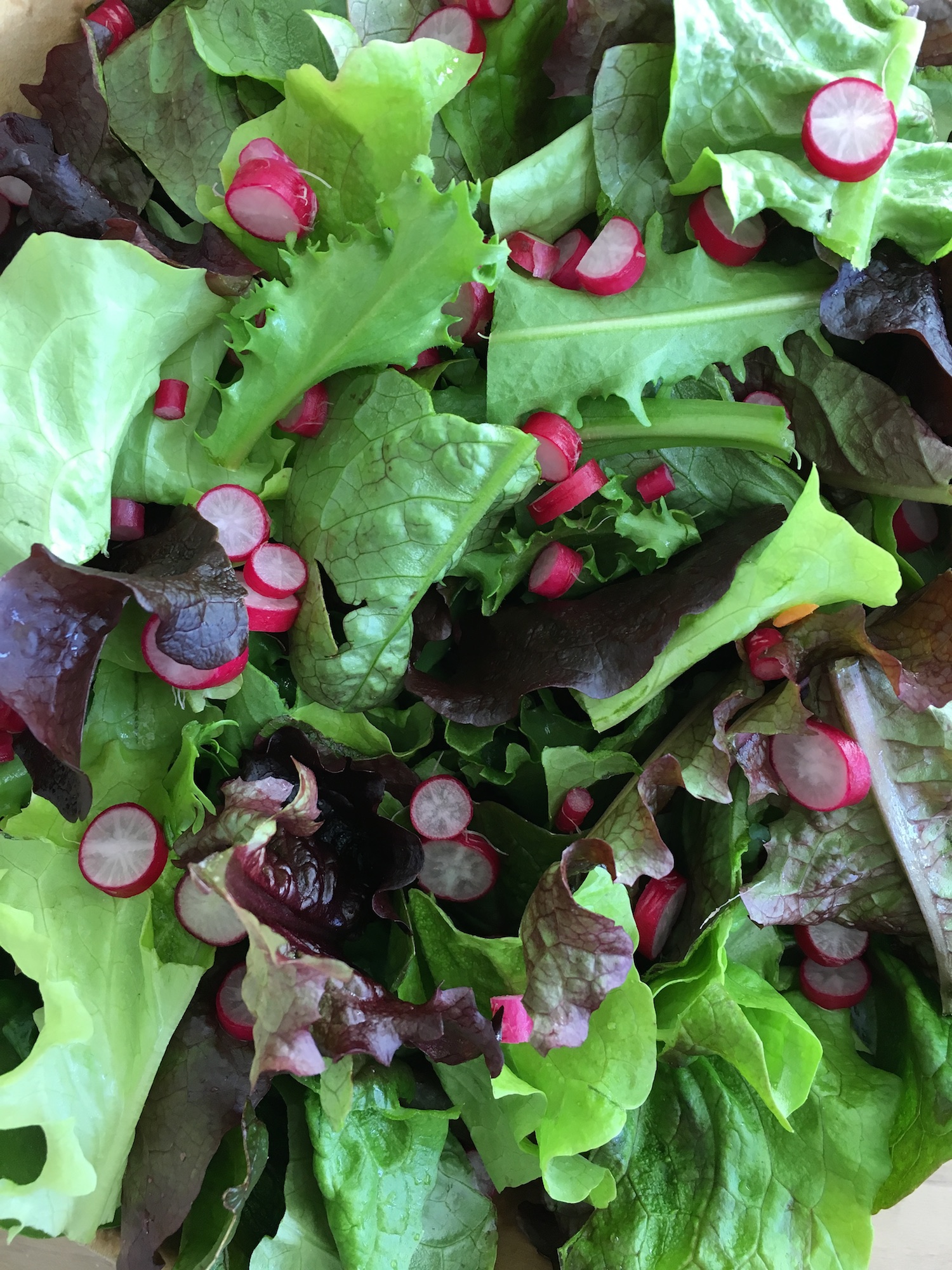
Today’s salad was the first of the Supreme Spring Salads—salads for which I have so much lettuce, I can choose to pick only the best, most perfect leaves, and can adjust the proportions of each variety to perfectly suit the meal. I also had a few lovely radishes from my daughter’s garden to add to the salad, making it even more perfect.

And this was just the first. With luck (and a fair bit of weeding), we’ll have many more Supreme Salads to look forward to in the coming months.


Heating the Greenhouse DIY

greenhouse-waterjugs2-smI wish I had a heated greenhouse. I start my seeds in my office, which has decent light and can be heated at night to help heat-loving seeds germinate and keep tender seedlings from freezing.

But at some point, the plants have to go to the greenhouse or they’ll get hopelessly leggy. Besides, there’s not enough room in the office for all my seedlings, once I really get going in spring.

The greenhouse is great for raising daytime temperatures for the plants and for protecting them from harsh wind. It also protects the plants from light frosts, but sometimes the temperature dips below zero at night, and then the unheated greenhouse can’t protect my plants enough.

If I know the temperature will dive, I can haul all the plants back to my office just for the night, but it’s quite a job—several trips with the wheelbarrow—and always results in some plants getting damaged.

So I’ve gone for passive solar heating in the greenhouse. I had my daughter paint empty 3-litre juice bottles black, and I filled them with water and placed them around the greenhouse. During the day, the water in the bottles heats up, and at night, the bottles slowly release their heat.

Having only one greenhouse, I haven’t been able to scientifically test whether my hot water bottles help, but last year—the first year I deployed the bottles—I was impressed by how well the plants weathered cold nights in the greenhouse. I intend to expand the number of bottles this year, and would love to ring the entire outer edge of the greenhouse with water bottles. If all goes well, I’ll end up with my heated greenhouse, without actually heating my greenhouse.

Here we go again…

2016-10-16-16-04-30It’s a sight to strike fear in my heart.

October 16th and the temperature hit 30°C (86°F) and humidity is 33%.

Thirty degrees is supposed to be a height –of-summer oddity. It’s the day you drop everything and head to the beach, because there are only a handful of days this warm in a summer.

Except that it’s the middle of spring.

And this happened last year.

And the year before.

And it heralds a third year of drought for us.

A third year of deciding which plants will be watered (and survive), and which ones will not (and probably die).

It will be a third year of expensive hay that has to be brought in for the goats, because the grass will brown off in November.

A third year in which the vegetable seedlings grow too fast too early, then struggle to set fruit in the dry heat.

Just thinking about it makes me grim.

But I suppose it also means a summer of incredible hot days at the beach. A summer in which I don’t need a wetsuit to enjoy the ocean. A summer of ice cream and swimming.

I enjoy these things. I really do. It’s a good thing they come along with drought. If I go to the beach, I can ignore the shrivelling garden at home…sort of.


All Hail the Bucket

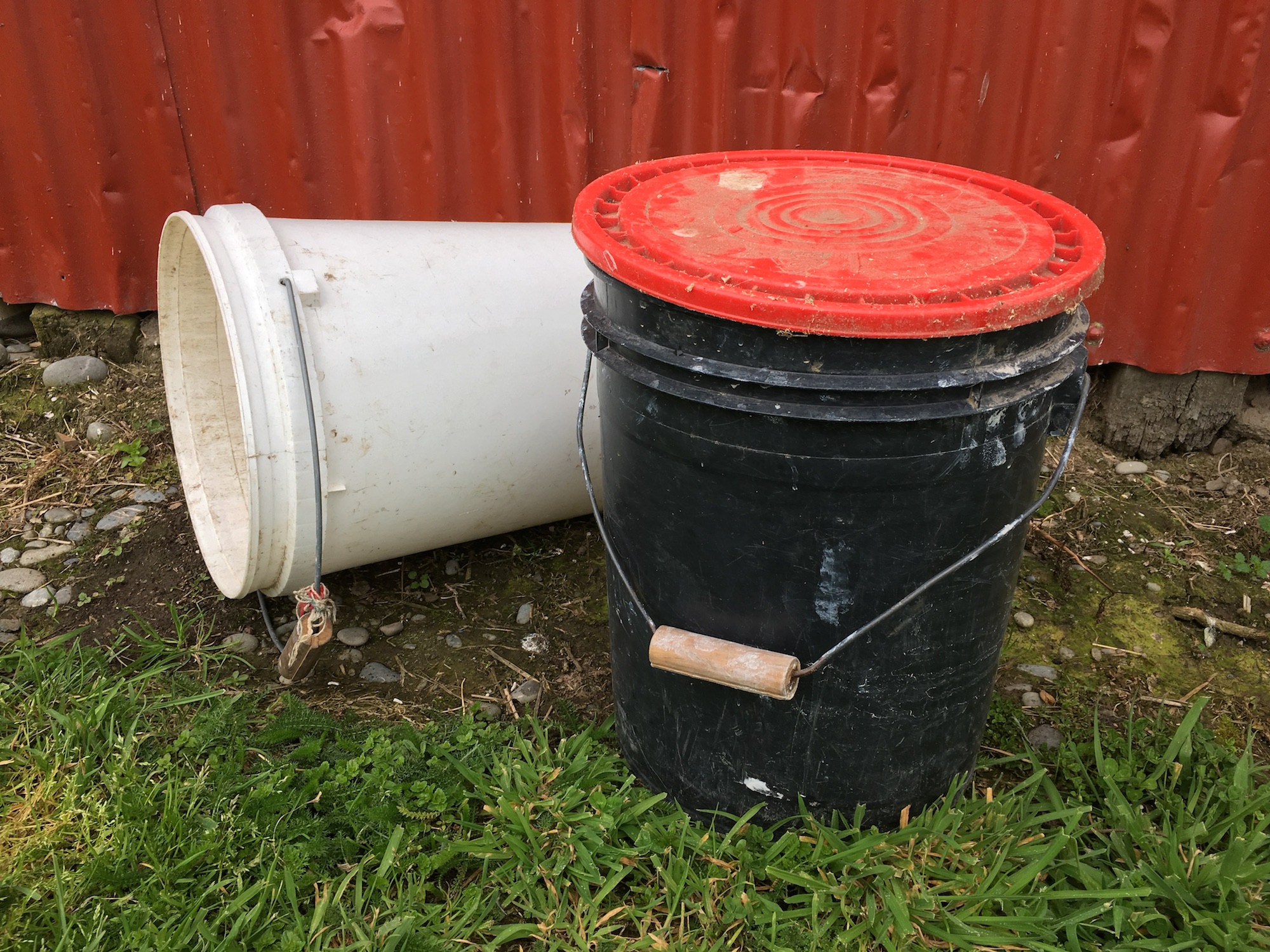
2016-10-14-10-44-19-hdrsmWhere would civilisation be without the 20-litre (5-gallon) bucket? We own seven of them, and it’s common for all of them to be in use simultaneously.

I can’t look at a 20-litre bucket without seeing a…

  • Washing machine—In Panama, we washed our clothes in a 20-litre bucket.
  • laundry-smShower—The bucket was also our shower in Panama. We would fill it with water and haul it out to our “shower” enclosure. Half a coconut shell made a scoop for pouring out the water for washing.
  • Brewery—Panamanians brewed and served the local corn alcohol in 20-litre buckets, and my husband brews beer in one.
  • Punch bowl—We used a bucket as a large punch bowl for parties in Panama.
  • Diaper pail—With tight-fitting lids, 20-litre buckets make great diaper pails for cloth nappies. They were an essential part of our baby gear when our kids were that age.
  • Watering can—Several of our current buckets have holes drilled in the bottom, and we use them to provide drip irrigation for the fruit trees.
  • Wheelbarrow—We use buckets to haul everything from rocks to weeds in spaces where the wheelbarrow can’t go.
  • Measuring cup—The 20-litre bucket is a handy unit of measure when mixing concrete.
  • Rubbish bin—A 20-litre bucket is the perfect size for a rubbish bin in the shop or shed, and it’s tough enough to handle the rough treatment a shop bin gets.
  • Grain bin—Tough plastic and a tight lid keep mice and rats out of the grain.
  • Stool—I regularly turn our buckets upside down to use as stools for reaching items on high shelves in the shed. I suppose you could also sit on them, if you were inclined to rest.

I could lose a lot of tools and get by easily without them, but I’d be hard-pressed to do without my buckets.

Spring Roller Coaster

rollercoaster_expedition_geforce_holiday_park_germany

Photo: Boris23; Wikimedia, public domain

The kids are back at school today after two weeks of school holidays. It’s the last term of the school year, and the start of what I always think of as a roller coaster ride.

For the past two weeks we’ve been slowly climbing the first hill. I could hear the tik-tik-tik of the chain winching us up, to perch at the top of the slope. Today we begin the descent to the end of the year. It will start slowly—I’ll be lulled into thinking I have plenty of time to do the gardening, get all the nagging spring DIY done, think about Christmas gifts, plan summer’s vacations. But before I know it, we’ll be hurtling along toward the end of the year, much faster than I anticipated. The garden will take longer that I’d hoped. The end-of-the-year school activities will start piling up. I’ll put off worrying about Christmas gifts until I’m frantic about it. Three DIY projects will balloon into ten. Late frost will keep me scrambling to protect plants. Livestock will get sick and require extra care. School will end much sooner than I’d like it to.

Time will compress. A month will be over in a week. A week will last a day. A day will be over in a blink of the eye.

Before I know it, we’ll be heading into the week before Christmas, and my Spring to-do list will be every bit as long as it is today.

I’ve learned to accept this state. I’ve almost learned to enjoy the frenetic insanity of the combination of the end of the school year, holidays, and spring gardening all at once.

But every year I sit here at the top of the roller coaster wondering if I really should have gotten on in the first place.

Spindle vs Garden

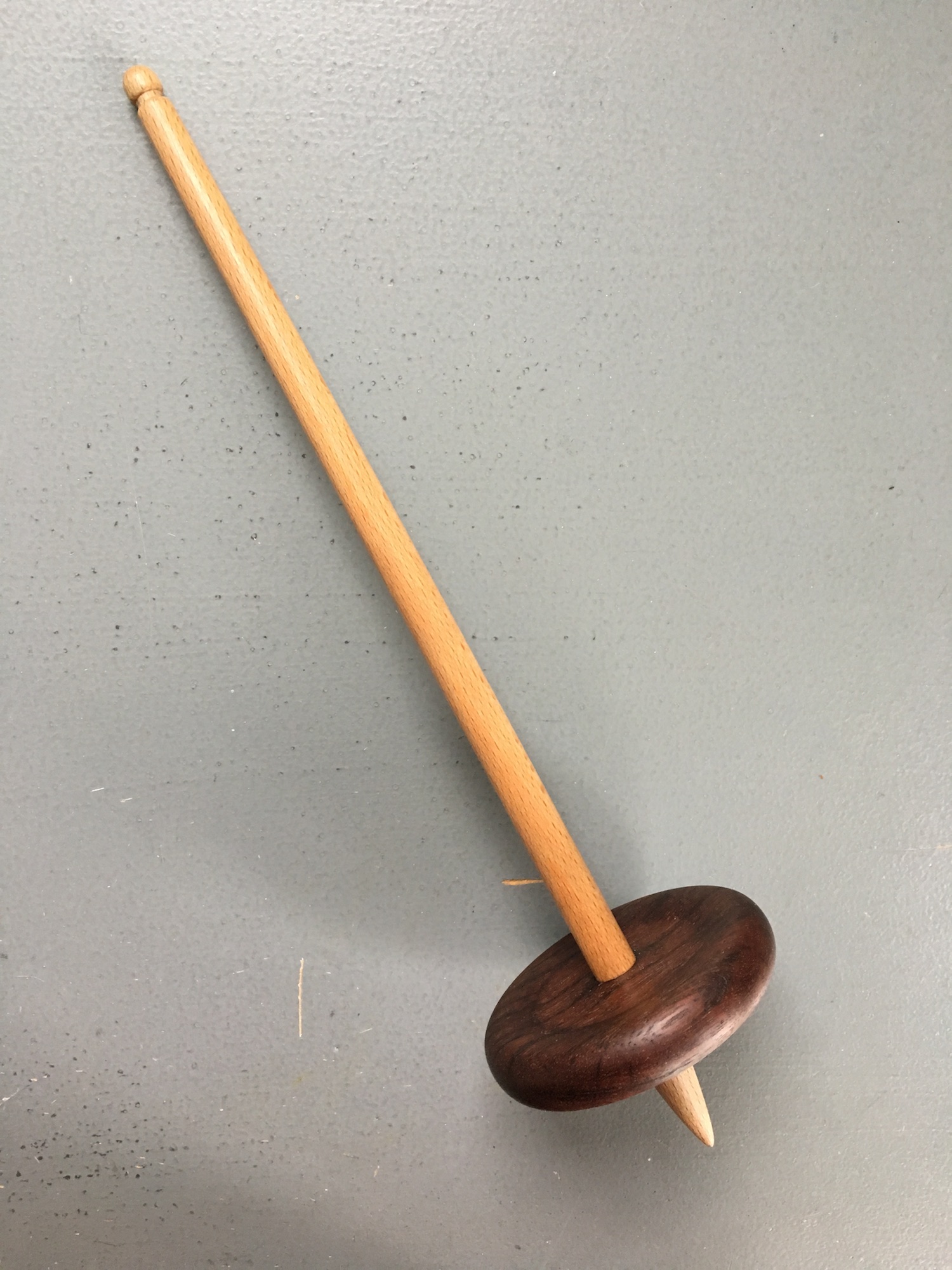
2016-10-09-11-01-27My husband presented me with this beautiful drop spindle that he turned for me this week. It’s practically a work of art—beautifully weighted and smooth as glass.

As if the pressure wasn’t already on.

At this time of year, crafts have to take a back seat to the garden, but with the goats newly shorn, I’m dying to actually work with the mohair sitting in my office. I picked up a pair of carders last week and have been slowly learning to use them. I have enough carded fibre to start spinning.

But the garden beckons—weeds grow rampant, seeds need to be planted, seedlings need potting up. And worse still, my hands are garden-rough; every time I touch the mohair, I end up with tufts of it stuck to the dry cracks in my hands.

So I may have to be content to just admire my new spindle for a while, until the spring garden rush is over.

Aesthetics vs Production

2016-10-08-16-01-56-smThere is tension in our garden—tension between the gardener who focuses on production and the gardener who focuses on aesthetics.

When the aesthetic gardener suggests a circular pattern to the vegetable garden, with a bench and sundial in the middle, the functional gardener rolls her eyes and asks how she’s going to manoeuvre a wheelbarrow around a bench and sundial. When the production gardener staples deer fencing onto her trellises instead of using the more attractive, but less functional jute, the aesthetic gardener shakes his head with dismay.

But production and aesthetics don’t have to clash. Indeed, they often go hand-in-hand. What makes for efficient production is often aesthetically pleasing.

Take the berry beds at Crazy Corner Farm, for instance. Three long rows with grass paths in between. Every spring, I spend days with a flat shovel re-establishing the edges of the beds—making them crisp and straight. It makes good sense from a production standpoint—it keeps the grass from creeping in to compete with the berries. It also makes it easier to mow if the grass doesn’t spread underneath the bushes.

Aesthetically, the crisp straight edges are perfect. They invite an evening stroll down the paths, and give a pleasing long view all the way from the front to the back of the property.

When the edges are tidy and the paths mown, both gardeners can relax and enjoy the view.