Get Outside—See Cool Stuff

The swarm--apologies for the image quality; I'm allergic to bee stings.

The swarm–apologies for the image quality; I’m allergic to bee stings.

I’m trying to make myself go out for a walk at lunchtime every day. I’ll admit that I can be a bit of a slave driver when I’m working, and I don’t always manage it. I have a tendency to simply work through lunch, and then suddenly discover it’s late afternoon.

In truth, the walks available to me from my front door aren’t necessarily all that inspiring—endless agricultural fields in every direction.

But you can’t experience anything if you don’t first go out. Yesterday, I took the most boring of the boring walks from my house—the one that doesn’t offer so much as a mailbox for the first kilometre. Don’t ask why I chose that way—maybe I wanted to clear my mind, as I’d been doing intense editing all morning.

On this most boring of walks, I happened to see something awesome—a honey bee swarm.

We are blessed with many nearby apiaries, and I always have a plentiful supply of bees to pollinate my garden vegetables, but even so, it’s unusual to spot a swarm. This one was hanging in a drooping mass off the neighbour’s fence.

Bees swarm to create a new colony. It’s usually the old queen who leaves her hive with a large portion of the workers. A new queen will hatch in her absence and take over the old hive.

The swarming bees leave the hive and gather nearby while scout bees search for a new hive location. This is what I saw—the resting swarm. It likely flew away to a new home within a few hours. Where those bees are now, I don’t know, but I hope they found a nice place nearby from which to visit my garden.

So, my most boring walk was amazing. That reminds me, I still haven’t gotten out for a walk today. Time to step away from the desk and get outside. Who knows what I might see?

The View from the Compost

img_2929-smI finished turning the compost today—a back-breaking, exhausting job I don’t particularly enjoy. After I added each layer, I climbed on top of the pile to even it out and water it. From my two-metre high perch, I had a lovely view. I admired the neighbour’s seed radishes—wide stripes of white and pink flowers marking the two varieties he is crossing this year. It looked more like a curtain than an agricultural field.

Then I turned to admire my own garden. Well, actually I just turned. I’ll admit that I was a little surprised I found the view so nice.

The early January vegetable garden is always gorgeous—everything is at its peak lushness. I expected to find that attractive. But surveying the entire “production” side of the property from my perch, I was pleased to note that the whole place looked surprisingly lush. The berry beds are dense and tidy. The extra vegetables planted in my “overflow beds” (because 300 m2 (3230 ft2) of vegetables naturally wasn’t enough) are growing well, too. The artichokes look a little sad, and the grass paths are brown, but that is to be expected in the heat of summer.

The overall effect was one of lush productivity. I spent a little extra time on top of the compost pile to enjoy the view. It made today’s brutal job a little bit nicer.

Inspiration for Dinner

2017-01-03-16-33-01“What’s for dinner?”

The daily question I ask my self, and am asked by my kids.

Sometimes I know the answer ahead of time.

Sometimes I have no idea. Maybe I’ve eaten an afternoon snack and am not hungry enough to think about dinner. Maybe I’ve been running around all day and haven’t had a chance to consider what I’m going to make. Maybe I simply don’t feel like cooking. The afternoon wears on, and still I don’t know what’s for dinner.

I don’t panic. At five o’clock, I take a colander and a knife to the garden. I stroll among the plants. What looks good? What needs to be picked? What’s newly ready to harvest?

By the time I return to the kitchen, the colander is stuffed with vegetables, and my mind is full of inspiration.

What’s for dinner?

I don’t know. Let’s cook up some fresh inspiration from the garden!

End of the Pickle Drought

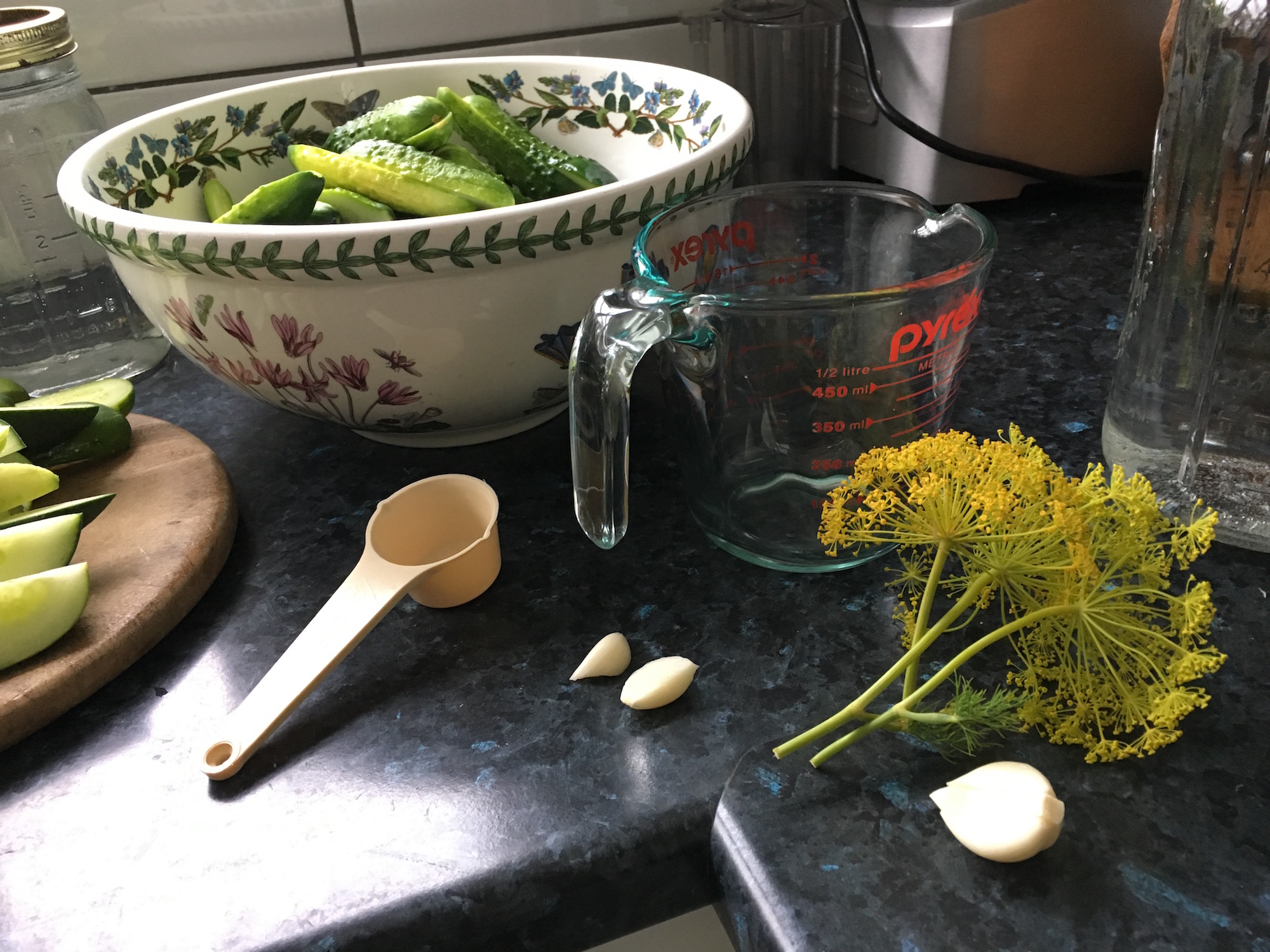
2017-01-02-08-03-25-smI grow pickling cucumbers every other year, in order to avoid becoming the Pickle Lady. Last year’s crop, however, was killed by frost, and we’ve been out of pickles for some time.

This year, the stars have aligned, and I have a beautiful crop of cucumbers coming on. As a bonus, the dill didn’t get completely wiped out by aphids (as it often does), so it’s perfectly timed with the cucumbers. There will be plenty of dill seed heads to flavour the pickles this year.

So it was with joy that I picked the first cucumbers yesterday. There weren’t enough to make a proper batch of pickles—there’s no point in heating up the canner unless I can fill it at least once—but I was fine with that. In fact, I was quite pleased there weren’t more. It meant I could make a batch of fresh pickles to put in the fridge and eat right away. After a long pickle drought, they’re going to taste fabulous!

New Life for an Old Rug

img_2793

A new garden area with freshly laid rug weed-block. Disguised with wood chips, no one will ever know it’s there.

Nothing lasts forever. Even well-made items eventually come to the end of their useful life.

But that doesn’t mean they’re not useful…in a different way.

Rugs get hard use in our house—there’s an awful lot of traffic in a small space. Add a dose of wool moths and high UV radiation, and it’s no wonder our rugs eventually start falling apart.

But tatty wool rugs don’t need to end up in the landfill. They can serve as excellent weed-blocking mulch in the garden. They last for years and eventually simply rot away. So much nicer than the plastic weed-block that eventually breaks up and stops working, but still needs to be removed and disposed of.

And as an added bonus, out here where there is no rubbish collection, it means we don’t need to haul the old carpet to the tip.

Cabbage Overload

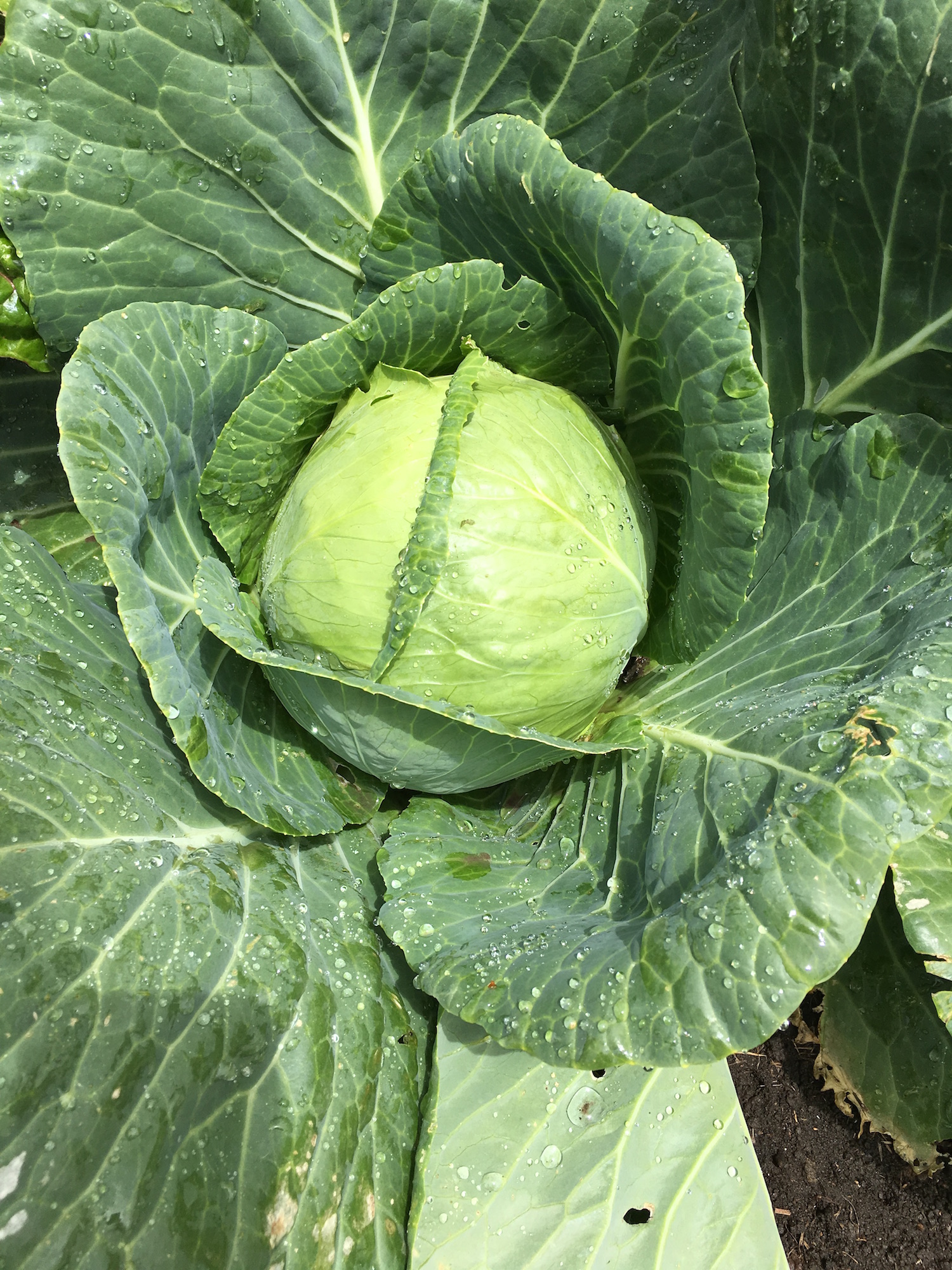
img_2762When my husband and I lived in Panama, we made the trek to the provincial capital, Penonomé, every week or two. The trip involved half an hour of walking to the closest bus stop, then a bumpy forty-five minute ride down the mountain in the back of a pick-up truck. It wasn’t something to do daily.

In town, we would pick up our mail, phone home, and do some shopping. In our village, we could buy rice, beans, and a few other necessities in small quantities from the little tiendas, but we could only get vegetables from town (we were nowhere close to self-sufficient in vegetables there).

With no refrigeration, and tropical heat, fresh vegetables didn’t last long. We ate well for a few days after a shopping run, but by the end of the week, we were usually down to plain rice.

The most long-lasting vegetable we had was cabbage. A cabbage might last an entire week before it was too wilted or rotted to eat. So every trip to town, we bought a cabbage, and for at least two meals a week, we ate cabbage and rice.

At that rate, in our two years of Peace Corps service, we ate about a hundred cabbages. By the time we left, we couldn’t bear to even look at a cabbage. It was several years before we considered eating one again.

Today, we enjoy about a dozen cabbages a year, most in the form of sauerkraut or coleslaw. The idea of cooking up a pot of cabbage and rice is still repulsive, but with cabbage being a year-round crop here, it’s good to be able to make use of it.

When is a zucchini not a zucchini?

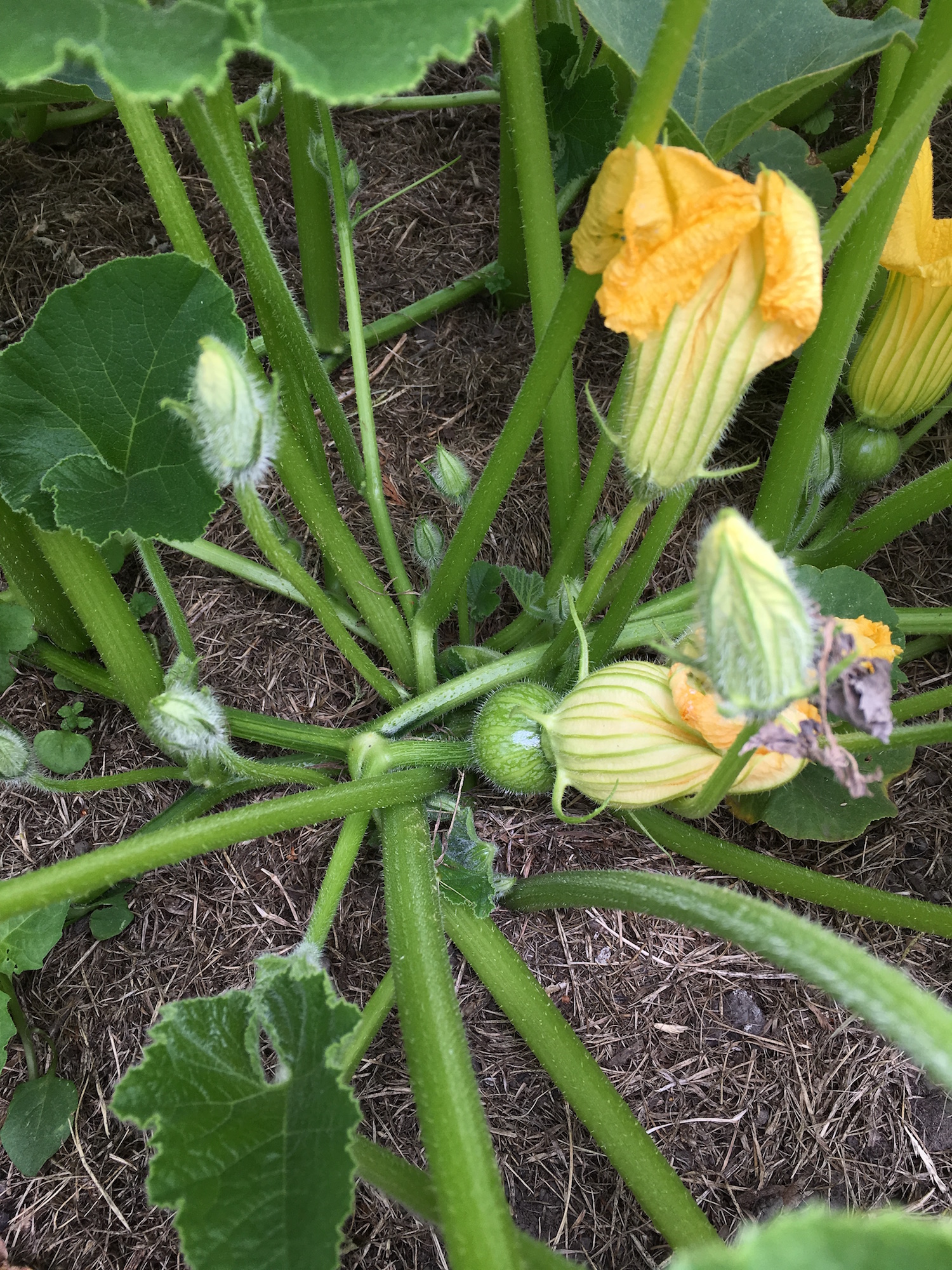
img_2757The zucchinis (courgettes) started producing over a week ago, so I’ve been spending more time among the plants. I noticed that one of the varieties was behaving in a very un-zucchini-like fashion—sending rambling vines out in all directions and forming round fruits. I checked the tag and noted the variety, then looked it up in the seed catalogue. Maybe it was a weird variety I was trying out—I’ve been known to buy some strange plants.

I didn’t find the variety among the zucchinis in the catalogue, and it didn’t take long to realise what I’d done. “Squash” can be winter or summer squash, and when it came time to planting out, “Squash—Jade” sounded like a summer squash. It’s actually a huge sprawling winter squash that replaced my favourite, Kurinishiki, in the seed catalogue this year.

I don’t know whether to be thrilled or annoyed. Winter squash germination was awful this spring, and then the plants got hit by frost. But the summer squash bed escaped the frost. So instead of having none of my favourite pumpkins, I have half a dozen healthy plants. And it also means I have six fewer zucchini plants, which is most definitely a bonus, because I always plant too many zucchinis.

The problem is, they’re growing in the middle of the zucchinis, and I’m going to be tripping over the vines all summer.

*sigh*

The only sensible thing to do is laugh at myself and make the best of it…and write a note on the seed packet, so I don’t make the same mistake next year.

When the pests are cute

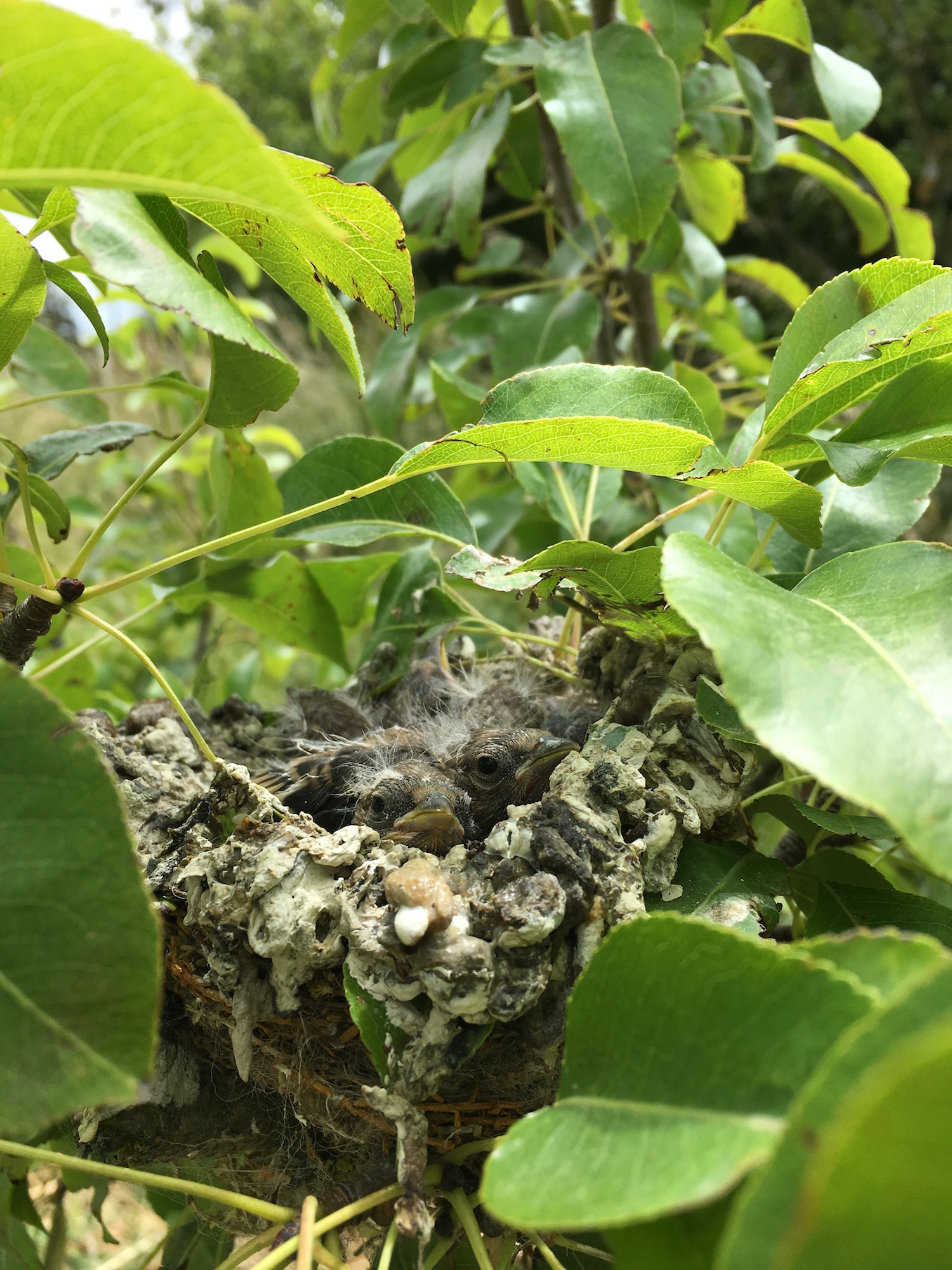
img_2765A month ago, I saw a perfect little bird nest in one of the fruit trees—incredibly tidy, and woven from grass and lichen. It was so pretty, I couldn’t bear to remove it, though I knew it must be the nest of a non-native bird (that’s about all we have here). Starling and house sparrow nests get the heave-ho as soon as I find them. This one…well, I couldn’t possibly disturb something so cute.

I forgot about the nest for several weeks, but today my husband noticed it was chock-full of chicks. Five grey fluffy European goldfinches (Carduelis carduelis)—so ugly they were adorable.

We don’t really need any more goldfinches, but since we don’t grow grain, they’re not much of a pest to us. These five chicks, though, will likely join the flock that descends on the neighbours’ fields in late summer. Sorry, guys. If you’d seen this cute nest of chicks, you’d understand.

Christmas eve eve…

img_2742Surprisingly, a day of calm. It was overcast and rainy. The garden is reasonably well weeded. The berries and peas were picked yesterday.

Tomorrow I will clean the house (because Santa doesn’t visit dirty houses—I’m sure my mother taught me that one), and the peas and berries will need to be picked again, but today there was remarkably little on the to-do list. I’m not sure what happened, because usually the lead up to Christmas is a frenzy, just so I can feel free to take the whole of Christmas day off.

So, I gave myself an early gift—a day of sewing. I managed two new desperately needed t-shirts for myself, and did the finishing by hand while listening to a recording of my far-away family reading A Christmas Carol. Then I picked roses, and played a game with my daughter.

Such a lovely, relaxing day, I hardly need Christmas at all…

Fabulous Flax

2016-12-14-13-33-57-smAbout two weeks ago, a paddock we drive past nearly every day suddenly turned the unmistakable blue of flax. Not New Zealand flax, but linen flax.

At first, I thought it must be something else, because the plants were short—only about knee height. I’d never seen linen flax so short.

I also didn’t think linen flax was grown in New Zealand any more. During WWII, linen flax was introduced and promoted for wartime needs. The first planting was in 1939, and within several years, there were seventeen processing plants in the South Island. But by 1948, it was all over. As far as I can tell, there is no flax grown commercially for fibre anymore in New Zealand.

But flax seed and flax seed oil are a different matter. And, naturally, the varieties grown are shorter and bushier (with more flowers/seeds per plant) than the varieties grown for fibre production. The largest New Zealand processor of flax seeds is just down the road in Ashburton, so it makes sense that one of our neighbours might plant flax.

I hope they find it an economically viable crop—it’s one of the most beautiful crops I’ve ever seen. For the past two weeks, it has been a sea of blue on sunny days (the flowers close when it’s cool or wet). A wonderful addition to the colourful array of crops grown around us.