Gardening and Community

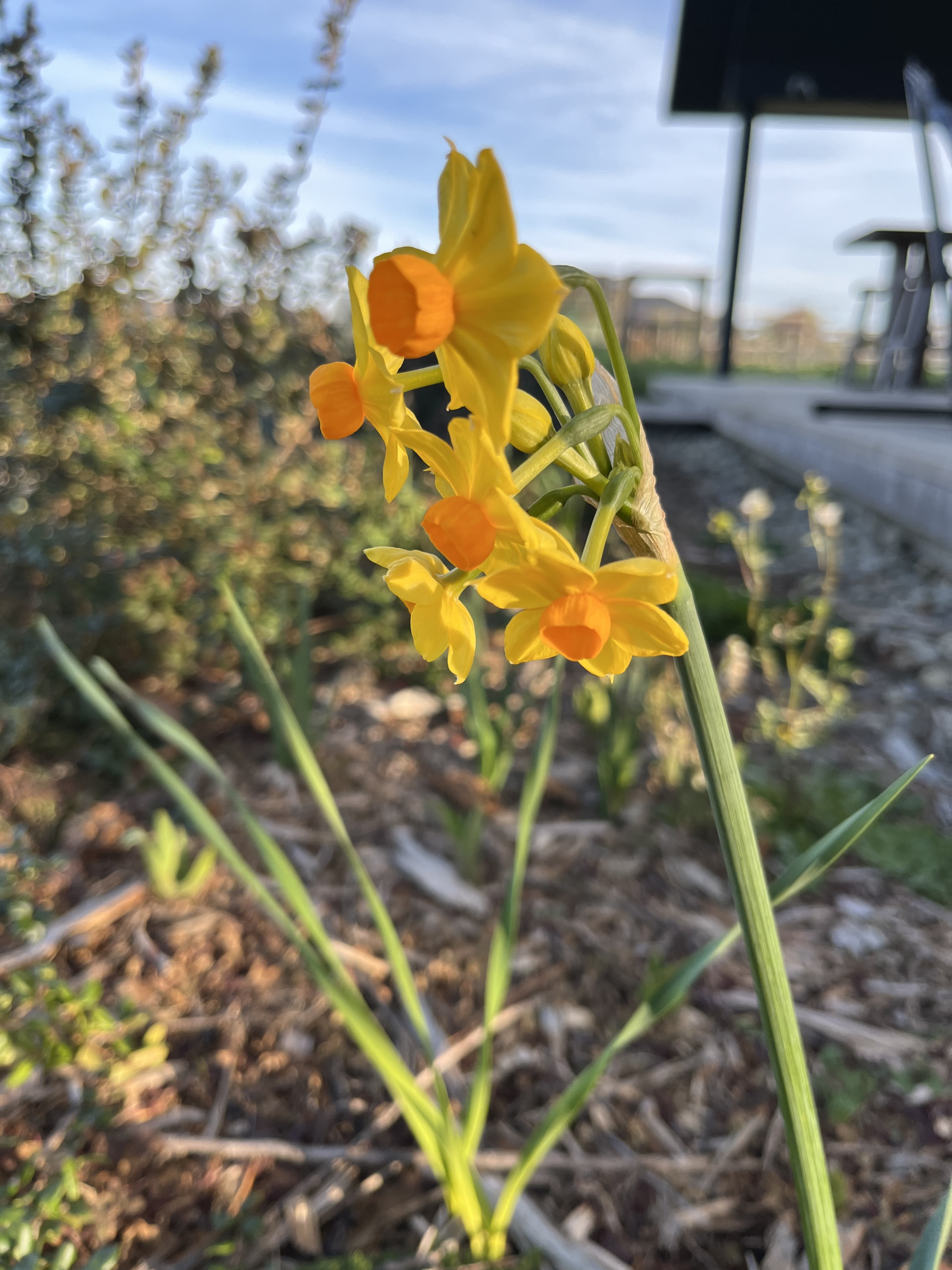
blooming daffodils
Blooming daffodils cover a multitude of sins (aka weeds) in spring.

The local veggie gardening group had our first Monday evening gathering for the season last night. And what a lovely gathering it was!

I hosted, which is always a bit nerve-wracking. You don’t want the place to look like it’s been abandoned or neglected, and in early spring, weeds are often more prominent than crops. And some of the group members have absolutely stunning gardens and are way better than I am at growing food. 

But we all have weeds. And we all have different challenges in our gardens and in our lives. And everyone comes in a spirit of community. Once people begin piling out of their cars and strolling the garden, any nervousness is forgotten as we all share our successes and failures so far this season, and catch up with each other’s lives outside the garden.

Conversations ebb and flow as the group wanders, breaking into subgroups around particular plants, garden structures, pest outbreaks, or other items of interest. 

Because we’re not quite on daylight savings time yet, we ended our garden stroll as daylight faded. But like any good gathering, we weren’t done yet—it was time for kai and a cuppa.

artichoke bud
Artichokes are on their way!

Last night, the party broke down on gender lines, as it often does (for no real reason … we laugh at ourselves all the time for this tendency to segregate)—the guys lit the brazier outside and commandeered the cheese and crackers to accompany some home brew. Indoors, the ladies had tea and cookies. 

Without the garden in front of us, the conversation diversified—and we’re such a diverse group outside our interest in growing plants, that you never know what might be under discussion on any given day. Crafts, books, digger operation, food, business interests, travel, rock collecting, climate change … you name it, we’ve probably discussed it. Garden group conversations are always intriguing and full of laughter.

When our guests headed home for the evening, the fire was still burning merrily in the brazier. The night was unseasonably warm, and the sky was clear and washed with stars. For an hour, my husband and I ignored the dirty dishes and sat in the dark by the fire, sharing what we’d both learned from the gathering.

While we sat there, a few thoughts occurred to me:

tomato seedlings
Tomato seedlings in the greenhouse.
  1. We don’t enjoy our garden enough. And by ‘enjoy’, I mean just sit or stroll and appreciate the beauty. Not that we don’t do this at all, but we could be doing it a whole lot more.
  2. We are absolutely blessed to be part of the local gardening community. I’m a total introvert, and being with groups of people where there are multiple non-stop conversations going on is exhausting for me. But I love this crowd of generous, community-focused people, and I look forward to each of our get togethers.
  3. Finding common ground with people can be as simple as sharing excess lemons or cuttings from your favourite herbs.

There is something humanising about gardening. The very act fosters community, brings people together. Reading the daily news, I can quickly begin to think the worst of the the entire human race. The garden group reminds me that there is beauty, not only in the garden, but in the ones who tend it.

Bread Day, revisited

It’s been a long time since I last blogged about a bread day. I reckoned it was time for a revisit.

For most of our married life, my husband has baked all our bread. When we moved to New Zealand, we applied for a permit to bring his sourdough starter, which was a bit of a family heirloom, having been passed to him by his father (who baked their bread when my husband was growing up).

Once we settled in New Zealand, in a rural location with some land, we built a wood fired bread oven. Our first oven was made of clay we dug from the property, empty wine bottles for insulation, and set atop two overturned concrete livestock water troughs. An oven on the cheap, because we didn’t have much money and weren’t sure we’d use it long term.

We loved it, so when the first oven began to fall apart, we were happy to buy materials for the second. And when we moved, we built a third one, on the new property as one of our first big projects.

A bread oven is different from a pizza oven. Unlike the pizza oven, which relies on a live fire, the bread oven bakes on stored heat.

A bread day starts the day prior, when my husband pulls the sourdough starter out of the fridge and makes his sponge—a wet slurry, more like batter than dough. The sponge bubbles away overnight.

On the actual bread day, the fires is lit early, usually before breakfast. My husband fills the bread oven with wood and lets it burn to coals, then repeats the process in order to ensure the mass of bricks soaks up plenty of heat.

While the fire burns, my husband makes up the dough, using around 7 kg of flour.

By about lunchtime, the dough is ready to be made into loaves, and by early afternoon, the second fire is burnt to coals, which get raked out of the oven. At this point, the oven is running at about gazillion degrees—way too hot for most breads. But each type of bread bakes at a different temperature, and each batch lowers the temperature of the oven.

The first bread in is focaccia—thin and flat, it is in and out of the oven in 5 minutes. Then we throw in a big tray of vegetables to roast. They take 10 to 15 minutes and bring the oven temperature down enough to bake narrow baguettes, which are also out within 10 minutes.

Then come the batards, and then finally the square loves.

At this point, I take over the baking. The oven is now at a good temperature for cakes and pies. I like to bake things like pound cakes on bread days, because they take so long to bake. It’s nice to be able to make them with the ‘free’ heat of the bread oven.

The oven is still quite hot (around 180℃) by the time the cakes are done (usually about dinnertime).

There are a whole bunch of things we’ve done with that heat: toast granola, roast pumpkins, make baked beans, dehydrate fruits and vegetables. As the oven cools further, we’ve made yogurt and dried herbs. There’s useful heat in the oven for a good 48 hours, if we have the time and inclination to use it.

Last weekend we found a new use for the residual bread oven heat—sterilising compost for seed raising mix (which I’m sure I’ll blog about later). I put about 40 litres of compost through in two lots, and I might have gotten a third batch through if I’d had it ready to go.

The final tally from last weekend’s bread day: 1 focaccia, 17 loaves of bread, 2 meals worth of roast vegetables, 2 weeks worth of breakfast granola, 2 cakes, a baker’s dozen of fruit tarts, and 40 litres of sterilised compost. Not bad for a bread day!

Check out this time lapse of a long-ago bread day.

Parsnip Cake

As spring nears, we’re working through the winter vegetables still in the garden. At this point, the remaining parsnips that I planted last spring are monster roots weighing in at nearly 1.5 kilograms. It’s past time to eat them.

So, when I found a recipe for parsnip cake, I had to make it.

The recipe was in the book Sweet, by Yotam Ottolenghi and Helen Goh (I seriously recommend this book, if you don’t already have it). Like many of Ottolenghi’s recipes, it includes flavour combinations and spices I don’t normally work with.

And as with most of Ottolenghi’s recipes, I didn’t have all the right ingredients to make the recipe as it was written, but with a few substitutions, I ended up with some delicious cake. As I often do, I baked the cake as cupcakes—they’re so easy to snag for lunch boxes, and they encourage us to eat less cake, because you can’t cut a big piece like you can with a proper cake.

I love the flavour combinations in this cake—parsnip, orange , nutmeg and aniseed. It’s a fantastic combination that I’m not sure I’ve ever used. 

Here’s my version of the Ottolenghi/Goh recipe:

150 g walnuts
450 g grated parsnip (the original recipe says this is 3 large parsnips, but it was only 3/4 of one of my parsnips)
100 g raisins
finely grated zest of 1 orange (approx. 1 Tbsp)
3 eggs
225 g caster sugar (I would cut this down next time—they’re quite sweet)
280 ml vegetable oil (I would cut this down next time—they’re a little too greasy for me)
190 g all purpose flour
1 tsp cinnamon
1 1/2 tsp baking powder
1 1/2 tsp baking soda
1 tsp nutmeg
1 tsp ground aniseed
3/4 tsp salt

Toast the walnuts in the oven for 10 minutes at 170℃. Cool and then coarsely chop. Combine the walnuts, parsnip, raisins and orange zest in a large bowl.

Beat eggs and sugar together in another bowl until thick and creamy (about 2 minutes). While beating, slowly pour in the oil until it is all combined. 

Sift together the flour, cinnamon, baking powder, baking soda, nutmeg, aniseed and salt in a bowl. Add these to the egg mixture and beat until combined. Fold in the parsnip mix.

Spoon the batter into cupcake tins (greased or lined with papers), and bake about 25 minutes at 210℃.

I found that these cupcakes didn’t rise much—the batter is mostly fruit, vegetables and nuts. If their flat look bothers you, I’d recommend topping them with a cream cheese frosting that includes grated citrus zest. I didn’t make special frosting for mine, but I had a little left over from a previous cake, and it was delicious on the cupcakes. It wasn’t at all necessary, however—they were fantastic with no embellishment at all.

Magpies in the dark

Photo: Eric Weiss

As though they know
What I need
When winter returns
On the eve of bud burst,
Magpies warble
On fence posts
In the dark.

Spring comes!
Spring comes!

Ten years ago I posted a blog titled, It Ain’t Over ’Til the Magpie Sings. The post was prompted by the first morning that a magpie warbled for an hour before dawn. At the old house, where the windows weren’t double glazed, the magpies were my alarm clock in spring and summer, warbling an hour or so before sunrise, urging me up to do the milking and make the most of the day. It’s harder to hear them in our new house, where the double glazed windows deaden outdoor sounds, but I’ve been tuning into the magpies for years.

And I’ve discovered that the magpies are remarkably predictable. Ten years ago, I heard the first pre-dawn magpie song on August 8th. Today (the 8th of August) I heard the first pre-dawn magpie song of the year.

And just like that day a decade ago, the first magpie song was followed by a winter lashing reminding us that, while spring was on its way, winter was still in charge. Today’s weather forecast shows the temperature dropping from a 4 am high (a balmy 12.3℃) all day, to 3℃. We can expect rain and icy wind for the next couple of days.

But in the dark, the magpies will keep singing.

Excitement Builds

Lately, it has still been light outside on our drive to and from work. The daffodils are up, and a few blooms are even open. When I weeded the asparagus bed last week, the Californian thistles were sprouting new buds 15 centimetres underground. 

And most importantly, my seed order has arrived!

Yep. Spring is on its way. Never mind that the frost behind the house hasn’t melted in a week, and the bird bath is skimmed-over with ice at 3 pm. Never mind that much of the country hit yearly lows yesterday. Never mind that our worst winter weather tends to arrive after spring has already officially started. 

This weekend, I’ll write my weekly spring to-do list, covering August to December. I’ll tidy the garden shed of winter detritus, and pull out the peppers in the greenhouse which have finally died. And I’ll finish the last of the winter pruning and deadheading. I’ll probably also fret over how little of those winter activities I accomplished—the sewing, spinning and other crafts I enjoy. 

And with the windows open (for the few hours it’s warm enough … just), and the house smelling of fresh air and the promise of growing things, I’ll impatiently await spring.

Garden Tally

Years ago, struggling with the feeling that I wasn’t pulling my weight in my family because I wasn’t earning much money with my business, I did a few back of the envelope calculations of what my gardening and milking/cheesemaking activities ‘earned’. At the time, I worked out that I was producing about $50,000 worth of food every year. The domestic accounting blew me away and put my mind at ease.

Plenty of food in the winter garden.

I’m no longer concerned about the monetary value of the gardening I do, but I’m still curious, and I love data and numbers. So I’ve decided to do some garden accounting this year.

Beginning at the winter solstice, I started keeping a log of all the food that comes out of the garden. Although the garden year never really ends here, I figured the solstice was as good a place as any to start. I’ve dedicated a notebook to the task and I’m recording as much information as I can about what I harvest—weight, number, variety, etc. I’ll periodically enter the data into a spreadsheet, so I can play around with the numbers.

Okay, yes, I’m a total nerd. But I love playing with data. And we always come to late summer (as we heave yet another laden basket onto the kitchen bench) wondering just how many kilos of courgettes we’ve harvested. But by then it’s too late to go back and weigh them. 

Peppers hanging on in the greenhouse.

Besides, there’s always the fascinating harvests, like the 500 grams of hot peppers I harvested yesterday. (in July?! For those in the northern hemisphere, July is the seasonal equivalent of January.) In addition, the exercise might tell me a bit about which varieties are more or less worth growing. Not that it would stop me from growing a crop I love, even if it doesn’t produce a lot, but it never hurts to have the data.

My intent is not to place a dollar value on what we harvest (Who can put a value on a warm, heirloom tomato fresh from the garden?), but to use the exercise to capture the quantity and diversity of food we enjoy. 

Pleasing Spaces, Pleasing Spouses

I’ve been gardening with my husband for almost 33 years now. Over the years, we’ve created many different garden spaces together. And even after all these years, we have different ideas about what our garden should look like. Each garden we’ve created has been a push and pull of our ideas, a creative collaboration, better for the different ideas we bring to the task.

I tend towards tidy, functional. My husband tends towards whimsical, aesthetic. I think about how I’m going to get a wheelbarrow into a space, how I’m going to weed it. He thinks about seating and art, lines of sight, and how we will enjoy the space. We joke that he builds gardens and I weed them.

The end result is beautiful gardens that are relatively easy to maintain. The end result is a garden that feeds us, but is also a place we regularly stroll with a glass of wine in hand, just to enjoy the beauty of it. The end result is beautiful spots to eat lunch, read a book, or write a blog post. The end result is a space that meets our physical, emotional and spiritual needs. 

And I can’t help but suspect that the collaborative act of gardening is one of the reasons we’ll be celebrating our 33rd anniversary next month. A lifetime of what are essentially team building activities can’t be bad for a relationship.

In fact, I see the same in many of the couples in our local garden group—spouses acting as teams, collaborating with one another to create spaces to nurture each other. I love to see the beautiful, supportive relationships between spouses in that group, and I have to believe that gardening together is a strengthening factor in those relationships.

One more reason (if you needed one) to get out there and garden—but do it with your partner.

Winter Gardening

It’s not quite winter here yet. There are a few more days until it officially starts. And the weather has been unusually warm. 

It’s a far cry from gardening in Minnesota, where I used to hack my parsnips out of the frozen ground in November and December, and the garden spent much of the winter under a blanket of snow.

Here, the garden is reduced and slow growing in winter, but there’s plenty happening.

We’re still picking tomatoes, peppers and eggplants from the greenhouses, though many of the plants are looking pretty sad. They will almost certainly give up in the next month.

The winter broccoli, cauliflower and cabbage are doing nicely. We’ve been enjoying plenty of these cool-weather crops over the past few weeks, and they will continue to give through winter. The leeks are gorgeous and ready to pick. They’ll provide onion flavour in dinners after the stored onions are gone, and before the first spring onions are ready in October. 

Leafy greens like Beet Erbette and Silverbeet (Swiss Chard) are in their prime through winter—they’ve been largely ignored through summer while so many other crops were available, but now they offer fresh greens to add to the frozen and bottled vegetables in winter dinners.

Weeds are slow growing in winter, and the vegetables require little work. Much of the vegetable garden is tucked up under mulch or green manures all winter.

But there’s a fair bit of maintenance to be done over winter. Perennial crops like berries and fruit trees need pruning, and winter is a good time to tackle the really pernicious weeds like twitch (couch grass), because the soil is soft and wet. Winter is also a great time to top up mulch and add compost to the soil, to mend fences and bird nets, to shift plants.

The beauty of winter gardening is that the urgency of the spring and summer gardening seasons is gone—there isn’t so much to do that you can’t enjoy a rainy day indoors, but you have a perfect excuse to be outdoors on those glorious sunny winter days.

And speaking of glorious sunny days … I think it’s time to get out of the office and into the garden.

Compost–a really rotten subject

Talk to a serious gardener for more than a few minutes, and you’ll probably hear about compost. We all have our own composting methods, and we’re all passionate about how well our methods work.

If you go on line and search how to make compost, you’ll find a range of suggestions, most of which involve building your pile with ‘green’ and ‘brown’ layers. There are lots of suggestions about what to, and not to, put in your compost, and how often to turn it. I find many of these suggestions take a lot more time and effort than I’m willing to put into my compost, and they don’t necessarily take into account the effects of climate on compost making.

I’ve made compost in Pennsylvania, Minnesota, Michigan, Ohio, Panama, and New Zealand. Every place I’ve done it, it needs to be done differently. Few of my compost piles have followed the ‘rules’, yet I’ve almost always gotten fine compost out of them.

In Panama, the compost pile needed to be protected from too much rain, or it would get waterlogged and go smelly and anaerobic.

At our first place in New Zealand, the compost pile needed to be watered regularly and covered with a tarp or it would dry out and not rot at all.

Our current location is a sweet spot for compost making—not too wet and not too dry. It’s almost impossible to avoid making compost, because plant material rots beautifully. But making a ‘proper’ compost pile speeds up the process.

I have two compost bins measuring 2 m by 2 m. One serves as a holding bin for plant waste while I use the finished compost from the other. When one bin is empty, I turn the material from the holding bin into the empty bin.

As I turn the compost out of the holding bin, I layer it with manure and give it a good watering to ensure that there aren’t dry pockets in the pile. I don’t follow the ‘green’ and ‘brown’ layer guidelines, but I do try to make sure that woody debris is well mixed with leafy green stuff, and that there’s a good amount of manure in the mix, too. I find the key is not so much the exact nature of each layer, but that I don’t end up with a thick mat of one hard-to-compost thing. The manure and the watering both give the pile a good kick to speed up decomposition, and in the days after the pile is turned, the smell of rotting vegetation can be strong, and the pile reduces in size rapidly.

As for the rules about what goes into a compost pile, I ignore them all. Cheese and other oily things go right in, as do non-recyclable paper products like butter wrappers, paper towels, greasy paper bags, and used baking paper. They all break down just fine, particularly because they form such a small component of the total pile. Do those things attract rats, as the composting guides suggest they will? Yeah, probably, but rats are also drawn to my vegetable garden, where they eat raw potatoes underground, pumpkins on the vine, and peas and beans off the plants. ANY vegetable material in the compost is going to attract vermin—I’m not sure a greasy butter wrapper is going to increase the number of rats attracted to the compost. I keep a trap next to the compost pile to snap up rats and hedgehogs as they arrive to feast. Any animals my trap catches go right into the compost pile, to give back whatever nutrients they’ve consumed from it. The neighbourhood cats also help keep the rodents in check. These rodent-control measures are necessary, but they’re no more than I’d already be doing, as rats and hedgehogs are a problem everywhere here.

I do try to make sure that plant material is chopped into short pieces before I put it on the compost. This not only helps it break down faster, it makes turning the pile much easier.

And there are a few things I won’t put in my compost pile. Thick branches take far too long to rot, so they get chopped into short pieces and spread under the trees in the native garden. And twitch (couch grass) gets put into black rubbish bags for about 18 months before going on the compost—otherwise it will sprout and grow through the compost, then plant itself all over the garden when I spread compost. Twitch is an aggressive weed that’s almost impossible to eradicate once established, so it’s worth keeping it out of the vegetable garden at all costs. I’ve learned this lesson the hard way over the years. My rule of thumb is that until the twitch has rotted enough that I can’t identify it, it could still grow. A year and a half tied up tightly in a rubbish bag seems to be what it takes to reach this stage.

Although the centre of my compost pile can get quite hot, not all of the pile reaches the high temperature needed to kill weed seeds, so I do have weeds in the compost. But I don’t particularly worry about weed seeds. All the weeds in the compost came from the garden in the first place, so I’m not introducing new ones, and aside from twitch, the weeds are manageable. I have considered sterilising small quantities of compost in the microwave for use in seed raising mix, where I don’t want any weeds, but have never tried it.

Overall, I think too much emphasis is placed on making compost the ‘right’ way, and it can scare some people off even trying. But decomposition is a natural process that happens whether we “compost” or not. By setting up even a small compost bin, and making sure the compost stays moist but not waterlogged, so bacteria, fungi and invertebrates to do their work, gardeners can reclaim nutrients from their plants and return them to the soil. It may take a little trial and error to find out what works best for your climate and your level of enthusiasm for compost management, but it’s well worth the effort.

Happy Autumnal Equinox!

Some years still feel summery at the equinox, but this year, the weather is decidedly autumnal. Monday, we hit our highest temperature of the summer—a blustery nor’westerly day that had my students wilting by 10 in the morning. It was 31 degrees at 5 pm when we left work. Dinner was a summer feast of sweet corn, soybeans and zucchini.

We slept with the windows open, covers kicked aside on Monday night.

Tuesday morning, I went out in the dark to water the plants at about 5.30. It was still 23 degrees. As I watered, the wind shifted.

By the time I left for work an hour and a half later, the temperature had dropped to 16, and rain spattered the windshield in fits and starts.

By ten o’clock, the skies had opened up. Wind drove the rain in sheets, and the temperature continued its slide downward.

Driving home from work, the temperature registered 11 degrees. Traffic moved slowly through the downpour, wind rocking the car and thrashing trees alongside the road. When I got home, I stripped off my rain soaked cotton clothes and replaced them with cosy wool. We had potato soup for dinner.

We woke on Wednesday morning to full autumn. Summer had been scoured away by over 40 mm of rain, and stripped bare by gale force winds.

A dramatic entrance for the season. But the truth is, autumn was already well underway. Our first frost came weeks ago, on 6 March. I picked the pumpkins last weekend. And the zucchini, tomatoes and other summer-loving plants were all showing signs of being nearly done for the season.

And, of course, squirrelly me has been in autumn mode for weeks, preserving everything I can in preparation for the dark days ahead.

Today we step into the dark side of the year. Although I very much enjoyed our last couple days of hot summer sun (and today promises some beautiful sunshine), I’m looking forward to all that the dark side has to offer.