Winter Solstice

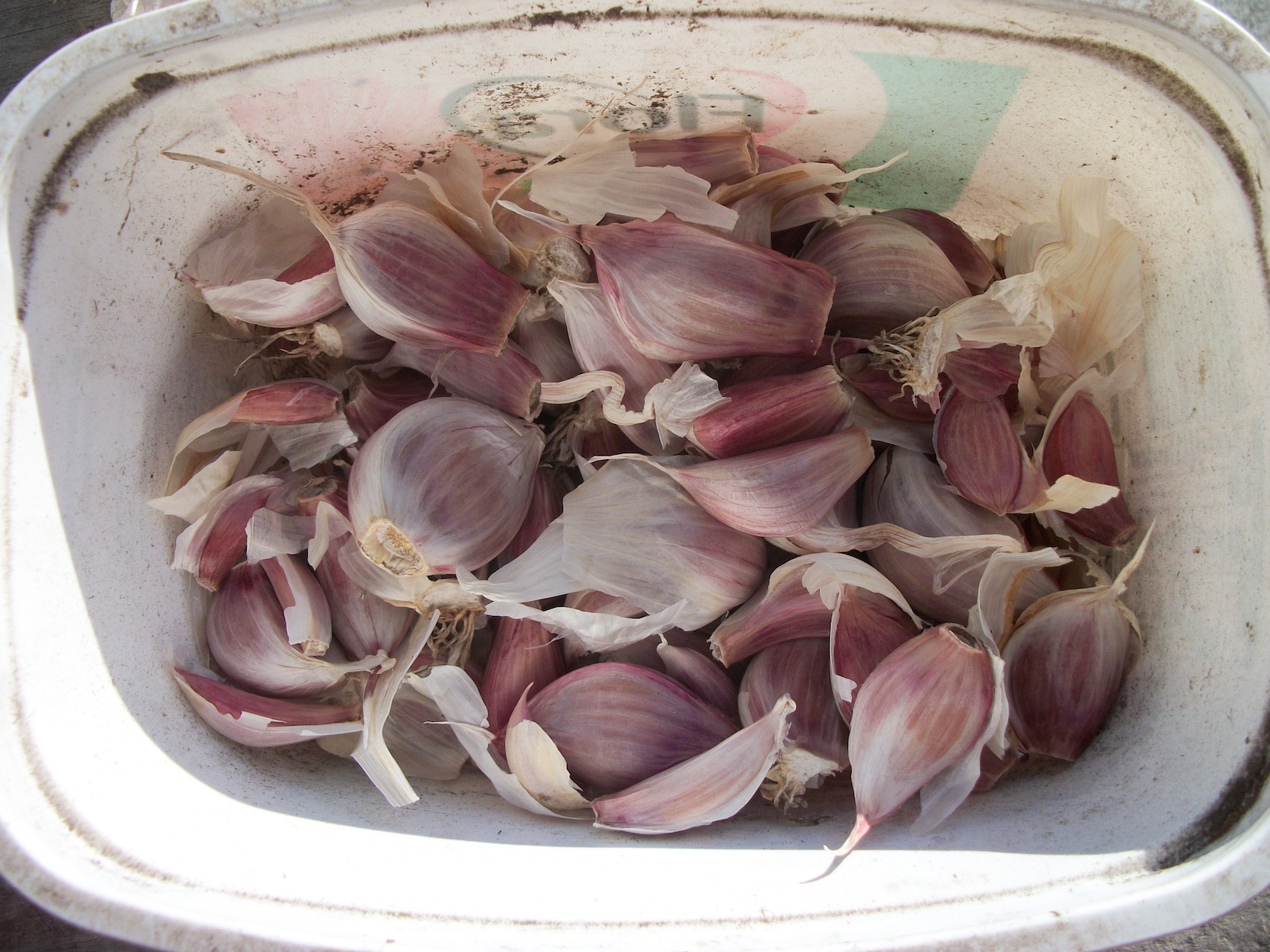
Garlic cloves ready to plant.

Garlic cloves ready to plant.

The forecast for tonight into tomorrow is for cold southerlies and snow lowering to sea level. So what did I do today? Planted garlic, of course!

Plant on the shortest day, harvest on the longest, is what I learned for garlic. Truth is that here, at least, it’s not ready to harvest until mid-January, but I do try to plant on the solstice. Coming from a homeland where the ground was frozen solid at the winter solstice, it feels positively cheeky to plant anything at that time. It’s a bit of defiance—I even planted through snow one year, just because I could.

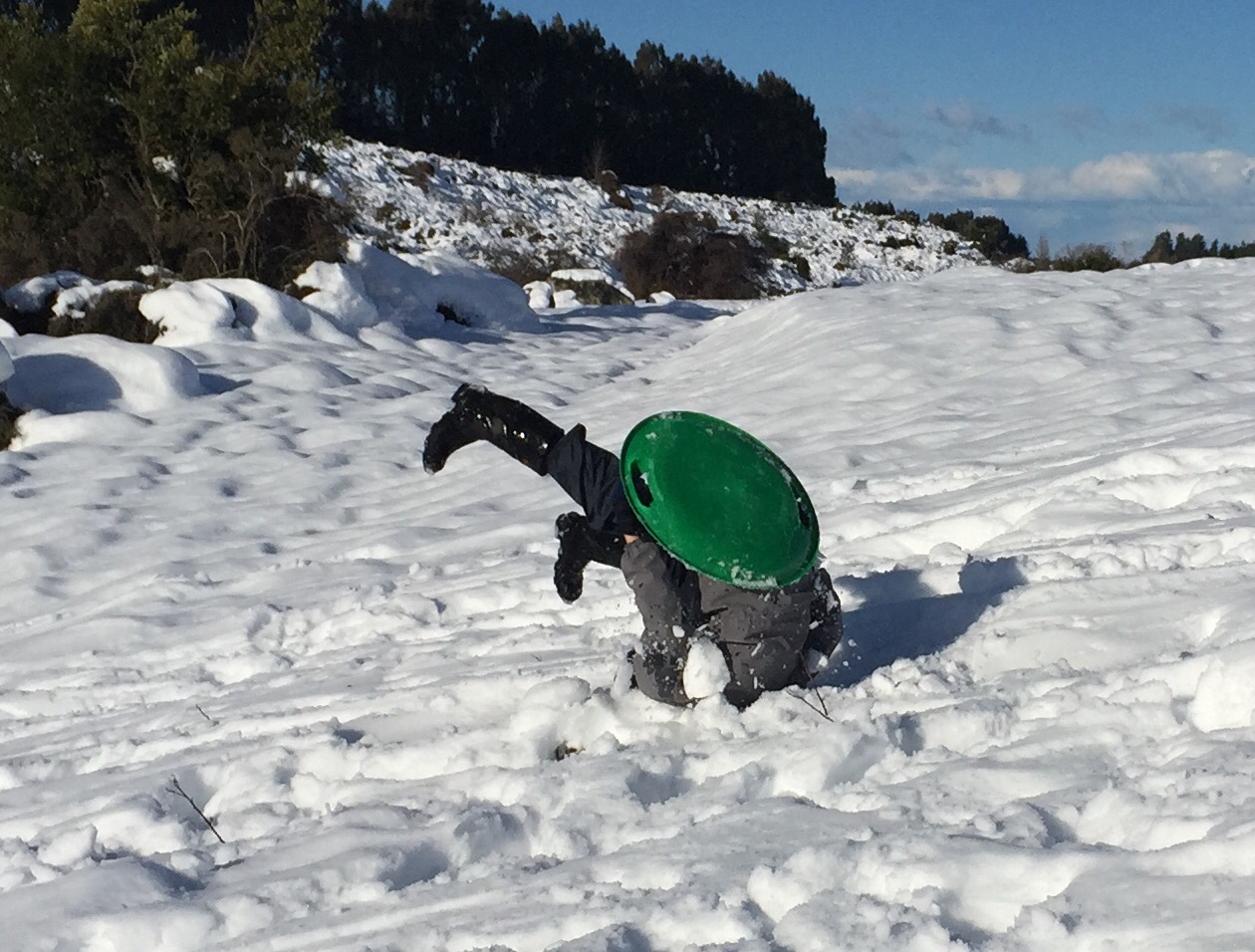
Wipe out!

Wipe out!

Today, I just had to break up mulch stiff with frost before I could plant. It was actually a beautiful (if chilly) day, and after spending the morning in the garden, we rugged up and headed to the hills for a fabulous afternoon of sledding in 30 cm of snow! Winter just doesn’t get much better than that!

Happy Matariki, (Maori New Year) to you all!

100_3340I love a good New Year celebration, but the January one has less meaning here than Matariki, which is seasonally appropriate, and a much needed celebration in the dark of winter. Matariki is celebrated on the new moon after the constellation Matariki (a.k.a. the Pleiades, Subaru, 7 Sisters) appears in the pre-dawn sky, after being absent from the night sky since April.

The modern celebration of Matariki only dates back to the early 2000s, and is a quirky blend of Maori traditions and European ideas. Kite and lantern making, food, song, and traditional crafts have all become part of the modern celebrations. Matariki is a time for looking back and honouring the past, and for looking forward with hope. It is a time to give thanks for the bounty of the harvest, and to begin to prepare for the coming planting.

So this Matariki, I will honour the spirit of my grandfather, who died late last year and taught me to pursue my dreams, even if it meant striking off the beaten path. I will look forward to the future, striving to make the coming year I find my place in my new career. I will celebrate the bounty of the past summer’s garden, bringing out jars of summer soup, peaches, and pumpkins for a weekend of glorious food. I will begin to prepare for next year’s garden, weeding the strawberries, and planting garlic in the cold, wet soil. I will celebrate light amidst the dark of winter, with candles and toasted marshmallows over a campfire.

May you find wonderful things to celebrate this weekend, too, whether you are celebrating Matariki, Winter Solstice, Summer Solstice, or just another day.

The lambs are coming!

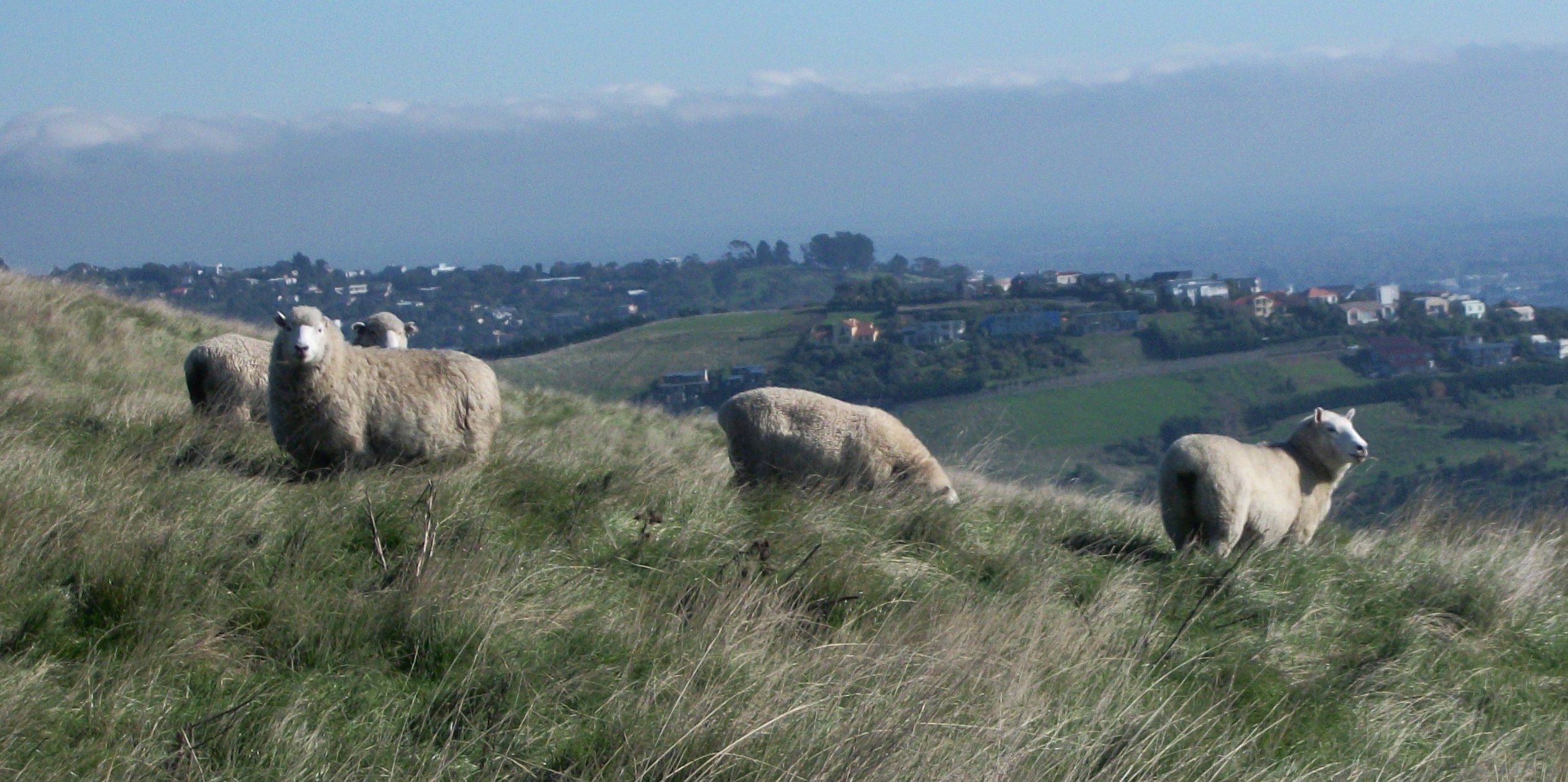
100_2204 cropTwo days ago, I heard the first one—a reedy, high pitched ‘baaa’ from the neighbour’s paddock. Today there are a dozen voices out there, calling to their mothers, whose low rumbles answer patiently.

Lambing comes early in our neighbourhood. These June and July lambs will have to survive the worst of winter, and the farmers know it is a gamble. One ill-timed storm, and a farmer can lose 200 lambs overnight. It is apparently worth the gamble though. Lambs that make it through the winter will have months of growth on the August and September lambs born in the high country, and will be prime for the Christmas lamb market.

Though I feel bad for those little lambs, born in the dead of winter, I do appreciate the promise they bring, frisking in the paddocks on frosty mornings. They promise spring to come. Warmth and light. They bring joy to the bare branches of the winter landscape.

Eating Native?

veggiesforgrilling2smI’m currently teaching a biodiversity class at my daughter’s school, so I’ve been thinking a lot about biodiversity in New Zealand. Out here on this island in the middle of the Pacific Ocean, living things have had 65 million years to evolve in isolation. Until humans arrived about 700 years ago, most living things here were endemic—found nowhere else on earth. Three and a half metre tall birds and the giant eagles that preyed on them, flightless parrots, frogs that hatch from the egg fully formed, tuatara that died out everywhere else on earth millions of years ago, crickets the size of mice…

Humans changed things dramatically and rapidly. We brought thousands of other organisms with us, some on purpose, many by accident. Many of those organisms flourished here, at the expense of native organisms. Today, there are few New Zealand ecosystems untouched by the invasion of humans and other non-natives. Some of the most successful invaders have been plants—today there are more introduced plants here than there are natives, and more arrive all the time, in spite of efforts to prevent them.

Many of those invading plants were brought to New Zealand on purpose to provide food, shelter, or medicine. In fact, I can’t think of a single native plant currently cultivated for food, except one seaweed. There are certainly a few edible native plants, but they are few, and they are more of a survival food than something you’d want to eat every day.

No surprise. The crops we eat today have been cultivated for thousands of years—selected by countless generations of farmers to be bigger, tastier, and easier to grow. With only 700 years of history in New Zealand, there’s hardly been time to develop native crops.

The human migrants to New Zealand brought their crops with them instead. Familiar corn and carrots, potatoes and peas. But it’s not just in New Zealand that people mostly eat food native to other regions. People have been carrying their food with them for as long as we’ve travelled, until it’s sometimes hard to know where a food originally came from—classic Italian tomato sauce is made from a plant native to the Americas, the American “wheat belt” has its origins thousands of years ago in Turkey, and cassava domesticated in Brazil is now a staple food throughout tropical areas worldwide. Few people anywhere in the world eat native.

While I would love to be able to magically bring back the moa, Haast eagles, huia, and host of other incredible New Zealand endemic organisms that humans have wiped out here, I will admit I’m terribly fond of my non-native tomatoes, cucumbers, potatoes, eggplants, etc. I am thankful those non-natives are here, and I need not subsist on seaweed and ferns. Does it feel somewhat disingenuous to passionately support the conservation of our native biodiversity while I plant my non-native vegetable garden? Yes, but I’m only human, after all, doing what humans have done for 10,000 years.
Favourite Kitchen Tools: cast iron skillets

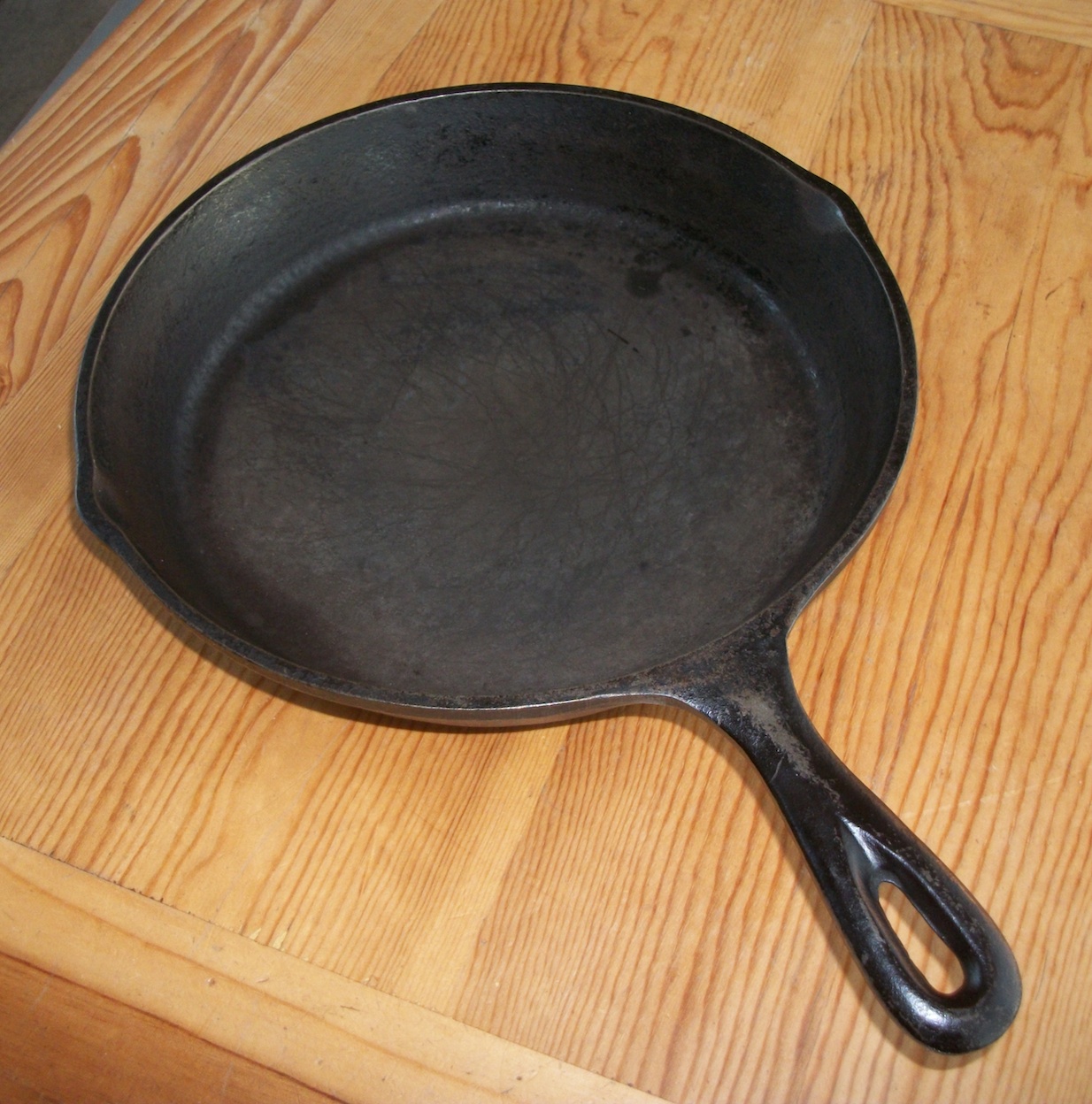
100_3215 copyTime for another tribute to one of my favourite kitchen tools. We have three cast iron frying pans. As I recall, two were garage sale finds and one was a wedding present. At least one of them gets used nearly every day.

I love the cast iron pans for their weight. Though it can take several minutes to heat them up, once they’re warm, they cook gently and evenly, without a searing hot spot in the middle and cold edges. I also love the pans for their ability to go from stovetop to oven—gravies and béchamel sauces made in a cast iron skillet can easily be popped into a warm oven to finish cooking, as can frittata.

I always make cornbread in a cast iron skillet—heating the skillet on the stove before pouring in the batter gives the finished bread wonderful crispy edges! And, of course, making flatbreads of any kind in cast iron is a pleasure—its mass allows it to quickly but gently bake a bread.

And it’s always nice to know I’ve got a handy weapon in the kitchen, you know…just in case Sauruman or Shelob shows up at the door (after all, we do live in Middle Earth…;) )

Seasonal food

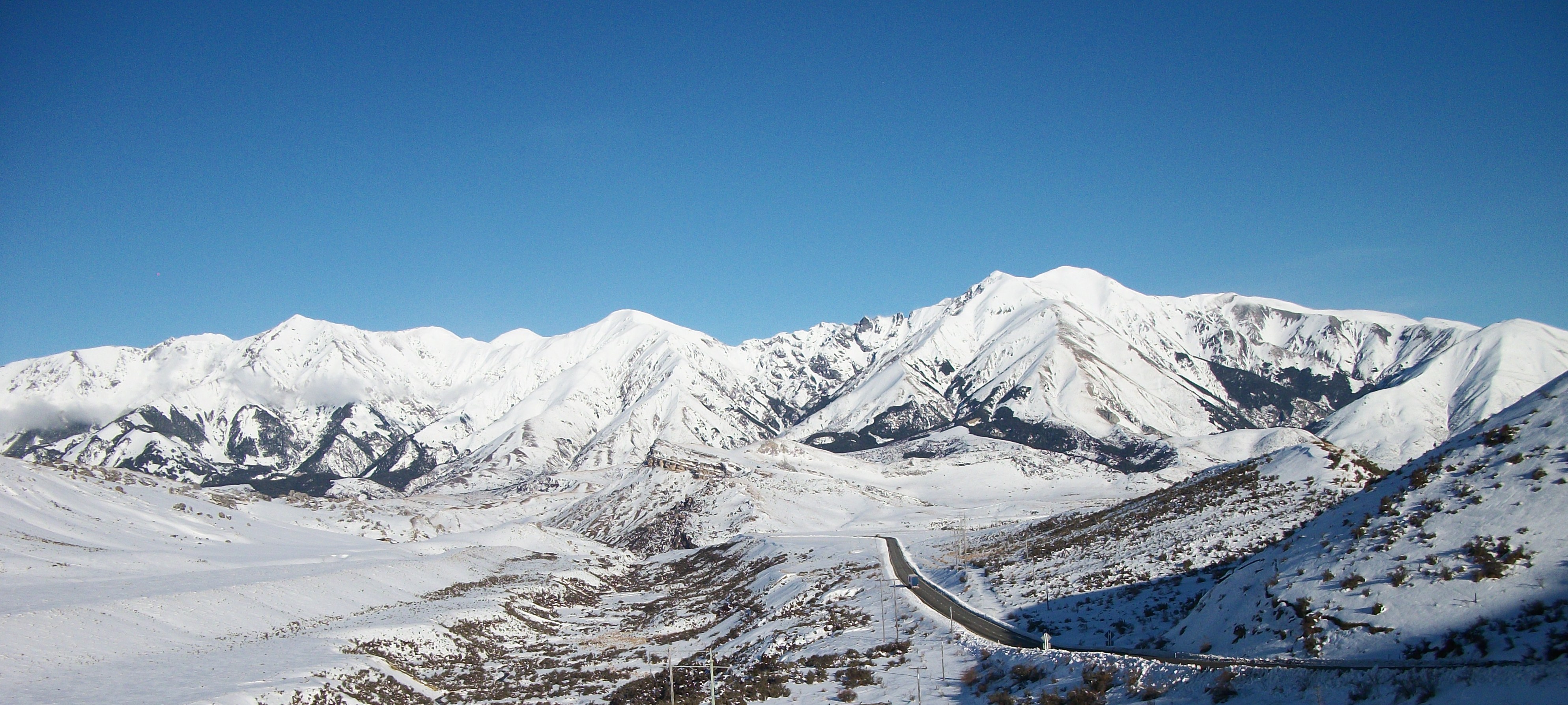
100_0535 cropOvernight, the mountains were cloaked in snow, and this morning they seemed to have leapt closer, looming huge and white where all summer they’d been nothing but distant grey peaks. The wind is cold and keen, and brings driving rain and hail clattering against the windows. The cat stretches out in front of the first of the season’s fires in the log burner.

Overnight, it seems, we have broken from our never-ending summer and have been plunged into winter. And overnight, our meals have changed. Though there are still a dozen cucumbers in the fridge, the thought of a cool cucumber salad is not appealing today. Instead I hunger for potato soup, bread warm from the oven, and hot apple crisp. I eye the pumpkins as I could not on the shorts-and-T-shirt day last week when I harvested them, and I think of gallette, soup, and pie. I am excited by the culinary opportunities the change of seasons presents.

There will be more T-shirt weather, I know. The cucumbers will be eaten. Here in the land of perpetual spring, even winter days can call for iced drinks now and again. But for now, I will enjoy the excuse to eat steaming soup with buttered biscuits, and drink hot tea in the middle of the afternoon.

Fall Foraging

DSC_0016 copyI enjoy foraging for forgotten food, and university campuses often offer good pickings. Development marginalises former research and demonstration plots. The plants are abandoned in some corner between buildings, and are forgotten by everyone but the groundsmen who have to mow around them.

Apples used to be a huge crop around Lincoln (until growing houses became more profitable), and the university has done research on apples for many decades. The “Orchard Carpark” is presumably the former site of the University orchard, but only one lone apple tree remains on the edge of the pavement. No one officially picks its fruit, but passersby avail themselves. This year, the tree is groaning under a heavy crop.

This morning, when I stopped by, the tree was well-picked on the lower branches, but there was plenty of fruit on the ground, and my daughter climbed into the tree to reach a few higher up. We came home with a bag full of tart, firm apples. Perfect for pie.

The French Potager

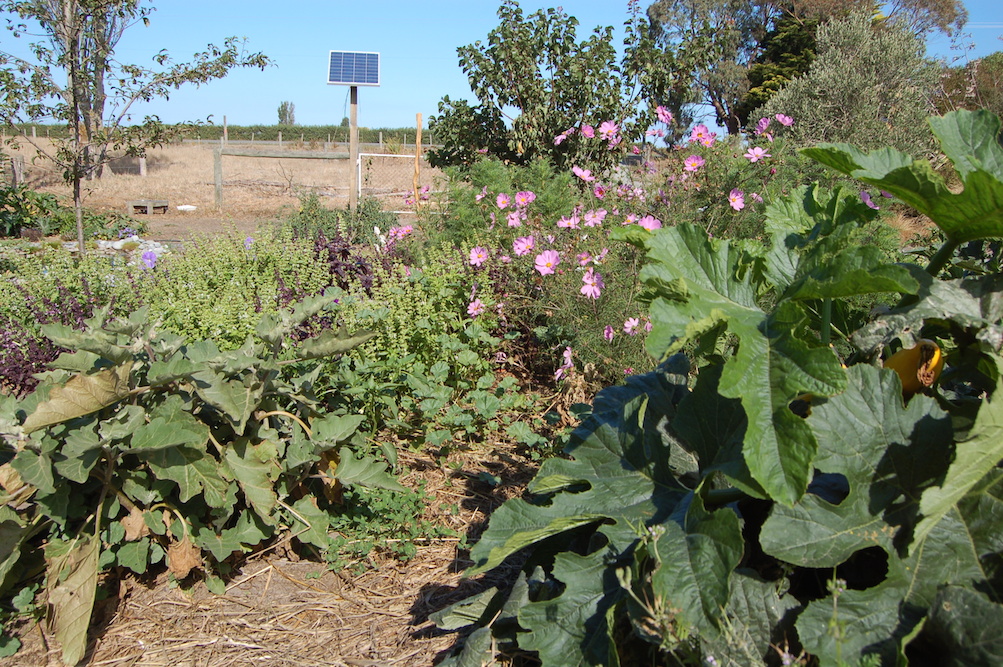
Zucchini, eggplant, basil and cosmos nestle happily together.

Zucchini, eggplant, basil and cosmos nestle happily together.

I love the idea of the French potager—the small garden densely planted with a mix of flowers, herbs, and vegetables. When we lived in St. Paul, Minnesota with a yard the size of a postage stamp, we had a delightful potager in raised beds near the house, and flowing down rocky terraces to the sidewalk. Showy okra flowers competed with cosmos and marigolds for the most beautiful plant award. Eggplants nestled next to thyme, corn formed a backdrop for zinnias, and colourful lettuces marched in a neat border around the whole arrangement.

Now that we have more than enough space, the vegetables are segregated and confined to the vegetable garden, where I can be sure they are well watered and mulched, and I don’t worry about a few spent, ugly plants hanging around. I’ve also found that here in the land of pernicious twitch (couch grass), planting perennials and annuals together is usually a recipe for disaster—annuals don’t compete well with twitch, and the perennials harbour fragments of twitch among their roots, providing an endless source of the weed.

But this spring, Ian was looking for temporary plantings for his new pond garden—plants he wouldn’t mind killing off along with the weeds in the fall when he plants the perennials he wants there. He picked up a few flats of annual flowers, took all my leftover vegetable plants, and created a delightful potager bursting with colour, fragrance and flavour. It’s a lovely reminder that you don’t need a “vegetable garden” to grow food, and that vegetable plants are beautiful, too.

Cultural Icons

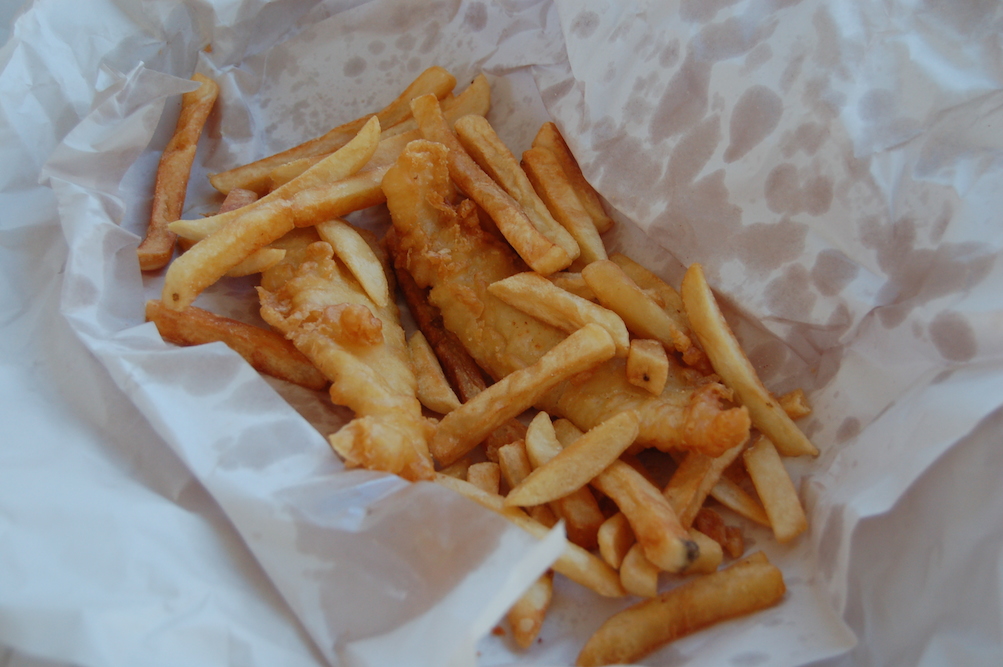
fishnchipssmWhat does it take to become a Kiwi? An appreciation for the uses of number 8 wire? The ability to pronounce Whangaparaoa without stumbling? Knowing the culturally acceptable way to pass a mob of sheep on the road? Understanding that a statement like “I wonder if you should move your car out of the way?” actually means “MOVE YOUR F#*&%^ CAR OUT OF THE WAY!” An ability to converse coherently about rugby?

All these things are certainly important. Equally important is an understanding of New Zealand food icons.

Food is central to cultural identity. Apple pie and hot dogs are quintessentially American, a Panamanian festival wouldn’t be complete without ojaldre, and Costa Ricans would lose their sense of self without black beans.

Wherever I’ve travelled, I’ve tried to experience the local, iconic foods so as to fully experience the culture. I try not to let my own dietary choices prevent me from these experiences, so among other things, I’ve eaten spicy chicken salteñas from a street vendor in Bolivia, and titi (muttonbird) traditionally caught and preserved by local Maori. These experiences haven’t always been positive—the spicy salteña tasted a lot worse coming back up an hour later in a public park—but they’ve always taught me something.

Modern Kiwi culture is culinarily represented by pavlova (a meringue topped with fresh fruit), kiwi fruit, and fish and chips. Determined that our kids not be culturally and socially handicapped by vegetarianism, we’ve made a point of occasionally picking up fish and chips at our local shop. We don’t do it often—maybe 3 times a year—so it’s a rare treat for the kids (as greasy, salty fried food probably should be), but it has worked. Though they still speak with an American accent, and have no interest in rugby, they can connect with their peers over the cultural icon of fish and chips. And I can think of no better way to fit in than around the dinner table.

Changing Perspectives

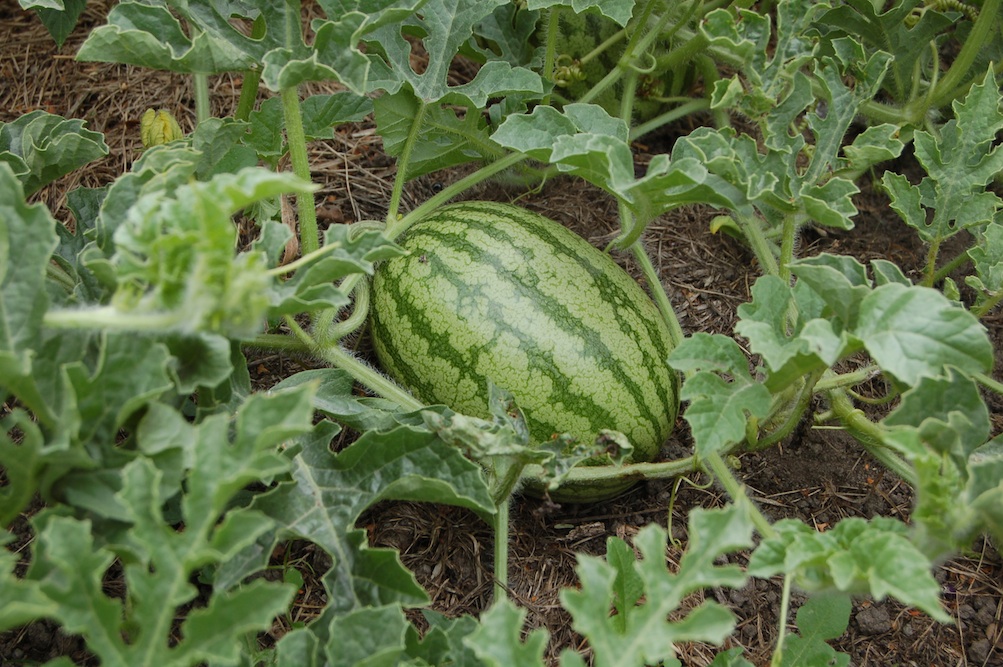
DSC_0019smWhen I first mentioned to a neighbour years ago that we were enjoying home grown watermelon, she was incredulous.

“Watermelon!? In Canterbury?!”

It’s true, melons are a hit-and-miss crop here. Summers are just too cold for these heat-loving plants. My first attempts were mediocre at best—we were lucky to get anything before frost killed the plants. Year after year, they failed. Since then, I’ve learned to start my seeds early in a heated room, and let the plants get nice and big before putting them out. They never go out into the garden until the end of November, and I try to tuck them into one of the more sheltered beds so they don’t have to deal with cold winds. With a bit of coddling, they do reasonably well.

Reasonably well for Canterbury, New Zealand, that is.

My standards for melons have changed dramatically in the last decade. If I were still gardening in North America, I would be sorely disappointed in my melon crop. The fruits are small and few—no giant rattlesnake watermelons or big fat cantaloupes here! Only the most rapidly maturing varieties give at all, and even on these varieties, most fruits don’t make it to maturity before the growing season ends.

But the few, small melons we do get are incredibly sweet and juicy. Even more so, because we shouldn’t be able to grow them at all here. Each one is a blessing and a marvel.