Nīkau Palm Gully

img_3044-smWe spent the weekend on the Banks Peninsula. Saturday we kayaked around Akaroa Harbour all day, and today we hiked out to Nīkau Palm Gully.

The track out to Nīkau Palm Gully is easy walking, as it follows a farm track. It’s pleasant, but not exactly wilderness. The views out over Akaroa Harbour, however, are spectacular. And at the end of the track is the steep drop down into Nīkau Palm Gully.

The gully is a tiny V of land, hemmed in by cliffs, and sporting one of the few remaining remnants of original Banks Peninsula forest.

Most notable among the trees are the palms which give the valley its name. The nīkau palm is the southernmost palm in the world, and New Zealand’s only native palm. It is found in coastal lowland areas, and the Banks Peninsula is as far south as it ranges on this coast. There are nīkau scattered around the Peninsula, but the population of them in Nīkau Palm Gully is impressive.

Nīkau palms are slow-growing. They begin as clusters of leaves growing on the forest floor. It may take forty to fifty years before they begin to form a trunk, and up to two hundred years to reach their maximum height of 10-15 metres. There are individuals of all sizes in Nīkau Palm Gully.

People have been visiting the gully for many years. One tree still bears the mark of a visitor who carved the year–1907–onto its trunk. A pair of amusing (to a reader over 100 years later) letters in the Akaroa Mail in 1909 indicate that the gully was, even then, considered a special place. In the first article, a member of the Beautifying Association writes a scathing indictment of the Akaroa Boating Club for having cut down several palms in the gully to use as decoration for an event. In a subsequent issue of the Akaroa Mail, a member of the Boating Club explains that they only removed a few leaves, not whole trees. The letter writer then goes on to accuse the Beautifying Association of removing entire plants (seedlings) from the gully for their gardens.

Thankfully, the landowners whose farm once encompassed the gully understood its significance, and gifted it to the Department of Conservation (in exchange for one 10-cent stamp presented to them on behalf of Her Majesty the Queen). It is now protected as a scenic reserve, and has been linked to other patches of native vegetation through a number of land covenants on adjacent properties.
 

Greengages

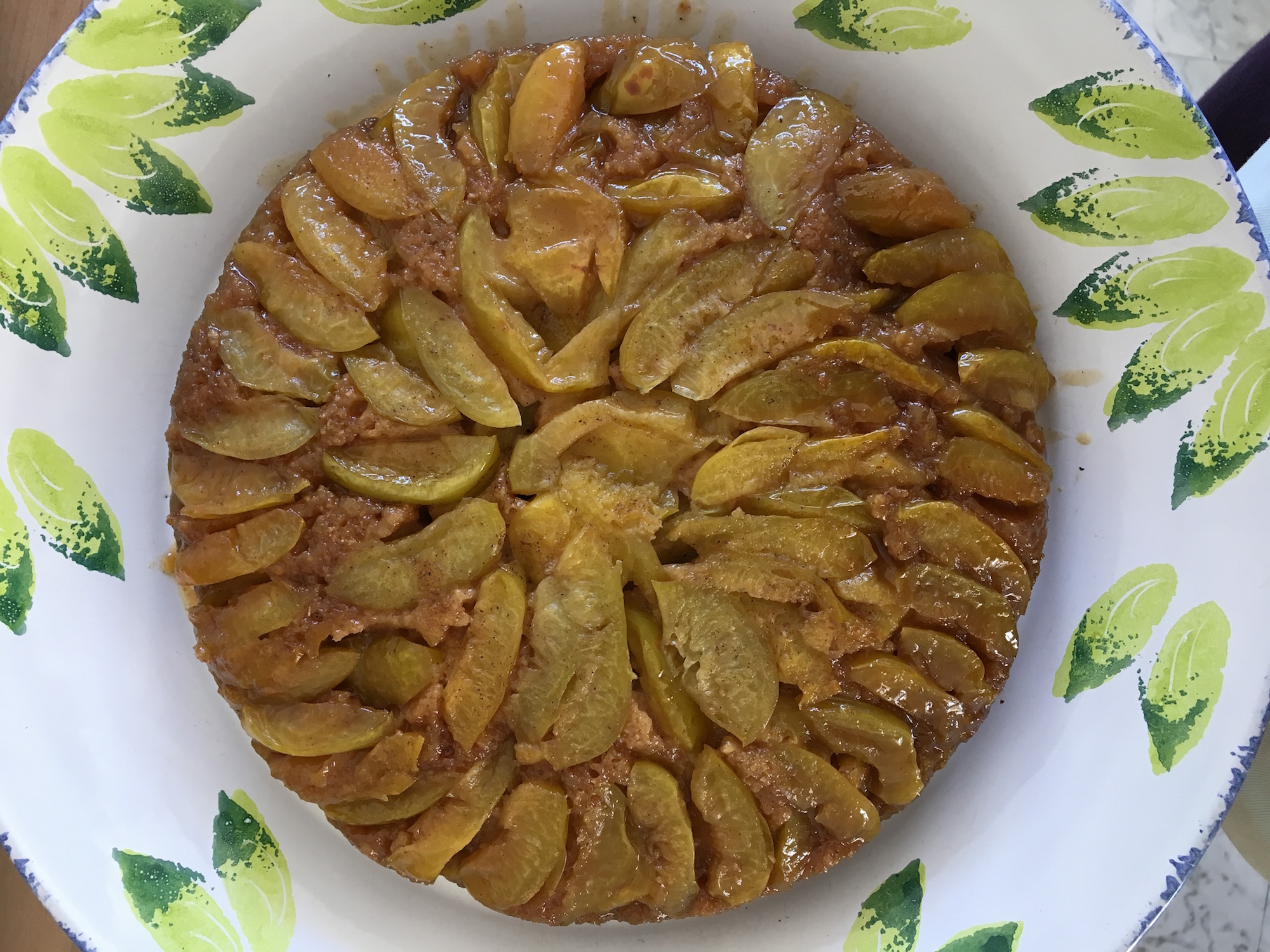
2017-01-25-14-58-09-smWe don’t often get many greengage plums. Our tree is small, and it sits in a windy location, so many fruits blow down before they are anywhere close to ripe. This year wasn’t too bad–we harvested about three kilos of fruit. Plenty to enjoy.

One of my favourite things to do with summer stone fruits is to make upside down cake. Indeed, I’ve blogged about it three times in the past two years. So today I’ll ignore the cake, and mention the plum, instead.

I didn’t know a lot about greengages before coming to New Zealand, where I found a fair number of people had them growing in their yards.

Greengages are named after Sir William Gage, who imported them to England from France in 1724. The cultivar he imported had another name, but apparently the tag was lost in transit (These were the days before anyone considered biosecurity…Importing a strange plant? Whatever). They were popular in America in the 1700s, but fell out of favour in the 1800s.

According to a 2004 article in the New York Times, there’s good reason greengages fell out of favour. The trees take longer to mature than other plums, they fruit erratically (I thought it was just our tree), the ripe fruit is fragile, and they’re prone to cracking and rotting on the tree. Not exactly an easy plum for commercial production.

But the greengage is considered one of the finest plums for flavour. Grown commercially, it fetches a high price. According to the New York Times article, in 2004 fewer than 100 greengage trees were harvested commercially in the United States. They are more common in Europe and New Zealand. New Zealand exports a small quantity of greengages to the US each year, where they are sold in specialty markets.

So I feel much better about my 3 kilo harvest of greengages. They are wonderful, and if they’re a bit finicky to grow? Well, that just makes them all the more special when we have a good year.

Postcard From New Zealand

2016-01-22 14.08.29 smWe spent the day yesterday at the beach (along with the entire population of Canterbury and half a million tourists, judging by the crowds). It was a stellar beach day–hot and sunny. Perhaps a bit too windy at times, but heat and wind are almost inseparable here, so we just go with it. We managed to slip away from the crowds for a while by clambering over the rocks to Little Okains Bay. The water was cold, the sand was hot, the rock pools teemed with cool creatures, and the scenery was stunning, as usual.

The entire day was a full-colour glossy tourism ad for New Zealand. And it was just one of many similar days we’ve experienced recently.

I’m not saying that every day is a vacation–I put in 11-hour workdays (painstaking editing) all last week, and I pull a lot of weeds and have to clean the house and the chicken coop every week–but New Zealand does vacationing well.

All day, I kept coming back to one, glorious, humbling, beautiful thought–this is my home. My family and I are so blessed to have been welcomed into this amazing country. A place where we can stand on the top of a mountain one weekend, and swim in the ocean the next weekend. A place where Christmas/summer vacation lingers through the entire month of January; even once many people are back at work, the vacation mindset remains. A place that embraces a weird and wonderful mix of people from all over the world.

New Zealand has its problems–no human society doesn’t–but I feel honoured to be allowed to make my home here in such an incredibly beautiful place among such incredibly beautiful people.

So you all my Kiwi readers–thank you.

And to all my overseas readers–having a great time. Wish you were here.

The Backcountry Hut Experience

Black Hill Hut

Black Hill Hut

The hut nestles amidst scrubby sub-alpine vegetation. As you emerge from the trees onto a rocky hillside, you see it across the valley. Dark beech forest laps at the hut on one side, and cliffs rise on the other. A kea calls. A stream rushes far below. You are not the first at the hut—a thin wisp of smoke rises from the chimney. You smile and look forward to warming your hands and drying your socks by the fire.

As each hiker arrives at the hut, they are greeted by those already resident.

“G’day. Did you come of from Sharplin Falls this morning?”

“Going to Woolshed Hut tomorrow, or all the way out?”

“Where are you from?”

“Oh, you’re from Southbridge. My mother lives there. Do you know her?”

“Is this your first visit to New Zealand?”

“Do you do much tramping?”

As afternoon wears on, the hut fills up. Locals, tourists, couples, solo hikers, and families with kids. A dozen or more strangers bunking together, cooking and eating together. There are no cell phones to divide you. You are all present in this place together. You share matches, hot water, chocolate, and reading material. As the evening wears on, a bottle of scotch might be passed around. You talk about your homes, previous travels, and your current aches and injuries. You tell stories. You laugh. You wish each other good night.

In the morning, some carry on downhill while you toil up Others, you know you will see again at the next hut. You bid them all a cheerful farewell, feeling like old friends.


When I first came to New Zealand, I found the idea of backcountry huts a bit odd. I didn’t have to hike with a tent? I’d just bunk with other hikers in a hut provided at just the right spot? I was used to hiking in the US, and for me backpacking (tramping) meant getting away from other people and setting up my tent in a place of complete solitude. I was dubious.

Twelve years and many backcountry huts later, I’m sold on the hut system. Not only is it lovely to not have to carry a tent, I’ve come to enjoy the social aspect of the hut experience.

That’s not to say I enjoy listening to half a dozen strangers snore next to me all night, or that I don’t sometimes wish my hut mates were less talkative, but on the whole, the people I’ve met and the things I’ve learned—about other places, other cultures, and sometimes even about my own neighbours—far outweigh the negatives.

Mountain neinei

2016-12-28-11-03-04-smMountain neinei (Dracophyllum traversii) is a tree Dr. Seuss would have been proud to call his own. Sparsely branched, with the leaves concentrated in tufts on the ends of the branches and bright red flower spikes on top, it would look right at home in Yertle the Turtle or The Cat in the Hat.

Aside from its goofy look, mountain neinei is an interesting plant. It is endemic to New Zealand (found nowhere else in the world), and inhabits ridgelines from about Arthur’s Pass north. We saw this one (and many others) on the way up Avalanche Peak near Arthur’s Pass last week. Though it is small (no more than 10 metres tall), it can live for up to 600 years, making it New Zealand’s longest-lived small tree.

It’s a useful plant, too. The leaves are used in weaving, the stems have been used to make walking sticks, and there is even an example of a flute made from mountain neinei.

It’s such a neat plant, it makes you want to speak in rhyme.

The ridge was quite steep,
And the day was too hot,
But the neinei were flowering.
We saw quite a lot.

Up rocks we scrambled.
The forest got smaller,
It looked like the top,
But the mountain was taller.

2016-12-28-13-24-57-smHigher and higher
We climbed and we huffed.
Till we reached the peak,
We really were puffed.

Spectacular views
And black jagged rock
Were our reward
For this strenuous walk.

What We Don’t Know

dsc_0009We headed to Tumbledown Bay today, ostensibly to try out the new snorkelling gear Santa brought us for Christmas. The water was murky and absolutely freezing, so it wasn’t exactly the best snorkelling, but it was a great day at the beach, regardless.

The seals were probably the best part of the day. There were lots of them, and they were vocal and active most of the day. A couple of them were even body surfing. They’d catch a wave and leap along with it almost all the way to the shore, then swim out and do it again. It was great fun to watch

The rock pools were great, too, as they always are. We saw some starfish, lots of snails, limpets, and chitons. I never get tired of them. In the sandier pools there were lots of marine isopods (sea slaters). I sat for a while at one pool and watched them. Some were just 3-5 mm long and the colour of sand. Some of the sandy-coloured ones had a white diamond on their backs. One, almost 10 mm long, was rusty orange with a white diamond on its back. The most spectacular was about 8 mm long, and had red and yellow markings, reminding me, oddly, of a European goldfinch.

As I sat there, I realised I had no idea whether I was looking at one species of slater with many colour variations, or twenty species.

A little research at home revealed that I’m not alone in my lack of knowledge of New Zealand’s marine isopod fauna. There are just 211 aquatic isopod species described for New Zealand. Scientists estimate that there are about eight times that many species. It’s not just the deep-water types that are poorly known, but many of the easily seen intertidal species are also undescribed. It seems these common little scavengers have been largely overlooked by science.

So the mystery remains—how many different isopods did I see today? As far as I know, no one can tell me the answer. But rather than disappointing me, the knowledge that we just don’t know excites me.

Anyone who thinks we know everything about planet Earth and the only real frontiers are in space is sorely mistaken. There is so much to be discovered, not just in exotic locations like the Amazon rainforest, but on the beaches that thousands of people visit every year, in the rivers and streams we cross daily on our way to work, even in our own back yards. There is so much about which we understand so little. The scientist in me quivers with excitement.

Did I see one species of isopod or twenty? No one knows. Doesn’t it make you want to go to the beach and peer into tide pools to find out?


Fabulous Flax

2016-12-14-13-33-57-smAbout two weeks ago, a paddock we drive past nearly every day suddenly turned the unmistakable blue of flax. Not New Zealand flax, but linen flax.

At first, I thought it must be something else, because the plants were short—only about knee height. I’d never seen linen flax so short.

I also didn’t think linen flax was grown in New Zealand any more. During WWII, linen flax was introduced and promoted for wartime needs. The first planting was in 1939, and within several years, there were seventeen processing plants in the South Island. But by 1948, it was all over. As far as I can tell, there is no flax grown commercially for fibre anymore in New Zealand.

But flax seed and flax seed oil are a different matter. And, naturally, the varieties grown are shorter and bushier (with more flowers/seeds per plant) than the varieties grown for fibre production. The largest New Zealand processor of flax seeds is just down the road in Ashburton, so it makes sense that one of our neighbours might plant flax.

I hope they find it an economically viable crop—it’s one of the most beautiful crops I’ve ever seen. For the past two weeks, it has been a sea of blue on sunny days (the flowers close when it’s cool or wet). A wonderful addition to the colourful array of crops grown around us.

Think Like an Entomologist

2016-12-21-12-45-56We went to the beach today. It was the perfect beach day—hot, and not too much wind (not at the beach, at least). The waves were big and great for body surfing and boogie boarding, and as usual, we ran into friends who also happened to be there, and had a good catch-up.

But the very best part of the beach today was the bees.

Thousands of native bees on the dunes just above high tide line. Swarming in the air, just 30 cm off the soil surface. I couldn’t help but watch, and I was rewarded with a fantastic show.

The bees almost all had loaded pollen baskets, and at first I wondered if they were feeding on something on the sand, because they would dip down to the surface, take a few steps, then fly away. I watched dozens of bees do this, but still couldn’t tell what they might be collecting.

2016-12-21-12-48-28Then I saw it. A bee landed, then quick as a flash, dove head first into the loose sand. It took her only a moment, and she had vanished, leaving nothing but a slight divot in the sand to show where she’d gone.

Then I knew. They were burrowing into the sand, provisioning nests for their larvae. They had dug the burrows earlier, and the brief touchdowns on the sand were to locate the right burrow. I watched for a long time, and saw several bees dive into their burrows. I even saw one go part way, decide she had the wrong spot, and scramble back to the surface to try again.

Then I saw another insect in the crowd—a wasp. It, too, was hovering over the sand and dropping down now and again to the surface. I surmised that it was a parasite, looking for the hidden bee burrows. I guessed it would enter a burrow and lay an egg on the bee larva, and the wasp larva would eat the bee.

These were all guesses based on my observations. I really didn’t know if there were dune-nesting bees here, or if they were parasitised by wasps.

At home, I was able to confirm my observations. My bees were the native Leioproctus metallicus, and they are parasitised by a gasteruptid wasp that lays its own eggs in the bee burrows.

I was pleased to have pieced together this puzzle by watching bees on the beach. (The only part I couldn’t see was that the bees try to fool the wasps by digging many burrows, not all of which contain larvae.) Entomologist Tom Eisner once wrote, “There is a saying that ‘5 minutes in the library can save you weeks in the laboratory,’ which has considerable merit. I prefer the naturalist’s version, which says that ‘weeks in the field can save you minutes in the library.'”

I’m with Eisner on that one. Watching those bees and trying to piece together what was happening was pure magic.

Takahē PDA

2016-12-11-11-49-22On a family trip to Wellington this weekend, we visited Zealandia, a predator-fenced wildlife sanctuary. A number of endangered native birds, reptiles, amphibians and insects have been introduced to the sanctuary, and many have done well there. Among the birds we saw were kākā, saddlebacks, and kākāriki. But my favourites of the day were a pair of geriatric takahē. Takahē are beautifully coloured, stocky birds about the size of a large chicken. They were thought extinct until 1948 when they were rediscovered in a remote area of the Murchison Mountains. In spite of protected habitat and a captive breeding programme, takahē remain critically endangered, with a population of around 300.

This pair were once part of the captive breeding programme, but at over 20 years old, they are no longer able to produce viable eggs. They were transferred to Zealandia to live out their retirement where they can be ambassadors for their species. They were certainly doing their job this weekend.

When we were there, the takahē were hanging out in a grassy clearing, feeding leisurely and basking in the sun. As we watched, the male walked over to join the female and groom her—a cute public display of affection. They talked to each other quietly as they fed, and completely ignored the half-dozen people standing around watching. They looked content and relaxed—just like a retired couple should.

I hope this unique bird can hold on, and flourish once again, if only in predator-free sanctuaries and offshore islands. It would be sad to lose it…again.

Christmas-lite

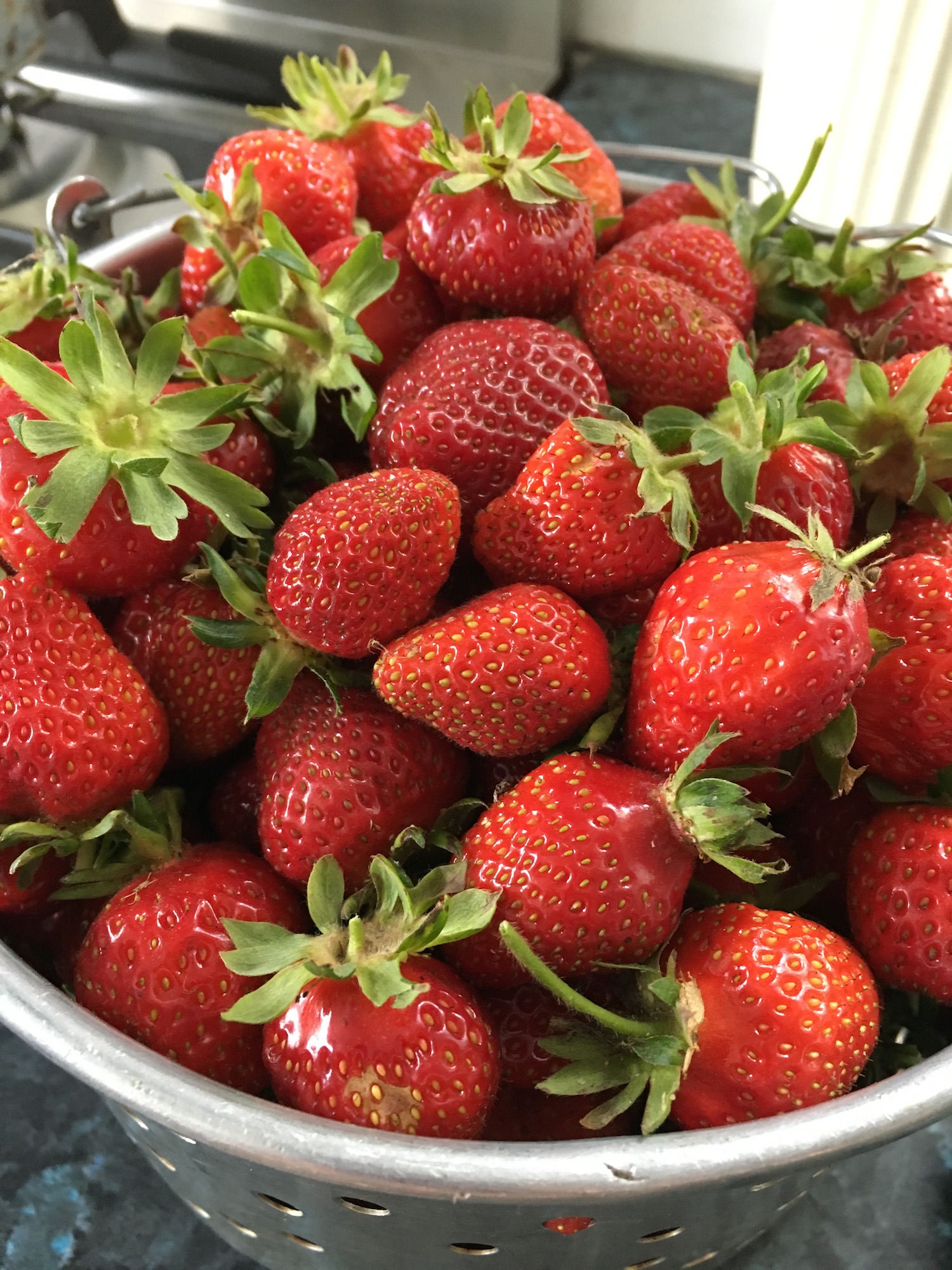
2016-11-30-17-31-25-smIt’s beginning to look a lot like Christmas…

Strawberries, gooseberries, black currants, red currants, cherries, and peas—ah! The signs of Christmas! They’re red and green, just like those in the Northern Hemisphere, but the greens are brighter than pine tree green, and the reds more succulent than holly berries.

They are just as festive as the colours up north, though in a different way. While you look inward, gathering around the hearth on long dark evenings, we look outward, sitting with friends on the beach on long summer days. You dream of white snow, we dream of white sand. You have visions of sugar plums dancing in your heads, we have visions of fresh strawberries dancing in ours. While you sing ‘let it snow’, we sing ‘let us go’ (to the beach).

Now and again I miss the cosy dark of Christmas in the north. And every year, I wish summer gardening, Christmas, and the end of the school year didn’t happen simultaneously. But I’ve grown to appreciate the summer Christmas. I appreciate not having to plan Christmas dinner, but letting it spring from whatever is abundant in the garden. I appreciate being able to sit outside on the porch in the sun after gifts have been opened. I appreciate the barefoot, short-sleeved, nature of Christmas here.

It’s like Christmas-lite.