What are the Odds?

A winter storm dropped nearly an inch of sleet on us overnight. I crunched through the ice in the dark this morning to feed the animals. After emptying sleet out of the chickens’ feed tray and filling it with pellets, I turned and saw, in one of my footprints, a bright green/blue glowing spot.

Bioluminescence. There was no mistaking the colour. I carefully scooped up the bit of glowing sleet and held it in my hand. I could think of no terrestrial source of the glow. There are no glowworms in my vegetable garden, and no bioluminescent fungi. Besides, this was in the ice, not on the ground.

The spot glowed for a moment between my fingers. Then the ice melted, the light went out, and whatever had made the glow dripped to the ground.

I spent an hour online looking for any reference to bioluminescence in snow, and found none. The only explanation I could come up with for my glowing sleet was that a phosphorescent marine creature was picked up in sea spray four kilometres away, frozen, and then deposited in my garden. My stomping foot disturbed it, and it glowed briefly before, most likely, succumbing to a deadly infusion of fresh water.

What are the odds that organism would be picked up from the sea and whisked four kilometres inland? What are the odds it would land in my garden? What are the odds it would have still been alive when I trekked out to feed the animals? What are the odds I would step on that tiny organism and induce it to glow?

Very, very tiny.

I was given a tremendous gift this morning. One of those gifts that reminds me to always keep my eyes open. You really never know what you might see.

Winter Roses

It was -3°C (27°F) yesterday morning, and only 8°C (46°F) in the house when I got up to light the fire. The days are short and often rainy. Nights are long. Towels in the bathroom never dry.

Sometimes it can feel miserable.

But over the weekend, I picked roses.

And I have to remind myself that at the winter solstice in Minnesota, I was hacking parsnips out of the frozen ground with a pickaxe, and months would go by without the temperature rising above freezing. The day my daughter was born, the noontime temperature was -31°C (-23°F). I used to teach snowshoeing. The winter we moved to New Zealand, the ground froze to 3 metres (10 ft) deep–froze people’s septic systems for months. Winter was real and deadly.

By contrast, I have not worn a winter coat since we moved here twelve years ago.

The lawn needs mowing year round.

I grow a winter garden (and the vegetables don’t freeze solid).

I pick roses.

Hard to complain about that.

Spectacular Storm

Just a few minutes before the rain, with the sun still shining.

When I checked the weather forecast last night, it looked promising for hanging out the washing today. Perhaps a bit overly windy, but a dry nor’westerly wind.

Unfortunately, I had to leave the house this morning before it was light, so I wasn’t able to get the laundry on the laundry line. Instead, I hung it on the indoor drying rack, set on the porch.

It was a good thing.

The storm that was forecast to blow in late in the afternoon arrived several hours early.

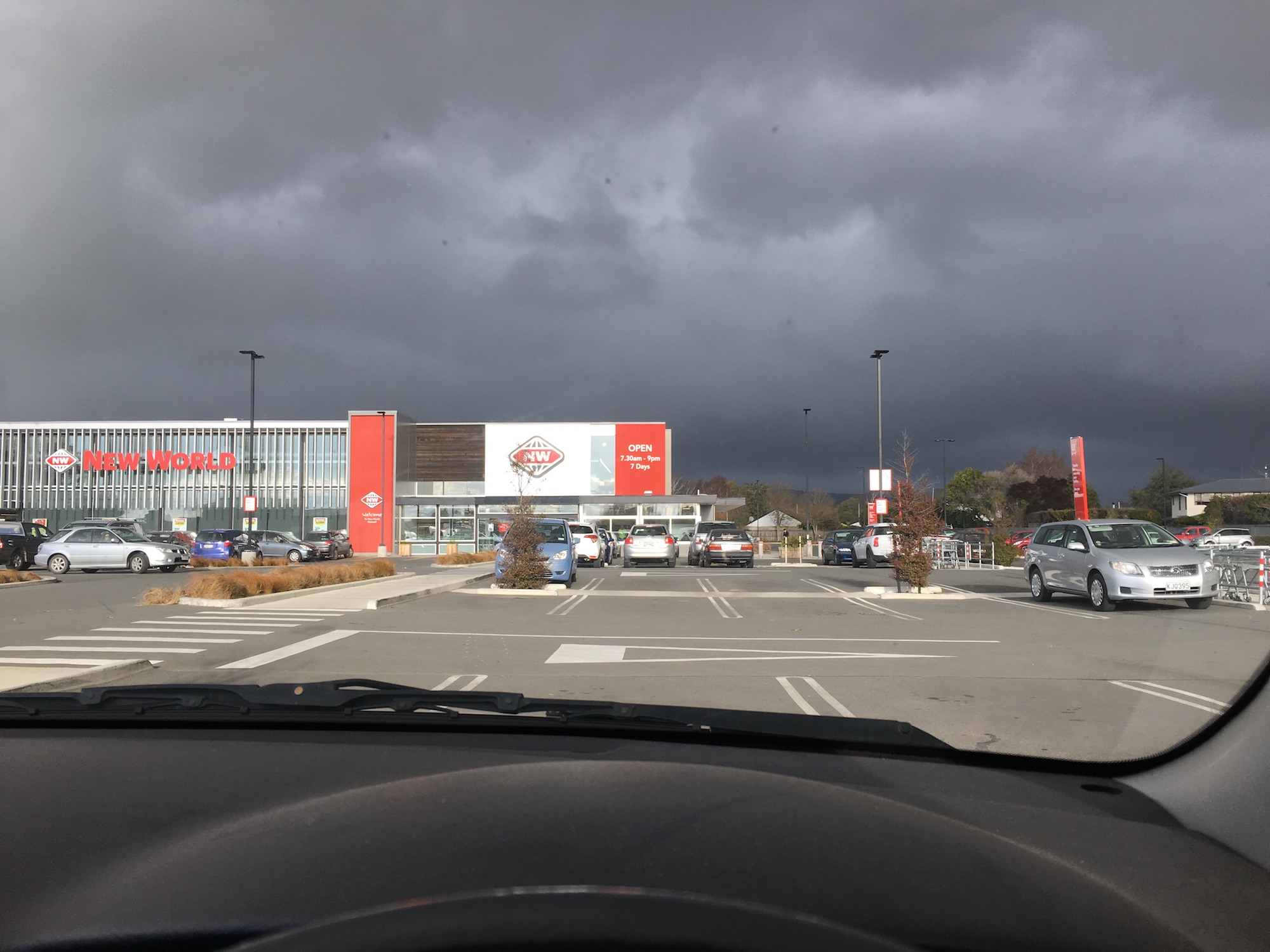
I had a fabulous view of it from the library where I was working today. The clouds spread out like a spill of hot jam, oozing across the the sky. The leading edge, when it first appeared, was white and smooth, but behind it, the clouds roiled black.

For an hour, I watched the storm ooze toward me. All the while the sun shone bright and warm.

Fifteen minutes before I knew I had to leave to pick up the kids, I decided it was time to make a run for the car. The storm nipped at my heels, and I just had time to get into the car before every autumn leaf on the street was whipped into the air by the first gust of wind.

I drove to the kids’ pick-up spot through a whirlwind of flying leaves and rubbish. By the time their bus pulled up a few minutes later, the car was being lashed by rain and hail.

And the laundry? It wasn’t exactly dry, and some of it had blown off the rack. But I was thankful that darkness had kept me from putting it on the line in the morning.

Beauty Smacks You Upside the Head

Today was an ordinary Monday. The weather was unsettled–clear before dawn, then overcast, drizzly, clearing somewhat late afternoon. Nothing special at all about it.

Except.

Except I couldn’t help but notice today the way the sunlight on the Port Hills highlighted every ridge and valley in bas relief.

I couldn’t help but see the lush green growth of the grass that showed off the lingering oranges and russets of autumn leaves.

I couldn’t avoid seeing that the clouds billowed across the sky in purple, peach, glowing white, and five shades of blue.

I couldn’t help but see the brush fires, flickering yellow, their powder blue smoke rising to form a xanthic smudge across the sky.

Like it or not, the absurd beauty of this place smacked me in the face today. I grinned like an idiot and nearly drove off the road.

Of course, I didn’t get any photos of it. It wouldn’t have done the day justice, anyway.

Not bad, for an ordinary Monday.

Public Service Announcement: Dragon Danger

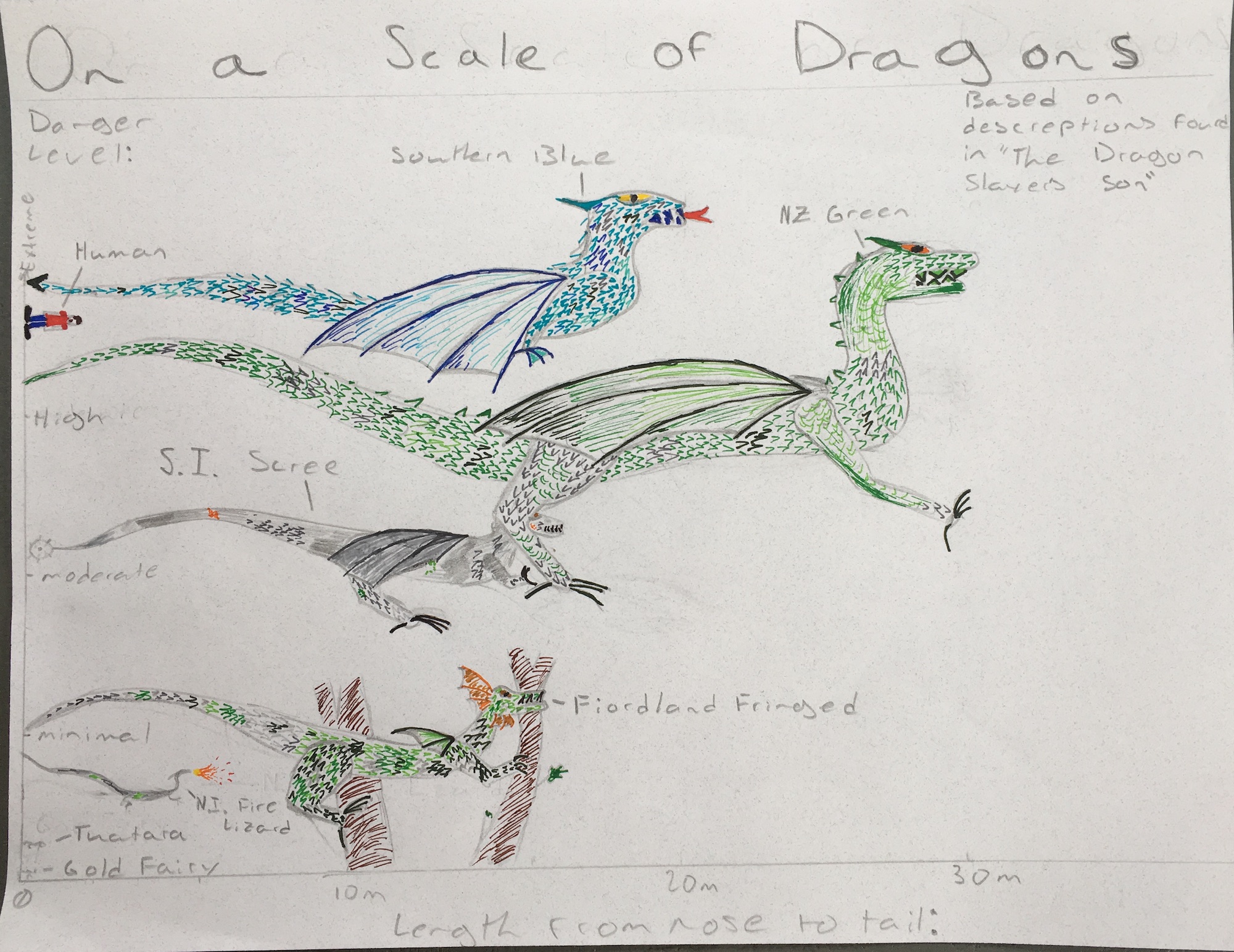
In case you’ve been wondering, my son has created this handy guide to the dangerousness of New Zealand dragons. This should come in handy, if you are ever faced with these creatures on your travels.

Please note that, though some of these dragons pose little or no danger to humans, it is unlawful to harass or disturb native wildlife. And even the gold fairy dragon can deliver a painful bite when provoked. It’s always best to view wildlife from a distance.

Particularly when that wildlife is thirty metres long, can breathe fire, and has a temper.

Traditional Easter Jack-o-lantern

The traditional Northern Hemisphere holidays make absolutely no sense here. Easter falls at the Northern Hemisphere seasonal equivalent of mid-October. So a celebration of spring flowers, new-season’s growth, resurrection, etc. just doesn’t work.

We’ve just brought in the last of the harvest–pumpkins, apples, popcorn. The only summer crops left are those in the greenhouse, and they won’t be around much longer, either. Trees are losing their leaves. We’ve brought out the candles, and dream of sitting by a crackling fire in the coming months. Clearly, painted eggs, bunnies, and spring flowers are inappropriate.

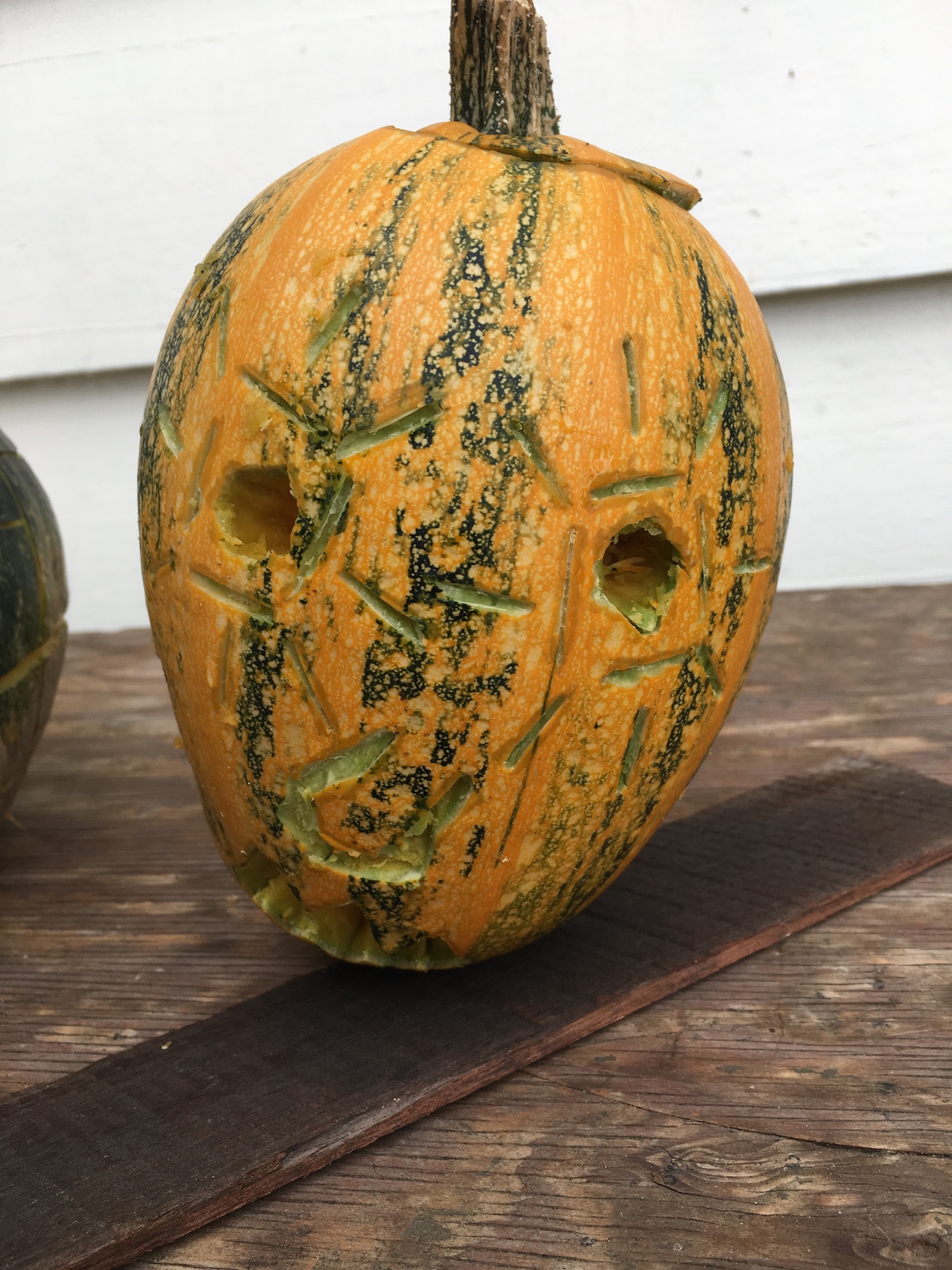
So I introduce the traditional Easter Jack-o-lantern. Carved while snacking on roasted pumpkin seeds.

Great fun for the kids, and better for them than chocolate bunnies!

Rangitata

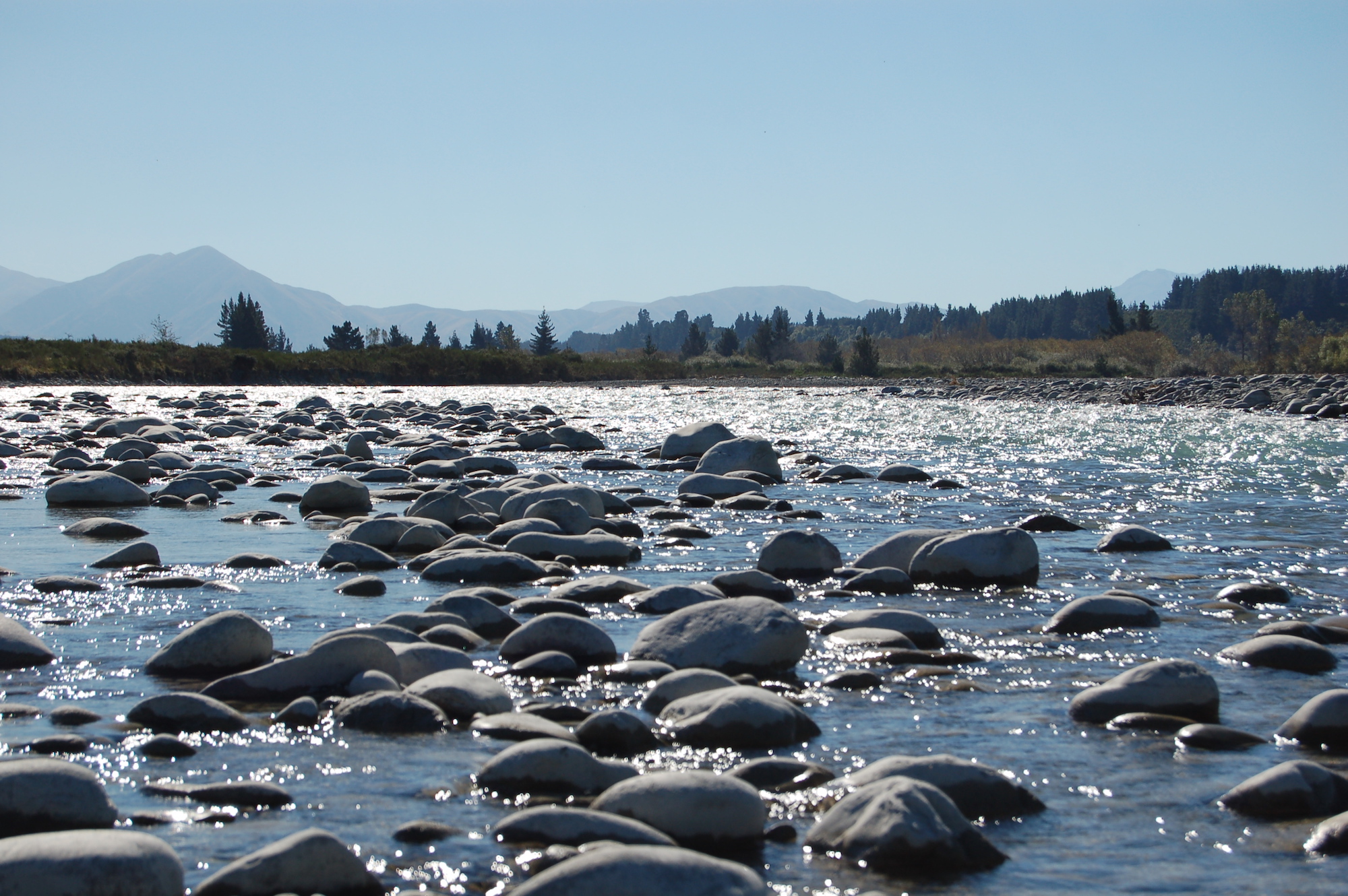
Boulders like
Some great migration of hump-backed
Turtles
Lumber through the shallows.
Wading
Only to the knees.
Wary
Of the laughing burble of
The deep channel beyond.
Their cousins crowd the opposite bank.

Watch.

One will push another in
If you wait long enough.

Losing Soil, Making Soil

img_3148This time of year is always dusty. The soil is dry. The air is dry. Farmers harvest the summer crops and turn the soil to plant the winter’s grass. It’s not unusual for a wind to kick up, sending newly-turned soil into the air.

I don’t know how much soil farmers in Canterbury lose this way (they’re also getting soil from the farms upwind and loess blown off the mountains), but I do know that where my back yard meets the neighbour’s field, my property is significantly higher. At least some of that soil is being lost.

Interestingly, there seems to be a place on the neighbours’ farms where soil is being made.

A hundred and fifty years ago, farmers in Canterbury were planting gorse hedges for shelter and fencing. Many of those gorse hedges remain (indeed, they’re hard to get rid of). The original plants are almost certainly long gone, as gorse is a short-lived shrub, but new plants are continuously growing from seeds cast by the mature plants.

It’s quite possible that my neighbour’s gorse hedges have been here since Joseph Price took up the original 5000-acre run number 79 in 1853.

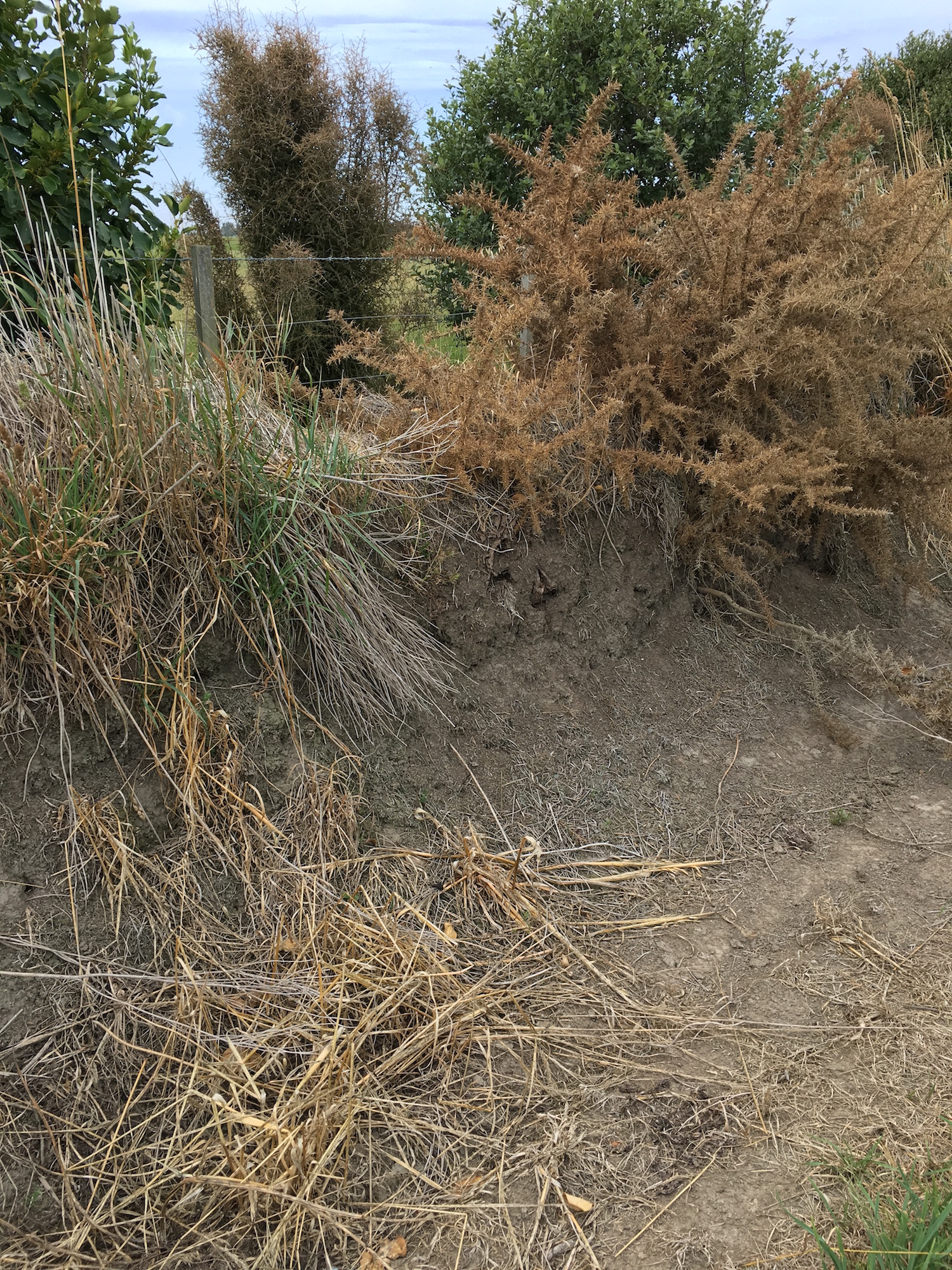
Gorse is dense when pruned into a hedge. New outer growth shades out growth in the middle of the hedge. Thorns and branches fall and form a dense, prickly mass at the base of the plant. Over time, this detritus breaks down and forms soil.

Quite a lot of soil, by the looks of it.

Some gorse hedges were planted on ridges–ditch and dyke, it was called–the farmer dug a ditch to help drain the land, and planted a hedge on the resulting pile of soil scooped out of the ditch. Some hedges were just planted on the level ground. This is how the hedges along my lunchtime walk were planted, but today it looks like they were sown on a tall, narrow wall of soil.

The build-up of soil under the gorse hedges is impressive. In some places, it is as high as my waist. It is most visible where the gorse has been herbicided off to make way for native hedging plants. There you can see how the twisted trunks and branches have caught the detritus and held it in place, even after it has rotted.

How important are these ridges of new soil in a landscape that is losing soil? Probably not terribly important–they cover just a tiny fraction of the landscape–but I find them intriguing, nonetheless. Our agricultural landscapes–as modified, controlled and cultivated as they are–still hold interesting stories.

Technological Stress Relief

Our smoke-red sky

Our smoke-red sky

It’s been a tense day here. For those who don’t pay attention to the New Zealand news (I don’t blame you–one of the top stories today was that a police officer in Queenstown pulled a plastic cup off of a hedgehog who was stuck in it), there have been two bush fires burning in the Port Hills, just outside of Christchurch for the past two days. We’ve been able to see the flames from our house 30 km away–they’re serious fires. Yesterday I worked at a library not far from where the fires were burning, and watched as helicopters with monsoon buckets circled.

Today the wind shifted and is pushing the fire toward the city. As evacuation orders started coming in, my kids were somewhere on a bus, caught up in a snarl of traffic. People fleeing the flames, people trying to get back to their homes from work, people coming to see the spectacle of the hills above town on fire–it was pretty chaotic.

I was safely at home, watching the smoke plume burgeon, listening to the radio. It all felt so familiar–a natural disaster, and I was in one place, and the people I love were in another. We’ve been here before.

The difference was that this time, all four of us own cell phones. Last time, we didn’t know the status of our loved ones until we actually saw them. This time, I knew pretty well where everyone was all afternoon.

It didn’t stop me from worrying–my kids were still too close to the fire and too far from me for comfort–but it prevented me from envisioning the worst.

I admit, there are times when I want to say to at least one of my children (or to myself), “Put down the phone!” But the trade-off of being able to communicate with them on days like today is worth it.

I’ve been accused of being a Luddite, and the accusation has some merit–I don’t like technology for technology’s sake. New technology tends to stress me out. But I certainly appreciated it today–it relieved a great deal of stress.

Salty Pretzels, Shiny Pots

img_3057I love soft pretzels. If I had an unlimited supply of them, I’m certain I would simply eat them until I was sick. So it’s a really good thing they’re basically not available in New Zealand.

They’re easy to make, though, and the kids enjoy shaping them. We make them with some regularity, usually timed so that they’re coming out of the oven at lunchtime. Served with dill pickles, mustard, and a good sharp cheese, they make an excellent meal (if a bit salty).

I love these pretzel meals, but even after the pretzels are gone, they leave a lasting bonus.

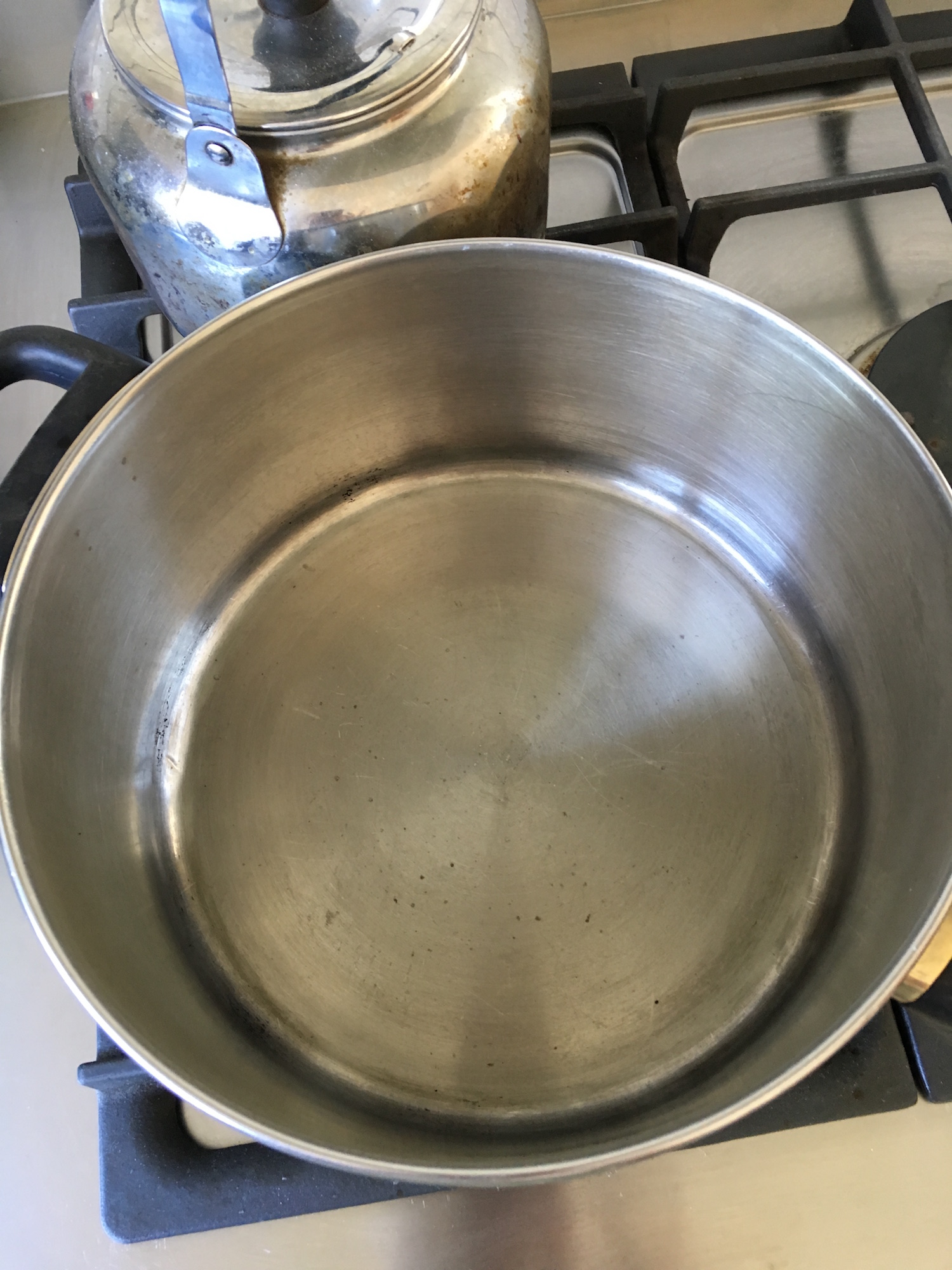
A shiny pot.

Boiling the pretzels in a baking soda/water mixture loosens all the burnt-on oil from my cooking pots. You know, all those dark spots you chalk up to ‘patina’ because they’re a real pain to wash off. Loosened by the baking soda, they lift right off when you wash the pretzel-boiling pot.

I learned this years ago, and regularly boil water and baking soda in my pots to get them nice and clean. But I never have the patience to boil it long enough–by making pretzels in the baking soda mixture, I leave it boiling long enough to lift the stains.

Pots looking dingy? Maybe it’s time to make pretzels!