Beautiful Basket Fungus

Mature fruiting body

One of my favourite fungi is Ileodictyon cibarium, the basket fungus, native to Australia, New Zealand and Chile. We have been treated this year to an amazing display of these fungi in our recently wood-chipped pond garden. Usually we don’t notice them until the fruiting bodies are fully formed, but because there are so many this year, we’ve been able to watch their whole emergence, from egg-like volva to lacy soccer ball.

Aside from their striking look, there’s nothing particularly lovely about these fungi. The basket fungus is in the family Phallaceae, also known as the stinkhorn fungi. Members of this family—you guessed it—have a foul odour (and many are phallus-shaped). The carrion or dung-smelling fruiting bodies attract flies to disperse the spores. Supposedly, the young fruiting bodies are edible … but not very tasty, as you can imagine.
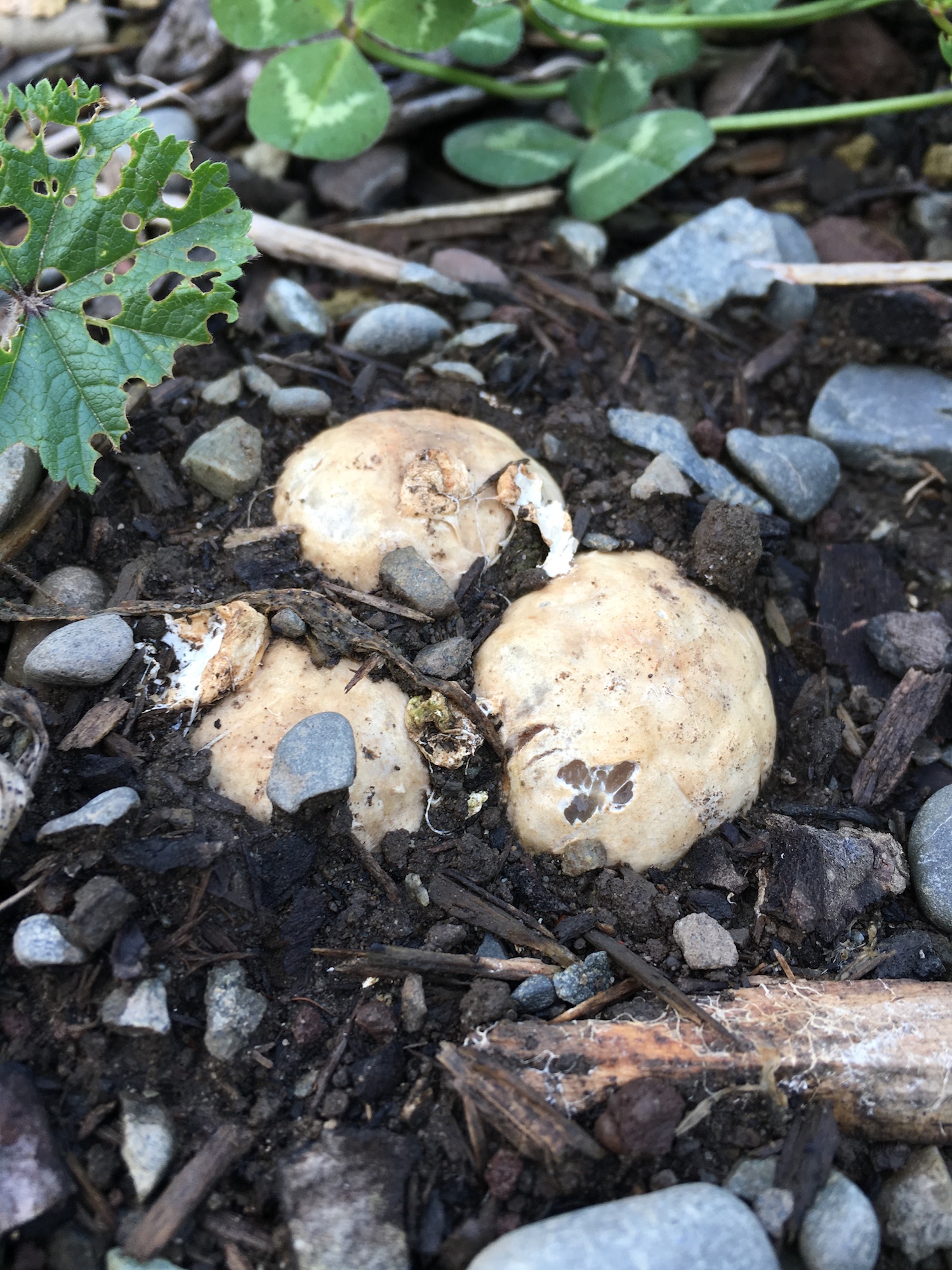
Immature volvae

In spite of their smell, basket fungi have a certain celebrity status, owing to their remarkable structure. In fact, in Hagley Park in Christchurch there used to be a play structure in the shape of a giant basket fungus. I’m not sure if it’s still there—my kids don’t frequent playgrounds anymore—but it was always a favourite with my kids.
Geek 1: Fear 0

I was in Christchurch for an all-day workshop on Saturday. The closest all-day parking was in the Art Gallery carpark. I resisted the idea of parking there. I never liked basement carparks, even before the 2010-2011 earthquakes, and I like them even less now.

Stupid, I thought. Time to get over this fear. Thousands of people park in multi-storey and basement carparks every day in this city. I can do it for one day.

I dove into the carpark, leapt out of my car, and practically sprinted to the exit. I was dismayed to find the pedestrian exit was through a couple of doors, down a corridor, and up a flight of stairs.

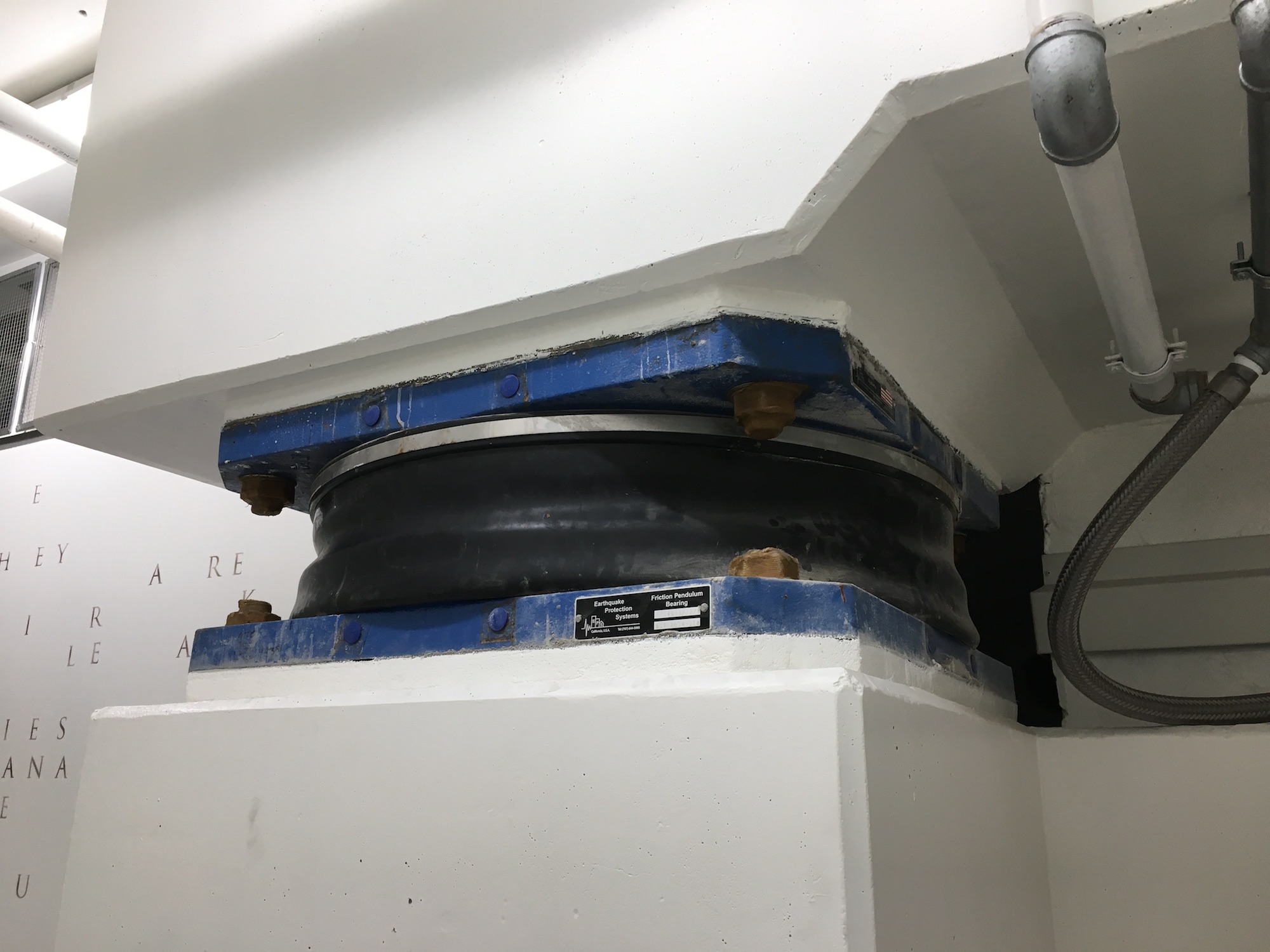
But just as I was about to climb the stairs, I noticed one of the seismic base isolators the building is equipped with. The geek in me overrode the scaredy cat, and I had to stop to snap a photo.

These isolation units are a cool piece of technology. They essentially decouple the building from the ground, so that when the earth shakes, the building stays still. In a quake, the top and bottom plates of the unit slide contrary to one another—the building’s inertia keeps the top plate relatively still while the lower plate jiggles around.

The isolation units were retrofitted to the art gallery (along with lots of other repairs) after the 2010-2011 earthquakes.

According to the manufacturer’s website, the Triple Pendulum Bearings like those installed in the Art Gallery are designed to dampen the wide range of lateral vibrations from small, medium, and large quakes. They don’t make the building completely quake-proof, but they did make me more comfortable leaving my car there for the day.

Ode to a Fern

I could have posted a blog yesterday, but only from here, where there was cellphone reception. You’ll excuse me if I decided to enjoy the view instead of write a blog post.

It’s not that I didn’t write. My daughter and I, out for two days of hiking, stopped a couple of times on our way to sit and write. Sometimes I gave us a challenge, sometimes we just wrote.

I can’t say that anything I penned in the past two days is great literature, but I did smile as I wrote this Ode to a Fern, which was our first challenge. True to our writing styles, my daughter’s poem was deep and insightful, mine silly doggerel. Here it is, to lighten your day …

O filmy fern
All wet with dew
With fronds so thin
They are see-through.

You could adorn
A lady’s hat
A leafy veil
Fine to look at.

Or perhaps a curtain
You could be
Your gauzy fronds
Flapping free.

O filmy fern
These aren’t for you
To your wild self
You must be true.

Inhabit damp footpaths
Dimly lit
The forest floor
Is where you fit.

Pigeon Bay Walkway

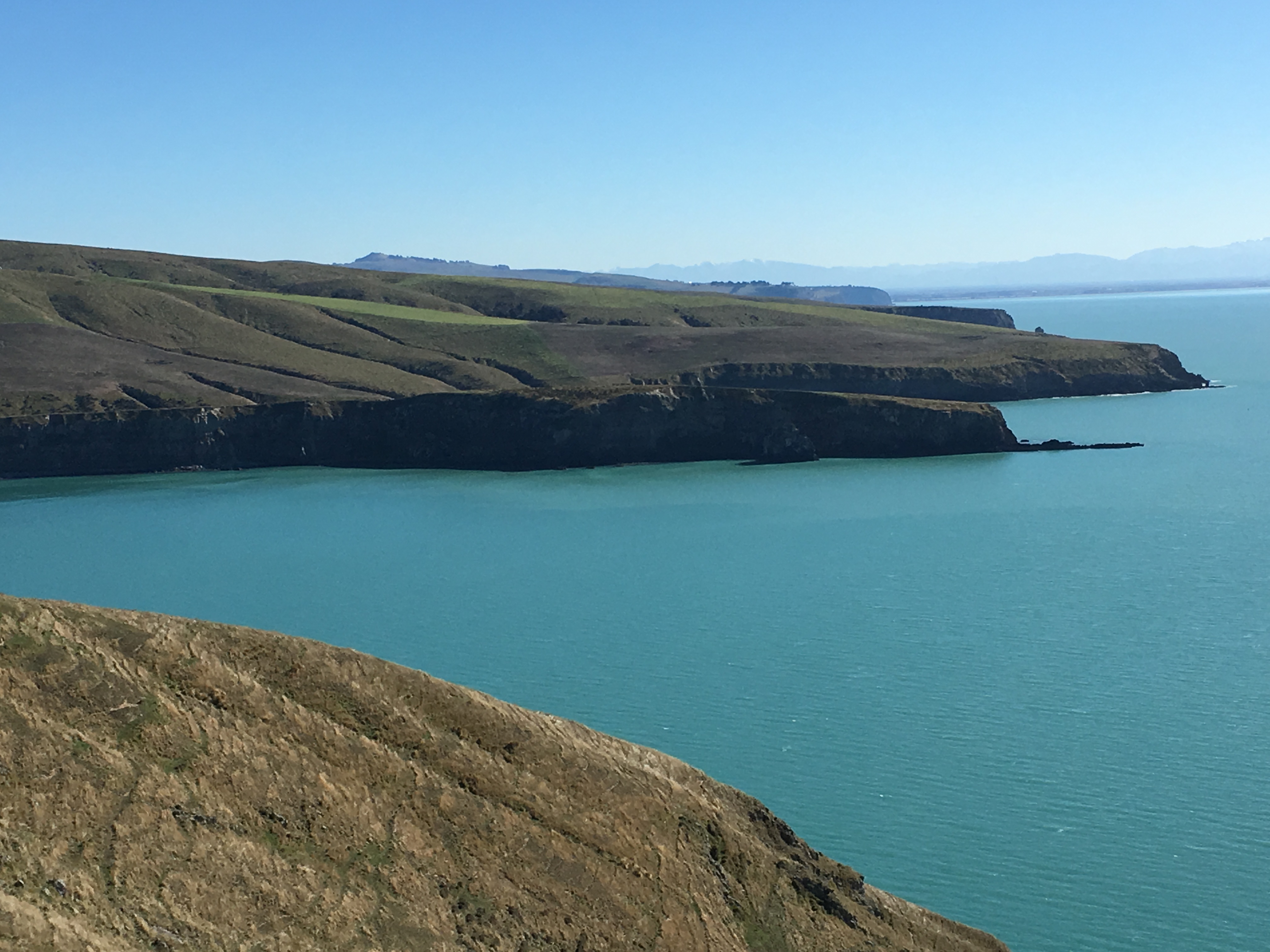
View from the head toward Christchurch.

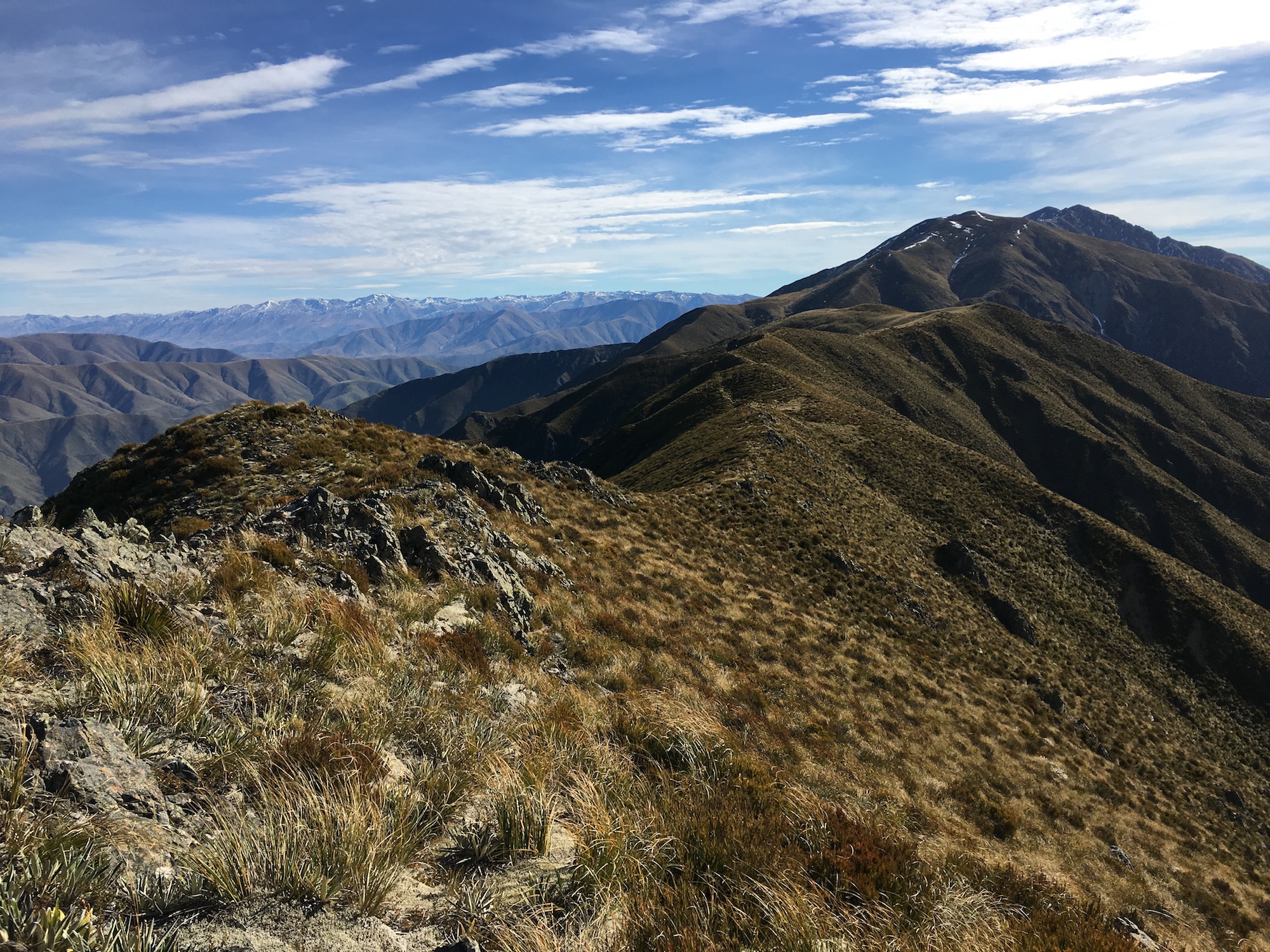
Yesterday was a beautiful autumnal day. We headed out to the Banks Peninsula and did the Pigeon Bay Walkway.

It has been over a decade since we’ve been to Pigeon Bay. Last time we went, the kids were preschoolers. Then, we’d hoped for some sort of beach where the kids could play in the water, but Pigeon Bay is rocky. The shoreline is covered in cobble-sized rocks teeming with life. Lift any rock and a dozen crabs scuttle away. A decade ago, the pursuit of crabs delighted the kids. Still does. Yesterday, we also noted starfish, chitons, limpets and snails under the rocks.

But the main activity for yesterday was the walkway. It’s rated as a five hour return walk, but is mostly on a well-graded farm track. It’s easy going, and we did it in four hours, including a lunch break.

The track runs all the way to the head of the bay. It’s not exactly a wilderness experience—the land is a beef and sheep farm—but the views are spectacular. It’s one of the few places on the Banks Peninsula where you can get right out to the tip of the headland.

Out on the head, the cliffs are quite spectacular, and you can see the layers of volcanic deposits, well-spattered with poo from the shag colonies there. In the clear air yesterday, we could see all the way to the Kaikoura ranges.

The best part of the walk for me was looking down on a small pod of Hector’s dolphins feeding in the bay below. The dolphins were clearly circling and corralling fish, and there was a trio of gulls shadowing them in the air, picking off the fish the dolphins missed.

A lovely walk. Hard to believe it took us this long to get around to doing it.

Nursery web spiders

The nursery web spider (Dolomedes minor) is one of New Zealand’s larger spiders, in spite of it’s species name. At this time of the year, it’s also one of the more visible spiders, or at least its webs are.

Nursery web spiders don’t use webs to catch food. Instead, they use their silk to create shelters for their eggs and newly-hatched young. These shelters are visible in late summer and autumn on the tips of shrubby plants, especially gorse.

The female spider can sometimes be seen hanging around the web during the day. In fact, if she’s nearby, its hard to miss her, with a body nearly two centimetres long, and a leg span reaching six centimetres.

The nursery web isn’t the only care the nursery web spider gives her young. Until the spiderlings are near to hatching, she carries the egg sac with her to protect it. The young hatch out inside the nursery web, staying within the web’s protection for about a week.

The spiderlings disperse by ballooning—they let out a strand of silk until the force of the wind blowing on it is greater than their own weight, and then they float away on the end of the thread to a new home.

Like other members of the genus Dolomedes, the nursery web spider is an ambush hunter, chasing down its prey on foot. But most other Dolomedes do this exclusively on or in water, whereas the nursery web spider hunts on land as well as water, eating a wide range of invertebrates.

Earthworm!

Most people give little thought to earthworms. Even gardeners, who appreciate their presence, don’t spend much time considering which species of worm are present.

But species matters.

Here in New Zealand, we have about 200 species of earthworms, most of which are native. The native and non-native worms are sharply segregated by habitat—natives in native habitats, non-natives in agricultural and urban habitats. So all the worms we see in our gardens are non-native species.

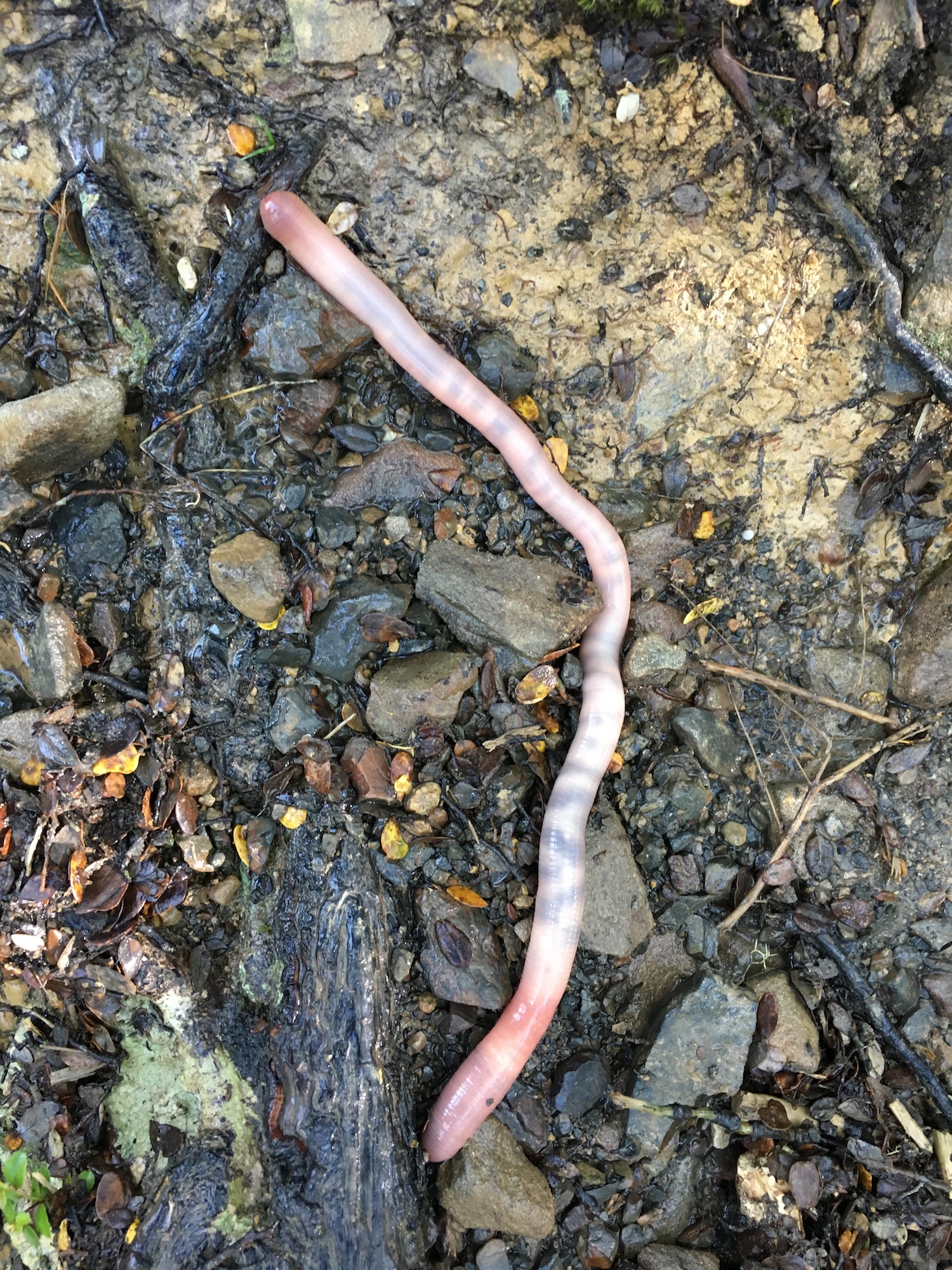
When you’re used to the small to medium sized non-native worms, finding a native worm is exciting. They’re generally larger than the non-native worms—sometimes much larger. Some can grow to nearly a metre and a half (59 in) in length.

We were lucky enough to find this native worm on Mount Oxford over the weekend. I can’t positively identify the species, but it’s likely to be Octochaetus multiporus. This was a young specimen—not yet reproductive age (as evidenced by its lack of a clitellum)—but already about 20 cm (8 in) long and as thick as my pinky finger. This particular species grows to about 30 cm (12 in) long.

O. multiporus is a particularly interesting worm because it is bioluminescent and spits a bioluminescent defence compound when disturbed. On the bright sunny day we found this one, there was no hope of seeing any bioluminescence. Still, it was a great find on our walk.

Fungal Wonderland

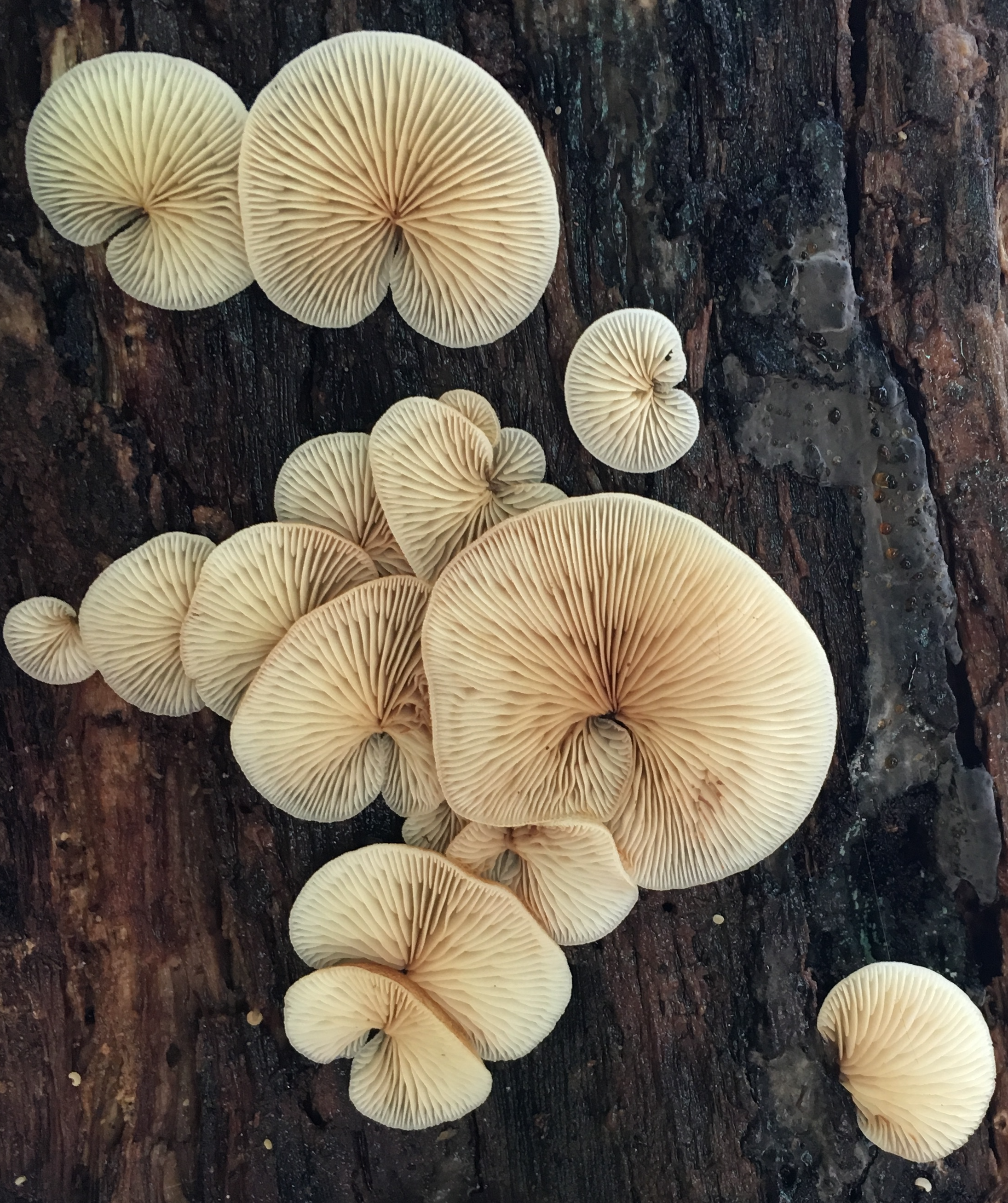
A family hike on Saturday took us through a fungal wonderland on Mount Oxford. Everywhere we looked, it seemed, fruiting bodies were popping out. White, brown, blue, purple, red, black—fabulous diversity of species, form and colour.

My favourite of the day, however, were not the big, showy Amanita muscaria or the lurid purple Cortinarius porphyroideus, but these unassuming (and unidentifiable by us) little shelf fungi. They were growing out of the underside of a fallen log we had to duck under, and their gills made stunning, artistic patterns. Unremarkable though the mushrooms themselves were, the perspective of seeing them from below turned them into something truly special.

Amazing how a simple shift of perspective can turn the ordinary extraordinary.

International Women’s Day

Today is International Women’s Day. Today I’m pleased to live in the country that was first to achieve women’s suffrage—in 1893. It would not have happened without the tireless effort of many women. Kate Sheppard, who led the charge, is commemorated on New Zealand’s $10 note.

Five bills giving women the vote, the first as early as 1878, nearly passed Parliament before the 1893 bill was successful. The successful bill was backed up by a petition signed by 32,000 women. That may not seem like a lot of signatures today, but it represented one-quarter of the female population of the country. That achievement, at a time before social media, e-mail, faxes, or even decent road access to much of the country, is truly astonishing.

Of course, suffrage was only one step in the journey toward gender equality. It wasn’t until 1933 that New Zealand saw its first female Member of Parliament, and though we’ve now had three female Prime Ministers, women are still underrepresented in the government. Women still earn 9 percent less than men (though that is much better than the 18 percent difference in Australia, the UK and the US). Women still face sexism at work and in daily life. There is still much to be done.

But I am heartened by the progress that has been made. It is encouraging to see younger women and girls speaking up and speaking out, and taking for granted rights and opportunities my generation was only beginning to grasp at their age.

As a Peace Corps volunteer twenty-five years ago, much of the work I did was with women, empowering them to be leaders in their community and beyond. It is generally acknowledged in international development circles that if you empower the women, you raise the well-being of the entire community (more so than if you expend the same effort empowering men). This is every bit as true in the developed world as it is in the developing world. No society benefits from oppressing half its population.

As a high school student, I participated in a job-shadowing day. At the time, I was interested in a career in wildlife management, so I shadowed a ranger at a local wildlife management area. When I walked in the door that morning, the director crossed his arms and scowled at me.

“We don’t like girls,” he said.

Well.

Sorry to hear that. We’re here to stay.

Green Orb Weaver

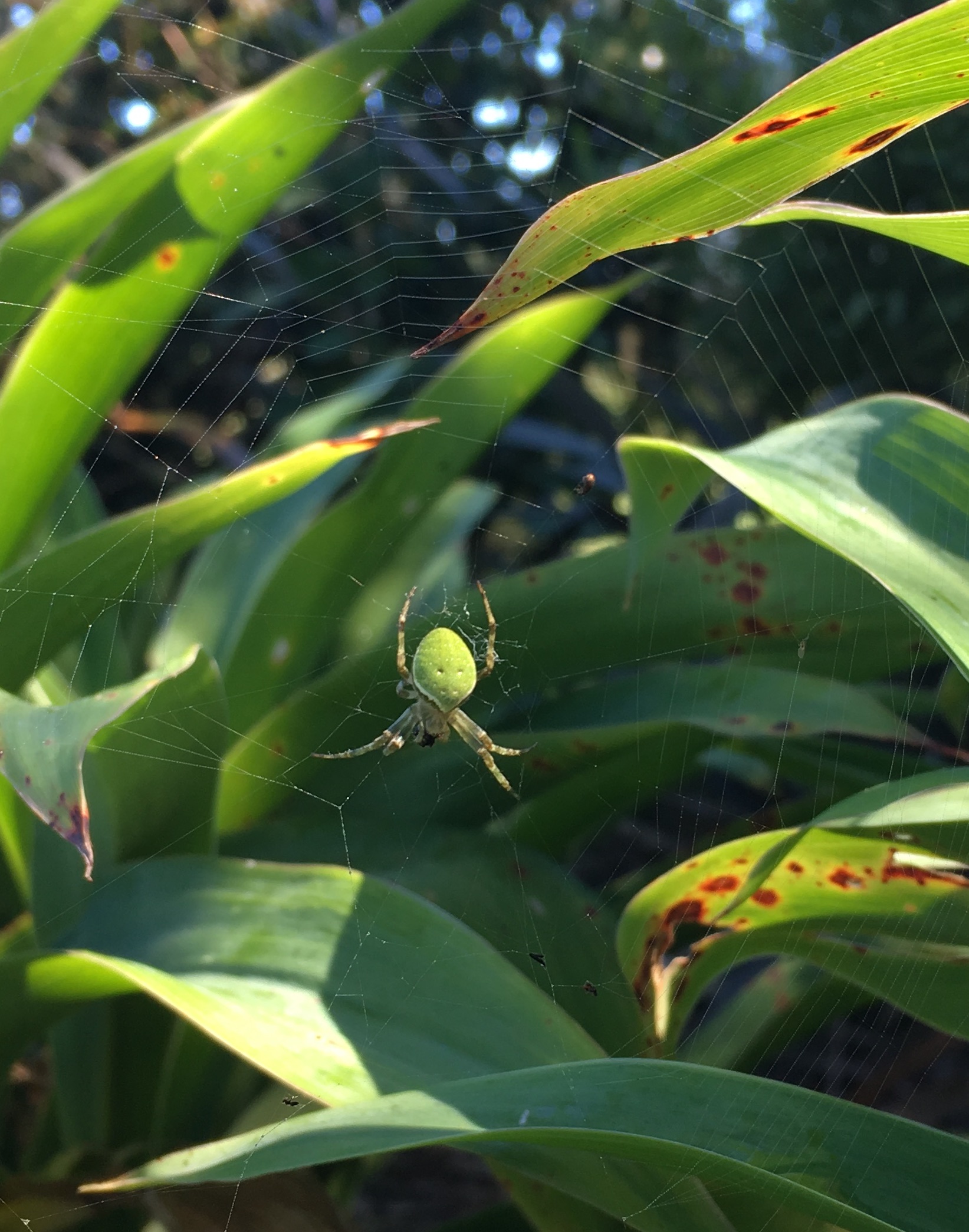
This year has apparently been good for the green orbweb spider (Colaranea viriditas); I usually see them only rarely, but I’ve run across quite a few this summer.

These beauties are pale green with a kelly green leaf-shaped mark covering the abdomen.

As the name implies, these spiders make orb webs—the spiral-shaped webs everyone’s familiar with. Though they’re primarily nocturnal, I’ve regularly seen them hanging out in the middle of their webs during the daytime (often snacking on an insect). These sharp-looking spiders apparently like a tidy web; they rebuild their webs nightly, and the webs are always as attractive as their residents.

The green orb weaver’s main predator is the native potter wasp, which paralyses the spiders with a sting and stuffs them into its nest for its larvae to feed on. However, the green orb weaver appears to be better at hiding from potter wasps than the non-native Australian orb weaver (at least on our property). Earlier this summer, the potter wasps decided that the screw holes in the bottom of the dining room table were perfect nest holes—every one of the dozens of orb weavers they crammed into the table was an Australian orb weaver.

I enjoy finding these little green gems in the garden. They’re as beautiful as they are helpful.

Magpie Moths

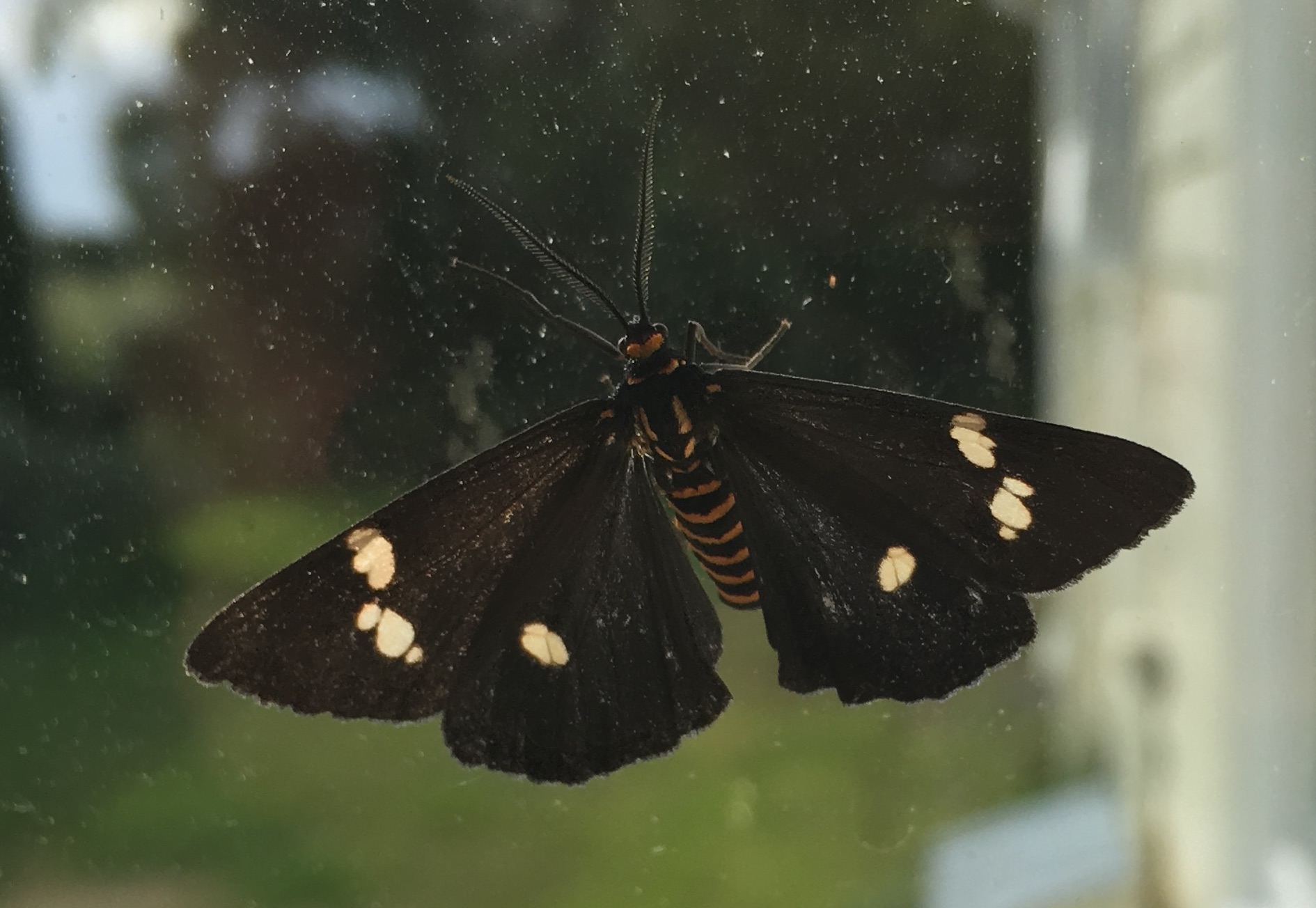
It’s the time of year when one of my favourite moths emerges—the magpie moth (Nyctemera annulata). Magpie moths are in the family Arctiidae—a family including many brightly coloured day-flying moths that threaten to blur the line between moth and butterfly. N. annulata is endemic to New Zealand, though it has a closely related Australian cousin, N. amica, with which it can interbreed.

Magpie moth caterpillars eat plants in the daisy family, especially in the genus Senecio. Common host plants include groundsel (Senecio vulgaris), ragwort (Senecio jacobaea), and cineraria (Jacobaea maritima, formerly Senecio cineraria).

We have large quantities of groundsel, and a few sizeable cineraria on the property, so we always have a healthy population of magpie moths. The caterpillars are black with orange ‘racing’ stripes, and somewhat hairy.

As you can guess from their colouration, magpie moths are poisonous. As caterpillars, they sequester toxins from the plants they eat. These toxins deter most predators. The shining cuckoo, however, is apparently quite fond of magpie moth caterpillars. It avoids the poison by eating only the insides of the caterpillar, leaving the bitter-tasting exoskeleton behind.

In addition to eating weeds like groundsel and ragwort, the magpie moth is a beautiful, colourful addition to the garden. It always makes me smile.