Pandemic Poetry–2021 Edition, #12

Another day, another … day. The good news is I’ve gotten work done in the garden around the rain we’ve had the past few days. I cracked open the compost pile, and the final product is excellent—always like Christmas when you discover you’ve got six cubic metres of compost to play with!

Unfortunately, it looks like the rain is going to hang around for a few more days, so any more work out there may have to wait.

Rain, rain, go away
So we can go out and play.
Covid’s got us stuck at home.
Lockdown means we cannot roam.
Because we’re tired of being lazy
Rainy weather makes us crazy.

Sun’s Return

It’s only a few weeks past the solstice. Nights are below freezing, and the worst of winter is still to come. In shady spots the frost lingers all day.

Spinach seedlings in the greenhouse

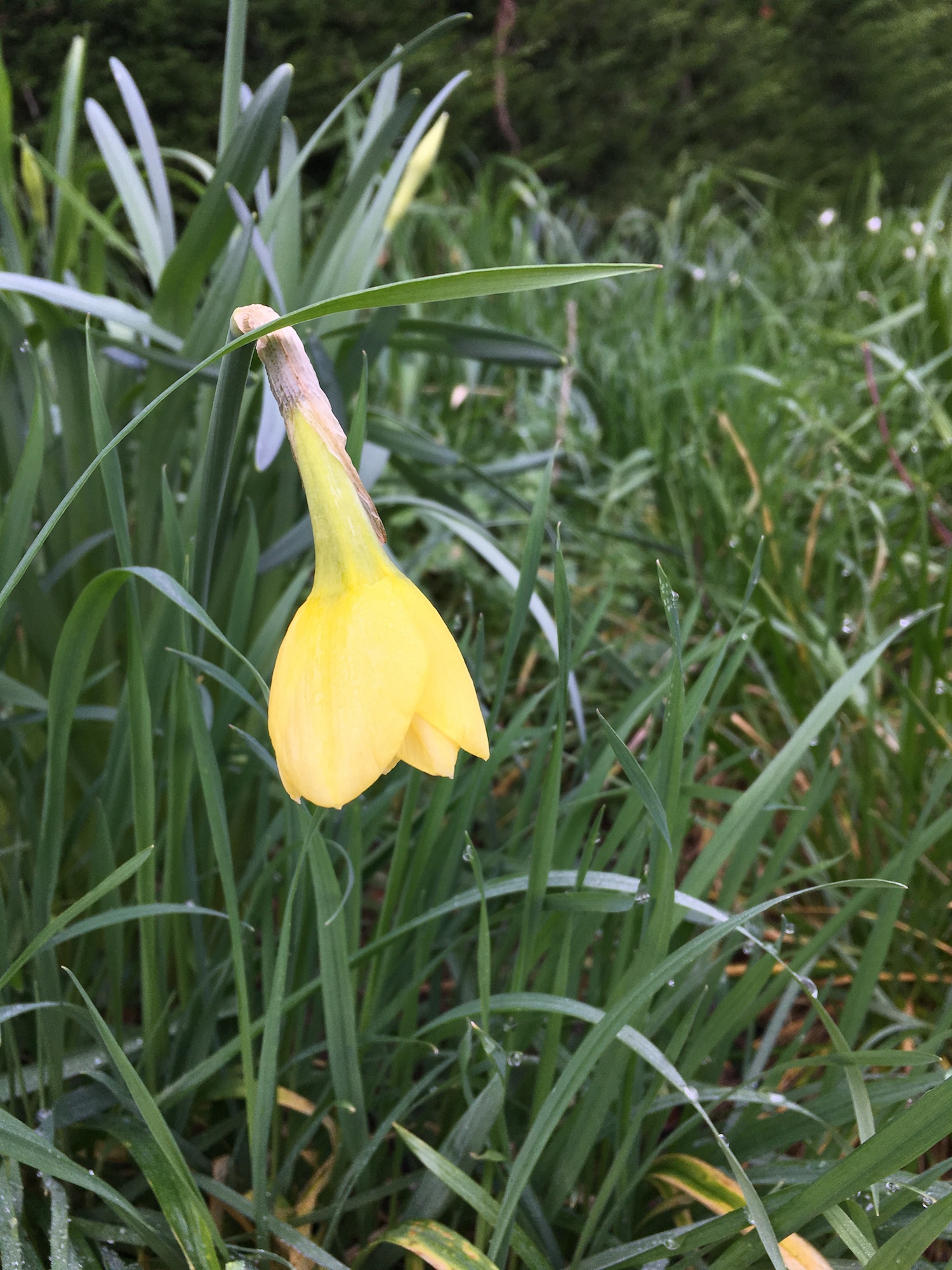
But plants are already responding to the increase in sunlight. There is a haze of new green growth in the chickens’ winter-bare paddock, daffodils are poking their shoots out of the flower beds, and the grass will soon need to be mown.

In the greenhouse, the lettuce and spinach seedlings that have been sitting there unchanging for weeks have finally begun growing again. The broccoli in the winter garden has begun thinking about heading up (at least until yesterday when the chickens got in there and stripped the leaves).

I too have responded to the sun. I’ve drawn my garden map for the upcoming season. I’ve assessed my seed needs in preparation for the arrival of the new year’s seed catalogue. I’ve nearly completed incorporating manure into the entire vegetable garden.

The weeks will go quickly. Before I know it, it will be time to start seeds, mark out garden beds and spread compost. Now is the time I should be buckling down to complete winter tasks—sewing, organising, cleaning … But like the plants stretching out their tentative leaves, I can’t help but respond to the sun, reaching for spring and looking forward to the new season to come.

Summer Stocktake

Mid-April, and it’s time to take stock of the summer’s garden. 

Compared with gardens at the old house, this year’s was a disaster—stunted plants that died off early, solanaceous crops decimated by viral disease, and heat and drought that I struggled to combat with irrigation.

But compared with what I expected, the garden was a huge success. I managed to provide the plants enough nutrients and water that they all managed to give us something. We had enough peas, corn and carrots to freeze some. We gorged on strawberries and melons. I gave away heaps of zucchini. The laundry room is piled with pumpkins. We’ve got more garlic and onion than we’ll be able to eat before it starts to sprout. And we’ve had a steady supply of tomatoes, eggplants and peppers. 

The stars of them all have been the carrots. Last spring I blogged about how well my carrots germinated this year—better than they ever had before, which was quite a surprise in the new garden. At the time, I reserved judgement—it was too much to hope the carrots would grow well in heavy clay soil studded with rocks.

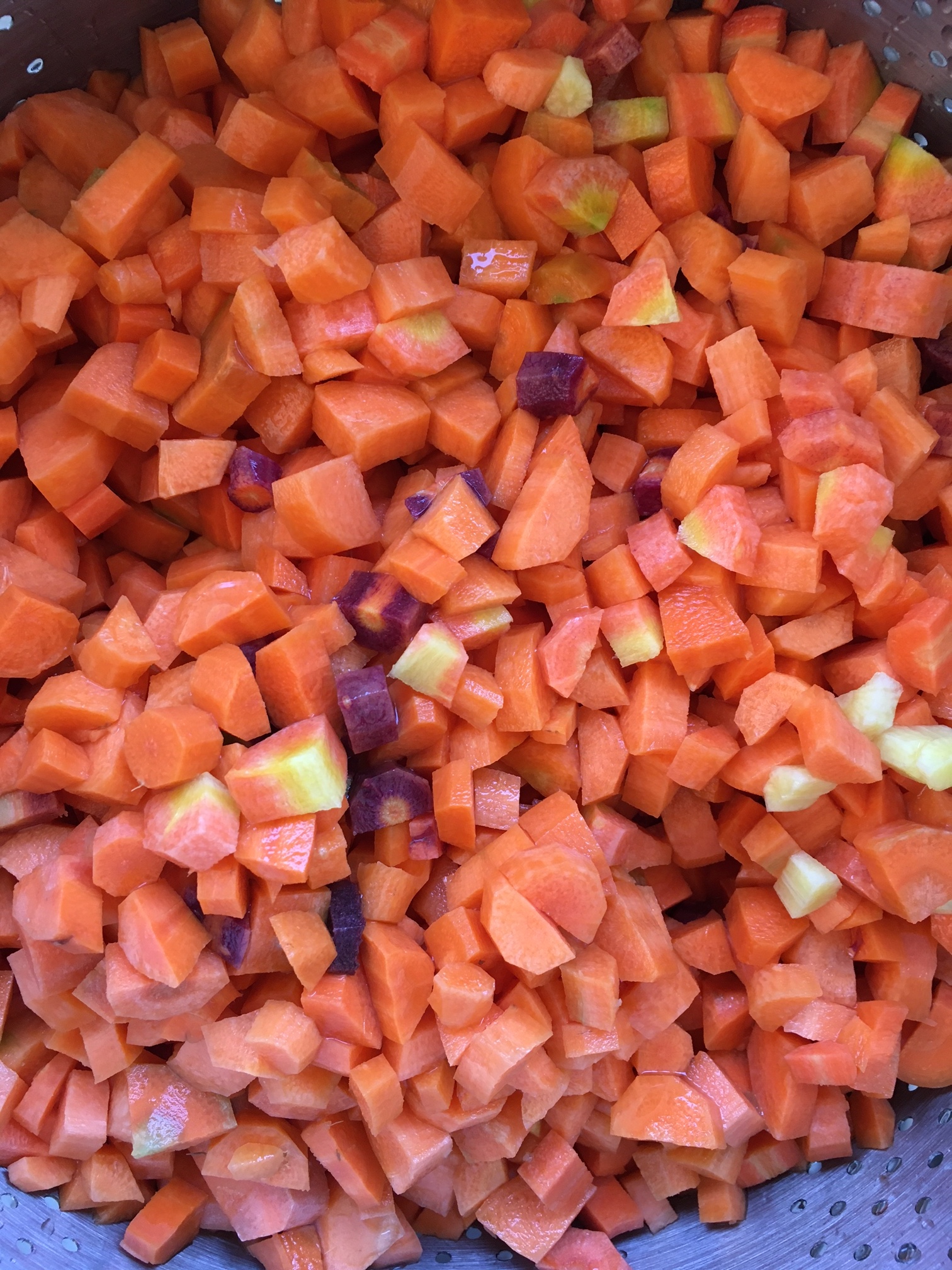
But all summer we’ve been eating beautiful carrots, and last week I harvested everything remaining in the bed, because the slugs and slaters were taking their toll. The fridge is packed with carrots now, and I blanched and froze several kilograms as well.

In spite of everything, it was one of the better years I’ve had for carrots. To be fair, the roots are small, compared to the old garden. Some are bent where they hit a rock, and many broke off when I tried to lift them—if they penetrated too far into the clay, they were nearly impossible to harvest.

But even the purple carrots grew, which is quite an accomplishment for me—in past years, the purple carrots have done well in early spring, but then have been decimated by aphids, so we only ever eat them as baby carrots. Last week I harvested quite a few nice big purple carrots.

Best of all were the Paris market carrots—little, super sweet round roots perfect for lunch boxes and snacks. Their shape made them easy to pick, so there weren’t any left when I harvested the lot last week, but they’ll definitely be in next year’s lineup as well.

Overall, I consider the summer’s garden to have been a success. It’s looking pretty bare out there now, and I’m hauling cow manure from the neighbour’s place and incorporating it into the soil, so by spring I hope to have a few more nutrients available for the plants. I’m already looking forward to next summer.
When Everything is a Gift

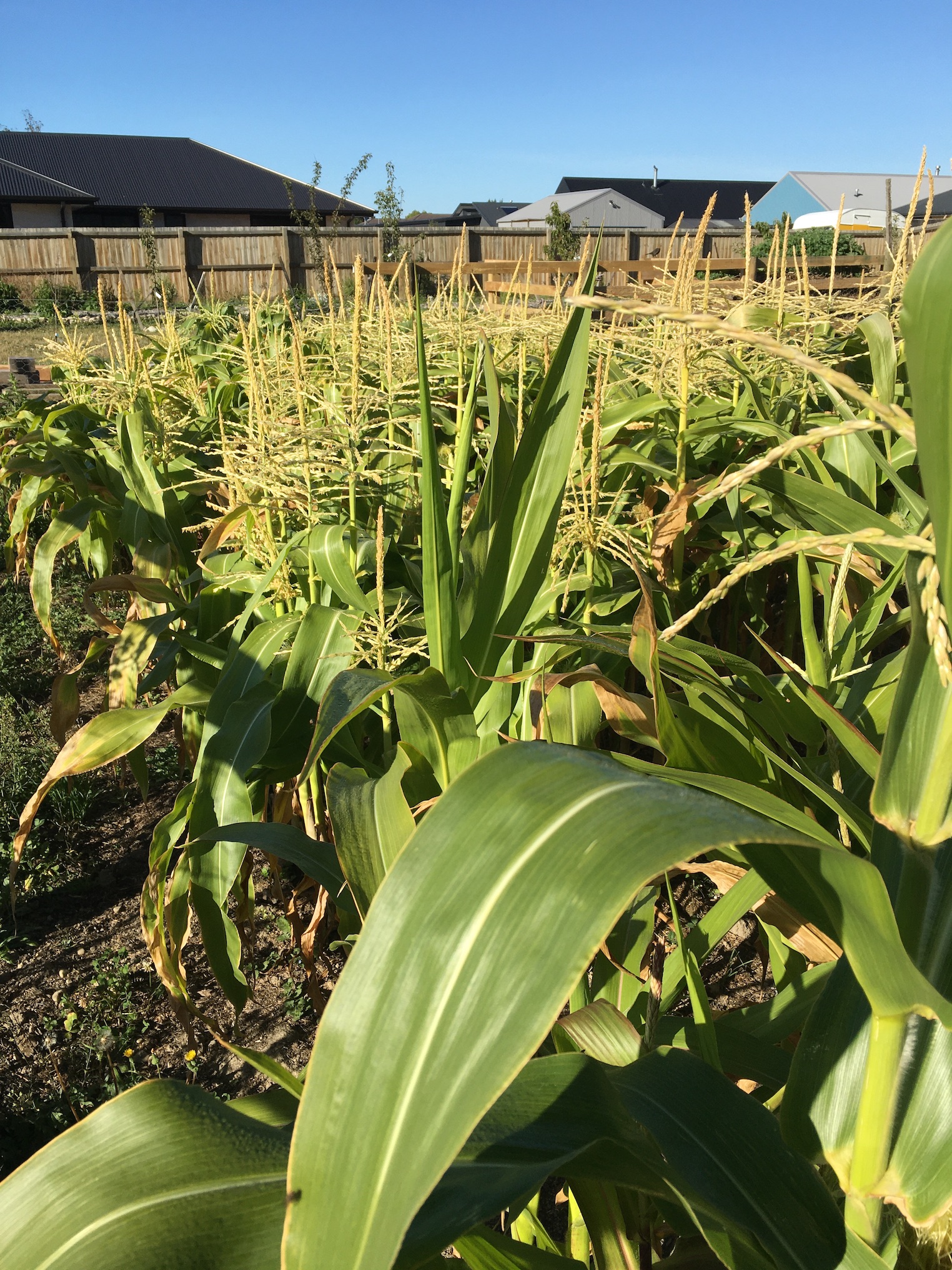
My stunted yellow corn.

I never expected much from this year’s vegetable garden. The soil test revealed a virtually sterile substrate, nutrient-free, stripped by decades of conventional agriculture and then scraped by the developer’s bulldozers. It will take years to improve the soil to the levels of my old garden. In the first year, I figured I’d be lucky to coax a few meals out of the garden.

There’s no question the vegetables I planted are suffering. The plants are half the size they should be, and many are yellow and senescing early for lack of nutrients.

But the compost, manure, and other organic fertiliser I’ve incorporated into the soil have done some good. We have plenty of onions, cucumbers, carrots, herbs and green beans. We are overwhelmed with zucchini. The soy beans and dry beans will all give harvests. Pumpkins swell on their vines. We’ve even eaten a few melons.

Every fruit feels like a gift.

I could be dismayed at the state of the garden—corn only waist high, tomatoes ripening at golf ball size, potatoes decimated by disease … but I know what the plants are up against. I know how hard they’re working to produce anything. I admire their effort and determination.

So, in spite of how pathetic the garden is, I am pleased. I feel blessed at every meal, and I look forward to an even better year next year.

It’s Okay to Wilt

Last week, the temperature hit 38ºC (100ºF) two days in a row. Working at home those days, I sat on the polished concrete floor, because it remained a few degrees cooler than the air, which was blowing hot and dry from the northwest. My phone and computer kept overheating, and eventually I shut them down and switched to pen and paper.

At some point, I commented to my husband about the sad state of the vegetables in the garden. Every leaf was wilted, and the plants looked like they were only barely alive, in spite of the watering I’d done the previous day.

“Yes,” he remarked. “But remember, they’re supposed to do that.”

He’s right—wilting is part of a plant’s way of coping with heat. Wilted leaves expose less surface directly to the sun, conserving water and keeping temperatures within the leaf cooler. A wilted plant can’t grow or photosynthesise—permanent wilting is fatal—but it can allow the plant to survive while conditions are harsh so it can continue to thrive when conditions improve.

It strikes me that wilting is a lesson we could all learn from plants: ease up when times are tough.

How many of us have expected to keep going at our usual pace through all of life’s struggles—illness, children, death of loved ones, earthquakes, pandemic … I know I’ve been irritated with myself, pushed harder, forced myself through difficulties at full pace, only to find I didn’t actually move at the speed I wanted, or I messed things up and had to do them a second time, or I simply made my eventual collapse worse.

How much better would I have done if I’d allowed myself to wilt before the point of collapse? Maybe I could have asked for help, or lowered my standards, or simply given myself permission to relax for fifteen minutes, an hour, an afternoon.

I’ve gotten better at wilting—the wisdom of 50 years of life—but I could still improve. I just need to remember the garden during a summer heat wave.

Inspirational Flavours

I was surfing the internet last week for something different to do with lentils and found a recipe for an intriguing lentil stew topped with roast broccolini and lemon on Bon Apetit’s website (Marinated Lentils with Lemony Broccolini and Feta).

I didn’t have broccolini, but I did have an overabundance of zucchini (surprise, surprise … It’s January; of course I have too many zucchini).

I was intrigued by the idea of roasting lemon, so I substituted zucchini and spring onions for the broccolini in the recipe, vaguely took inspiration from the herbs and spices in the lentils, and ran with it.

The result was delicious and refreshingly different from my normal lentils. The roast lemon was good—sour, bitter, and slightly caramelised. It enhanced the lightness of the vegetables and was quite pretty, too. And the spicy, tangy lentils were a nice complement to the vegetables. I can envision the dish working well with many different vegetables—eggplant, green beans, even beetroot—a great way to highlight an individual vegetable against the richness of lentils.

It’s gotten me thinking about other places I might include roast lemon slices—in mixed roast vegetables over couscous, in a lemon/butter sauce over pumpkin ravioli, floating atop a bowl of vegetable soup … there are lots of intriguing options. I love when a recipe inspires new ways to prepare old ingredients.

Duck for Christmas

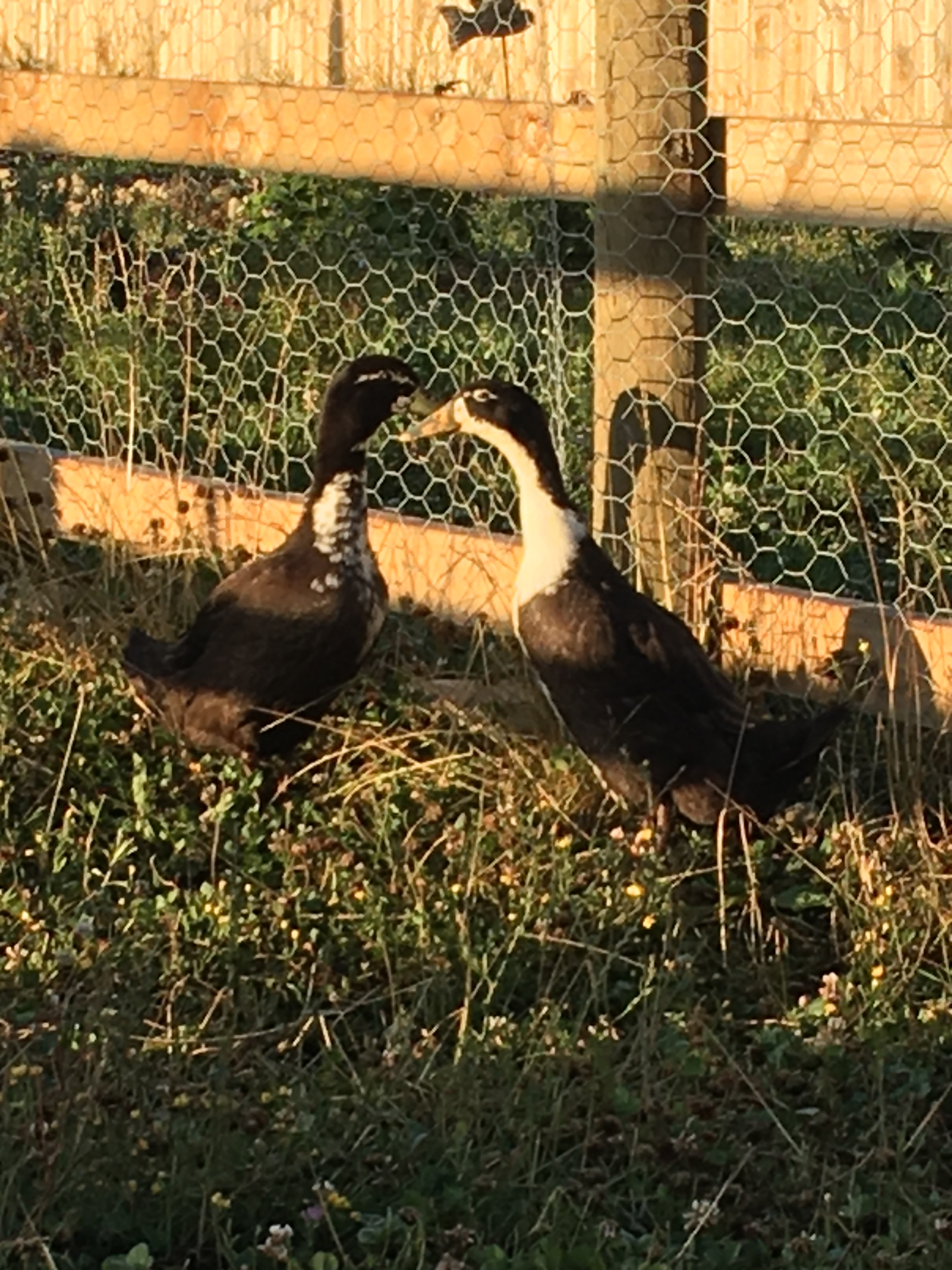
In the excitement of our pre-Christmas hike, I forgot to introduce the newest members of our menagerie—a pair of Indian runner ducks.

I looked into getting ducks years ago, based on the fact they like slugs, won’t tear up the vegetable garden, and lay eggs. I gravitated toward Indian runner ducks for their quirky looks and less water-dependent lifestyle. 

I ended up with chickens instead, because they were easy to get locally, and ducks were more difficult.

Three laying hens is about right for us, in terms of eggs. Unfortunately, a few months ago, before I had a proper fence constructed, one of my chickens escaped and never returned. So we’ve been a little light on eggs.

When someone posted in our community Facebook page (two days before our trip) that they had Indian runner ducks to give away, I couldn’t pass up the chance.

These two are ducklings, and won’t be giving eggs for a while (if they’re even females … we’re not certain), but they’ve been quite entertaining, and I look forward to letting them loose in the vegetable garden once I’ve finished the fence.

The chickens, with whom they’re housed, weren’t at all amused at first and are still thoroughly offended when the ducks go for a swim in the drinking water, but for the most part the birds ignore each other.

I look forward to finishing the entire garden fence so I can let the ducks loose among the vegetables. 

Carrot Surprise

I’m expecting the worst from this year’s vegetable garden. Loosening the heavy clay soil as I prepare beds can feel like chipping at concrete. I fill a bucket with rocks every two square metres. At best, I’m able to loosen the top seven centimetres. And with the soil test having revealed shockingly low levels of NPK, there’s little hope for a bumper crop.

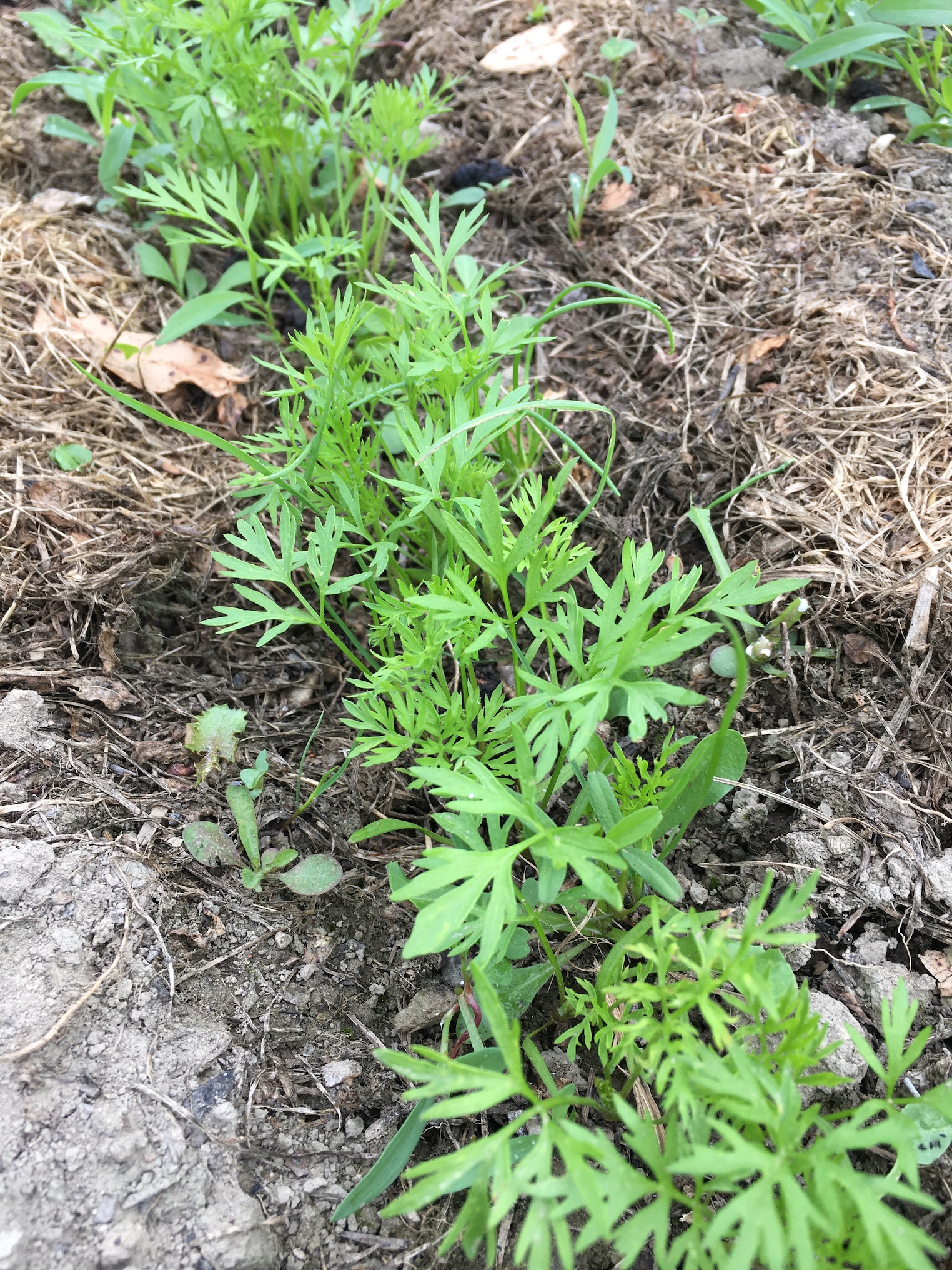
So it was a huge surprise to lift the frost cloth from my carrot plantings to find the best germination I’ve ever had. At the old house, I sometimes had to plant twice because carrot germination was so patchy. Some varieties barely germinated at all.

Now it looks like I’ve grossly over-planted—I swear every seed germinated—all five varieties.

I planted on the same date, with the same care afterwards as I have in the past. The weather wasn’t much different from weather at the old place. The only real difference was the soil. Go figure.

Maybe it was a fluke; I had occasional good years at the old house. And who knows how the carrots will grow now they’ve sprouted.

But it’s nice to have something go better than expected in this sad soil.

Part-Time Ducks

Ordinarily, I’d be annoyed if the neighbour’s livestock made a habit of hanging out in my garden. At the old house, a mob of sheep would occasionally take a detour into the yard while being driven past. And I remember a bunch of cows grazing their way through the vegetable garden once when I was a kid. Those experiences were always destructive.

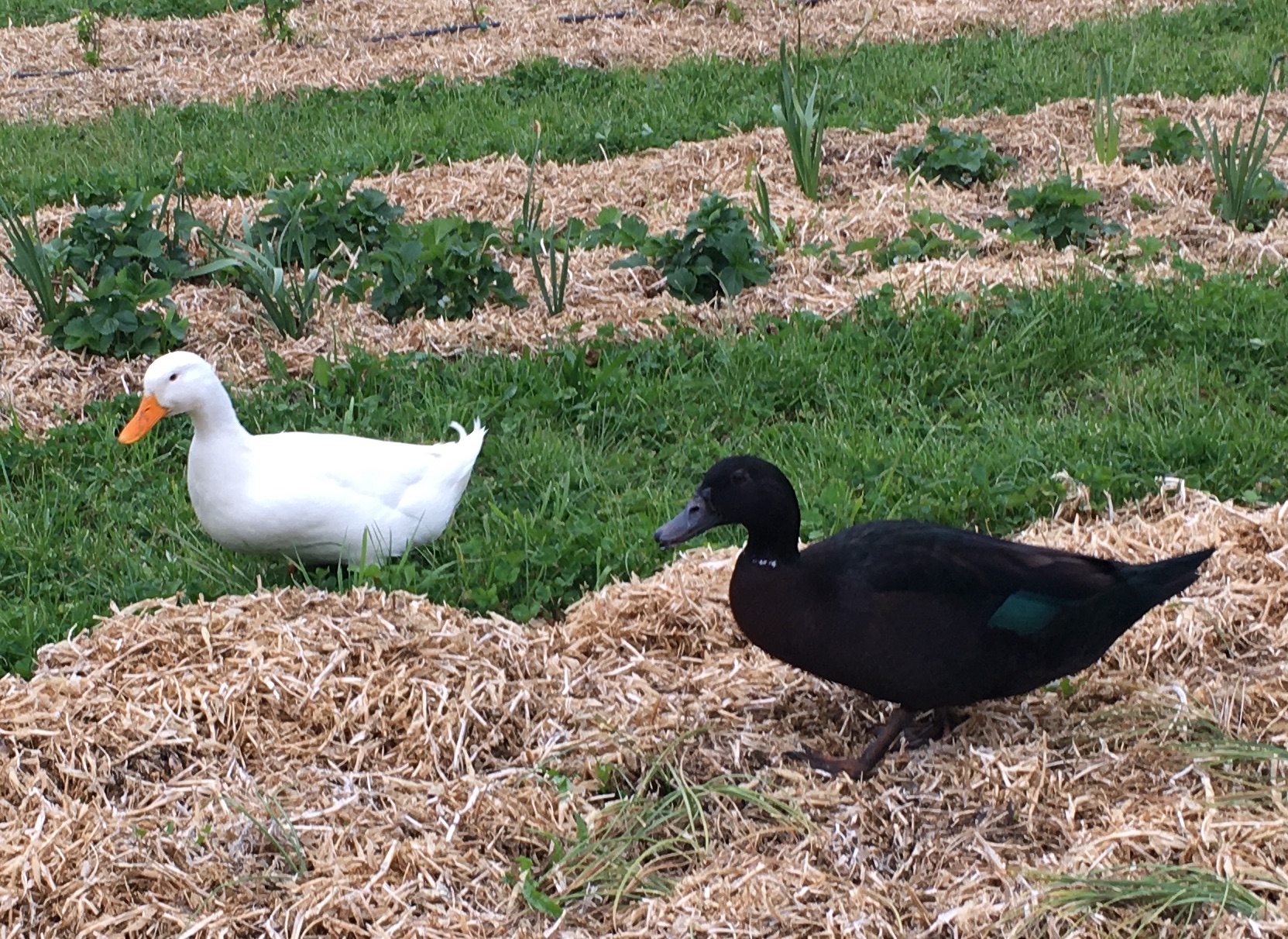
But one of the neighbours at our new place lets her livestock roam the neighbourhood, and I find it quite pleasing. They are a perfect pair of ducks—one all white, one all black (I’ve dubbed them Ebony and Ivory, of course). Watching them cruising the neighbourhood somehow makes me happy. Their owner occasionally comes out to the road to shoo them back home, but most of the time, they roam freely. 

For a long time, they avoided our place, waddling around next door, across the street, down the road … But this week, they discovered the wealth of slugs in our garden. They’ve been spending a few hours every day waddling up and down the rows of perennial crops, probing the mulch and quacking contentedly to one another.

I appreciate their gentle pest control operations in our garden, particularly since they come with no obligations on my part. I’ve seriously considered getting ducks in the past, primarily for slug control, but I never followed through. In the end they were always just more animals to have to care for. So part-time ducks are exactly my sort of livestock. They show up for work, put in a few hours, then head off to someone else’s yard. 

I hope they’re giving their owner lots of eggs.

Happiness is a Kitchen Full of Baked Goods

The weekend was crazy-busy with garden work. Saturday, I worked from 7 am to 6 pm weeding, mulching, digging post holes. Sunday’s schedule was similar, but I stopped around 3 pm because the final job on the list was planting out lettuce seedlings, and the weather (hot and with severe gales) was sure to kill them all. Besides, I could barely move—back, arms, hands and feet all hurt from the punishing work. All I wanted to do was collapse.

Except that I wanted to collapse with baked goods in hand.

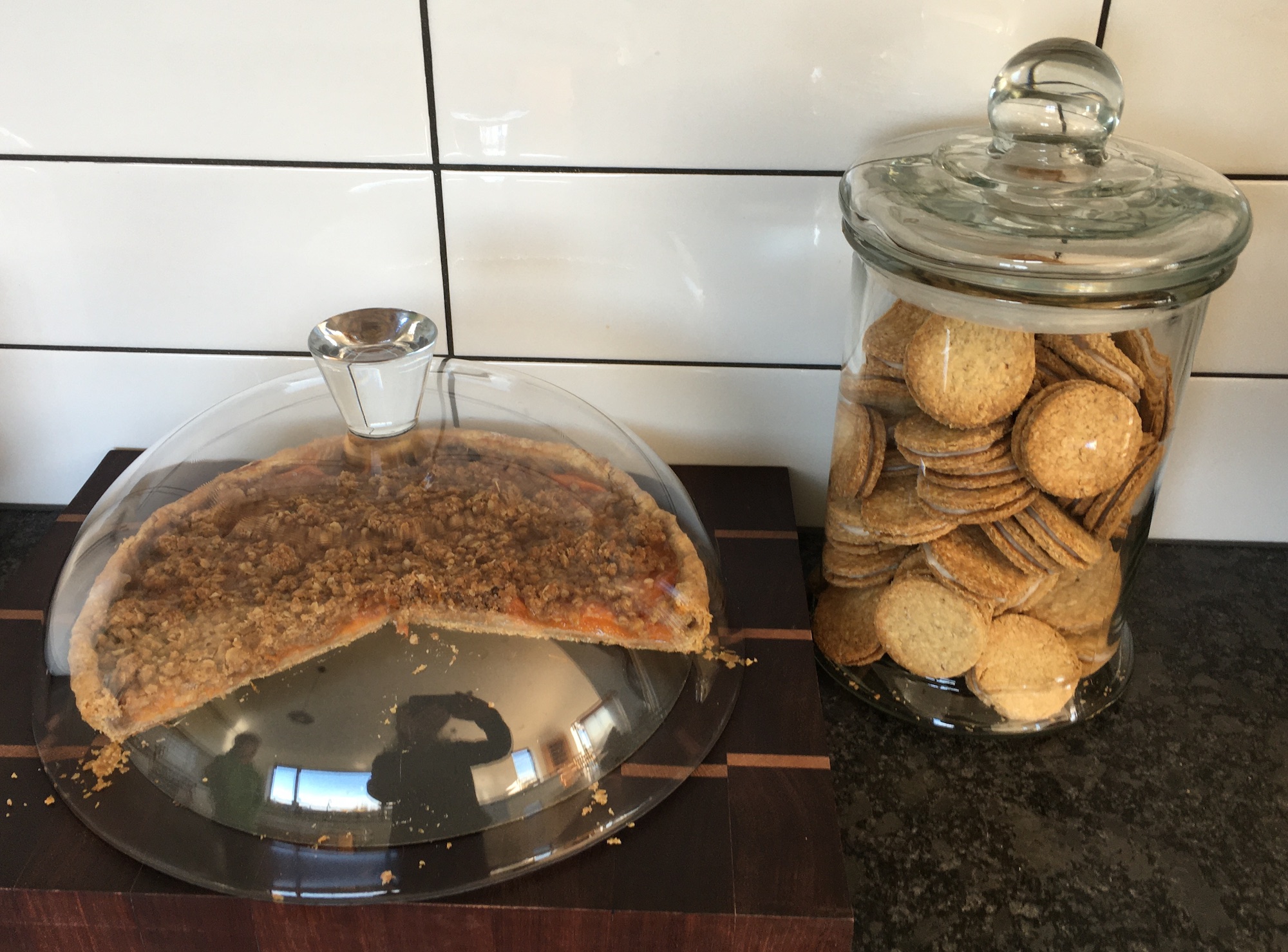
So instead of sitting down, I baked. Apricot tart for dessert, and a double batch of Irish coffee crunchies (from The Gourmet Cookie Book) for lunches. Baking made me forget my tired body for a couple of hours. As I pulled the last of the cookies from the oven, I was on a roll. I started in on chopping vegetables for dinner. While dinner cooked I filled the cookies with icing and finished cleaning the kitchen, so that by the time dinner came out of the oven, the cookie jar was filled, the tart was waiting to be cut, and all the dishes were washed.

I could barely sit upright long enough to eat dinner.

But every time I’ve been in the kitchen since then, I’ve looked at those baked goods and smiled. Okay, and maybe I’ve snitched a cookie too, but don’t tell anyone. 

Happiness is definitely a full cookie jar.