Hedgehogs

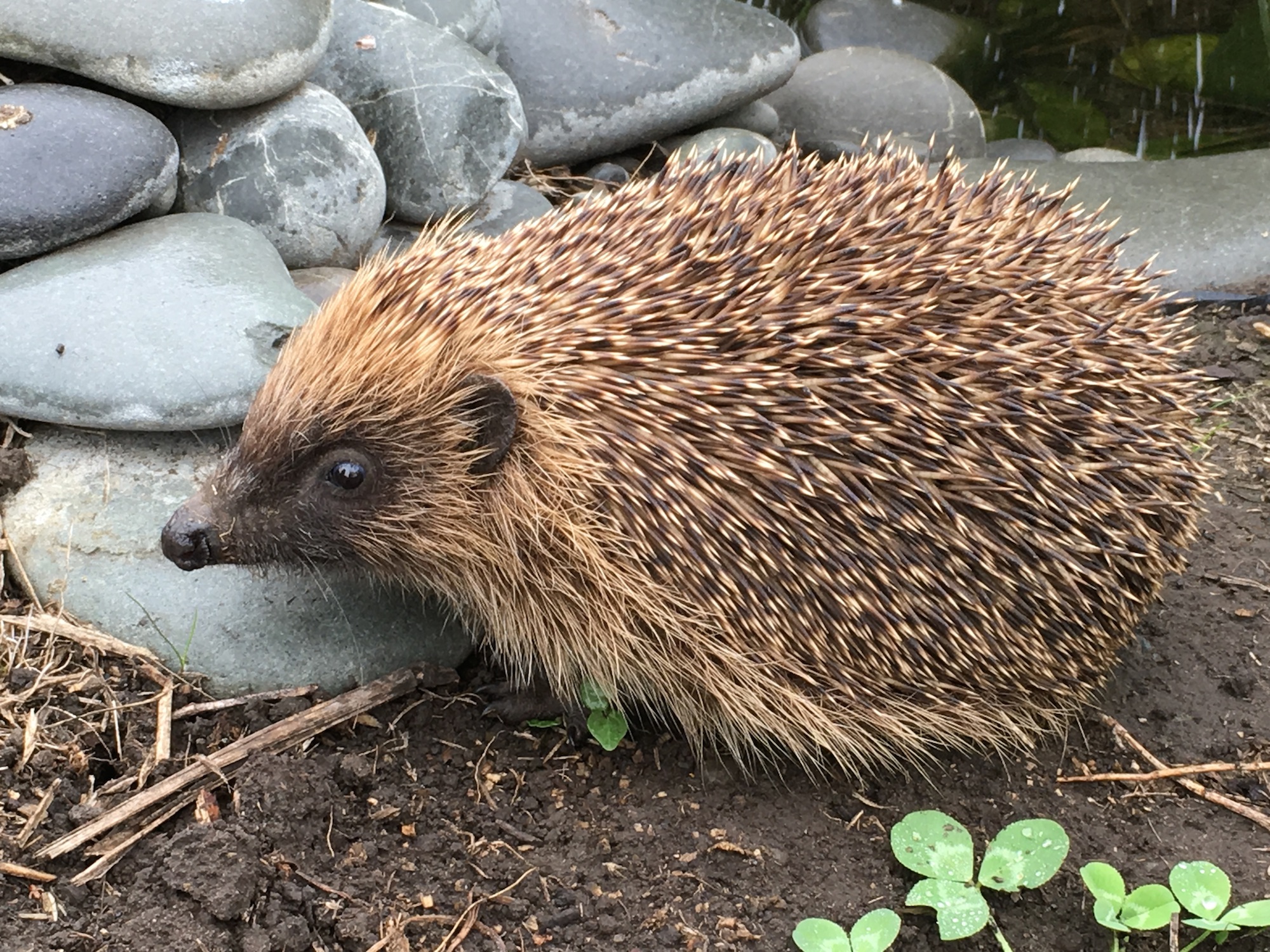
2016-01-26 18.07.41 smThey’re adorable and unafraid of humans. They eat snails, slugs and grass grubs. What’s not to like about hedgehogs?

Unfortunately, a fair bit, here in New Zealand. In addition to eating pests, they also feast on ground nesting bird eggs and chicks, skinks, and many native and endangered invertebrates.

And they’re more common in New Zealand than they are anywhere in their native habitat.

And I think they’re more common in our yard than anywhere else in New Zealand.

Now that the days are getting shorter, I regularly step on them in the dark when I’m out milking and feeding the animals. I certainly wouldn’t walk barefoot through the yard at night here.

They snuffle around the flower beds, snorting and grunting, oblivious to anything non-edible. They spread compost all over the yard.

They also apparently love cucumbers—last year I had to trap one out of the garden after it managed to squeeze in through a hole in the rabbit fencing. It took a bite out of each cucumber—obviously trying to find the perfect one.

They like the apples and peanut butter I bait the possum traps with, and though I don’t aim to kill them, I will admit that I’m not upset when I catch a hedgehog instead of a possum (my trapping seems to have no effect whatsoever on the population of either pest, anyway…). They snatch the eggs of the spur-winged plovers that nest unsuccessfully every year in our paddock, and I’d much prefer plover chicks to hedgehogs in the yard.

It still doesn’t stop me from smiling when I see one trundling along through the grass.

They are adorable after all…
Respite

Before the rain...

Before the rain…

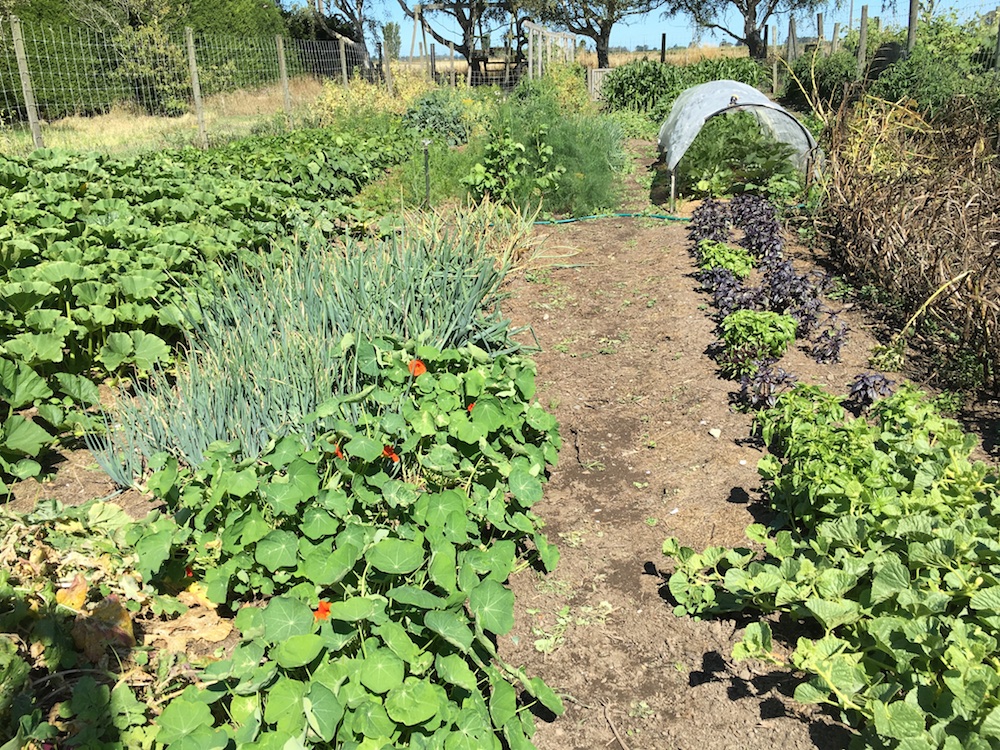
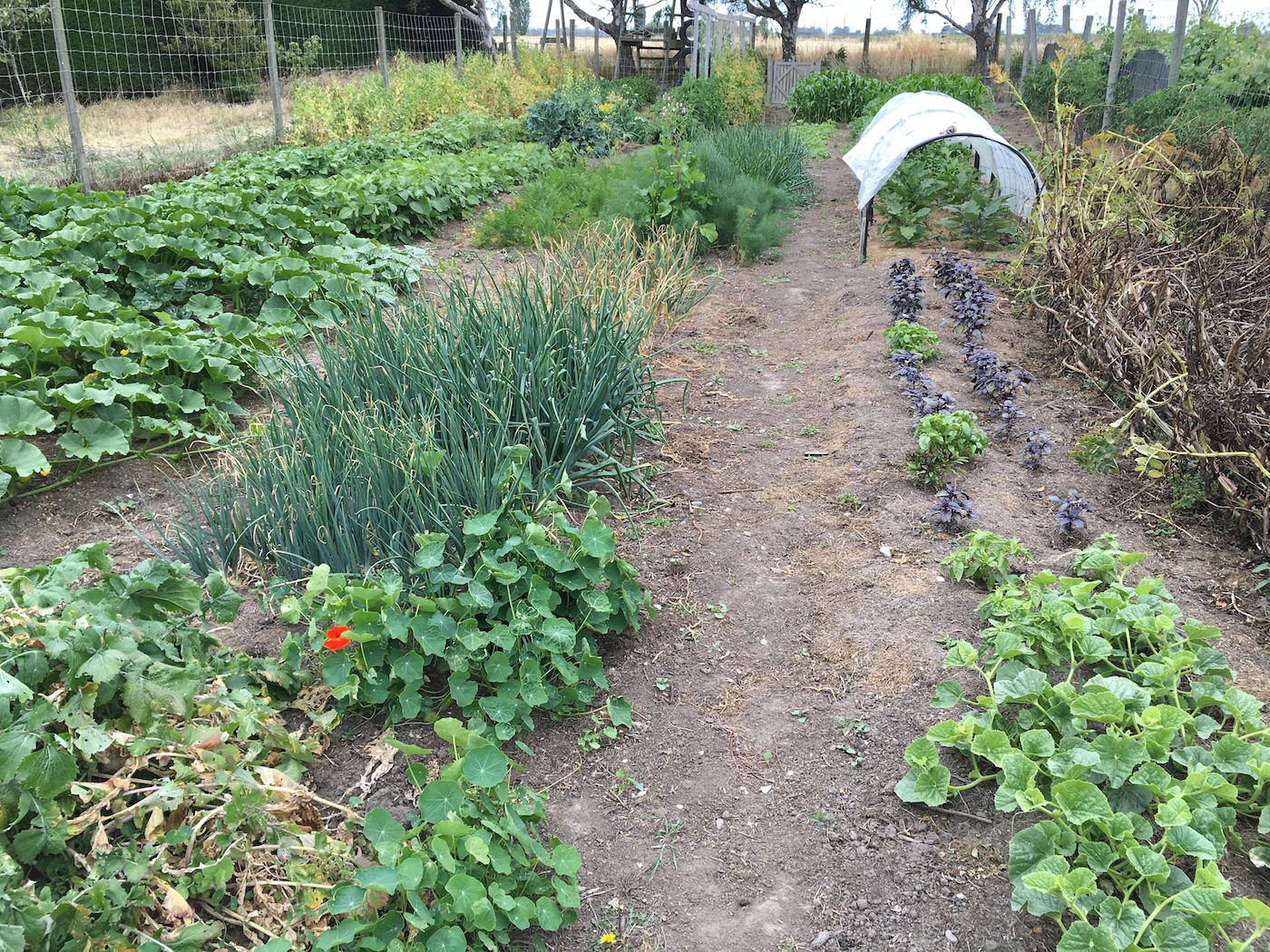
A week ago, I was looking at a garden struggling to stay alive, even with my regular watering and mulching. Relentless days of hot sun and no rain to speak of since early spring—things were grim.

Then, last Friday night it rained. Saturday was cloudy and rainy. Sunday, Monday and Tuesday were cloudy and misty. Four days of relief.

After the rain.

After the rain.

The garden responded. Many plants doubled in size in the past week. Zucchinis matured, pumpkin runners snaked into neighbouring beds, peas began a second flowering.

It will dry out again. The rain wasn’t nearly enough to make up for the drought. Already this afternoon, the temperature is back in the low 30s (nearly 90˚F).

But I’m thankful for the respite. It made all the difference to this week’s garden, and it will continue making a difference for weeks.

Sometimes that’s all we need—a vacation, a respite, a little time for recuperation, time to grow and fortify ourselves before we are plunged back into a struggle.

And now that it’s rained, my respite from weeding is over. The weeds responded as much as the crops did, and it’s back to the grindstone for me.

But I will do so with more cheer, knowing that the plants have had a break, too.

Solanaceae

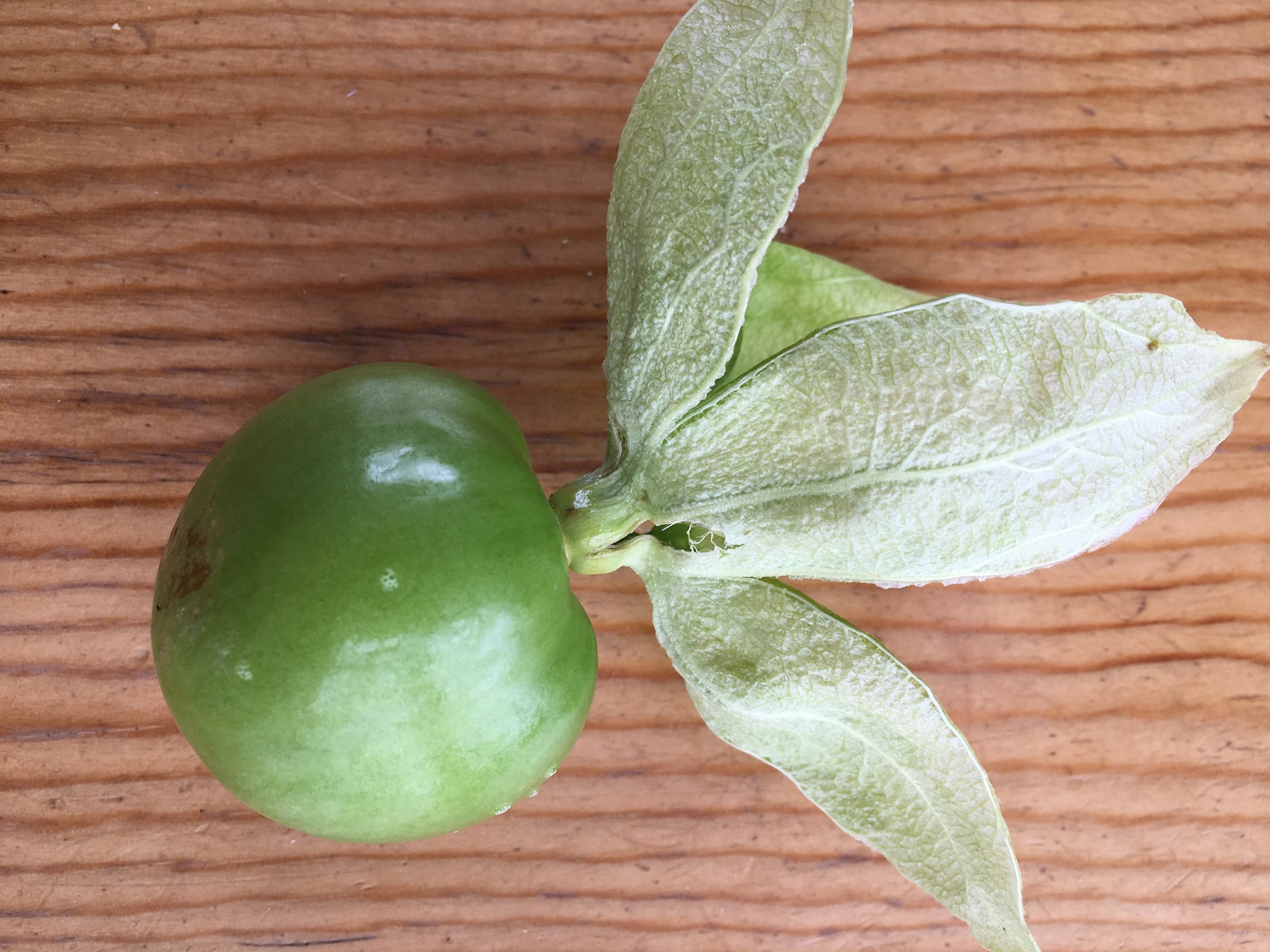
Tomatillo

Tomatillo

Solanaceae—one of my favourite families of plants.

There are more than a few members of this family in the vegetable garden:

Tomatoes, potatoes, eggplants, cape gooseberries, capsicum (peppers), and tomatillos are all solanaceous plants.

Nicotiana

Nicotiana

But they don’t end there. In the flower garden there are petunias and nicotiana, among the perennial fruits are gogi berries, and in the native garden there is poro poro.

And, of course, growing as weeds everywhere are black and hairy nightshade (these don’t get my favourite plant vote).

This diverse and sometimes tasty group of plants also includes many containing medicinal, poisonous or psychoactive chemicals (tobacco, mandrake, and deadly nightshade among them). Indeed, it’s best to be careful with the Solanaceae—even the edible ones contain poisons in the non-edible portions of the plants, or, as in the case of green potatoes, even in the edible parts. Solanine is the culprit in green potatoes—it causes diarrhoea, vomiting and hallucinations, and its bitter taste prevents herbivores from eating the potatoes. Other chemicals in the Solanaceae can have the opposite effect—reducing nausea in chemotherapy patients, and reversing the effects of poisoning by certain pesticides and chemical warfare agents.

And we’re still discovering more uses for these pharmacologically rich plants.

What’s not to like?

Gardener Overboard!

2016-01-16 17.22.14 HDR smIt’s that time of year, I can’t seem to get out of the garden. The recent, much needed rain has made everything grow—I swear the plants are twice the size they were last week.

Which, of course, means that the tiny zucchini (courgettes) we were scrounging for three days ago have turned into monsters. We’ve gone from not quite having enough to overwhelmed overnight.

That’s usually the case, (see last year’s zucchini post) and you would think I’d learn…

But, of course, when you’re a Problem Gardener like I am, you just can’t resist. You can’t have just one variety of summer squash. Once you have one, you need to have another, and another…

I have five this year—Gold Rush, Costata Romanesco, Black Coral, Ambassador, Pink Banana Jumbo, Flying Saucers, and Sunbeam…Okay, that’s seven, but Black Coral and Ambassador are for all practical purposes the same, and I didn’t plant any more plants just because I planted two yellow patty pan type squash (who could resist a vegetable named Flying Saucers?).

And once again we will eat zucchini until we’re sick of it, and I’ll swear that I will only plant one (or maybe two?) varieties next year.

And once again, I’m sure I’ll come up with half a dozen excellent reasons why I need to plant five (er…seven) varieties.

Wild Wind

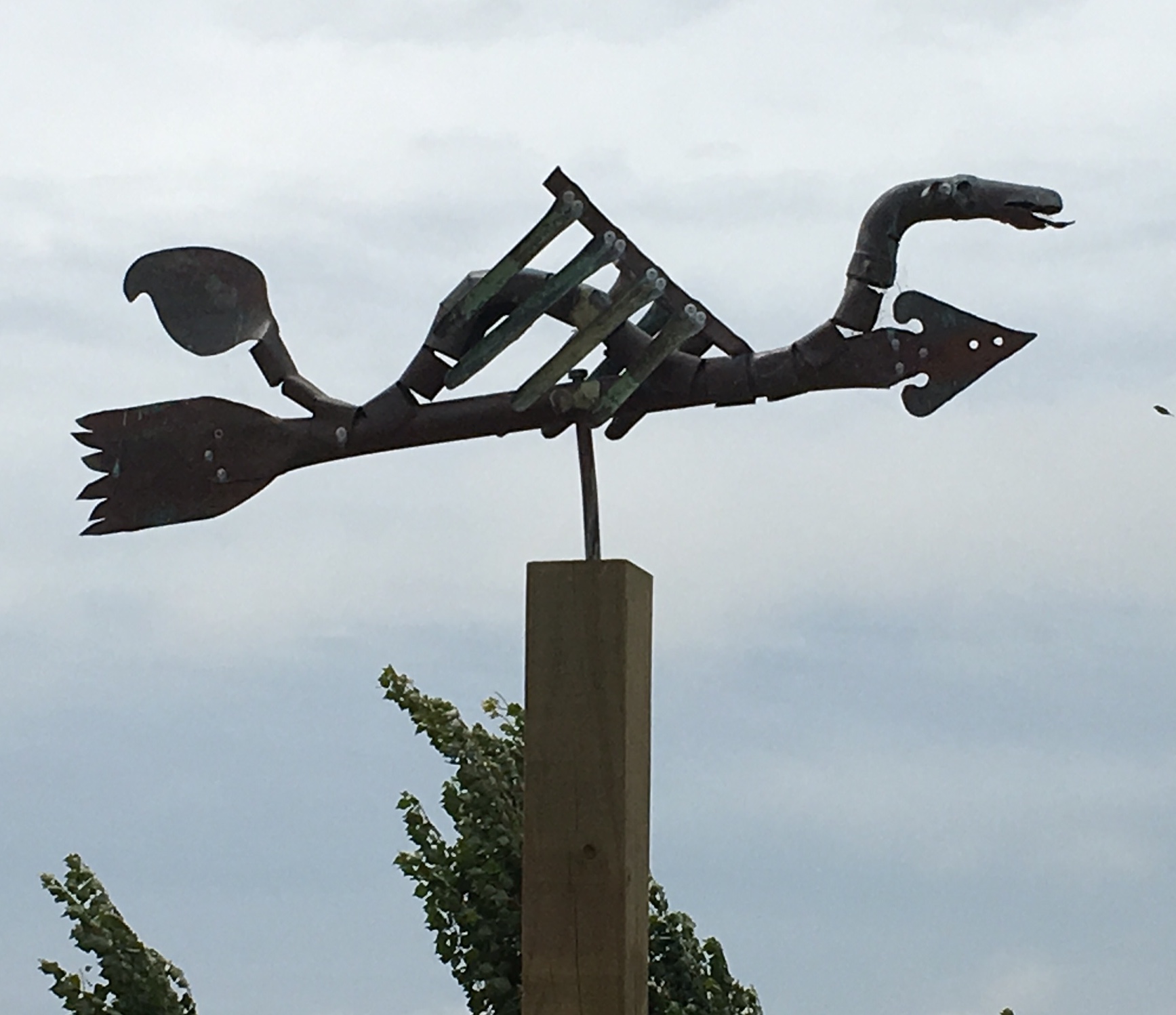
"Fred" the weather vane braving the wind.

“Fred” the weather vane braving the wind.

The satellite images showed a band of clouds stretching diagonally across the Tasman Sea, from Australia to New Zealand and out into the Pacific.

All morning, we felt that front, as it pushed the wind ahead of it.

An empty rain barrel tipped and rolled away. Hay bales set up for archery toppled. Bird nests flew out of the oak trees like cannonballs, spilling eggs and chicks across the yard. Plums, apricots, apples and figs rained from branches heavy with fruit. The office shook as 100 kph gusts hit it. I watched as the windows flexed. The air was hot and gritty, filled with dust and flying debris.

Then I smelled the sea.

The wind shifted 180 degrees in a moment. The air cooled, became moist. The plants, bowed all day to the south, tipped to bow northward, limp and compliant. The dust that had finally settled on the south side of every rock and building, lifted again to find new harbourage on the north side of something.

That band of clouds sits over top of us now. If we are lucky, it will deliver a few drops of rain.

Colours in the Garden

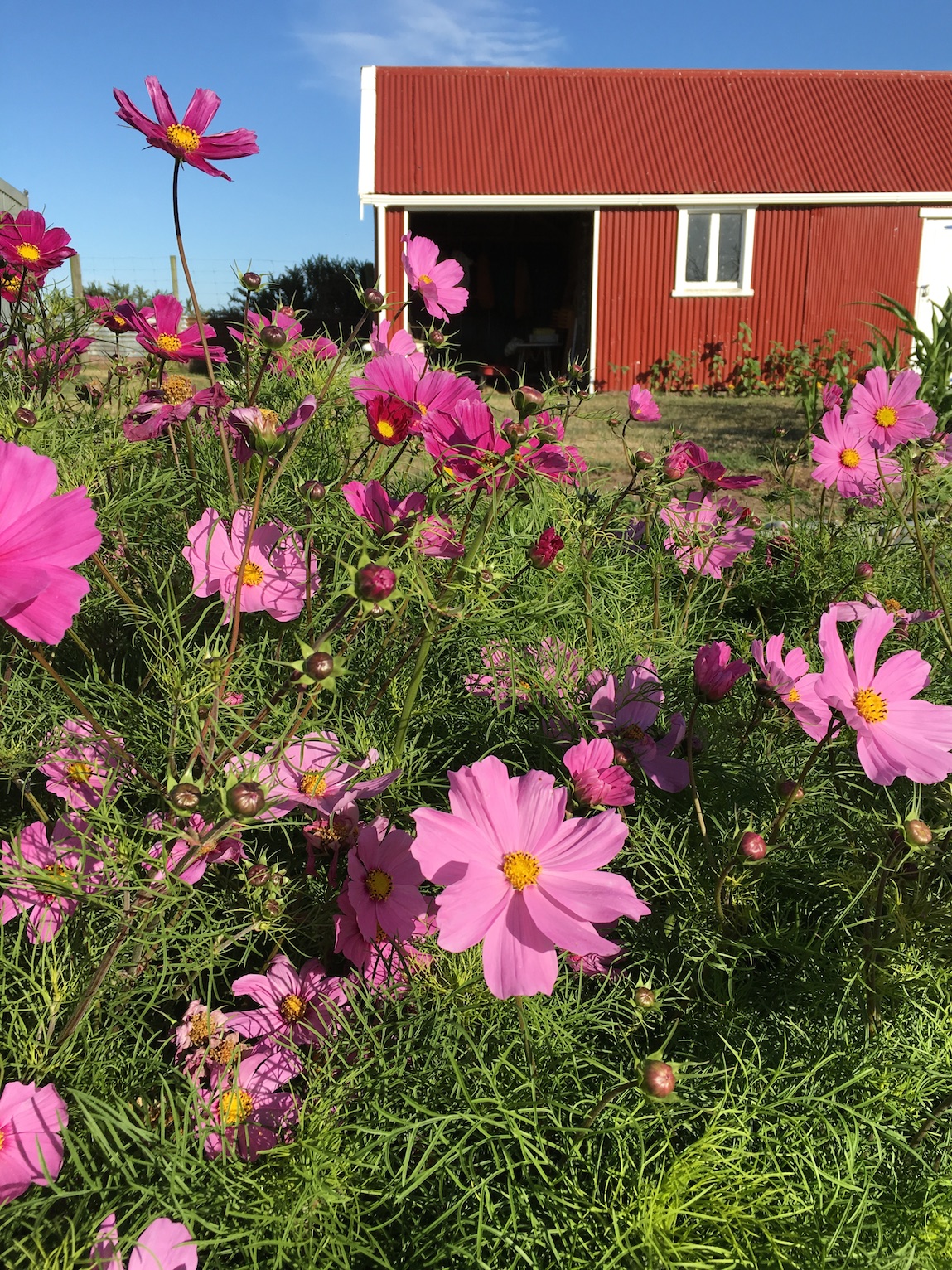
2016-01-12 08.31.38 smJanuary can be a pretty brown month, and it is especially brown this year, with the El Niño induced drought. So I’ve been appreciating the flowers in the garden even more than usual.

When I wandered through the garden this morning and saw this view, I had to capture it.

But why do I enjoy these bright colours? Why not appreciate the brown?

There is a great deal of speculation about our colour preferences. Some people believe that our colour preferences are evolutionarily based. The most popular colours are blue and green. These would have been important colours for our ancestors to focus on—the blue of clean water and clear skies, the green of plants.

But as far as I can tell, there’s no good data to support that theory.

And many of us like colours other than blue and green, too.

A research paper published in 2010 by psychologists Stephen Palmer and Karen Schloss at UC Berkeley found that people’s attitudes toward colours were based on their experiences with objects that were normally associated with those colours. Basically, if you like sunny days, you’ll like the colour blue. If you like tomatoes, you’ll like the colour red. (But if you like sunny days, you won’t necessarily like blue tomatoes, because you don’t expect blue to be associated with tomatoes.)

And, as you would expect, they also found that those preferences were culturally influenced, and people from different cultures had different colour preferences.

So there’s probably no evolutionary advantage to me loving this garish juxtaposition of pink, green, red and blue. I just love it because I love the garden.

Look for the Good

100_3873I’m not always successful at it, but I do try to find pleasure and beauty in everything, even the day-to-day chores.

It’s not necessarily easy. The laundry doesn’t present a perfect rainbow every day.

But knowing that it can…well, that goes a long way.

2016-01-10 15.59.26 HDR smIn the garden, there is a weed (okay, there are many hundreds of weeds, but there’s one in particular…). I know I need to pull it—it will soon set seed and cause me grief. But it is a lovely English daisy—a perfect mound of spoon-shaped leaves with dainty white and yellow flowers dancing above it. I smile as I carefully weed around it. I will get rid of it…eventually.

The drag of getting up at 5am to milk is a small payment for the peace and silence of a sunrise.

The ache in my back in the morning reminds me that I did something yesterday.

The brown film I scrub off the bathtub means we all spent the week outdoors.

The failed project teaches me.


I still grumble sometimes.

I still sometimes wish for a day off.

But it helps, to look for the good. It’s usually there, if only I look.

In Praise of Thistles

2016-01-09 16.58.01 smI hate thistles.

California thistles infest my garden. Their underground runners are impossible to remove, and every time I pull one, two spring up in its place.

Leave them laying on the ground once you’ve pulled them and they either re-root and have to be pulled again, or they dry into vicious prickly brown masses, ready to stab any exposed flesh in the garden.

But thistles have another side.

Artichokes (a thistle) provide us delicious food in early spring, when little else is available in the garden.

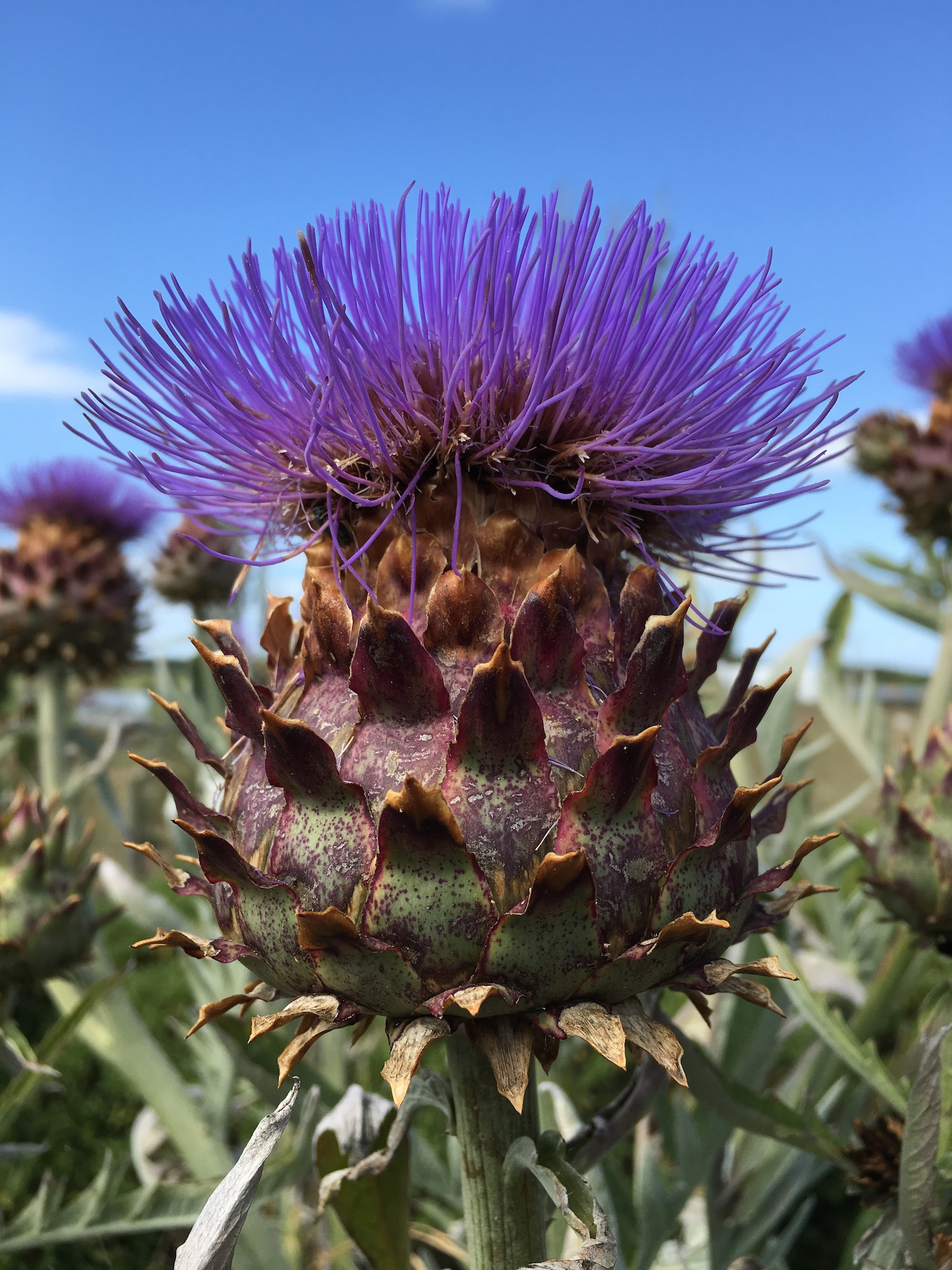
Cardoons (the artichoke’s poor wild cousin) produce stunning fist-sized purple blooms. Even the @!#!*&$*!%# California thistles have beautiful flowers if I don’t manage to pull them quickly enough. Those flowers attract bees by the dozen, and I love to watch the bees tumbling around in the giant flowers.

At this time of year, I’ve usually managed to get on top of the California thistles and prevented them from flowering, but the cardoon—a centrepiece of the flower garden—puts on a gorgeous display. Standing two metres tall and topped with dozens of giant purple flowers, you can be forgiven for forgetting that the plant is a thistle.

Just don’t make me try to pull that thing out…

Secret Garden

Years ago, my husband installed a mirror in our hedge. I still catch myself wondering about the garden on the other side.


hedgemirrorsmThere is an arch in the hedge,

Dark and green,

And a gate.

It beckons.

Calls me to step through

To the secret garden

Beyond.


At work over here,

I glance up.

The far side is green,

Lush,

With clipped shrubs

And well-weeded flowers.


I wonder at the gardener

Who can maintain such beauty.

I struggle so on this side!


A bird flashes by,

Glimpsed through the arch,

I am sure it was red,

With a long tail.

What exotic creatures live over there

On the other side?


I stand, stretching my aching back.

I step closer to the arch.

Was there movement?

There is someone on the other side.

The gardener?

I would like to meet her.

Would she show me around her garden?

Boldly I approach the gap.

I see she, too, walks to greet me.

When I catch her eye,

I draw up short.

A slow smile spreads across our faces

As we recognise one another.


The hills are alive with the sound of music

I was in the garden, weeding as usual, when I heard the Star Wars theme wafting across the yard. It was my daughter, testing the new low register she was making for the flip-flop-o-phone.

What’s a flip-flop-o-phone, you ask?

It’s one of a number of musical instruments scattered around our yard. My husband believes in tantalizing all the senses in the garden. Music is an important part of that, so he builds instruments everywhere.
tubophone smIn the herb garden is the tubophone—galvanized electrical conduit cut to a C-major scale and played with a mallet—a DIY glockenspiel.

musicalbench sm


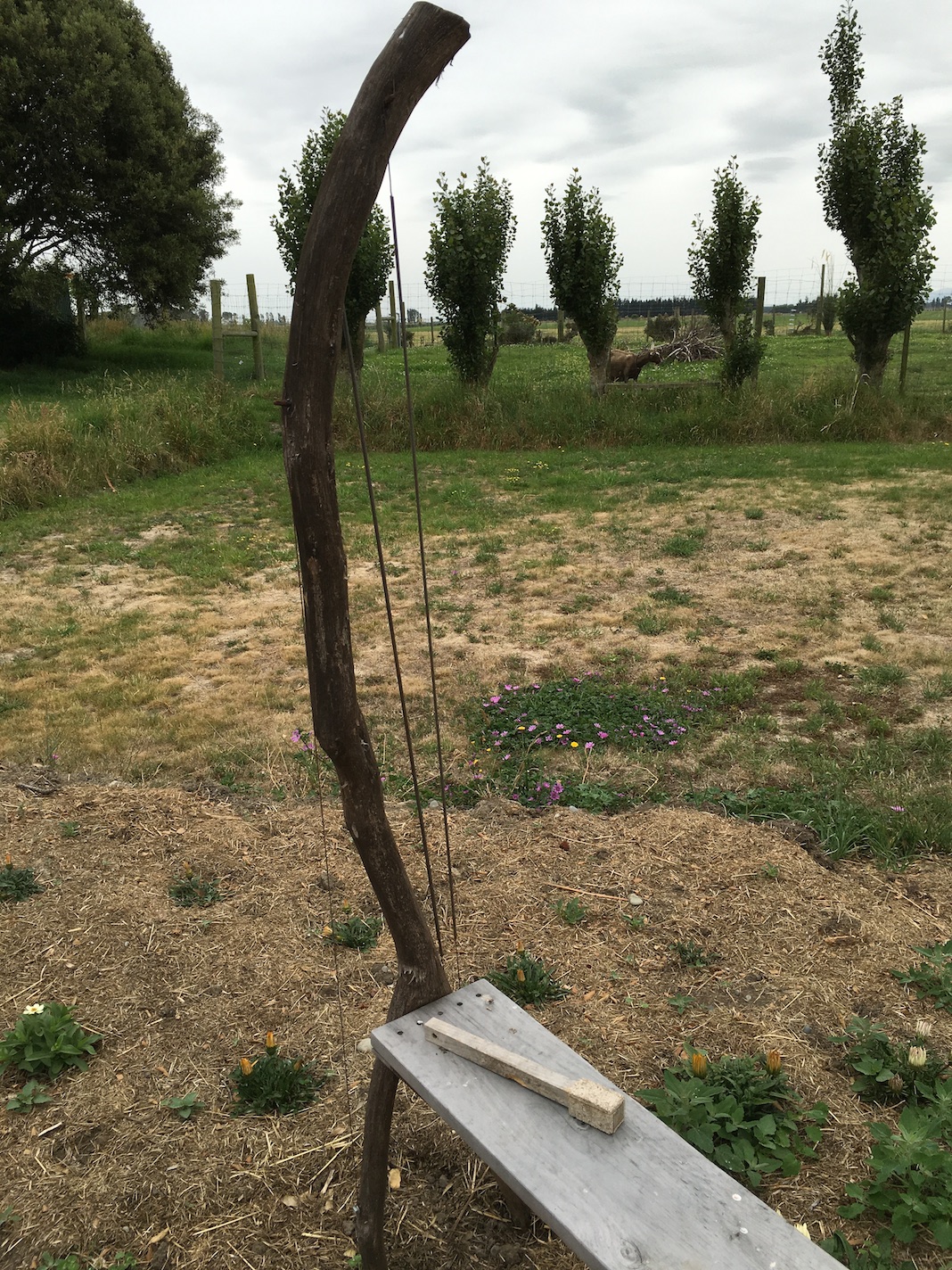
In the pond garden is a bench strung with strikable and pluckable piano strings—sort of a jug band sound.


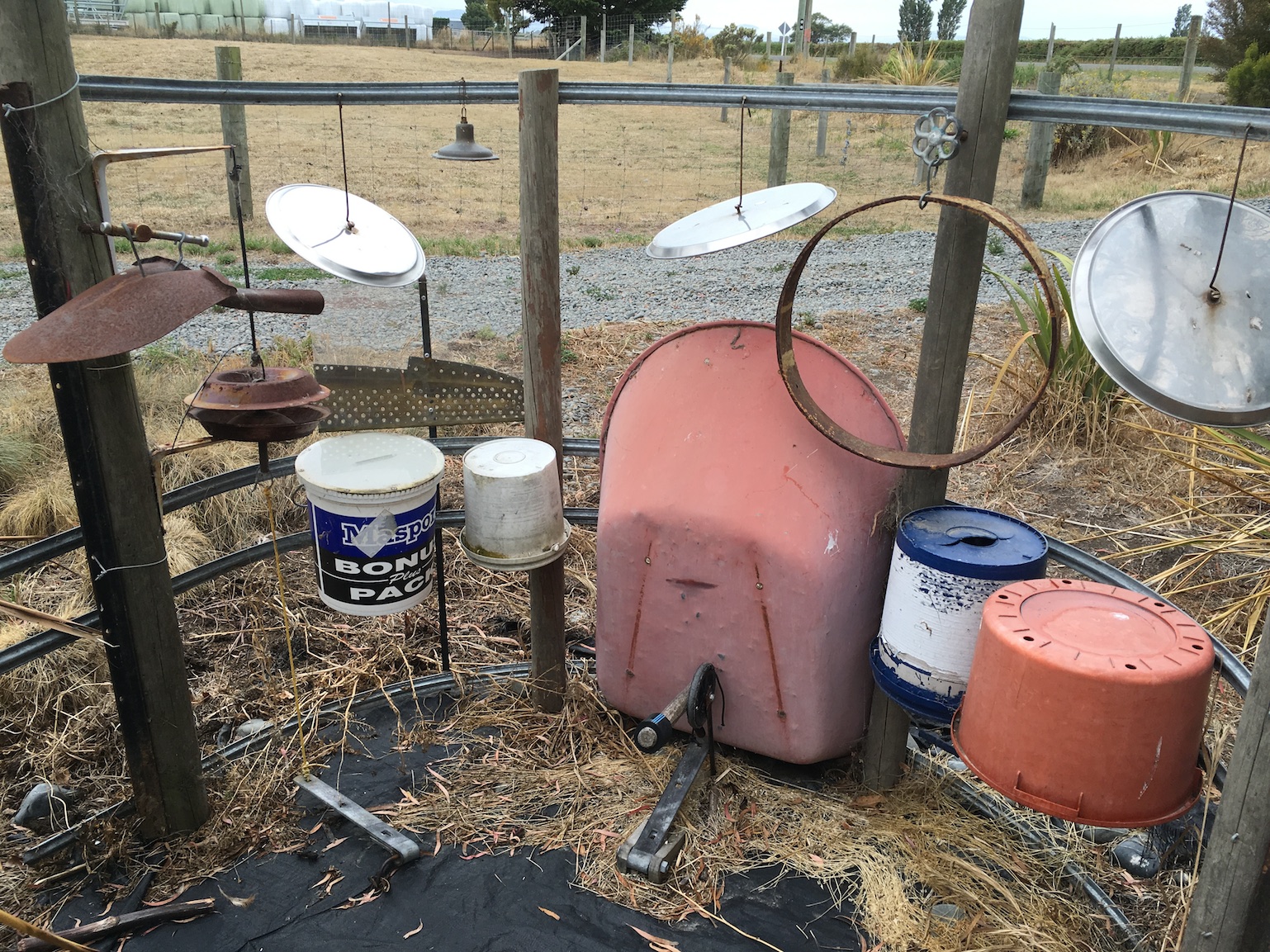
drumkit1 smAnd nestled among the plants in the native garden are the garden drum kit (complete with wheelbarrow bass drum, bucket snare, and tyre hub high hat), and the flip-flop-o-phone.
flipflopophone1 sm


The flip-flop-o-phone is a set of pvc pipes (salvaged plumbing) that are struck on the end with an old flip-flop to make a (sort of) musical note.

The outdoor instruments are fun, interactive garden elements we all enjoy—one of the many elements of whimsy my husband adds to the landscaping.