Great Deals

2016-03-20 15.33.57 sm

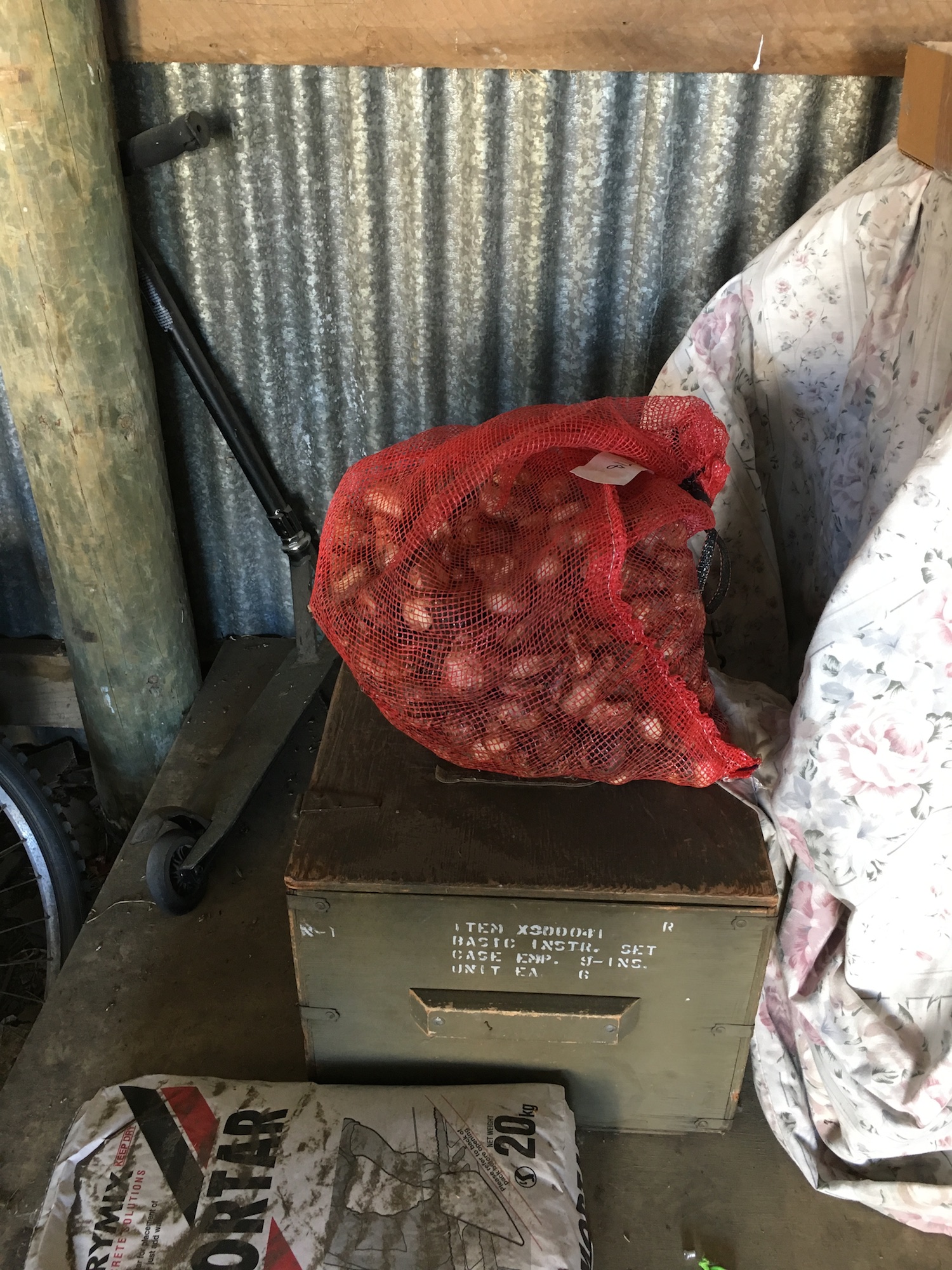
Sack of daffodil bulbs awaiting planting.

Some people can’t resist a deal.

“Wow, I got two dozen colour-coded, LED-lighted, Wi-Fi enabled sock hangars for the price of twelve!”

I am usually not one of these people.

I’ve even refused a free pair of shoes during a 2 for 1 sale—I only needed one pair, and the idea of finding another pair that fit was too stressful for me.

But when one of the local daffodil growers decided to downsize and sell off bulbs at $45 for 200, I couldn’t help myself. We wanted more daffodils anyway.

Though maybe not 200.

Two hundred daffodil bulbs is actually somewhat intimidating.

Particularly since the garden areas already designated for bulbs are full.

Well, at least they’re not colour-coded, LED-lighted, Wi-Fi enabled sock hangars.

Fruit overload

2016-03-15 19.20.44 smCan you have too much fruit? I’m not certain, but if you can, I think we’re approaching it.

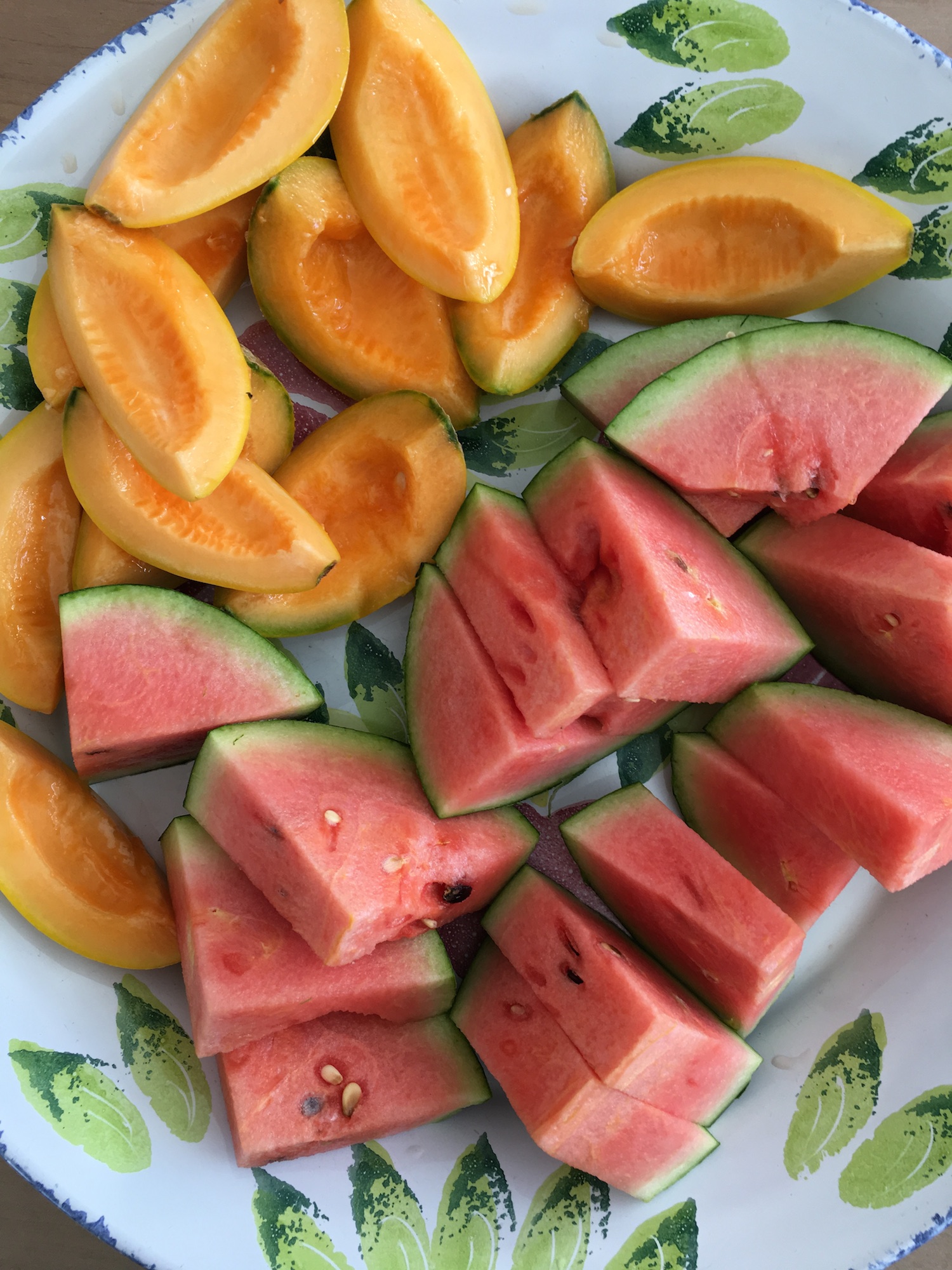
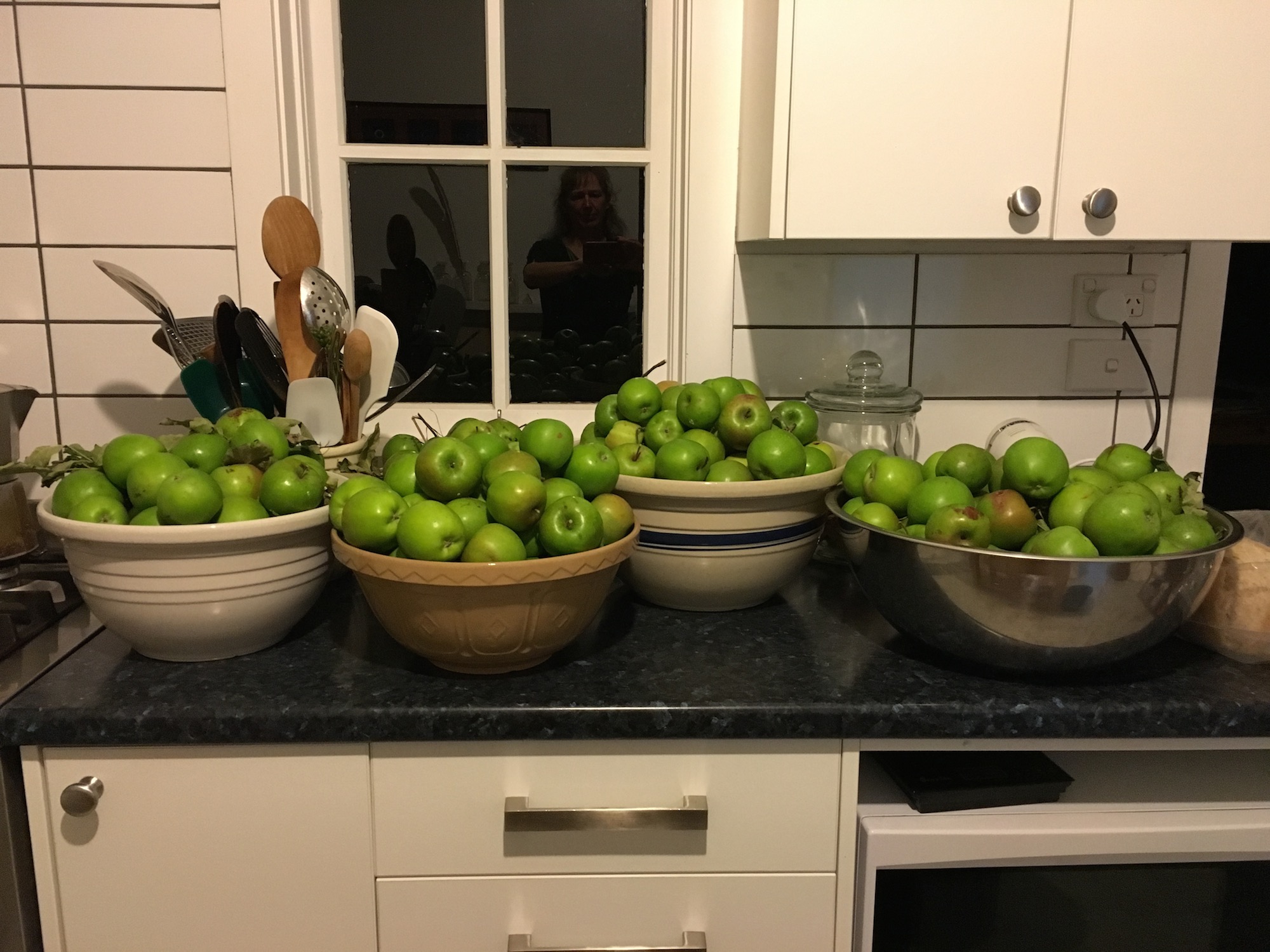
I mentioned the apples the other day—there’s still a 20 litre bucket and a large bowl full of them in the kitchen. Then there are the melons I mentioned yesterday—a great heaping platter of them, and more to come in the next few days.

And a houseguest brought us a box of apricots as a gift.

And the grapes have started coming in, so there’s a colander full of them in the kitchen.

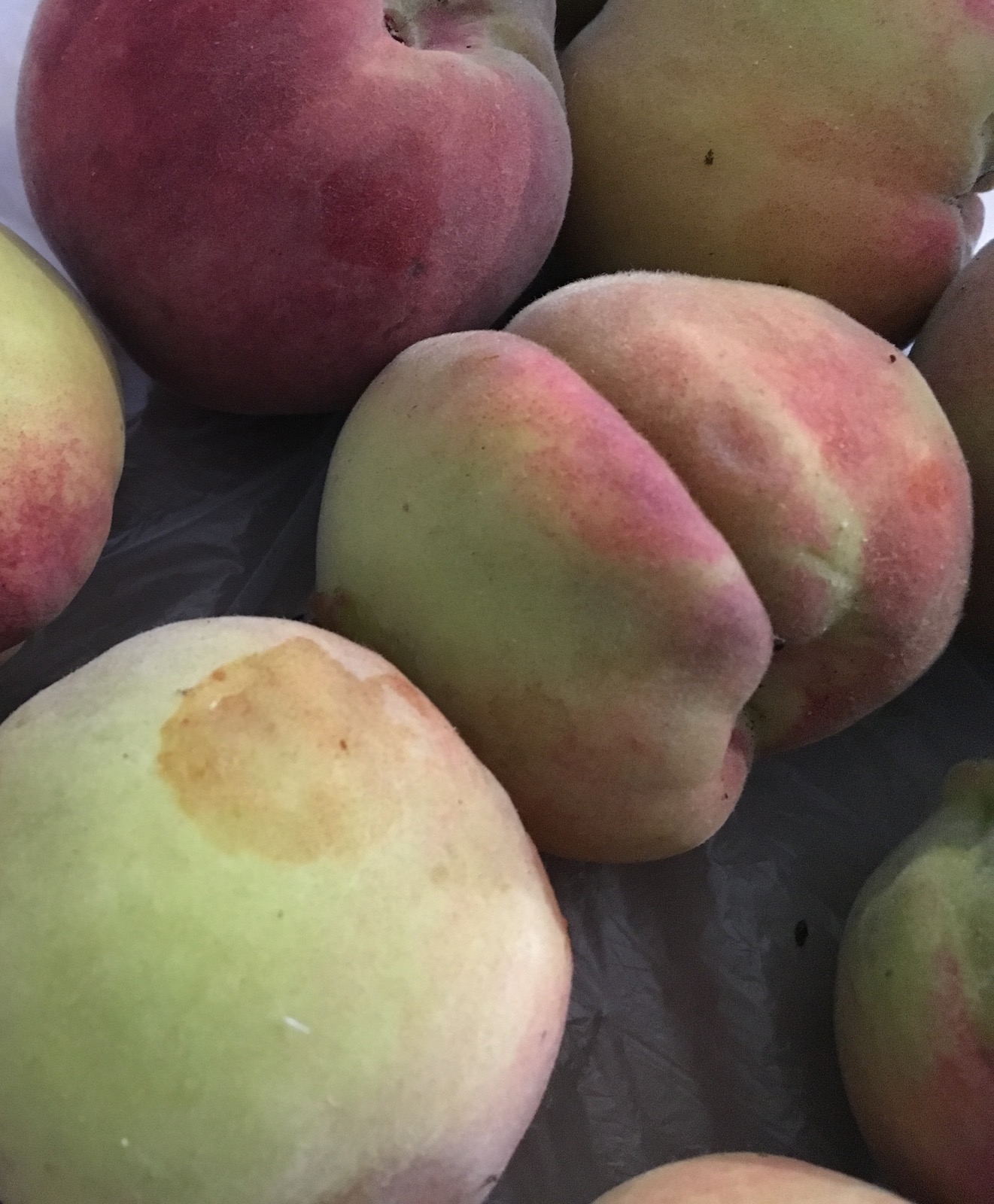
And today I went to pick up 200 daffodil bulbs I ordered, and it turns out that the woman selling the bulbs was the first person I ever sold goat kids to—she’s still got one of them. Anyway, so we got to talking (as you do), and next thing I know, she’s filling a bag with peaches for me—dead ripe and luscious.

So sitting in the kitchen right now are probably 10 kilos of fruit for every person in the family.

So I wonder, can you have too much fruit?


Melon time

2016-03-14 17.47.43 smThey only just squeak into summer here, screaming in at the last minute, if they come at all.

Melons usually hate Canterbury summers—cool and dry just isn’t melon weather. I plant them every year anyway, because sometimes they manage.

This year has been a good year for melons. They would have liked more water, but they at least had the heat they wanted. Most of the melons are grapefruit-sized, but they’re delicious, and because they’re so small, they make fabulous lunchbox fruits—cut them in half, scoop out the seeds, then put the halves back together with a rubber band, and they travel beautifully.

And though they come in only after summer is officially over, they are still the ultimate flavour of summer.

Windfall

2016-03-10 21.13.23 smToday.

Thirty degrees C.

120 kph wind.

Dust clouds so thick I couldn’t see the back fence 20 metres away.

So I knew there would be carnage by day’s end.

Picking yellow summer squash for dinner, I was having trouble finding them, because they were completely coated in dust.

I studiously avoided looking at the fruit trees—I couldn’t face what I knew I’d find while the wind still howled.

Later in the evening, my husband and kids went out and surveyed the damage. Remember back in November when I posted the picture of all those apple blossoms? I knew it was too good to be true.

Every fruit was stripped off of every tree. They collected them all, tossed the bad ones on the compost, and brought the rest inside.

None are quite ripe, but we’ll make the best of them—applesauce and pie this weekend, for sure!

Ballistic Plants

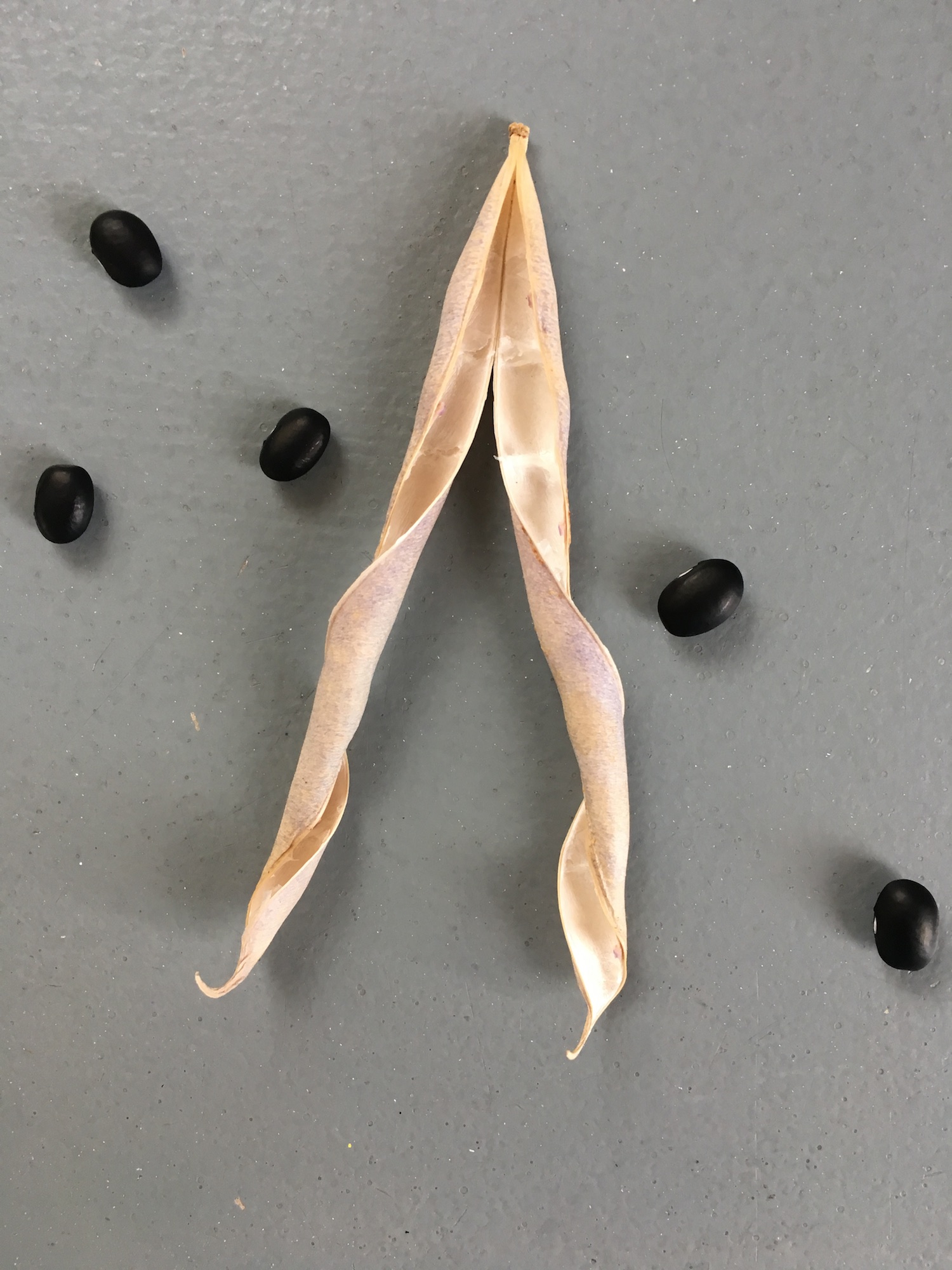
2016-03-05 19.16.53 smI only just harvested the black beans before they all exploded in the garden. It was the hot sun Thursday and Friday that did it. Friday afternoon, when I realised how dry the beans were, I raced to pick as many as I could, and was able to bring in the last of them this morning, with only a few losses.

Though it can be a pain for harvesting, I love plants with explosive seeds. As much as the explosion and shower of seeds, I like the empty pod afterwards. The tension that caused the explosion is gone, and the empty pod twists into attractive little corkscrews.

We have a weed in the yard with seeds so explosive, my daughter and I have dubbed it the seed-in-your-eye plant. It’s real name is bitter cress (Cardamine hirsuta). It’s common in the flower beds around the house, and has a habit of detonating just as a hapless weeder grabs hold of it (hence the seeds in the eye).

My favourite explosive plant is touch-me-not. Where I grew up, touch-me-nots sprang up in any moist hollow. As soon as they started flowering in summer, I’d start searching for ripe seed pods. I’d give each seed pod a gentle squeeze—if the pod was ready, it would burst under my fingers, sending yellow seeds scattering, and turning into a curly work of art. I loved the feel of the deforming fruit.

Sadly, my own children only have beans and bitter cress to detonate here. Now, if I can just convince them that shelling dry beans by detonating them is great fun…


Invasion of the Cabbage Whites

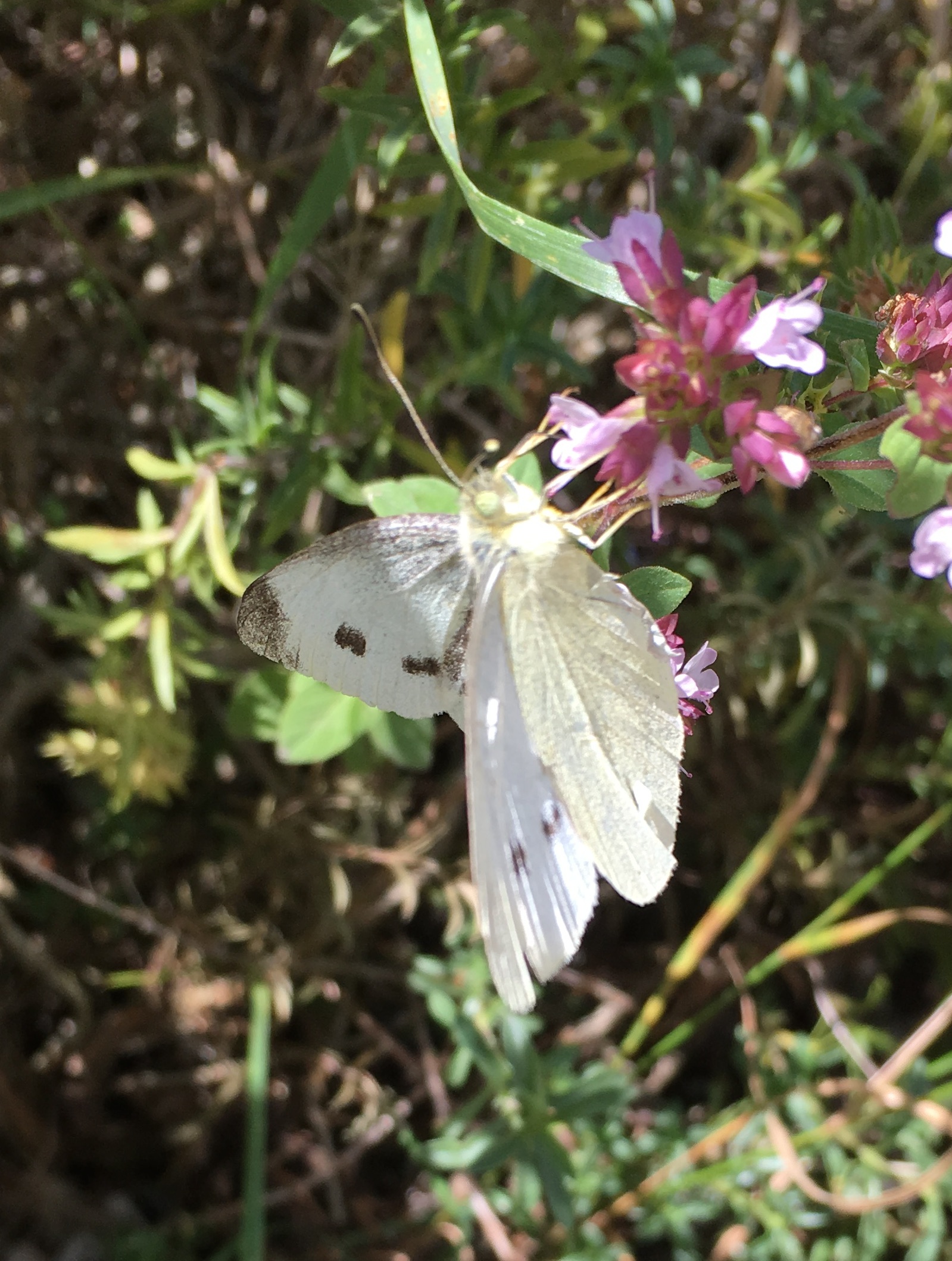
2016-03-02 14.24.23The small cabbage white butterfly (Pieris rapae) is the bane of gardeners’ existence all over the world. Native to Europe, Asia and North Africa, the butterfly is now found throughout most of North America, Hawaii, Australia and New Zealand.

In my little corner of New Zealand, the butterfly is especially common, presumably because of the huge numbers of commercial brassica crops grown here. In late summer, the roadsides shimmer with the butterflies, and their tattered wings flutter like flags in my car’s grille.

These butterflies are the reason broccoli is a seasonal crop for us. Broccoli can be grown year-round here, but mid- to late-summer broccoli becomes infested with caterpillars. For a few years, I dutifully treated my broccoli with Bt (an organic bacterial toxin that selectively kills caterpillars), but I eventually stopped bothering.

By mid-summer, there is so much other food coming out of the garden that, truth is, we don’t need the broccoli. And having a broccoli-free part of the year helps bring variety to our diets, and makes broccoli more special when it is available in winter and spring.

Sour grapes? Not at all! Just learning to work with the local wildlife instead of against it. Makes life easier for everyone!

The Beginning of the End

Pumpkins are filling out and beginning to harden off.

Pumpkins are filling out and beginning to harden off.

March 1—first day of autumn here. It is appropriately autumnal today, with a grey sky and brisk, cool wind.

But it didn’t take a cool day, or the calendar to tell me summer was coming to a close. I have been milking in the dark for weeks—a sure sign the equinox is coming. Last week, the first of the elm leaves crunched brown and crisp underfoot. The poplar trees are looking sparse. The dry beans have started to senesce—pods bleaching, yellow leaves plopping to the ground.

The coming weekend will be full of harvest activities—no time for the beach, regardless of how hot it is. Soy beans, dry beans, and corn will all need harvesting. We’ll make the year’s summer soup. I’ll make another batch of pesto for the freezer before the basil is finished. I’ll dry some tomatoes.

There will be plenty more hot days, and likely a few trips to the beach. There will be many more tomatoes, eggplants, beans, and melons. Summer’s not really over. But it’s beginning to pack its bags and get rid of whatever it can’t take with it when it leaves for the Northern Hemisphere.

The Season for Salsa

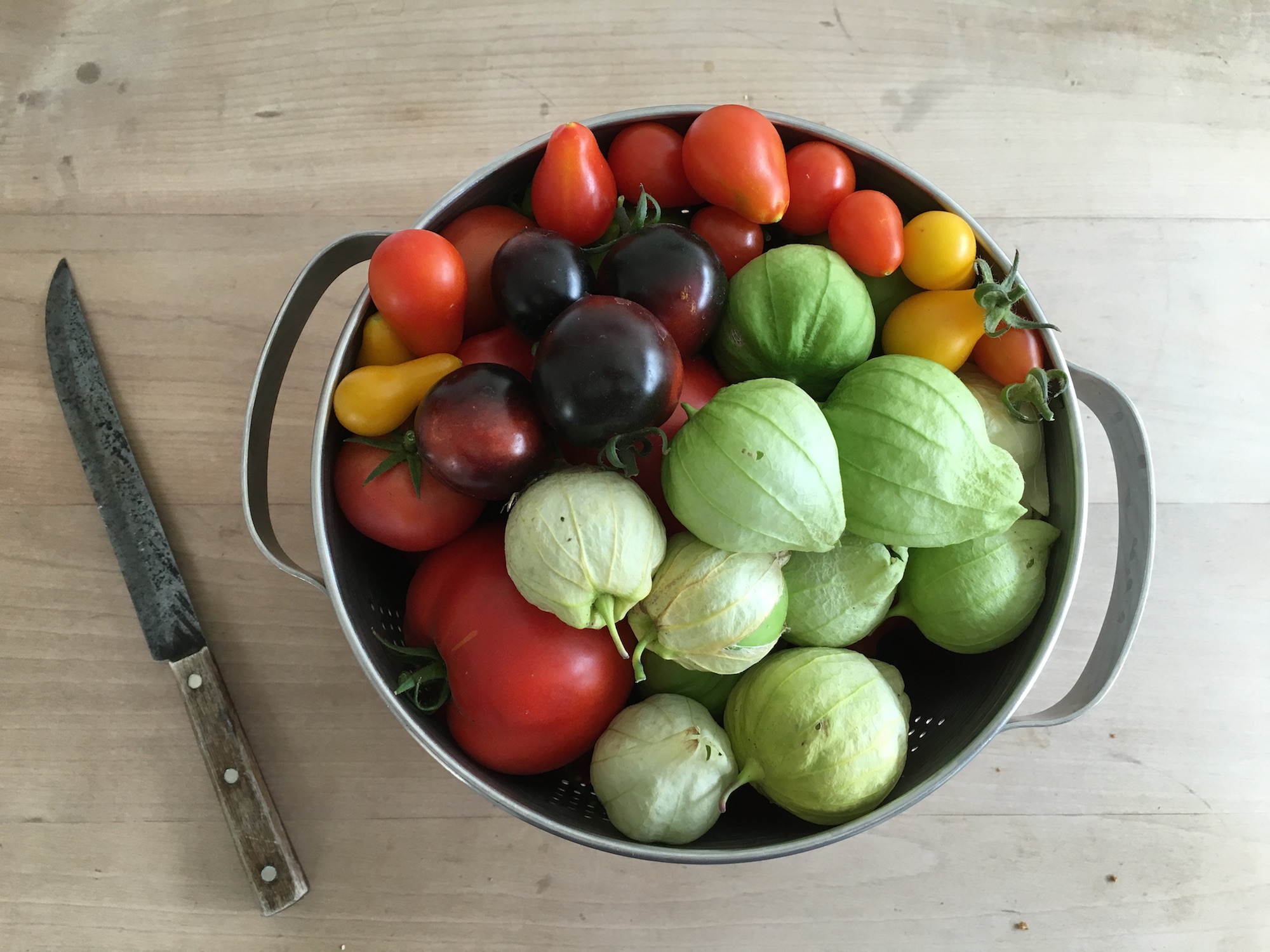
2016-02-26 16.28.01 smNothing beats a good salsa. And there are limitless variations on the theme—tomato or tomatillo, cooked or raw, spicy or mild, cilantro or none…

If I’m using tomato, I prefer a raw salsa, but if I’m making salsa verde—based on tomatillos—I like it cooked.

I have a love/hate relationship with tomatillos. On the one hand, I quite enjoy them in salsa verde. On the other hand, we don’t tend to like them in any other form, so we’ve never been able to eat all the tomatillos produced by even one plant, and the rotting fruits in the garden are truly disgusting.

But salsa verde is a lovely alternative to ketchup on burgers and fries, is fantastic in burritos, and makes a great chip dip. I’ve seen many variations on salsa verde, but this is what I do.


500 g (1 lb) tomatillos, husked and rinsed

½ cup water

1 fresh chilli pepper or a pinch of cayenne

2 red sweet peppers, charred

1 onion

1 clove garlic

½ cup chopped fresh cilantro

2 Tbsp cream or half and half (optional)

salt to taste


To char the sweet peppers, spear a whole pepper on a fork and hold it over the flame of a gas burner, turning regularly, until the skin blackens. Drop the charred pepper into a bowl and cover with a plate for a few minutes to let the skin steam and loosen Peel off the blackened skin before using. Roughly chop tomatillos, chilli, sweet peppers, onion, and garlic. Place all ingredients except the cilantro and cream in a saucepan and cook 15-20 minutes until the vegetables are soft and the liquid is reduced by about a third.

Blend until smooth (I use my immersion blender). Stir in the cilantro and optional cream, and adjust the salt. Serve hot or chilled.

This sauce freezes well—I freeze it in small quantities and pull it out as we want it.
 

Jewels in the Garden

groundbeetlesmDigging potatoes for dinner yesterday, I came across one of my favourite New Zealand insects—the metallic green ground beetle.

When I teach about this insect, I always tell the kids it’s magical because at first glance it appears to be just a large black beetle. A closer look, however, reveals shimmering green around the edges.

Some individuals are more spectacularly green than others, and the one I found yesterday was one of the most vibrant I’ve seen.

Metallic green ground beetles are welcome in the garden. As larvae and as adults they eat slugs, grass grubs, and caterpillars—some of my worst pests.

But I think that what makes metallic green ground beetles most special is that they are endemic, not just to New Zealand, but to the Canterbury region. That means they are found nowhere else on Earth but in this little region of New Zealand.

They aren’t rare or endangered—they thrive in nearly every environment. They have close relatives nearby. But I appreciate the fact they are our own unique jewels.

Wilting

2016-02-26 12.56.09 smOh, limp plant!
I know how you feel
When the wind blows hot
And the brain cells congeal.
And you’d give all you own
For a cool glass of water
But nothing will help
As the sun burns still hotter.

And you know it must end,
But it all comes to grief
When the sun goes down
And you get no relief.

For the night wind, too,
Blows hot and blows dry,
And your leaves stay limp
Though the moon’s in the sky.

Then, just before dawn
You feel the wind shift.
And you pray for some rain,
That life-giving gift.

As the drops start to fall
You breathe a great sigh
And lift your leaves up

To give thanks to the sky.