When the pests are cute

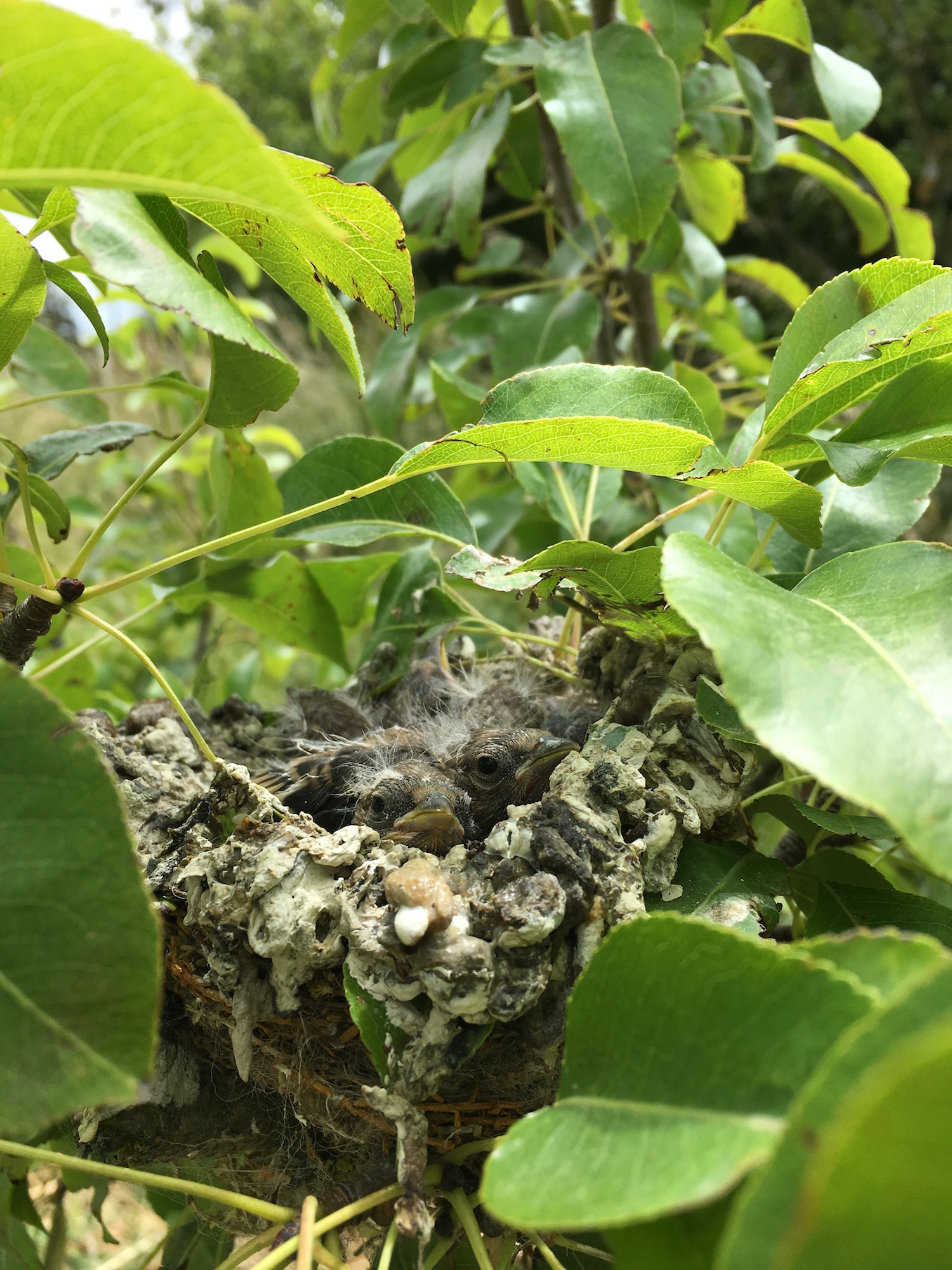
img_2765A month ago, I saw a perfect little bird nest in one of the fruit trees—incredibly tidy, and woven from grass and lichen. It was so pretty, I couldn’t bear to remove it, though I knew it must be the nest of a non-native bird (that’s about all we have here). Starling and house sparrow nests get the heave-ho as soon as I find them. This one…well, I couldn’t possibly disturb something so cute.

I forgot about the nest for several weeks, but today my husband noticed it was chock-full of chicks. Five grey fluffy European goldfinches (Carduelis carduelis)—so ugly they were adorable.

We don’t really need any more goldfinches, but since we don’t grow grain, they’re not much of a pest to us. These five chicks, though, will likely join the flock that descends on the neighbours’ fields in late summer. Sorry, guys. If you’d seen this cute nest of chicks, you’d understand.

Through Fresh Eyes

100_2137-smAll week I weeded and tidied the yard in preparation for a pizza party on Friday night. I tried to make the sad, tired parts of the yard look less decrepit and free the nicer spots from their mantle of early summer weeds.

It’s a Sisyphean task—by Friday, the spots I had weeded on Monday were already sporting fresh weed growth.

So as the first guests arrived, I fretted over the shabby state of the yard and garden. As I looked around, I saw weeds, flowers that needed deadheading, outdoor furniture that should have been hosed off…

But no one noticed my weeds, aside from those guests studying particular ones (it was a party of ecologists, after all, and they were thrilled to find their research subjects ‘in the wild’).

Instead, they saw the musical instruments, the blooming flowers, the fish in the pond, the cat playing with a grass stalk, the places for playing and relaxing. They saw all the things we love about the yard, and never noticed the twitch sprouting in the paths and the flecks of bird poo on the deck chairs.

“This is awesome!” cried one guest as he beat out a rhythm on the outdoor drum set.

“It all looks so fresh…like it’s all new,” said another.

Throughout the evening kids and adults alike wandered around, feeding goats, playing outdoor instruments, grazing on raspberries, sitting on the benches tucked here and there, climbing trees, playing lawn games, and feasting on produce from the garden, baked in the new bread oven. Everyone smiled. Everyone relaxed.

It was good to see the property through their eyes for the evening. I focus so closely on the work that needs to be done, that sometimes I forget that, even with weeds or grass that needs mowing, the place is a haven. Sometimes I forget to put away the to-do list and just enjoy the place. I struggle to stop and smell the roses without also noticing they need to be pruned.

So thank you to all the guests who joined us Friday night. You gave me a fresh perspective and gave me permission to slack off a little this weekend—to just be here.
You have got to be kidding me…

2016-12-16-15-35-55It frosted Saturday morning. Yeah. It was 30C Friday afternoon, and by Saturday morning it was 2C. It was back up to 30 degrees by Saturday afternoon, and today we went to the pool.

I didn’t even think to check the garden Saturday morning. It never frosts this late in the year. That’s the seasonal equivalent of frost on June 16th, for those of you in the Northern Hemisphere. Even in St. Paul, Minnesota, it never frosted that late. It was a rude surprise when I went out to the garden in the afternoon to pick some vegetables and found the pumpkins and beans blackened.

The plants will survive—it was a light frost and the growing tips of the plants weren’t hit—but it will knock the pumpkins back significantly. They were already behind, because the first planting didn’t germinate, and these plants were my second try at them this year. A frost this late might be the difference between mature pumpkins when the first autumn frost hits or pumpkins that still need a few weeks of growth to reach the right stage for storage.

Unfortunately, the only thing to do at this point is shrug and be thankful the other frost-tender crops weren’t damaged…after the obligatory grumpy farmer complaints are through.

I’d Rather Be Weeding

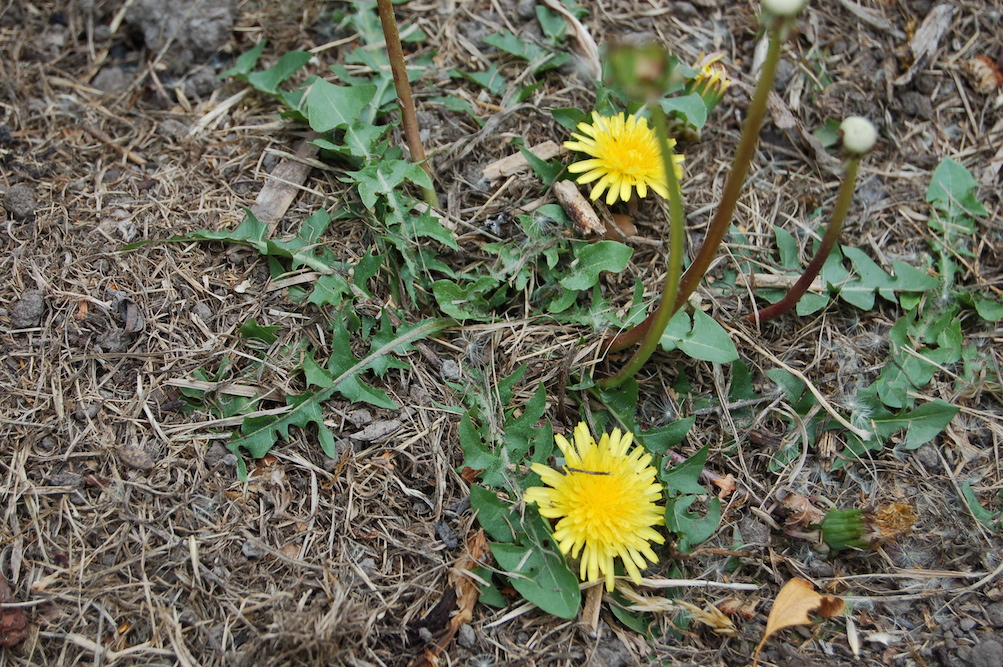
dandelion-smWhen I tell people we grow almost all our own vegetables, I get a lot of comments like, “Wow! That’s impressive!”

I shrug—I think if they really knew, they wouldn’t be impressed.

Truth is, I think I grow so many vegetables because I’m just not cut out for the modern world.

I drove into town today for groceries and to finish (do) my Christmas shopping. I had already put the job off for several days while I found other, more important things to do in the garden. Then I timed my arrival in town with the opening of the shops, so the crowds would be less. I came armed with multiple lists—a list of destinations, and a list of items to be purchased at each location. I ticked them off, one by one, feeling the stress level mount as the morning wore on.

Noon came and went, and I was still working through my lists. The crowds grew. I got stuck in traffic. I didn’t stop for anything to eat or drink, lest the whole trip take longer.

I finally made it home just before 2 pm, exhausted, irritable, and completely stressed.

A little lunch and an hour of hard physical labour in the garden restored me.

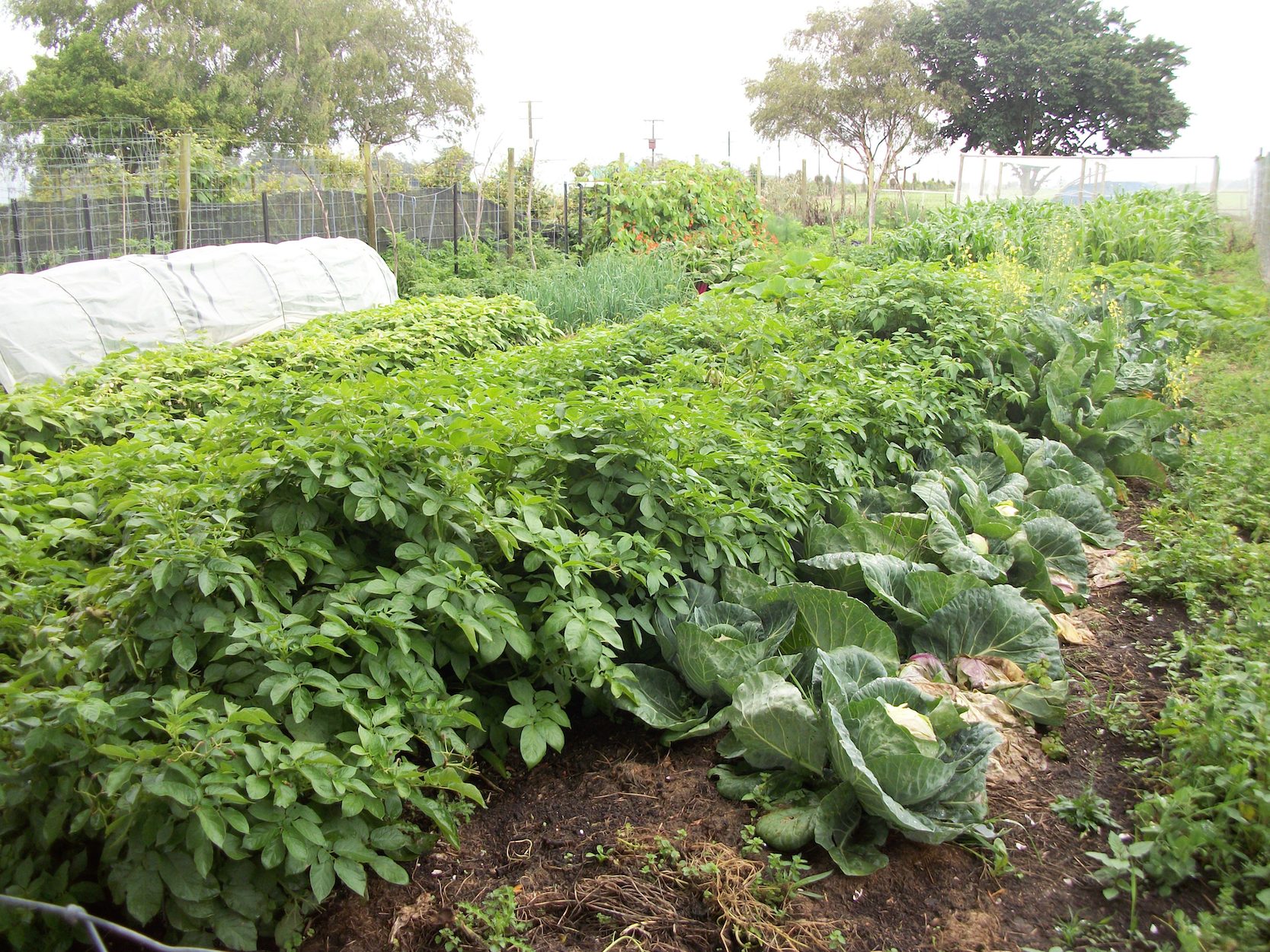
Growing our food means I don’t have to go for groceries as frequently. I don’t have to deal with parking, stores, financial transactions, deciding what to buy of the endless array of products on the shelf. Sure, it may take four months to get a tomato, but at least I don’t have to go to the store to get it.

This Old House: Gifts from the Past

2016-12-09-10-46-51Most of the time, I think it would be wonderful to have a brand new house on a property that’s never had a house on it. To not be fighting a hundred and thirty years of other’s landscaping decisions and poor house maintenance would be a delight.

But then, sometimes the property’s history is a bonus.

When we moved in over eleven years ago, most of the property was overgrown with weeds. Even the garden beds around the house were choked with grass and yarrow. We slowly hacked away at the jungle, finding many surprises along the way—beautiful old roses, dahlias, peonies, daffodils, and a host of other flowers hidden away in the weeds. We transplanted the floundering plants to new, weed-free garden beds as we re-landscaped the property.

We thought we had discovered all the lost plants, but strange things have shown up over the years.

Several years after we had cleared and replanted the area between the house and the hedge, a day lily sprang up there. We had never seen a day lily on the property before. The following year, a winter-flowering iris popped its head up there, too. Again, a flower we haven’t seen anywhere before.

Other flowers have since appeared in unexpected places, long after the areas had been re-landscaped—mostly bulbs, as though the bulb sat dormant for years until conditions were better. Either that or they’ve been growing, not flowering, and somehow escaping my notice.

Either way, they’re like gifts from past gardeners.

A Rose

R Weiss roses Christchuch Botanic Gardens

R Weiss
roses
Christchuch Botanic Gardens

A rose, by any other name
Would still have thorns and be a pain.

Black spot, chafers, aphids, too,
Spider mites and powdery mildew.

Japanese beetles, leafcutter bees
It’s rife with pests and disease.

So go ahead, forget the rose
Plant a flower with fewer foes.

Sunflower, Daisy, there’s really a passel
Of flowers easy to grow without hassle.

No pruning, no spraying, no disease or thorns
For none of these things a gardener mourns.

Or better yet, just live with the weeds
They grow by themselves, and spread their own seeds.

Dandelion, yarrow, catsear and cress
All grow on their own and let the gardener rest.

Cleanliness is Next to Godliness

2016-12-03-09-23-41-hdr

Clean pots drying in the sun.

Well, I’m not sure about the godliness, but cleanliness is important when it comes to growing plants.

I finally got round to washing the pots from all my vegetable seedlings today. They had been stacked just outside the shed door, waiting—calling out to me every time I went in or out of the shed. I managed to ignore them for several weeks.

It’s tempting to just put away the empty pots after planting out. It’s such a busy time of year, and washing pots is tedious. But I’ve learned that it must be done. If I don’t wash the pots, next year my seedlings will be plagued with disease. They’ll grow poorly, or die outright.

In truth, I don’t know that for a fact. I haven’t studied it scientifically, but in my experience, I have bad seedling growth if I plant in dirty pots. So I wash.

The pots don’t need to be perfectly clean—I swish them out with a brush in a bucket of water, then dry them in the sun. It’s actually probably the UV radiation that kills any pathogens, not so much the cleaning. But whatever it is, it works. A little extra care now, and next year’s crops will get off to a good start.

What’s the price of a weed?

2016-11-08-16-14-49This is an important question at our house, with lots of weeds and two teens looking to make some extra money.

I decided to take a mathematical approach to this question.

Crop loss and control costs for weeds in New Zealand are estimated to be about $1.2 billion per year. Add another $1.3 billion for biodiversity losses, and the total bill for weeds comes to $2.5 billion per year.

So what should I be spending on weeds? Let’s do a few calculations.

New Zealand has a land area of 268,021 km2. That’s 26,802,100 hectares.

Our property is 0.6 hectares.

So our property is 0.00000002 of the land area of New Zealand.

Multiplying New Zealand’s total weed bill of $2.5 billion by 0.00000002, I should be paying about $50 a year to control weeds on my property.

My husband set the price of a 20 litre bucket of weeds at $2 (and I agreed to pay triple price for each bucket of pure thistles—hazard pay and all). That $50 is only going to pay for 25 buckets of weeds (or only 8 buckets of thistles).

Darn. I’m seriously being over-charged for weed control…

A Cauliflower Calamity

2016-11-29-16-41-47We’re about to be inundated with cauliflower. I’m afraid it’s all my fault.

As I looked through the seed catalogue way back in July, I saw ‘Cauliflower Orange Bouquet F1’.

The photo showed a warm orange head of cauliflower, and I thought, “Oooo! That would be pretty!”

I ordered it, of course. Never mind that I already had half a packet of ‘Snowball’ left from last year, and we don’t eat all that much cauliflower.

And then, because I can’t help myself, I planted both types this spring. After all, if orange cauliflower would look good, then orange and white cauliflower would look better, right?

Now I’m looking at 20 cauliflower plants all coming ready at the same time. That wouldn’t be too bad, if I had my beautiful orange and white colour combination.

Unfortunately, Orange Bouquet has turned out to be a sort of weak yellowish colour. If you didn’t have the two side by side, you’d be hard-pressed to tell the orange from the white.

The orange is every bit as delicious as the white, and the heads are big and compact. There’s nothing at all wrong with it. But it is a bit disappointing.

And now I’m wondering what to do with all this cauliflower…

Hmm…

I see in the catalogue there’s another variety—’Violet Sicilian’—now, that would be something! Think how all three colours would look together!

(Please, somebody stop me now, before it’s too late!)

Crane Flies

2016-11-29-07-27-59The crane flies are the largest family of flies in the world. There are over 15,000 species worldwide, with 1600 species in North America and 600 species in New Zealand.

The Māori name, matua waeroa, means ‘king mosquito’. You could be forgiven for thinking crane flies are giant mosquitoes—their body shape is similar. But crane flies cannot bite. The adults of many species don’t eat at all, and those that do sip nectar.

Crane fly larvae are sometimes called leatherjackets, because their exoskeletons are thick and leathery. They are aquatic or live in wet soil or rotting vegetation. Most feed on dead plants, though there are a few predators among the aquatic larvae.

When we moved to Crazy Corner Farm, and I turned the vegetable garden for the first time, I found the wet end of the garden teeming with crane fly larvae. Hundreds and hundreds of them. Every shovelful of earth came up with at least ten larvae. It was truly impressive, and the chickens loved me for the handfuls of larvae I tossed to them that year. The larvae must not like cultivation, though, because I don’t find them in the vegetable garden anymore.

I find crane flies endearing—awkward and gangly, they remind me of teenage boys who’ve just gone through a growth spurt and aren’t quite comfortable with their larger dimensions. The analogy might not be so far off. Crane fly larvae are legless and live in confined spaces. When they become adults, they suddenly have six impossibly long legs, and are airborne. It must be terribly confusing.

I spotted this beauty on my office door this morning, sitting on the glass with the white curtain behind it. I couldn’t resist photographing it.