Garden Tally Half-year Check-in

We’re nearly at the summer solstice, so I thought it was time to do a check-in on the garden tally project I mentioned back at the winter solstice.

Since 21 June, we’ve been keeping a record of all the food that comes out of the garden. Whenever we bring something into the kitchen, we record it in a little notebook I’ve placed there for the purpose. The months of June, July and August include lots of days when we brought in nothing but eggs. No surprise, the dead of winter is a slow time in the vegetable garden. 

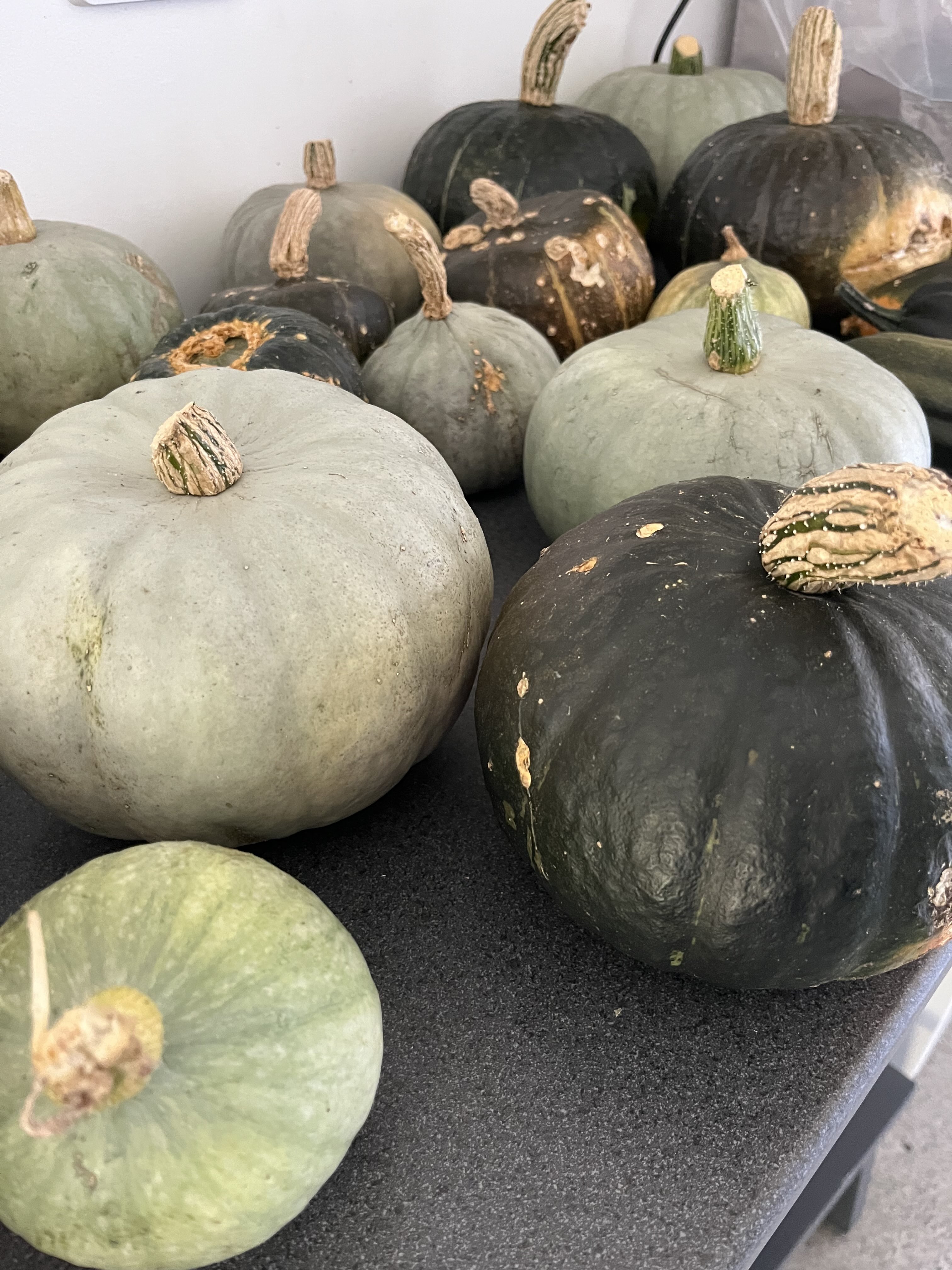
That’s not to say we weren’t eating from the garden. All winter we enjoyed the stored up bounty from last summer—tomato sauces, pickles, jams, chutneys, pesto, pumpkins, frozen corn and peas … There may have been little fresh coming in, but we didn’t lack for delicious vegetables and fruits.

Since September, the incoming volume from the garden has grown rapidly, and some of the half-year numbers are already staggering, despite the fact that the early onset of summer heat wreaked havoc on the spring crops.

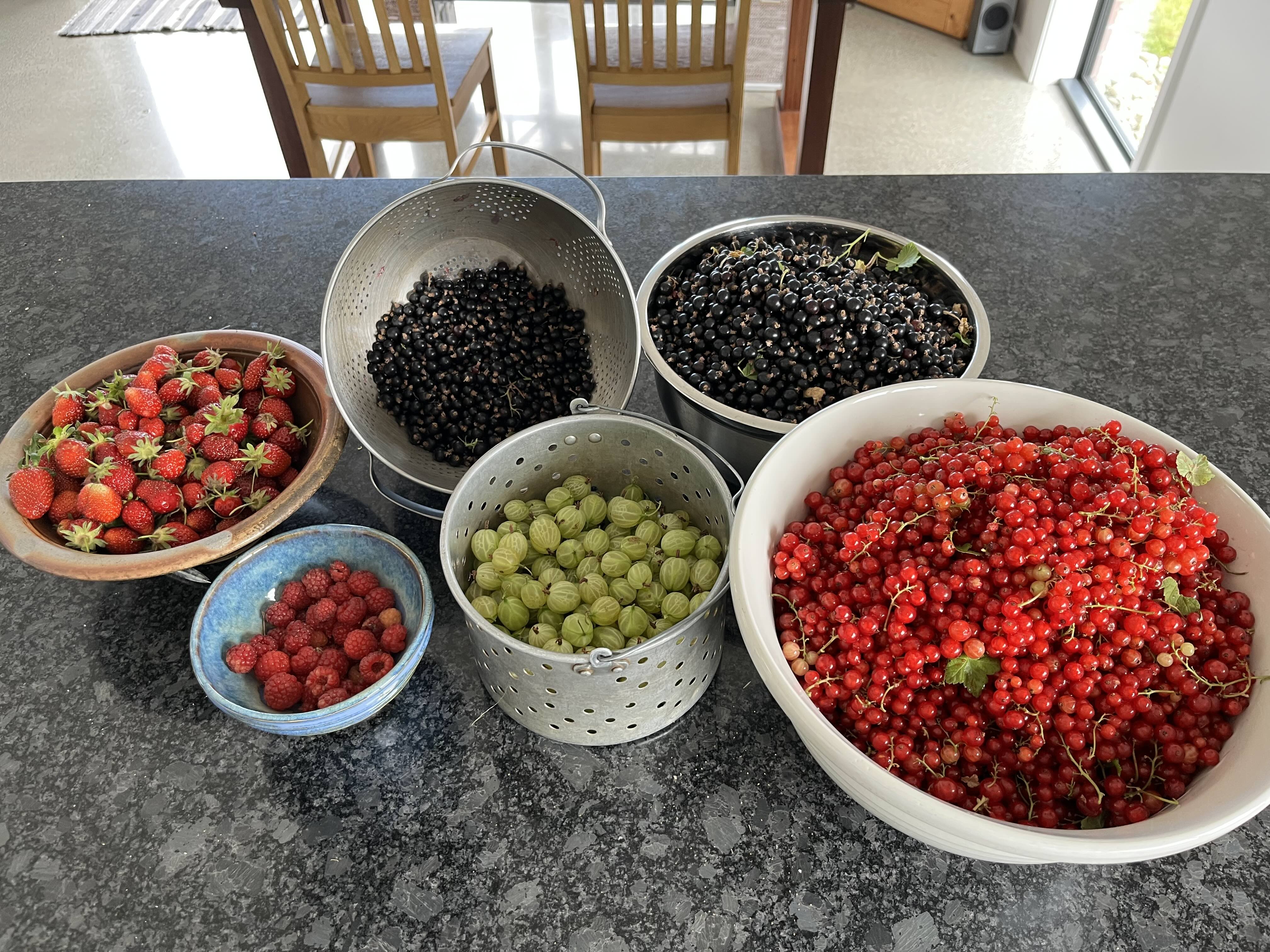
If you ever wondered what 6.6kg of gooseberries looked like …

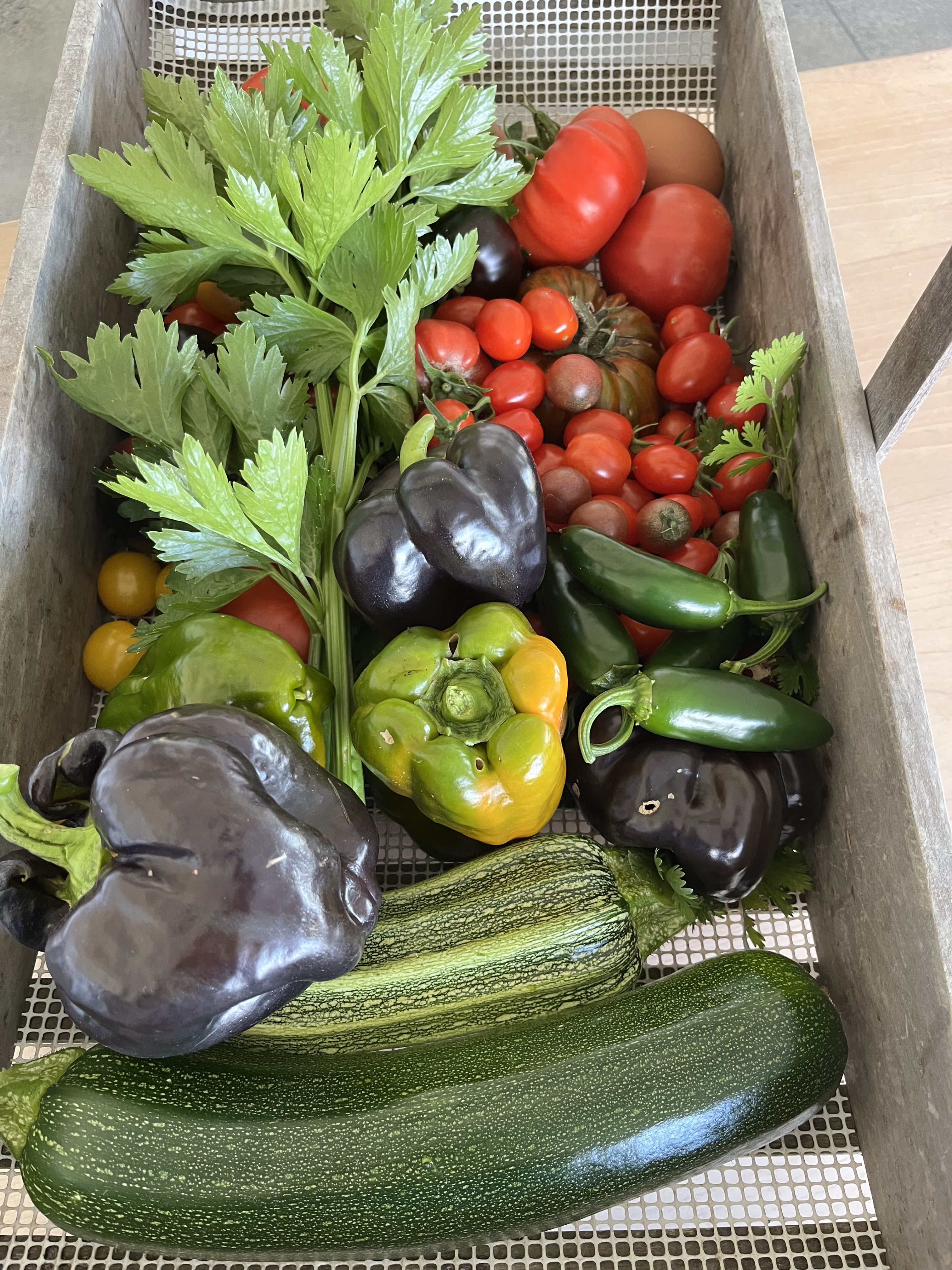
We’ve harvested over 56 kilograms of vegetables, 40 kilograms of fruit, and 335 eggs since the winter solstice.

Those 56 kg of vegetables only covered about half of our theoretical daily need, but that was the ‘lean’ season, when most of what we were eating was stored food from the previous season. Even as a vegetarian, I didn’t feel any lack of vegetables over winter.

There were also some stand-out individual harvests.

The final sweet pepper from last year’s crop was harvested on 2 August! For those of you in the northern hemisphere, that’s like harvesting peppers in early January. The new greenhouse is truly amazing for extending our growing season.

And it not only extends the later crops, it also gives them an early start. This year, I was disappointed, because the zucchini I planted early for the greenhouse never germinated. So the plant I stuck into the greenhouse was sown at the same time as my outdoor zucchini. Despite this, we harvested the first greenhouse zucchini on 13 December, well before my ‘zucchini by Christmas’ goal.

No matter how small, the first tomato is the best.

Oddly, however, the first ripe tomatoes have come from the outdoor tomato plants. These plants are currently less than half the size of the plants in the greenhouses, and honestly look like they’re only barely hanging on. Yet the Gold Nugget cherry tomatoes are already ripening out there.

All these stats make me eager to see what the second half of the growing year has in store. I was blown away by how much we’ve harvested during the leaner half of the year, but the real harvest has yet to begin.

I hope you all have a lovely solstice full of family, friends, and good food. 

Pickling onions, harvested in December, but we’ll eat most of them next winter.

Bountiful Berries–a Summer Celebration

In the past two weeks, we have picked and processed (or eaten) 26.6 kg of fruit. Mostly strawberries, raspberries, black currants, red currants and gooseberries, but also a few cherries and boysenberries.

I have run out of half-pint sized jam jars, which is fine, because when you’re making jam with over 6 kg of fruit, you really want to put it in larger jars for the sake of your own sanity. The freezer, too, is beginning to fill with fruit, some of which will be taken out through the summer to combine with later crops in chutneys.

Still, the fruit keeps coming. Honestly, you can hardly tell I’ve picked currants at all. The next two weeks will likely see me pick at least another 20 kg of fruit.

And then it will be largely over. Christmas usually marks the end of the insane early summer harvest. Heading into the new year, the blueberries will begin to ripen, and raspberries, strawberries and boysenberries will continue to come in. But the obscene overabundance of berries will be over for the year. 

Although it is exhausting, there’s something magical about the December berry rush. Eating your way through the garden, having fresh berries on your breakfast cereal every morning, cramming your lunch box with fruit. Making trifle and fresh fruit ice creams. And the days are long—you can fit in a lot of picking and processing of fruit. It’s not unusual for me to be finishing a batch of jam at 10 pm. After all, it’s still light out, surely there’s time to get it done today. Never mind the clock, or the fact that it’s light before 5 am, and I’ll be springing out of bed at first light to pick more fruit before the day heats up.

Can this much work be a celebration? It feels like it. I weed, water, mulch, fertilise and prune all year, and then for a month the berries pour out their thanks. The work to gather it up is full of joy. By the end of the month, I’ve stored berries for the year. In the dark days of June, I’ll be able to make black currant tarts and enjoy the sparkling taste of the summer solstice. 

Homemade Potting Mix

I’ve been frustrated with commercial potting and seed raising mixes in recent years. Not only are they expensive, but my vegetable seedlings languish in them, if they germinate at all.

The culprit is most likely clopyralid herbicide residues in the mixes. Even ‘organic’ compost may have traces of the herbicide in it, because the chemical doesn’t break down easily, and can be found even in manure from animals that have eaten plants sprayed by it.

So this year I decided to try making my own potting mix. The results have been encouraging.

My biggest hurdle to making good potting mix is ridding my compost of weeds. I don’t do hot composting. Though some of my pile will get to the temperature necessary to kill weed seeds, not all of it does. Fortunately, I have an effective way of sterilising compost—the bread oven.

This spring, every time we’ve fired up the bread oven, I’ve used the residual heat, after all the baking is done, to sterilise compost. 

I put moist, sieved compost into a restaurant steam tray (lidded) and/or a stock pot (lidded) and put it in the hot oven until the temperature in the centre of the compost reaches 82℃. This takes a couple of hours, as the oven is usually only around 150℃ by the end of baking. 

I mix my sterilised compost with coarse landscaping sand in a 2:1 ratio, and voila—my own potting and seed raising mix!

Sterilised soil is prone to fungal outbreaks, because there are no other microorganisms to keep the fungi in check, so when I use my mix, the first watering I give it is a slurry of soil from the garden. This inoculates the mix with the healthy mix of microbes from the garden and avoids excessive fungal growth.

And how did my mix do, compared to commercial mix? Spectacularly well! 

Because I didn’t decide to make my own mix until I actually needed it, some of my seeds were planted in commercial ‘organic’ mixes. Many of these seeds failed to germinate this year. Those that did germinate then sat without growing at all until I transferred them to my own mix.

Seeds planted in my own mix germinated well and grew vigorously.

I will definitely be making my own potting mix from now on.

The Carrot Conundrum

I love carrots. I love them cooked into everything from pasta sauce to burgers, and I love them raw in my lunch box. As a snack to get me through the day, they are unparalleled—crunchy, juicy and sweet, but not so sweet that they give me a sugar crash. And homegrown carrots are a million times more flavourful than commercial carrots, so growing good carrots is important to me.

Unfortunately, I rarely have luck with my carrots. Last year, I planted three times and got, maybe six carrots. This year, after my first planting failed entirely, and my second mostly failed, I decided to get serious about carrots. 

First, I evaluated why my carrots so often fail. It’s not just one problem that nails them. First, I probably plant my carrots a little too early. Not that they won’t grow at the cooler soil temperatures of early spring, but they take longer to germinate, leaving the seeds at risk of my other two problems: pests (mostly slugs and slaters) which eat the seeds and freshly germinated seedlings, and drying out.

Finally, even once my carrots germinate, they struggle with the heavy clay soil of my garden. If I lighten the soil by adding lots of compost, the slugs and slaters just eat the carrots before they can establish.

So, to try to address all these issues, I started by asking my husband to build me a raised bed. Into the bed we poured a commercial garden mix (half soil, half compost), combined with a sack of garden sand.

I watered the bed well before planting. Then I made my furrows deeper than necessary, so that even after covering the seed, the rows were lower than the surrounding soil. My hope was that the rows would stay moist longer after watering or rain if they were furrowed. 

I watered well after planting, then generously sprinkled the bed with slug bait (I use Quash (iron EDTA), which is also very effective against slaters, but is safe for most everything else). Then I mulched between the rows with grass clippings, and covered the whole bed with feed sacks laid right on the surface.

With the feed sacks on the surface, I didn’t need to water daily, but I watered every other day (with extra waterings on hot days).

Ten days later, I have excellent germination on my carrots!

Was my raised bed necessary? Maybe not, but by making the bed, I focused my effort on a smaller area than I usually plant in carrots. It gave me an excuse to work really hard in that small area to make it work.

Will it work again next year? I’ve had bumper carrot crops in the past, so I know that success one year doesn’t necessarily mean success every year. But I’m hopeful that I’ve hit on a technique that works consistently for me. Only time will tell. 

In the meantime, I’m doing my best to keep my newly sprouted carrot seedlings moist and free of pests. I can taste the carrots already…

A Fresh Perspective on a Changing Garden

blooming daffodils in formal garden beds

Twice a year, on (or near) the equinoxes, I clean the gutters. It’s not a job I enjoy, but it’s a necessary evil living downwind of the neighbour’s huge pines, macrocarpas, and gum trees. 

The one thing I do enjoy about the job is the excuse to spend a few hours up the ladder, peering down at the yard from a perspective I don’t normally have. 

So last weekend when I was cleaning gutters, I took my phone with me and snapped a few pictures from on high.

The last time I photographed the garden from this perspective was in September 2022. At that time, we’d just finished establishing and gravelling the paths in the front yard. Look what a difference three years makes! And what a fun perspective from which to view it.

Three years of change in the herb garden.

Gardening and Community

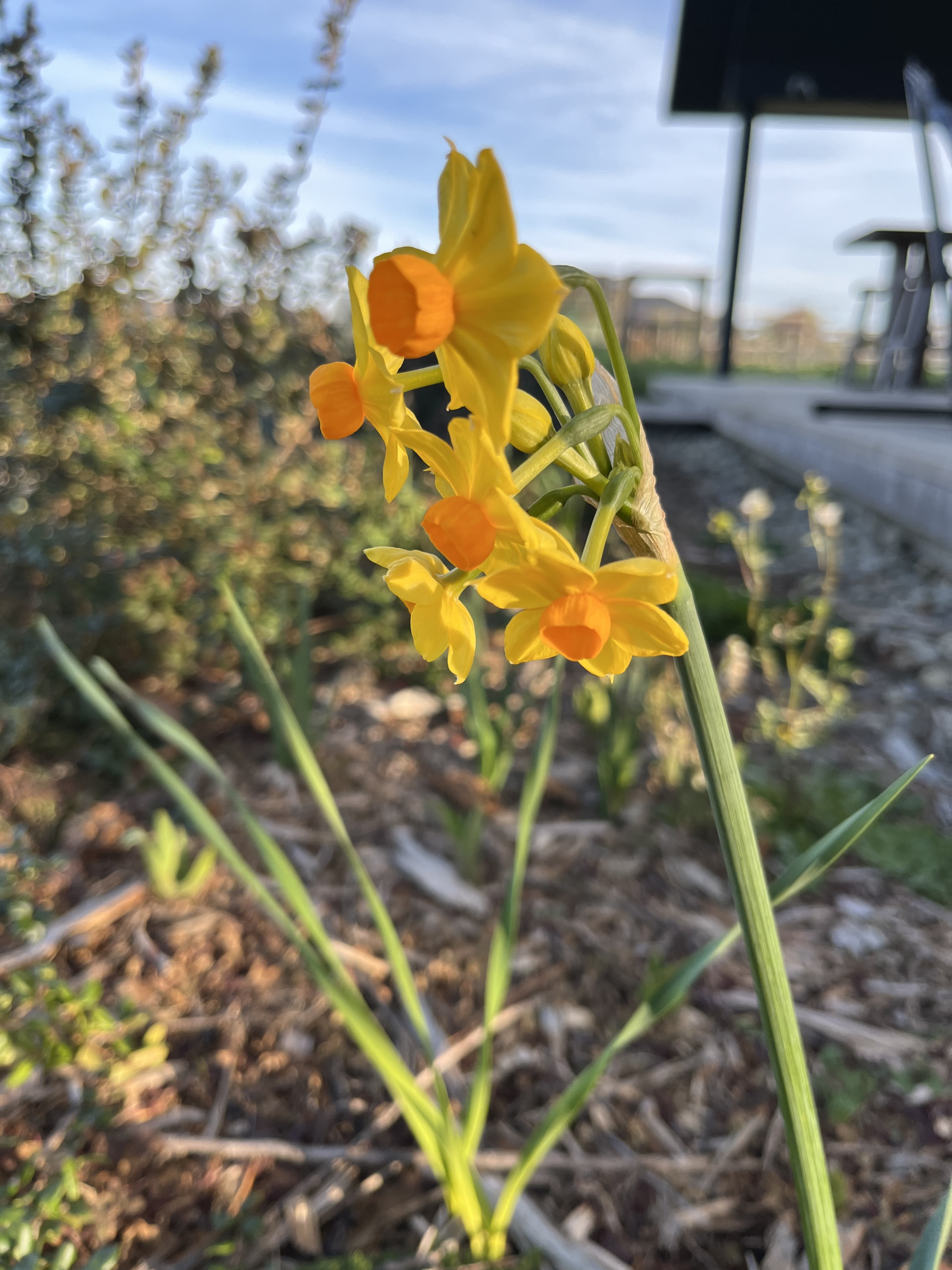
blooming daffodils
Blooming daffodils cover a multitude of sins (aka weeds) in spring.

The local veggie gardening group had our first Monday evening gathering for the season last night. And what a lovely gathering it was!

I hosted, which is always a bit nerve-wracking. You don’t want the place to look like it’s been abandoned or neglected, and in early spring, weeds are often more prominent than crops. And some of the group members have absolutely stunning gardens and are way better than I am at growing food. 

But we all have weeds. And we all have different challenges in our gardens and in our lives. And everyone comes in a spirit of community. Once people begin piling out of their cars and strolling the garden, any nervousness is forgotten as we all share our successes and failures so far this season, and catch up with each other’s lives outside the garden.

Conversations ebb and flow as the group wanders, breaking into subgroups around particular plants, garden structures, pest outbreaks, or other items of interest. 

Because we’re not quite on daylight savings time yet, we ended our garden stroll as daylight faded. But like any good gathering, we weren’t done yet—it was time for kai and a cuppa.

artichoke bud
Artichokes are on their way!

Last night, the party broke down on gender lines, as it often does (for no real reason … we laugh at ourselves all the time for this tendency to segregate)—the guys lit the brazier outside and commandeered the cheese and crackers to accompany some home brew. Indoors, the ladies had tea and cookies. 

Without the garden in front of us, the conversation diversified—and we’re such a diverse group outside our interest in growing plants, that you never know what might be under discussion on any given day. Crafts, books, digger operation, food, business interests, travel, rock collecting, climate change … you name it, we’ve probably discussed it. Garden group conversations are always intriguing and full of laughter.

When our guests headed home for the evening, the fire was still burning merrily in the brazier. The night was unseasonably warm, and the sky was clear and washed with stars. For an hour, my husband and I ignored the dirty dishes and sat in the dark by the fire, sharing what we’d both learned from the gathering.

While we sat there, a few thoughts occurred to me:

tomato seedlings
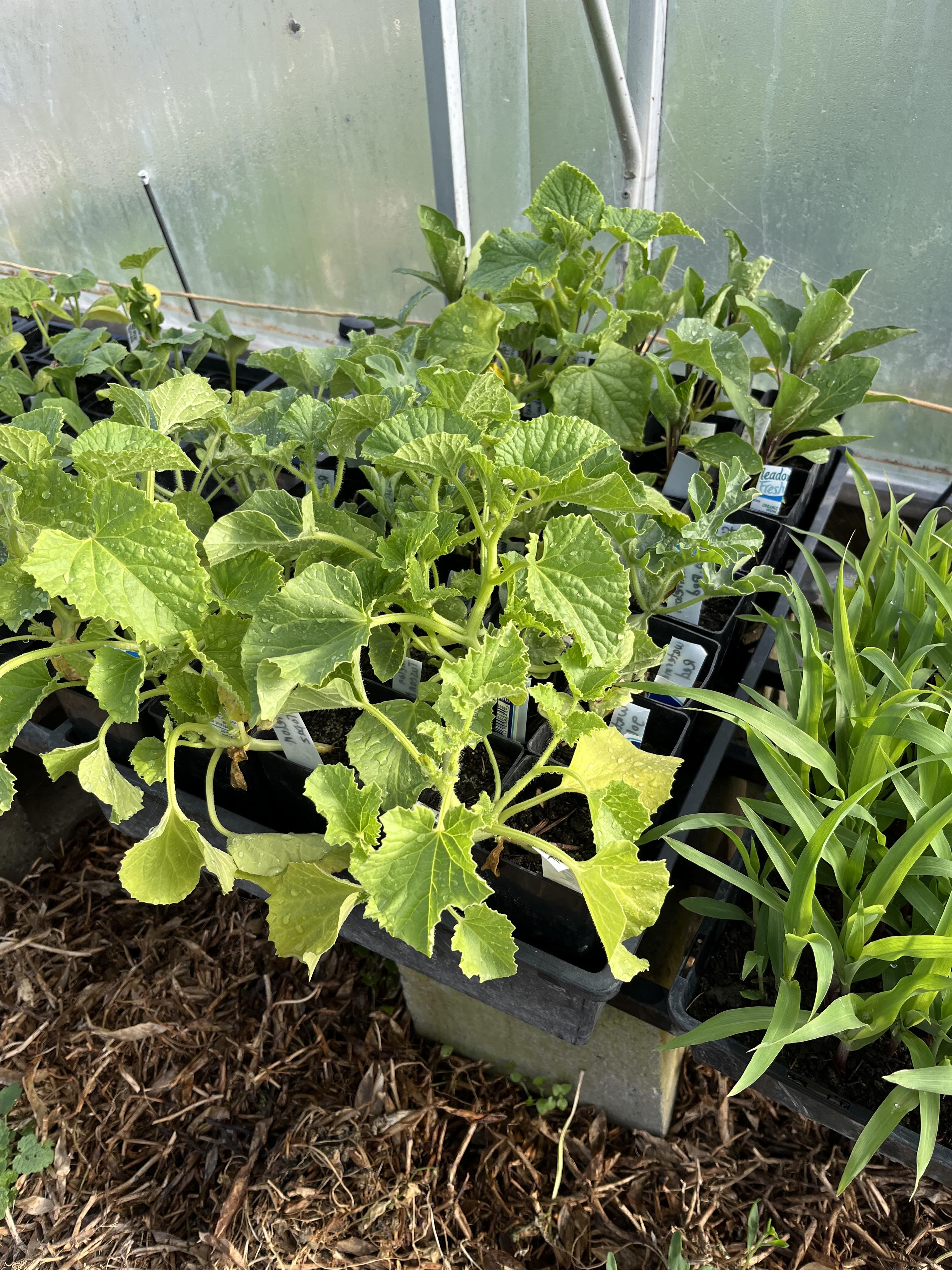
Tomato seedlings in the greenhouse.
  1. We don’t enjoy our garden enough. And by ‘enjoy’, I mean just sit or stroll and appreciate the beauty. Not that we don’t do this at all, but we could be doing it a whole lot more.
  2. We are absolutely blessed to be part of the local gardening community. I’m a total introvert, and being with groups of people where there are multiple non-stop conversations going on is exhausting for me. But I love this crowd of generous, community-focused people, and I look forward to each of our get togethers.
  3. Finding common ground with people can be as simple as sharing excess lemons or cuttings from your favourite herbs.

There is something humanising about gardening. The very act fosters community, brings people together. Reading the daily news, I can quickly begin to think the worst of the the entire human race. The garden group reminds me that there is beauty, not only in the garden, but in the ones who tend it.

Excitement Builds

Lately, it has still been light outside on our drive to and from work. The daffodils are up, and a few blooms are even open. When I weeded the asparagus bed last week, the Californian thistles were sprouting new buds 15 centimetres underground. 

And most importantly, my seed order has arrived!

Yep. Spring is on its way. Never mind that the frost behind the house hasn’t melted in a week, and the bird bath is skimmed-over with ice at 3 pm. Never mind that much of the country hit yearly lows yesterday. Never mind that our worst winter weather tends to arrive after spring has already officially started. 

This weekend, I’ll write my weekly spring to-do list, covering August to December. I’ll tidy the garden shed of winter detritus, and pull out the peppers in the greenhouse which have finally died. And I’ll finish the last of the winter pruning and deadheading. I’ll probably also fret over how little of those winter activities I accomplished—the sewing, spinning and other crafts I enjoy. 

And with the windows open (for the few hours it’s warm enough … just), and the house smelling of fresh air and the promise of growing things, I’ll impatiently await spring.

Garden Tally

Years ago, struggling with the feeling that I wasn’t pulling my weight in my family because I wasn’t earning much money with my business, I did a few back of the envelope calculations of what my gardening and milking/cheesemaking activities ‘earned’. At the time, I worked out that I was producing about $50,000 worth of food every year. The domestic accounting blew me away and put my mind at ease.

Plenty of food in the winter garden.

I’m no longer concerned about the monetary value of the gardening I do, but I’m still curious, and I love data and numbers. So I’ve decided to do some garden accounting this year.

Beginning at the winter solstice, I started keeping a log of all the food that comes out of the garden. Although the garden year never really ends here, I figured the solstice was as good a place as any to start. I’ve dedicated a notebook to the task and I’m recording as much information as I can about what I harvest—weight, number, variety, etc. I’ll periodically enter the data into a spreadsheet, so I can play around with the numbers.

Okay, yes, I’m a total nerd. But I love playing with data. And we always come to late summer (as we heave yet another laden basket onto the kitchen bench) wondering just how many kilos of courgettes we’ve harvested. But by then it’s too late to go back and weigh them. 

Peppers hanging on in the greenhouse.

Besides, there’s always the fascinating harvests, like the 500 grams of hot peppers I harvested yesterday. (in July?! For those in the northern hemisphere, July is the seasonal equivalent of January.) In addition, the exercise might tell me a bit about which varieties are more or less worth growing. Not that it would stop me from growing a crop I love, even if it doesn’t produce a lot, but it never hurts to have the data.

My intent is not to place a dollar value on what we harvest (Who can put a value on a warm, heirloom tomato fresh from the garden?), but to use the exercise to capture the quantity and diversity of food we enjoy. 

Setting Goals, Celebrating Achievements

We all love it when we get that sense of accomplishment—the feel-good sensation when we can step back and say ‘I did that.’

But sometimes that feeling is hard to come by. When we have lofty goals or a big job ahead, it can feel daunting. The grinding slog to your goal might never end—or at least it feels that way.

I know a lot of people who have started on some project or creative pursuit, but have given up partway, because they felt they’d never reach their goals.

I’ve certainly felt the same from time to time.

But I’ve come to realise that there’s a difference between goals and dreams, and by defining the difference, we can keep ourselves motivated to continue those massive projects.

Dreams are the big-picture goals. For example, one of my dreams is to be able to support myself with my writing. Another is to be able to produce all the food my family consumes.

It’s possible (okay, probable) I’ll never reach those dreams, for lots of reasons. I should probably give up on both of them. But then I’d never reach them, for certain.

Here’s where goals come in. Goals are achievable steps towards those dreams. Businesses and organisations use goals all the time to measure their progress. A charity might have the dream (or mission, in organisational speak) of eliminating child poverty. Are they likely to actually accomplish that? No. So they turn to smaller, achievable goals to measure their progress—number of meals handed out, number of families housed, etc.

I do the same thing in both writing and gardening.

This week, I am working on my quarterly plan for July – September. This is my road map. My 3-month to-do list. Modified from a report form I was required to file as a Peace Corps Volunteer 30 years ago, I’ve been using these quarterly plans for decades now. 

Each quarterly plan includes goals for that quarter. Goals are actions I can take. Things within my control. For example, I never include a goal like, ‘publish four short stories in literary magazines’, because I have no control over whether a literary magazine accepts my story. Instead, my goal might be to ‘submit short stories to ten literary magazines.’ This is something I can accomplish. And if I keep doing it, eventually I’ll end up with those four short stories published in literary magazines. But as the rejections pile up, I won’t feel as though I failed to meet my goal, provided I did actually submit to ten literary magazines. Likewise, sales goals might include attending a certain number of markets during the quarter, but wouldn’t include goals as to number of books sold at those markets. Because I can’t control how many people show up to the market, or whether the people at the market are interested in buying books on that day. Of course, over time, I’ll learn which markets are worth attending, and how many books I can reasonably expect to sell at a particular market. But my goals will always centre on attendance at those markets, because that is the only thing I can realistically control.

And every time I accomplish one of those goals (and mark that satisfying tick in the DONE column of my plan), I get to celebrate. At the end of each quarter, I can look back at my plan and say, ‘look at all the things I’ve accomplished.’ Have I reached my dream? Yeah, nah. Have I taken concrete, useful steps towards it? Absolutely.

I do the same when I’m gardening, although it’s a more seasonal activity. When I survey the garden and consider all there is to do in order to grow enough to feed us, it’s easy to get overwhelmed. So late each winter, I make a plan that includes achievable goals for each week. All of those goals add up to plants in the ground—an excellent accomplishment. Of course, there’s nothing I can do about the weather—if there’s a drought, or weeks of rain, or excessive heat … I still might not reach my dream. But I have still accomplished my goals and given myself the best chance I can of reaching that dream.

And, honestly, that’s all we can ask of ourselves. Everything we want to achieve—those big dreams we have—include aspects that are out of our control. Luck, the decisions or actions of others, the weather, the economy, pandemics, earthquakes … you can’t pin your sense of accomplishment on the outcome of events like that.

So set yourself some achievable goals, then celebrate your accomplishments. You’ll find the journey to your dreams much more rewarding.

Pleasing Spaces, Pleasing Spouses

I’ve been gardening with my husband for almost 33 years now. Over the years, we’ve created many different garden spaces together. And even after all these years, we have different ideas about what our garden should look like. Each garden we’ve created has been a push and pull of our ideas, a creative collaboration, better for the different ideas we bring to the task.

I tend towards tidy, functional. My husband tends towards whimsical, aesthetic. I think about how I’m going to get a wheelbarrow into a space, how I’m going to weed it. He thinks about seating and art, lines of sight, and how we will enjoy the space. We joke that he builds gardens and I weed them.

The end result is beautiful gardens that are relatively easy to maintain. The end result is a garden that feeds us, but is also a place we regularly stroll with a glass of wine in hand, just to enjoy the beauty of it. The end result is beautiful spots to eat lunch, read a book, or write a blog post. The end result is a space that meets our physical, emotional and spiritual needs. 

And I can’t help but suspect that the collaborative act of gardening is one of the reasons we’ll be celebrating our 33rd anniversary next month. A lifetime of what are essentially team building activities can’t be bad for a relationship.

In fact, I see the same in many of the couples in our local garden group—spouses acting as teams, collaborating with one another to create spaces to nurture each other. I love to see the beautiful, supportive relationships between spouses in that group, and I have to believe that gardening together is a strengthening factor in those relationships.

One more reason (if you needed one) to get out there and garden—but do it with your partner.