Gifts from the Soil

DSC_0001 smAccording to Wikipedia, the price of porcini mushrooms (Boletus edulis) ranges from $20-$80/kg in the U.S., though it’s been known to rise to over $200/kg (wholesale) in years when it is scarce.

Porcini is expensive because of its ecology. It is a mycorrhizal fungus, meaning it lives in association with the roots of plants. This is a mutualistic relationship—the plant provides sugar, and the fungus provides nutrients. Neither one can grow properly without the other. Porcini’s mycorrhizal partners are oak trees. In order to grow porcini, you have to grow oak trees, so it is difficult to cultivate. The result is that porcini is largely collected from the wild, and is subject to wide fluctuations in production.

Sitting down to a picnic lunch today (in a location that shall remain secret), Ian and I picked 730g of porcini. It’s very early in the mushroom season, and quite dry, so we were surprised to see it, though Ian regularly finds it nearby. Ian manages several hundred dollars worth of porcini foraging in the autumn, even calculated by the lowest prices. It’s a delicious and welcome gift that is overlooked by thousands of passersby.

Porcini is a firm and meaty mushroom. Strongly flavoured, a little can go a long way when it needs to. But in autumn when the porcini are fruiting, we need not skimp, and a meal can easily include half a kilo of mushrooms. I dry the excess for use over winter in soups and stews. It goes well with thyme and rosemary, and lends a deep earthy flavour to dishes.

So, thanks to whoever brought these two non-native organisms—oaks and Boletus edulis—to New Zealand. Their presence is a gift to our table.
Practice Makes Perfect

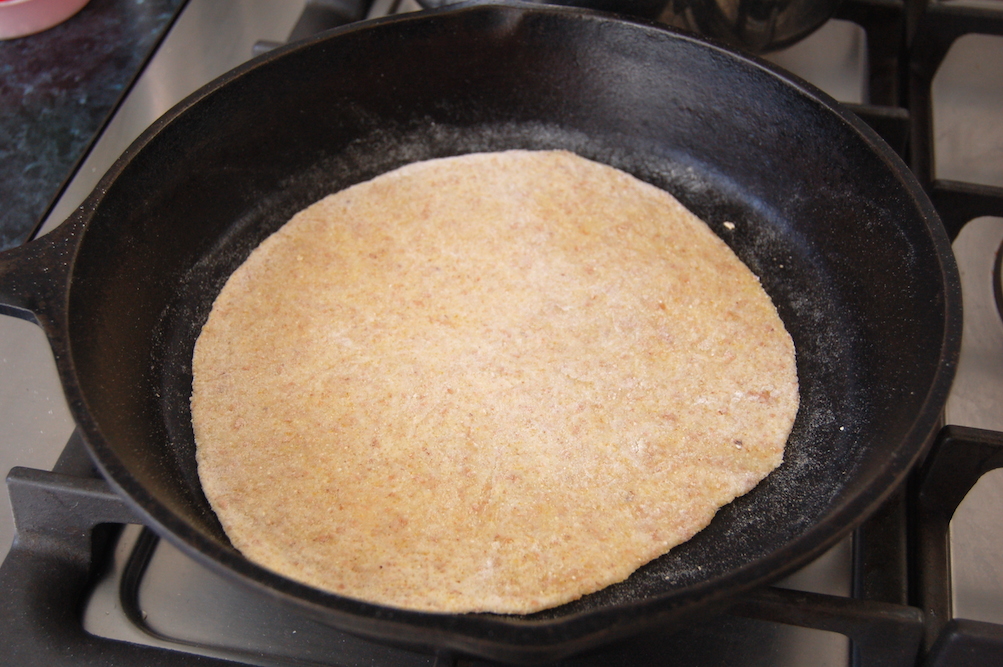
Tortilla1smIan shakes his head and rolls his eyes.

Nobody just whips out a batch of home made tortillas! Even Mexicans buy their tortillas.”

I shrug. It’s really not that big a deal, making tortillas. Although…thinking back to twelve years ago, when I was a novice tortilla maker, I’m inclined to agree. Back then, making tortillas always involved tears and curses. The dough ripped, stuck to the kitchen counter, and stuck to my rolling pin. The pan was always too hot or too cold, either burning or drying out the tortillas. Why I continued to try making them, I don’t know.

But I did. Again and again I tweaked my recipe, changed my rolling technique, adjusted the heat under my pan. Somewhere along the line, making tortillas changed from a once-in-a-while-when-I’m-feeling-particularly-brave sort of dish to a standard part of my repertoire. It changed so dramatically, that once I made over 100 tortillas for a party, and did so without breaking a sweat.

How many other foods once seemed unfathomably difficult or complex? I can think of dozens: risotto (stir constantly?), pizza (such advance planning needed!), anything Indian (all those spices?!), quiche (crust, and filling, and custard?!)…

It’s good to remember, sometimes, how difficult these “easy” things seemed long ago. It’s good to remember that how difficult something is to do is often simply a measure of how much you’ve practiced doing it. A few weeks ago, having endured yet another fondant icing disaster (see The Desolation of Smaug), I privately decided that fondant was too hard, and I would stick to my buttercream icing in future. But maybe I just haven’t made enough fondant. I don’t know if “practice makes perfect”, but it does make it easier.

Summertime Grilling

veggiesforgrilling2smThere’s nothing like a barbecue in summer. Now, you might think that vegetarians don’t have much use for a grill—you couldn’t be more wrong! Grilling is one of the best ways I know to celebrate summer vegetables. Add some corn on the cob or a fat slice of melon, and you’ve got a veritable feast.

One of the best things about grilling vegetables, is that they take very little preparation beforehand—big slabs of vegetable work best, so there’s no tedious chopping to do.

I’ll admit that grilling is Ian’s sphere, and what goes on after the vegetables are cut is his business. A few weeks ago, he wrote down the following recipe for the marinade he brushes on the vegetables before grilling:grillingveggies1 sm

Oil (~ 75% of volume)

Worcestershire sauce

Mustard (just a bit but essential)

Ketchup (not too much)

Vinegar (bit)

Cayenne

Soy sauce (fair whack)

crushed garlic

brown sugar (tiny bit to enhance flavour)

You can see by this recipe it’s an exact science…but never mind; whatever he does, works, and I’m happy to leave the grilling to him.

Bon appétit!

Sunday Morning Breakfast

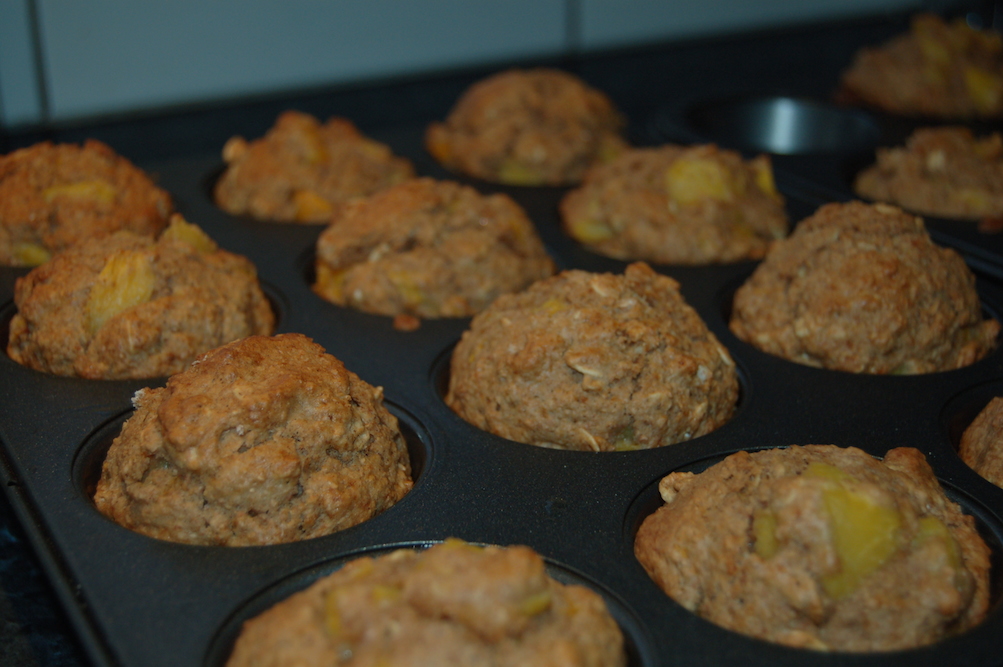
DSC_0001 smI’m fond of breakfast. I usually wake ravenous in the morning, and by the time I get in from the daily animal care and milking, I’m more than ready to eat. My weekday breakfast is homemade muesli eaten standing up in the kitchen while I pasteurise the day’s milk. On Sundays, though, I take the time to make breakfast, and the whole family sits down together. I’ll admit right up front that I don’t do this out of some sort of altruistic love toward my family—I do it for purely selfish reasons. I love scones, biscuits, muffins, pancakes, and waffles. I would eat them every day for breakfast if it were at all practical or wise to do so. But it has also made for a wonderful family tradition that we all look forward to each week.

Today’s breakfast was peach oatmeal muffins. This recipe is a variation on Peach-Oatmeal Bread from King Arthur Flour’s Whole Grain Baking book. I’ve increased the spices and halved the sugar to create a muffin I consider healthy and yummy enough for a Sunday morning.


Peach oatmeal muffins


2 cups peaches, peeled and cut into small pieces (canned or frozen peaches work fine)

2 cups whole wheat flour

¾ cup all purpose flour

½ cup packed brown sugar

1 Tbsp baking powder

½ tsp baking soda

½ tsp salt

1 tsp ground cinnamon

¼ tsp ground nutmeg

¼ tsp ground cloves

1 cup old-fashioned rolled oats

2 large eggs

1 cup milk

¼ cup vegetable oil

¼ tsp almond extract

Place cut peaches into a strainer to drain. Stir together the flours, sugar, baking powder, baking soda, salt and spices in a large bowl. Add the oats and peaches, stirring to coat the peaches. In a separate bowl, beat together the eggs, milk, oil and almond extract. Add to the flour mixture and stir just until evenly moistened.

Scoop into greased muffin tins, and bake at 375°F (190°C) for 25-30 minutes, until a toothpick inserted into the centre of a muffin comes out clean, and the tops are lightly browned. Allow to cool in the pan for 5 minutes before turning out.

(makes about 18 muffins)

Favourite kitchen tools–Brisingr

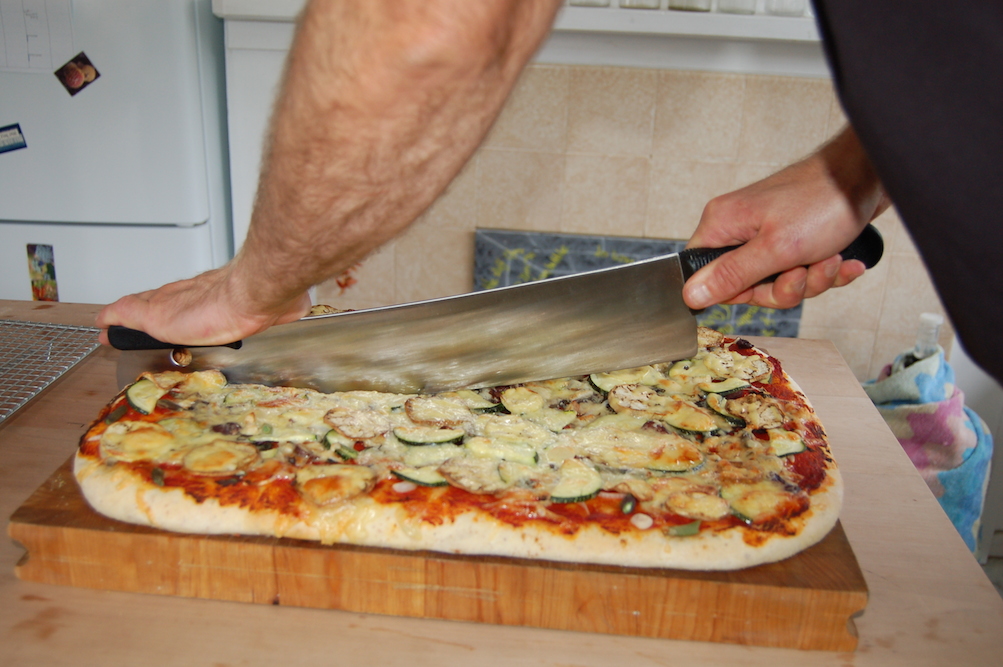
DSC_0011 smWe all have our favourite tools—the ones that fit the hand perfectly, or make a job easy. I have quite a few favourite tools in the kitchen. One of them is “Brisingr”, a knife so impressive, the kids named it after the sword in the fantasy series by Christopher Paolini. Brisingr is a handy and effective knife for big round vegetables like cabbage and pumpkins (Indeed, I once cut up 3 commercial cases of pumpkins in one session for a school event. The knife needed sharpening afterwards, but it made the job quick and painless). It’s also a fantastic pizza knife. Best of all, it just looks good. Hanging on the wall, poised to cut, or lying next to an expertly sliced pizza, it calls out, “Back off, lesser knives! I’m here to get the job done”.

Do you have a favourite kitchen tool?

Leftover Cake

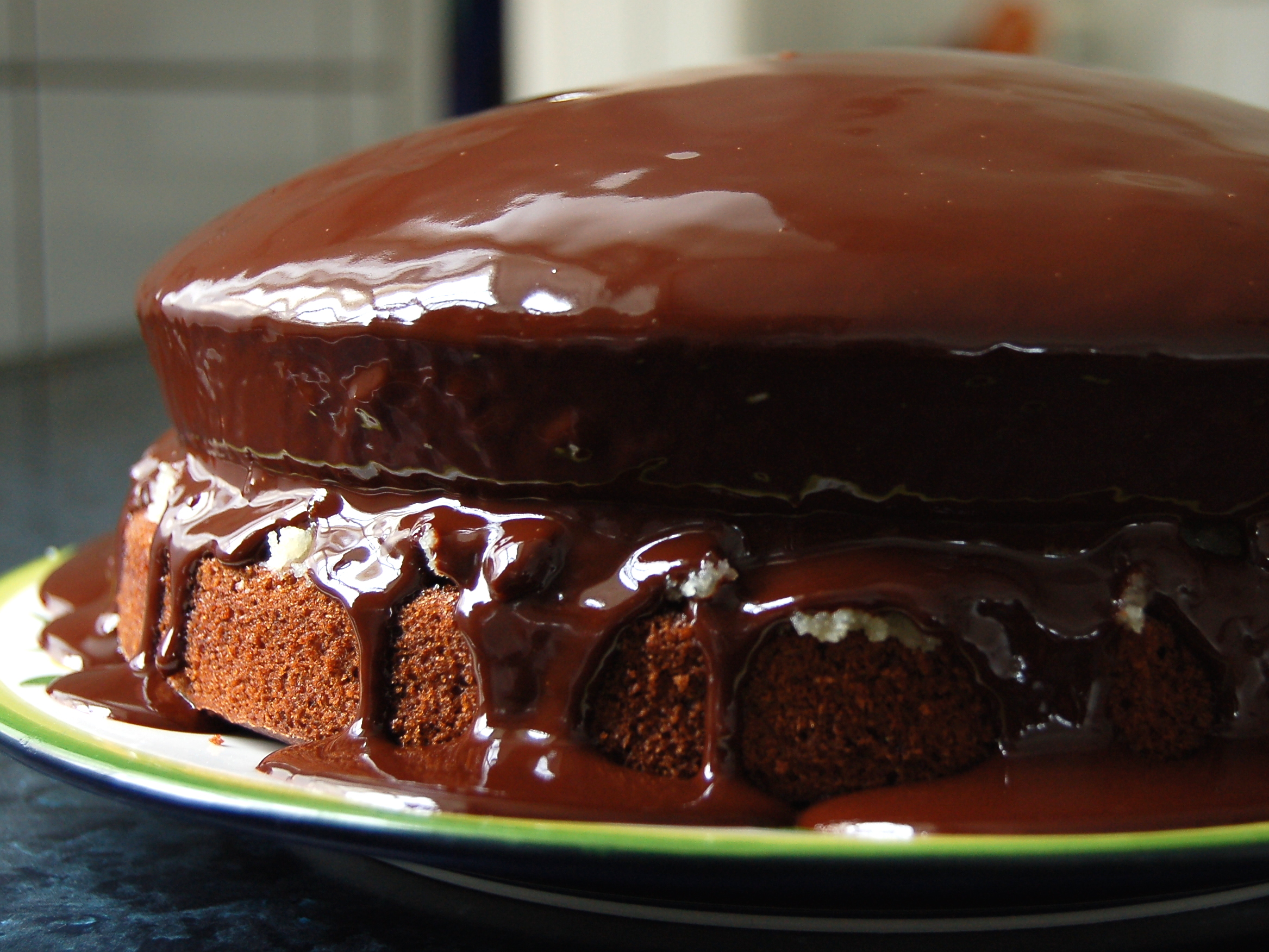
DSC_0006 cropAfter the Desolation of Smaug, I felt a need to redeem myself in the cake department. I also had some almond paste and some dark chocolate left over from the kids’ birthday cakes, so yesterday I created this beauty—as delicious as it looks. It’s a devils food cake, filled with almond paste, and covered with a chocolate ganache. Marvellously decadent!

Kiss me Nicholas

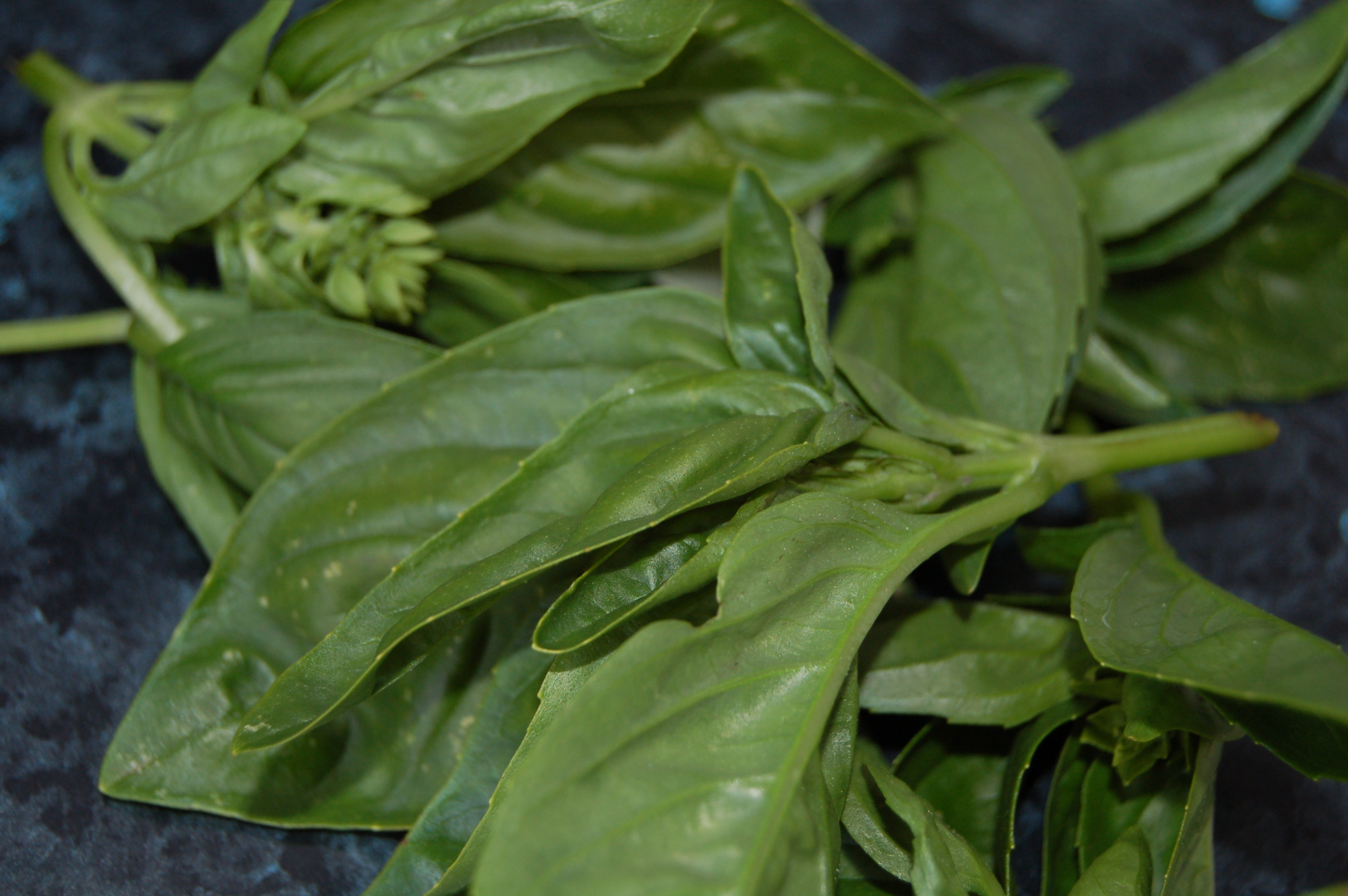
basil greenFor Valentine’s Day, I thought I’d write about one of my favourite romantic foods—basil, also known as bacia-nicola or kiss me Nicholas in Italian. Like most herbs, basil’s lore is mixed, being associated with both love and hate, but for today, let’s focus on love. What I like about basil is not that it will make a woman love you, as sage is supposed to do (if you thread the leaves onto the woman’s hair and bury it under her doorstep), or that it is an aphrodisiac, as saffron is said to be. What I like is that it is said to “attract husbands to wives”. Isn’t that nice?

Now let it be said that there is no scientific evidence whatsoever that basil attracts husbands to their wives. The two main aromatic chemicals in basil are methyl chavicol, and eugenol. Methyl chavicol is produced commercially for use in perfumes, flavourings and herbal supplements, and apparently doesn’t attract anything. Eugenol is also used in perfumes and flavourings, and also as an antiseptic and anaesthetic, particularly in dentistry. The only things eugenol is known to attract are male orchid bees (who use the chemical to make pheromones), and female cucumber beetles.

Alas, there is no scientific evidence that feeding my husband pesto will attract him to me. But I can’t help believing there is just a little truth in basil lore. After all, they say the way to a man’s heart is through his stomach. If I feed my husband a delicious meal full of basil (and what meal full of basil wouldn’t be delicious?), it stands to reason he might be attracted to me.

So I’ll go all out with the basil today, because it can’t hurt, right?


Salt

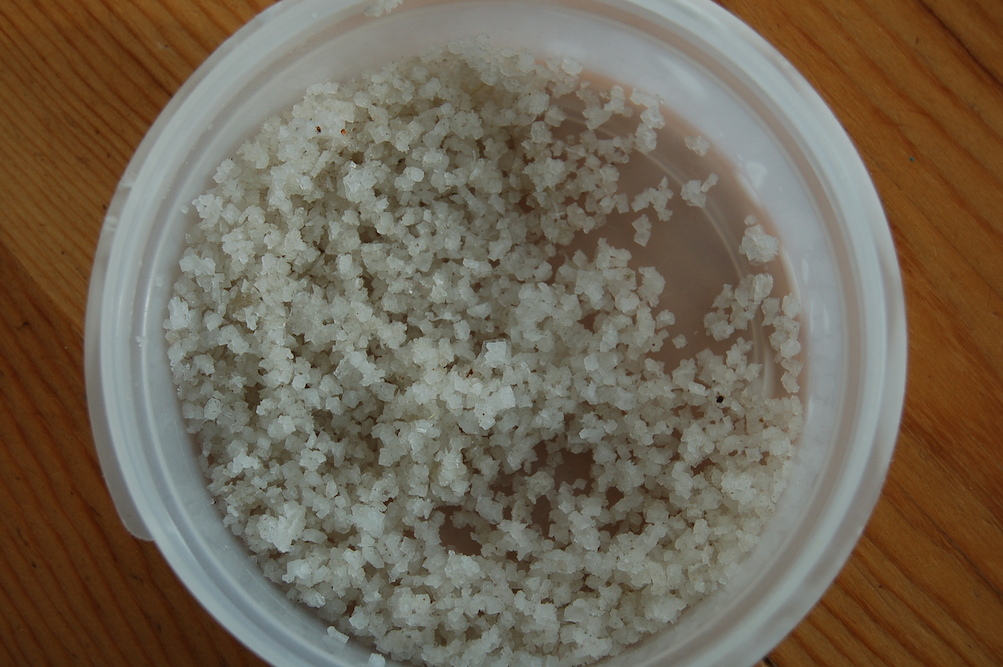
SaltsmIt preserves and flavours almost all our food. It’s been traded commercially for over 2600 years. It features in the language of nearly all cultures—you are “worth your salt”, you are “the salt of the earth”, you take things “with a grain of salt”, you “rub salt in a wound”.

Central as it is, it is one of those ingredients we don’t produce ourselves. During summer, our meals often consist entirely of products we’ve produced…except for the salt.

My daughter was determined to rectify that. Last week, she declared she was going to make salt. We popped out to the beach and snatched a bucket of sea water from a large and violent surf. She poured the water into a pan and set it on the porch. Within two days, she had a pan of salt…and, due to a dust storm, dirt. She tried again, this time protecting the pan from dust with a sheet of Perspex, propped up to allow air circulation.

The result was delightful, and surprising to us all. From a jelly roll pan full of seawater, she harvested about half a cup of salt. Even with the cover, some was too dirty to use, but the rest is beautiful. We enjoyed it on our corn on the cob last night, and it was everything a gourmet salt should be—a full-bodied taste of the sea. And so easy to harvest!

Half of New Zealand’s salt is produced just a few hours north of Christchurch at Lake Grassmere. The industrial scale process of harvesting 70,000 tonnes of sea salt each year is little different from our tiny experiment in a baking pan. Like we did, the process at Lake Grassmere relies on summer sun and strong, drying nor’west winds. We buy a lot of salt from Lake Grassmere, for cheese making, preserving, and cooking. But we might be buying less from now on. There’s something wonderful about harvesting this most basic of ingredients, this gift from the sea.

When Food Doesn’t Taste Good

It happens to the best of us. We get a cold, we feel lousy, we can’t taste much, and we can’t be bothered to eat. That’s how I’ve felt for the past week—sore throat, low grade fever, slightly upset stomach. The last thing I want to do is cook a meal. In my twenties, I’d have made myself a piece of toast and gone to bed early. It’s not that easy anymore. There’s a family that wants dinner, whether I do or not. There’s also a whole mess of vegetables out in the garden, clamouring to be eaten.

So I fall back on the standards—meals I can cook with little effort and without the need to taste test them before they reach the table. Oven-baked risotto is one of the best. This recipe is a variation on a recipe in Market Vegetarian by Ross Dobson.


Oven-baked zucchini and eggplant risotto

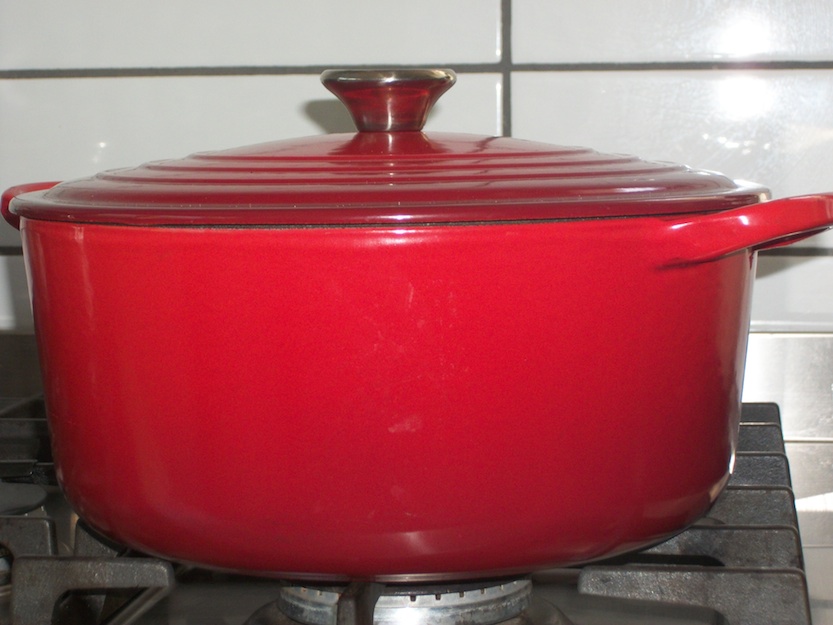
My beloved Le Creuset makes oven risotto a breeze.

My beloved Le Creuset makes oven risotto a breeze.

3 cups water or vegetable stock

2 Tbsp olive oil

1 onion, chopped

1 garlic clove, chopped

1 ½ cups Arborio rice

handful fresh basil, chopped

2 medium zucchini, chopped

2 medium eggplants, chopped

2 tomatoes, chopped

3 Tbsp butter

½ cup grated Parmesan cheese

Preheat the oven to 200°C (400°F). Warm the stock over low heat in a small saucepan. Put the oil in a flameproof, lidded casserole dish and set over medium heat. Sauté the eggplant, onion and garlic gently for 2-3 minutes until the onion has softened and the eggplant is partly cooked. Add the rice and the cook for another minute before adding the zucchini. When the rice becomes opaque, add the tomatoes and basil. Pour the hot stock into the casserole and stir well. As soon as the liquid starts to simmer, cover with the lid and cook in the oven for 30 minutes.

Stir in the butter and Parmesan just before serving.


The Desolation of Smaug

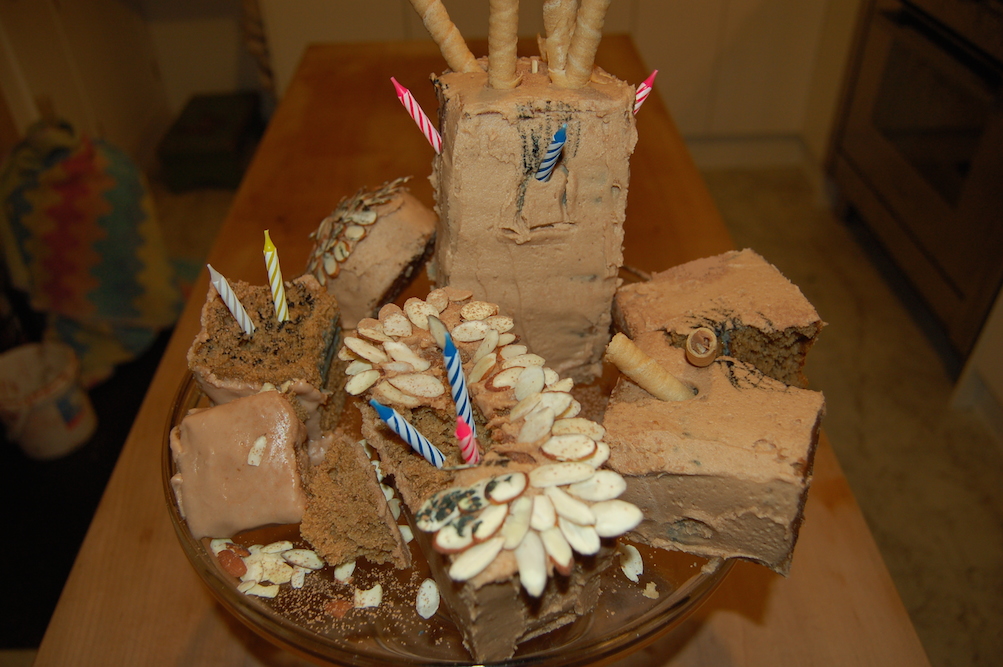
The desolation of Smaug

The desolation of Smaug

When my son requested this year’s birthday cake, he envisioned an architectural marvel—the city of Dale (yes, another Hobbit themed cake), with its neat, tile-roofed houses and soaring stone towers. I agreed to his request, thinking I would use the rolled fondant icing I intended to try this year. The one using agar…the one that tasted like sugared seaweed (read about it at this post). No problem, plan B was to use a poured fondant (no agar in that) and ice the buildings like petit fours. I tested the fondant last week on the dwarf heads, and was confident it would work.

But this batch of fondant was too thick; it ended up lumpy, and didn’t stick properly to the cake. Fixing it would require remaking it (and allowing it to cure for another 24 hours). OK, on to plan C. I had some marzipan left over from last week’s cakes, so I tried rolling it and covering the cake with it—too soft, it didn’t hold together. Plan D was to try the same with almond paste. It almost worked, but only on small pieces, and I didn’t have enough of it, anyway. I resorted to plan E, buttercream icing, which I knew wasn’t going to created the look I wanted. Before the first building was iced, I decided it wasn’t good enough. Tired, frustrated, and struggling under the oppression of a bad head cold, I surveyed the results with dismay. Nothing short of another day’s work was going to improve the cake. It was 9.30 pm the night before Lochlan’s birthday. I had, maybe, another hour before I would collapse from exhaustion.

I did the only logical thing I could—I skipped to plan S. He’d asked for the city of Dale, and he would get it, but not before Smaug did.

It felt wrong to purposely rip and tear at the half finished buildings, but the resulting confection was deemed “awesome” in the morning. I wouldn’t go so far, but it will do. Sometimes, that’s the best you can hope for.