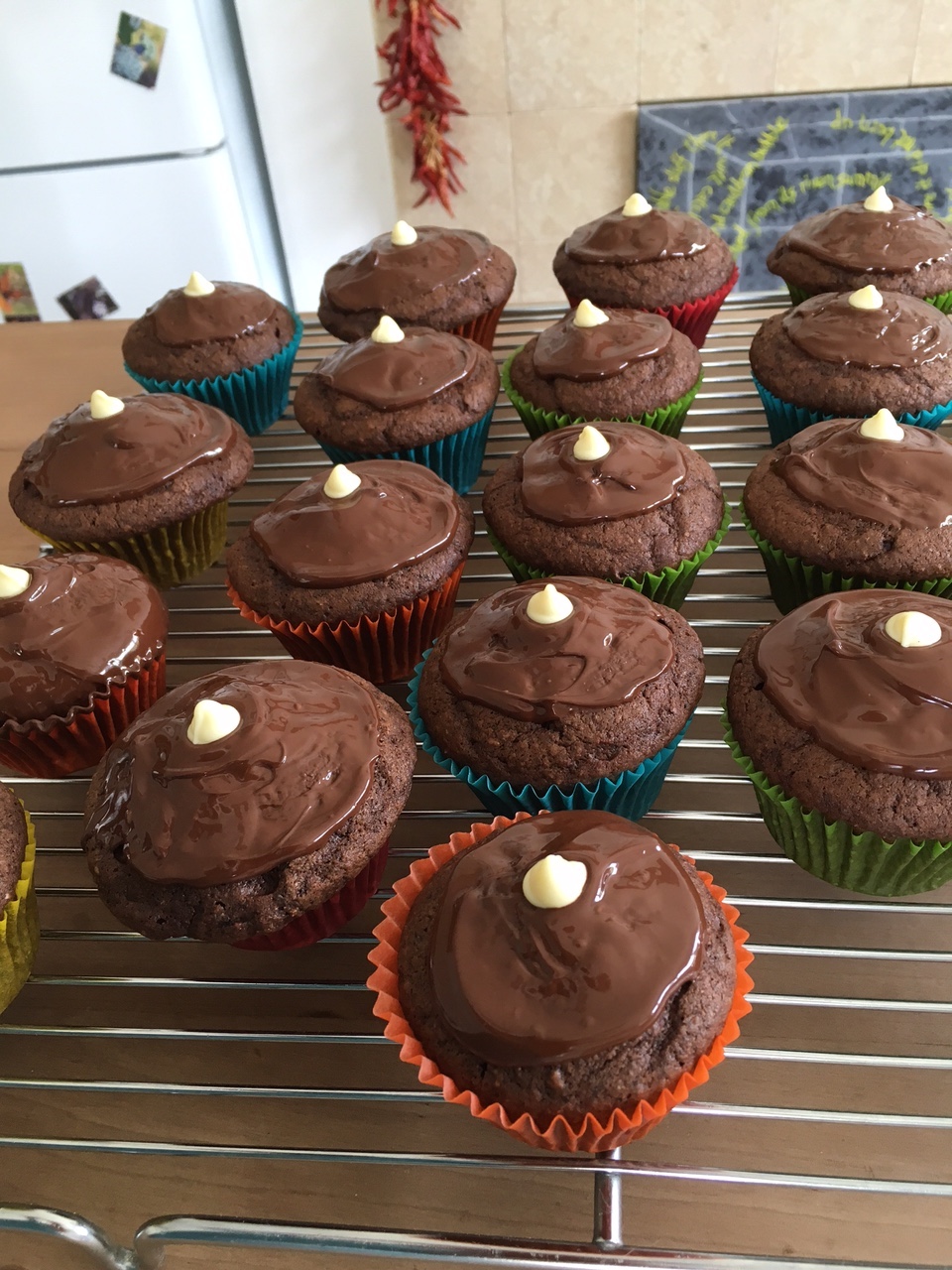
 After a year of daily food-related posts, I couldn’t resist sharing this.
These are devil’s food cupcakes, topped with melted dark chocolate and white chocolate chips.
So decadent!
After a year of daily food-related posts, I couldn’t resist sharing this.
These are devil’s food cupcakes, topped with melted dark chocolate and white chocolate chips.
So decadent!
 My family loves food. We eat well. We eat a lot. But what I’ve come to realise is that we don’t just love food for its own sake. We don’t go out to restaurants, and we don’t wax lyrical about our favourite products from the grocery store.
For us, food is as much about how it gets to our table as it is about what it tastes like there. Food is a labour of love, a creative endeavour, a team effort. Food is inseparable from its origin.
Years ago, my son asked, “If we didn’t grow the ingredients ourselves, is it really homemade?” That is how deep our relationship to our food is.
I sometimes wonder if this is healthy—this obsession with food. But it really isn’t so much about the food as it is about the process and all the corollary benefits.
Producing our own food, we stay fit without paying for gym memberships, we have food security in the face of natural disasters, we learn to work together as a family, the children gain a sense of worth from helping to feed us all, we eat better, we reduce our impact on the earth…the list goes on and on.
Producing our own food is a way to nurture the family, a way to acknowledge our place in the natural world, a way to celebrate each day of the year and the gifts it brings.
 Our laundry room smells like a boys’ locker room next to a sulphurous hot spring…and I’m happy about that.
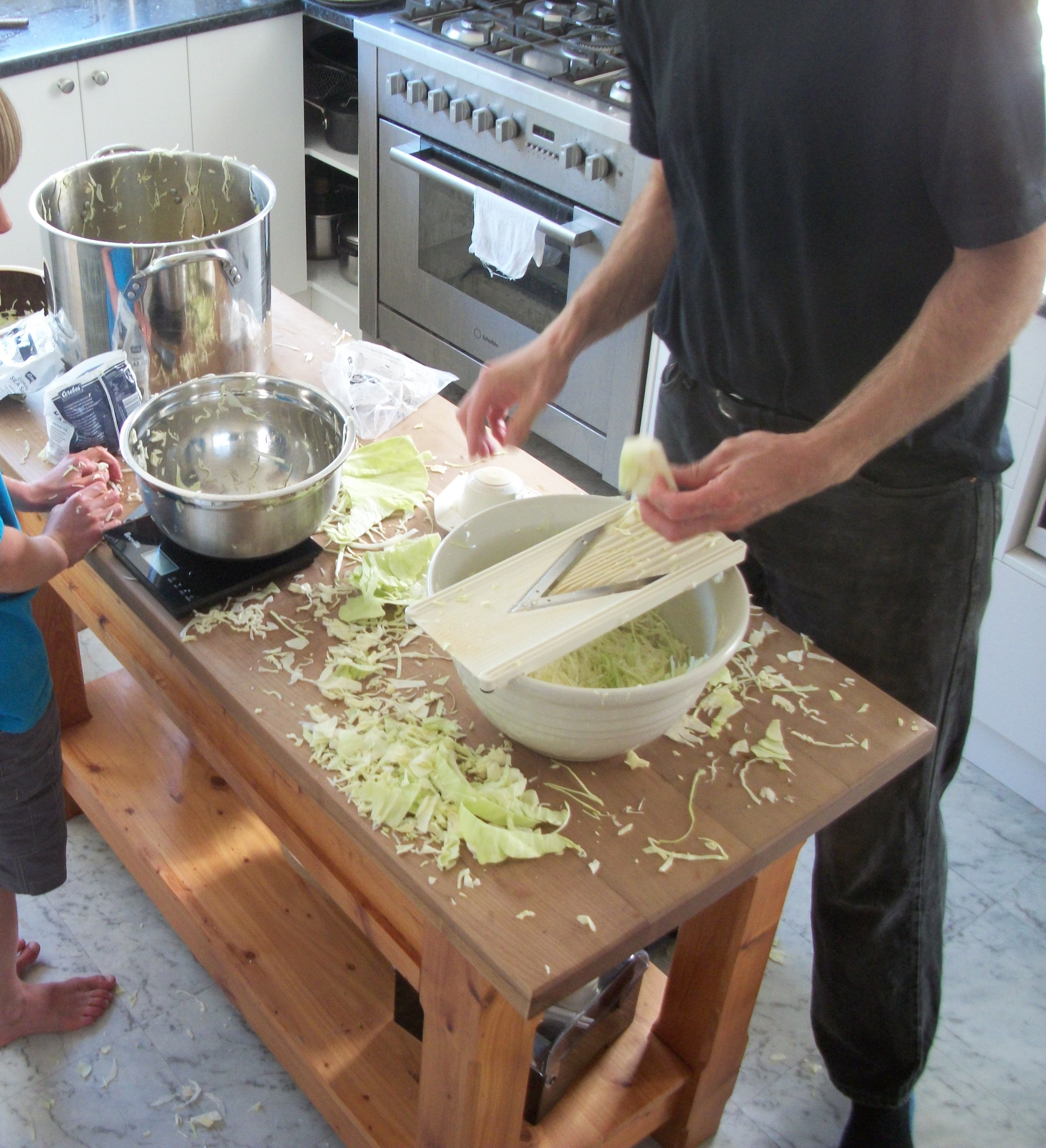
Sitting on the benchtop in the laundry is a large ceramic crock filled with fermenting cabbage—in six weeks the bacteria bubbling away in the crock will turn it into sauerkraut.
Making sauerkraut is incredibly simple—it’s nothing but shredded cabbage and salt. But it’s not a pretty process—fermentation is smelly, looks disgusting, and should never be attempted by the squeamish. The end result, however, is delicious.
Being a good Pennsylvania Dutch girl, I love sauerkraut. It’s great on burgers and grilled cheese sandwiches, and goes well with almost any potato dish.
But I’m thankful we can make two years worth of sauerkraut at once, because the smell of fermenting cabbage could put you off the finished product pretty fast. Once the fermentation is complete, I’ll bottle the lot in pint jars—the perfect amount for a meal—and give the laundry room a really good airing.
 I don’t do anything on Christmas Day. I take the day off. Well, okay, I have to do the milking and the other animal care, but I do only the essential daily tasks.
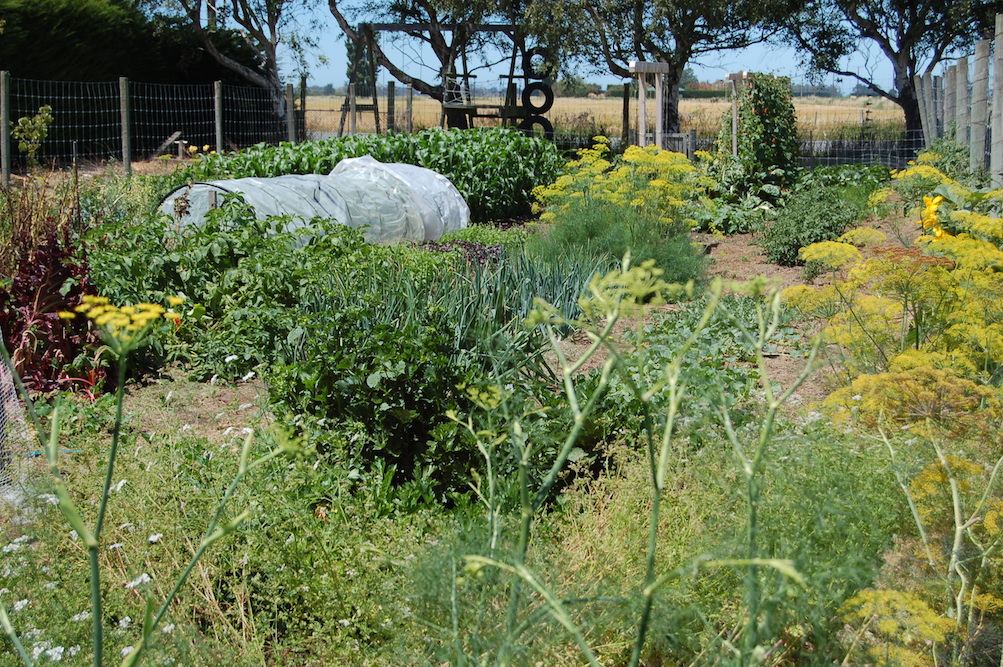
Before Christmas, I make sure the garden is well-weeded, so I’m not tempted to pull any on the day. I make sure all the picking and processing of fruits and vegetables is caught up, so I don’t feel I have to make jam or sauerkraut. I make sure the laundry is all done the day before, so I don’t feel a need to do washing. As soon as I’m done with the morning chores, I put on a skirt, just to make it harder to do work.
I don’t even cook much. Christmas breakfast—sticky buns—are made the night before, and left to rise in the fridge overnight. All I do is throw them in the oven in the morning. Lunch on Christmas is leftovers from Christmas eve dinner—usually calzones. Christmas dinner is salad, cheese, and bread. Easy and summery.
So I take a day of rest, and I enjoy it a great deal. I read a book. I take an afternoon nap. I do a little sewing, I play games with the kids.
The problem is the next day.
My body is obviously made to be in motion. Sitting around all day is not good for it.
The morning of the 26th of December, I can barely get out of bed, my back is so stiff and sore. I hobble around groaning for the first hour of the day.
So I’m happy to be back at work on Boxing Day, weeding, harvesting, doing the laundry. Good thing Christmas comes only once a year!
 Christmas day is a low-key affair at our house. We work like mad up through Christmas eve, preparing food, baking cookies, getting caught up on all the weeding, harvesting and processing of vegetables. Then Christmas day, there is nothing to do but enjoy the fruits of our labours.
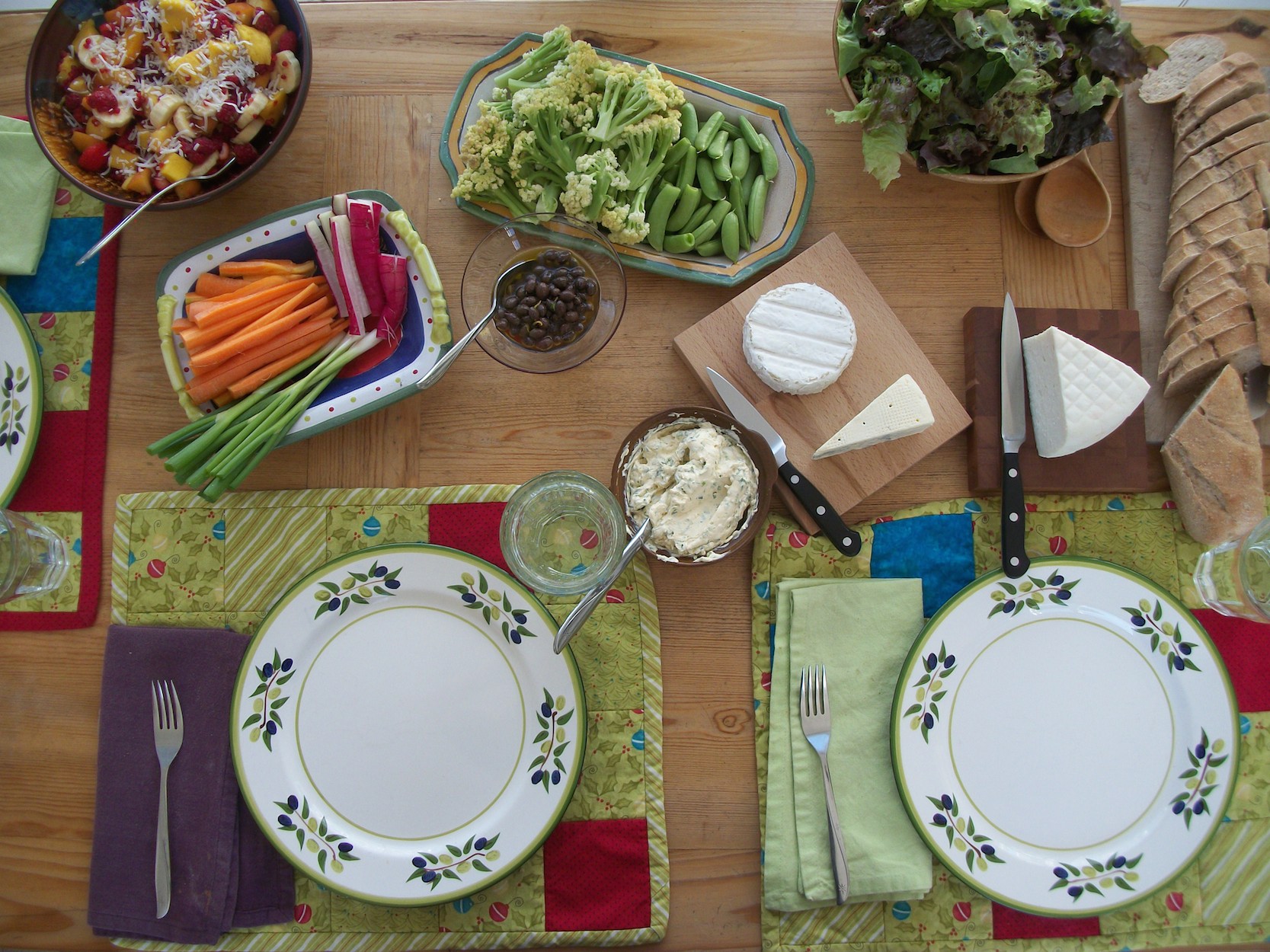
To that end, I made a vegetable dip for our Christmas dinner, which will be a Mediterranean feast—bread, cheeses, olives, salad, and fresh vegetables.
Inspired by a variety of recipes, and by the lovely herbs in the garden, I made the dip up as I went. Taste testers declared it delicious, and we’re looking forward to enjoying it tomorrow with carrots, cauliflower, sugar snap peas, and broccoli from the garden.
1 (8oz/225g) pkg cream cheese, softened
2 small spring onions
small handful fresh flat leaf parsley
2 small stalks cutting celery (or ½ celery stick)
small sprig fresh savoury
½ tsp paprika
juice of 1 lemon
Beat cream cheese until fluffy. Chop herbs and onion very fine and stir into the cheese along with the paprika. Add enough lemon juice to make a dipping consistency.
 Okay, one more cookie recipe, then I’ll be done for the year…maybe.
These are one of my all-time favourite cookies–big soft cookies that taste like raisin pie. Mom made them every Christmas when I was growing up (at least that’s how I remember it…), and she wrote down the recipe for me when I left home. The index card is stained and bent, but carefully guarded in a little wooden recipe box.
Like many handed-down recipes, this one is incomplete—little more than a list of ingredients. You have to know what to do to turn them into cookie dough. I’ve added more instructions below.
2 cups brown sugar
1 cup shortening (I use softened butter)
2 eggs
½ cup milk
1 tsp baking soda
1 tsp vanilla
4 cups flour (I usually need about 1 cup more)
pinch salt
Mix baking soda into milk and set aside to thicken. Cream brown sugar and shortening together until fluffy. Beat in eggs, then milk and vanilla. Gradually add flour, mixing until you have a stiff dough.
Refrigerate dough at least 2 hours.
While the dough is chilling, make filling. Place in a medium saucepan and boil until thick:
2 cups chopped raisins
2 cups granulated sugar
1 cup water
1 Tbsp flour
Allow to cool to room temperature.
Roll the dough thin and cut out 2-inch circles. To form the cookies, place a circle on a greased baking sheet, put a scant tablespoon of filling in the centre of the circle, and top with another circle. Press the edges firmly together (a fork does a nice job and leaves a pretty edge). Bake at 190°C (375°F) for about 10 minutes.
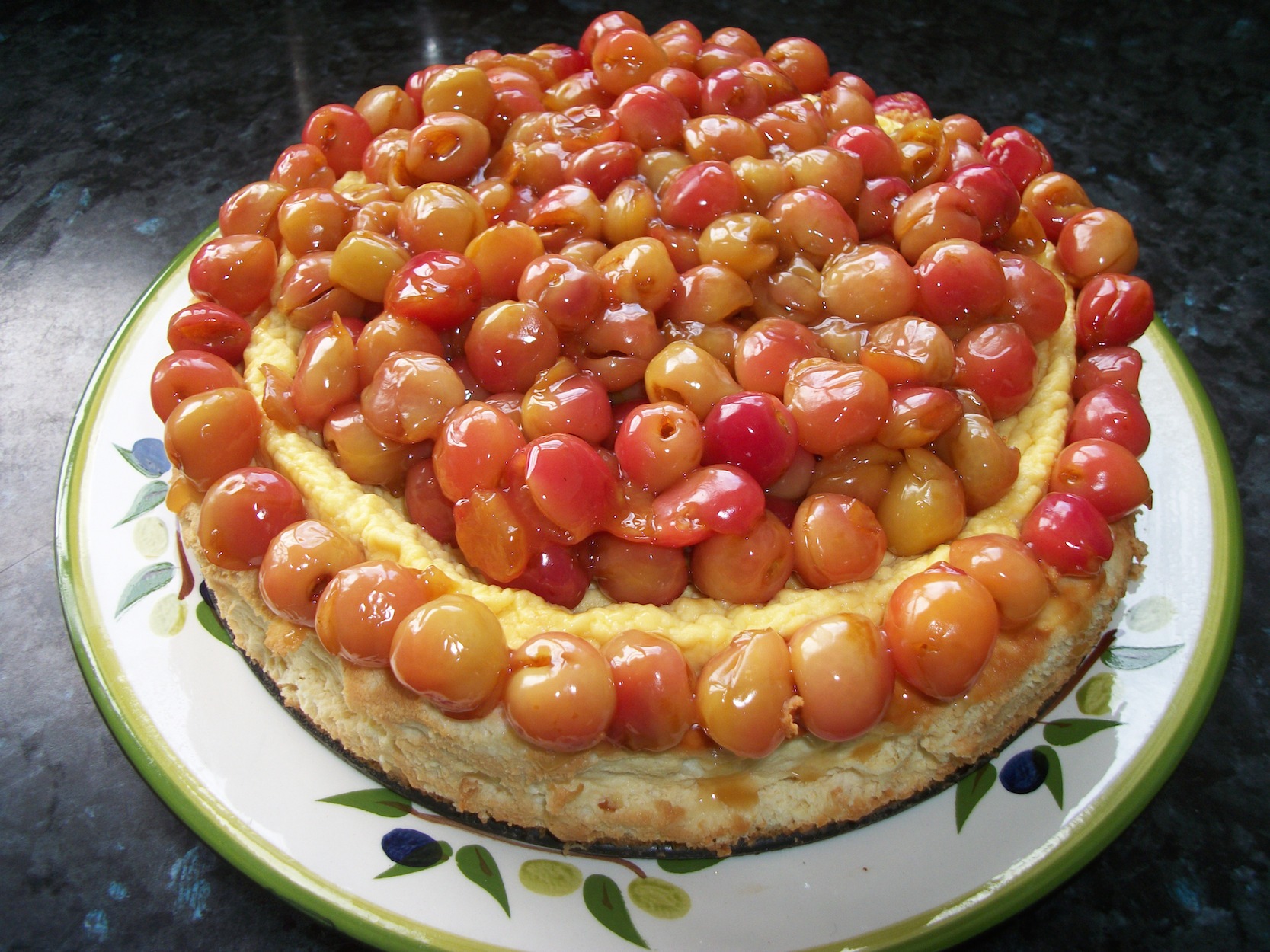 While all you denizens of the northern hemisphere are baking Christmas cookies, we’re down here trying to figure out how to eat an overabundance of early summer fruits.
This week, we had a delicious confluence—too many cherries and too much ricotta cheese. There’s only one thing to do with that situation—make ricotta cheesecake and smother it in cherry pie filling!
The ricotta cheesecake—essentially a sweet soufflé—puffed twice the height of the pan in the oven, then fell most unattractively when it cooled. But it left a perfect rim for holding cherries.
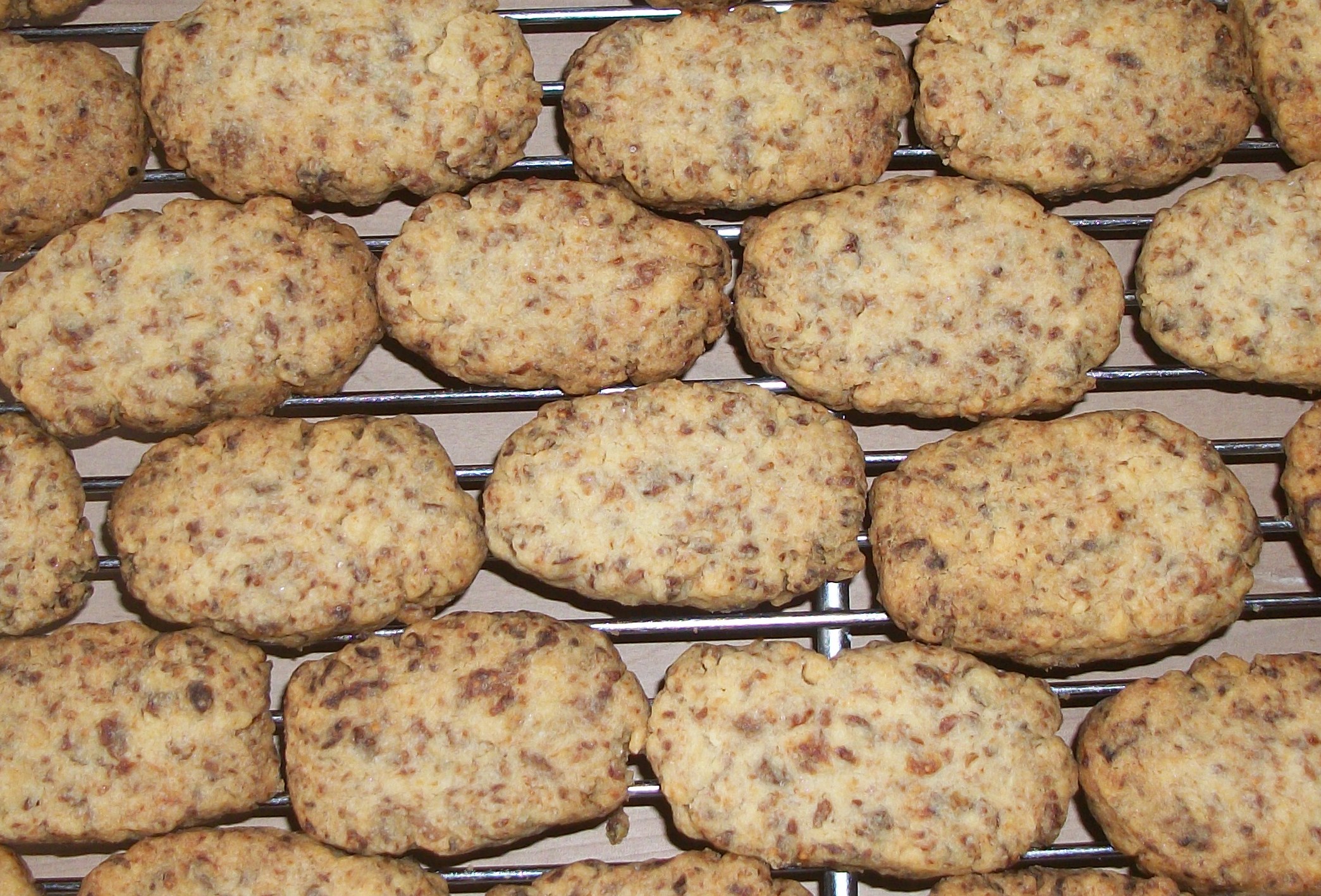 I’ve had a hankering for figs lately—must be the holidays—so I made fig cookies. They taste like a cross between fig newtons and walnut crescents.
This recipe is adapted from a recipe in The Gourmet Cookie Book (Have I mentioned before that this book is the most beautiful book ever made? It is a lesson in effective graphic design, and has lots of good recipes, too. If you haven’t finished your Christmas shopping, you must buy this for someone. If you have finished your Christmas shopping, you need to buy it for yourself. Aw, never mind—just buy it for yourself, regardless.)
Anyway, these cookies take most of their sweetness from the figs. If you wanted a slightly sweeter cookie, I think they’d be fabulous dredged in powdered sugar!
1 cup butter
¼ cup sugar
1 cup walnuts, ground*
1 cup dried figs, ground*
1 tsp vanilla
2 cups all-purpose flour
Cream butter. Add sugar and beat until fluffy. Stir in ground walnuts and figs, and vanilla. Stir in flour, mixing until all incorporated.
Use a scant tablespoon of dough for each cookie. Form into small finger shapes about 1 inch (2.5 cm) apart on a greased baking sheet. Bake at 300°F (150°C) for 25-30 minutes. Do not let them brown. Cool completely before eating—they crisp nicely as they cool.
*I grind the figs and walnuts together in a food processor—the walnuts keep the figs from sticking together in a big clump.
 Cilantro is an acquired taste. This strong herb is used in Asian and Central American cooking, and is one of those things you either love or hate.
When I first tasted fresh cilantro (Coriandrum sativum), I will admit I didn’t like it.
It wasn’t until I had culantro—Eryngium foetidum, also known as Mexican coriander—that I really learned to like the flavour (Never mind that the scientific name means ‘foul-smelling thistle’).
In Panama, both are eaten, and though they are only distantly related plants, they serve the same culinary purposes, with similar flavours. Panamanians consider Eryngium foetidum the ‘real’ cilantro, and call it simply culantro. Coriandrum sativum is called culantro Chino (Chinese cilantro).
Culantro grew wild in our lawn in Panama, and we weren’t long in the country before we were eagerly searching it out to flavour our dinners. It was a disappointment to return to the U.S. and find we could only get culantro Chino—positively bland in comparison to the foul-smelling thistle we grew to love.
But we’ve since grown fond of Chinese cilantro, too. It grows year round here. In fact, it’s as much a weed here as culantro was in Panama, and I find it cropping up all over the place. It does a lovely job of providing a year round crop without any work on my part at all. I just need to be open-minded about leaving the ‘weeds’ where they sprout.
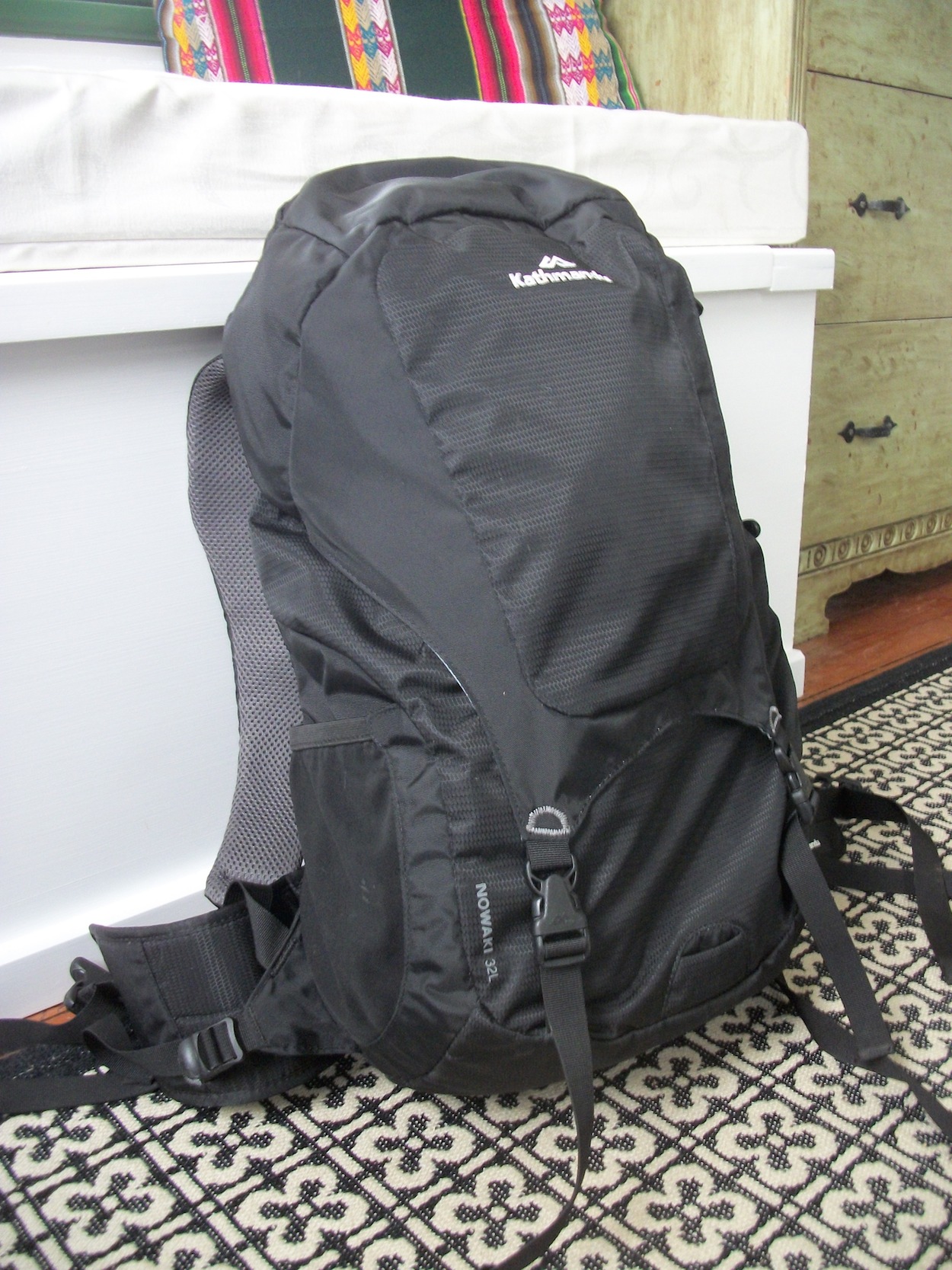 I picked up the food for a backpacking trip today. All I can say is BLECH, and HOLY COW THAT STUFF’S EXPENSIVE! And we don’t go for the “backpacker” food—we just buy the instant meals available in the grocery store.
To buy over-salted, over-sugared, freeze-dried, highly processed food when there is fresh produce pouring out of the garden is physically painful.
I suppose we should plan in advance. As vegetables come into season, we should dry enough for our trips, make up our own highly-processed, over-salted backpacking food. Once upon a time—before children—we did some of that.
But it’s actually a lot of work…to change a delicious vegetable into something we would only consider eating if it were the only option. I just can’t get excited about that.
So, we’ll probably just keep buying those icky instant meals. It’s backpacking, after all—you don’t do it for the food.
 Robinne Weiss