
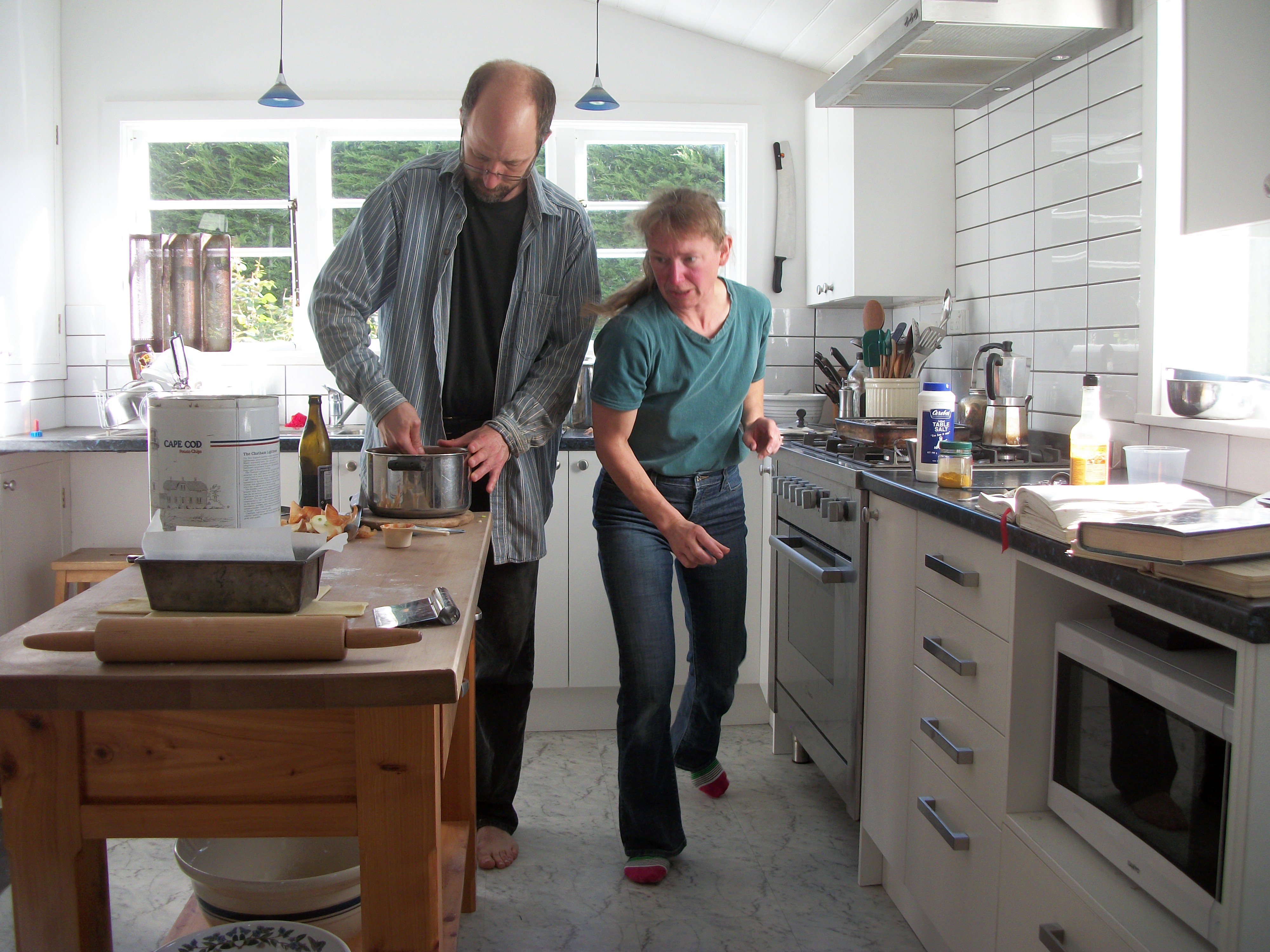
Doing a little team cooking dance.
Ian and I met studying guanacos at the Detroit Zoo, but we became friends over food. I lived in a dorm, he lived in a house, and he treated me to home cooked meals when we met to work on the latest research project for our Animal Behavior class. It wasn’t long before we were cooking those meals together, and cooking together has been an important part of our relationship for over 23 years now. We intuit each other’s cooking style after so many years, and as with good ballroom dancers, we understand, for each dish, who “leads”. Like seasoned dancers performing a well-rehearsed number, we work in harmony, joyfully, anticipating what comes next, so that even tricky moves look effortless to bystanders.
So I suppose it isn’t surprising that, about a month ago, the kids decided they wanted to make dinner once a week. They know what a fun and fulfilling task it can be, and they want to be part of it.
Unfortunately pre-teen siblings who are often nervous around things like hot ovens and stovetops don’t work together quite so smoothly. Indeed, after the first week, when they ended up cross and irritated with one another making the simplest one-pot meal, we suggested they cook two dishes—that way each one of them can be “in charge” of one dish, and while the other will help them cook it, they’re in charge of decisions about the dish and how it is made.
And I suppose this is exactly what Ian and I have come to in the kitchen, though not by design. We each have our specialties. Ian bakes bread, and though I help, and am perfectly capable of making fine bread myself, he is in charge of bread. I bake desserts, and when Ian takes on a dessert himself, he defers to my judgement if he gets into difficulty. I make cheese, he makes beer. I make omelettes, he makes frittata. Yet we rarely do any of these things alone—the other is usually there, cleaning or cutting vegetables, washing dishes, testing spicing.
It works for the kids, as it does for us. Though they often need a helping hand from Mum or Dad, and though they may argue about what they’re going to cook, once they’ve divided the meal, they manage to work together reasonably well…for 10 and 12 year old siblings. They are already developing their “own” skills, becoming the “expert” in chopping carrots, or cracking eggs. And they’re learning how to accept each other’s expertise. What a huge lesson! To learn that someone (even your little sister) might know more than you do! And to learn to accept, seek, and value someone else’s skills and expertise.
So, while the kids’ Friday night dinners often end with a shocking mess in the kitchen, and sometimes the smell of something burnt hard to the bottom of a pan, they’re great training for all sorts of situations in life.
 Location, location, location! True for real estate and for food. Where you eat is every bit as important as what you eat. Some of my best meals have been based on the where, not the what:
 Robinne Weiss