Kiss me Nicholas

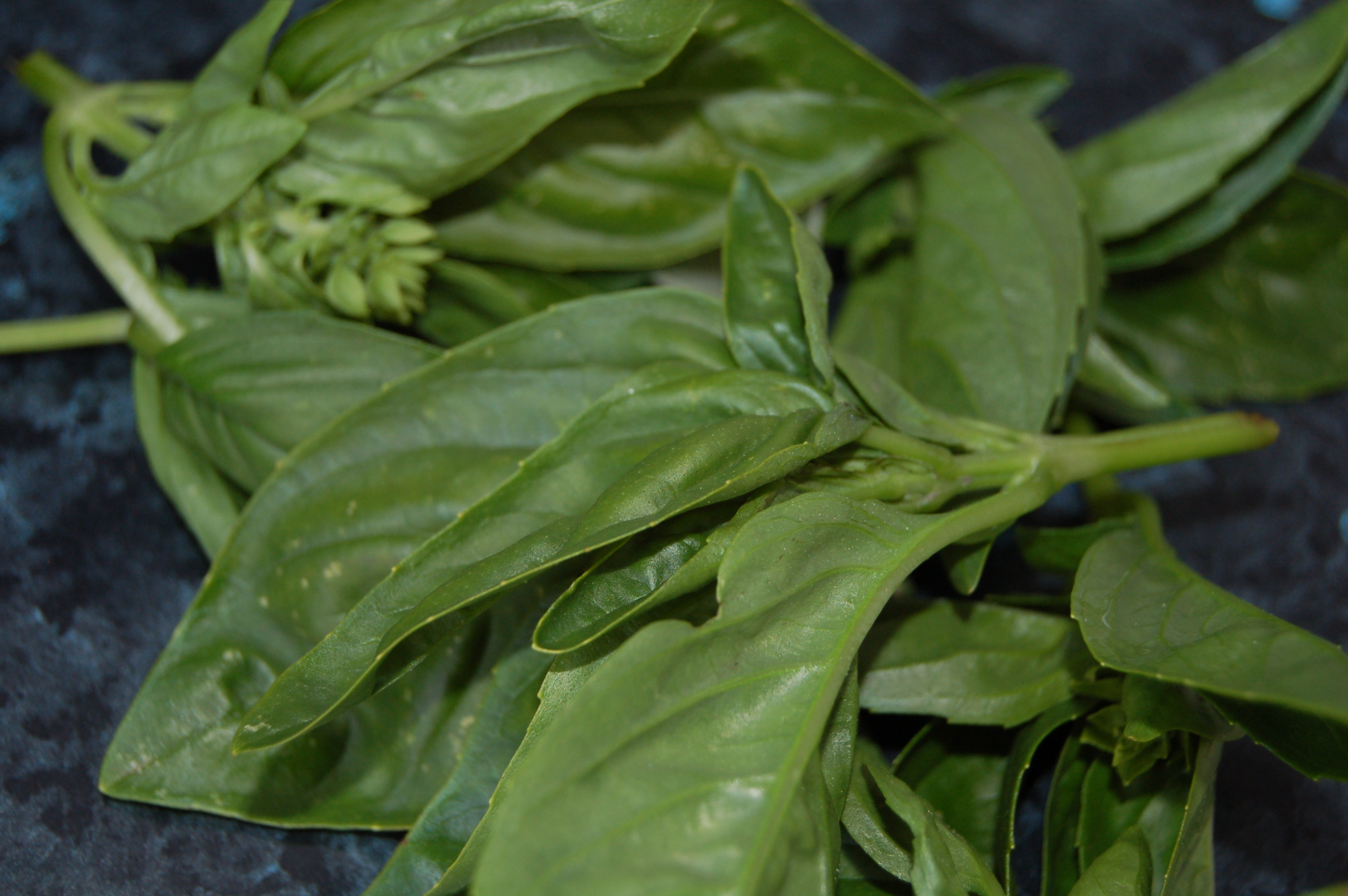
basil greenFor Valentine’s Day, I thought I’d write about one of my favourite romantic foods—basil, also known as bacia-nicola or kiss me Nicholas in Italian. Like most herbs, basil’s lore is mixed, being associated with both love and hate, but for today, let’s focus on love. What I like about basil is not that it will make a woman love you, as sage is supposed to do (if you thread the leaves onto the woman’s hair and bury it under her doorstep), or that it is an aphrodisiac, as saffron is said to be. What I like is that it is said to “attract husbands to wives”. Isn’t that nice?

Now let it be said that there is no scientific evidence whatsoever that basil attracts husbands to their wives. The two main aromatic chemicals in basil are methyl chavicol, and eugenol. Methyl chavicol is produced commercially for use in perfumes, flavourings and herbal supplements, and apparently doesn’t attract anything. Eugenol is also used in perfumes and flavourings, and also as an antiseptic and anaesthetic, particularly in dentistry. The only things eugenol is known to attract are male orchid bees (who use the chemical to make pheromones), and female cucumber beetles.

Alas, there is no scientific evidence that feeding my husband pesto will attract him to me. But I can’t help believing there is just a little truth in basil lore. After all, they say the way to a man’s heart is through his stomach. If I feed my husband a delicious meal full of basil (and what meal full of basil wouldn’t be delicious?), it stands to reason he might be attracted to me.

So I’ll go all out with the basil today, because it can’t hurt, right?
 

Salt

SaltsmIt preserves and flavours almost all our food. It’s been traded commercially for over 2600 years. It features in the language of nearly all cultures—you are “worth your salt”, you are “the salt of the earth”, you take things “with a grain of salt”, you “rub salt in a wound”.

Central as it is, it is one of those ingredients we don’t produce ourselves. During summer, our meals often consist entirely of products we’ve produced…except for the salt.

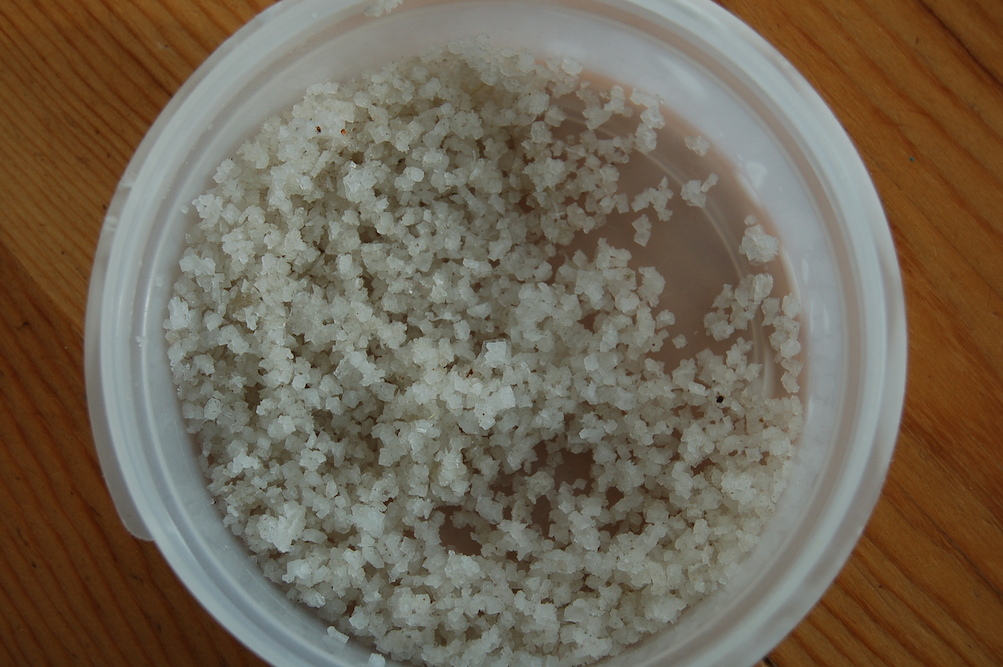
My daughter was determined to rectify that. Last week, she declared she was going to make salt. We popped out to the beach and snatched a bucket of sea water from a large and violent surf. She poured the water into a pan and set it on the porch. Within two days, she had a pan of salt…and, due to a dust storm, dirt. She tried again, this time protecting the pan from dust with a sheet of Perspex, propped up to allow air circulation.

The result was delightful, and surprising to us all. From a jelly roll pan full of seawater, she harvested about half a cup of salt. Even with the cover, some was too dirty to use, but the rest is beautiful. We enjoyed it on our corn on the cob last night, and it was everything a gourmet salt should be—a full-bodied taste of the sea. And so easy to harvest!

Half of New Zealand’s salt is produced just a few hours north of Christchurch at Lake Grassmere. The industrial scale process of harvesting 70,000 tonnes of sea salt each year is little different from our tiny experiment in a baking pan. Like we did, the process at Lake Grassmere relies on summer sun and strong, drying nor’west winds. We buy a lot of salt from Lake Grassmere, for cheese making, preserving, and cooking. But we might be buying less from now on. There’s something wonderful about harvesting this most basic of ingredients, this gift from the sea.

When Food Doesn’t Taste Good

It happens to the best of us. We get a cold, we feel lousy, we can’t taste much, and we can’t be bothered to eat. That’s how I’ve felt for the past week—sore throat, low grade fever, slightly upset stomach. The last thing I want to do is cook a meal. In my twenties, I’d have made myself a piece of toast and gone to bed early. It’s not that easy anymore. There’s a family that wants dinner, whether I do or not. There’s also a whole mess of vegetables out in the garden, clamouring to be eaten.

So I fall back on the standards—meals I can cook with little effort and without the need to taste test them before they reach the table. Oven-baked risotto is one of the best. This recipe is a variation on a recipe in Market Vegetarian by Ross Dobson.


Oven-baked zucchini and eggplant risotto

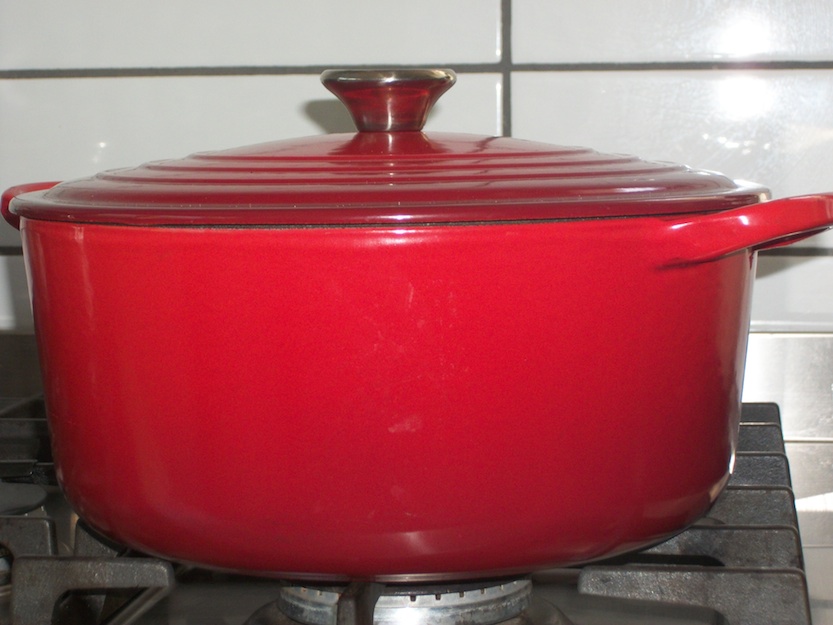
My beloved Le Creuset makes oven risotto a breeze.

My beloved Le Creuset makes oven risotto a breeze.

3 cups water or vegetable stock

2 Tbsp olive oil

1 onion, chopped

1 garlic clove, chopped

1 ½ cups Arborio rice

handful fresh basil, chopped

2 medium zucchini, chopped

2 medium eggplants, chopped

2 tomatoes, chopped

3 Tbsp butter

½ cup grated Parmesan cheese

Preheat the oven to 200°C (400°F). Warm the stock over low heat in a small saucepan. Put the oil in a flameproof, lidded casserole dish and set over medium heat. Sauté the eggplant, onion and garlic gently for 2-3 minutes until the onion has softened and the eggplant is partly cooked. Add the rice and the cook for another minute before adding the zucchini. When the rice becomes opaque, add the tomatoes and basil. Pour the hot stock into the casserole and stir well. As soon as the liquid starts to simmer, cover with the lid and cook in the oven for 30 minutes.

Stir in the butter and Parmesan just before serving.


Water

waterglasssmI was most of the way through a pond life lesson and leading 30 kids back to the nature centre when I had my first real lesson in dehydration. My world went black. I fainted. When I came to, I retched until long after my stomach was empty. Years later I watched a fellow Peace Corps Volunteer do the same after a long hot day in the field.

For a while, a small skink lived in our house in Panama. We named him Smaug. One day we found him listless and dull. It was the dry season, and we wondered if he might be thirsty. We offered a jar lid of water. He instantly pounced on it and began to drink. He was pert and perky the next day.

Last week, our son was complaining about helping with a garden task. He was dragging his feet and grumbling. “Have you had anything to drink today?” asked Ian. No. A glass of water, and he was a different boy—energetic and helpful.

Water.

Taken for granted when it’s there, terribly missed when it’s not.

I’ve been thinking a lot about water lately—naturally so, since it’s in such short supply here at the moment. I am ever grateful for the new well, and its ability to keep the vegetable garden green and our water glasses full.

We lost the old well in the September 2010 earthquake. When the power came back on, after four days of near-constant shaking, the pump poured out a slurry of sand instead of water. We spent five months trying to salvage the old well. They were five months of not knowing whether we’d have water or not each day; of carefully filling every vessel we could on the “wet” days, so we were sure to have water on the “dry” ones; of daily conversations with the technicians at Allied Water, who began to feel like family, they were here so often. More than once, I washed the laundry with rainwater in a 5-gallon bucket, just as I used to do in Panama. The garden went without, so we and the animals could drink.

It was a relief when the new well was dug, and we could again count on water for drinking, cooking, washing and irrigating. The careful habits stuck, though, and I try to make every drop count. And just in case, a week’s worth of drinking water sits in the shed, and a barrel of rainwater stands ready for watering and washing.

The Desolation of Smaug

The desolation of Smaug

The desolation of Smaug

When my son requested this year’s birthday cake, he envisioned an architectural marvel—the city of Dale (yes, another Hobbit themed cake), with its neat, tile-roofed houses and soaring stone towers. I agreed to his request, thinking I would use the rolled fondant icing I intended to try this year. The one using agar…the one that tasted like sugared seaweed (read about it at this post). No problem, plan B was to use a poured fondant (no agar in that) and ice the buildings like petit fours. I tested the fondant last week on the dwarf heads, and was confident it would work.

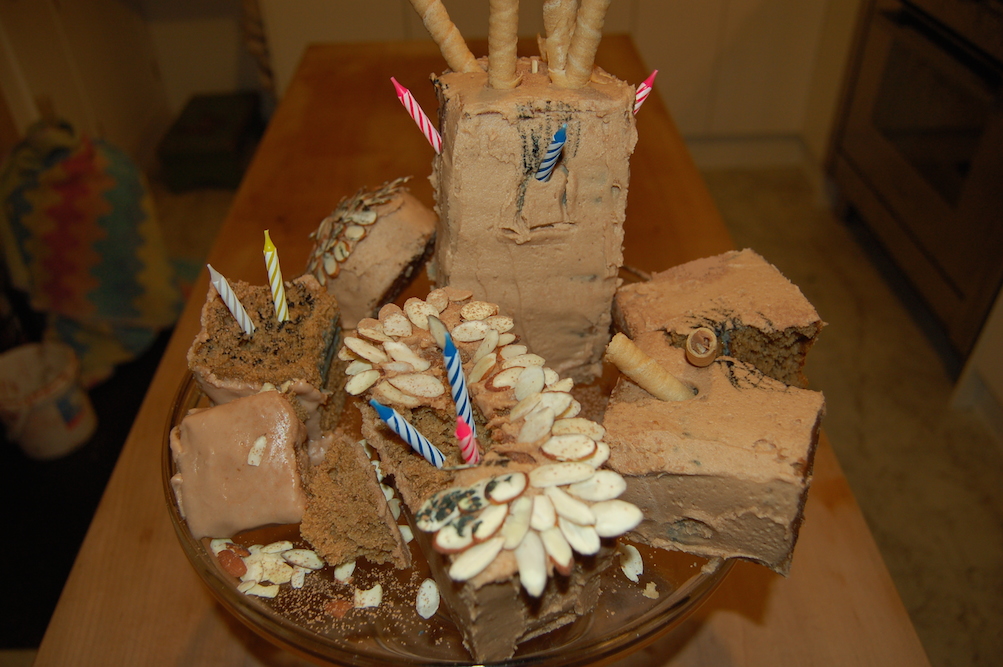
But this batch of fondant was too thick; it ended up lumpy, and didn’t stick properly to the cake. Fixing it would require remaking it (and allowing it to cure for another 24 hours). OK, on to plan C. I had some marzipan left over from last week’s cakes, so I tried rolling it and covering the cake with it—too soft, it didn’t hold together. Plan D was to try the same with almond paste. It almost worked, but only on small pieces, and I didn’t have enough of it, anyway. I resorted to plan E, buttercream icing, which I knew wasn’t going to created the look I wanted. Before the first building was iced, I decided it wasn’t good enough. Tired, frustrated, and struggling under the oppression of a bad head cold, I surveyed the results with dismay. Nothing short of another day’s work was going to improve the cake. It was 9.30 pm the night before Lochlan’s birthday. I had, maybe, another hour before I would collapse from exhaustion.

I did the only logical thing I could—I skipped to plan S. He’d asked for the city of Dale, and he would get it, but not before Smaug did.

It felt wrong to purposely rip and tear at the half finished buildings, but the resulting confection was deemed “awesome” in the morning. I wouldn’t go so far, but it will do. Sometimes, that’s the best you can hope for.

The Food Year

GardenYearThe modern food system, with international trade and refrigerated transport, ensures that fresh tomatoes, cucumbers and other summer crops are always available, even in Maine in February. Want eggplant parmesan for New Year’s dinner? A special cucumber salad for Valentine’s day? Even in Maine, it’s no problem—you’ll find the ingredients in the supermarket.

A gardener’s food year is more seasonal. Some might say having year round supplies of summer fruits and vegetables is a great thing, and I don’t deny its appeal. But there is something to be said for seasonality. Nothing tastes sweeter than the first strawberry of the year, when you’ve been dreaming of strawberries for months. Nothing is more poignant than the last tomato, knowing it heralds winter, and eight months wait for the next juicy bite. Absence makes the heart grow fonder. Vegetables herald, define, celebrate, and farewell seasons and annual events.

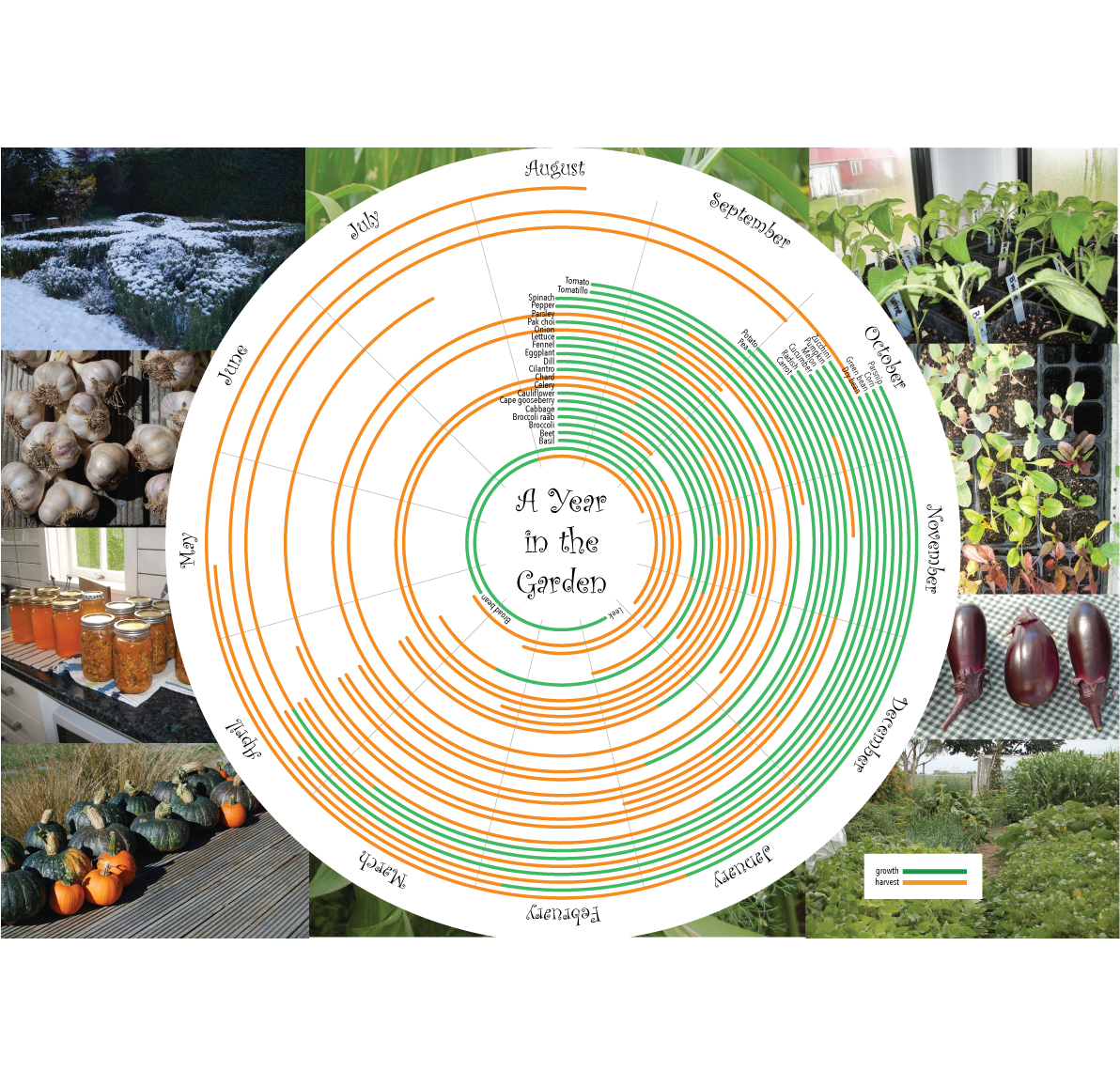
It’s difficult to capture the essence of seasonality in the garden. There is the early spring scrounge for anything still alive and edible, while you madly plan and plant for the future. There is the overwhelming abundance of summer, when the question shifts from “what is there to eat?” to “what needs to be eaten?” There is the frantic preserving of late summer, when you realise it all has to end. There is the calm of autumn, when the larder is full, and you know you can curl up like a chipmunk in your well-provisioned nest when the winter winds blow.

I tried to capture some of the garden year’s seasonality in this little graphic. It includes most of the annual crops we grow, though some are lumped together and others left out to minimise clutter. None of the perennial crops are included. But I hope it gives you an idea of what’s in and coming out of the garden at different times of year.

Special thanks to Ian for writing the R code to create this nifty little graphic.

Unnecessary kitchen gadgets

Everyone has a drawer in the kitchen—the junk drawer. In it goes all the little things that don’t quite fit into a neat category—corkscrews, melon ballers, garlic presses, vegetable peelers, the odd rubber band.

In every junk drawer, there’s probably a selection of effective but completely unnecessary kitchen gadgets. Gadgets useful for exactly one thing. I had a rummage through ours today and found these gems.

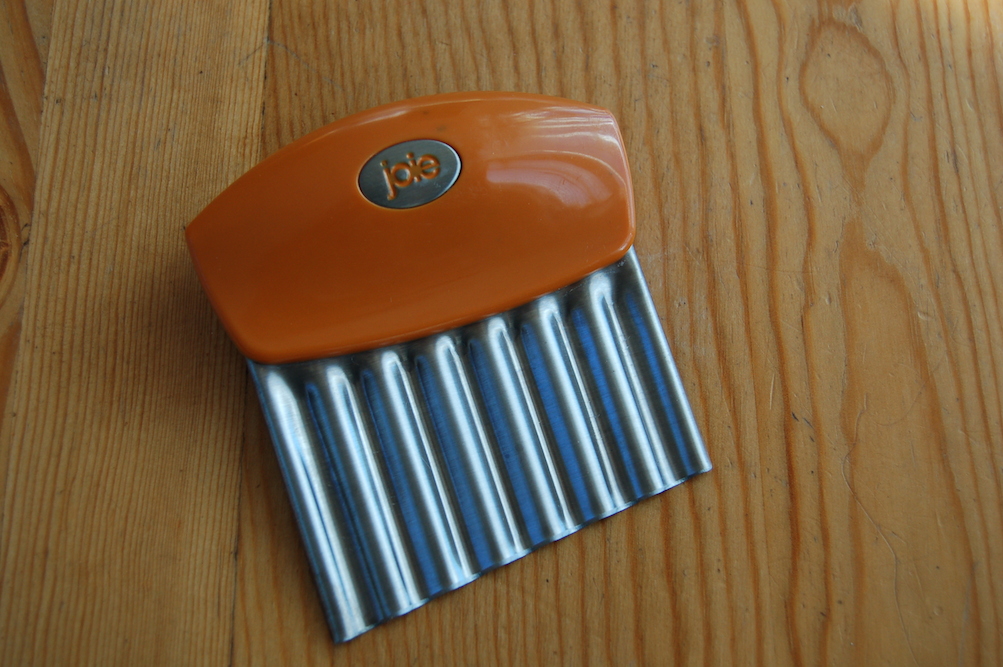
DSC_0010 smThe crinkle cut knife—This truly does make awesome French fries, but it’s shorter than your average potato, and who wants to sit there and carefully line up the little wavy lines so your fries look nice?


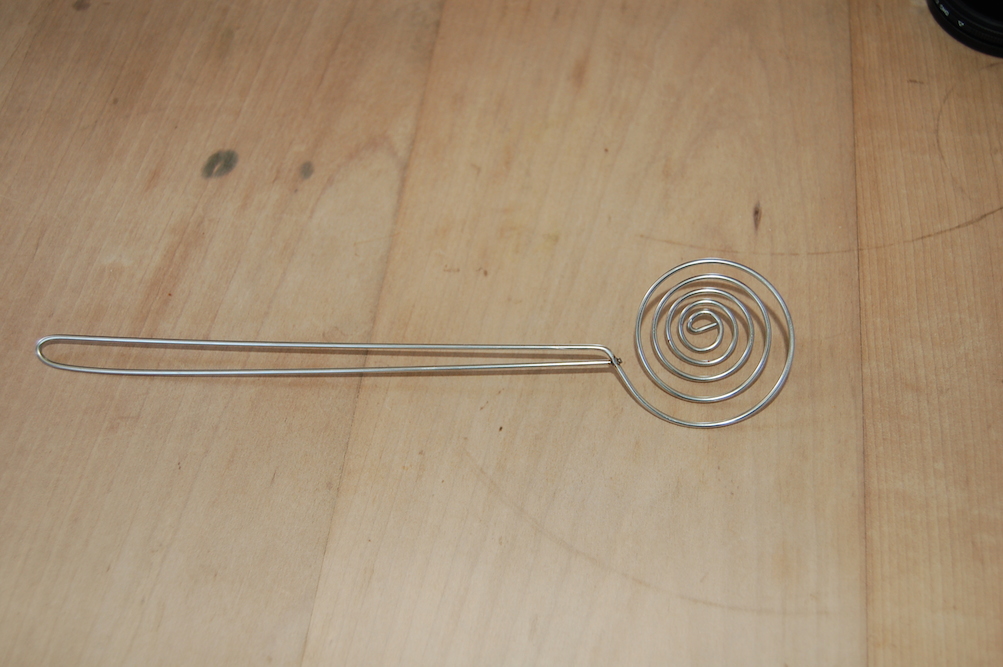
DSC_0012smThe candy dipper—If this worked as well as a fork, I might pull it out when I dip truffles. It certainly looks really cool. Unfortunately, an ordinary fork is easier to use.


DSC_0001 sm

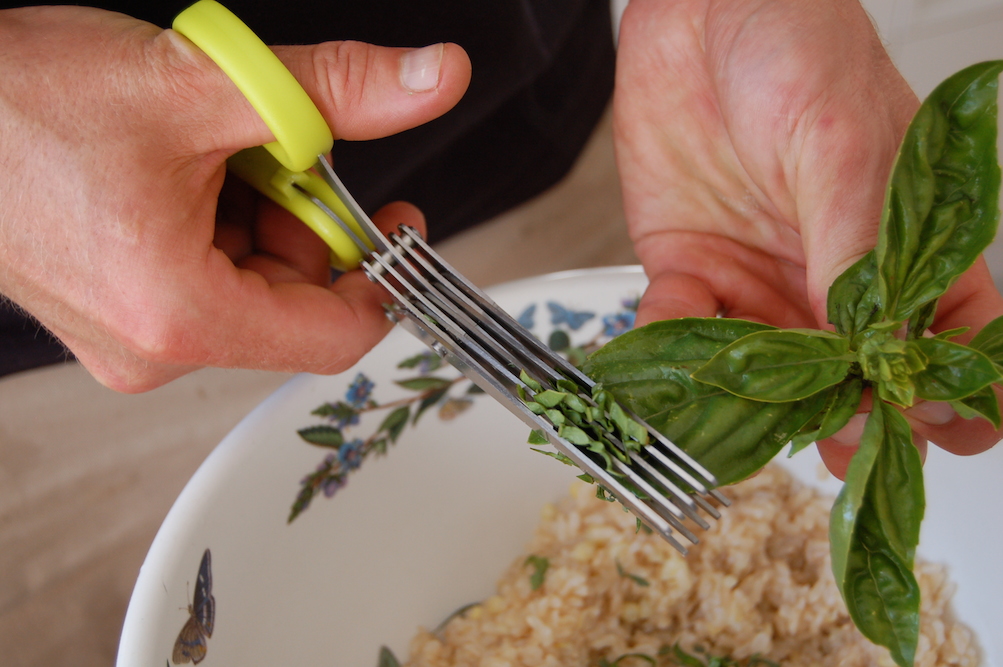
The herb scissors—These are all the rage right now here; every kitchen store has them. I took one look at them and thought, “Cute, but you’d never get them clean.” Ian took one look at them and thought, “Great stocking stuffer for Robinne!” We pull them out occasionally for the humour value, but I find a knife works just as well, and is easier to clean.

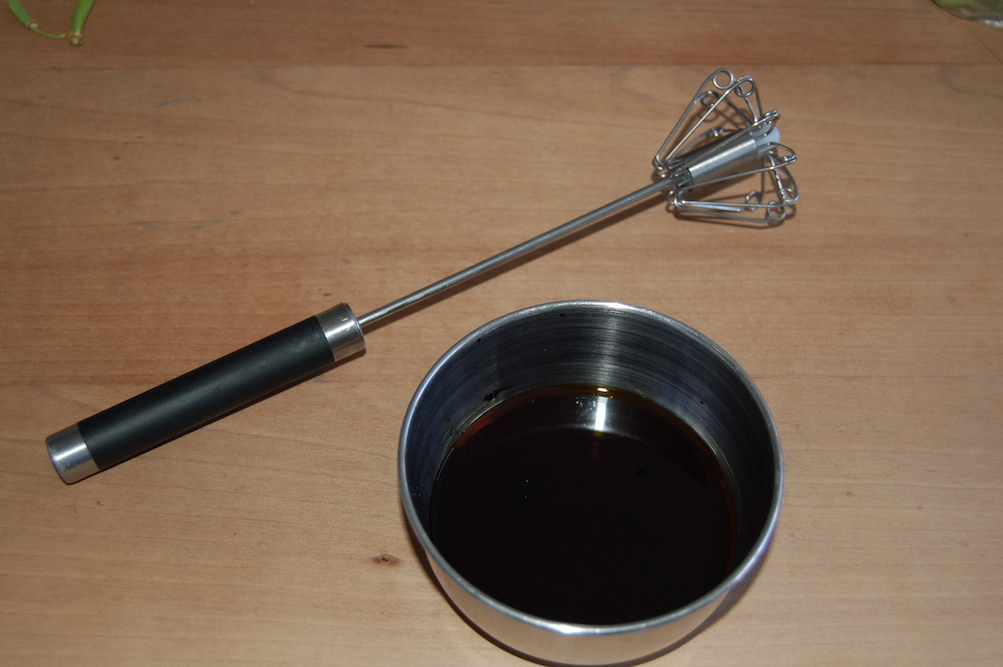
whisk2 smThe spring-loaded whisk—I don’t even really know what to call this gadget. Press down on the handle, and the whisk spins. For small quantities of vinaigrette, it does a fine job, but give it anything more, and it can’t manage. Even for stuff it could manage, I still tend to reach for a fork instead.

What unnecessary kitchen gadgets are in your junk drawer?


The (not so) Humble Onion

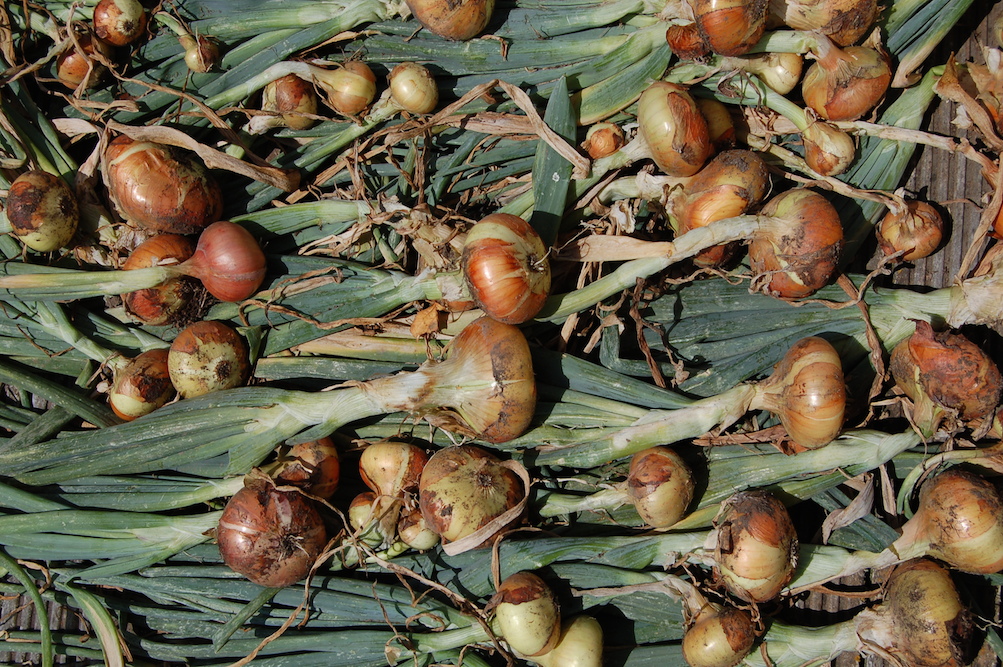
DSC_0010smI never thought much about onions until I tried to grow a year’s supply of them. Onions were just onions—a necessary component of most nights’ dinners, but not a feature. In fact, onion was probably my least favourite vegetable. My first attempts to grow enough for the year were abject failures. Onion was such a mundane vegetable, I just assumed it would be easy to grow.

I was wrong. First, the tiny seeds didn’t like to germinate in the garden, so I learned to start them indoors, and transplant the seedlings. Then I discovered that onions are very sensitive to drought, and I needed to improve my watering regime or they would never get larger than a walnut. I also quickly learned that they hate competition and I needed to keep the onion bed scrupulously weed free. Finally, I found they were heavy feeders and liked a generous helping of good quality compost in their bed. Such finicky tastes for a vegetable I assumed was little more than a weed!

I did eventually get it right, and can now keep us supplied with onions year round. As with most vegetables, I gained a greater appreciation for subtle differences among varieties when I started seriously growing onions. One of my best “discoveries” has been red onions. The first time I grew them, I cured and stored them like the others, with poor results. They never properly dried, and rotted or sprouted within a month of harvest. What I’ve since realised is that they should be eaten fresh. And when eaten fresh, they are like an entirely different vegetable—so sweet and succulent, that even I like them raw in salads. Now we start eating the red onions as soon as the first bulbs swell. They fit nicely in the food year, between the last spring onion and the storage onion harvest.

The best thing about them is they’ve taught me to better appreciate a vegetable I was never overly fond of before. I think about the times I’ve had French onion soup and didn’t like it. Was it because it was made with the wrong variety of onion? Did I spend the majority of my life unenthusiastic about onions because all I’d eaten were the store bought varieties? Seems I’m going to have to do some more research and try some new varieties. There are dozens to choose from in the seed catalogues!

Gardens are Like Kids

DSC_0013Wednesday was a brutal one in the garden. Temperatures neared 30°C (86°F) and 125 kph (78 mph) wind whipped up billowing clouds of dust and flattened plants. There was nothing I could do but hope I’d watered enough last week and tied up the tall plants well enough that they could recover afterwards. When the sun set and the wind died down, I ventured out to survey the damage. As I feared, the plants were limp and battered. I watered them well overnight, and most looked refreshed by morning, ready to face another day of sun and wind.

It’s a lot like sending the kids off to school each day. It’s a harsh environment—they have to navigate school work, buses, and relationships with peers and teachers. They need these challenges to grow, just as plants need the sun and air, but some days the wind blows too hard. A new teacher, a friend who has moved away, a taunt in the lunch room…as a parent, you know these things will happen, and there is nothing you can do except hope you’ve given your children enough love and support to recover afterwards. They come home flat and battered, and you give them some extra TLC so they’re ready to go back and face it again the next day.

There’s only two things that money can’t buy…

DSC_0033 smTrue love and home grown tomatoes—the only two things that money can’t buy, according to singer Guy Clark. I could add a few other foods to that list, but he’s definitely right about the tomatoes.

Home grown tomatoes are the only ones we’ll eat any more. Life’s too short to eat the store bought ones. I plant 6 or 7 varieties every year—a couple of new ones, and a bunch of old favourites. Each variety has different uses.

Brandywine is without a doubt, the best tasting tomato on the planet. So good that I plant it every year, even though the summers are really too short and cool for it here. For raw eating, nothing beats a Brandywine.

Delicious is almost as good as Brandywine. It’s my insurance policy; it grows better in cool weather than Brandywine does. I’m sure to get some Delicious, even if the Brandywines don’t give well, or they all get eaten by the birds (they think Brandywines are best, too, and even eat them green).

Amish Paste is robust and prolific. Unlike many other paste tomatoes, it manages well with erratic watering. Fleshy and dry, it makes great sauces.

Russian Red is my prolific, hardy workhorse tomato. It has small fruits with a fine, but not stellar flavour. Its value lies in its ability to flourish in cold weather, ripening fruits long after other varieties have succumbed to frost.

Suncherry is a lovely red cherry tomato that not only fills lunchboxes with juicy goodness, but also dehydrates well, providing us with lovely sweet/tart dried tomatoes all through winter.

Of course, the best way to enjoy a tomato is standing up in the garden, but here’s one of my favourite tomato dishes. This is straight out of Vegetarian Cooking for Everyone, by Deborah Madison. Make it with the best tomatoes you have, and don’t use an iron skillet or the tomatoes will taste tinny.

Tomatoes Glazed with Balsamic Vinegar

1 ½ pounds tomatoes

2 tablespoons butter

3 tablespoons balsamic vinegar

1 plump shallot, finely diced

salt and pepper to taste

Cut tomatoes into wedges about 1 ½ inches across at the widest point. In a skillet large enough to hold the tomatoes in a single layer, heat the butter until it foams. Add the tomatoes and sauté over high heat, turning them over several times, until their colour begins to dull, about 3 minutes. Add the vinegar and shallot and shake the pan back and forth until the vinegar has reduced, leaving a dark, thick sauce. Season with salt and plenty of pepper.