Life as a Squirrel

pumpkins2 smHaving recently crossed over into the dark side of the year, I am naturally looking ahead to the winter to come. The days are growing short, the nights cool.

As I sneak a late-night snack of almonds and raisins (though I’m not particularly hungry), I begin to wonder…Am I like a bear, eating extra food, building up fat in order to hibernate all winter?

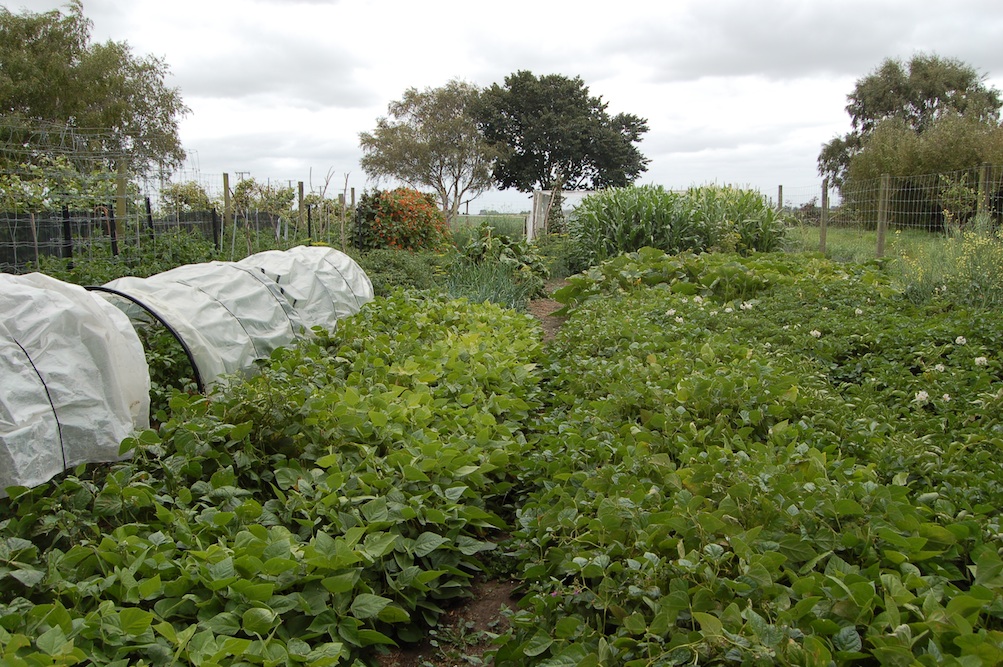
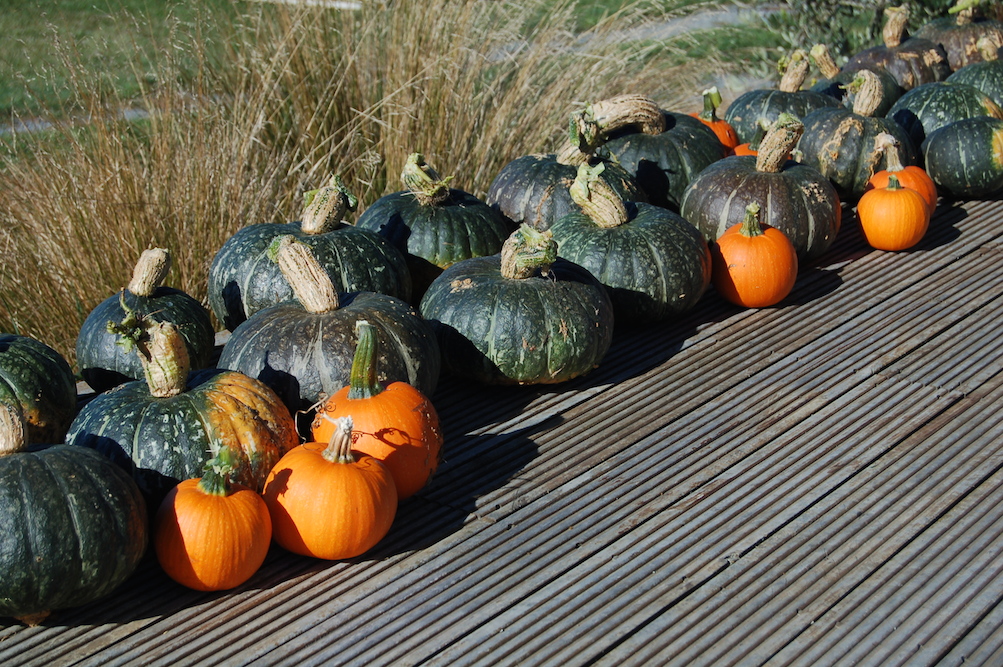
Then I harvest the beans, corn and pumpkins and store them away in cupboard, freezer and shed, and I believe I am like a chipmunk, filling its larder with autumn’s bounty so I can huddle inside munching on the fruits of my labour all winter.
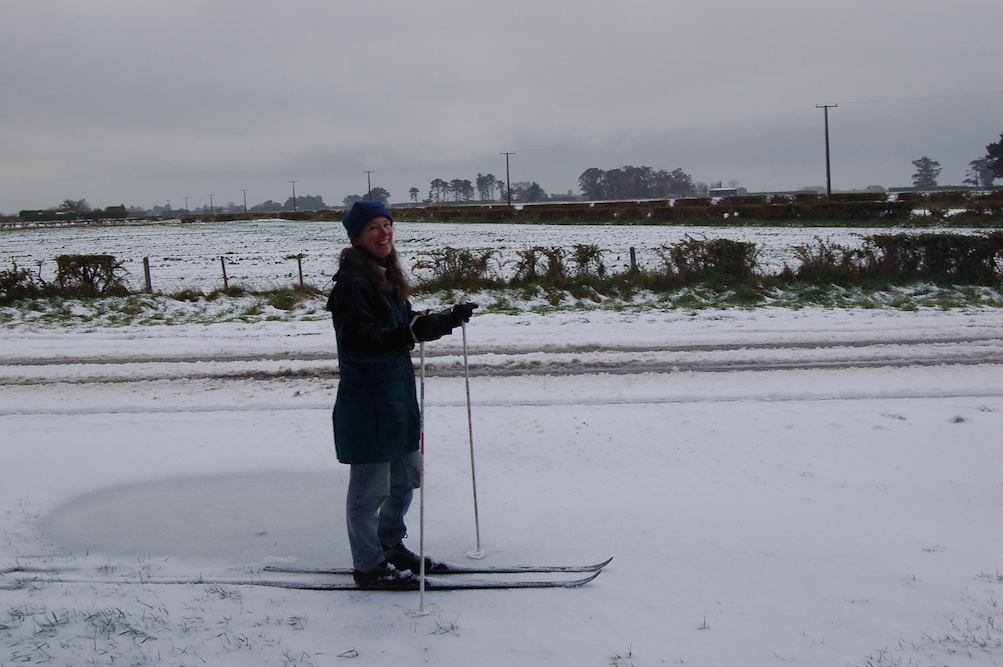
Our last snow--in 2011. We rarely get snow to frolic in, but it's nice to frolic when I can.

Our last snow–in 2011. We rarely get snow to frolic in, but it’s nice to frolic when I can.

But that’s not quite right, either, because I’m truly more like a squirrel. I hunker down in my winter nest during the worst weather, but on fine winter days I like to frolic outdoors, to scamper around searching out the little tidbits I’ve stashed here and there. The chard I left growing on the compost pile, the lettuces in the greenhouse, the last of the potatoes and carrots still in the garden, the cabbage and broccoli that hang on through the cold months. Sometimes, squirrel-like, I forget where I’ve hidden something—the last jar of artichokes, in the back of the cupboard, perhaps, or the leeks, quietly growing without my noticing until one day they are ready to eat.

I’m sure that, for a squirrel, fine winter days are a frantic race to stave off winter starvation, but for me, winter frolicking is just that—a little light weeding, gathering in the meagre winter crops, and enjoying the release from the hard labour of summer.

I still have a month or more to go before I can rest from summer labours, but on this tired end of the year, I look forward to my squirrely winter days, curling up in my nest and eating from my food caches.
The Well-sharpened Knife

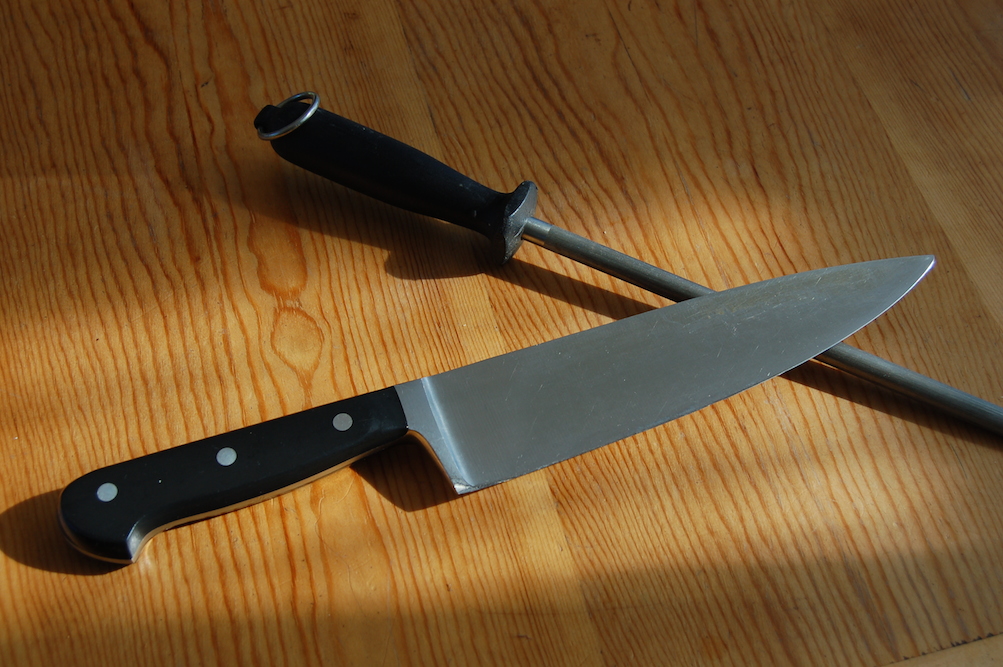
knife_sharpenersmTomatoes are always good for our knives. There’s nothing like a tomato to show you how dull a knife is, and the knives get sharpened more during tomato season than they do all the rest of the year. Last weekend, I sharpened my favourite tomato knife twice as I chopped 18 kilos (40 pounds) of tomatoes for pasta sauce. Then I sharpened it again the next day before slicing a tomato for lunch.

Years ago I saw a knife salesman demonstrating his wares. He cut a tomato to show how good his knives were. The knife sliced cleanly through the fruit, without squishing it, or tearing at the skin. It would have been an impressive demonstration, except that I know all about tomatoes and knives. The best knife in the world will destroy a tomato if it’s not well sharpened. The knife salesmen count on that. Their knives might be the cheapest, lousiest knives out there, but because they sharpen them before a demonstration, they’re guaranteed to cut better than any knife in the average domestic kitchen.

A well-sharpened knife is a pleasing tool (and much safer than a dull one). It’s too bad it takes a bushel of tomatoes to remind me to sharpen them.

Brought to you by the letter P and the colour Purple

DSC_0004 copyPotatoes are one of my favourite foods. They go with just about everything. They can be baked, fried, boiled, steamed, and grilled. They can become a cool potato salad for a hot summer day, or a thick steaming soup for a cold winter night.

When we visited Bolivia and Peru years ago, I got to see and taste a wide range of potatoes I’d never experienced before. One of my most vivid memories is sitting in a boat travelling across lake Titicaca watching a group of local men pull out their lunches—handfuls of small, colourful potatoes that they ate like apples. Most of those potato varieties never make it out of South America, and our cuisine is poorer for it.

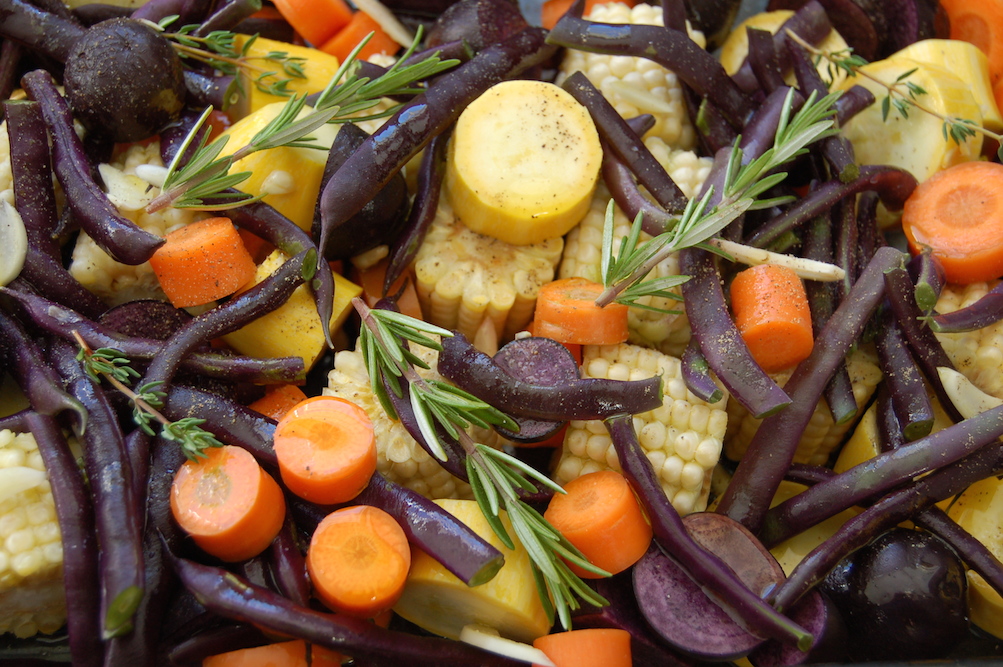
Roast veggies3sm

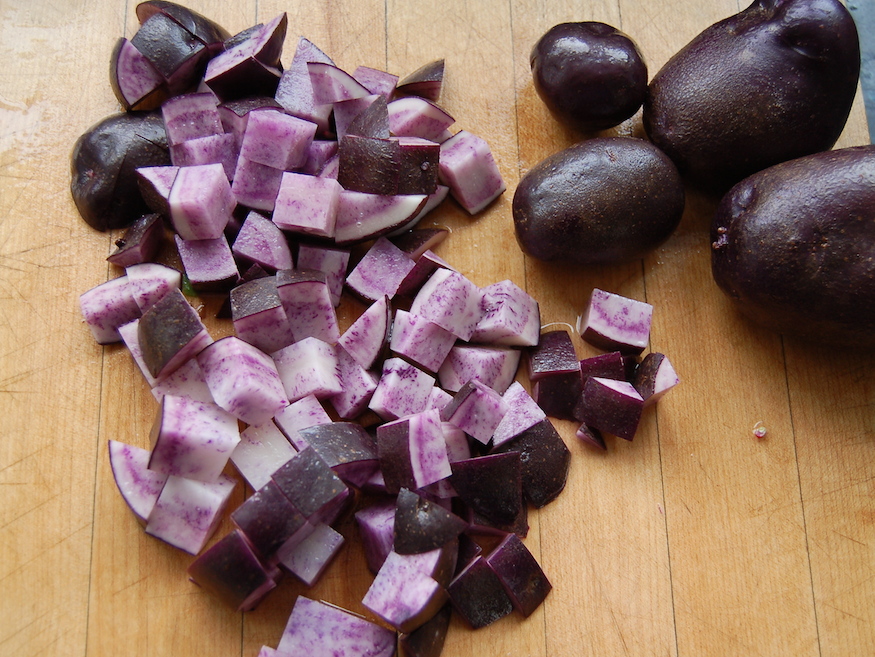
Purple potatoes (and purple beans, too) add a lovely colour contrast to other vegetables.

Supermarket potatoes are a rather uniform lot, but a greater variety can be had in seed potatoes. My all time favourite potato is Purple Heart. Even if it weren’t delicious (which it is), its purple colour would win me over. The colour remains during cooking, and adds a splash of whimsy to a plate. Purple mashed potatoes, anyone?

Chai

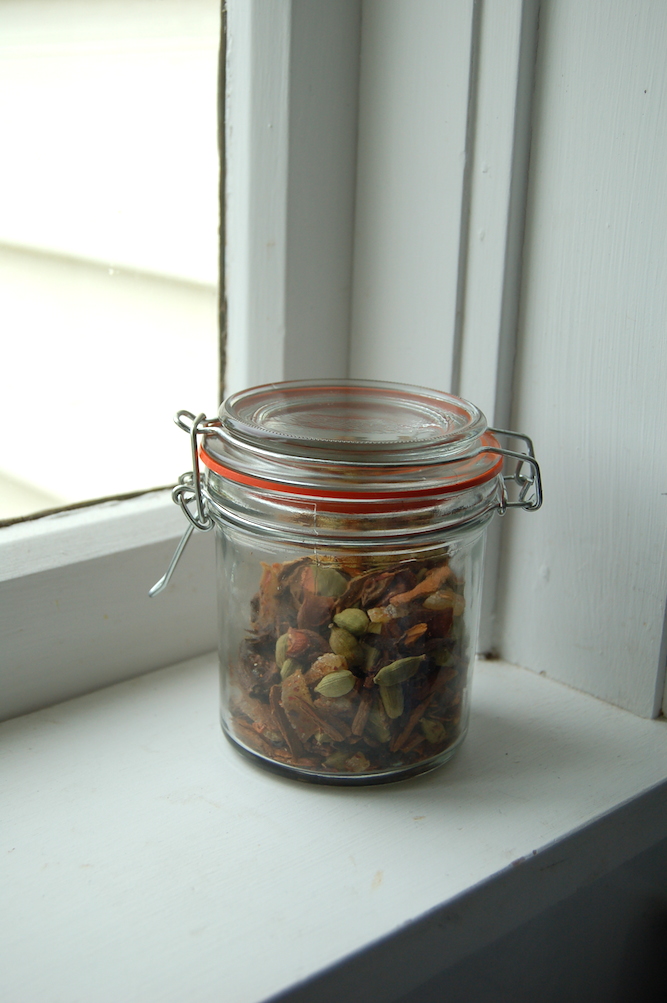
DSC_0001 copyIt was a cool, drizzly day today, and the ceiling was dripping from some newly sprung leak in the roof. It was a day for tea.

My current favourite tea is a homemade chai my husband gave to me at Christmas. I had been making up individual cups of chai for us, plonking various spices into the cup individually, but some days it was too much work to search through the cupboard for all the right spices. Ian’s chai mix makes a cup of chai as easy as a tea bag. A scant spoonful of his mix makes a wonderfully spicy cup to warm up even the wettest of days. The mix includes candied ginger, hot pepper flakes, stick cinnamon, cardamom pods, whole cloves, and star anise. And the best part of it is the spicy Christmas-baking smell it leaves in the house long after the last sip has been drunk.

The Brewer’s Wife

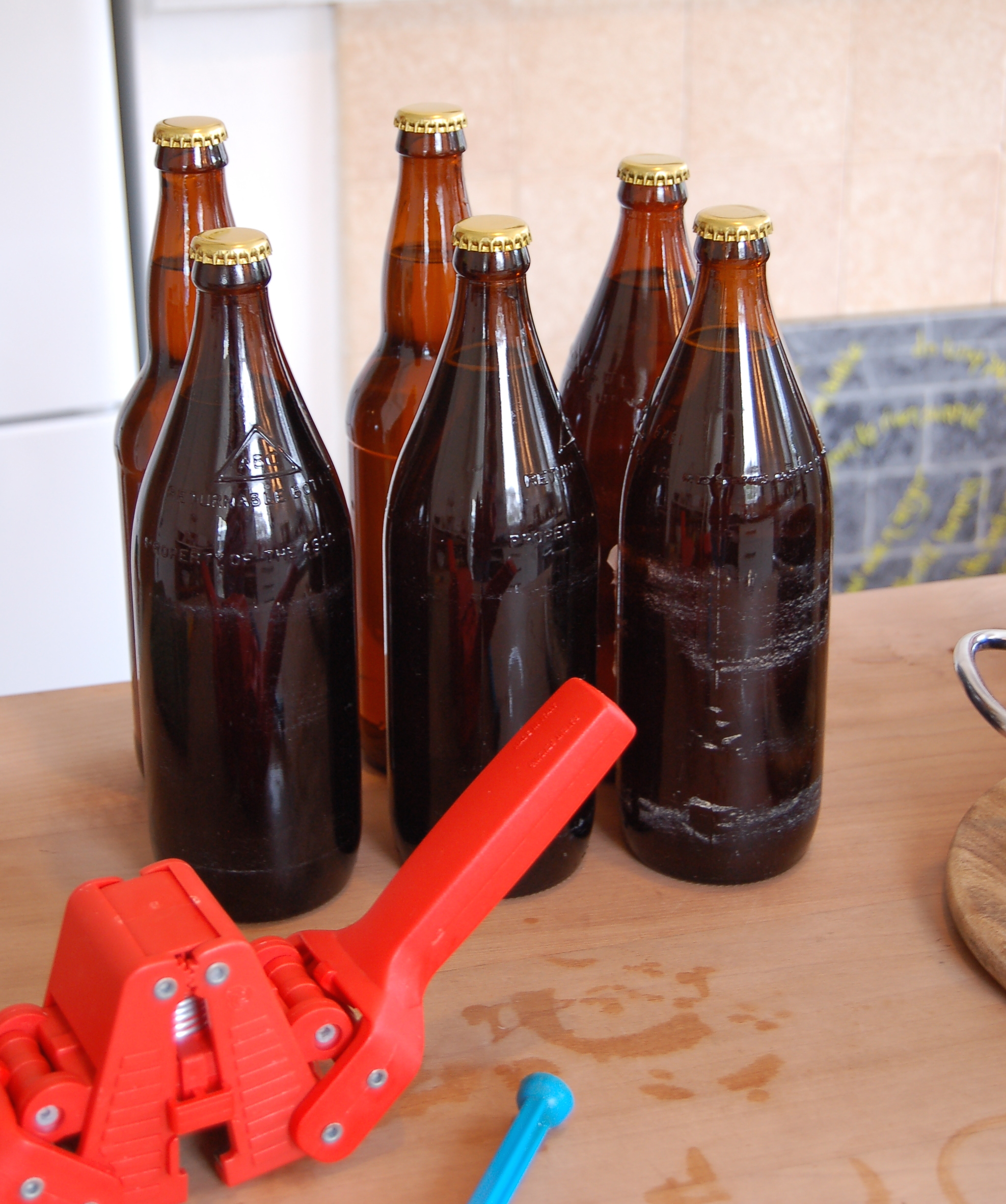
DSC_0004 cropIan and I each have our own ‘domains’ within the kitchen. Ian’s domain involves everything involving yeast (as befitting a guy who studies fungi), so brewing is his job.

Of course, being the brewer’s wife has its own responsibilities. I am the assistant who lifts, holds, and hauls as needed. I’m also the capper and labeller when it comes time for bottling. These tasks are not unpleasant ones, but there are others less agreeable.

Every now and again, something goes awry with a batch of beer. Somehow it always seems to happen when Ian is away, and I am home. Usually it involves a mess.

Once, several years ago, Ian started a batch of beer, then left the next morning for a week of field work. About midday the first day, I happened to glance at the brewing bucket, and was concerned to see the lid bulging. I bent down to peer at the airlock, which looked clogged with foam and debris. At that very moment, the lid blew off the bucket with a boom. Beer sprayed everywhere—floor, ceiling, walls, and kitchen cabinets were all anointed. Not an inch of the room was spared, and I was left soaked and dripping with beer. It wasn’t the only time I’ve had to clean up wayward beer, but it was surely the most spectacular.

On the whole, though, being the brewer’s wife has more advantages than disadvantages (she says as she sips a lovely pale ale…)


Some Like it Hot

DSC_0003 copyWhat do you do with 3 kg of hot peppers? I don’t know, but you’ll need lots of water on hand!

I planted Thai Super-Chilli, my reliable, high-producing hot pepper this year, and I also tried a new variety—Jalapeño Early. Ordinary jalapeños take so long to produce that they’ve barely flowered before the frost kills them off. I didn’t expect much from Jalapeño Early, but I hoped we’d at least get a few. They’ve been tremendous! We’ve been eating them for weeks, and I finally had a chance to go out and properly pick—close to 3 kilos, and more still on the plants (I quit picking when my colander was full). That’s a kilogram of fruit from each plant–way more than I ever expected!

Unfortunately, they’re milder than an ordinary jalapeño, but I’ve pickled them with a few Thai Super-Chillies in each jar, to spice them up a notch. They should be great with the black beans I harvested a few weeks ago—warm us right up on a cold winter evening!


Favourite kitchen tools: Granny Fork and Pastry Knife

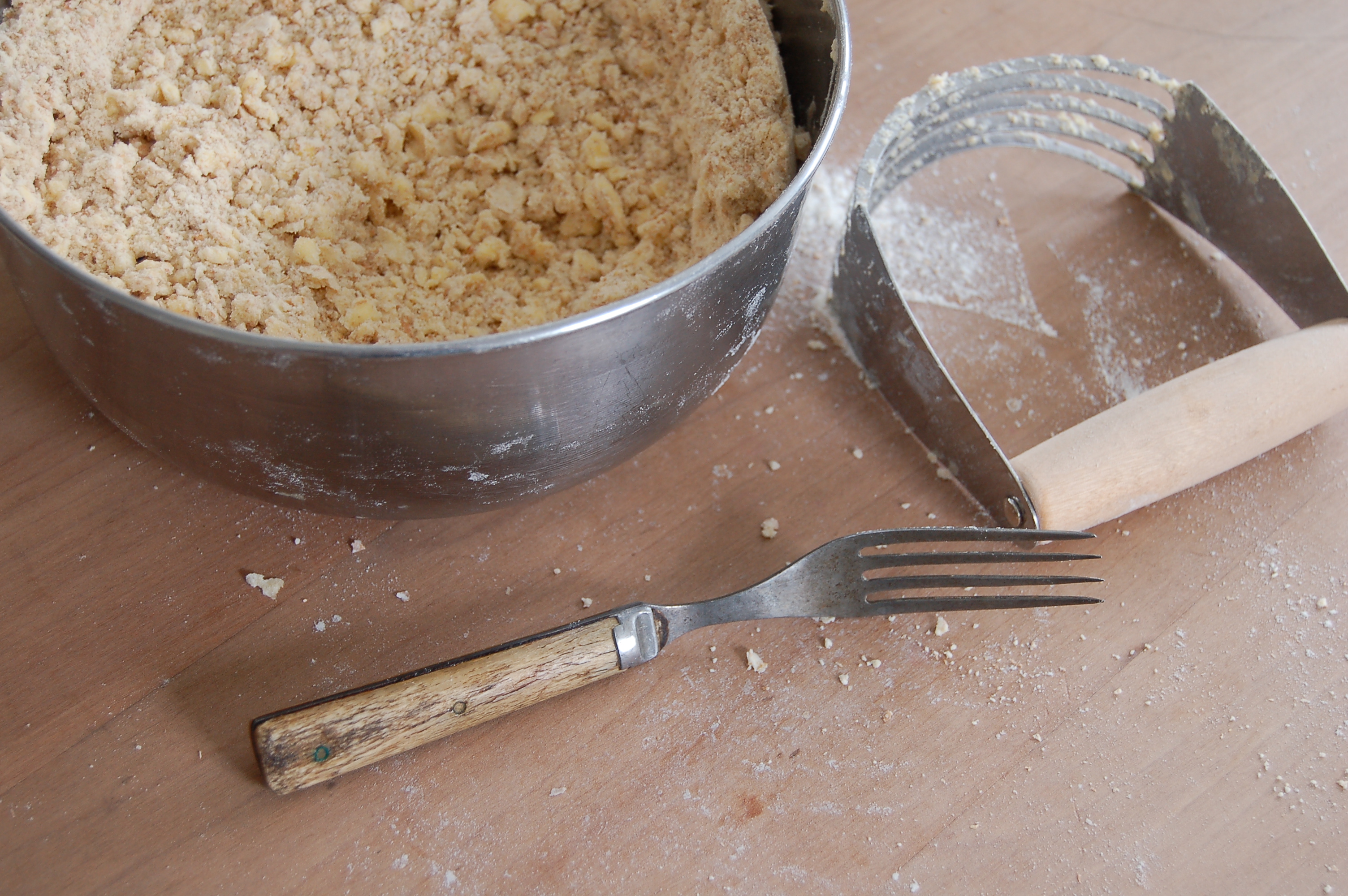
piedough3I thought it was time to share another favourite kitchen tool, and really had to share both of these together, because I so often use them together for pie dough.

The granny fork. I don’t know what this sort of fork is actually called, but everyone’s granny has one, so we call it a granny fork. Long, thin tines make it perfect for mixing water into pie crust, and the real bone handle, worn and stained, tells stories of kitchens past. The granny fork mixes history into every pie.

The pastry knife. I suppose most people don’t use this tool anymore. It’s been replaced by the food processor, which is far quicker and easier to use, for sure. But I enjoy the feel of a pastry knife. There is a pleasing rhythm to cutting butter with one of these, and it’s much quieter than the food processor when I’m making scones early on a Sunday morning while the family sleeps. I particularly like the old ones, purchased at second hand shops or garage sales—they fit the hand better, and are sturdier than new ones—but as I wear out a pastry knife in about a year (don’t think about that…it’s a lot of pastry!), I use whatever I can find.

So there we are—the Luddite’s favourite kitchen tools. While the food processor gathers dust, I quietly make my pie dough just like granny did.

Soy: The Asian/Pennsylvania Dutch Cultural Conundrum

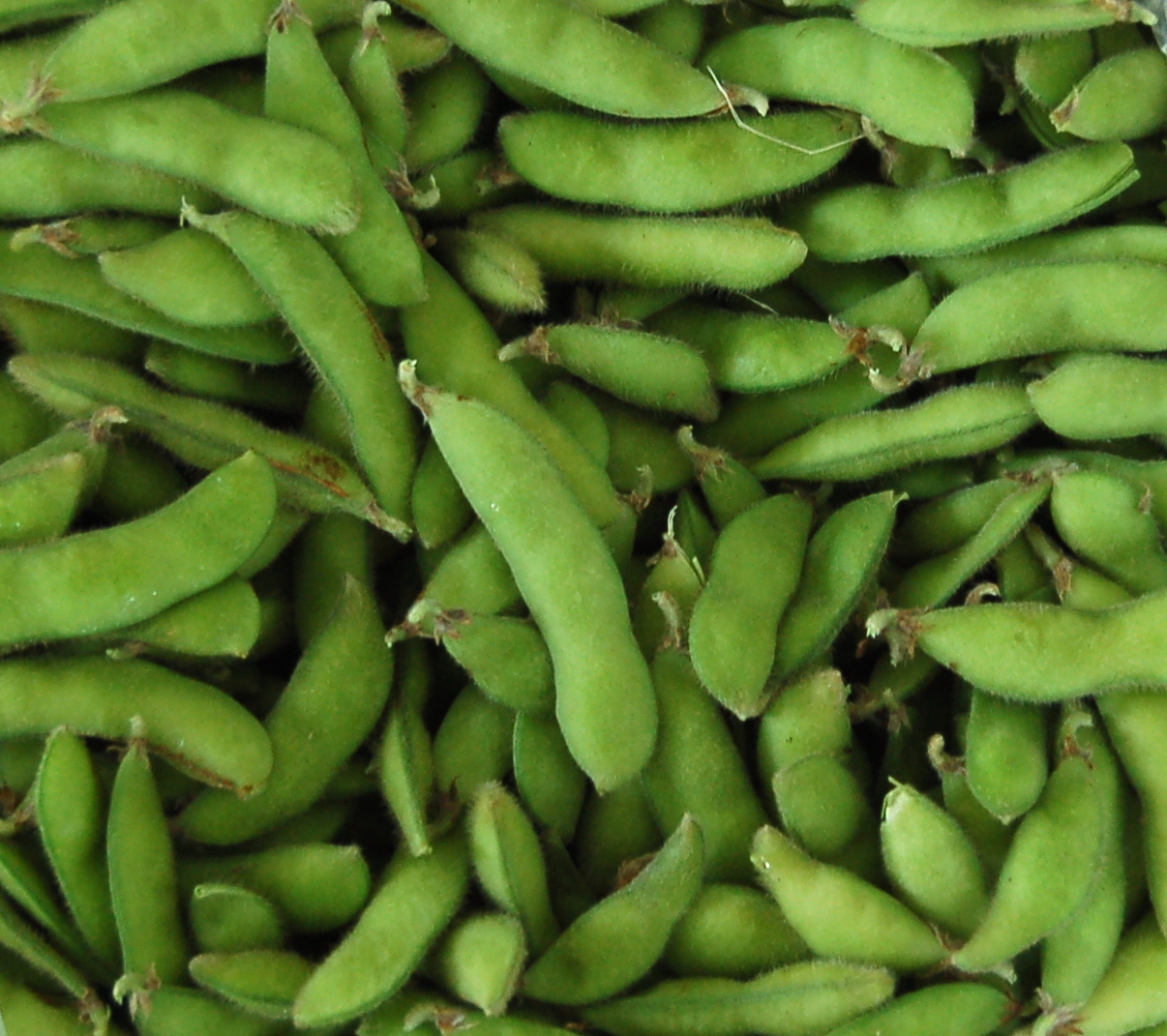
soycropI grew up thinking soy beans were an ordinary garden vegetable. Every year, my mother planted soy from seeds purchased at the tiny general store in Mastersonville. It wasn’t until I was 21 and finally living in a “real” house on my own (not in the university dormitories) that I realised the rest of America didn’t even know what soy beans were. My attempts to find fresh soy beans in 1990 in Ann Arbor, Michigan failed. In fact, the only soy product I could find were “soy nuts”—roasted, salted soy beans—at a health food store. They were stale and mealy, and so hard they nearly broke my teeth.

It seemed that no one outside of Lancaster, Pennsylvania ate fresh soy beans as a vegetable. Everyone thought I was nuts. I started asking my mother to send me a packet of seeds every spring, from the store in Mastersonville.

Many years later, I learned about Japanese edamame and recognised it as the fresh soy beans of my youth. Fresh soy beans have been eaten since at least the 1200s in China, Japan and other Asian countries, and are apparently popular bar food in Japan, served steamed and salted in the pod to be snacked on alongside your beer.

Soy beans arrived in the American Colonies in 1765, but were mostly used as a forage crop. When and why the people in south eastern Pennsylvania began to eat fresh soy is unclear. And why no one else in America did is even more unclear, since soy’s sweet, nutty flavour beats the socks off of other beans Americans commonly eat fresh (I’m thinking about those mealy lima beans…).

Soy beans as garden vegetable only arrived in New Zealand in the past 6 years or so. I was unable to get seeds when we first arrived, and when I first contacted an Asian seed supplier to enquire about them, I was told they were still building up their stock, and couldn’t sell them yet.

Even now, though I can get soy bean seeds, I have been unable to locate the appropriate bacterial inoculant for them, and they grow poorly here. Still, I grow them–my garden feels incomplete without them. However it came to be, I feel a cultural connection to soy beans—that Asian/Pennsylvania Dutch fusion food. Go figure.

Cleaning Up: Why I Don’t Need a Dishwasher

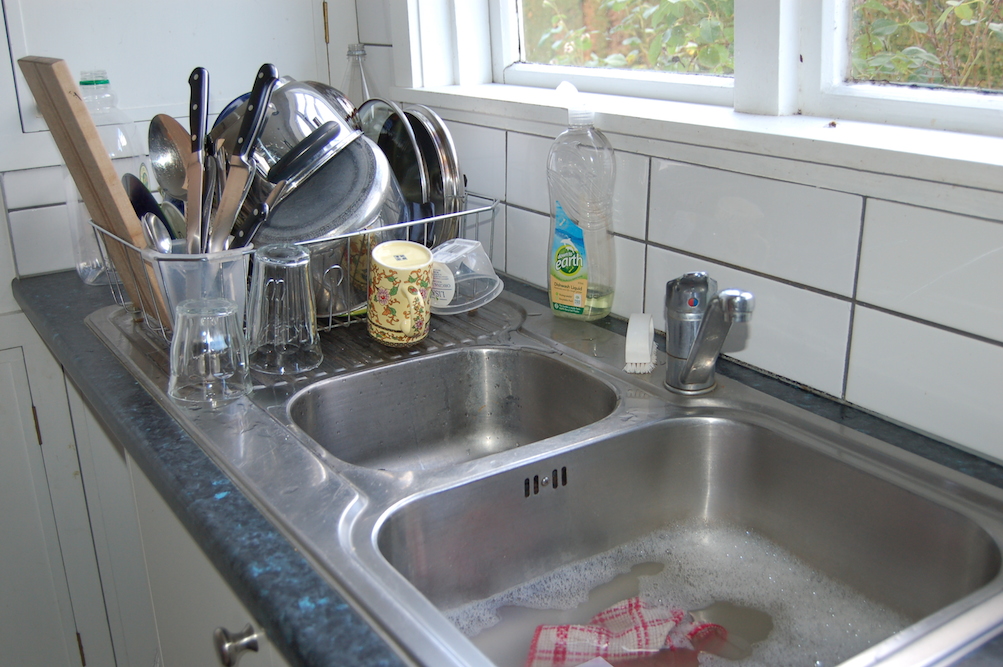
DSC_0004 copyI have lived 42 of my almost 45 years without a dishwasher. I remember washing dishes with my siblings as a child. In my memory, it was done willingly, but I’m sure we bickered over it as much as my kids do. Who will wash? Who will dry? Do we have to wipe down the table and kitchen counters, too? But, as with my own children, I know that once we’d finally settled the details and gotten down to the job, washing the dishes was full of laughter, silliness, and playing with bubbles.

It was a lesson in fairness, in being part of a team—the cook shouldn’t have to also clean up, everyone should have to do some of the work to feed the family, clean up tasks should be shared by all.

It was, and still is, also a time for communion with one another. As kids, it was a time to share jokes and plan the next great tree fort. As adults, it’s a time to debrief the day and discuss the future.

I find doing the dishes particularly satisfying after a party—the time you might least expect to enjoy washing up. When the last guest leaves, and the kids have gone to bed, we’ll start gathering up dishes—the wine glasses left on the windowsills, the plates scattered about the lawn, empty serving dishes, and crusty pots and pans. We heap the dirty dishes on the kitchen counter, fill the sink with hot, foamy water, and get to work. While we work we talk, and after a party, there is plenty to talk about. Though we were both present, each of us heard different news. We compare notes and observations. We discuss who is contemplating divorce, who is newly pregnant (but doesn’t want anyone to know yet), whose children are struggling at school, who just accepted a prestigious job overseas. The conversation wanders, and we compare our relationship to our friends’ marriages, taking lessons from all we’ve seen and heard, giving thanks for the solid relationship we have. We talk about the food—who liked what, how many people went back for seconds or thirds, how we might do things differently for the next party. We wander further into discussion of our lives and careers, ranging far and wide to talk about love, life and happiness.

Before we know it, the mountain of mess is tidy. The dishes are clean, dry and put away. The counters are clean, and we have assessed, evaluated, and repaired our lives.

All through the simple task of washing dishes.

Do I occasionally wish for a dishwasher? Yes, but only rarely. The daily chore of washing dishes is a daily opportunity for laughter and reflection that a dishwasher cannot give.

Come out and play

DSC_0001smSometimes

Words do not want

To come out and play.

They stick

Somewhere

Behind my eyes.

Behind the pounding in my head.

Foiled by

My son’s maths homework

(to be checked by a parent)

My daughter’s permission slip

That needs signing.

Confined by

The clock ticking on the wall.


So I take the words outdoors

To the garden,

To feel the rain and wind.

I let them get dirty.

I let them pick vegetables

And contemplate a spicy curry.


After dinner,

Fed and rested,

Perhaps

They will creep out

Cautiously

To frolic on the page.