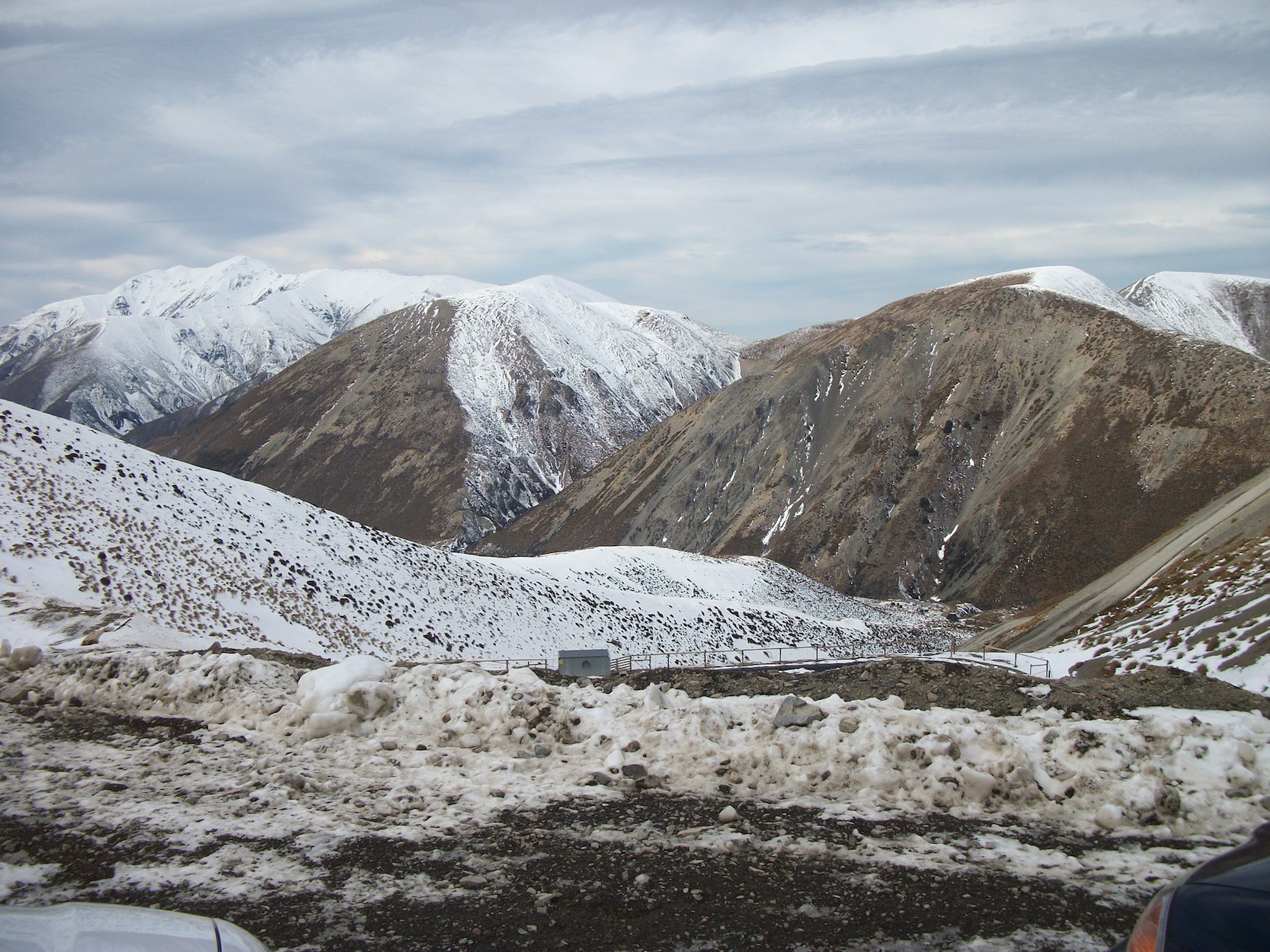
 I took the kids skiing today. When they came off the slopes, snowy and cold, we sat in the car drinking hot chocolate and tea from a thermos and admiring the view.
Not a bad place for a tea break.
I took the kids skiing today. When they came off the slopes, snowy and cold, we sat in the car drinking hot chocolate and tea from a thermos and admiring the view.
Not a bad place for a tea break.
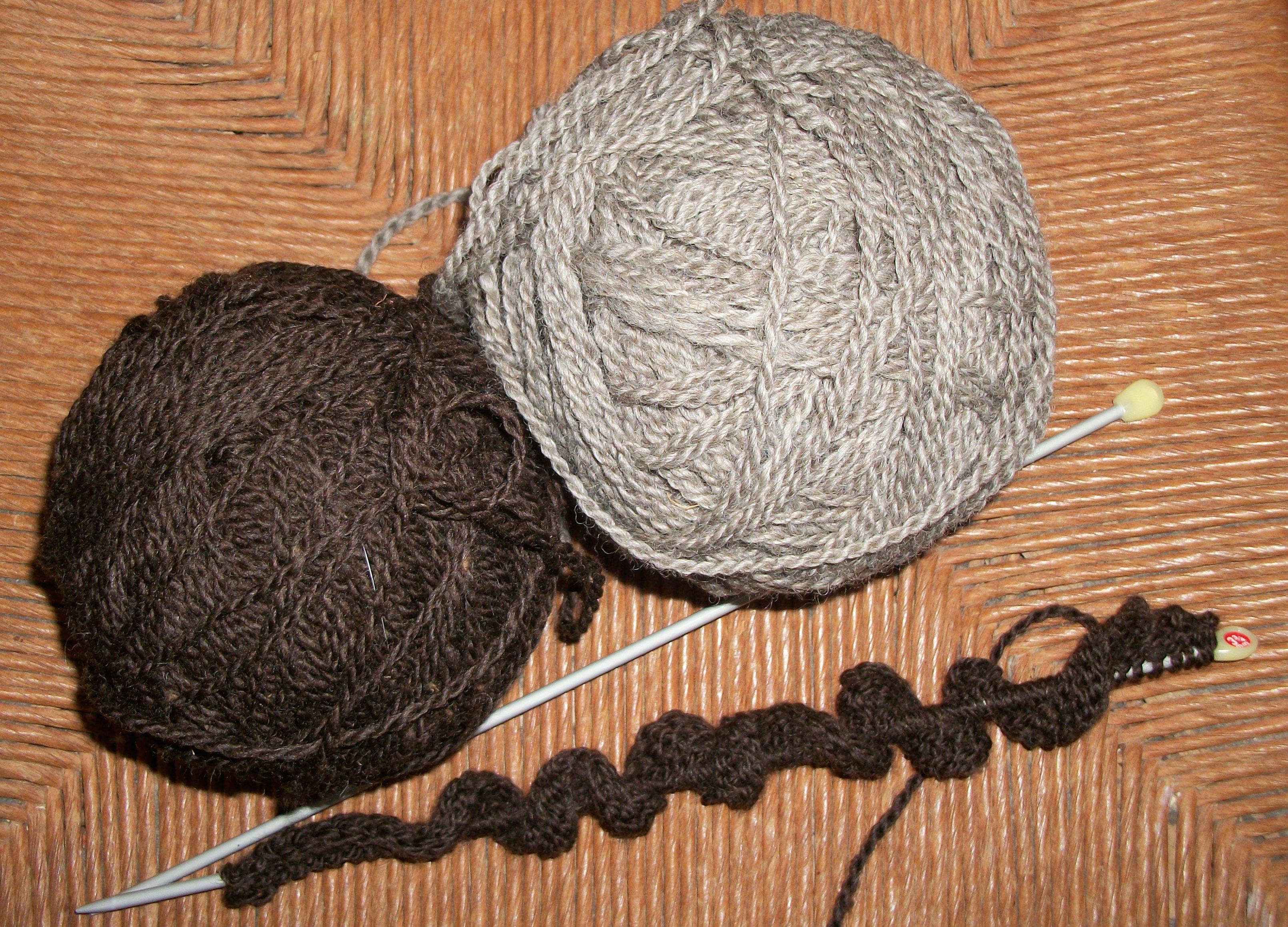 I am not a knitter. People have been trying to teach me to knit since I was seven years old, to no avail. I’m very crafty in other ways. I weave, sew, quilt and embroider; I was once quite good at macramé (when macramé was “in”); I’ve done quilling and scherenschnitt, basketry and rug braiding, beading and jewellery making. I’m proficient at all these crafts and more, but put knitting needles in my hands, and suddenly I’m all thumbs.
But I’m also stubborn. When my mother tried to teach me to knit, and failed, I tried again. When the neighbour tried to teach me to knit, and failed, I tried again. When a friend tried to teach me to knit, and failed, I tried again. I bought Debbie Bliss’ book How to Knit, and forced myself to knit and unravel, knit and unravel, until I could manage to knit a row without dropping or adding stitches. It wasn’t pretty, and it was a stressful process. I’d finish a knitting session with a sore neck and tense muscles. I made myself a pair of slippers. Then I made another pair, and another, and another, and another. Six pairs of slippers later, I was thoroughly sick of slippers, and still struggled with knitting. I took a break…a ten month break. When I came back to knitting, I had to learn all over again. I tried out some different stitch patterns, attempted knitting in the round, and ended up unravelling most of my work.
Another year passed. My slippers wore out, and winter came. My feet were cold, so I tried knitting again. I had to pull out the knitting book in order to remember even the basic stitches.
But something had changed. After the first clumsy rows, I began to relax. The stitches came naturally. My fingers didn’t cramp. I finished the first slipper in a day. I was over the hump.
As parents, my husband and I regularly have to push our children to get over that hump. Learning a new skill is hard work, and there are precious few rewards at the beginning. Playing the piano, there are many wrong notes, and the songs sound clunky, the rhythm erratic. Making pastry, there could easily be half a dozen dense, oily lumps before the first magical, flaky crust. Juggling, there are a lot of balls rolling away on the floor before they soar effortlessly from hand to hand.
For some skills, the hump is low, and easily surmounted. For others, that hump is like a steep mountain with no breathtaking views until the very top. As a parent, one of my jobs is to push the kids to get over those mountains and not quit before a new skill becomes fun. It doesn’t mean becoming a tiger mom, but it does mean enforcing some discipline in kids who may not want to practice their instrument, because it’s a struggle, and they know they sound awful. It means asking the kids to help prepare dinner, and patiently encouraging them as they slowly and unevenly slice the carrots or mix the dough. It means cheering on the child who comes last in the race, and running alongside her as she prepares for the next one.
Hopefully, if we do our job right, the kids will be able to push themselves over those humps on their own one day.
They might even learn to knit.
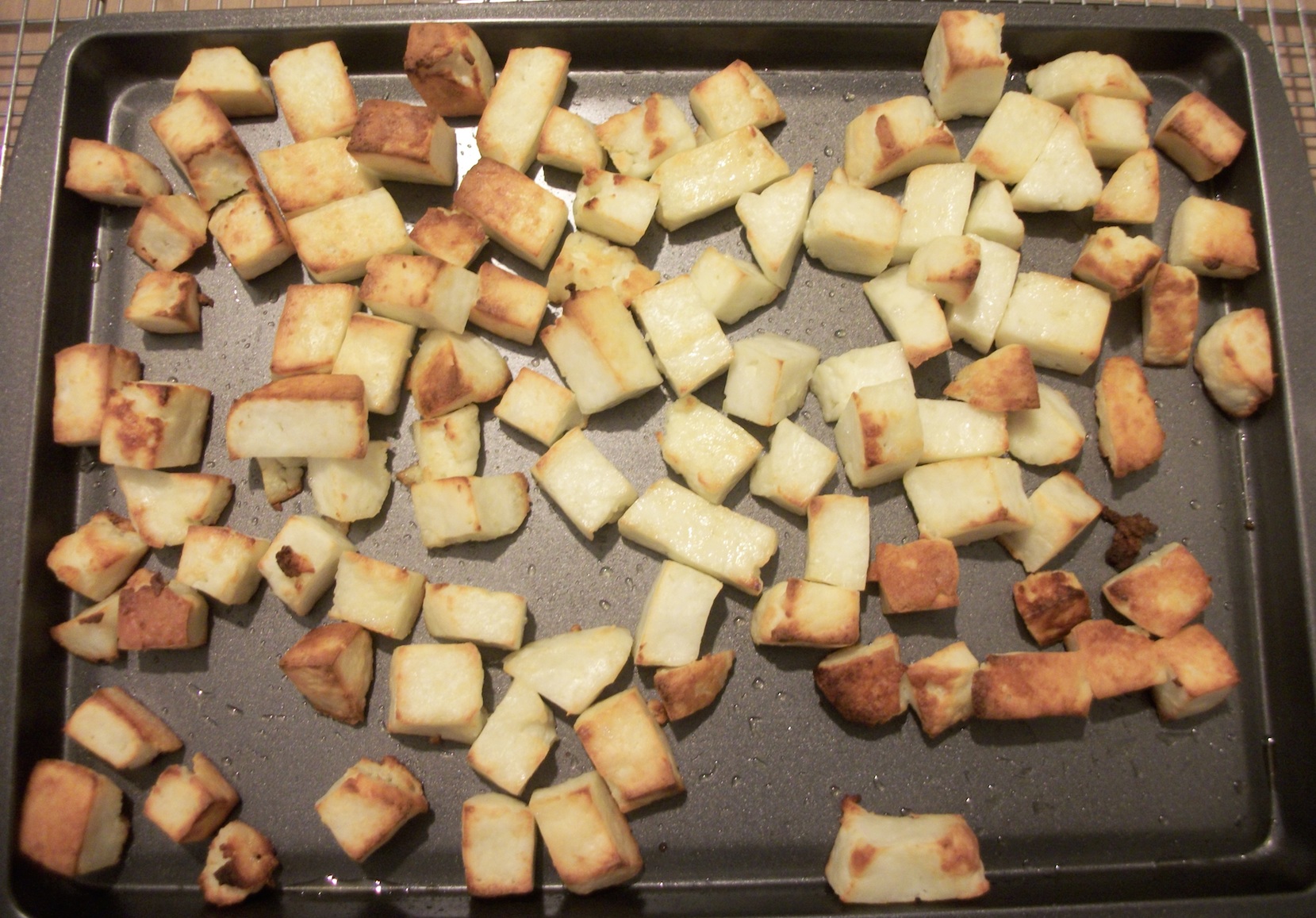 This is such an easy, wonderful cheese to make, that even without a ready supply of fresh goat milk, I’d keep making this cheese.
Paneer is used largely in Indian cooking, though I’ve been known to throw it into oriental stir fries where it takes the place of tofu. No matter where you use it, it gets lovely crispy edges when it fries, and it soaks up spicy flavours.
Paneer takes almost no time to make (in cheese terms, anyway), and requires no special equipment or cultures. As a friend of a friend once said, “Paneer is very dangerous.” Too easy to make and too good to resist! Give it a go!
1 gal whole milk
2 tsp citric acid, dissolved in ¾ c. hot water OR ½ c. fresh lemon juice
Heat the milk on high to a foaming boil, stirring constantly to avoid scorching. Turn the heat down to low and quickly add the citric acid solution, stirring very gently. The milk should curdle almost instantly. (If it doesn’t, add a little more acid). As soon as the milk has curdled, remove it from the heat, and let it sit, covered, for 10 minutes. Spoon the curd gently into a colander lined with cheesecloth (3 layers if you’re using “cheese cloth”, 1 layer if you’re using butter muslin (known here as baby muslin; you can also just use a clean handkerchief). Once the large chunks have been transferred to the colander, gently pour the rest of the liquid and curds into the colander. Pull up the corners of the cloth and twist gently. Hold the bundle under lukewarm running water for 10 seconds, then hang to drain for 3-4 hours. To speed up the draining, you can press the cheese under a light weight (put a small plate or saucer on top of the cheese to spread the weight evenly; I use a 2 litre bottle of water) for 1 ½ hours. Refrigerate until you’re ready to use it; use within 3 days.
*When it comes time to cook paneer, most recipes say to fry it. If you don’t use a non-stick pan, the paneer will stick and fall apart. If you do use a non-stick pan, the paneer will sputter and spit hot oil everywhere. I avoid both by baking it on a lightly oiled non-stick baking tray in a hot (230°C/450°F) oven until it is nicely browned.
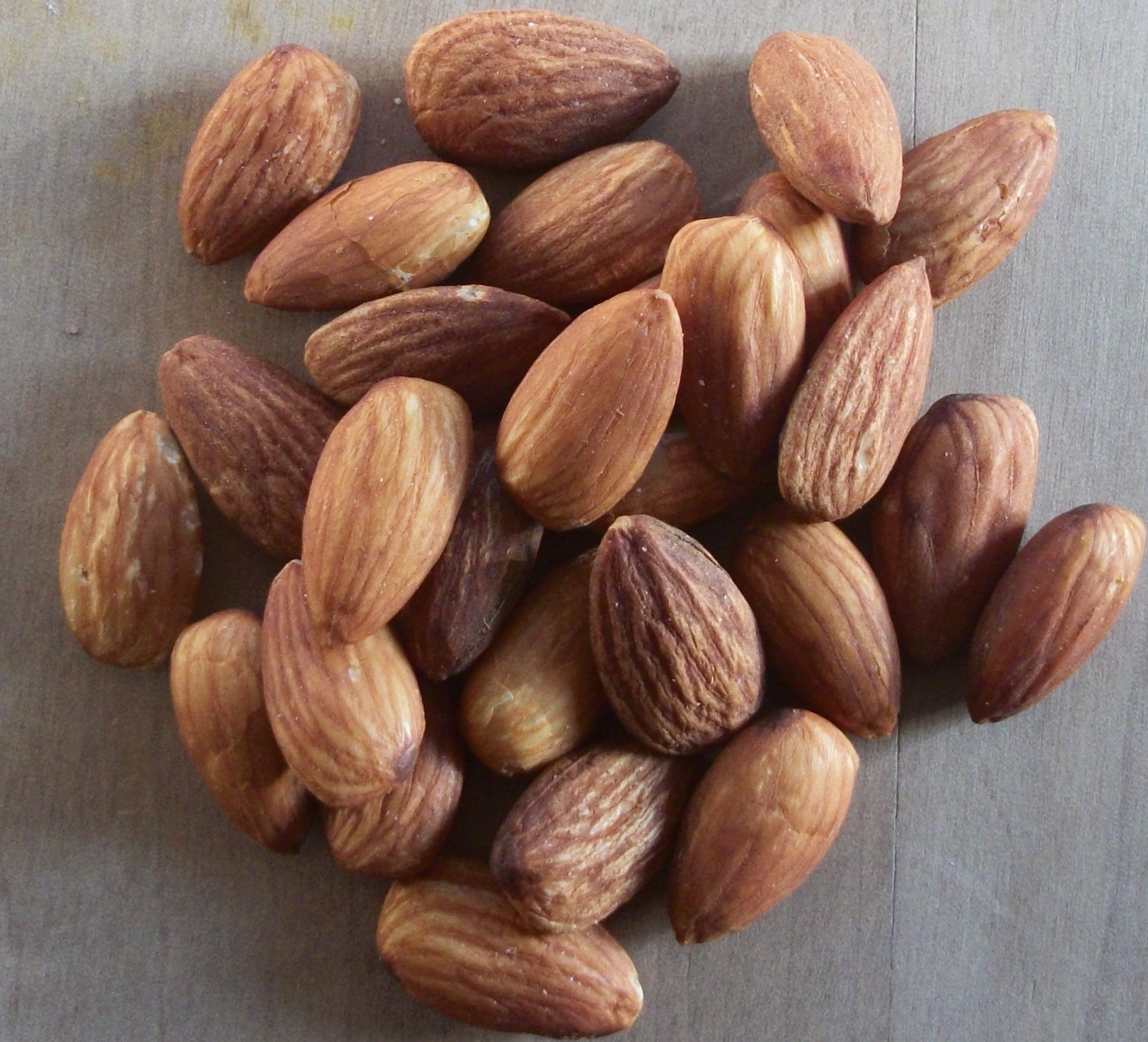 Well, there they go—the last of the almonds. The last I will buy for a long time.
I absolutely love almonds. They’re one of my favourite nuts. But I had already replaced most of the almonds we eat (which come from California, producer of 80% of the world’s almonds) with locally grown walnuts, in my effort to eat closer to home. Now, however, they’ll be a very rare treat.
In my post last week about our relationship with bees, I talked about how North American bees are forced to forage in agricultural monocultures, leading to poor nutrition and exposure to pesticides. The largest of those monocultures is in California’s almond growing region, where the bees are “parked” every year during almond flowering in order to pollinate the trees.
Add to that the gallon of scarce California water that goes into producing each almond, and I find I can’t keep buying them. At least not the ones at the grocery store.
BUT, in deciding that, I’ve discovered that there are NZ almond growers as close to us as Marlborough, and that, with a little coddling, we might even be able to grow them ourselves!
So, with that, I have cheerfully sworn off California almonds. I’ll be checking out my local nurseries for almond trees, and tracking down those locally produced nuts!
 It’s the winter school holidays and it’s been raining for days, so my daughter and I decided we needed a project. After paging through some craft books and trolling the internet for a bit, we decided to make coasters.
With some old map books, a few scraps of linoleum tiles and felt, we turned out these cool coasters.
We cut the linoleum tiles into 3 ½ inch squares, then looked for the best bits of map to cover them with. We chose map locations that were either meaningful to us, or that were just neat looking. We cut out 4 ½ inch squares from our maps, and used glue and/or double sided tape to stick them onto the linoleum squares, wrapping the edges to the back. Then we glued a square of felt onto the back, and protected the maps with two coats of varnish.
Simple and fun! A great way to spend time with my daughter!
 (Transcript of an actual conversation between me and my daughter)
“You could blog about eyeballs!”
“Umm…the blog is supposed to relate to food.”
“You could blog about vampires, and how they eat eyeballs!”
“But vampires suck blood; they don’t eat eyeballs.”
“Yes they do. They suck the blood, then eat the eyeballs!”
“No, vampires have piercing-sucking mouthparts. They can’t eat eyeballs…Unless, of course, they liquefy them first.”
“Oh.”
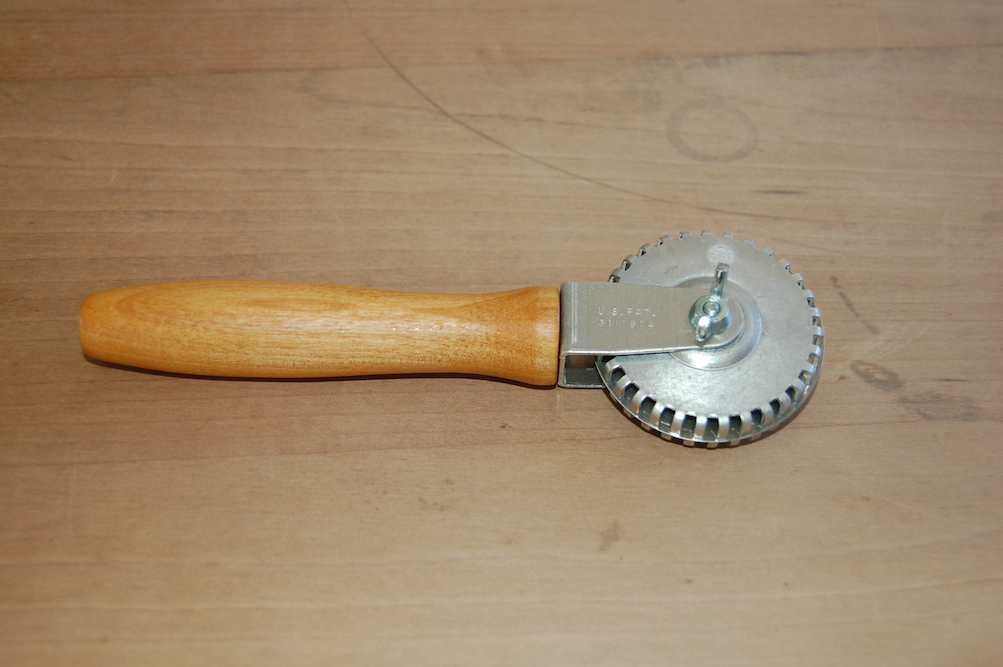
Ravioli slicer/sealer
With a scratchy throat and the sniffles, I was thinking about easy dinners for this evening. I baked up some pumpkins mid-afternoon, and asked the kids what they thought I should do with them for dinner.
“Pumpkin ravioli!” was the enthusiastic response. I had to admit, it sounded like a great idea, in spite of my lingering cold.
“If you’ll help, I’ll make ravioli.”
And so my daughter and I made ravioli together. Pumpkin ravioli has traditionally been one of those once-a-year meals that I swear I’ll never make again every time. The ravioli takes forever to make, then explodes when it is boiled. I’ve used a ravioli maker with little wells in it, I’ve cut my ravioli with a biscuit cutter and sealed it with my fingers, I’ve cut it with a knife and sealed it with a fork. Doesn’t matter, it takes forever to make and falls apart in the water.
This time, I used a ravioli cutter/sealer my in-laws gave us for Christmas. Used like a pizza cutter, it rolls along, sealing the edges and cutting the ravioli apart in one quick motion. I was dubious, and I explained to my daughter that “this probably won’t work, and we might end up having to just make pasta noodles and use our filling as a sauce.”
Much to my surprise and delight, the little cutter did a brilliant job! I’ve never had ravioli go so quickly (even in spite of the fact the power went out half way through dinner preparation)—we rolled out big sheets of dough, dolloped them with filling, topped them with a second sheet, and ran the cutter along the edges. Slick as…
And the taste? We topped it with a sauce of butter, garlic, rosemary, sage, and dried tomatoes. Fresh Parmesan cheese grated onto it at the table, and it was absolutely divine!
Unfortunately, with the power out, I got no photographs of the finished ravioli, but we had a delightful candlelight dinner—quite appropriate for glorious homemade pasta.
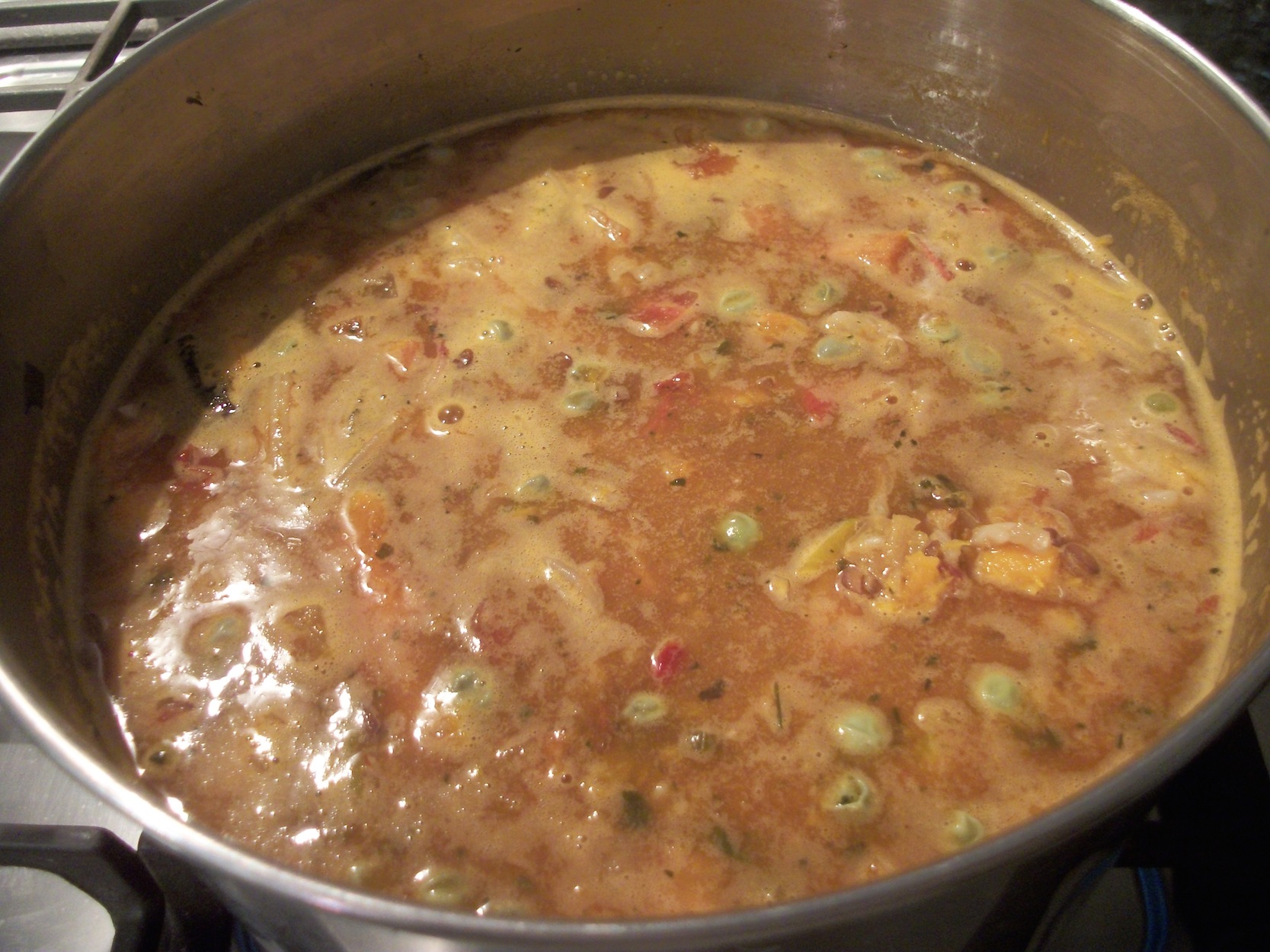
There could be anything in here…
It always happens. At some point in winter, we start to see the end of the vegetables. Winter’s vegetables lose their fight against the cold and rain. The remaining potatoes are small and beginning to sprout, the pumpkins are nearly gone, as are the onions. The garlic is sprouting. The frozen and canned vegetables are harder to find, requiring rummaging around in the freezer or cupboard. There are still vegetables to eat, but we can start to see the bottom of the barrel.
At that point, leftovers from dinner stop going to the chickens. We keep an ice cream tub in the fridge, and leftovers go there instead. When the ice cream tub is full, we have enough for leftover soup.
Leftover soup is always a surprise. Indian food mixes with Italian food. Tomato sauce might mix with a Béchamel. Doesn’t matter what it is, it goes in. Add a little water, maybe make some savoury muffins to have with it, and ‘voila’! A dinner that doesn’t deplete the remaining stores from summer. And, usually, it’s not half bad, either! It usually takes us a week to build up enough leftovers for soup, and we’ll often time a leftover soup night for Friday. An easy dinner, then a family movie is a great way to kick off the weekend!
 We marked another milestone in the food year yesterday—we ate the last of the goat cheese. We managed to finish off the Parmesan and Bishop’s Corner* on the same day.
It’s true, you only know what you’ve got when it’s gone. The goat cheese is that way for me. During the height of milking season, when rounds of cheese crowd out other food from the refrigerator, I can forget what a gourmet delight it is. I can forget that our ‘everyday’ cheese would cost us about $100/kg if we had to buy it. But when I’m staring at the last tiny sliver of perfection, knowing that my next bite of cheese is going to have to be run-of-the-mill commercial cow cheese, I recognise the value of what we produce.
So we savoured our last bites, and look forward to spring, when the milk will again be flowing, and the rounds of cheese will start stacking up.
*Bishop’s Corner is a cheese of my own creation—a happy mistake that turned out better than what I meant to make. I make that mistake over and over again now, and have named the cheese after a local crossroads.
Painted Mountain,
Long White Wonder,
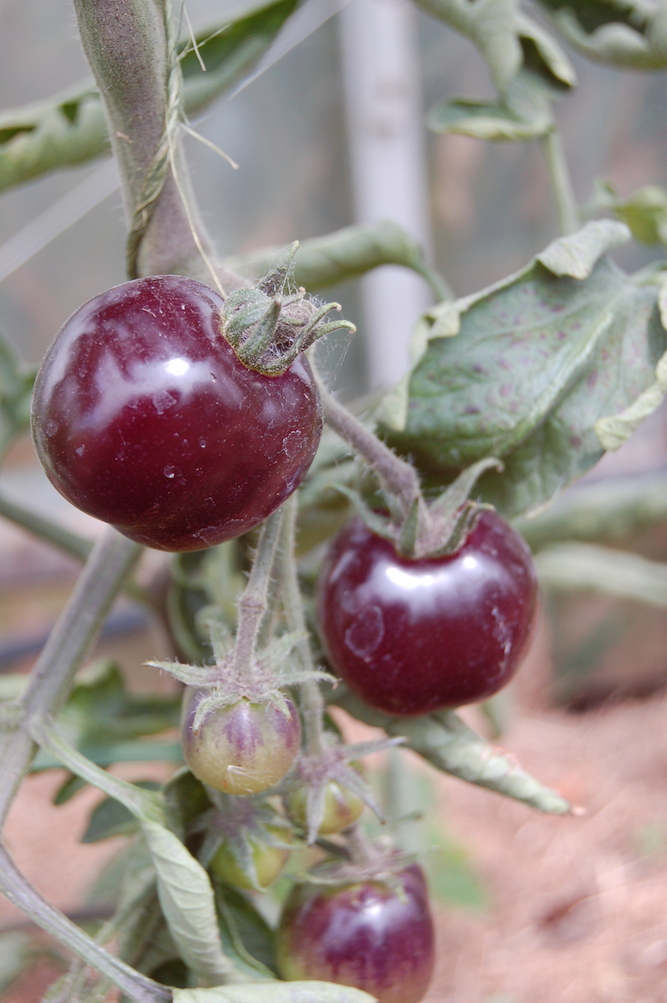
Indigo Rose
Full Moon,
Flying Saucers,
Pink Banana Jumbo,
Bloody Butcher,
Collective Farm Woman,
Drunken Woman Fringed Head,
King of the Blues,
Peppermint Stick.
I love the poetry of vegetable names! I’ll be planting many of these vegetables this spring. Can you identify what each is?
 Robinne Weiss