Losing Soil, Making Soil

img_3148This time of year is always dusty. The soil is dry. The air is dry. Farmers harvest the summer crops and turn the soil to plant the winter’s grass. It’s not unusual for a wind to kick up, sending newly-turned soil into the air.

I don’t know how much soil farmers in Canterbury lose this way (they’re also getting soil from the farms upwind and loess blown off the mountains), but I do know that where my back yard meets the neighbour’s field, my property is significantly higher. At least some of that soil is being lost.

Interestingly, there seems to be a place on the neighbours’ farms where soil is being made.

A hundred and fifty years ago, farmers in Canterbury were planting gorse hedges for shelter and fencing. Many of those gorse hedges remain (indeed, they’re hard to get rid of). The original plants are almost certainly long gone, as gorse is a short-lived shrub, but new plants are continuously growing from seeds cast by the mature plants.

It’s quite possible that my neighbour’s gorse hedges have been here since Joseph Price took up the original 5000-acre run number 79 in 1853.

Gorse is dense when pruned into a hedge. New outer growth shades out growth in the middle of the hedge. Thorns and branches fall and form a dense, prickly mass at the base of the plant. Over time, this detritus breaks down and forms soil.

Quite a lot of soil, by the looks of it.

Some gorse hedges were planted on ridges–ditch and dyke, it was called–the farmer dug a ditch to help drain the land, and planted a hedge on the resulting pile of soil scooped out of the ditch. Some hedges were just planted on the level ground. This is how the hedges along my lunchtime walk were planted, but today it looks like they were sown on a tall, narrow wall of soil.

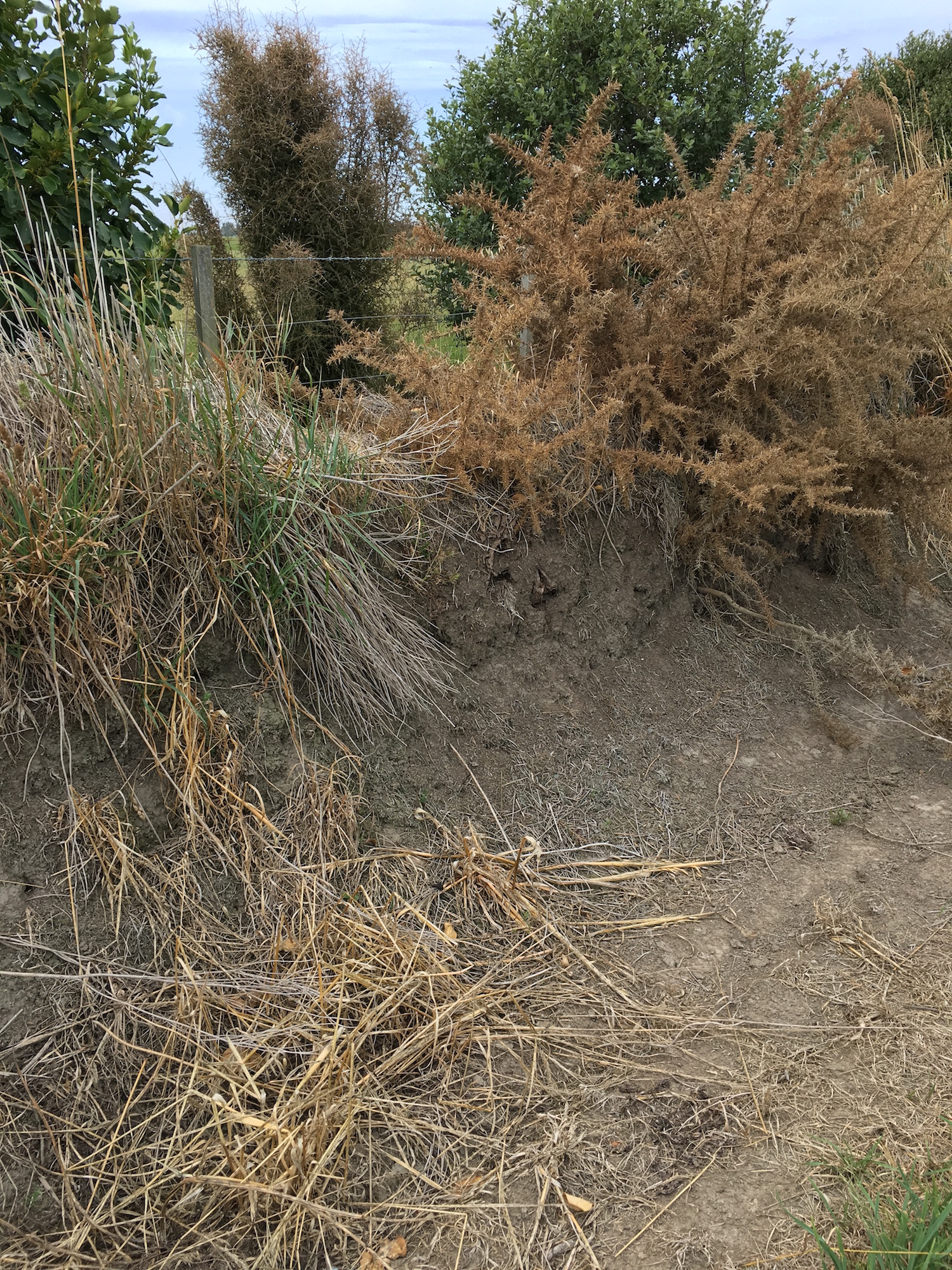
The build-up of soil under the gorse hedges is impressive. In some places, it is as high as my waist. It is most visible where the gorse has been herbicided off to make way for native hedging plants. There you can see how the twisted trunks and branches have caught the detritus and held it in place, even after it has rotted.

How important are these ridges of new soil in a landscape that is losing soil? Probably not terribly important–they cover just a tiny fraction of the landscape–but I find them intriguing, nonetheless. Our agricultural landscapes–as modified, controlled and cultivated as they are–still hold interesting stories.

Technological Stress Relief

Our smoke-red sky

Our smoke-red sky

It’s been a tense day here. For those who don’t pay attention to the New Zealand news (I don’t blame you–one of the top stories today was that a police officer in Queenstown pulled a plastic cup off of a hedgehog who was stuck in it), there have been two bush fires burning in the Port Hills, just outside of Christchurch for the past two days. We’ve been able to see the flames from our house 30 km away–they’re serious fires. Yesterday I worked at a library not far from where the fires were burning, and watched as helicopters with monsoon buckets circled.

Today the wind shifted and is pushing the fire toward the city. As evacuation orders started coming in, my kids were somewhere on a bus, caught up in a snarl of traffic. People fleeing the flames, people trying to get back to their homes from work, people coming to see the spectacle of the hills above town on fire–it was pretty chaotic.

I was safely at home, watching the smoke plume burgeon, listening to the radio. It all felt so familiar–a natural disaster, and I was in one place, and the people I love were in another. We’ve been here before.

The difference was that this time, all four of us own cell phones. Last time, we didn’t know the status of our loved ones until we actually saw them. This time, I knew pretty well where everyone was all afternoon.

It didn’t stop me from worrying–my kids were still too close to the fire and too far from me for comfort–but it prevented me from envisioning the worst.

I admit, there are times when I want to say to at least one of my children (or to myself), “Put down the phone!” But the trade-off of being able to communicate with them on days like today is worth it.

I’ve been accused of being a Luddite, and the accusation has some merit–I don’t like technology for technology’s sake. New technology tends to stress me out. But I certainly appreciated it today–it relieved a great deal of stress.

Mysteries of the Pond

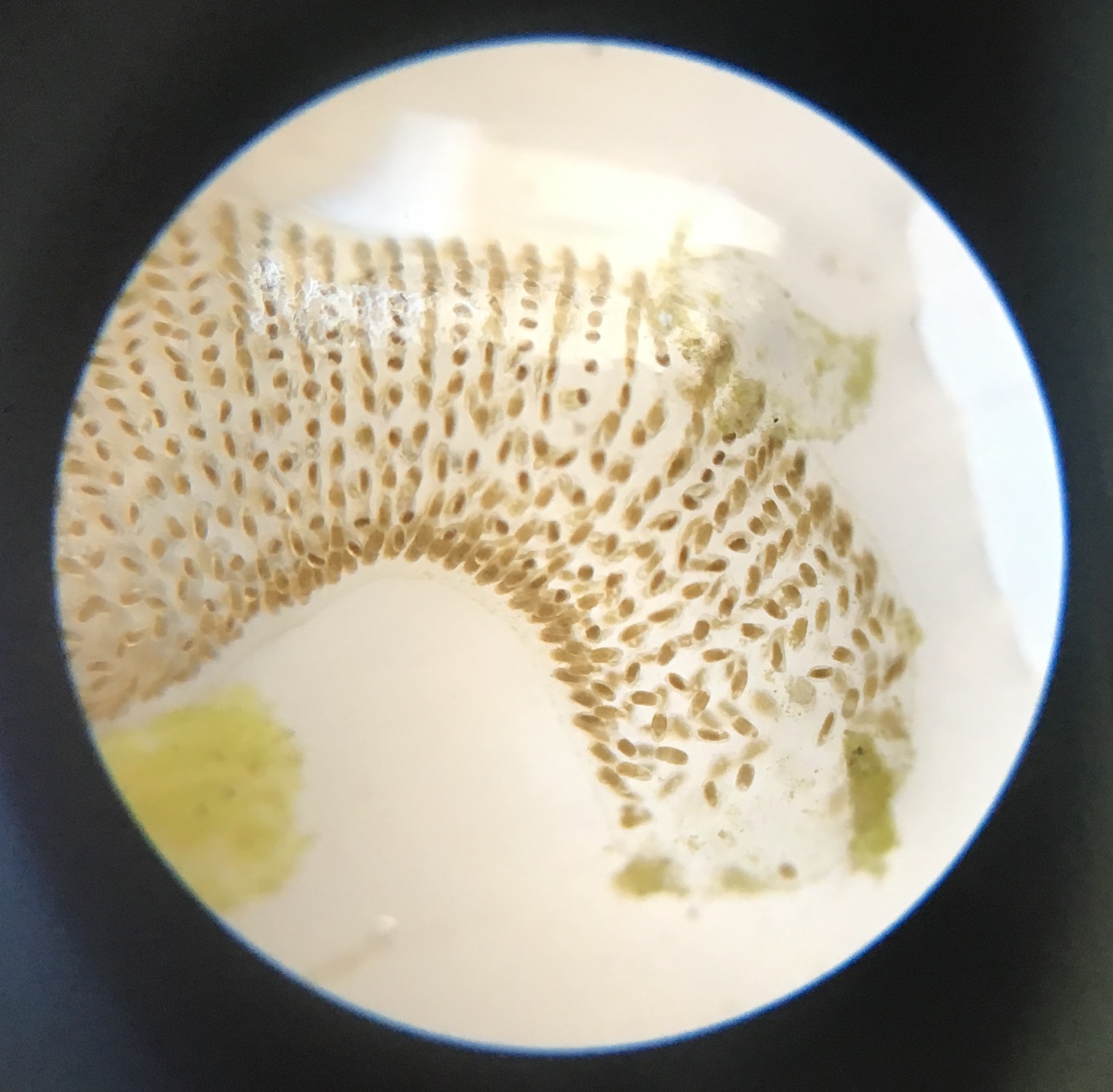
2017-02-11-15-04-42My daughter was hanging out at our little pond the other day and found the egg mass of some aquatic creature. At first I assumed it was a mass of snail eggs, because it had that look. But when we put it under the microscope, the eggs were arranged in perfect rings around the mass. I spent most of my childhood raising aquatic snails in little fishbowls on my windowsill (sorry, Mom!) and never saw an egg mass so orderly.

What could it be?

Neither of us had any idea.

But we have fish tanks…

The egg mass is currently in a small tank, and we’re checking daily. One of these days our mystery will be solved.

Bittersweet Sweet Corn

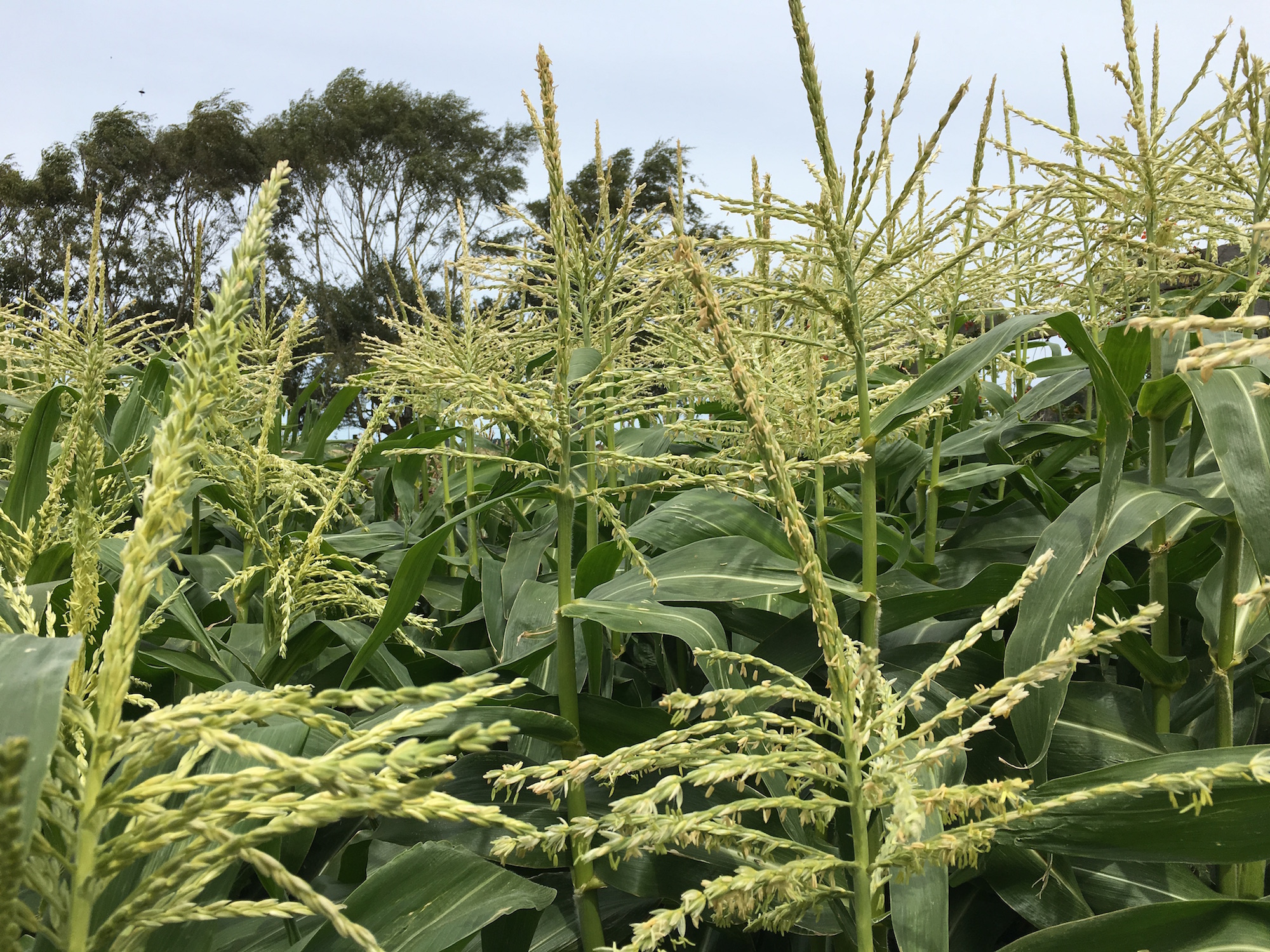
2017-01-24-15-16-41-smYou wait for it all summer. You watch it grow taller and taller. You marvel when it overtops your head. You cheer when it starts to flower, and you impatiently poke the ears as they grow and fatten.

Then one day–finally–the first ears of sweet corn are ready to pick. Always eaten as corn-on-the-cob, the first ears are celebrated and savoured. They cry out Summer!

They are the beginning of the end, of course.

Once the sweet corn is coming on, the green beans will start to slow down. The peas, already on their last hurrah, will give up. February’s heat and dry will begin to take its toll on all the plants.

There is still plenty of time to enjoy summer’s bounty–the deluge of vegetables won’t be over until mid-April. There is still ketchup to make, and summer soup to bottle. And lots and lots of corn-on-the-cob to eat.

But once the corn is ripe, the clock is ticking. From here on out, the garden will look a little worse each day. I’ll start pulling plants out, clearing beds, harvesting storage crops.

And in a shady corner of the yard are two trays of seedlings, sheltering from the heat and harsh sun. Waiting for the end of the sweet corn. Winter crops.

Because every season’s end is another’s beginning.

Summer Farewell

2017-01-29-06-18-08-smSunrise over
Quiet water.
Waves roll in.

— • —

Anemones and
Starfish rule.
Snail goes slow.

— • —

Cliffs enclose
Sandy bays in
Rocky embrace.

— • —

Footprints
Tell
Stories.

— • —

Paddle slowly.
Quiet now.
Fish are sleeping.

— • —

Beach beckons
Sun is high
School threatens.

Thirsty Bees

img_3051When my husband created a pond in the yard, I expected the damselflies, mayflies, midges, diving beetles, and other aquatic insects to show up. I even expected the heron who occasionally drops by to sample the goldfish.

I didn’t necessarily expect the honey bees.

I wasn’t surprised when they showed up, though. What surprised me was the sheer numbers that have shown up this summer. The edge of the pond has been humming for weeks as hundreds of bees jostle for space on the best perches.

Honey bees, like all animals, need water–at least a litre a day per hive. The bees don’t just drink the water; they also use it to dissolve honey that has crystallised, dilute honey for larval food, and to cool the hive on hot days.

When scout bees find a good water source, they mark it with pheromones that tell the other bees it’s a good spot. I reckon by now, the edge of our pond is sticky with pheromones (or at least stinky with them), because there’s always a crowd there.

And after yesterday’s 31°C (88°F) temperatures and 130 kph (81 mph) wind, the pond was extra crowded today.

I’m happy to oblige the bees. I need them to pollinate my vegetables, and they’re not aggressive when they’re foraging away from the hive, in spite of the potentially frightening crowds. The arrangement is a win-win situation for all of us.

Nīkau Palm Gully

img_3044-smWe spent the weekend on the Banks Peninsula. Saturday we kayaked around Akaroa Harbour all day, and today we hiked out to Nīkau Palm Gully.

The track out to NÄ«kau Palm Gully is easy walking, as it follows a farm track. It’s pleasant, but not exactly wilderness. The views out over Akaroa Harbour, however, are spectacular. And at the end of the track is the steep drop down into NÄ«kau Palm Gully.

The gully is a tiny V of land, hemmed in by cliffs, and sporting one of the few remaining remnants of original Banks Peninsula forest.

Most notable among the trees are the palms which give the valley its name. The nÄ«kau palm is the southernmost palm in the world, and New Zealand’s only native palm. It is found in coastal lowland areas, and the Banks Peninsula is as far south as it ranges on this coast. There are nÄ«kau scattered around the Peninsula, but the population of them in NÄ«kau Palm Gully is impressive.

Nīkau palms are slow-growing. They begin as clusters of leaves growing on the forest floor. It may take forty to fifty years before they begin to form a trunk, and up to two hundred years to reach their maximum height of 10-15 metres. There are individuals of all sizes in Nīkau Palm Gully.

People have been visiting the gully for many years. One tree still bears the mark of a visitor who carved the year–1907–onto its trunk. A pair of amusing (to a reader over 100 years later) letters in the Akaroa Mail in 1909 indicate that the gully was, even then, considered a special place. In the first article, a member of the Beautifying Association writes a scathing indictment of the Akaroa Boating Club for having cut down several palms in the gully to use as decoration for an event. In a subsequent issue of the Akaroa Mail, a member of the Boating Club explains that they only removed a few leaves, not whole trees. The letter writer then goes on to accuse the Beautifying Association of removing entire plants (seedlings) from the gully for their gardens.

Thankfully, the landowners whose farm once encompassed the gully understood its significance, and gifted it to the Department of Conservation (in exchange for one 10-cent stamp presented to them on behalf of Her Majesty the Queen). It is now protected as a scenic reserve, and has been linked to other patches of native vegetation through a number of land covenants on adjacent properties.


Celebrate January

2017-01-24-15-13-32-smThe golden month is nearly over. January is the sweet spot of the year.

The Christmas frenzy is over. The kids are o vacation. much of the rest of the population goes on holiday too.

Even I get a break. By January, the plants in the garden are large enough to suppress weeds, so there’s little weeding to be done. Te early crops are winding down and the summer crops are ramping up. Full-scale bottling (canning) and dehydrating will come later. January is mostly a time to enjoy the garden’s summer bounty.

There is work to do, of course. Peas, pickling cucumbers, and green beans all peak in January, and they need to be processed. But they are relatively quick and easy crops to preserve.

Along with the garden respite usually comes sunny summer weather. We can go camping and backpacking, and take trips to the beach. January is a month of sand, sun and effortless meals.

February will come, with school, work, and a mountain of vegetables to process. The nationwide party mindset will end, and we’ll all settle in for another year at the grindstone.

But there’s still a week left. Enough time for a bit more fun…