New Arrivals

IMG_1139 cropThe Saturday Story will have to wait until Sunday this week, because there’s excitement in the paddock today.

I made the difficult decision a few weeks ago to sell my dairy goats and switch to angoras. The daily grind of milking, dealing with mastitis, kiddings, and all the other stress that goes along with breeding and milk production was getting really old. It was time for a new adventure.

So today, we drove to Rangiora and picked up three lovely wee boys (wethers) from Mohair Pacific. My elderly dairy goat, Artemis, will remain with us. The last of the other dairy goats is due to be picked up on Monday morning.

We’re still getting to know the new boys, and they’re still settling into the paddock. We’ve been tossing around names for them, with such notable trios as the three musketeers, the three stooges, and the three tenors being among them, but I think we’ll wait and learn a bit about their personalities before we stick names on them.

This will be a new adventure for me—learning to spin and dye yarn. I love mohair, though, and I’m looking forward to weaving and knitting with it.

Homeland

Lovely, but doesn't make me feel at home.

Lovely, but doesn’t make me feel at home.

When Europeans settled new lands, they had a habit of bringing all their favourite plants and animals with them. The result has been a plague of invasive exotic species all over the world. It’s easy to dismiss these settlers to as misguided imperialists, and I’ve done so myself.

But being a stranger in a strange land more than once in my life, I have to admit that I understand the desire to bring a little of the homeland to a new land.

Autumn is when I feel it most.

Most native New Zealand trees are evergreen. There are no native autumn colours, no piles of native leaves to be raked and jumped in. No smell of wet leaves carpeting the ground on crisp autumn mornings.

Last year my daughter and I found a lovely little path along a stream on one of our city walks. Dropping down to the stream edge from the street, I was first struck by the fact that all the trees were non-native oaks and maples. Then I was struck by the smell, and the rustle of fallen leaves on the path, and the glow of yellow that suffused everything. The familiarity of that little stretch of path lifted a weight I didn’t know I carried—the weight of being away from home. For the three minutes it took us to stroll through that little patch of Northern Hemisphere trees, I was in my element. The illusion came to an end all too quickly as we stepped back out onto the street.

So, while I still advocate native plantings, and whittle away at the non-natives on our own property as our young native trees grow, I don’t pass judgement on those early Europeans. They carried a weight in their hearts greater than mine—once they were here, there was no going back for most of them. Never to return to their homeland, they needed to bring a piece of it here. I can sympathise.

Any day now…

DSC_0060smOkay, it’s allowed to rain now.

Any day would be fine.

Just a little?

And maybe something a bit cooler than t-shirt and shorts weather to go with it?

Please?

Six years ago, the beginning of May looked like the picture above—we called it the black days of May. That was a bit too much rain, but normally we’ve had some good rain by the beginning of May.

Not so, this year. This year, it’ll be the brown days of May. We had plans to do a lot of landscaping this fall, but the soil is still bone dry—new plants wouldn’t stand a chance, even if we could water them. Almost every bit of promised rain has failed to materialise. The little that has fallen has evaporated within a day under summer-like heat.

2016-05-03 10.26.14It feels like summer will never end.

I’m still watering the garden, though the summer crops have mostly given up out of drought and exhaustion. The winter crops are likely to bolt in this weather, even with watering.

And who knows how long I’ll be able to water. It hardly rained last winter, and last summer was particularly dry, too. Canterbury water is over-allocated. The water table is dropping, and some people have already had to deepen their wells. How long before we run out?

Water is still being managed for short-term profit here—to ensure maximum output of dairy and crops. Environmental concerns and future supply are given lip service. That will come back to bite us. Climate change models predict less rain for Canterbury. If we keep on like this, at some point, we will run out.

Do we have the will to change before that happens? Experience in other parts of the world says no.

I do my best to conserve water here—using greywater to water plants, watering sparingly, mulching heavily, planting shrubs that can handle the dry—but I’m a tiny player, surrounded by farms hundreds of times the size of my property. The water I conserve is just a drop in the bucket.

A drop in the bucket would be nice about now. But the meteorologists are predicting no rain at all for the month of May in Canterbury.


Mosquitoes, Disease, and Environmental Change

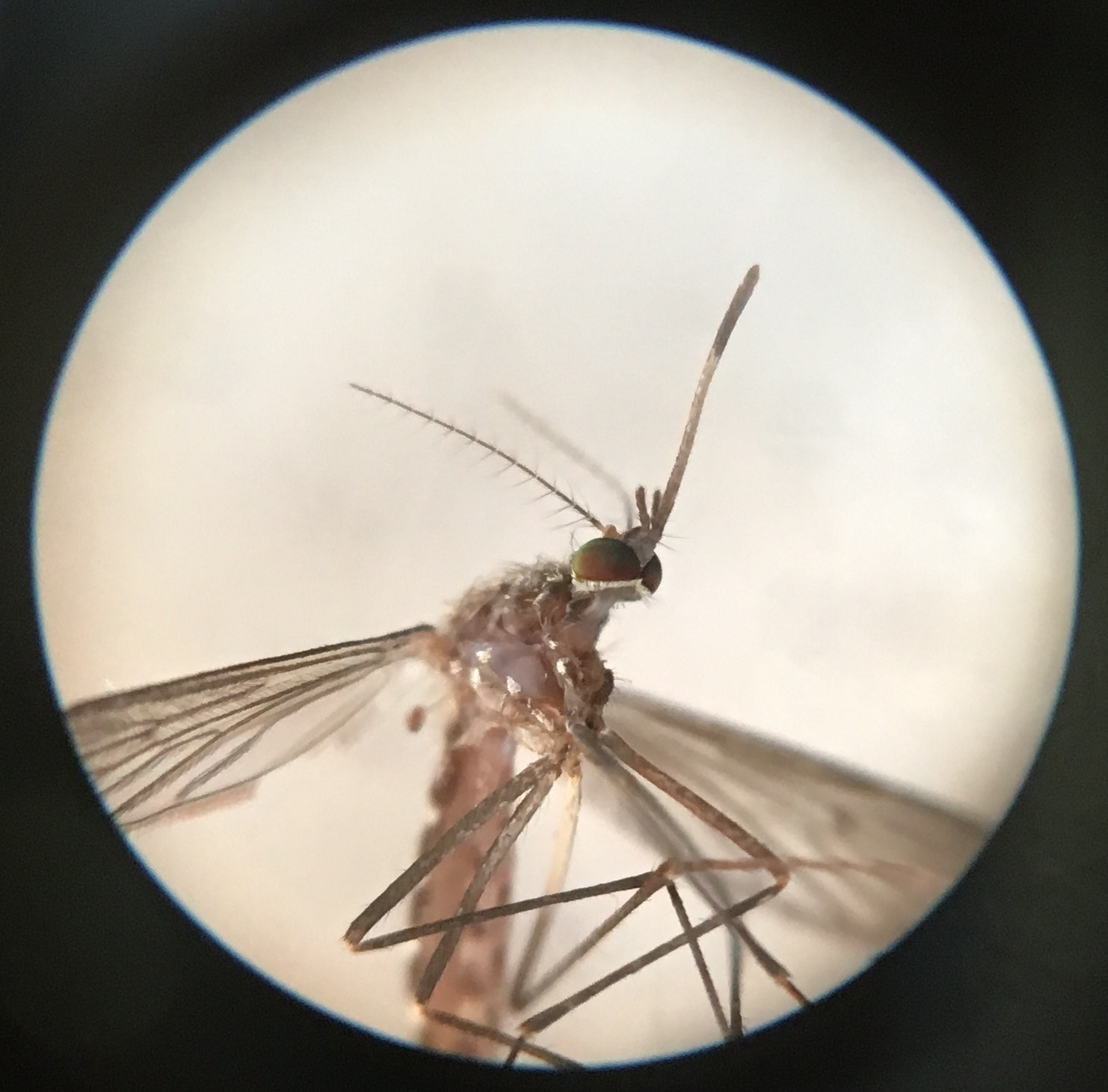
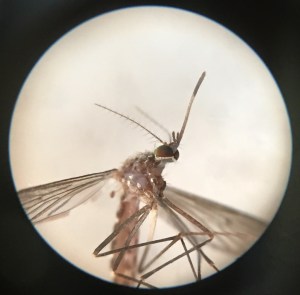
2016-05-02 07.38.34With Te Waihora/Lake Ellesmere just a few kilometres away, we’ve always had mosquitoes at our house. But since we installed a small pond, the mosquito population of our property has gone up (in spite of the fish, which do eat a lot of them).

Though mosquito identification is not my forte, most of the mosquitoes appear to be Culex pervigilans, the common house mosquito, or vigilant mosquito. Like most of our mosquitoes, this species is endemic to New Zealand.

Because of the isolated nature of New Zealand, few of the world’s nasty mosquito-borne diseases have ever arrived here, and no human diseases have managed to arrive and spread. But that doesn’t mean they couldn’t, if given the opportunity.

Whataroa virus is an Australian bird virus, which may also produce flu-like symptoms in people. In New Zealand, it has been found only in the area around the small West Coast community of Whataroa. It was first detected in 1962, and recent surveys show it has not increased in prevalence since then. In New Zealand, it is vectored by Culex pervigilans, which is common throughout the country.

So why hasn’t it spread?

Well, we don’t know for certain, but to get a clue, it’s worth looking at why other mosquito-borne viruses spread. Most emerging diseases come on the heels of environmental change—when the habitat changes, mosquito populations may increase (many mosquitoes do well in disturbed habitats), or the virus’ other hosts may increase or move around, spreading the virus. Environmental changes can be natural, like seasonal flooding; or human-induced, like cutting native forest (or digging a pond…).

Which brings us back to Whataroa, which hasn’t changed much at all over the past 50 years. There’s been no great increase in mosquito habitat, and little development that would favour the non-native blackbirds and thrushes that appear to be the reservoir for the virus. So the Whataroa virus has simply languished in place.

If the Whataroa virus had arrived at another location, it might have already spread far and wide (as avian malaria has done over the past 40 years). If a developer had come into Whataroa and built golf courses or fancy subdivisions, it might have spread. When the next big Alpine Fault quake happens, the resulting destruction will likely create new disturbed habitat for mosquitoes, blackbirds, and thrushes, and Whataroa virus might spread with them.

All sorts of variables determine whether and when a mosquito-borne disease becomes a problem. Some of these are known, and under our control, but many are either not understood or are out of our control. Sometimes, the only thing we can do is to react when trouble strikes.

Which is, of course, my excuse for swatting this mosquito when it landed on my arm this morning.

Rocket Spider

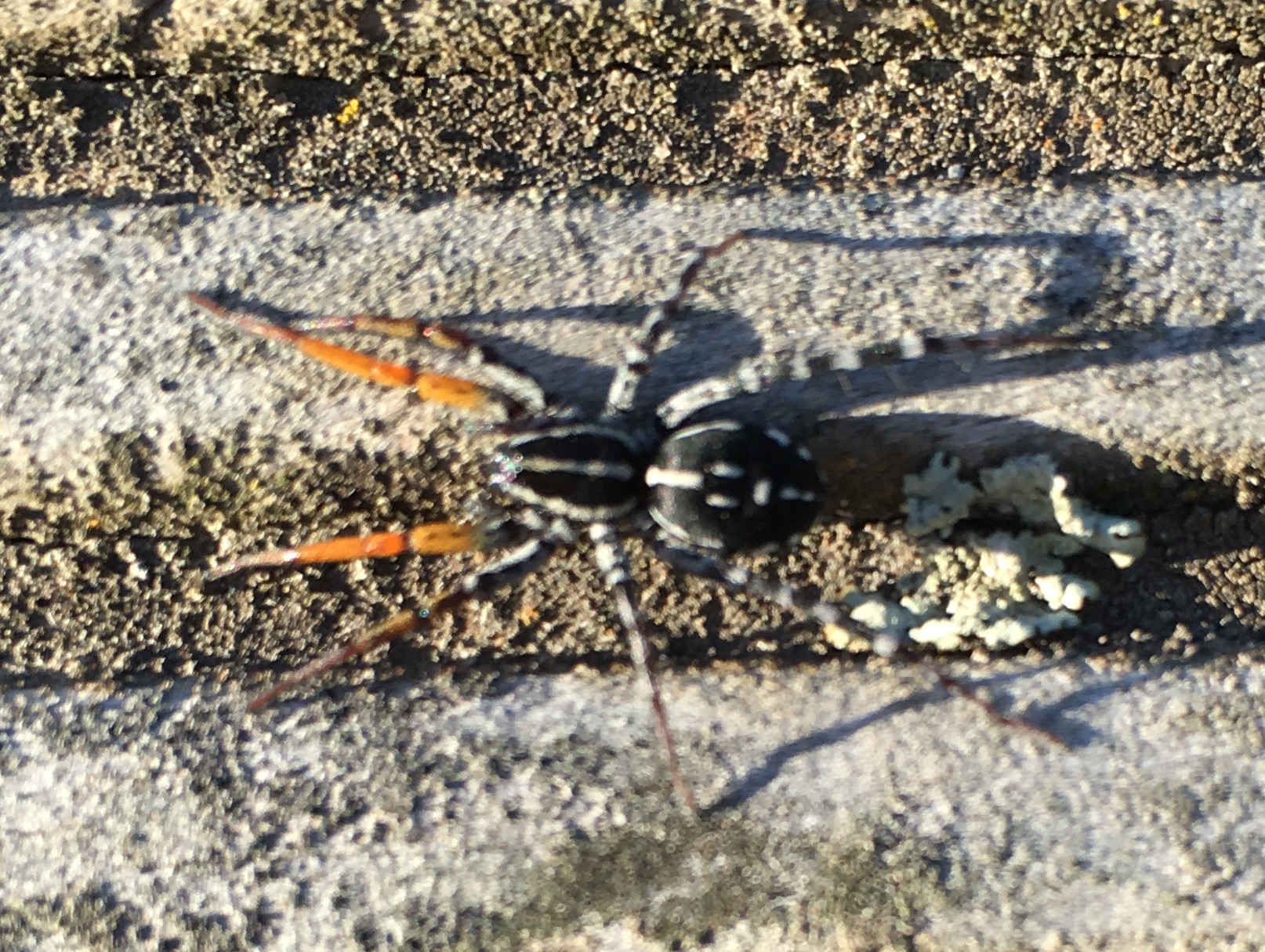
2016-05-01 15.49.10One of my favourite spiders here is an Australian invader. Officially known as the Australian ground spider Nyssus coloripes (formerly Supunna picta), but at Crazy Corner Farm, we invented a more colourful name, the rocket spider.

Rocket spiders have colourful orange front legs and white spots down their sides, making them stand out wherever they are.

They are in a group of spiders known as the fleet-footed spiders, and they are most definitely that. They are active daytime hunters, and race around as though they are rocket-propelled.

There is a female rocket spider who lives in my office. She’s been there for the better part of a year now, and zips over my bookshelves, desk, and walls as I work. She’s not shy—I sometimes have to shoo her off the keyboard, and once she skittered across my face.

I’m sure the rocket spider finds plenty of flies to eat in my office, but these spiders have unusual tastes. Though rocket spiders don’t build webs to catch food, I’ve seen them in the webs of Australian orb weavers—eating the orb weaver.

It’s a spider eat spider world, after all.

An Unusual Moth

2016-04-22 15.36.36One day last week I was folding the laundry, which had been hanging out on the line all day. As I shook a t-shirt to fold it, up flew a tiny moth. When it landed again, I noticed that it looked odd. It sat with wings wrapped around it, a bit like a grass moth. But it held its spiky back legs high in the air, unlike any moth I’d seen. I took a couple of photos, none of which came out great—the iPhone just wasn’t made for macrophotography.

Still, even with a grainy photo, I was able to identify the moth to the genus Stathmopoda.

That’s where it started to get weird.

Everyone knows that butterflies and moths start off their lives as caterpillars, and that caterpillars eat plants, right?

Not so, in the genus Stathmopoda. Instead of munching leaves, the caterpillars of Stathmopoda eat other insects.

Yes, they’re carnivorous caterpillars.

They prey primarily on scale insects, so some species are actually used as biological control agents to help control these pests.

They are not the only carnivorous caterpillars. Though carnivory is rare among butterflies and moths, it has evolved separately several times in at least eight different lineages. Most carnivorous caterpillars eat small, slow-moving or sedentary insects, as you might expect from an animal that is neither speedy nor particularly formidable itself. As far as we know, there is only one moth that is carnivorous as an adult—the ‘vampire moth,’ Calyptra eustrigata, which feeds on the blood of ungulates.

I’m quite happy that this little Stathmopoda is carnivorous. Our currants suffered a bad case of scale insects this summer, so I hope there are lots more Stathmopoda out there. Here’s wishing it great reproductive success in the garden!

Throwback Thursday: At the Centre of the Universe

d1scans001 copy“This bit needs to be yellow. It’s part of the United States.”

“No it’s not. It can’t be! There is the United States. This bit, way over here can’t be part of it.”

I was working with a group of students in Membrillo, Panama. We were painting a map of the world on the wall of the school, and we were arguing about Alaska.

We argued about more than one country placement, including Panama.

It wasn’t really a surprise that these children, most of whom had never gone further from home than they could walk in a few hours, didn’t know where on the planet they lived.

But talking to them, I realised they didn’t even know where in Panama they lived. Many of them had parents working in Panama City, and most of them would one day work there themselves, but they had no idea where the city was in relation to their own village.

So when we finished the world map, I spent a week enlarging a map of Panama to transfer to the other blank wall at the school. Before these kids were going to make sense of Panama’s place in the world, they needed to be able to see their place in Panama. We outlined the provinces, and labelled the cities and towns. When we finished, Membrillo was the largest name on the map—the centre of the universe, with their nation and their world arrayed around them.

Orange Pore Fungus—a storybook mushroom

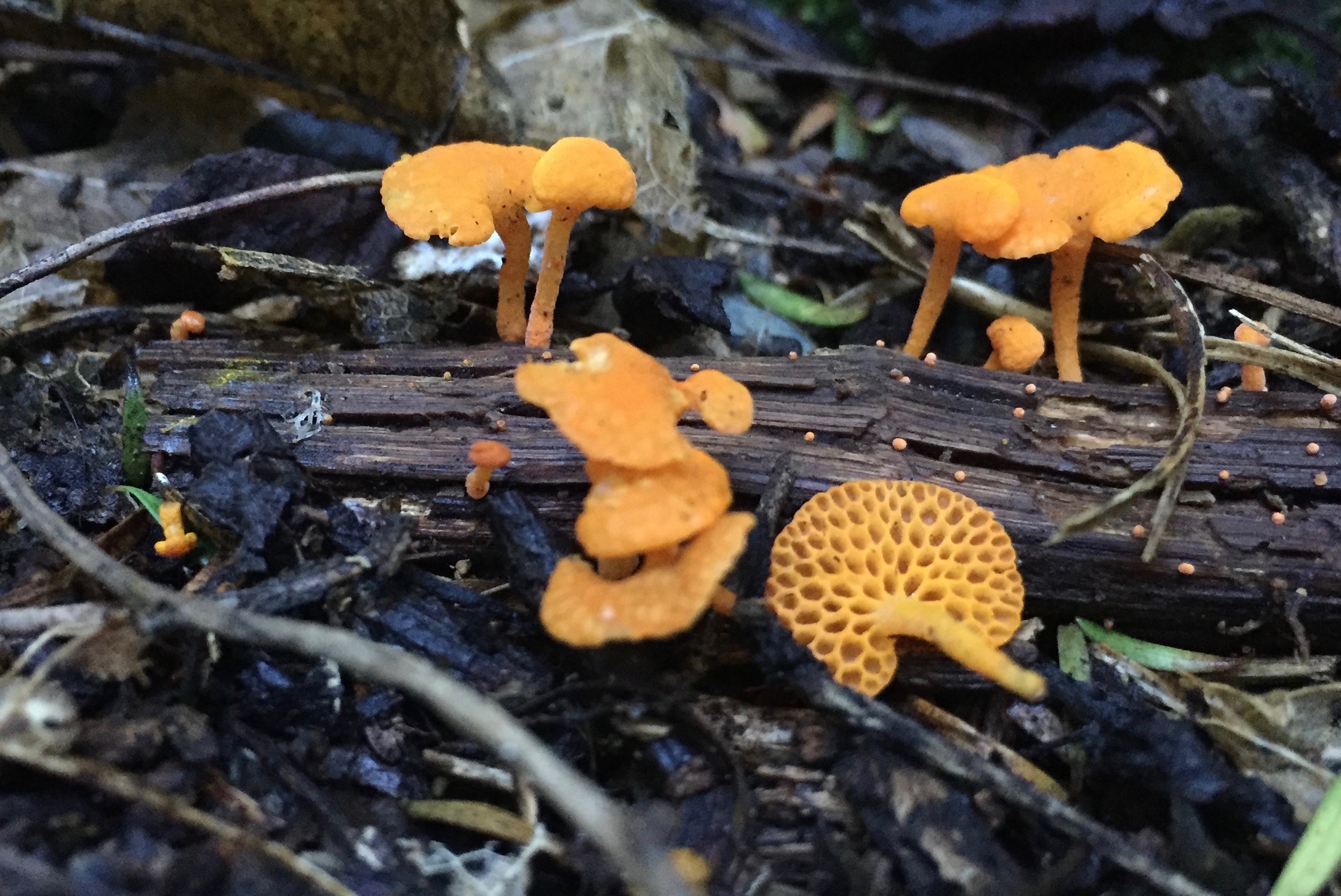
IMG_5266As my husband and I were hiking on Sunday, we came across a beautiful little fungus along the trail. Pebbly orange caps with a honeycomb underside. I was enchanted—they were storybook mushrooms that would have nestled neatly into any fairy tale.

But when my husband posted the sighting to NatureWatch NZ, the dirty truth came out.

These storybook fungi are Favolaschia calocera, the orange pore fungus, an invasive weed, and our sighting was the first in Hinewai Reserve.

The orange pore fungus is a curious organism. It appears to be native to Madagascar, though there is some speculation that it might also be native in parts of Asia.

It was first recorded in New Zealand in 1969, and has since spread throughout the North Island and much of the South Island. It has also recently been found in Australia, Thailand, China, Kenya, Reunion Island, and Norfolk Island. Its success probably shouldn’t be surprising—it’s a generalist, invading just about any dead wood available, unlike many other species that have specific tastes. It is also able to produce spores without mating, so it’s very quick to reproduce. It is so successful in New Zealand that mycologists are concerned that it could be displacing native fungi.

But it hasn’t stopped in New Zealand. In 1999, the orange pore fungus was first noted in Italy near the busy port of Genoa. Genetic studies of the Italian fungus indicate that it probably came from New Zealand on imported timber.

This storybook fungus is straight out of a fairy tale, all right—but the tale was written by the brothers Grimm.

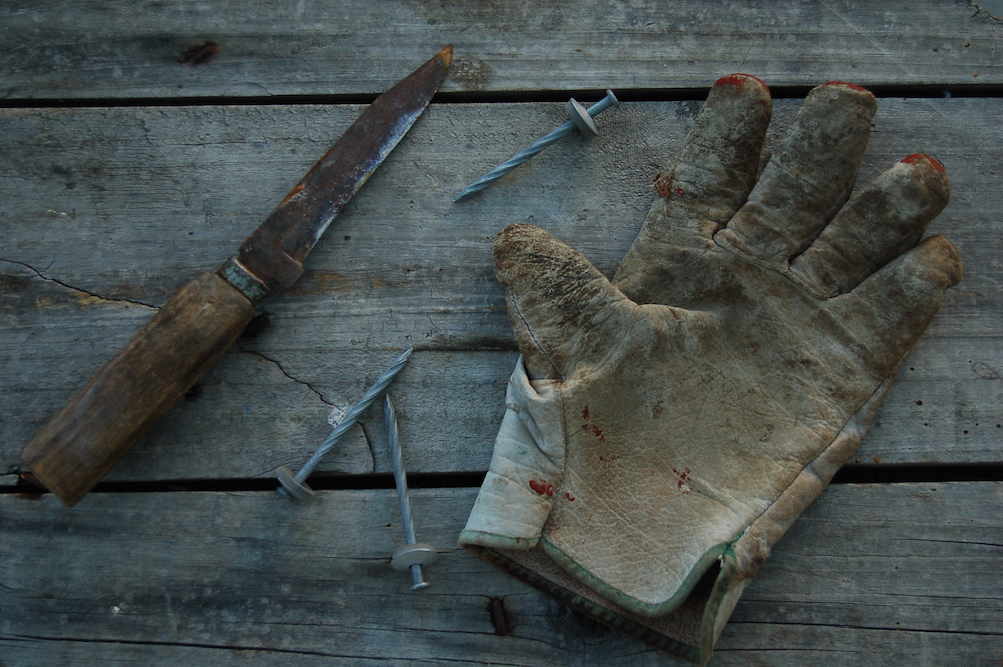
Still life with nails

still life with nails smWhen the work is done
The tools
Rest.

They do not worry
About the quality of the job,
Or whether there is enough paint
To finish it.

They are not concerned
About tomorrow’s to-do list.

Presumably
They do not ache the next day
From having used muscles
Heretofore unknown.

No.

They repose
With the relaxation of babes,
The languor of ladies
Who lunch.

A Rough Day at Work

We dropped the kids off for a week of YMCA camp this morning.

The best thing about taking the kids to camp is finding ourselves on the Banks Peninsula with no children and the whole day stretching before us.

Today, there was work to do—scoping out a field trip site for a workshop my husband is hosting in Akaroa next month. It was rough work. We were forced to drive out to Hinewai Reserve and hike through regenerating native bush to the beach.

I hate that sort of work.

Hinewai_LongBayIt’s especially bad when you are forced to have lunch on the beach, endure views like this, and see a 100 year-old nīkau palm tree at the limit of its ecological range.
And it’s even worse when after you’re done, you have to stop by Akaroa for a beer and chips outdoors along the waterfront.

NikauTerrible.

Good thing every work day isn’t like that. 😉