All Hail the Bucket

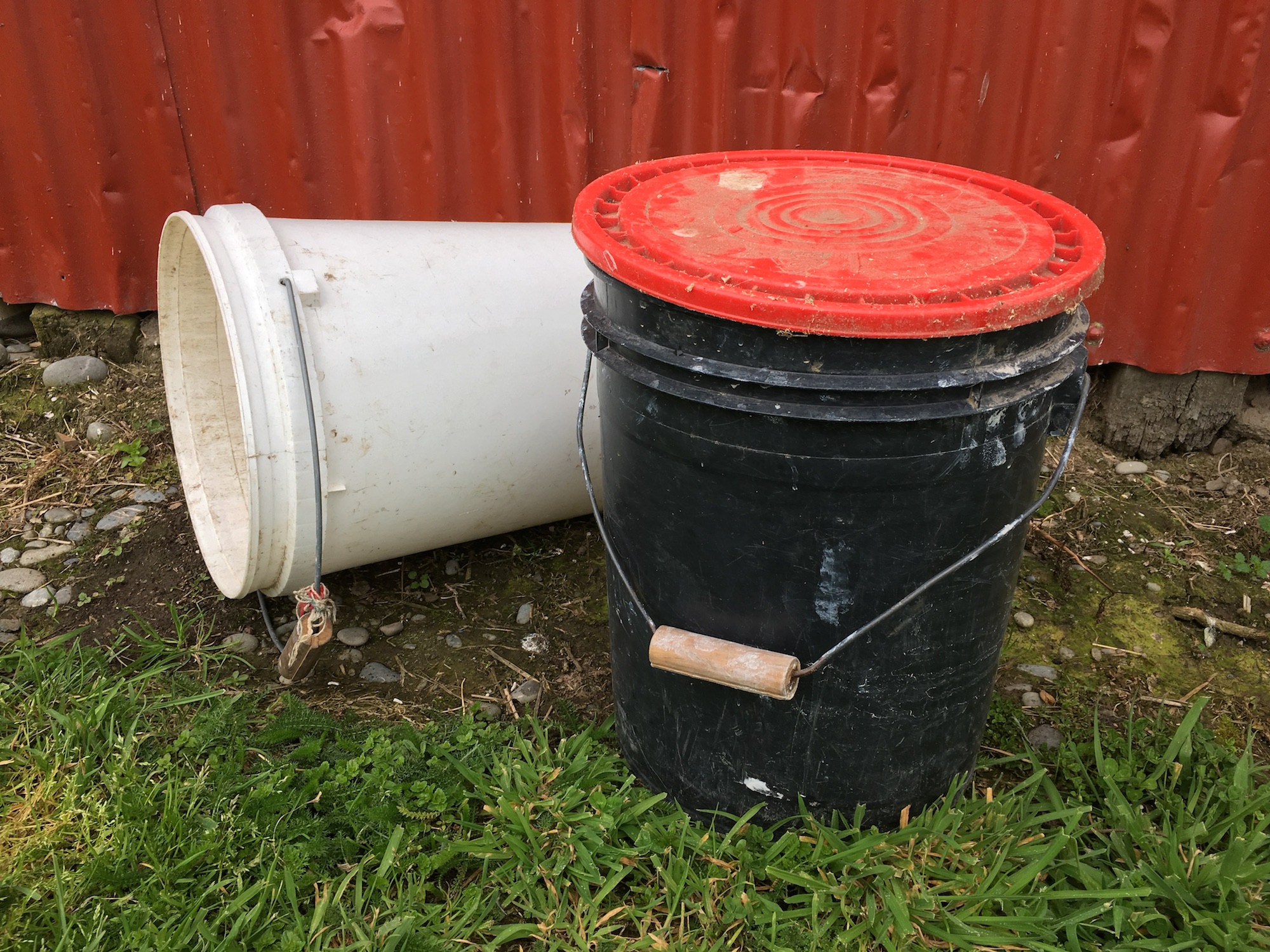
2016-10-14-10-44-19-hdrsmWhere would civilisation be without the 20-litre (5-gallon) bucket? We own seven of them, and it’s common for all of them to be in use simultaneously.

I can’t look at a 20-litre bucket without seeing a…

  • Washing machine—In Panama, we washed our clothes in a 20-litre bucket.
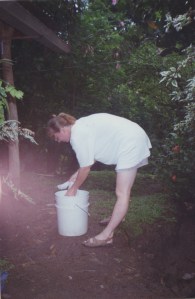
  • laundry-smShower—The bucket was also our shower in Panama. We would fill it with water and haul it out to our “shower” enclosure. Half a coconut shell made a scoop for pouring out the water for washing.
  • Brewery—Panamanians brewed and served the local corn alcohol in 20-litre buckets, and my husband brews beer in one.
  • Punch bowl—We used a bucket as a large punch bowl for parties in Panama.
  • Diaper pail—With tight-fitting lids, 20-litre buckets make great diaper pails for cloth nappies. They were an essential part of our baby gear when our kids were that age.
  • Watering can—Several of our current buckets have holes drilled in the bottom, and we use them to provide drip irrigation for the fruit trees.
  • Wheelbarrow—We use buckets to haul everything from rocks to weeds in spaces where the wheelbarrow can’t go.
  • Measuring cup—The 20-litre bucket is a handy unit of measure when mixing concrete.
  • Rubbish bin—A 20-litre bucket is the perfect size for a rubbish bin in the shop or shed, and it’s tough enough to handle the rough treatment a shop bin gets.
  • Grain bin—Tough plastic and a tight lid keep mice and rats out of the grain.
  • Stool—I regularly turn our buckets upside down to use as stools for reaching items on high shelves in the shed. I suppose you could also sit on them, if you were inclined to rest.

I could lose a lot of tools and get by easily without them, but I’d be hard-pressed to do without my buckets.

At the Penguin Spa

2016-10-11-14-40-35-cropIt was a week of endangered species for me. After being bitten by a kea on Monday, I was lucky enough on Tuesday to have a chance to see a Fiordland crested penguin / tawaki at Haast School, where I’d spent the morning teaching.

After lunch that day, a trio of Department of Conservation rangers arrived with a juvenile female tawaki that had been rescued off a nearby beach where she had been found emaciated. She was being nursed back to health in preparation for re-release, and the rangers took the opportunity to share her with the local school.

Tawaki are not quite as rare as kea, but they’re shy and tend not to frequent tourist areas like the kea do. This was the first one I had ever seen. There are about 2500 to 3000 breeding pairs remaining, and they’re one of only three penguin species that nest on mainland New Zealand.

Like many of our native birds, they are threatened by stoats, which eat eggs and chicks, and dogs, which can wipe out entire breeding colonies.

The children at Haast School named this particular penguin Ellen, and they had great fun watching Ellen take a warm saltwater bath. The water needed to be warm because Ellen wasn’t preening and waterproofing her feathers properly (because she was too weak to do so). Without waterproof feathers, she got waterlogged in the bath, rather than staying nice and dry as penguins usually do underwater. After her bath, the DOC ranger wrapped her in a fluffy pink towel to dry off, and put a hot water bottle underneath her.

A full spa experience, I would say.

It wasn’t quite the same as seeing a tawaki in the wild would have been, but it was closer than I’m ever likely to get to one of these birds in the wild.

Ellen will spend about four weeks eating and taking spa baths before she’s ready to fend for herself again. I wish her luck.

Time for Thyme

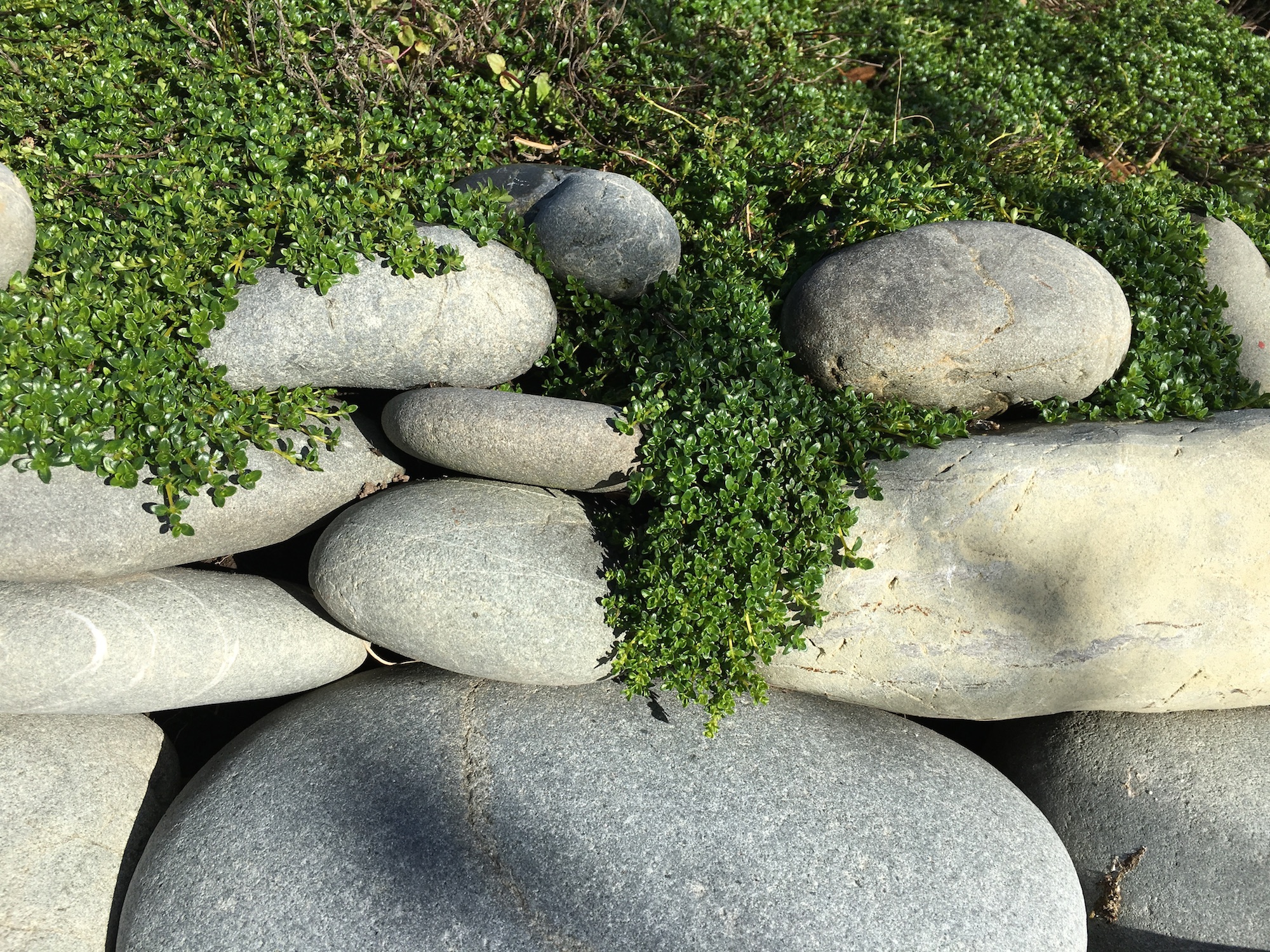
2016-10-10-09-15-06Thyme is one of my favourite herbs. In spring, its lush new growth encourages me to put it in almost everything. Nearly everything is better with thyme, but it is especially good with braised carrots, eggs, pumpkin, and mushrooms. Mixed with good olive oil, also makes an excellent marinade for bocconcini—little mozzarella balls.

It’s one of those herbs that we plant more of than we need for culinary use, because it’s so pretty in the garden. There are around 400 varieties of thyme. Some are more culinary, others are more ornamental. Some grow into 30 cm tall shrubs, others creep low to the ground.

Thyme is a tough little plant. It puts up with hot dry conditions, and recovers from even the most aggressive pruning. The low-growing varieties can even be used as a fragrant lawn (though at our house, there’s no stopping the couch grass coming up through it).

Its white, pink or purple flowers are attractive to a wide range of insects. On ours, we regularly have honey bees bumble bees, flower flies, and butterflies—and the preying mantids that eat them.

Truly, you can never have too much thyme.

Cheeky Parrots

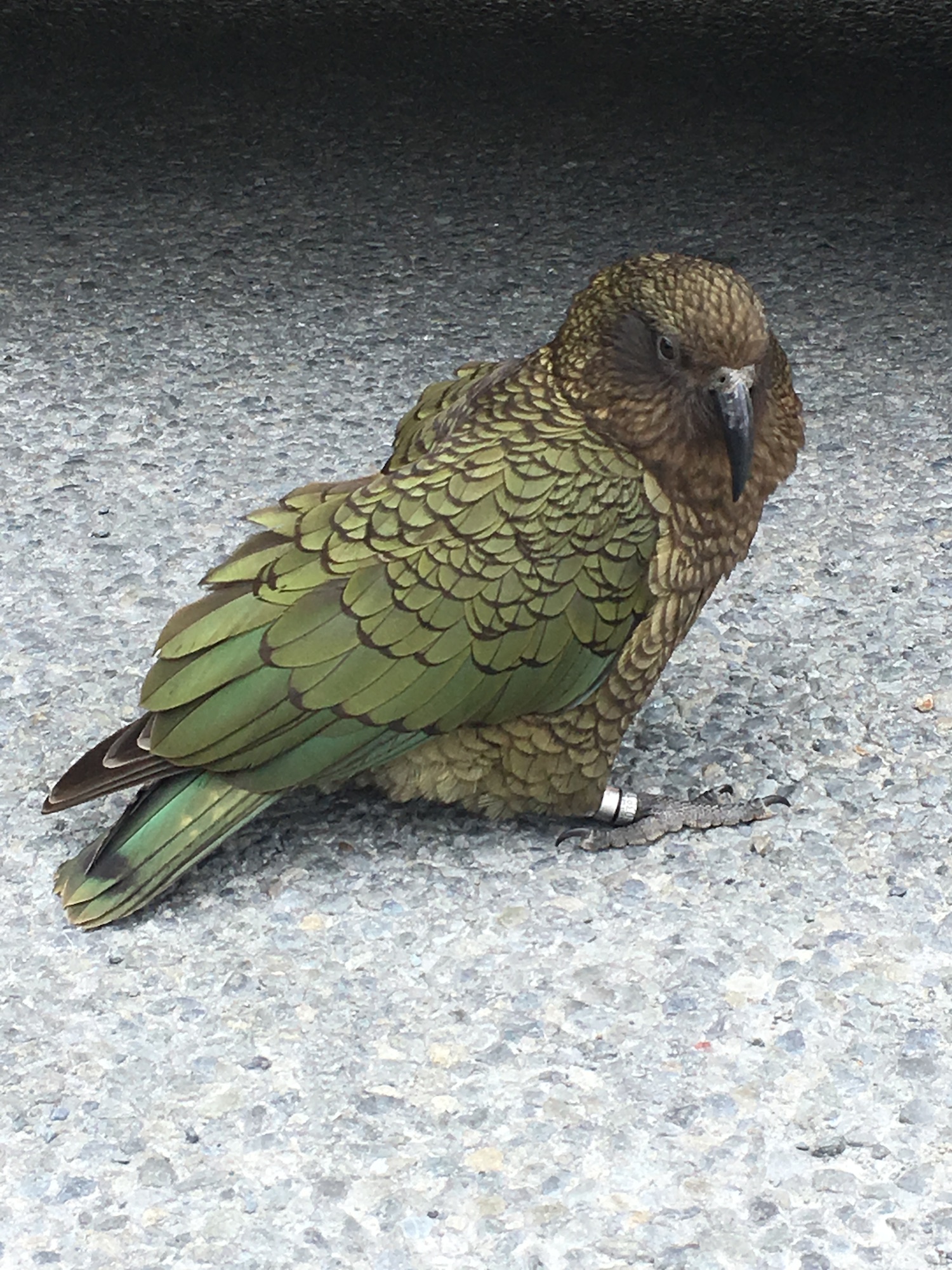
2016-10-10-13-11-37-smIt’s not every day you’re bitten on the bottom by an endangered species.

Yesterday was one of those auspicious days, however. I was travelling through Arthurs Pass, headed to Haast with two colleagues to do a programme at the school there. We stopped to pick up lunch at the Arthurs Pass store, and three kea descended on us.

For those who don’t know, kea are large alpine parrots. Though there are only 2,000 of them left, they are bold and curious animals, unafraid of people. And they’re smart. They understand tourists—how they get so absorbed in taking photos of the parrots that they forget to shut their car doors, or leave a sandwich lying beside them.

They work in gangs—one bird coming in close to pose for pictures, while the others circle in from behind to ransack the vehicle.

We knew this, and had taken appropriate precautions. There were three of us and three of them. We should have been safe.

But, of course, we wanted pictures—you simply can’t not take pictures of them, no matter how many times you’ve seen them. We all crouched down beside the van to snap our photos. That’s when it happened. I was focused on one kea, and another came up behind me and bit me on the bottom. Cheeky bastard!

But I got a photo.

Spring Roller Coaster

rollercoaster_expedition_geforce_holiday_park_germany

Photo: Boris23; Wikimedia, public domain

The kids are back at school today after two weeks of school holidays. It’s the last term of the school year, and the start of what I always think of as a roller coaster ride.

For the past two weeks we’ve been slowly climbing the first hill. I could hear the tik-tik-tik of the chain winching us up, to perch at the top of the slope. Today we begin the descent to the end of the year. It will start slowly—I’ll be lulled into thinking I have plenty of time to do the gardening, get all the nagging spring DIY done, think about Christmas gifts, plan summer’s vacations. But before I know it, we’ll be hurtling along toward the end of the year, much faster than I anticipated. The garden will take longer that I’d hoped. The end-of-the-year school activities will start piling up. I’ll put off worrying about Christmas gifts until I’m frantic about it. Three DIY projects will balloon into ten. Late frost will keep me scrambling to protect plants. Livestock will get sick and require extra care. School will end much sooner than I’d like it to.

Time will compress. A month will be over in a week. A week will last a day. A day will be over in a blink of the eye.

Before I know it, we’ll be heading into the week before Christmas, and my Spring to-do list will be every bit as long as it is today.

I’ve learned to accept this state. I’ve almost learned to enjoy the frenetic insanity of the combination of the end of the school year, holidays, and spring gardening all at once.

But every year I sit here at the top of the roller coaster wondering if I really should have gotten on in the first place.

Spindle vs Garden

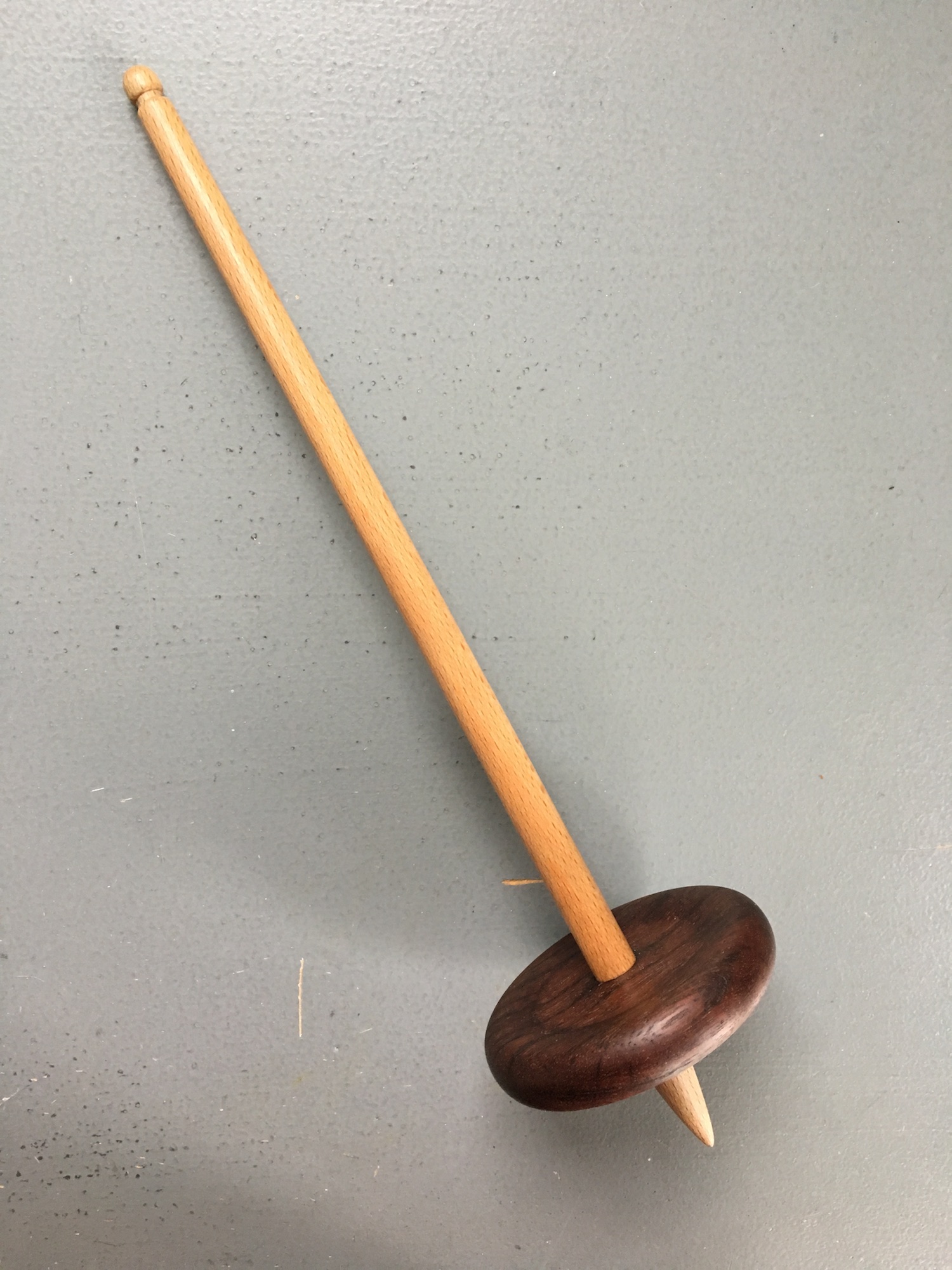
2016-10-09-11-01-27My husband presented me with this beautiful drop spindle that he turned for me this week. It’s practically a work of art—beautifully weighted and smooth as glass.

As if the pressure wasn’t already on.

At this time of year, crafts have to take a back seat to the garden, but with the goats newly shorn, I’m dying to actually work with the mohair sitting in my office. I picked up a pair of carders last week and have been slowly learning to use them. I have enough carded fibre to start spinning.

But the garden beckons—weeds grow rampant, seeds need to be planted, seedlings need potting up. And worse still, my hands are garden-rough; every time I touch the mohair, I end up with tufts of it stuck to the dry cracks in my hands.

So I may have to be content to just admire my new spindle for a while, until the spring garden rush is over.

Aesthetics vs Production

2016-10-08-16-01-56-smThere is tension in our garden—tension between the gardener who focuses on production and the gardener who focuses on aesthetics.

When the aesthetic gardener suggests a circular pattern to the vegetable garden, with a bench and sundial in the middle, the functional gardener rolls her eyes and asks how she’s going to manoeuvre a wheelbarrow around a bench and sundial. When the production gardener staples deer fencing onto her trellises instead of using the more attractive, but less functional jute, the aesthetic gardener shakes his head with dismay.

But production and aesthetics don’t have to clash. Indeed, they often go hand-in-hand. What makes for efficient production is often aesthetically pleasing.

Take the berry beds at Crazy Corner Farm, for instance. Three long rows with grass paths in between. Every spring, I spend days with a flat shovel re-establishing the edges of the beds—making them crisp and straight. It makes good sense from a production standpoint—it keeps the grass from creeping in to compete with the berries. It also makes it easier to mow if the grass doesn’t spread underneath the bushes.

Aesthetically, the crisp straight edges are perfect. They invite an evening stroll down the paths, and give a pleasing long view all the way from the front to the back of the property.

When the edges are tidy and the paths mown, both gardeners can relax and enjoy the view.

A Delightful Day Hike in Canterbury

Looking toward Akaroa from Stony Bay Peak.

Looking toward Akaroa from Stony Bay Peak.

With the kids on school holidays, we took the day to go hiking. My daughter chose our destination—the Skyline Circuit, which starts and ends in Akaroa.

It’s an 800m climb to Stony Bay Peak, and down again, and makes a nice day walk.

It’s a typical Banks Peninsula track, climbing mostly through paddocks to a rocky gorse-covered peak. Not exactly a wilderness experience, but varied enough to be interesting, and there are some lovely pockets of native vegetation along the way.

You wouldn’t want to do this walk if the tops were shrouded in cloud—it’s the view from the top that makes the steep climb worthwhile. This morning was clear, and we could see all around the Banks Peninsula and across the plains to the Southern Alps.

Much of the downhill is on Stony Bay Road. I’m not generally fond of hiking roads, but Stony Bay Road isn’t much more than a nice wide gravel path that snakes down through a picturesque patchwork of bush and paddocks.

We ate lunch at the top, and were ready for an afternoon snack by the time we made it back to Akaroa. And, of course, that’s where the beauty of the walk becomes particularly clear—you can end it with a beer and chips at a café in Akaroa (we were even treated to live piano music on the waterfront today).

The clouds rolled in as we left Akaroa, and it was raining by the time we got home, but it was the perfect spring hike.

The Spotted Owl

2016-10-05-16-43-05Back in the late 1980s, during the time when I was going to university, there was a great deal of controversy around the Northern Spotted Owl. Conservationists were trying to use the bird as a tool to limit logging of old growth forest in the Pacific Northwest by encouraging its listing as an endangered species (it was listed as threatened in 1990). It was a hot topic in conservation at the time.

Home for Christmas one year around that time, I was presented with a gift specifically from my grandfather.

That was odd. It was the women of the family—grandma and mom—who shopped for gifts. What could Grandpa have for me?

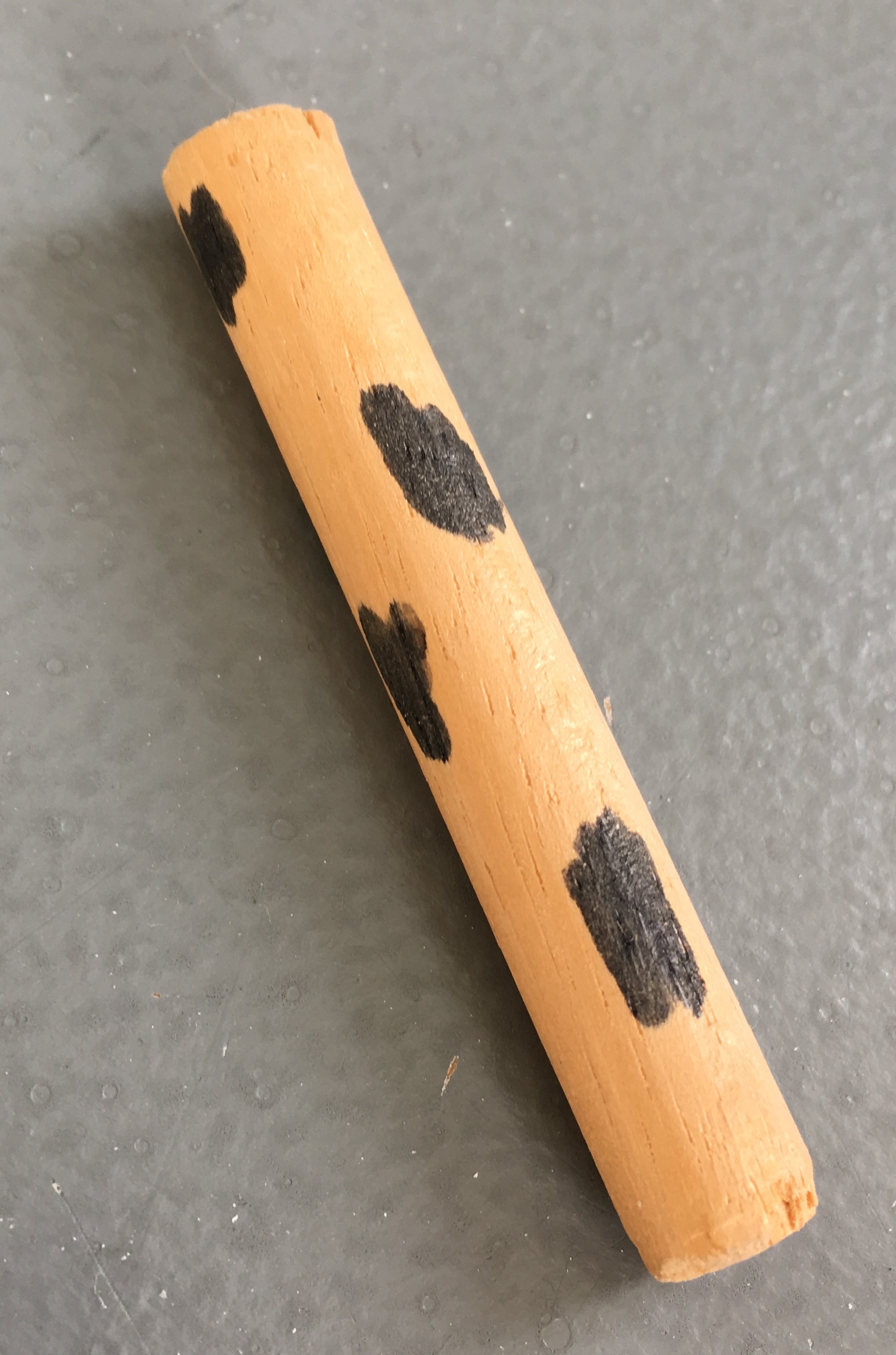
It was a small box. Inside, nestled in tissue paper was a small piece of wooden dowel with crude blotches drawn on it with a marker.

He watched me unwrap it, clearly struggling to hide a smile.

I pulled it out of the box and turned it around in my fingers. I was obviously supposed to figure out what it was. I wracked my brains. What was this spotted stick supposed to be?

It never occurred to me that it was a joke. I finally had to ask.

“It’s a spotted dowel!” Grandpa said, breaking into a grin.

I have no idea what other gifts I got that Christmas. No doubt, whatever they were, they’re long gone from my life.

But the spotted dowel has it’s own special place—its own little drawer in a small-parts organiser that holds all my buttons and beads and other odds and ends. I often run across it accidentally while looking for something else, and it still makes me smile.

A Concrete Solution

2016-10-04-12-35-55Whenever we mix concrete, we’re always left with a little extra. What do you do with half a bucket of concrete?

In the past we’ve made the odd decorative paver with the leftovers—scattered a few pretty shells in the bottom of a plant pot saucer and filled the saucer with concrete. But we don’t have many saucers, and they really don’t use much concrete.

Last time we poured concrete, however, we came up with a perfect use for the extra—garden weights.

It’s windy here. Very windy. I was forever grabbing rocks, firewood, and broken bricks to weigh down tarps, frost cloth, bird netting, and everything else light enough to blow away. But they’re inconvenient—awkward to handle and often not really heavy enough to do the job.

These garden weights are perfect, though.

I filled cheap plastic flower pots (from plants we bought at the garden centre) with concrete, but before it hardened, I added a handle made of high tensile fencing wire. The first batch I made, I just used the wire. They’re nice, and very useful, but the wire is tough on the hands when you’re carrying them. This time I added a short piece of irrigation pipe to the wire to make a comfortable handle (you could also use a bit of old garden hose).

The best thing about them is they’re entirely made of ‘waste’—leftover concrete, plant pots that would have ended up in the rubbish, wire salvaged from some other project, and used irrigation pipe.

No, that’s not true. The best thing about them is that they work great—they’re nice and heavy, uniform in size, and easy to lug around.