You say Iris, I say Orris

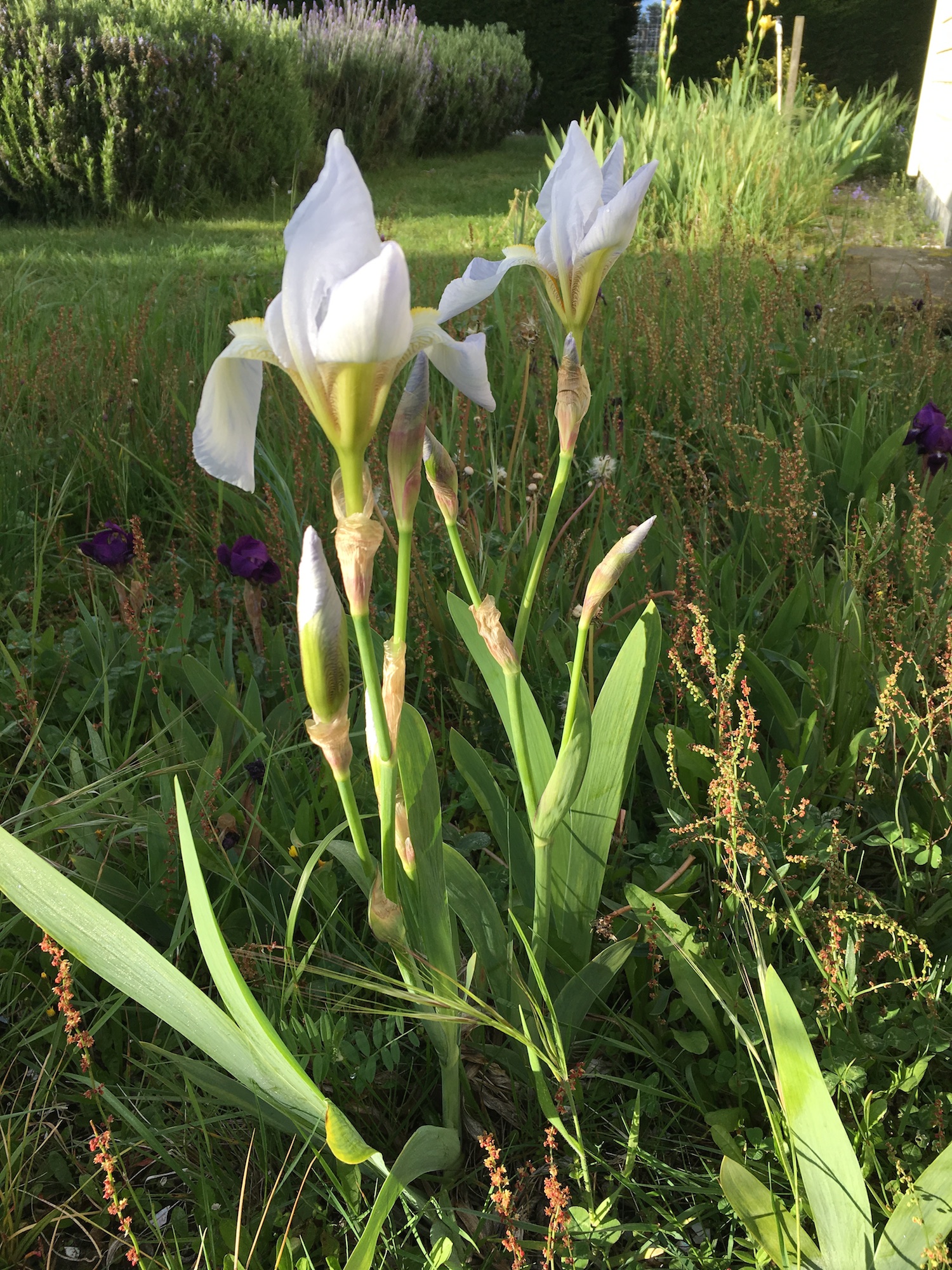
2016-10-28-07-33-39-smWhen we first planted our herb garden, nearly ten years ago, we planted a ‘knot’ of rosemary and lavender. In all the spaces inside the knot, we planted other herbs—a wide range of thymes, oregano, salad burnet, chives, etc. This iris was one of them (though we’ve since rescued it from being smothered in the knot). It is not a herb we ever intended to use—we just thought it was interesting. It is Iris pallida—the iris that is the source of orris root.

Orris root used to be used medicinally, but today its main attraction is its smell. It is used in perfume and potpourri, and in a Moroccan spice mix called Ras el harout.

I love the word orris, because it’s so clearly a case of dialect confusion. Say ‘iris’ with your teeth clenched, and you’ll get ‘orris’.

I can just imagine how it happened…the doctor calls on a patient in a remote village. He examines the man, and asks the family, “What have you done for him so far?”

“We’ve given ‘im a bit of iris root.”

“What? Orris root?”

“Yep, iris.”

“What is orris? I’ve never heard of it.”

“It’s this plant, blue flower, grows down by the creek. I’m sure ye’ve seen it before.”

“Hm.” The doctor scribbles orris root into his notebook, and forever after iris root is known as orris root.

 

Midnight Flowers

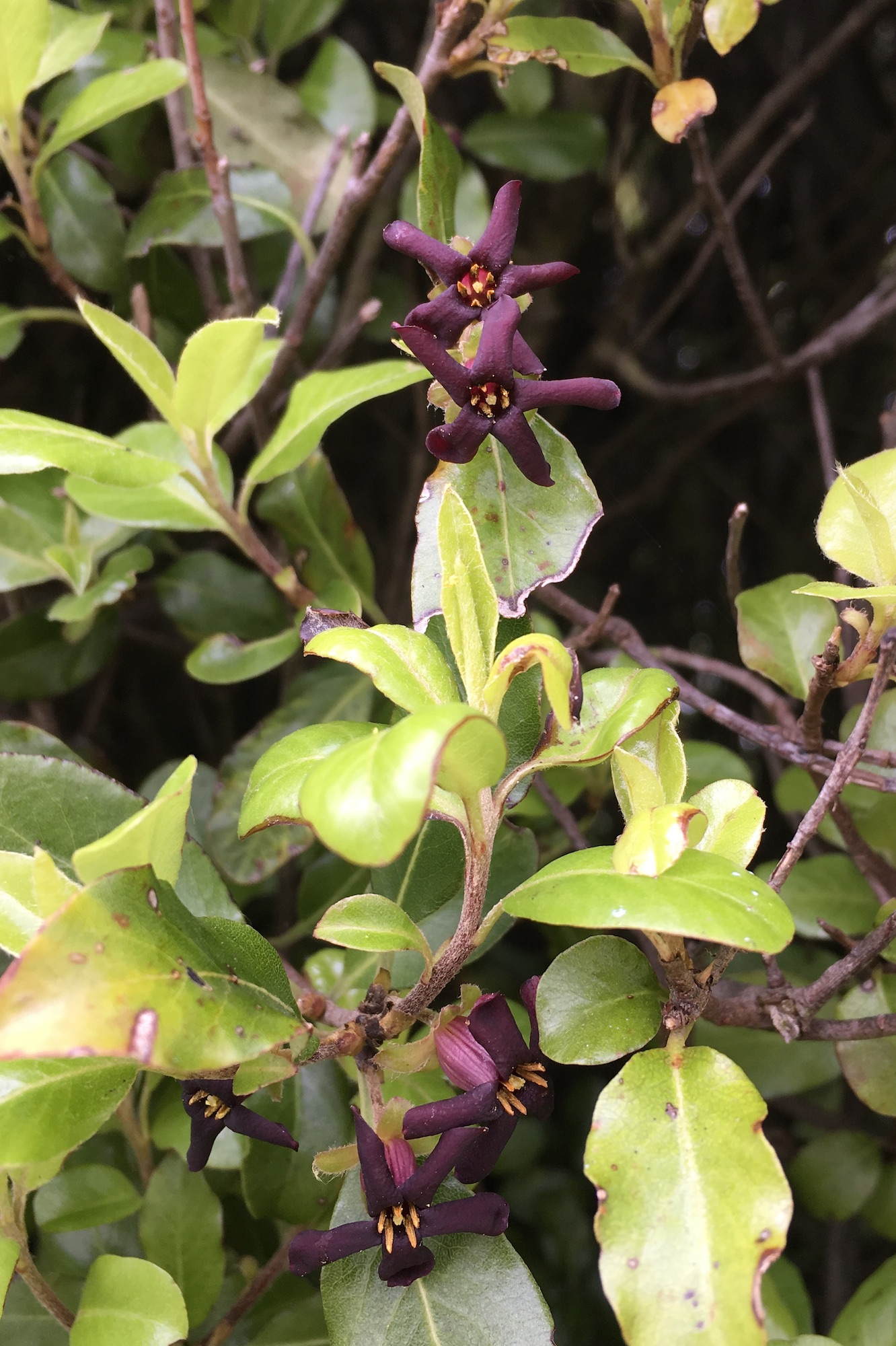
2016-10-26-15-51-31We have several pittosporums around the house, mostly Pittosporum tenuifolium, also known as kohuhu. Kohuhu are nice hedging plants, and form lovely dense shrubs when pruned. They’re a great background plant—like mood music—a lot of nice greenery, but little character.

Until they bloom, that is.

And only at night.

Pittosporum flowers are the kind of blooms that you can walk past a hundred times a day and never see. They’re about the same colour as the branches, and sit nestled among the greenery. They attract no bees or butterflies.

But walk past the same bush in the dark, and you’re practically knocked over by the smell. Heavy and clinging, the smell must attract all the night-flying moths and beetles for miles around.

I’m generally not a fan of smelly flowers, but there’s something marvellously incongruous about pittosporum flowers—so inconspicuous during the day, so in-your-face at night. The smell has become as sign of spring for me, and I always make sure my early-morning chores take me close to one of the bushes at this time of year.


Dolphin Stress Relief

Hectors' dolphin (not today's) in Akaroa Harbour.

Hectors’ dolphin (not today’s) in Akaroa Harbour.

I had a long blog post for today mostly written. I just needed to polish it and find a photo to go with it…

Then we went down to the beach after dinner.

Before we had even crested the dunes, we saw the Hector’s dolphins—a pair of them cavorting just beyond the breakers of an unusually calm sea. By size it was a mother and calf.

What blog post can compete with dolphins?

“You realise this isn’t normal, right?” said my husband to the kids. “Most kids can’t see endangered dolphins on the beach five minutes from home.”

But it is normal for them.

And for that I am so thankful.

We walked the beach, watching the dolphins and picking up colourful stones. The stresses of the day vanished.

I forgot all about that other blog post…

Orb Weavers

2016-10-24-13-39-42Weeding can be tedious, miserable work. Hard on the back, hard on the hands, and downright painful in much of my garden, where nettles and thistles grow exuberantly.

But there are some perks. Weeding brings you close to the vegetation, and gives you a chance to see things you might otherwise miss.

Today I was treated to two native orb weaver spiders—two of my favourite native spiders here.

The first was a bright green, round-bottomed Colaranea viriditas—the green orbweb spider. These little gems are supposedly quite common, but the bright green ‘leaf’ on their backs must do an excellent job of camouflaging them, because I count myself lucky when I see one. Unfortunately, my camera was nowhere close, and this one scurried away before I could catch it.

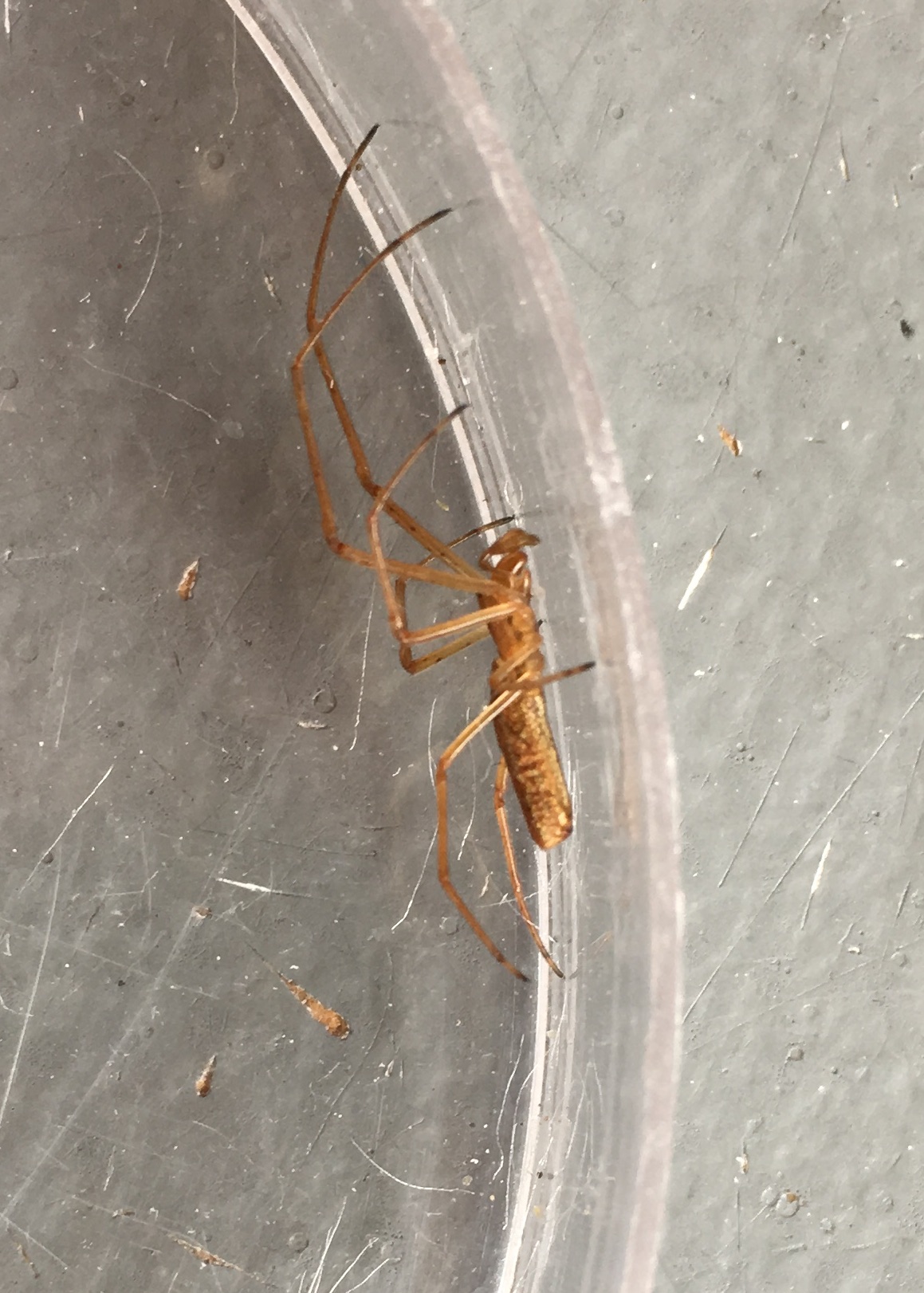
The second orb weaver I saw today is an expert at camouflage. You would be hard pressed to recognise it as a spider at all most of the time. This spider is in the family Tetragnatha—the big-jawed spiders. Tetragnathids have long thin bodies, and sit with their legs stretched out to the front and back, making the spider look like a small twig (I had to poke the one pictured here so it would stand up and look like a spider for the photo).

Tetragnathids are usually associated with wet areas, so I’m not sure what they’re doing in my dry yard, but they’re certainly common here. Though they’re hard to see, you can’t swing a sweep net in the tall grass without coming up with a few of them.

Both these spiders catch flying insects in webs shaped like the classic Halloween spider web—orb webs. Is it a coincidence that I saw them both today, a week before Halloween? Maybe they’re practicing for their big night.

Or maybe it was just my lucky day.

Crowded House

2016-10-21-18-50-54-smLast night the temperature dipped to -1°C. Fortunately, it had been forecast, so I pulled all the tender plants out of the greenhouse and into the heated office for the night.

It was a truly glorious sight—the seed shelves full of just-sprouting cucurbits and corn, and the floor carpeted in tomatoes, eggplants, peppers, and basil plants.

I look forward to getting all those tender plants back out to the greenhouse—I can’t even walk through the office, let alone work in there at the moment—but it was fun to have all the plants together for a photo shoot.


Supreme Spring Salad

2016-10-21-17-49-45-smWe had occasional salads all winter, from the fall planting of lettuces and spinach. We’ve also had several salads from this spring’s lettuce planting. But all these salads have been small, and have required me to scrounge every available leaf to glean even a modest quantity.

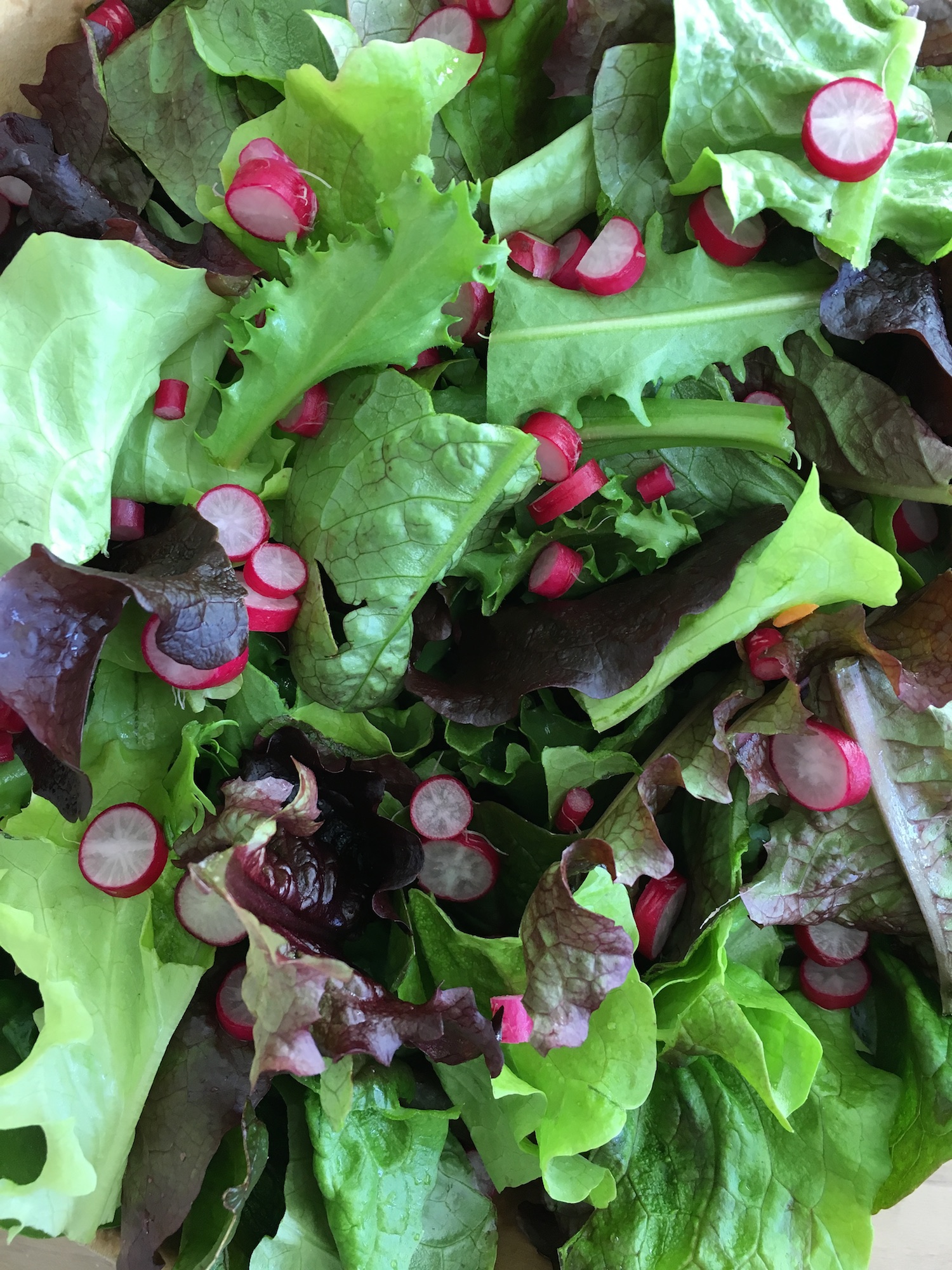
Today’s salad was the first of the Supreme Spring Salads—salads for which I have so much lettuce, I can choose to pick only the best, most perfect leaves, and can adjust the proportions of each variety to perfectly suit the meal. I also had a few lovely radishes from my daughter’s garden to add to the salad, making it even more perfect.

And this was just the first. With luck (and a fair bit of weeding), we’ll have many more Supreme Salads to look forward to in the coming months.


Moody Skies

Looking up the Waiau River bed toward Franz Josef Glacier

Looking up the Waiau River bed toward Franz Josef Glacier

I’ve been to Westland in brilliant weather—when the sky is clear, the sun is shining, and every snowy peak is visible. It is spectacular when that happens.

But the rainfall on the West Coast is measured in metres. Temperate rainforest covers the lower slopes, and the rivers churn, gushing down the steep mountainsides. Sun is not the normal state of affairs. Clear skies are not what make the West Coast what it is.

More often than not, it’s raining on the West Coast. And if it’s not raining, it’s threatening to rain. So, while blue skies are gorgeous, they’re like a false smile, put on for special occasions. The real skies are brooding, veiling the higher peaks in clouds and the lower ones in misty rain (or pounding rain).

And those moody skies are every bit as spectacular as the blue ones, in my book, and more honest. Just as I appreciate when a friend shows their true colours, I appreciate when the West Coast does, too.

Provided I have a good rain coat, that is…

Heating the Greenhouse DIY

greenhouse-waterjugs2-smI wish I had a heated greenhouse. I start my seeds in my office, which has decent light and can be heated at night to help heat-loving seeds germinate and keep tender seedlings from freezing.

But at some point, the plants have to go to the greenhouse or they’ll get hopelessly leggy. Besides, there’s not enough room in the office for all my seedlings, once I really get going in spring.

The greenhouse is great for raising daytime temperatures for the plants and for protecting them from harsh wind. It also protects the plants from light frosts, but sometimes the temperature dips below zero at night, and then the unheated greenhouse can’t protect my plants enough.

If I know the temperature will dive, I can haul all the plants back to my office just for the night, but it’s quite a job—several trips with the wheelbarrow—and always results in some plants getting damaged.

So I’ve gone for passive solar heating in the greenhouse. I had my daughter paint empty 3-litre juice bottles black, and I filled them with water and placed them around the greenhouse. During the day, the water in the bottles heats up, and at night, the bottles slowly release their heat.

Having only one greenhouse, I haven’t been able to scientifically test whether my hot water bottles help, but last year—the first year I deployed the bottles—I was impressed by how well the plants weathered cold nights in the greenhouse. I intend to expand the number of bottles this year, and would love to ring the entire outer edge of the greenhouse with water bottles. If all goes well, I’ll end up with my heated greenhouse, without actually heating my greenhouse.

Random Acts of Kindness

2016-10-17-08-54-55I noticed this article in the news today, and thought it was worth sharing as an antidote to all the hate that’s on the news.

http://www.stuff.co.nz/travel/themes/adventure/85392553/How-kind-acts-by-strangers-renew-faith-in-peoples-goodness-the-world-over

In it, the author writes about several instances in which the kindness of strangers renewed her faith in humanity. Most the experiences she relates happened while she was travelling, and the kindness she was shown often required sacrifice and bravery.

I had a similar experience in Panama one day while waiting for the bus in Panama City. My husband and I were staying in a seedy part of town—Peace Corps volunteers have little money, so we stayed in the cheap hotels when we had to go to the city. We were headed from the hotel to the Peace Corps office, and waiting for the bus on a busy street.

We were wary, and prepared for pickpockets and the like, but we both froze when a huge man stalked over to me. A good 30 cm taller than me, he came right into my personal space and hung over me. Didn’t say a word, but glared at me with bloodshot eyes, his whole body screaming murder.

I blinked at him for a moment, waiting for him to say something, threaten me, whatever. When it was clear he wasn’t going to, I smiled and said good morning to him. This elicited a grudging good morning back, but didn’t soften his stance.

On the busy street, the confrontation didn’t go unnoticed. A pair of policemen began to saunter toward us. The situation was about to get ugly.

That’s when the little old lady selling lottery tickets on the sidewalk took matters into her own hands. Though she was easily another 15 cm shorter than me, she picked up her umbrella and began whacking the threatening man with it, scolding him for giving Panama a bad name.

She couldn’t possibly have been actually hurting him, but he withered under her attack, shrinking away and looking ashamed of himself, and finally slinking off.

The bus came, and we quickly hopped on. Life on the busy street returned to normal.

I’ve blogged before about other experiences I’ve had giving and receiving kindness from strangers. Whether the gesture is little or big, random acts of kindness make everyone feel good.

We could use a little more of it, by the sound of the news these days. Go ahead. Practice a little random kindness today.

Here we go again…

2016-10-16-16-04-30It’s a sight to strike fear in my heart.

October 16th and the temperature hit 30°C (86°F) and humidity is 33%.

Thirty degrees is supposed to be a height –of-summer oddity. It’s the day you drop everything and head to the beach, because there are only a handful of days this warm in a summer.

Except that it’s the middle of spring.

And this happened last year.

And the year before.

And it heralds a third year of drought for us.

A third year of deciding which plants will be watered (and survive), and which ones will not (and probably die).

It will be a third year of expensive hay that has to be brought in for the goats, because the grass will brown off in November.

A third year in which the vegetable seedlings grow too fast too early, then struggle to set fruit in the dry heat.

Just thinking about it makes me grim.

But I suppose it also means a summer of incredible hot days at the beach. A summer in which I don’t need a wetsuit to enjoy the ocean. A summer of ice cream and swimming.

I enjoy these things. I really do. It’s a good thing they come along with drought. If I go to the beach, I can ignore the shrivelling garden at home…sort of.