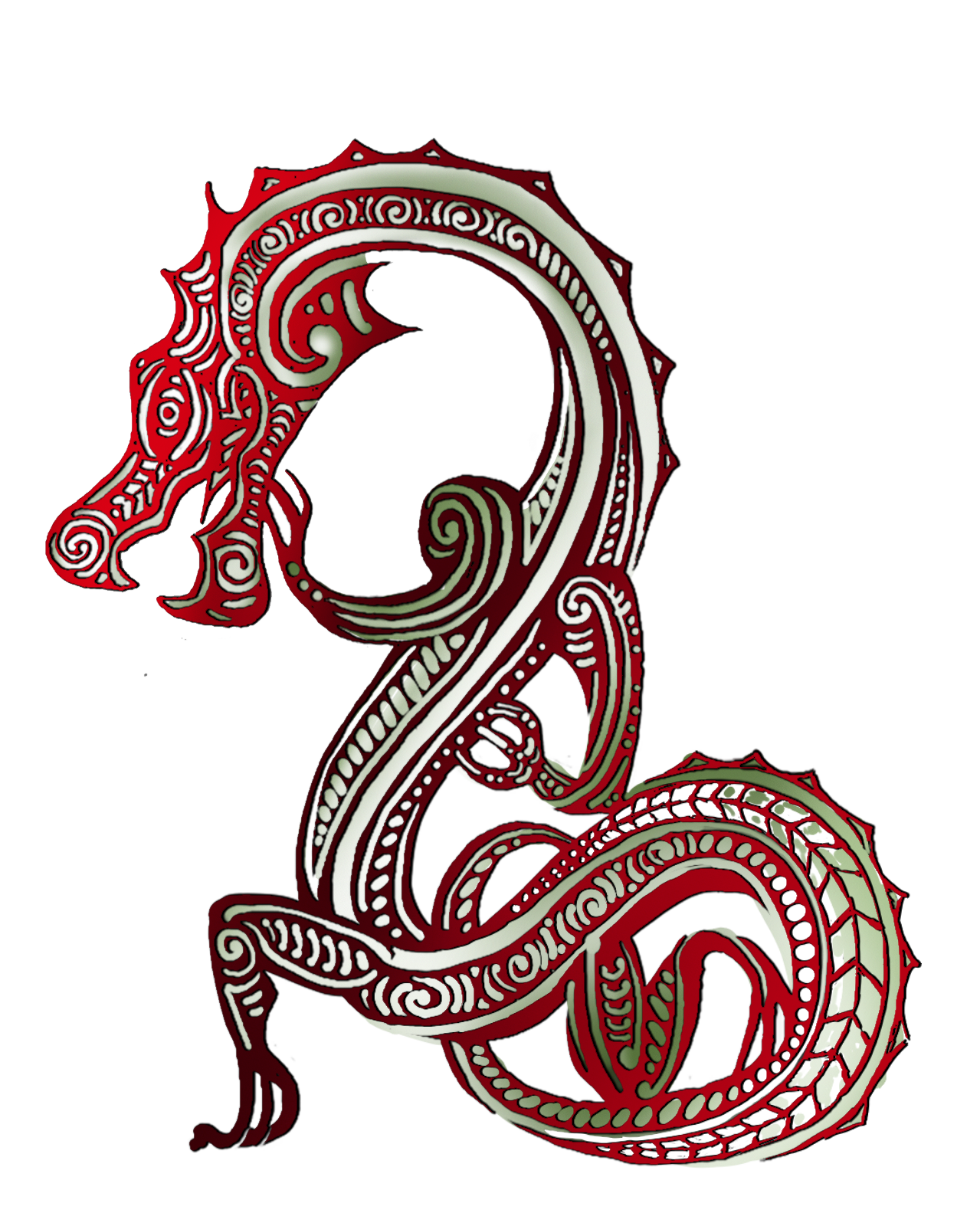
 Another short story from the world of the Dragon Slayer series. How Archie came to be where he is at the beginning of The Dragon Slayer’s Son.
Archibald McMannis frowned as he knelt at the front of the hall. He wasn’t sure about this. He’d asked for two weeks of extra time to decide whether to accept the position of Patriarch of the Fraternal Order of Dragon Slayers International. Even so, he still wasn’t certain it had been the right decision.
His thoughts drifted back to his last mission. The one that had clinched his nomination, though he hadn’t known it at the time. He had been called overseas to deal with a tundra dragon in Russia. The beast had already defeated three dragon slayers (only one had come out alive), and the Fraternal Order of Dragon Slayers had pulled Archie in as the last hope of slaying the vicious animal.
This would be Archie’s tenth mission, and he had yet to sustain injuries worse than scorched eyebrows. He was a natural. Some said he was so good, he didn’t even have to use his sword; he could talk a dragon into committing suicide.
Archie himself had started that rumour. It was almost true. His command of the Draconic language was superb. He could carry on long conversations with dragons. He did carry on long conversations with dragons. And he hadn’t killed nearly as many as everyone supposed he had.
Arriving at the dragon’s lair, in a bleak windswept valley in the middle of nowhere, Archie thought he might actually have to kill this one. It burst from its burrow in the permafrost, blasting fire. Archie crouched under his shield, watching the snow around him vaporise in the intense heat. The dragon didn’t even give him time to talk. After the fire, it struck with its claws, knocking Archie to the ground and flinging his shield out of his hand.
Archie scrambled to pick up the shield before the dragon struck again.
He didn’t make it. The whoosh of wings too close made him turn just in time to see the jet of flame come roaring at him. He closed his eyes and rolled across the ground as quickly as he could. The flames seared his eyelids, then his face plunged into snow as he rolled. Over and over he went—flame and ice, flame and ice. The dragon pulled up and Archie managed to get to his feet.
He dove for his shield, and by the time the dragon had turned, he was ready.
“Navarra, would you kill me before we have a chance to talk?”
The dragon landed in front of Archie—all twenty-five metres of it—and he frowned at its appearance. Tundra dragons survived the cold with a thick layer of fat that made them seem almost portly for, but this one was anything but fat. Its hip bones jutted up from its hindquarters and its spine was a sharp ridge along its back. Its limbs were wasted and thin. Archie could have counted every rib.
“Why should I talk to you, Dragon Slayer? Why shouldn’t I just eat you? You’re here to kill me, after all. Just like the others. Do you taste as sweet as they did?”
Archie ignored the questions. “What’s wrong with you? Are you sick?”
“Ha! Like you care. Like any of your kind care. You would starve us out of existence. Destroy our habitat and our prey just like you destroy us.”
“What do you mean?”
“What do you mean?” the dragon mocked. “Are you so blind you can’t see? Young and stupid. Is that the sort of dragon slayer they send to finish me off? Or maybe all you humans are like that. Babies. Idiots. So stupid you can’t see that whatever you do to the dragons you do to yourself.” Navarra began coughing. A wet, hacking cough that made Archie wince.
“Is there…Is there anything I can do for you?”
“What, before you kill me?” The dragon coughed again. Its legs began to shake. “Go away,” it growled, and then stumbled back into its lair.
Archie didn’t know what to do. He’d never had a dragon walk away from a fight. He’d also never seen a dragon in such bad shape. How had it defeated three other dragon slayers? What had happened to it? Staring at the burrow entrance, he considered his options.
A dragon slayer never entered a lair. Not if he wanted to stay alive. There was no room to maneuver in a lair, and dragons became particularly defensive against intruders.
But if the dragon wouldn’t come out, how would he get rid of it?
“Hey, Navarra. Why don’t you come out and fight like a real dragon?” Maybe taunting it would bring it out again. Archie waited, sword at the ready, but the dragon neither responded nor appeared.
“You must be a real coward, not to come out and face me.”
No response.
Archie sighed. He would just have to wait. He stepped away from the lair entrance so he would have some warning if Navarra appeared. He kept his sword and shield out, but relaxed into a crouch to try to get out of the wind.
Fifteen minutes passed, half an hour, an hour. Archie shifted and stamped his feet to warm them. The wind picked up and it began to snow.
Another hour, and the wind had become a gale, the snow blinding. If the dragon did emerge now, he’d never see it until it was on top of him.
Archie shivered. Dragon or no, he could very well die out here. He had been dropped off by helicopter a few kilometres away. He was to radio back when he was ready to be picked up, but no helicopter could fly in these conditions.
He crept closer to the lair. It wouldn’t do to be surprised if Navarra came out. He had to be able to see the entrance. His shivering continued. Even stamping wasn’t warming his toes now.
Another hour in the blizzard, and Archie knew the storm would kill him if he didn’t find shelter. The only shelter available was the dragon’s lair. He took a deep breath and ducked inside.
The entrance tunnel dove quickly, and Archie had difficulty descending without slipping. He was shivering uncontrollably, and he realised he’d waited too long to take cover. The warmth of the lair beckoned him. Every step down brought a rise in temperature. Every step down brought him closer to the dragon.
It was daylight above, but only dim light filtered into the lair. Archie took his time, letting his eyes adjust before going too far down. He was as good as dead if Navarra decided to kill him in here, but he wanted to at least be able to see it coming.
The entrance tunnel leveled out. Archie guessed he was a good thirty metres belowground. Then, before he realised he was near the main chamber, the tunnel opened up. Blinking in the semi-darkness, Archie saw the dragon sprawled on its side, chest heaving, eyes closed.
Archie took two more steps into the lair.
“What’s your name, Dragon Slayer?” Navarra’s voice was a raspy whisper.
“Archie. Archie McMannis.”
A weak laugh. “Archie McMannis. Yes. I’ve heard of you. You killed my cousin, Neve.”
Archie swallowed. “Yes. I’m…I’m sorry.”
Navarra opened an eye and looked at Archie. “Why?”
“Why did I kill her?”
“No. Why are you sorry?”
“Because…” Well, now. “Because she was clever and articulate and…and she made me laugh.”
A wheezy chuckle came from Navarra. “Yes, she knew how to make a pun, didn’t she? So why did you kill her?”
Archie shrugged. “I’m a dragon slayer. It’s my job. She was eating skiiers.”
Another chuckle. “She did develop quite a taste for them. Me, not so much. The skiiers were fine, but the skis always got stuck between my teeth. Not worth the bother, if you ask me.” A racking cough shook Navarra’s body.
“Is there anything I can do for you?”
The dragon didn’t respond.
Archie stood for a minute longer, unsure of what to do.
The dragon shivered. “Fire.” It was barely a whisper.
Of course. The dragon was so thin, it had no way to stay warm. It needed heat. Fire.
How was he going to build a fire in the middle of a blizzard in the tundra?
He turned, ready to head out into the storm to find something to burn. Then he noticed the charred patch on the floor. Navarra had been keeping warm with fire for a while. He glanced around the lair and his gaze lit on a pile of lichen and moss, carefully dried and stored.
Archie set his sword and shield down reluctantly. What if Navarra’s weakness was just an act? He glanced at her again. She still shivered. If it was an act, it was a convincing one.
He gathered an armful of moss and carried it to the fire pit. His fingers were numb and clumsy as he fumbled for the lighter he knew he had in his pocket—part of the kit every dragon slayer kept on him at all times. It took a dozen tries to strike a flame—his fingers simply didn’t want to do what he asked of them—but finally he had a fire going. It was smoky, but it was warm.
Holding his hands over the flames to warm them, Archie was surprised by movement behind him. He jumped away from the fire and snatched up his sword and shield.
Navarra raised an eyebrow, but said nothing as she shifted closer to the fire.
“Why don’t you kill me?” asked the dragon. “You see what state I’m in. One stroke of that sword is all it would take.”
Archie looked at his sword and slowly lowered it. “Why don’t you kill me? I’ve foolishly trapped myself in your lair.”
Navarra chuckled. “I’m curious, Sir Archie McMannis. I’ve heard many things about you.”
“What sort of things?”
“Well, I heard that, after you killed Neve, you took her eggs to her sister, to be hatched and raised.” Archie shrugged and Navarra continued. “I heard you spent a week with a copper dragon in Nepal who you were sent to kill. You both left that encounter alive.”
“That copper dragon hasn’t been seen since.”
Navarra chuckled. “Not by humans. I hear he’s got a nice new home in an uninhabited valley. As do two other dragons you’ve supposedly slain.”
“Is it a problem if I prefer to negotiate rather than kill?”
“No. It’s just curious. Put down your weapons and sit by the fire. You’re shivering as much as I am.” The dragon coughed, and Archie nervously lowered his sword and shield to the ground. When he was settled by the fire, Navarra spoke again.
“I am nearly five hundred years old. I have lived in this lair for longer than even I can remember. I have seen many things in the world. Many changes. But the tundra is my home. It has always provided plenty of food and shelter. It has been a place of peace and solitude for tundra dragons—we are not social creatures.” The dragon had to stop as a series of coughs racked her body.
“But if the tundra provides food, why have you been killing people?” asked Archie.
“I’ve not been killing just any people. These are the men who have brought roads and trucks and drilling rigs to my home. They have chased off the reindeer I used to eat. They’ve churned up the ground and spilled acrid smoke into the air. I’ve been killing them because there is nothing else to eat anymore.”
Archie knew it was true. He’d seen the oil rigs dotting the landscape as they flew over, the endless roads slicing across the tundra, the grim concrete barracks where the workers lived.
“And now, the entire tundra ecosystem is dying. Killed off by human greed. By your species’ need to go faster, have things from the other side of the world, and show off your wealth.”
“What do you mean?”
“It’s melting.”
Archie thought of the blizzard raging outside. It certainly wasn’t melting today.
“You humans probably can’t even see it happening. Your lives are so short. But I have been here long enough to see it. Two hundred years ago, the permafrost was just that—permanent. The ground stayed frozen year-round, and we tundra dragons could construct our lairs anywhere, and they lasted. They were dry and comfortable. Now, my roof leaks all summer. Many lairs have been flooded and abandoned. And where the ground has thawed, trees move in. We tundra dragon are not made for forests. We can’t maneuver well enough to hunt among the trees. We’re forced to move further and further north to find frozen ground and enough game to support us. Some day, we will be pinned against the sea, fighting for space with polar bears. If the polar bears still survive by that point.”
Archie knew about climate change. He knew it was an important environmental issue, but to hear this ancient dragon tell of the changes she’d seen during her lifetime made it real, personal.
“And amidst all this, we face the persecution of dragon slayers.”
“I’m sorry,” was all Archie could think to say.
Navarra looked keenly at Archie, until he began to itch for the comfort of his sword.
“Yes. You are sorry. That’s what makes you such a curious dragon slayer. That’s what makes your reputation as the best dragon slayer so…interesting.”
Archie sighed. “When I killed Neve, I felt terrible. She agreed, after we’d talked, that I had no choice but to try, and she had no choice but to try to kill me in turn. We agreed to a fair fight…to the death.” He blinked. “Three times I could have killed her, but I held back. Gave her the chance to escape. I know she did the same for me.” He was silent for a moment, replaying the fight in his mind. “I made it as quick and painless as I could.”
“And you risked your life to save her children.”
Archie shrugged. “I was sent to kill only Neve.”
“But dragon slayers are supposed to minimise future threat by destroying eggs when they can.”
“No one else knew she was incubating eggs.”
“Have you killed a dragon since?”
Archie hesitated. Would it be showing too much weakness? Navarra could still kill him. His sword was out of reach.
“No. Not one.”
Navarra chuckled, and her laugh soon turned to a cough. Archie watched helplessly as she hacked until blood dribbled from her mouth. When she spoke again it was a wheeze.
“Archie. Dragon slayer. You must slay one more dragon.” She took a shuddering breath. “We are dying. All of us, not just the tundra dragons. Our habitats are under threat. Those who know of us do not understand us. You humans are all so young. So sure of your place.” She coughed again, and her eyes closed. “Except you, Archie. The dragon slayer who saves dragons.” Her breathing became laboured. “You, Archie…You must kill me…”
“No.”
“You must kill me…And then…must…not kill…again…save…” She coughed, and Archie stood and placed a hand on her snout where it lay on the floor of the lair. Her eye flickered open at the touch. “So much pain…hunger…please…” Her eye closed again, and she began to pant.
Archie left her side to pick up his sword. It gleamed in the light of the fire. He had once been so proud of that gleam, proud to be a dragon slayer. He walked quietly to Navarra’s side. She gave no sign of having heard him, but she said, “Thank you.”
Archie swallowed, lifted his sword, and drove it point first into the spot just behind the head that all dragon slayers were taught was the most difficult part of a dragon to access, but the surest and swiftest death. Navarra didn’t move, but seemed to sigh gently.
Now here he was, about to be confirmed as the leader of the Fraternal Order of Dragon Slayers International. If they knew what he had in mind for the Order, would they have asked him to lead it? If they knew how few dragons he’d actually killed, he was certain they wouldn’t have. He cringed at the thought of the initials PFODSI behind his name. He wondered how the members would react when he began discussing dragon conservation. He didn’t expect it to go well. But after two weeks of agonizing, he’d come to the conclusion that he would have better luck changing the system if he were in charge of it, rather than if he were one of its minions.
“Rise,” said the master of ceremonies, breaking into Archie’s thoughts. Archie rose and turned to the attending dragon slayers. “I present to you Sir Archibald McMannis, Patriarch of the Fraternal Order of Dragon Slayers International.”
“For family, village and hearth, we pledge our swords as protection.” All the gathered dragon slayers recited the Dragon Slayer pledge.
“And for the dragons,” Archie added in his head. He hoped the dragons would understand.
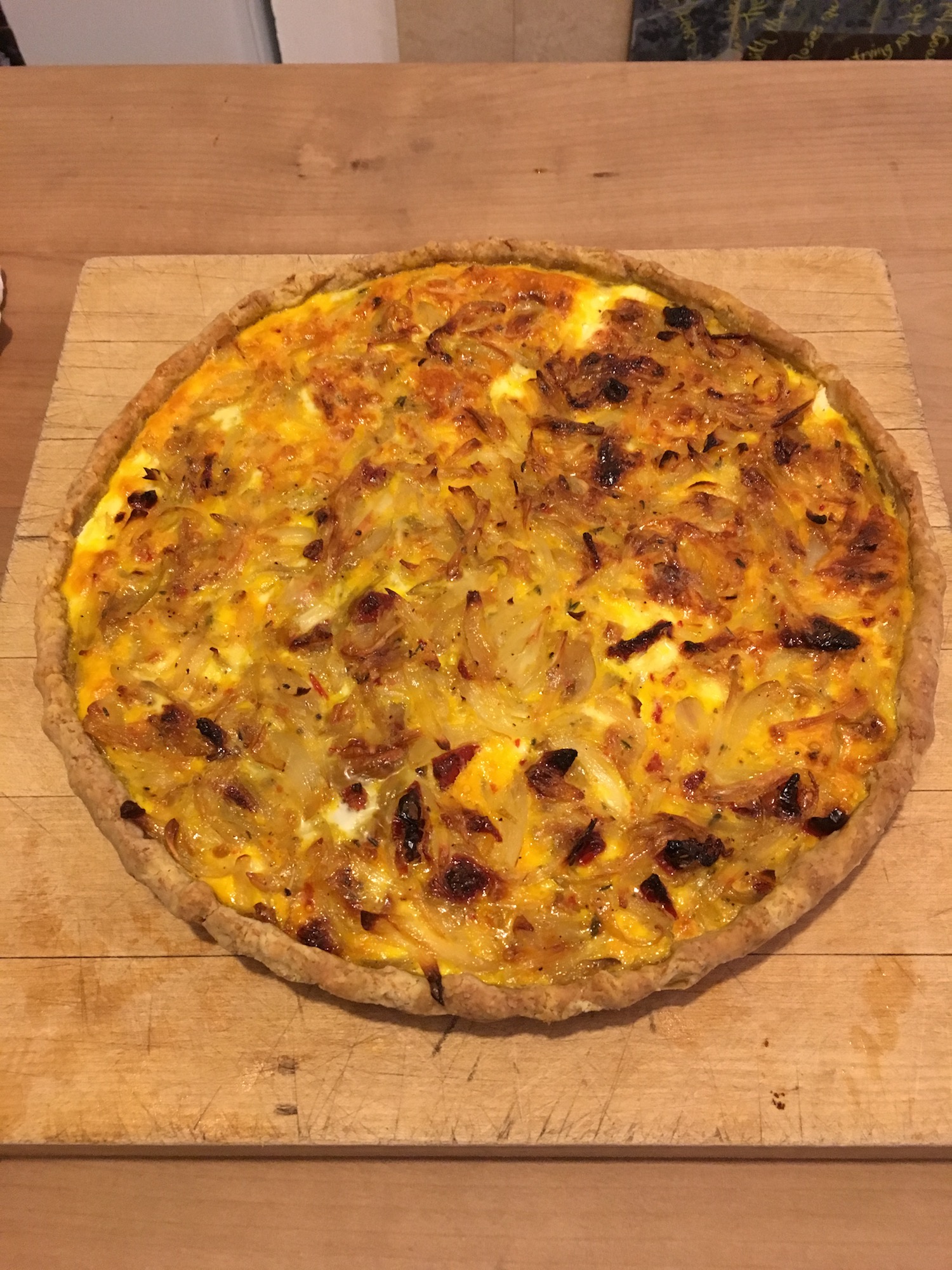
 A very happy birthday to Her Majesty this weekend. And many thanks for the extra day off and the excuse to go all out on a cake.




 Robinne Weiss