My Love/Hate Relationship with Yarrow

2016-06-24 13.33.30Growing up, yarrow was a flower to be dried for arrangements. An innocuous plant that grew along the roadsides. I liked the flowers, and I loved the insects and spiders it attracted.

It wasn’t until I moved to New Zealand, where yarrow is a pernicious weed in my garden, that I began to consider yarrow more closely and learn more about it.

Yarrow is native to Europe and parts of Asia, but has been spread widely, because of its many uses.

It is referenced in Homer’s Iliad as being used for stanching wounds, and has been used all over the world for many other medicinal purposes—from reducing fevers and soothing earaches, to curing urinary problems and head colds.

Yarrow was probably originally brought to New Zealand as a medicinal plant, but it has other uses that are more valid than the medicinal ones.

Today yarrow is a common pasture plant. Its deep rhizomes make it drought resistant, and it is higher in certain key nutrients than either ryegrass or white clover. I discovered this when I began to worry about the goat paddock. After two dry summers, the yarrow was taking over a big swath of the paddock. I worried, knowing that to remove that much yarrow would be a Sisyphean task—dig it out and any bits of rhizome left in the soil will simply resprout. Even herbicides are largely ineffective against yarrow.

So I was thrilled to learn that its virtues went beyond pretty dried flowers, and that I could ignore it in the paddock.

Of course, it grows everywhere, and isn’t bothered by mowing. But that has benefits, too. This past summer, when all the grass of the lawn was brown and dead, the yarrow remained some of the only spots of green.

And then there are the insects it attracts, which I naturally love.

And so, I love yarrow…and I hate yarrow. Either way, I have to live with it.
Evaluating the garden year

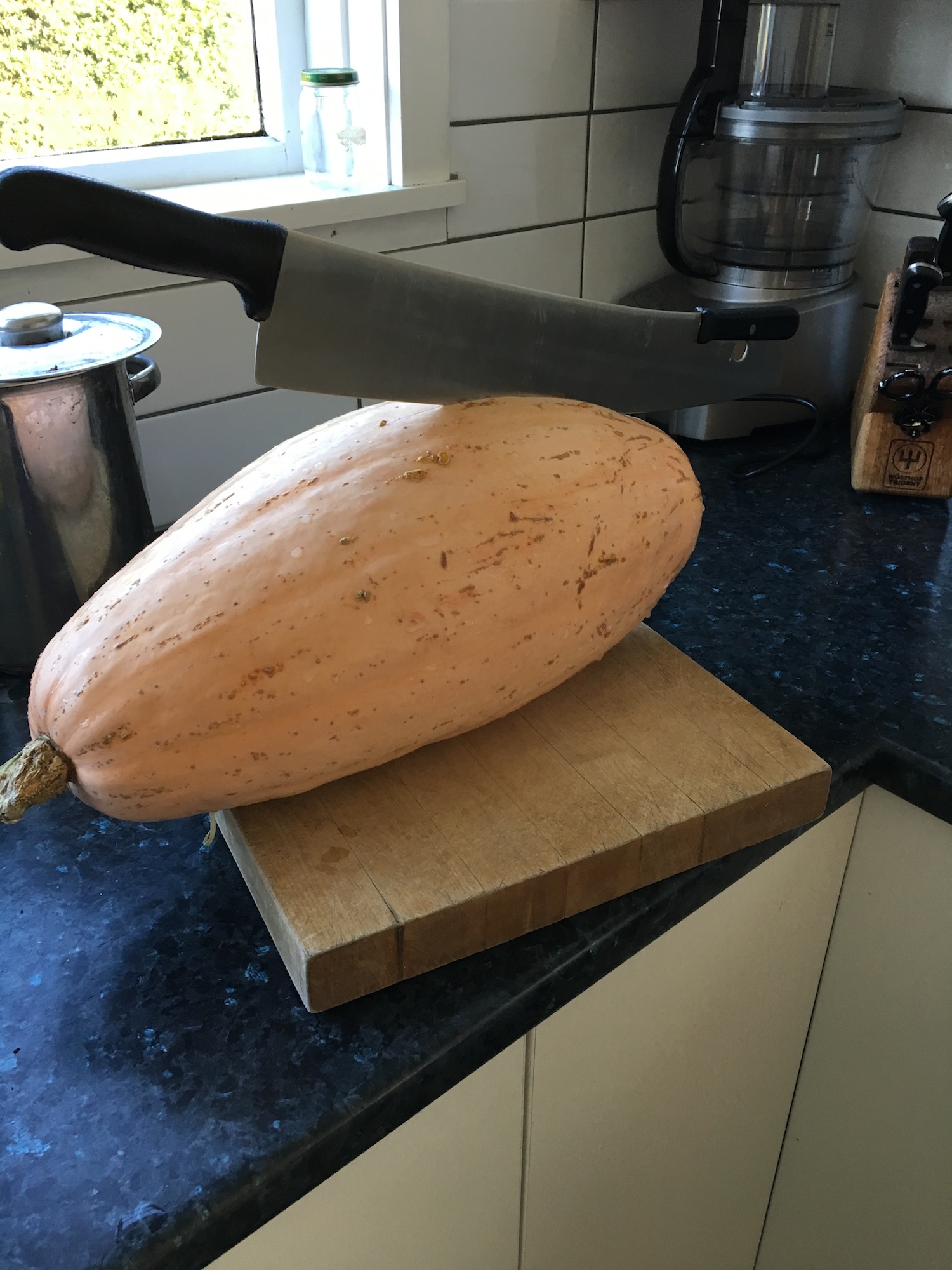
A jumbo pink banana squash--one of last year's winners.

A jumbo pink banana squash–one of last year’s winners.

The new seed catalogue will be out in a little over a week, so it’s time to consider which new plants did well and which didn’t last summer.

It’s difficult to really evaluate varieties I hadn’t tried before, because last summer was so devastatingly hot and dry, but I got a feel for them by how my tried and true varieties did.

Tomatoes were a bust—all varieties—it frosted extremely late, and then was just too dry. But I did find that one of the new varieties I tried—bloody butcher—was extra sensitive to the neighbour’s herbicide overspray. So that one’s off the list for next season.

Same went for the yard long red noodle beans—they didn’t recover from the overspray until March, and then it was just too late.

The blue corn was preferentially eaten by the rats, and none survived past seedling stage. Doesn’t mean I won’t try again next year, but I’ll need to protect it better.

Jumbo pink banana squash was a winner, though. Not only was it a spectacular plant in the garden (anything that can grow half a metre in one day has my vote), but the fruits were equally spectacular. They have good flavour and texture, too. The only real drawback is that it’s difficult to fit one in the oven, because they’re so big.

The purple carrot, pusa asita, was also a winner, though its germination was spotty, like all the purple carrots seem to be. The colour was worth it though, as the purple goes all the way to the centre.

And the fire candle radishes were fantastic—delicious, spicy, and slow to bolt.

I’m looking forward to the arrival of the new catalogue and the chance to try out some new varieties for the coming year!

Preserving the Harvest

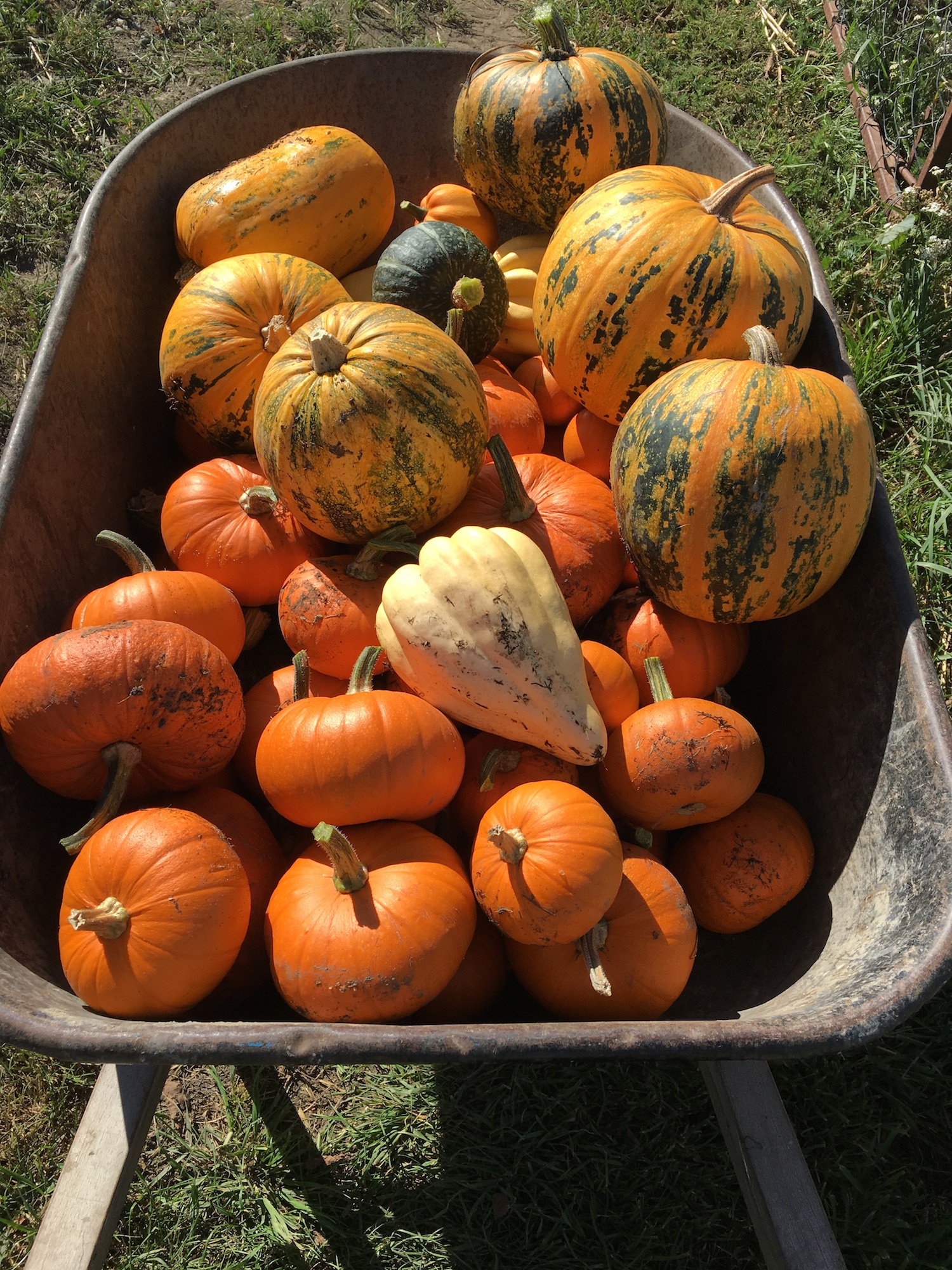
About a third of the harvest.

Gardening is a never-ending struggle against the elements.

Seeds must be stored cool and dry to maintain viability.

Then they need to be kept warm and moist in order to germinate.

But not too moist, or they’ll rot, or damp off once sprouted.

Then the plants need to be nurtured with just the right amounts of sun, shelter, water and nutrients so they will grow and produce. They need to be protected from pests.

With luck and hard work, the gardener can nurture the plants all the way to harvest.

But even once that produce is harvested, a gardener continues to fight—some foods can be canned, dried, or frozen so they keep longer, but others can’t. Or, maybe they can, but they’re better fresh. Or maybe there’s no room in the freezer for them.

It’s about now that these fresh foods begin to show their age.

Members of the onion family—shallots, onions, garlic—are stored as living bulbs. When the solstice is past, they want to grow, so they begin to sprout, even hanging in their riestras in the shed or the kitchen.

Then there are the pumpkins. In theory, some can keep for up to six months or more after harvest. That is, in ideal conditions—cool and dry, sitting on dry straw and not touching one another. I don’t have ideal conditions, nor the space to spread out my pumpkins. They hang in mesh sacks from the rafters of the cool, but damp shed—the only way to protect them from the rats.

Three months from harvest, the first pumpkins are beginning to rot. I discovered them today when I selected pumpkins for a galette for dinner.

Now comes the race to bake as many pumpkins as possible and freeze their pureed flesh before they go bad, and before the freezer is full.

I can fit about eight pumpkins at a time in the oven, unless they are jumbo pink banana squash or musquee de Provence, which only fit one at a time . There are sixty-six pumpkins left in the shed. That’s a lot of baking!

Light in the Night

2016-02-24 20.57.32Last night was the longest night of the year. It’s fitting that we all overslept this morning. Everyone left for work and school in the dark, and will come home in the dark. To add to the dark of this winter solstice, the day is overcast.

But all is not black and bleak.

Yesterday, we saw the first of this year’s lambs bouncing around in the neighbour’s paddock.

The young blackbirds and magpies are already singing and vying for territories.

The breeze is from the north today, soft and gentle.

And from here, the days will only get longer.

At the bottom of the well, there is only one way to go.

So we’ll enjoy the sun while it lasts, light the table with candles this evening, and look forward to our slow climb toward spring.

A happy solstice to you, whichever one you are enjoying today.

Confessions of the Resident Exterminator

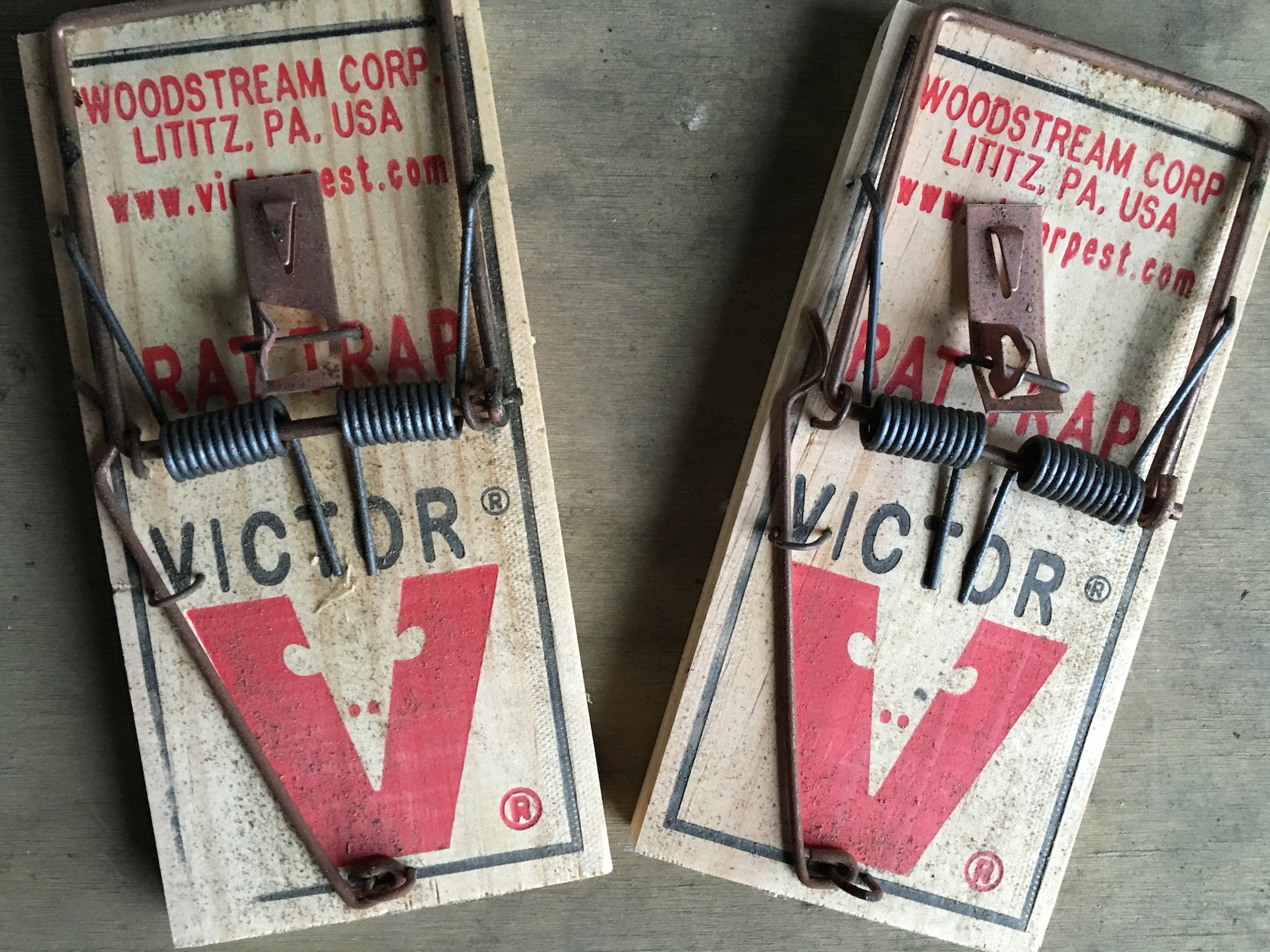
2016-06-20 16.14.21Being the least squeamish member of the household, it falls to me to deal with all members of the animal kingdom on our property.

That means I take care of the livestock, of course (I can’t even imagine anyone else dealing with kidding or mastitis), I dispose of the gifts the cat leaves lying beheaded on the lawn, and I deal with pests.

Though I don’t enjoy killing anything, I have no problem squishing bugs in the garden, and dropping slugs into soapy water (I don’t recommend squishing them—its really slimy). I don’t even flinch at the idea of setting mouse traps or possum traps, either.

But rat traps? *shudder*

I put it off until the rats are so numerous that they’re having loud parties in the attic, keeping me up all night racing around, gnawing on the rafters.

And then I wait longer, until the rest of the family starts to notice the noise in the attic, or a greasy body sliding through the wall cavities.

Then I pull the rat traps out and look at them for a while, screwing up my courage.

Finally, after many excuses, I get out the ladder, prepare some bait (bread with peanut butter is reliable), and make my way to the attic with the traps.

Bait on the trap, set trap in place, pull back the bar to arm it…

SNAP!

Bait goes flying, fingers sting, and I jump, cracking my head on a rafter.

Try again. Bait on the trap, put the trap in place, pull back the arm…

SNAP!

Maybe we can coexist with the rats? I calm myself and try again. Third time’s the charm, right?

Bait, set it in place, hold my breath and pull the arm…

Breathe out slowly. Carefully move my hands away from the trap, willing it not to spring shut.

Get the second trap. Repeat.

The good news…and the bad news is that the traps work. Within 24 hours I’ll have to empty them and reset them. The parties will stop. I’ll be able to sleep.

But I hate setting those traps.

Mud Run

2016-06-19 13.24.31 smCould there be anything better calculated to appeal to kids than a mud run?

Today’s certainly brought them out, despite the drizzly 10-degree weather.

The question is, why?

It can’t be for the muck in your eyes, nose and ears. There were plenty of kids spitting mud throughout the course, and wiping it from their eyes with filthy hands.

It can’t be for the chance to get hypothermia. Even after a 5k run, at least a third of the kids hit the finish line shivering.

It can’t be for the smell. The reek of swamp at the finish line was enough to make me take my photos with a zoom lens, rather than get too close.

It must be for the fun of doing something they’re not ‘supposed’ to do—get so thoroughly filthy they need to be hosed off, even before a shower. Add the silly costumes most of them wore, the requirement that they enter in teams, and a chocolate bar at the end, and it’s a winning combination.

For my part, I was happy to stand on the sidelines today in my hat, scarf and gloves. Maybe a summertime mud run, ending at the beach—that I could go for.

Mysterious Lights

2016-06-17 13.12.38Ordinarily, I stick to the natural world here, but I learned something today that I thought was pretty cool.

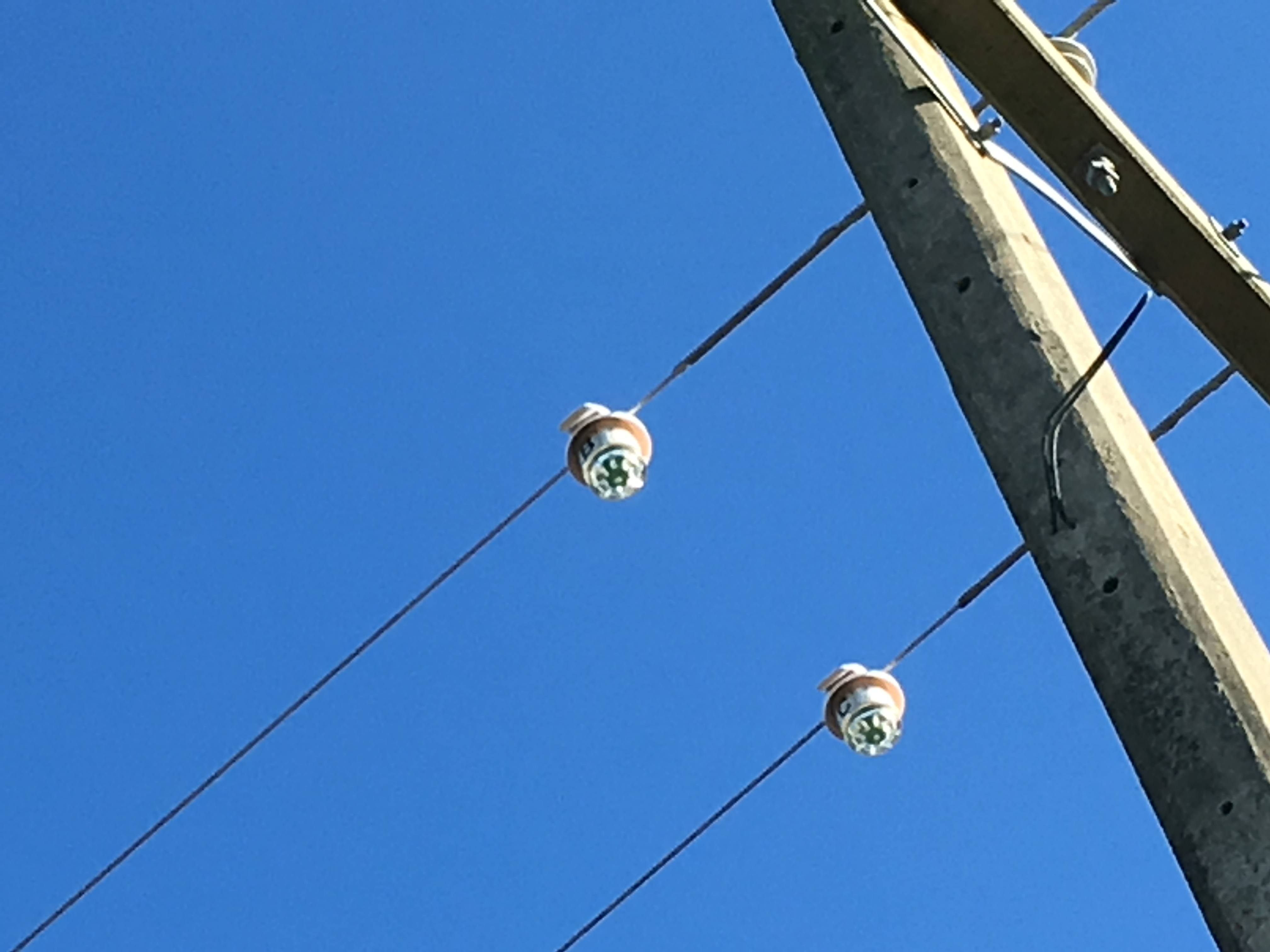
Months ago, I began seeing strange flashing lights when I was feeding the animals in the morning. They seemed to be coming from a copse of trees about 500 metres down the road. The red and amber lights flashed sometimes with a pattern, and sometimes just once, and they weren’t always there.

For the life of me, I couldn’t figure out what would be up in those trees flashing away (the sci-fi writer in me had all sorts of fun ideas, though!).

I’ve seen them off and on for the better part of a year, but it wasn’t until a few days ago, while walking the road at night, that I discovered that the lights aren’t coming from the trees at all, but from strobe lights mounted on the powerlines between our house and that copse of trees.

Of course, that didn’t solve the mystery of what the heck those lights were, but it did give me something to google. I’m not the first one to have wondered about those things.

It only took a moment to discover that they are fault indicators, and the pattern and colour of flashes indicates the type and magnitude of the fault.

Thinking back on it now, I realise that the first time I noticed them (when they were flashing constantly for a long time), the power was out.

What is surprising, now that I know what I’m seeing, is how frequently they flash. Though perhaps I shouldn’t be so surprised, given how frequently our power goes out. But even when the power is on, the fault indicators flash remarkably often.

Apparently, they clip right to the line and monitor the electrical load. Some of them can even wirelessly relay information back to the lines company. They make perfect sense for those linemen out on a windy, rainy night trying to pinpoint a fault.

But, of course, now that I know they’re telling me something, I wish I knew how to ‘read’ them.

Throwback Thursday: Tramping the Abel Tasman

100_1198 smThe Abel Tasman was our first Great Walk as a family. It was also our first family tramp longer than two nights—the kids were still at the stage where they sometimes needed a prod to get to the top of a hill (or more accurately, the promise of chocolate at the top).

The Abel Tasman was the perfect trip—long enough to give the kids a ‘real’ adventure, and easy enough that they didn’t struggle with it. The distances between huts were short enough that the kids could spend hours playing on the beaches along the way and still get to the hut by mid-afternoon.

I’ve heard that the track is miserable in bad weather—all those exposed beaches can’t be fun in the wind and rain—but we were blessed with perfect sunny days. Though it was April, the weather was warm enough for lots of swimming along the way, and the whole experience felt more like a frolic than a tramp.

For me, the best part about the trip was gaining a greater appreciation for tides. The surges of water, so different from the normal waves, that fill the estuaries, bringing schools of fish and rays with them. The rippled and exposed mud flats of low tide. The twice-daily rhythm of inundation and exposure of the coast.

It wasn’t a wilderness experience—the huts were filled to capacity, and boats stopped at most of the beaches—but it was a beautiful chance to explore a rich and dynamic coastline.


Racing Ahead

100_3459 smI think the best feeling as a parent is to see your children way out ahead of you.

Not just on the trail, though that’s good, too, because it means they’re having fun doing something we all enjoy.

Metaphorically, too, it’s great to see them in the distance.

It means they are developing their own interests, taking the initiative to grow in ways I can’t help them, taking risks.

It means they’re growing up.

I love the fact my son knows more about bridge engineering than I do.

I delight in the fact my daughter races around the yard on a unicycle (nothing I ever learned).

I’m thrilled that they both come to me to say they’ve arranged to participate in various extracurricular activities—on their own initiative, and having gotten all the details I need to make sure they are at the right place at the right time.

Having the kids running out ahead makes my life a scramble at times (juggling schedules to make sure everyone gets where they need to go, and can do what they want to do), but it also makes my life easy. The kids are taking control of their own lives and learning. That’s what we’ve raised them to do, and it’s a joy to watch.

Pear Compote

2016-06-14 18.46.11 smMy husband brought home a bag of pears yesterday. They were dead ripe, and there was no way we were going to be able to eat them all before they went bad.

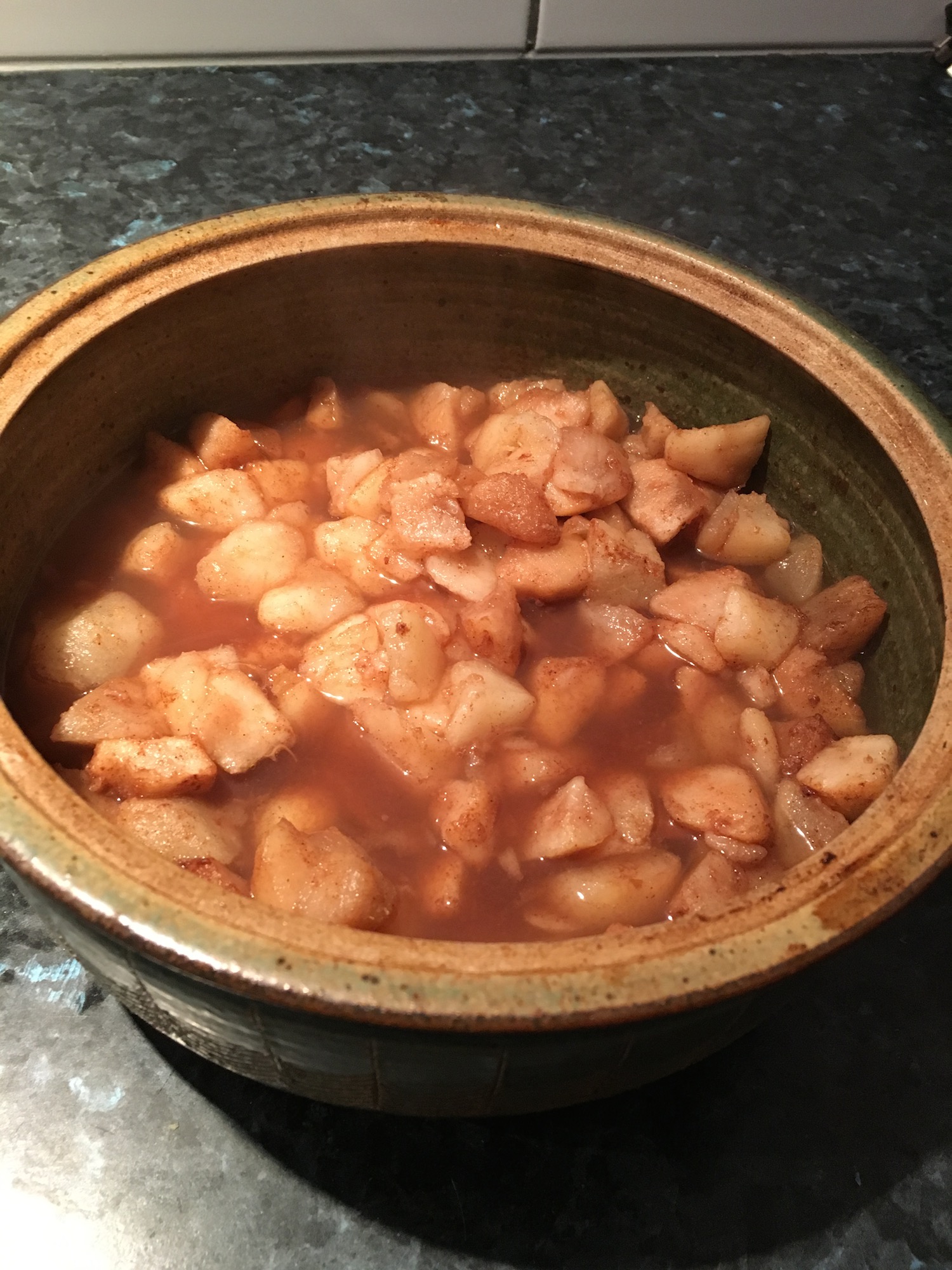
I filled a casserole dish with peeled and cubed pear, added a few tablespoons of honey and a similar quantity of lemon juice, sprinkled it generously with cinnamon, and baked it for 45 minutes at 190°C (375°F).

The result was intense and lovely. We had it warm with whipped cream after dinner, but there’s plenty left over. I’m thinking it will be perfect on my granola in the morning…