Nutmeg Memories

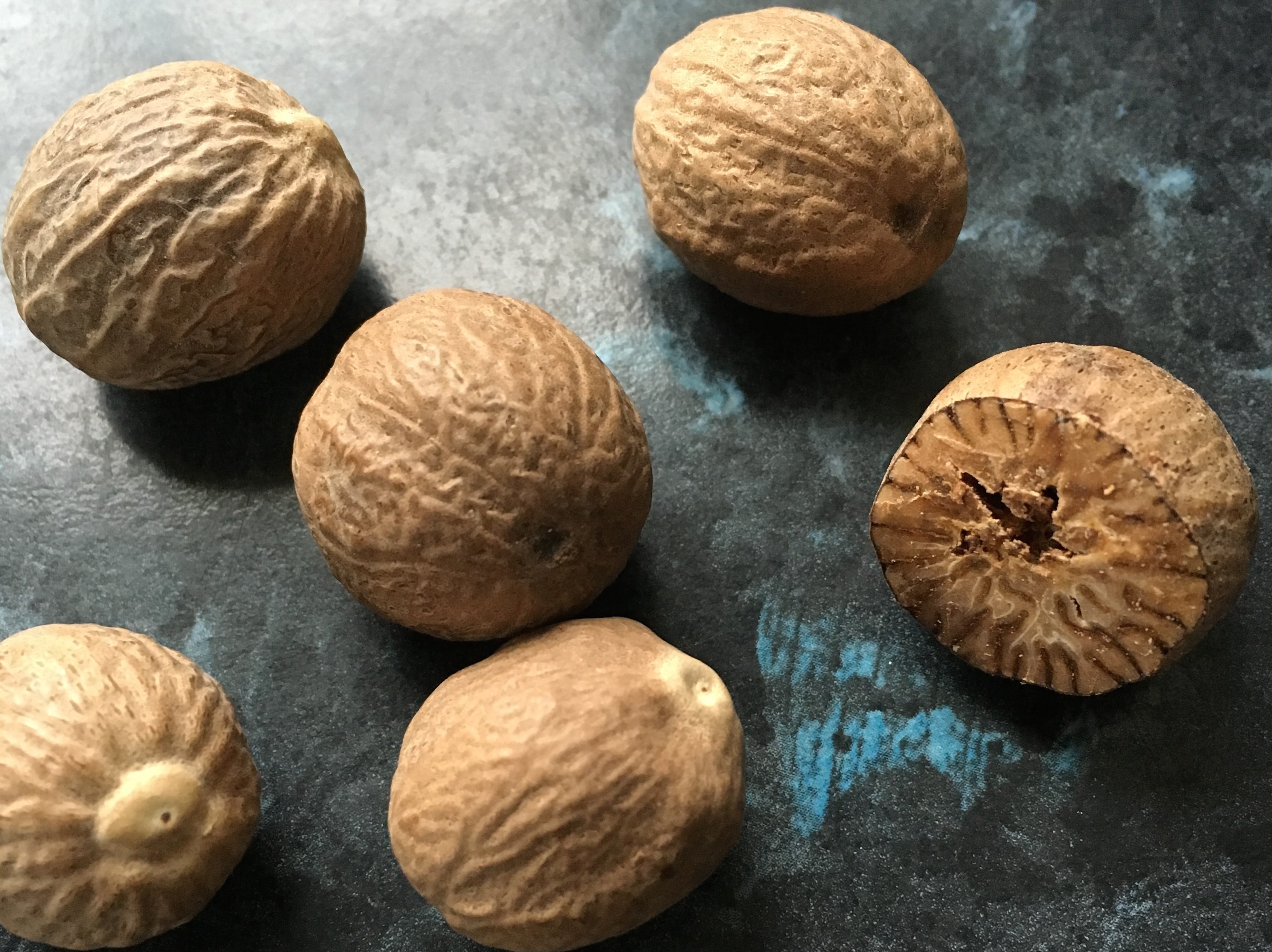
2016-07-05 09.26.26 smWe were almost out of nutmeg, so I put it on the grocery list.

But finding whole nutmegs here isn’t always easy. I had to go to three different grocery stores before I found one that carried them.

It’s only fair, I suppose, that nutmeg is hard to find here. It grows only in the tropics, and whole nutmegs don’t fit well into the little commercial spice jars.

But there’s not a lot of point in buying ground nutmeg, as the flavour dissipates quickly once it’s ground.

My husband and I were lucky enough to have a friend who did her Peace Corps service in Grenada, where 20 percent of the world’s nutmeg is produced. That’s 20 percent of global production on an island that’s only 349 square kilometres (133 square miles) in size, with a population of about 110,000.

Naturally, we had to visit her during her service. My overwhelming impression was that the island exhaled nutmeg. There were nutmeg trees everywhere, and piles of drying nutmegs along the roadsides. The smell hung in the air and clung to my clothes. It was joined by the smell of mace (also from the nutmeg tree), cinnamon, cloves, allspice, and a wide array of tropical fruits. My memories of Grenada are intimately linked to the olfactory experience.

Since then, I can’t smell nutmeg without being transported back to a white sandy beach, with seawater as warm as bathwater, colourful flowers, and an island that moved in languid tropical time.

Presiding Over Death

Artemis in her younger years.

Artemis in her younger years.

It was bound to happen, this winter or next. My ‘old girl’, Artemis is showing her age.

She’s been coughing for a couple of weeks. At first I suspected lung worms, as she was due for a worming. But a drench didn’t help. Then I thought she must have pneumonia.

But when the vet visited today, she diagnosed heart problems. Artemis is just old, and her heart is starting to give out, allowing fluid to build up in her lungs. No injection or pill is going to fix that. The only thing we can do is keep her as comfortable as possible.

In a way, it’s almost a relief, to have a goat dying of old age and not any one of the myriad ills that have befallen my other animals. But it also makes it that much more difficult to face the farewell I know is coming. She’s been a fixture in the paddock for nearly eleven years—it will seem bare when she’s gone.

Until then, my job will be to fill the remainder of her life with treats and scratches. To keep the bedding where she spends more and more of her time thick and fresh. And when the time comes, to make her passing as painless as possible.

Jelly Diagonals

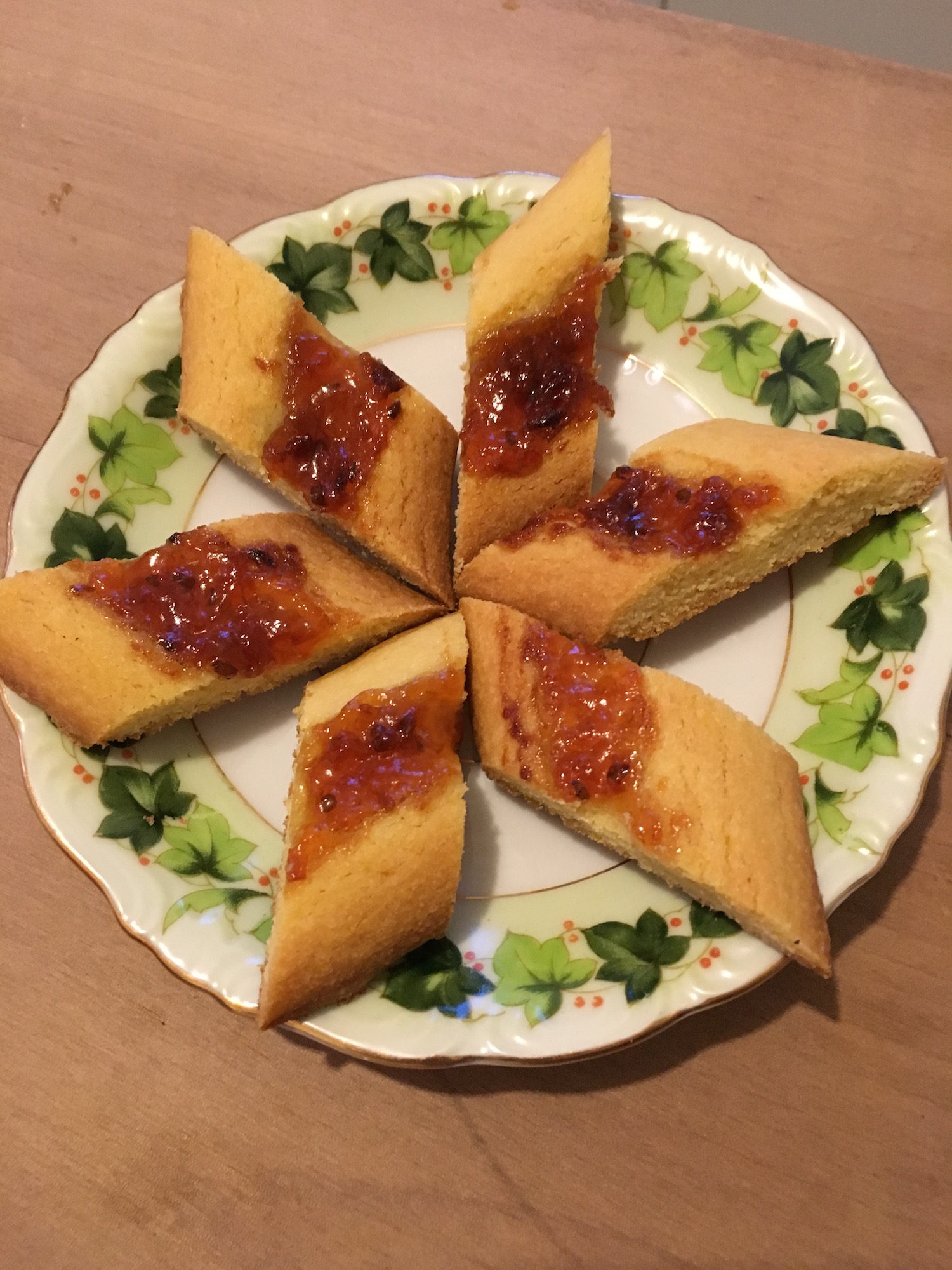
2016-07-02 17.16.26 smLove thumbprint cookies, but can’t be bothered filling a hundred little thumbprints with jam?

Try Jelly Diagonals! Not only are they quicker to make, they look like something special.

I use a recipe from Farm Journal’s Cookie book, but you could use any thumbprint cookie recipe.

Once you’ve made the dough, divide it into four pieces and roll each piece out into a log about 2 cm (Âľ inch) in diameter. Lay the logs onto a baking sheet (two per sheet), and press a channel down the length of each log. I use a wooden spoon handle for this. The channel should be a scant centimetre (3/8 inch) deep.

Fill the channel with your favourite jam, and bake until brown on the edges.

Cut into diagonal slices while still warm. Cool on a rack.

Saturday Stories: Sledding

IMG_2918I trudged up the hill behind Haley. The sled she pulled behind her was hardly recognisable as the twenty-dollar plastic toboggan it had once been.

“And you really think this is going to work?” I asked.

“I’m sure it will. As long as you pack the snow first, so I can build up enough speed by the time I hit the ramp.”

I sighed. My little sister had been in the garage for days—no, weeks—modifying her sled, only leaving off to go to school and eat meals. The floor was strewn with papers—fiendish-looking equations, diagrams, and sketches.

Mom and Dad humored her—let her use all the power tools, bought her sheet metal, wire, and who knows what else.

“We don’t want to squash her creativity,” said Mom.

It was creative, all right. The cheap plastic sled now looked like a silver bullet, with a sleek shell over the top. A small Perspex window gave the rider some visibility out the front. Fins and wings stuck out along the sides and back.

We reached the top of the hill and I handed Haley her bike helmet.

“Mom says you have to wear this.” Haley rolled her eyes but snapped the helmet on.

“If this ruins my weight calculations…”

“Better than ruining your head,” I said.

“Help me in.”

I lifted Haley and lowered her gently through the sled’s hatch. She grinned and gave me a thumbs-up before closing the hatch behind her.

Plopping my sled down at the top of the slope, I started down the hill. I hit the ramp at a good clip and soared into the air before landing with a thud in the snow beyond.

I had only just stopped and turned when Haley began her descent. God, she was moving fast! What had she done to her sled to make it go like that? I could see her face through the window, tense and full of excitement.

She hit the ramp and seemed to go straight up. And up. And up.

Then she was gone.

I blinked at the overcast sky and waited.

A few flakes of snow spiralled lazily down.

A crow cawed from a nearby tree.

Then I went home.

Outwitting the Cat

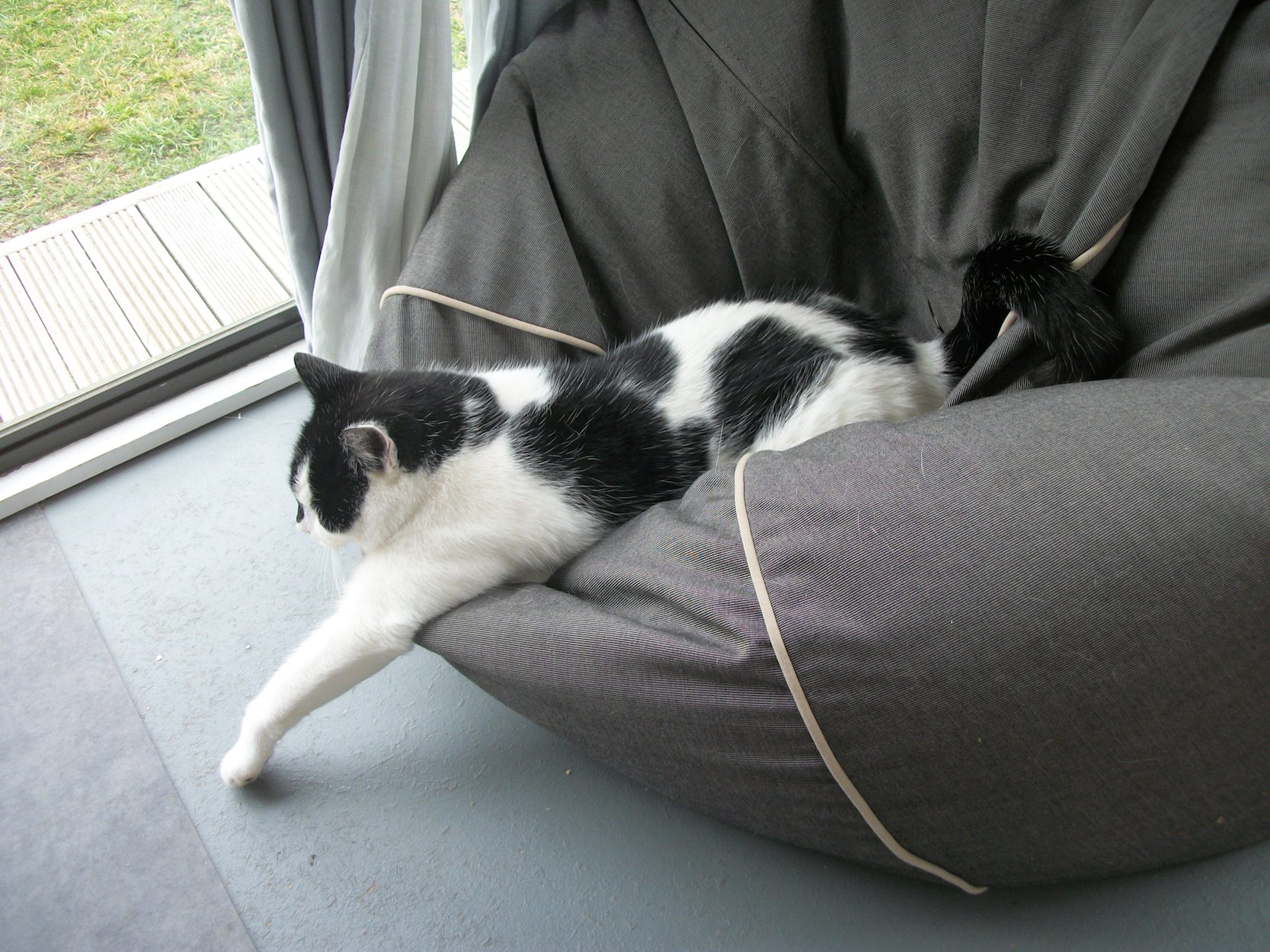
Exhausted after a hard night's hunting.

So cute and innocent…not.

It has been five years since I slept through the night. It’s no coincidence that it’s been five years since we got our cat.

Don Gato is a talker. He meows to come in, he meows to go out, he meows to be fed, he meows to be petted, he meows to be played with, he meows purely to piss us off.

In the middle of the night, he appears at my bedroom window and howls to come in. If I let him in, he waits until I’ve just managed to fall asleep again, then comes into the bedroom and howls to go out.

I’ve learned to sleep through the meowing at the window, but if I don’t let him in when he howls at the window, he hurls himself at the front door, rattling the door handle and loudly shaking the entire door. Repeatedly. For up to four hours (that’s the longest I’ve been able to stand it, though I’m confident he would have carried on as long as it took to get me out of bed).

When I tried to cure this behaviour by spraying him with water, rather than letting him in when he threw himself at the door, he learned to simply hit the door, then run out of range of the spray bottle.

A few nights, I’ve accidentally locked him into my office for the night, but doing that regularly would most certainly result in the total destruction of the office.

Last night I tried a new tactic. I affixed a string handle to a small plastic tub, filled the tub to the brim with water, and hung it on the front doorknob. If the cat tried to jump at the door, he would tip the water on himself (relieving me from the need to get up and spray him, and making the jump and run technique ineffective).

I slept all night last night.

Let’s hope the defences hold for tonight—I’ve got a lot of catching up to do.

Vegetarian Sloppy Joes

IMG_1389My family loves tofu meatballs, so any tofu I buy usually ends up in spaghetti with meatballs. But I enjoy tofu in many forms. Vegetarian sloppy joes comes in a close second to meatballs for me. This is a winter-friendly recipe, using canned tomatoes and dried herbs, but there’s no reason you couldn’t make it with fresh tomatoes and herbs in season.

300 g firm tofu, crumbled
1 onion, chopped
1 clove garlic, chopped
8 button mushrooms, finely chopped
1 can chopped tomatoes
2 Tbsp paprika
1 tsp smoked paprika
½ tsp ground cumin
½ tsp ground fennel
1 tsp dried basil
1 tsp dried oregano
1 tsp mild mustard
2-3 Tbsp olive oil
salt and black pepper to taste

Sauté the tofu in the oil until it begins to brown. Add the onions and paprikas and continue to sauté until the onion is translucent. Add the garlic and mushrooms. When the mushrooms begin releasing their moisture, add the remainder of the ingredients. Cover and bring to a boil, then turn the heat to low and simmer for at least 30 minutes. You may need to uncover the pot during the last 10 minutes or so to allow some of the moisture to boil off.

Serve on Mum’s Fluffy Buns.

Throw the Windows Open

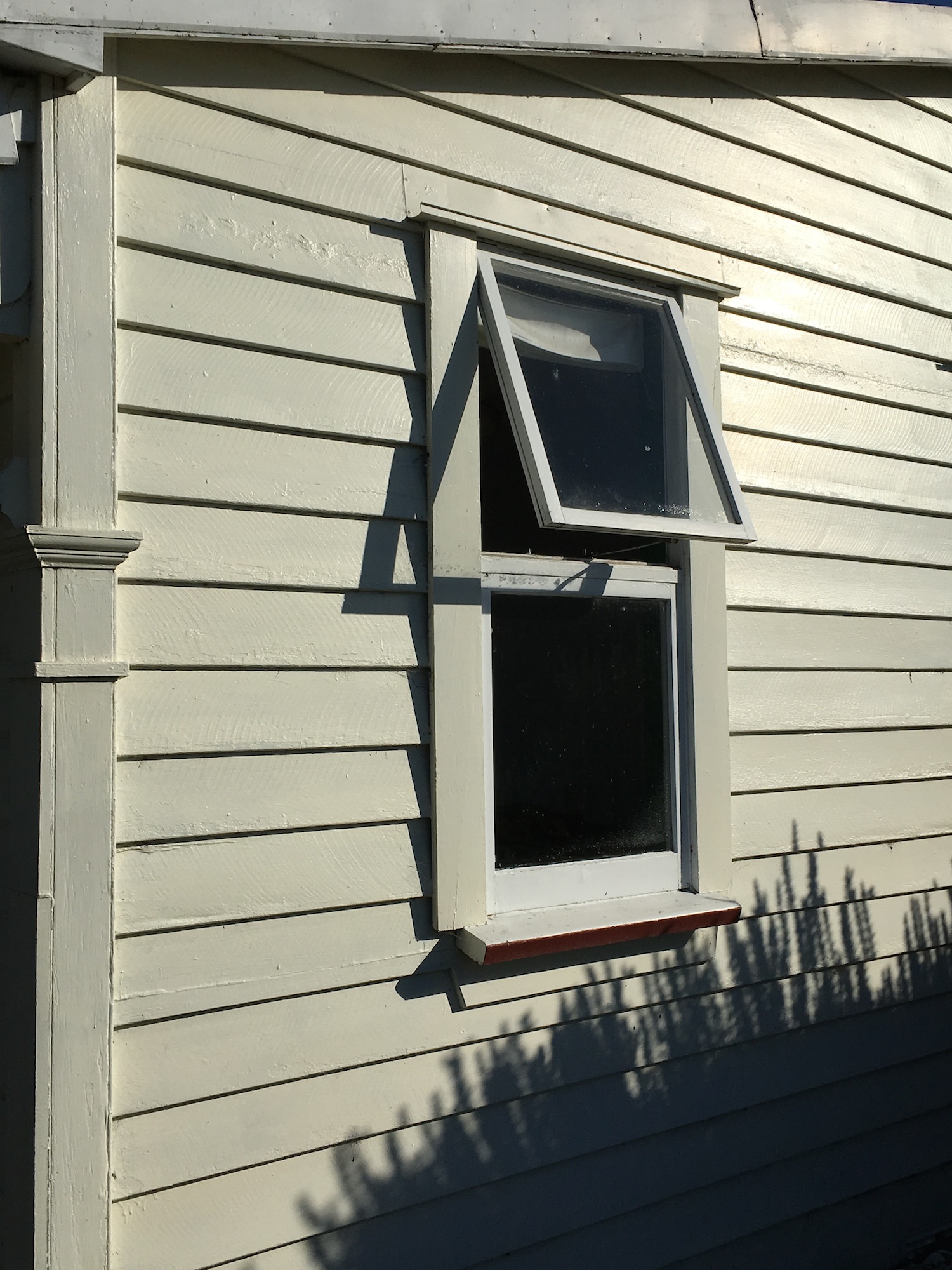
2016-06-29 13.02.59Until we moved to New Zealand, I would have laughed at the idea of opening the windows and doors in mid-winter. When it’s well below zero, a fresh breeze through the house isn’t exactly welcome.

Somehow here, the idea of a fresh breeze through the house at any time of year is welcome.

It helps that the climate is warm—there’s never a day that remains below freezing, even in the depths of winter. But even so, I noted after I flung the house open today that the outside temperature is only 11°C (52°F). I’m sure I never opened the windows at that temperature in Minnesota or Pennsylvania.

Of course, in Minnesota and Pennsylvania, the windows never ran with moisture. Puddles didn’t form on the windowsills every morning (in MN, it was ice, but that’s another story). The winter air here is warm enough to hold plenty of moisture, and without central heating to dry out the air, it can get pretty damp indoors. A couple of hours of a brisk breeze on a sunny afternoon can do wonders for the indoor humidity.

Perhaps that’s part of what I like about living here—the opportunity to invite the outdoors in, even during the wintertime.

As Horace Everett wrote (to Aaron Copland’s music): Stomp your foot upon the floor / Throw the windows open / Take a breath of fresh June air and dance around the room.

Functional and Meaningful

2016-06-28 16.00.01The pattern weights in the slick sewing magazine were tempting, for sure—sleek brass cylinders that screamed ‘professional sewer’. Just looking at the picture, I could feel their delicious heft and smooth finish.

But my life is not one of polished brass. Though the fancy pattern weights were elegant and undoubtedly fit for the job, my beach rocks are, too.

Smooth greywacke cobbles I collected myself from the beach just 4km away beat out the fanciest weights. They belong here. They fit my hand nicely, come in many sizes and weights, and they speak to me of waves and water, sun and sand. Nothing purchased can do that.

My pie weights come from the beach, too, and work just as well as a fancy set of ceramic beads. More so, because they make me smile whenever I use them.

Objects that are of a place. Objects that belong.

In our global economy, with the products of the world just one click (and a credit card number) away on the Internet, it’s easy to forget that what is in our back yard may be just as useful, and far more meaningful, than anything manufactured and stamped with a brand name.


Playing with Fire

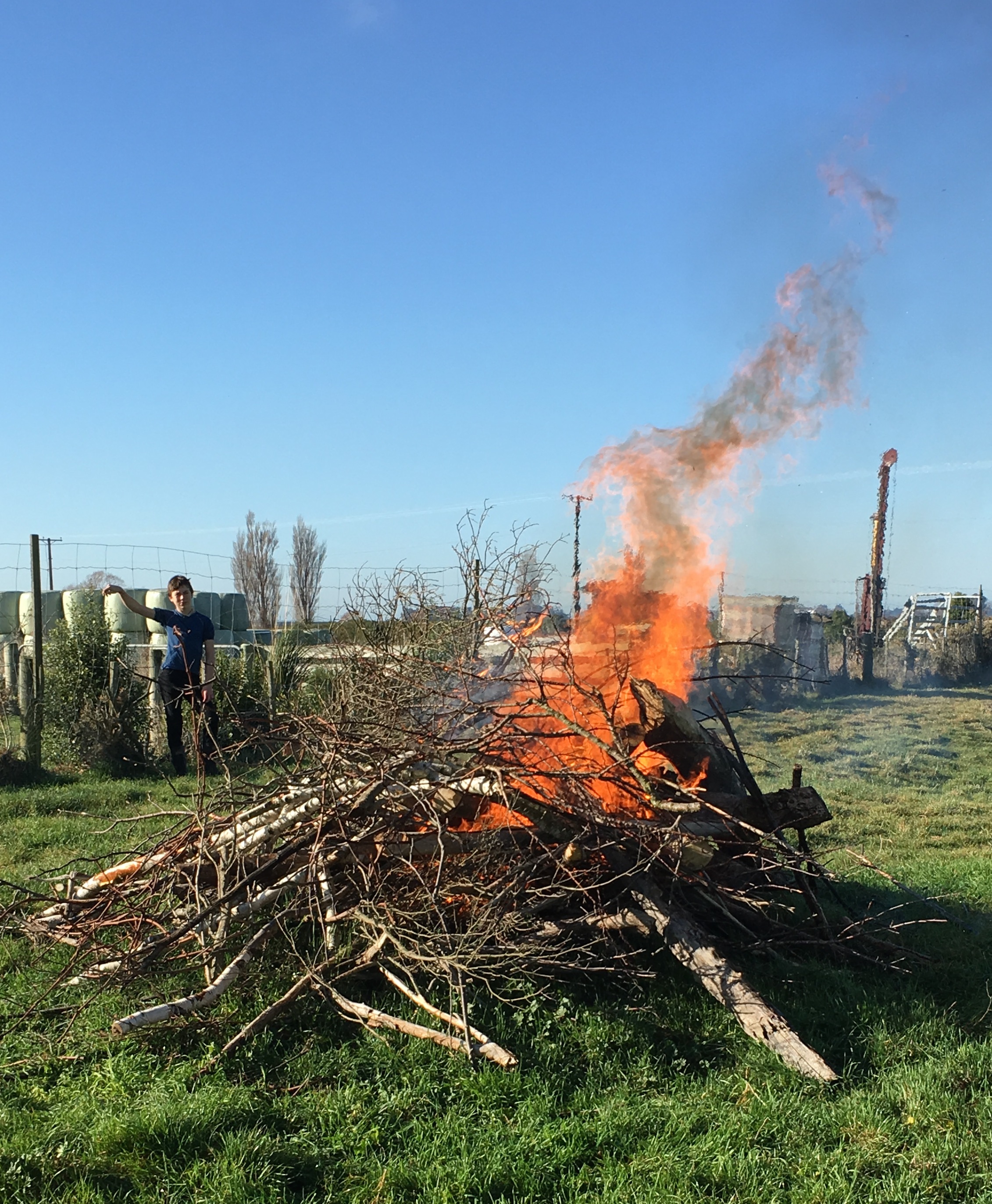
2016-06-25 11.56.06There is nothing better calculated to get my teenage son outside than the prospect of fire.

Most weekends, he spends the day indoors reading books or playing computer games. He’ll come out to help in the yard or garden if we ask him to, but as soon as he’s released, he’ll be back inside.

Tell him we’re going to burn off the brush pile, though, and he’s out the door like a shot, and will spend all day pottering around the fire—tossing sticks in, raking coals together, hosing down the grass around the fire to keep it from spreading.

What makes fire so compelling, especially for teenage boys?

Believe it or not, scientists have actually tried to answer this question. Researchers at the University of Alabama found that gazing at even a video of a fire reduced subjects’ blood pressure. The longer they watched the fire, the more relaxed they became. The researchers suggest that the multisensory aspect of a fire focuses our attention and reduces anxiety.

Whether that is simply an outcome of meditation associated with this sensory focus, or an evolutionary response to the social and physical security that a fire was to our ancestors is a matter of speculation.

Fire is, in fact, essential to humans. Our power-hungry brains need the extra nutrition provided by cooked food (about one-fifth of our calories are used by our brain). We can’t grow and develop properly on a raw diet, and human culture never would have evolved without it, so it stands to reason it would be important to us.

So, why are kids so interested in fire—more so than adults?

Researchers at UCLA have studied fire play among children in various cultures, and have concluded that the desire to master the control of fire is common among cultures. This makes sense from an evolutionary standpoint—we need fire to survive, so those able to control it historically did better and produced more children.

In westernised cultures, where open fires aren’t used on a daily basis, children’s interest in fire lasts longer than in cultures where fire is a daily necessity for cooking or heating. They remain fascinated by fire until they’ve learned to master it.

This doesn’t fully explain my teen—he mastered fire years ago, learning to light and maintain a fire in our log burner. But I do think there is an aspect of control that keeps us coming back to fire, especially when we’re young. Fire has incredible destructive power. To ignite that power, then hold it in check to achieve a goal (heating the house, cooking dinner, or disposing of brushwood), is a heady thing, particularly for teens who have so little control over their own lives.

All of which leads me to believe that it’s important for us to teach our kids to safely light and control fires. Research indicates they will play around with it until they learn—it’s an innate need. Better they learn safely than by burning down the house.

I also think that giving kids safe ways to exert control is important for their growing sense of accomplishment and self-worth. There is so much we can’t let them control—they can’t drive, they have to go to school, they can’t leave home—I remember all those restrictions eating away at me when I was a teen, eager to exert myself on the world.

So, yeah, we let our kids play with fire. It’s good for them.
Gonna Feel That Tomorrow!

Einstein smI put it off as long as I could.

I waited until the new goats were happily eating out of our hands, enjoying (or at least tolerating) a good scratch.

Then I found other excuses for a couple of weekends—excuses to put off trimming the new goats’ hooves.

I knew it would be a circus the first time I trimmed their hooves.

I’ve been spoiled by the dairy goats so used to the routine I didn’t need to even hold onto them when I opened the gate—out of the paddock, onto the milking stand, stand calmly while I do whatever needs doing, then trot calmly back to the paddock.

But of course the three new boys aren’t used to the routine. For them, hoof trimming means being herded up, and slung onto their backs. I could have done that, but training them to stand nicely while I trim their hooves will make life much easier in the long run.

For today, though, it was killer. It was a day of many firsts for the new goats—first time on a lead, first time on the milking stand, first time to have their hooves trimmed standing up.

Their personalities came out. Newton was the timid one. As soon as he found himself on a lead, he stood stock still and refused to budge. I practically had to push him all the way to the stand. Einstein was a bucking bronco, lunging and twisting to get free of the lead. He sent me sprawling to my knees, and then cracked me soundly on the chin with his horns. Darwin was happy to go, but not ever in the direction I wanted him to.

In truth, it was exactly as I expected, and no different from a dairy goat her first time on a lead and on the milking stand. I was thankful that angora goats are small—nothing like being dragged across the yard by a 70 kg saanan. Still, my chin is black and blue, my back is sore, my knees are skinned, and I have a rope burn on my arm. I have a bad feeling that tomorrow morning, I’m going to feel every bruise and ache even more.

Tell me again why I do this…?