Cricket Flour

IMG_1784I was running errands in town today, and called in to Bin Inn for some flour and cornmeal.

I was excited to find this sitting on the shelf next to the rice flour and barley flour. It was the first time I’ve seen commercial insect products that admit to being insect products sold in an ordinary store (there are plenty of things you’ve probably bought that contain insect products, but manufacturers generally don’t advertise that).

It’s nice to see insects showing up on the grocery store shelves. I am a proponent of entomophagy, even though I am a vegetarian. If you’re going to eat meat, insects are probably the most environmentally sound way to go.

Being cold-blooded, insects convert feed into body mass much more efficiently than our warm-blooded livestock. You can raise a kilo of crickets on just 1.7 kilos of feed. Compare that to chicken at 2.5 kg of feed per kilo of chicken, or cows at 10 kg of feed per kilo of cow. Adjust these numbers for percentage of the animal that’s edible, and they favour insects even more—80 percent of a cricket is edible, whereas only 55 percent of a chicken and 40 percent of a cow is.

It still takes resources to produce insects. Though they convert feed into food more efficiently, insects need to be kept warm—warmer than you need to keep a cow, because they can’t keep their own bodies warm. There is an energy cost in that.

Of course the biggest problem with farming insects is getting people in Western countries to eat them. Most of the world’s people actually do eat insects, but our modern Western culture had separated us so much from our food, that we even get squeamish when we can identify the animal that our cuts of meat came from.

Consumers generally don’t want to actually see the animal when they’re preparing dinner. I’m sure cricket flour goes over better than, say pickled whole crickets (sort of like sliced ham vs. pickled pigs feet).

It will take a change in our attitude toward insects before Westerners will agree to bar nuts that include roast, salted crickets (which are delicious, by the way). When preschoolers learn that a cricket says “chirp, chirp” along with the cow says “moo”, we’ll be on our way. When we begin to view insects, not as enemies to be beaten, but as fellow organisms on Earth, we’ll be on our way. When we stop seeing insects as dirty, but rather recognise that they carry fewer potential human pathogens than our close relatives the cow and pig, we’ll be on our way.

As a vegetarian and a gardener, I value the insects that come into the kitchen on my vegetables. I don’t get enough vitamin B12, because it is only found in animal products. Insects are full of vitamin B12. So, I’m casual about cleaning the insects off our organically grown vegetables. We eat a lot of aphids, and quite a few caterpillars, I’m sure. And that’s great—it gives us all the nutrition we need, without any extra effort on our part (less, in fact).

Indeed, though I support insect farming, I’m afraid I will probably never buy any insect products–there are so many wonderful insects out there free for the taking, I couldn’t see spending $120 per kilo (and that’s half off!) for cricket flour.

Besides, I prefer my crickets whole—the best part about them is the crunch, after all.

Literary Fog

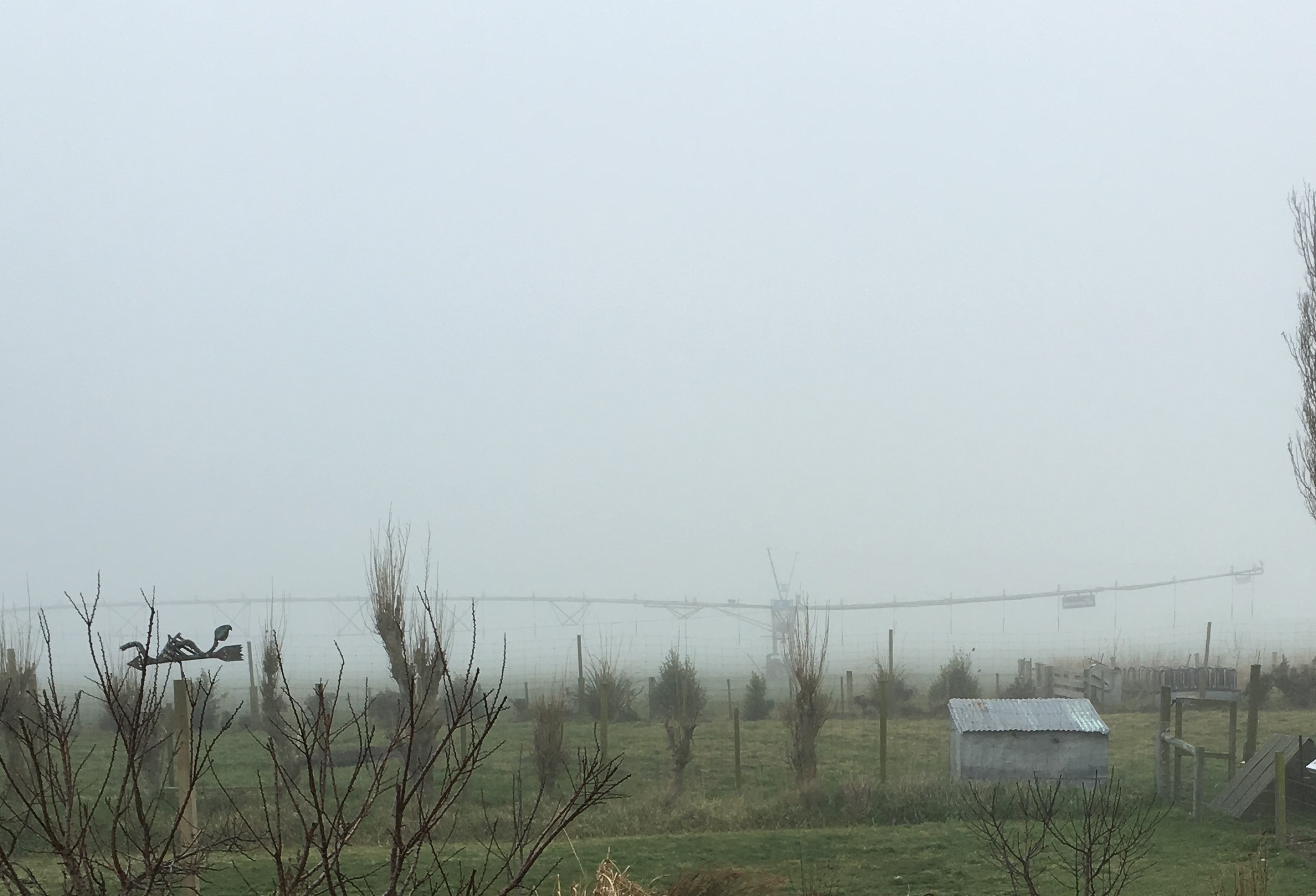
The view extended no farther than the neighbour's irrigator.

The view extended no farther than the neighbour’s irrigator.

“The fog came pouring in at every chink and keyhole, and was so dense without, that although the court was of the narrowest, the houses opposite were mere phantoms. To see the dingy cloud come drooping down, obscuring everything, one might have thought that Nature lived hard by, and was brewing on a large scale.”
–Charles Dickens, A Christmas Carol

This is one of my favourite quotes about fog. It’s actually quite a bit longer than this (Dickens certainly couldn’t dispense with such an atmosphere in just two sentences.)—I’ve just transcribed the second half of it here.

Today put me in mind of this quote. We were in the grip of a chilly sea fog most of the day. Heavy, wet and cold. I’m sure that a mere kilometre away, it was a warm and sunny day—that was the forecast, at least. But this close to the sea, our weather sometimes defies the land-based predictions.

I worked in hat and fingerless gloves most of the day, even indoors. When I went outdoors to care for the animals or get the mail, the trees dripped sullenly, and I came back in with my hair frosted with water droplets.

For about an hour—between 11 am and noon—the fog retreated. The sun shone warm on paddocks sparkling with water. I threw open the windows and took off my hat and gloves.

But soon the dull grey blanket came rolling back. I saw it coming, while the sun still shone, and closed the windows. And then we were plunged into the chill darkness again.

I would have liked the sun today—my laundry, hung on the line in the morning, ended up being thrown into the dryer in the afternoon, wetter than it had started. But there is something so delicious and…Dickens…about fog, that I can’t resist spending time out in it. There is mystery in fog. There is introspection and contemplation. Who knows, but the Hound of the Baskervilles could be out in that fog. Fog is literary. Fog is visceral, tangible like a sunny day can never be.

I do hope we see the sun tomorrow, but if it is fog, well, I’ll sharpen my pencil and keep an eye out for strange door knockers and large black dogs.

My life in gumboots

2016-08-16 12.32.47My daughter and I wear the same size gumboot, but there’s never any problem telling them apart.

That’s because gumboots tell the story of their wearer’s activities.

Mine tell many tales.

A smear of paint—Sicily White—tells of a hot summer day scraping and painting the house. A job that had to be called off, because the paint was drying so fast, I couldn’t spread it.

Another glob—brick red—tells of another summer day fixing and painting the roof, balancing paint bucket and feet on the peak, and looking out over the hedges to the lake and sea beyond.

Lavender speckles recount an afternoon drenching goats, when a syringe of purple medicine burst open and splattered everywhere.

Bits of hay relate frosty mornings feeding the animals in the dark, by moonlight and starlight.

Smears of mud describe weeding and planting in the vegetable garden.

Clumps of goat poo tell of afternoons in the paddock, hand-feeding grain to eager goats who push and shove to get more than the others.

The tales are fleeting—even the most enduring splatters fade in time, replaced by the next instalment of my life in gumboots.

Waiting

2016-01-25 20.44.42 smFor the week before our trip to the U.S. I got almost nothing done. I was mentally occupied, with the trip—waiting for it to begin.

When we returned, we were just a week and a half from my husband leaving for a trip, and I got little done that week, either—waiting for him to leave.

While he was gone, I did almost no writing. I was distracted, I was working in odd places at odd times around the extra tasks that fell to me while he was gone. I was waiting for him to return.

Now he’s back, and I feel stuck in the habit of waiting.

I fear I’m stuck in the Waiting Place, as Dr. Seuss so eloquently described it:

“…for people just waiting.
Waiting for a train to go
or a bus to come, or a plane to go
or the mail to come, or the rain to go
or the phone to ring, or the snow to snow
or waiting around for a Yes or No
or waiting for their hair to grow.
Everyone is just waiting.”

Yep, I’m stuck in the waiting place.

It can be a hard place to get out of, but I learned many years ago that waiting rarely brings what you want.

It was in Peace Corps in Panama. My husband and I had been out with our local Corregidor (mayor), Fermín, and were returning to our village by bus. As we waited for the bus, it started to pour. We waited for hours, and when the bus finally came past, it didn’t even stop—it was too full already. The next bus might be hours, or might not come at all, so we decided to just walk, in spite of the rain. Fifteen minutes later, when we were thoroughly soaked, we heard another bus coming up behind us. Fermín smiled and said, “If you don’t walk, the bus won’t come.”

I took that as an important life lesson.

And now, I need to step out into the rain and stop waiting.

It’s All About Perspective

IMG_5709 sm
We headed to the mountains this morning in the hopes of snow. We were disappointed in that—there was no sledding to be had, but we did have a lovely walk at Kura Tawhiti/Castle Hill instead.

Kura Tawhiti, with its fabulous limestone formations and huge boulders, is one of our favourite quick day trips and a regular stop-off on our way to other places. For all our visits, though, we have never actually gone to the top of Castle Hill. So today, that was our destination (with many boulder-scaling detours along the way, of course).

The best part of the top of Castle Hill was the massive boulder jutting up from near the summit (I really think they should have put the trig marker on top of that rock—it really is the summit, more so than the ground below). Though I didn’t measure it, I’d guess the rock adds a good seven metres to the height of the hill. It dwarfed us all as we stood in its shadow.

It was a lovely walk to the top, though we were disappointed that we couldn’t actually make it to the top of that big rock. After a few minutes on top, we made our way down the other side of the hill.

Later, looking back toward the summit from a neighbouring ridge, that massive boulder looked tiny.

“The lesson,” my husband said, “Is that until you reach them, all your problems will seem insignificant. It’s only when they’re upon you that you’ll realise how utterly insurmountable they are.”

It wasn’t exactly the lesson I took (I was thinking that big problems, safely in the past, look small), but it’s a valid point. Sometimes we take on challenges or make decisions we know will lead to challenges in the future. At the time, those challenges might look manageable, but when we finally face them down, they could be huge.

Thankfully, we rarely have to face life’s problems alone unless we choose to do so. In fact, many of the big challenges that matter a great deal to us—raising kids, dealing with illness, facing loss—are really only manageable when shared. Sometimes, the hardest part is asking for help.

And then, once you’re past, the problems look smaller again. They look more manageable, because you did manage them.

So, don’t be afraid of those big challenges. They may be bigger than you think, but once you’ve made it past them, you’ll be able to look back from a distant ridge and say, “Well, maybe that wasn’t so bad after all.”

Saturday Stories: Jessi’s Scarf

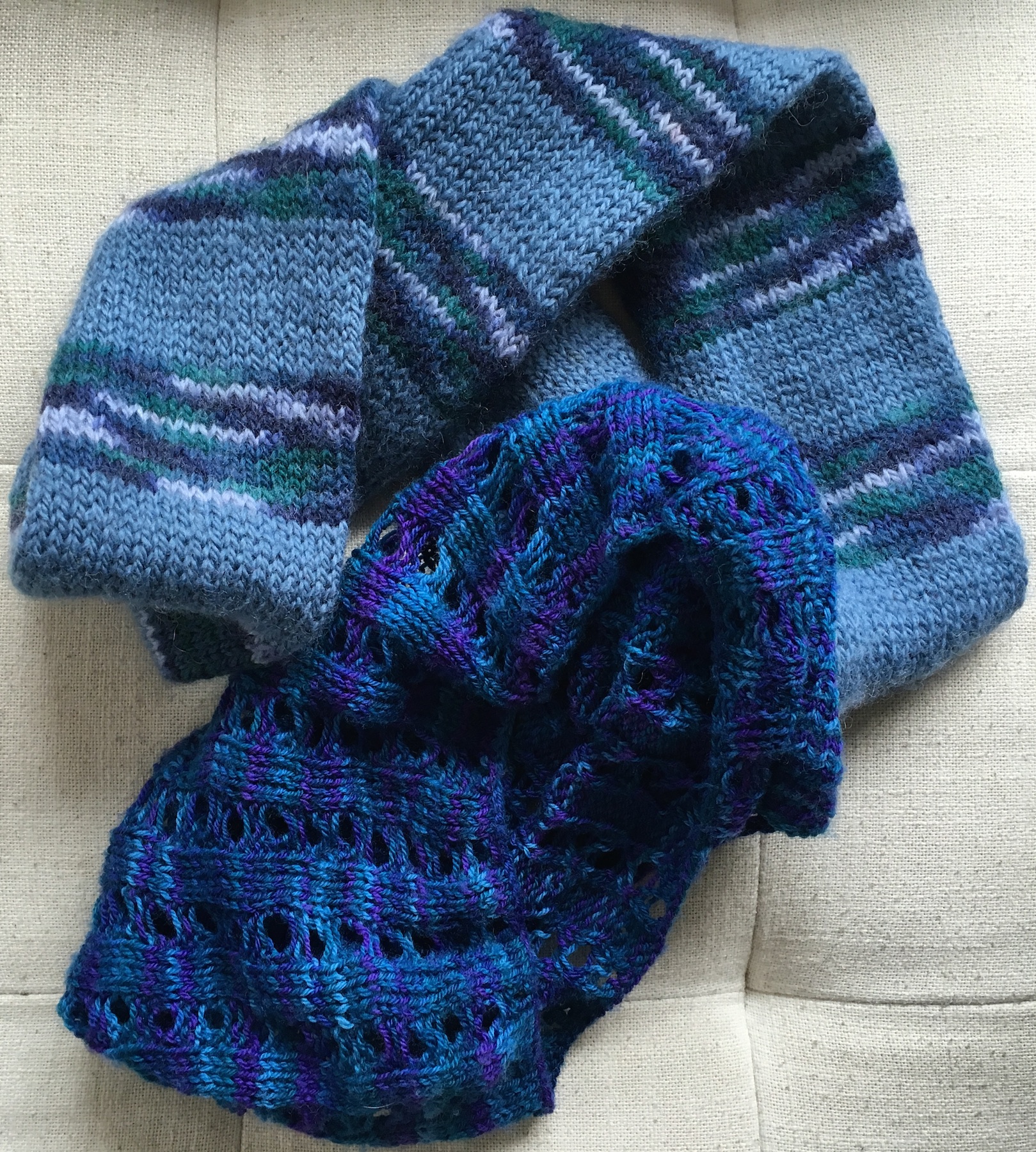
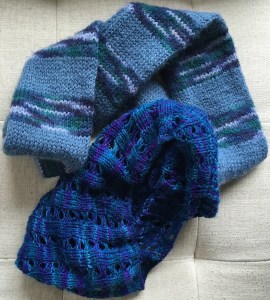
2016-08-13 12.57.50Jessi knotted the scarf around her neck, checking it in the mirror before stepping out onto the street. She walked briskly—the morning was cold, and she was running late. It wouldn’t do to be late for work. With unemployment at forty-three percent, her employer could fire her at nine in the morning, and have a replacement for her before ten. She was lucky to have a job, and meant to keep it.

She passed a boarded-up restaurant—Dominique’s—and thought about the last time she’d gone there. It had been her last date, and it had been a disaster. She and Michael had been seeing each other for a month, and things were looking good. They had met at Dominique’s on a Friday after work. Dinner and a few drinks had ended with them walking to her apartment. That’s where it all fell apart. Kissing her, Michael had unwound her scarf from her neck.

“What is that?” he said.

Jessi snatched the scarf back from his hand and wrapped it around her neck again.

“It’s a birthmark.”

Michael left soon afterwards, and hadn’t asked her out again. That’s how most of Jessi’s relationships had ended. She had yet to meet a guy who could overlook the angry red splotch that wrapped its arms around her neck from chin to collar bone. Like her employer, they could always find another girl—one whose neck didn’t look like it had been peeled.

Jessi turned the corner onto Bond Street, leaving the restaurant and her memory of Michael behind.

She walked even more quickly now. The Bond Street Detention Center filled much of the block, and it wasn’t a place she enjoyed passing. The economic crisis had led to all sorts of ridiculous policies aimed at ‘making America great again’, most of which were misguided and based on fear, not facts. The government had gone on a campaign to round up illegal immigrants, homeless people, the disabled…anyone who was even slightly different or who spoke up against government policies or big business. The Bond Street Detention Center had opened less than a year ago, and it was already overcrowded. Most of the detainees had done nothing wrong, and none of them deserved to be housed in such miserable conditions. Detainees lived in tents. They were given scant food rations, foul water, and no legal assistance. On top of that, they were billed for every last expense the government incurred to house them there. When they couldn’t pay, all their assets were confiscated.

Jessi hated the policies that put innocent people behind bars, but what could she do about it? If she spoke up about it, she would end up a detainee herself, or worse. Just two weeks ago, a group of twenty protesters had been gunned down by police officers claiming they threatened national security. The protesters had been completely unarmed, participating in a sit-in against mandatory micro chipping of immigrants.

As she passed the high chain-link fence of the Detention Center, a clamour arose. Arms reached out through the fence, and voices called for her to stop, to help. Above the din, a high voice reached Jessi’s ear.

“Just your scarf, please. I’m cold.” A young girl wearing a flannel shirt much too big for her as a coat, and with no shoes stood gripping the bars, looking at Jessi. Jessi shook her head and carried on.


Jessi took the long way home, so she didn’t have to pass the Detention Center. She had been distracted all day at work. She hadn’t made any mistakes, but her boss had noticed.

“Pay attention, Jessi,” he’d said. “If you’ve got other things you’d rather do, someone else would be happy to do your job.”

She had forced herself to focus for the rest of the day, but now that she was home, her mind replayed the morning’s walk.

Just your scarf.

Just her scarf. Jessi hadn’t been out in public without a scarf since she was a baby. Her scarf was part of her. Her scarves, that is—she had dozens. Without a scarf, she felt naked, vulnerable. People stared, pointed. She couldn’t go without her scarf.

Please. I’m cold.

Jessi opened her dresser drawer. She pulled out a scarf—tomato red silk with a blue border—her sister had given it to her four years ago for Christmas. She lay the scarf gently on her bed and pulled out another—fine cashmere dyed deep green—she had bought that one herself, with money from her very first job out of high school. She laid the cashmere scarf on the bed with the silk one. She drew a third scarf from the drawer—sunny and yellow—her mother had worn it when Jessi was a girl, to make her feel like she wasn’t the only one wearing a scarf.

One by one, Jessi pulled every scarf from her drawer. Each had a story. Each brought back memories. She laid them out on her bed, the story of her life, told in scarves.

That night she slept under them.

In the morning, she woke early. She chose her favourite scarf—a soft merino knit in shades of deep pink and purple that her parents had given her for graduation—and tied it around her neck. Then she gathered the rest of her scarves in her arms and stepped out the door.

She walked quickly, for fear of losing her resolution before she got to the Detention Center. She clutched her scarves to her chest, blinking tears out of her eyes.

On Broad Street, the arms reached out through the fence. Jessi stopped and pressed a scarf into the first hand. Then the next and the next. In a minute, her arms were empty.

“A scarf for me?” It was the young girl who had asked for a scarf yesterday. She hadn’t gotten one.

“I’ve given them all away,” said Jessi, opening her hands to show they were empty. “I’m sorry.”

“That one?” the girl asked, pointing at the one wrapped around Jessi’s neck.

“But I need this scarf,” said Jessi.

The girl looked stricken, and Jessi imagined how unfair her words must have seemed to this girl who didn’t even have shoes or a coat. The girl turned to leave.

“Wait!”

As the girl returned to the fence, Jessi unwound the scarf from her neck. She was ashamed to find her fingers trembling. She bent down to push the scarf through the fence for the girl.

The girl looked up at Jessi and smiled. Then her smile froze, and Jessi shut her eyes, waiting for the exclamation of horror she knew was coming. Instead she felt little cold fingers on her neck.

The girl gasped. “You have a flower. A beautiful flower on your neck!” Then she was gone in the crowd.


Jessi arrived at work, still dazed. As she stepped into the office, her boss looked up.

“Morning.” Then he did a double-take. “What the hell happened to your neck?”

Jessi blinked at him, as though she’d only just noticed he was there.

“It’s a flower. A beautiful flower.”

Going bananas

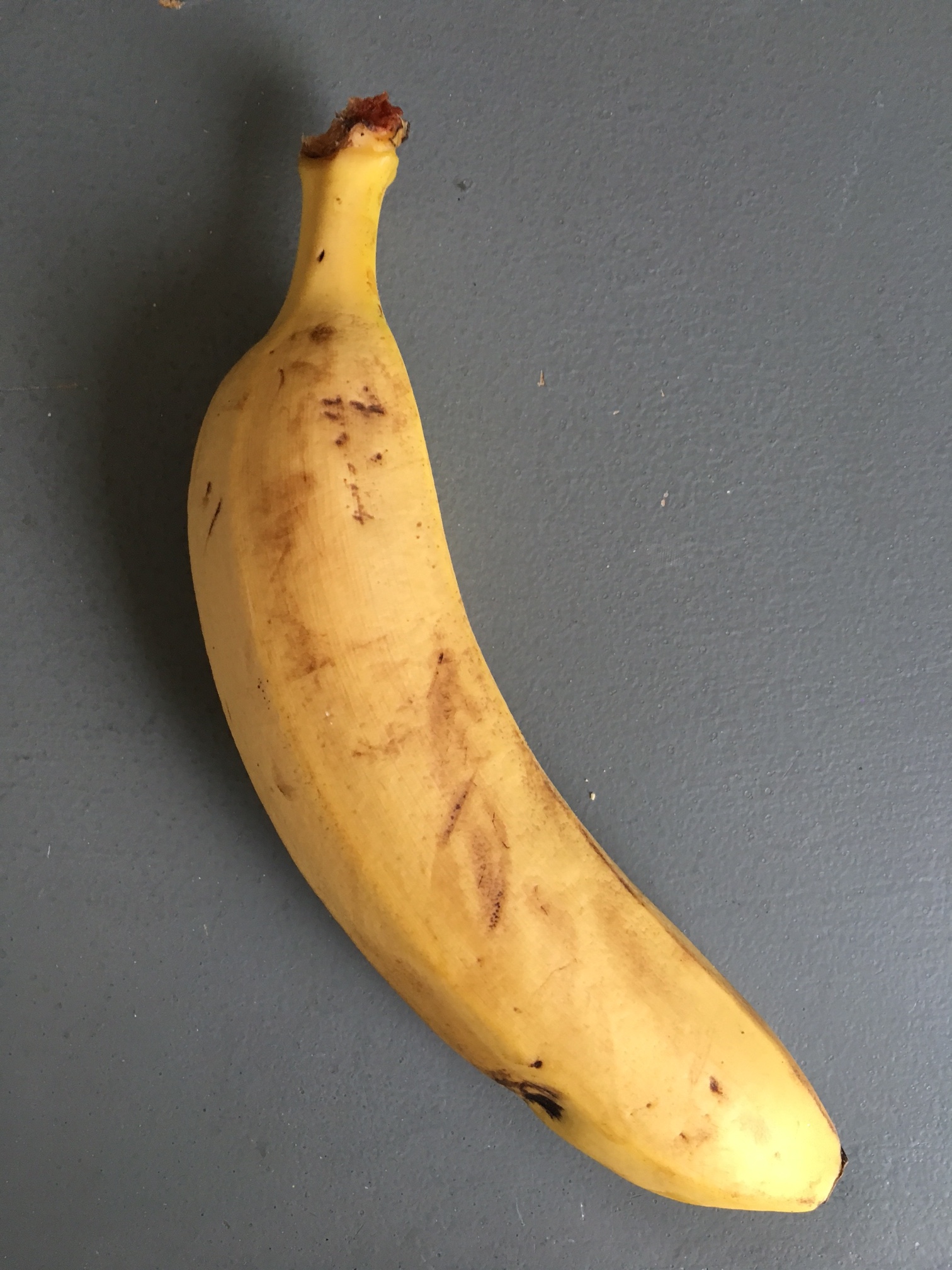
bananaOver 100 billion bananas are eaten globally every year, making bananas the fourth most important food crop in the world. Most bananas are consumed locally—only 15% are exported. Almost all the bananas grown for export are a variety known as Cavendish. New Zealand is said to have the highest per-capita consumption of Cavendish bananas in the world, at 18 kg per person per year.

The Cavendish was named for the Duke and Duchess of Devonshire—whose family name was Cavendish. Their head gardener imported a plant from Mauritius in 1830 and grew it in the family’s hothouse. The banana flourished and provided the duke’s guests with fresh bananas to eat. The Cavendish banana grew so well, the duke was able to supply two cases of plants to a missionary in Samoa. Those bananas were the start of the banana industry in Samoa.

Missionaries spread the Cavendish throughout the Pacific, but it wasn’t until the 1950s that the variety became popular commercially.

Until the 1950s, the most important banana for export was the Gros Michel, but in that decade, it was almost wiped out by a fungus known as Panama disease.

The Cavendish—smaller and not as flavourful as the Gros Michel—was immune, so growers switched largely to the Cavendish.

Almost all commercially grown bananas today are Cavendishes—clones of the plant grown by the Duke and Duchess of Devonshire.

Panama disease didn’t sit idly, though. By 1992, a strain evolved in Southeast Asia that was able to attack the Cavendish. And since the plants are all genetically identical, they are all susceptible to the new strain of the disease. At least 10,000 hectares of Cavendish bananas have been destroyed, and more will certainly fall as the fungus spreads.

For many of the nations that export bananas, it will be an economic disaster. For those of us who enjoy bananas…who knows?

There will likely be a time in which bananas become more expensive, even hard to find in our grocery stores.

But having lived in Panama, I know there are many banana varieties (about 1000, worldwide). And every single one I’ve eaten is better than the Cavendish. The Cavendish’s main selling point is its ability to survive transport, not its flavour.

In our village in Panama, everyone grew bananas. They came in many sizes, shapes, and colours. Some were more starchy, some were sweeter. Some tasted so much like banana, they seemed almost fake. Others tasted like a fruit salad, with tangy citrus overtones to the banana flavour.

I have to believe that as growers develop a replacement for the Cavendish, they will naturally end up with something more flavourful than the bland Cavendish. If we’re really lucky, they’ll develop more than one variety, providing greater insurance against the future evolution of Panama disease and more variety in our supermarkets. That has to be a good thing in the long run.

Want to know more? Visit the Panama Disease website.

Writing By Hand

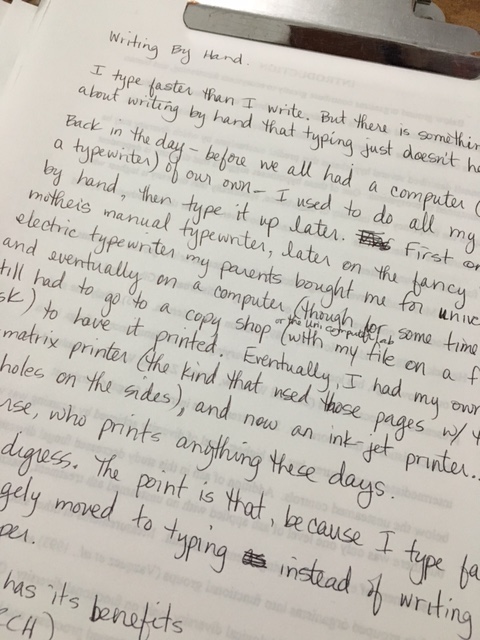
IMG_1739I type faster than I write. But there is something sensual about writing by hand that typing just doesn’t have.

Back in the day—before we all had a computer (or even a typewriter) of our own—I did all my writing by hand, then typed it up later. First on my mother’s manual typewriter, later on the fancy ‘portable’ electric typewriter my parents bought me for university, and eventually on a computer (though for some time I still had to go to a copy shop or the university computer lab with my file on a floppy disk to have it printed). Eventually, I had my own dot-matrix printer (the kind that used those cool pages with the feed-holes down the sides), and now an ink-jet printer. Of course, who prints anything these days…

But I digress. The point is that, because I type fast, I’ve largely moved to typing instead of writing with pen and paper. It’s just more efficient.

But writing has its benefits.

Educational researchers have studied the role of writing in learning, and have found that when we write notes out on paper, we actually think about what we’re writing, and we tend to rephrase things in our own words—we process the information, and learn it. When we type notes, that doesn’t happen—we tend to type verbatim, and it essentially goes in one ear and out our fingertips, bypassing the brain altogether. We don’t learn the material.

That’s fine, but when I’m writing, I’m not learning, per se. I’m expressing what’s in my head already, so it shouldn’t make any difference whether I type it or write it.

But it does.

Writing is slower for me than typing, so I spend more time considering each word as I write it.

I can pack more meaning into each word when it’s written by hand. How I write something is a reflection of my meaning. When I’m typing up a handwritten document, the typed words are often different—trying to capture in the barren lines of Times New Roman what an extra-loopy ‘y’ means, or the precise emphasis meant by an aggressively crossed ‘t’.

When I write by hand, I not only see the words, but I feel them. They have more substance than when I type them. They are more intimate. And if I’m writing something that is emotionally charged, or personal, I need to caress the words—make sure they are just right and formed correctly. I can’t do that through a keyboard.

So I often step away from the computer, pick up a pen and paper, and write by hand. It keeps me in touch with words in a way the keyboard cannot.

Frozen

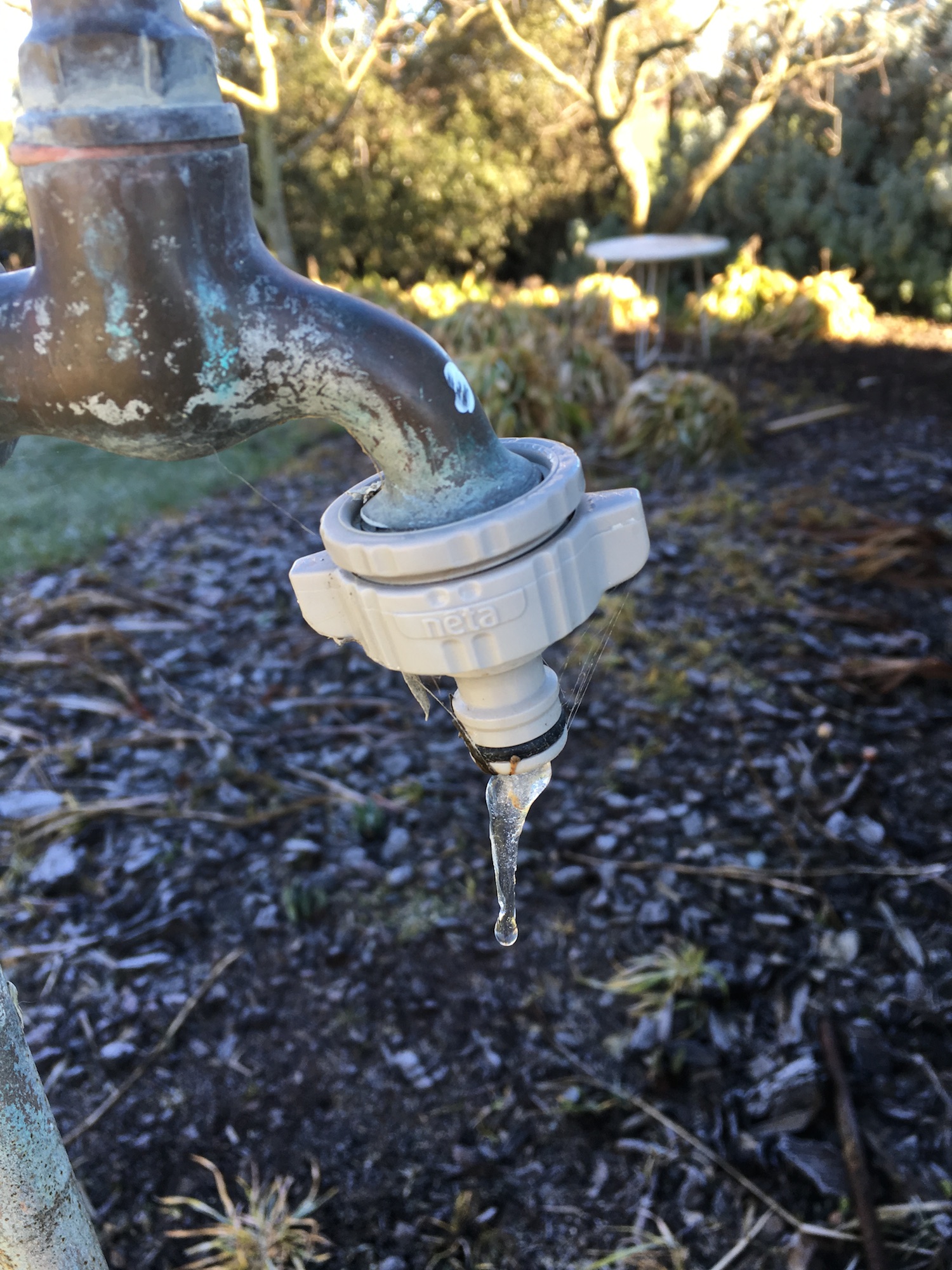
2016-08-10 10.08.08 smFive degrees below zero.
Grass
stiff with frost.
Pipes
frozen.
Pond
iced over.
Broken tap
paralysed mid-drip.
Nothing moves in the pre-dawn darkness
Except the stars,
shimmering in a black-ice sky.


Library Complaints

100_3972 smThe interesting thing about working in the public library is watching the people who come in.

Today, one of the notable visitors was a woman who arrived with her husband. As they walked in, they were arguing.

To be more accurate, she was complaining about something to him. He gave monosyllabic answers to her long rants about their plans for the day, and how they were inadequate.

She left him reading the newspaper near the entrance while she descended on the library to plague the librarians with passive-aggressive questions about why they did or did not have the titles she was looking for. When she found a CD she wanted to check out, she complained that the CD wasn’t held in its case well enough—it threatened to fall out when she opened it, she said at great length and with much demonstration to the ever-patient librarian.

As she moved further into the library, I lost track of her, but I’m convinced she complained her way through the shelves, because she was still grumbling when she returned to collect her husband and leave.

I felt sorry for the librarians, who handled her complaints with grace and polite smiles. But I felt more sorry for her.

She was not young—easily in her mid-eighties. She complained with the skill of someone who has made it her life’s work to be unsatisfied, her goal to find fault with everything.

She can’t have had a very nice life.

Not that I think a hard life turned her into a complainer. On the contrary, I expect that complaining made her life hard.

That internal dialogue we play in our heads can colour everything we experience. It’s easy sometimes to let that dialogue turn to complaints.

The library never has the book I want.

Someone ate the last cookie again?

Why can’t people be quiet in the library so I can focus?

I’m not suggesting no one should ever complain. Pointing out problems to those who can do something about it, and standing up for yourself are important things that complaining can sometimes accomplish.

But when every thought becomes a complaint, the complaining turns toxic. Sometimes it pays to turn those complaints around. It doesn’t necessarily solve the problem, but it changes how you feel about it, and that can make all the difference.

The book I want is already checked out? Maybe the librarian has a suggestion for a similar book.

The cookies are gone? What a good excuse to make my favourite kind!

People are distracting me in the library? Maybe I what they do can inspire today’s blog post?

Life never gives us what we want. That’s probably a good thing. If we can remember that, it makes life much better.